This week delivered a useful reminder that health and wealth rarely move on separate tracks. Interest rates, energy prices, public-health concerns, and advances in mental-health treatment can all affect the same household… sometimes simultaneously.
The larger lesson is not to predict every headline. It is to build enough margin into our health, finances, and daily routines that one difficult week does not knock us completely off course.
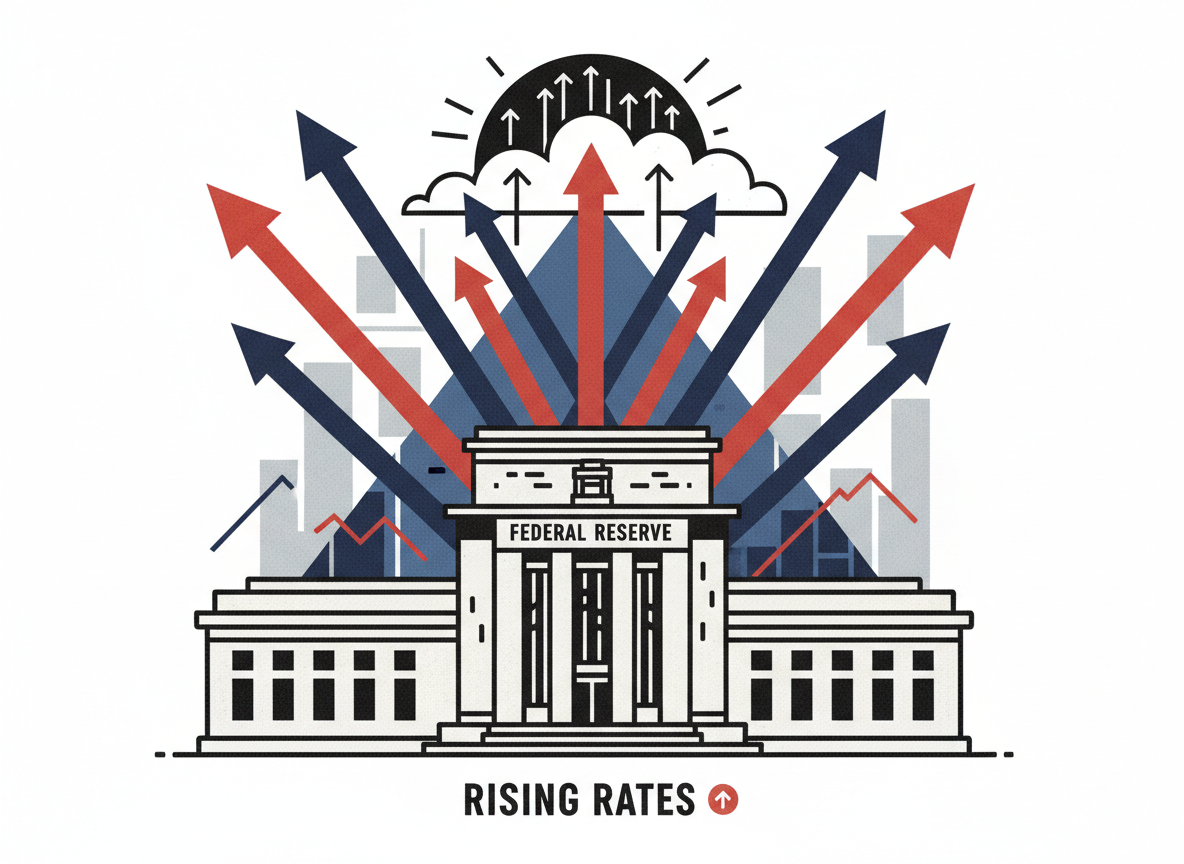
The Federal Reserve Raises Rates Again
The biggest financial story came from the Federal Reserve. On September 16, the Fed raised its target range for the federal funds rate by a quarter percentage point, bringing it to 3.75%–4.00%. The vote was unanimous.
For consumers, another rate increase can translate into higher borrowing costs on credit cards, variable-rate debt, auto loans, and eventually some mortgages. Savers may benefit if banks and money-market funds pass along higher yields, but that benefit can be offset when household expenses rise at the same time.
Investors should resist making an all-or-nothing move based on one Fed meeting. Higher rates can pressure richly valued growth stocks, real estate, and other rate-sensitive assets. However, they can also create opportunities in cash-equivalent investments, short-term Treasuries, and financially strong companies that generate dependable cash flow.
My approach remains simple: stay diversified, keep some cash available, dollar-cost average into high-conviction positions, and avoid chasing whatever moved the most this week. Volatility is uncomfortable, but it can also reward patience and preparation.
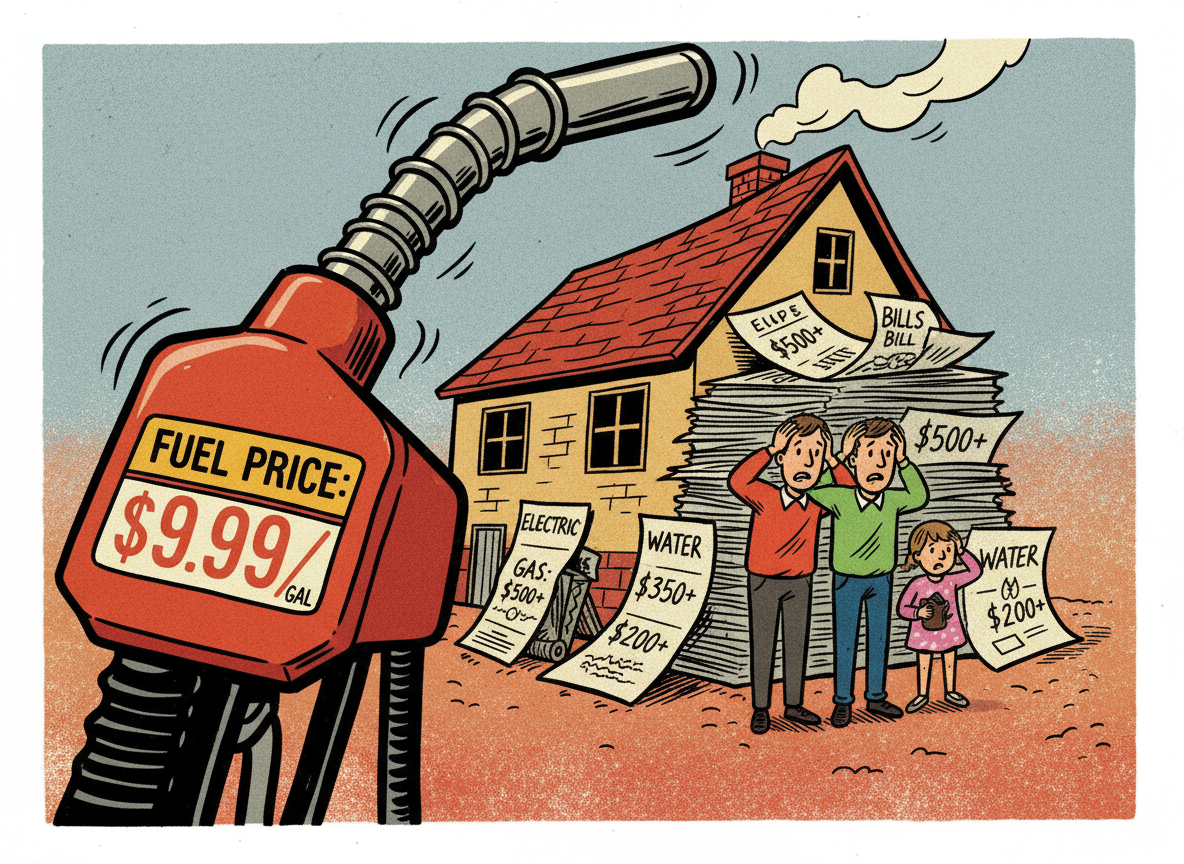
Energy Costs Are Becoming a Household Issue Again
Rising gasoline and diesel prices are more than a transportation story. Diesel powers the trucks, equipment, and supply chains that move much of what Americans buy. When those costs increase, businesses often pass at least part of the expense to consumers.
That means higher energy prices can appear in grocery bills, delivery fees, airfare, household goods, and corporate profit margins. They can also complicate the Fed’s inflation fight because energy touches nearly every part of the economy.
For households, this is a good week to review spending rather than panic. Small adjustments combining errands, checking insurance and subscription costs, using fuel rewards wisely, and directing extra cash toward high-interest debt can help absorb rising prices without abandoning long-term investing goals.
Investors should watch companies with heavy transportation, manufacturing, or distribution costs. Revenue growth may look healthy while margins quietly weaken. In this environment, balance-sheet strength and pricing power matter.
Mental-Health Treatment Continues to Evolve
On September 14, the FDA held a public hearing on the potential future therapeutic use of psychedelic drug products in supervised and supportive settings. The agency gathered perspectives on possible benefits, risks, clinical standards, patient protections, and the evidence that would be required.
This does not mean psychedelic treatments have received broad approval. It does show that federal regulators are seriously examining how emerging therapies might fit into a safe, evidence-based medical framework.
That matters to me personally. After completing TMS and reaching remission from depression, I understand how meaningful it can be when a treatment finally helps after a long struggle.
Innovation deserves hope but also discipline. New mental-health therapies require careful research, qualified medical supervision, honest discussions about risk, and strong protections for vulnerable patients.
The encouraging trend is that mental health is increasingly being treated like health: something worthy of scientific investment, open conversation, and individualized care.
Public-Health Awareness: Rare Does Not Mean Ignorable
Rabies concerns also received attention this week following several unusual animal-exposure incidents. Human rabies remains rare in the United States, but it is almost always fatal after symptoms appear. The good news is that prompt wound cleaning, medical evaluation, and post-exposure vaccination can prevent the disease when treatment begins in time.
The practical takeaway is straightforward: never dismiss a bite, scratch, or possible saliva exposure involving a bat or an unfamiliar wild or domestic animal. Wash the area thoroughly and contact a healthcare professional or local health department promptly. Pet owners should also keep their animals’ vaccinations current.
Preparedness is not fear. It is knowing what deserves immediate action.
One Step Forward
This week’s health and wealth stories point toward the same principle: protect your margin.
Financial margin means maintaining emergency savings, controlling expensive debt, diversifying investments, and leaving room to take advantage of opportunities.
Health margin means keeping appointments, following treatment plans, remaining active, sleeping as well as possible, and responding promptly when something feels wrong.
My one step forward this week is to review one area of vulnerability instead of trying to fix everything at once. That could mean checking the interest rate on a credit card, adding a little to an emergency fund, scheduling a delayed medical appointment, or simply getting outside for a daily walk.
Progress is rarely one giant decision. More often, it is a series of small choices that make us harder to knock down.
Disclaimer: This article is for educational and informational purposes only. It is not medical, investment, tax, or financial advice. Consult qualified professionals regarding your individual circumstances.
About the Author:
David Dandaneau is a client relations analyst that covers the insurance and financial services industry. He is known for his insightful analysis and comprehensive coverage of market trends and regulatory developments.
Cerebras Systems Inc. (NASDAQ: CBRS) has emerged as one of the more intriguing and volatile public companies attempting to reshape how artificial intelligence models are trained and, increasingly, how quickly they can perform inference.
Cerebras went public in May 2026 in one of the year’s most closely watched technology IPOs. Shares were priced at $185, and the completed offering raised approximately $6.38 billion in gross proceeds.
Four months later, the investment thesis is becoming clearer: Cerebras has extraordinary growth opportunities, but investors are paying a substantial valuation for that opportunity.
The artificial-intelligence infrastructure race is no longer simply about NVIDIA and GPUs.
Rows of illuminated servers and overhead cabling power this expansive modern data center.
What Makes Cerebras Different?
Cerebras attacks the AI computing problem differently from traditional GPU manufacturers.
Its core technological innovation is the Wafer Scale Engine (WSE). Rather than cutting a semiconductor wafer into numerous individual chips and connecting those processors together, Cerebras essentially turns an enormous portion of the wafer itself into one processor.
The objective is straightforward: eliminate many of the communication bottlenecks associated with moving information between individual chips.
Cerebras has increasingly focused this technology on high-speed AI inference the process of actually running trained AI models and generating answers for users and applications.
That distinction is important.
As AI moves from experimentation toward widespread commercial deployment, inference could become an enormous recurring infrastructure market. Every AI search, coding agent, autonomous workflow, enterprise chatbot and reasoning system consumes inference compute.
Cerebras wants to supply a meaningful portion of that compute.
Revenue Growth Is Accelerating
The company’s financial trajectory illustrates why investors are paying attention.
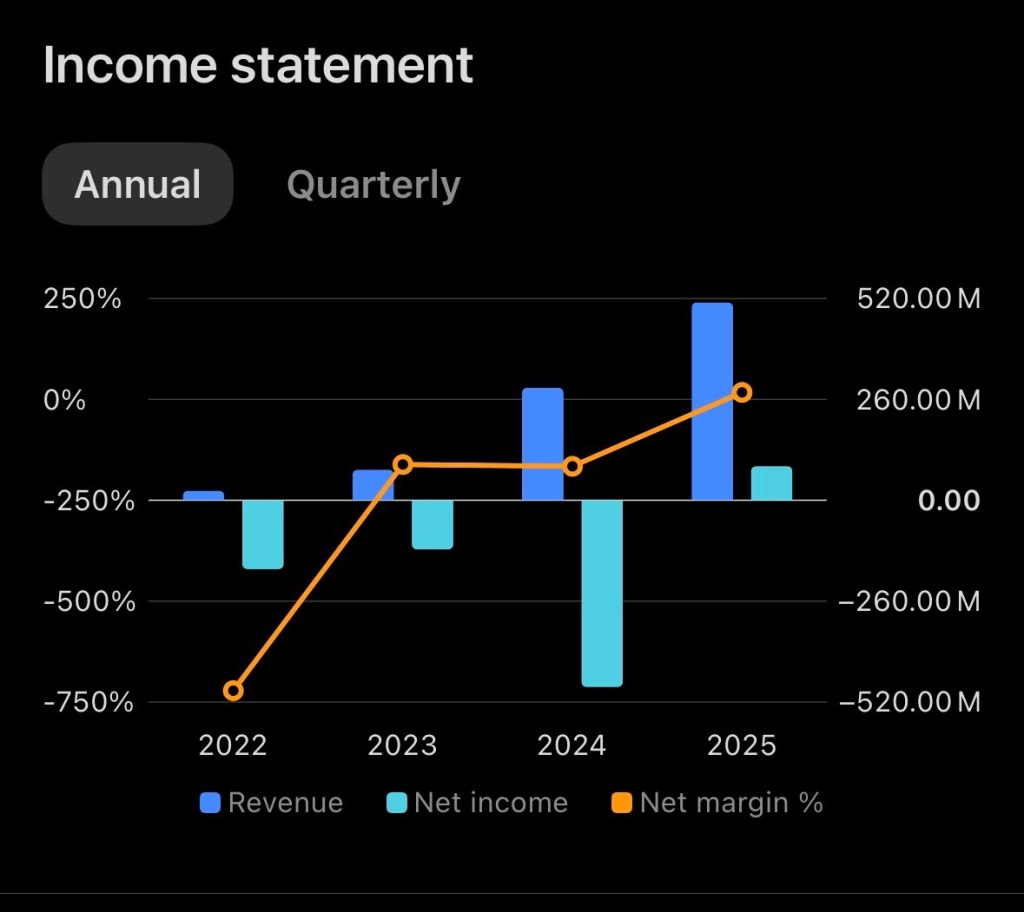
Cerebras generated approximately $290.3 million of revenue in 2024, increasing to roughly $510 million in 2025, representing 76% year-over-year growth.
Growth accelerated further during 2026.
First-quarter core revenue reached $191.3 million, up 92% year over year, including $111.6 million of hardware revenue and $79.8 million from cloud and other services.
Then came Q2.
Cerebras reported approximately $210 million of core revenue, while its core cloud business grew 287% year over year. The company also reported that it had secured approximately 600 megawatts of data-center capacity and planned to expand manufacturing capacity by more than tenfold during 2026.
Management subsequently increased its full-year outlook.
Cerebras now expects 2026 core revenue of approximately $880 million to $890 million, with core gross margins between 41% and 43% and core operating margins between negative 19% and negative 17%.
At the midpoint, $885 million would represent roughly 74% growth over 2025 revenue.
That is serious growth.
But it comes with an important caveat: Cerebras is still spending heavily to build the infrastructure necessary to capture that opportunity.
The $20+ Billion OpenAI Opportunity
Potentially the biggest component of the Cerebras growth story is its relationship with OpenAI.
Cerebras announced a multi-year agreement involving 750 MW of capacity valued at more than $20 billion. The company has also announced a multi-year partnership with Amazon to bring Cerebras inference technology to AWS.
These relationships potentially accomplish something extremely important for Cerebras: validation.
Competing against entrenched semiconductor and cloud-computing ecosystems requires more than superior benchmark performance. Customers need confidence that Cerebras can deploy its technology reliably and at enormous scale.
Large AI customers and cloud partners can help establish that credibility.
Cerebras has additionally disclosed customers or relationships involving companies such as Cognition, Lovable, Block, Figma, AlphaSense, GSK and CrowdStrike.
The company is therefore beginning to look less like an experimental AI-chip developer and more like an emerging AI infrastructure platform.
The CS-4 Could Be the Next Catalyst
Cerebras unveiled its next-generation CS-4 system in August, claiming performance of up to 30 times faster than GPU-based alternatives in certain workloads. The company is simultaneously expanding its global infrastructure footprint, including a recently announced 165 MW AI data center in Finland.
Those developments are worth watching closely.
AI infrastructure ultimately becomes an economics problem. Performance matters, but customers also care about cost per token, power consumption, latency, reliability and scalability.
If Cerebras can consistently demonstrate materially better inference economics—not merely impressive benchmark speeds—it could capture a meaningful piece of the rapidly expanding inference market.
The Financial Risk Investors Shouldn’t Ignore
The bull case is compelling, but CBRS isn’t a low-risk semiconductor investment.
First, profitability remains a work in progress.
Although Cerebras reported GAAP net income of $237.8 million during 2025, its filing shows a non-GAAP net loss of approximately $75.7 million, and the company explicitly warns investors that it has a history of generating losses.
Management’s 2026 guidance still calls for a substantially negative core operating margin.
Second, gross margins deserve close attention.
Q1 core gross margin was an impressive 47%, but Cerebras has been investing aggressively in cloud infrastructure and data-center capacity. The company currently expects full-year core gross margin of approximately 41%-43%.
Third, customer concentration has historically been significant. Large contracts can produce extraordinary revenue growth, but dependence on a relatively small number of enormous customers can also create significant volatility if deployments are delayed, renegotiated or canceled.
Finally, there is competition.
Cerebras isn’t operating in an empty market. NVIDIA dominates AI accelerators, while AMD, hyperscale cloud providers and custom silicon developers are all pursuing the same enormous AI-compute opportunity.
Cerebras doesn’t necessarily need to defeat NVIDIA to succeed.
It does, however, need to prove that wafer-scale computing occupies a sufficiently valuable niche within the broader AI infrastructure ecosystem.
Valuation: This Is Where Things Get Interesting
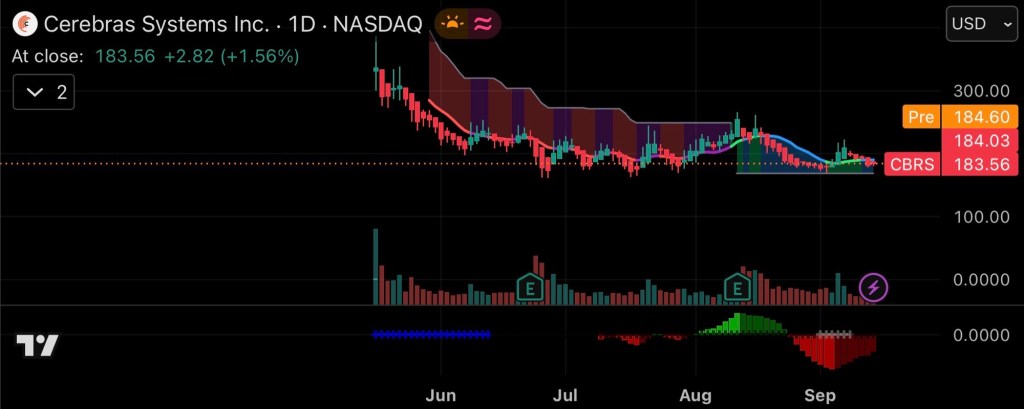
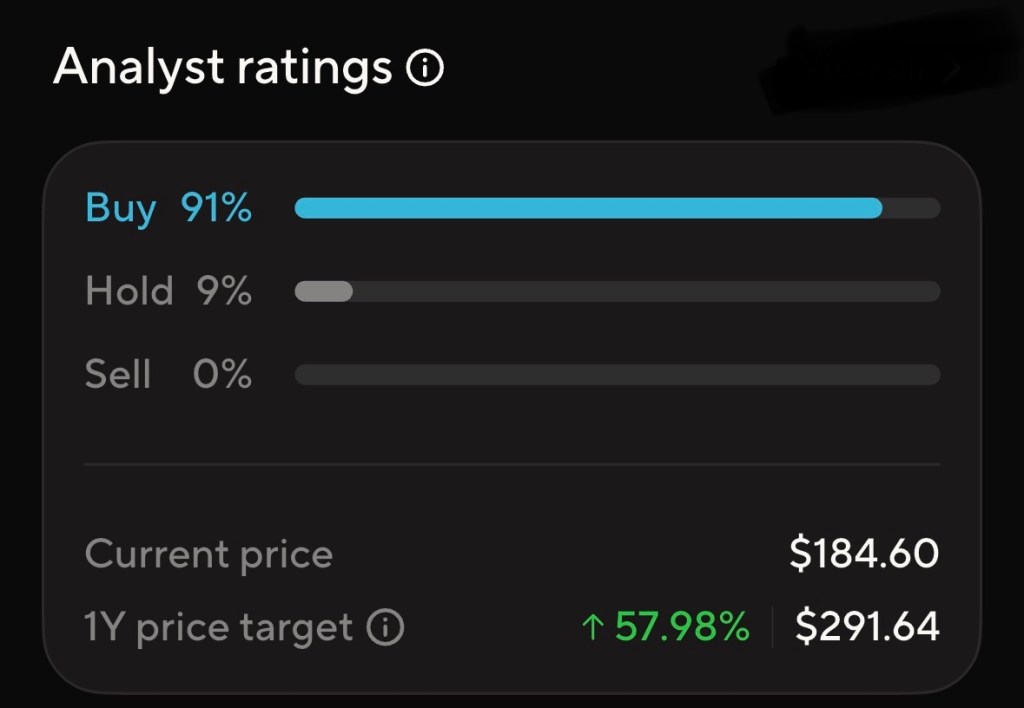
CBRS currently trades around $184, putting the company near its original $185 IPO price after experiencing substantial volatility since its May debut.
That matters psychologically, but the more important question is valuation.
With management forecasting approximately $885 million of 2026 core revenue, investors are already assigning Cerebras a substantial premium based on expectations of continued hypergrowth.
In other words, today’s CBRS valuation isn’t primarily based on what Cerebras earns today.
Investors are buying expectations for what the company could become several years from now.
That makes execution extremely important.
A company growing revenue 60%-80% annually can grow into a seemingly expensive valuation remarkably quickly. But if growth falls toward 20%-30% while profitability remains elusive, valuation compression can be equally dramatic.
My 12-Month CBRS Scenario Analysis
Forecasting a recently public, high-growth AI semiconductor company to a single price would create a false sense of precision. A scenario framework is more useful.
Bear Case: $120-$150
This scenario could develop if revenue growth decelerates, cloud margins deteriorate, major capacity deployments are delayed, customer concentration becomes problematic or investors broadly reduce the multiples they are willing to pay for AI infrastructure companies.
From approximately $184 today, that represents meaningful downside.
Base Case: $240-$300
This scenario assumes Cerebras continues producing strong revenue growth, approaches or exceeds its current guidance, demonstrates improving operating leverage and successfully converts its enormous infrastructure commitments into recurring cloud revenue.
Interestingly, current Wall Street research sits in roughly this neighborhood. Needham reiterated a $300 price target following the company’s first-quarter results.
Aggregated analyst data recently showed an average target around $292, although analyst targets should always be viewed as estimates rather than predictions.
Bull Case: $350-$425
For Cerebras to reach this range, I would want to see several things happen simultaneously: revenue expectations moving materially above $1 billion, continued triple-digit or near-triple-digit cloud growth, successful OpenAI capacity deployments, evidence of attractive CS-4 economics, improving gross margins and a credible path toward operating profitability.
A sustained AI infrastructure spending cycle could provide an additional tailwind.
This is the highest-risk scenario because it requires both strong fundamental execution and investors continuing to award CBRS a premium valuation.
What I’m Watching Next
For investors holding CBRS, I believe five metrics deserve particular attention over the coming quarters:
Cloud revenue growth: arguably the most important long-term metric because recurring inference revenue could eventually be more valuable than one-time hardware sales.
Gross margin: rapid revenue growth means much less if infrastructure costs consume the economics.
OpenAI deployment progress: successful conversion of the announced $20+ billion relationship into actual revenue could fundamentally alter Cerebras’ financial profile.
Operating losses: Cerebras needs to demonstrate that revenue can eventually grow considerably faster than operating expenses.
Customer diversification: additional enterprise and hyperscale customers would reduce dependence on a handful of massive relationships.
The Bigger Picture
Cerebras represents a particularly interesting kind of AI investment.
This isn’t simply another company adding artificial intelligence to an existing product.
Cerebras is building the physical infrastructure required to run AI itself.
The company increased revenue from just $24.6 million in 2022 to $510 million in 2025, and management now expects approximately $880-$890 million in core revenue during 2026.
Meanwhile, cloud revenue is growing at nearly 300%, manufacturing capacity is expanding dramatically, hundreds of megawatts of data-center capacity are under contract, and Cerebras is developing relationships with some of the most important companies in artificial intelligence.
That’s the opportunity.
The risk is that investors already recognize much of it.
At approximately $184 per share, CBRS remains a high-growth, high-expectation investment where quarterly execution can produce enormous price swings, as demonstrated when shares dropped sharply following the company’s August earnings release despite management raising its annual outlook.
My working 12-month framework therefore puts $240-$300 as a reasonable base-case range, with approximately $120-$150 representing a bearish execution/valuation scenario and $350-$425 representing a strong-execution bull scenario.
Those ranges aren’t price targets or guarantees. They are a framework for measuring future results against the expectations embedded in the stock.
For investors already holding Cerebras, the central question isn’t simply whether artificial intelligence will continue growing.
It almost certainly will.
The more important question is whether Cerebras can convert its technological advantage, enormous customer agreements and rapidly expanding infrastructure footprint into durable revenue growth and ultimately durable profits.
If it can, CBRS could become one of the more important publicly traded AI infrastructure companies to emerge from this generation of the technology boom.
Disclosure: I currently hold a position in Cerebras Systems (NASDAQ: CBRS). This article reflects personal research and analysis and is provided for informational purposes only. It is not financial advice or a recommendation to buy or sell any security. Investing involves risk, including the possible loss of principal.
Over the past few years here, one thing has become clear: the topics that matter most are the ones that impact everyday people in real life. From protecting families financially to improving personal health and building long-term wealth, the conversations shared across social media have focused on practical advice, real experiences, and personal growth.
Here’s a look back at some of the biggest themes that resonated with readers and followers alike.
A scenic dirt path leads to a city skyline at sunset, with glowing navigation and connectivity icons along the trail.
Insurance Isn’t Just a Bill… It’s a Financial Safety Net
One recurring topic has been the importance of understanding insurance beyond the monthly premium. Conversations around auto insurance scores, homeowner protection, life changes, and shopping for coverage highlighted how important it is to make informed decisions.
Many drivers don’t realize that constantly switching insurance companies can sometimes hurt their long-term pricing and stability. Insurance history, payment consistency, claim frequency, and credit-related factors often play a role in how rates are calculated. The key message shared over time has been simple:
✅ Shop smart ✅ Compare coverage… not just price ✅ Understand what you’re buying ✅ Protect yourself before problems happen
There were also important discussions about protecting families after the loss of a spouse. Topics included updating estate documents, reviewing beneficiaries, adjusting homeowners and auto insurance policies, and making sure financial accounts are organized during difficult times.
Health and Sleep Matter More Than We Admit
Another major focus centered around health and quality of life, especially sleep.
Personal experiences discussing CPAP therapy opened conversations for many people struggling silently with exhaustion, poor sleep quality, and untreated sleep apnea. The message was relatable because it focused on real-life improvements instead of medical jargon.
Many readers connected with the idea that better sleep can improve:
Energy levels
Mood and mental clarity
Blood pressure
Productivity
Overall quality of life
The discussions also honestly addressed the adjustment period that comes with CPAP use, reminding people that long-term health improvements often require patience and consistency.
Mental Health Conversations Continue to Break Stigma
Mental health awareness became another important topic throughout the years. Rather than focusing only on diagnoses or labels, the message centered around perseverance, growth, and finding purpose despite difficult seasons.
The overall tone remained encouraging:
Every day is another opportunity to keep moving forward.
Readers responded positively to honest conversations about stress, emotional struggles, and the importance of seeking support while continuing to pursue productive and meaningful lives.
Investing Conversations Focused on Long-Term Thinking
Investment-related discussions also attracted strong engagement, especially around dividend-paying companies and emerging growth opportunities.
Articles and commentary involving companies like General Mills (GIS) and Ondas Holdings (ONDS) explored the balance between stability and growth potential.
Topics included:
Dividend investing
Market volatility
Long-term portfolio strategy
Risk management
Emerging technology opportunities
One consistent theme stood out:
📈 Investing is not about chasing hype every day it’s about building disciplined habits over time.
Transparency also remained important, with disclosures shared whenever positions in discussed companies were personally owned.
A vintage scale balancing symbols of health, money, technology, and family.
Technology, Sustainability, and Everyday Innovation
Discussions around sustainability and technology showed how rapidly the world is changing. Topics ranged from electric vehicles and smart homes to how innovation is reshaping the insurance industry itself.
As more households adopt connected devices and cleaner technologies, conversations emphasized how these changes may impact:
Insurance pricing
Risk assessment
Home safety
Driving habits
Long-term financial savings
The growing overlap between technology and personal finance continues to create opportunities for consumers willing to stay informed.
Why These Conversations Connected With People
The reason these topics gained attention is because they were grounded in real life.
They weren’t just about headlines or trends they focused on:
✔ Protecting families ✔ Improving health ✔ Building financial stability ✔ Encouraging personal growth ✔ Preparing for the unexpected
In a social media environment often dominated by negativity and noise, practical conversations that educate, encourage, and empower people continue to stand out.
Key Takeaway
Over the years, these discussions have shown that everyday decisions can have a lasting impact. Whether it’s reviewing an insurance policy, improving sleep, investing for the future, or simply finding ways to stay positive during difficult times, small steps often create meaningful long-term results.
The conversations will continue because life keeps evolving, and staying informed matters more than ever.
GIS, one of the most recognizable consumer staples companies in the United States, has increasingly attracted income-focused investors as its stock price has declined significantly from recent highs. Known for household brands such as Cheerios, Pillsbury, Häagen-Dazs, Betty Crocker, and Blue Buffalo, General Mills now offers one of the highest dividend yields in the packaged food sector.
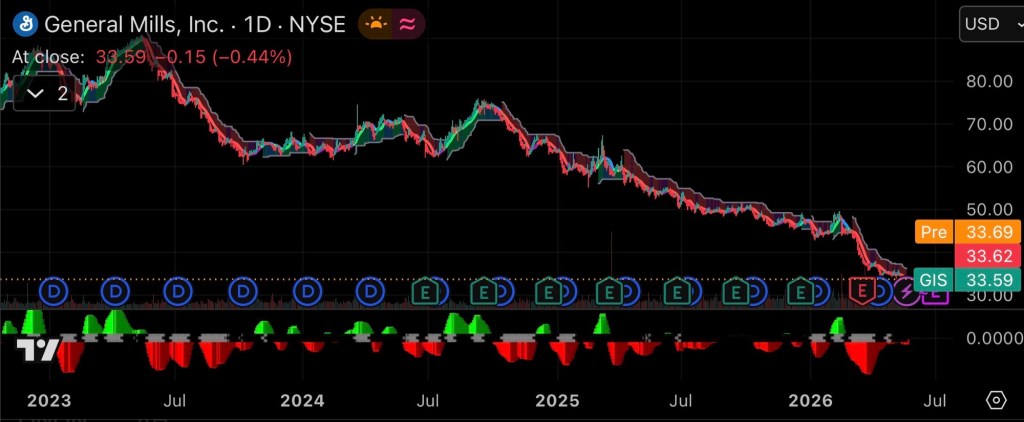
As of May 2026, shares of General Mills are trading near multi-year lows around the mid-$30 range after previously trading above $55 within the past year. The decline has pushed the company’s dividend yield above 7%, a level rarely seen for a mature consumer staples company with decades of dividend history.
A vibrant chart showing fluctuating financial growth trends over a year
Strong Dividend Remains a Key Attraction
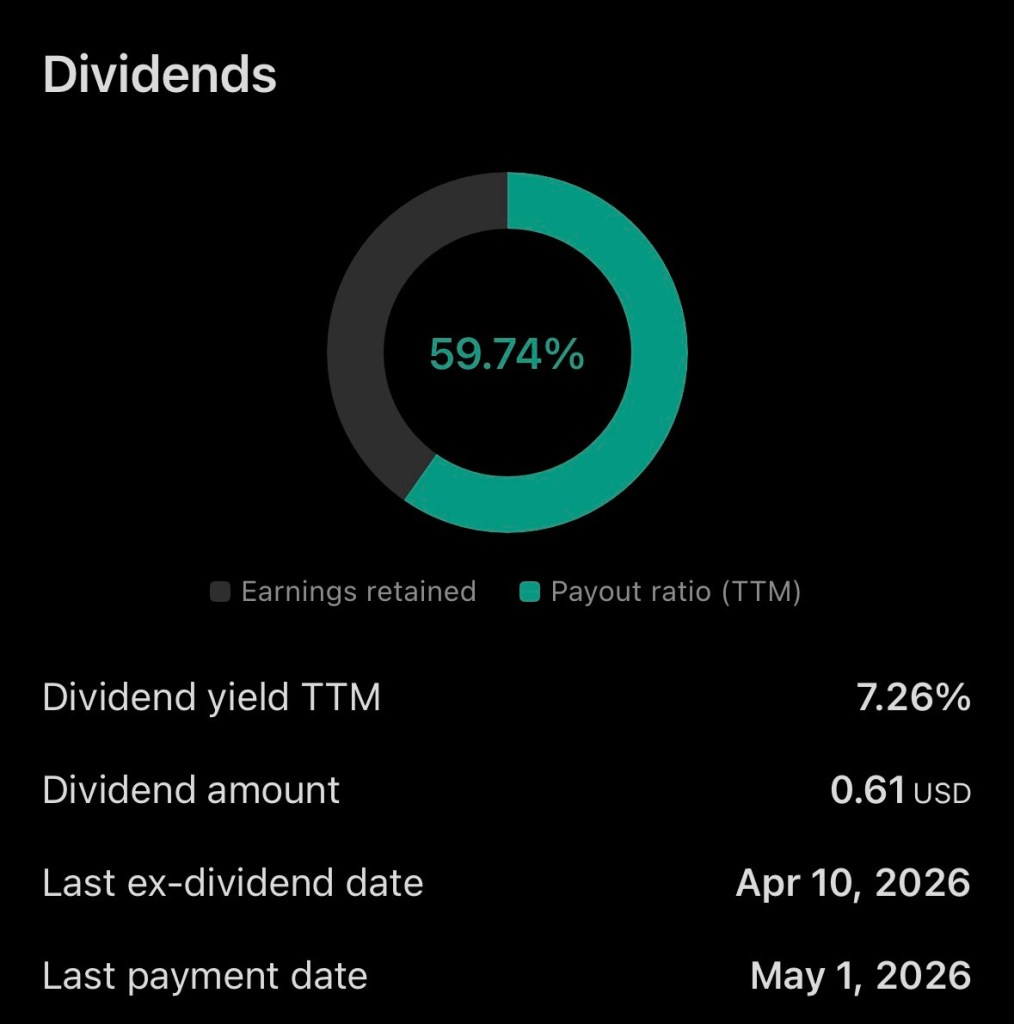
General Mills currently pays an annual dividend of approximately $2.44 per share, translating to a dividend yield above 7%. The company has maintained consistent quarterly dividend payments and has modestly increased its payout in recent years. The payout ratio remains near 60%, which many analysts still consider manageable for a stable consumer products company.
For income investors, the yield alone may make GIS an attractive defensive holding during periods of market volatility and economic uncertainty. Consumer staples companies historically perform better during slower economic periods because consumers continue purchasing essential food products regardless of broader market conditions.
Financial Performance Shows Both Strengths and Challenges
While the dividend remains attractive, General Mills has faced operational headwinds over the past year. Revenue has declined modestly, with trailing twelve-month revenue around $18.4 billion, down more than 6% year-over-year. Earnings and profit margins have also softened as consumers increasingly seek lower-cost alternatives amid inflationary pressures.
The company recently reduced portions of its fiscal 2026 guidance, citing weaker consumer demand and increasing competition from private-label food brands. Management has acknowledged that shoppers are becoming increasingly price sensitive and are prioritizing value-based purchases.
Despite these challenges, General Mills continues to generate substantial cash flow and maintains strong brand recognition across multiple product categories. The company is also investing heavily in innovation, protein-focused products, pet food expansion, and operational efficiencies aimed at improving long-term growth.
Why Some Investors See Upside Potential
Although sentiment surrounding GIS has weakened, several valuation metrics suggest the stock could offer upside potential at current levels.
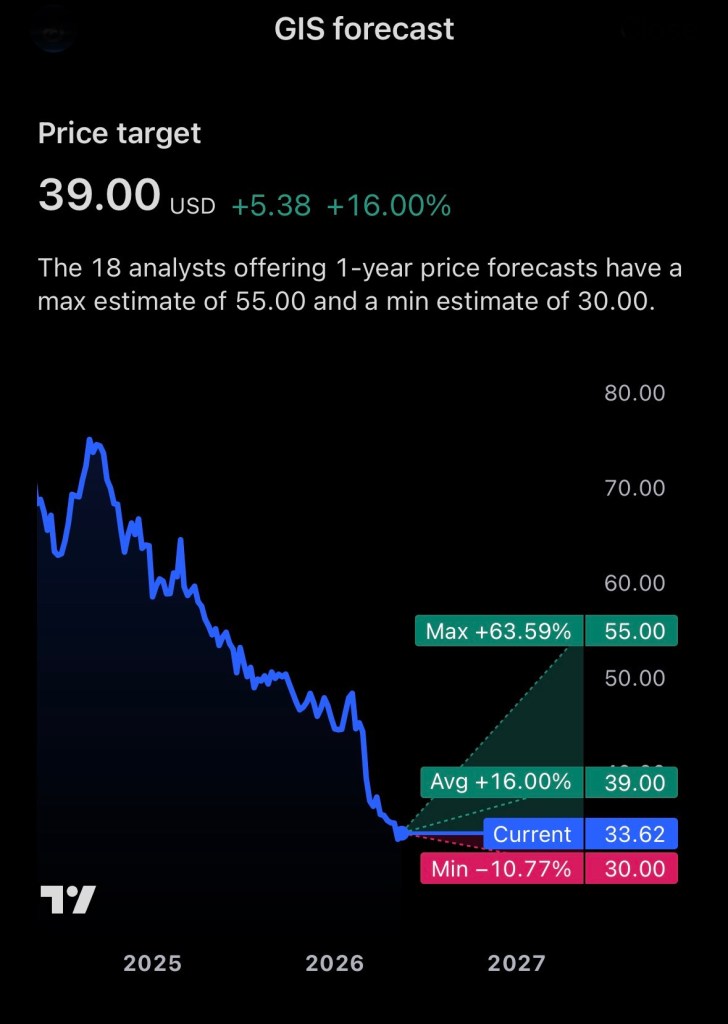
General Mills currently trades at a price-to-earnings ratio below 9, substantially lower than many competitors in the consumer staples sector. Analyst price targets average around $42 per share, implying potential upside of nearly 18% from recent trading levels.
Bullish investors argue that much of the negative outlook may already be reflected in the current stock price. If inflation moderates, consumer spending stabilizes, and management successfully executes its growth initiatives, GIS could potentially see both earnings stabilization and multiple expansion over the next 12 to 24 months.
Additionally, the combination of a high dividend yield and possible capital appreciation may appeal to long-term dividend growth investors seeking total return opportunities.
Risks Investors Should Monitor
Despite the attractive valuation and dividend yield, risks remain. Persistent inflation, changing consumer habits, private-label competition, and margin compression could continue pressuring earnings. The packaged food industry also faces ongoing challenges from shifting dietary preferences and increased competition from health-focused brands.
Investors should also monitor debt levels, input cost inflation, and whether the company can successfully restore organic sales growth over upcoming quarters.
Final Thoughts
General Mills appears to represent a classic value-versus-growth debate. The company is no longer viewed as a high-growth stock, but its depressed valuation, established global brands, and substantial dividend yield could present an opportunity for patient investors willing to accept slower growth and near-term volatility.
For dividend-focused portfolios, GIS may warrant consideration as a high-income consumer staples holding, particularly if management can stabilize sales trends and maintain strong free cash flow generation.
Disclosure
The author currently owns a position in General Mills ($GIS). This article is for informational purposes only and should not be considered financial advice. Investors should conduct their own research before making investment decisions.
References (APA Format)
MacroTrends. (2026). General Mills revenue 2012–2026. Retrieved May 21, 2026, from MacroTrends
Reuters. (2026, February 17). General Mills’ forecast cut from demand hit rattles packaged-food stocks. Retrieved May 21, 2026, from Reuters
Stock Analysis. (2026). General Mills (GIS) dividend history, dates & yield. Retrieved May 21, 2026, from Stock Analysis Dividend Page
Stock Analysis. (2026). General Mills (GIS) financials & income statement. Retrieved May 21, 2026, from Stock Analysis Financials
Stock Analysis. (2026). General Mills (GIS) stock price & overview. Retrieved May 21, 2026, from Stock Analysis Overview
MarketWatch. (2026). Cheerios parent General Mills says it will sacrifice some profit to drive sales amid cautious consumers. Retrieved May 21, 2026, from MarketWatch Article
A growing number of professionals and behavioral economists are challenging the narrative: what if the real key to fulfillment isn’t how much you earn, but how you think about what you have?
This shift in perspective often referred to as a “wealth mindset reset” is gaining traction across industries, from finance to mental health. The premise is straightforward: when individuals focus less on income comparisons and more on positive drivers like stability, growth, and purpose, they tend to experience higher levels of satisfaction and long-term success.
The Problem with Income Obsession
For decades, income has been the most visible and measurable indicator of success. Promotions, bonuses, and salary benchmarks are easy to quantify. But that clarity comes with a downside.
“Constantly measuring yourself against others financially creates a moving target,” says one financial wellness expert. “There’s always someone earning more, which can lead to chronic dissatisfaction even when you’re objectively doing well.”
This phenomenon is closely tied to relative income theory, where happiness is influenced less by absolute earnings and more by how one stacks up against peers. The result? Even high earners can feel financially insecure.
Reframing Success
Instead of anchoring self-worth to income, experts recommend shifting focus toward controllable and meaningful metrics:
Financial Stability – Are your essential needs covered? Do you have a safety net?
Progress – Are you improving your skills, growing your career, or expanding your opportunities?
Autonomy – Do you have control over your time and decisions?
Purpose – Does your work align with your values or provide a sense of contribution?
These factors, while less tangible than a paycheck, have a stronger correlation with long-term well-being.
The Psychology of Positive Focus
Research in positive psychology suggests that gratitude and forward-looking thinking can significantly improve both mental health and productivity. When individuals focus on what’s working rather than what’s lacking they’re more likely to make better decisions, take calculated risks, and build sustainable habits.
In practical terms, this could mean recognizing consistent income instead of chasing sporadic spikes, or valuing flexibility in a job over a marginal salary increase.
A Financial Strategy Hidden in Plain Sight
Interestingly, this mindset isn’t just about feeling better it can also lead to smarter financial behavior.
People who aren’t fixated on income alone are more likely to:
Save consistently rather than spend to “keep up”
Invest with a long-term perspective
Avoid high-risk decisions driven by short-term gain
Build diversified income streams over time
In essence, focusing on positives creates a more disciplined and resilient financial strategy.
Real-World Application
Consider two individuals earning the same salary. One constantly compares themselves to higher earners, feels behind, and takes on unnecessary financial risks. The other focuses on steady growth, appreciates their progress, and makes calculated decisions.
Over time, the second individual is more likely to build sustainable wealth not necessarily because they earn more, but because they think differently.
In the End
Income will always matter it’s a fundamental part of financial security. But it’s not the full picture. By shifting attention away from “how much” and toward “how well,” individuals can unlock a more balanced, productive, and ultimately rewarding financial life.
In a world obsessed with numbers, the real advantage may belong to those who learn to look beyond them.
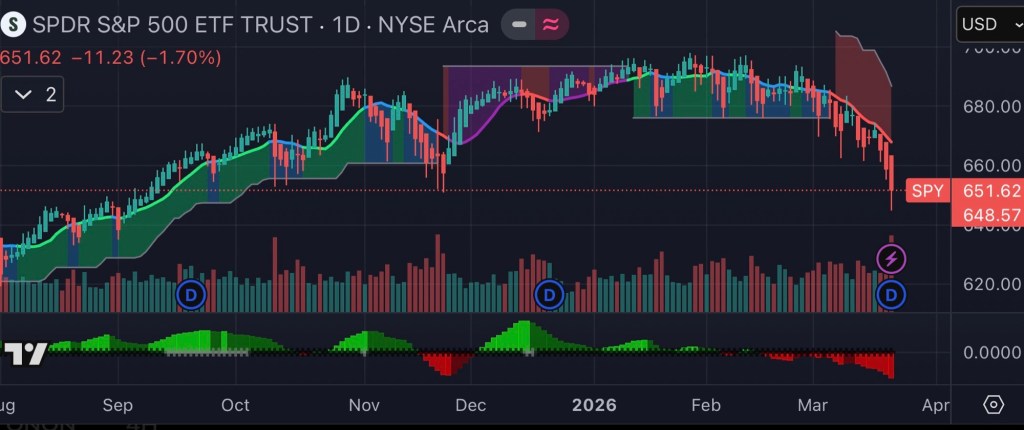
State Street SPDR S&P 500 ETF Trust (SPY) $648.57 -$11.81 (1.79%) • Today $653.51+$4.94 (0.76%) After Hours
By Industry Perspective
The relationship between financial strength and personal health is no longer theoretical, it’s measurable, observable, and, in many cases, predictable. Whether you’re analyzing the volatility of the market through vehicles like the SPDR S&P 500 ETF Trust or underwriting a homeowner’s policy, the same principle applies: risk management drives outcomes both financially and physically.
Market Volatility and Mental Health: The Silent Correlation
As illustrated in the market activity above, even broad-based investments can experience short-term declines. While seasoned investors understand this as normal market behavior, the psychological response is often anything but rational.
Periods of drawdown like recent fluctuations in the S&P 500 can trigger stress responses similar to those seen in high-risk professions. Elevated cortisol levels, poor sleep, and impulsive decision-making (panic selling, overtrading) are common. In financial terms, this is known as behavioral risk and it can erode long-term returns faster than market downturns themselves.
From a health standpoint, chronic stress is linked to:
Cardiovascular disease
Weakened immune response
Reduced cognitive performance
Translation: Poor financial discipline doesn’t just hurt your portfolio it can degrade your physical health.
Insurance: The Health Buffer You Don’t Think About
In the insurance industry, we view risk through a different but parallel lens. Policies aren’t just financial tools; they are health preservation mechanisms.
Consider this:
A homeowner without proper coverage facing a catastrophic loss (fire, hurricane, liability claim) doesn’t just experience financial strain it often leads to anxiety, depression, and long-term instability.
Conversely, a properly insured individual has risk transferred, which significantly reduces stress exposure.
This is especially relevant in markets like Florida, where environmental risk is high. Strategic coverage wind mitigation credits, flood insurance, liability umbrellas does more than protect assets. It protects peace of mind, which is directly tied to long-term health outcomes.
Wealth Building as a Health Strategy
There’s a growing body of thought especially among financial planners and risk professionals that wealth is a form of preventative medicine.
Here’s how:
Liquidity Reduces Stress Emergency funds and accessible capital eliminate the “fight-or-flight” response during crises.
Diversification Mirrors Healthy Living Just as a balanced diet prevents overexposure to one risk factor, diversified portfolios reduce systemic financial risk.
Long-Term Planning Promotes Stability Retirement accounts, life insurance, and asset protection strategies create predictability one of the most powerful contributors to mental well-being.
The Discipline Overlap: Investors vs. Insureds
The most successful individuals in both investing and insurance share identical behavioral traits:
Consistency over intensity (dollar-cost averaging vs. regular policy reviews)
Risk awareness without fear-based decisions
Long-term thinking over short-term reactions
This overlap is not coincidental it’s structural. Both disciplines reward those who understand that risk isn’t something to avoid it’s something to manage intelligently.
Final Analysis: Health and Wealth Are Not Separate Systems
The traditional view separates financial planning and personal health into different domains. That view is outdated.
Poor financial decisions → Increased stress → Negative health outcomes
Lack of protection (insurance gaps) → Catastrophic loss → Long-term instability
Bottom line: The same habits that build wealth discipline, planning, risk management are the exact habits that sustain long-term health.
Closing Thought
Whether you’re reviewing your investment portfolio or evaluating your insurance coverage, you’re not just making financial decisions you’re making lifestyle decisions that will compound over time.
Because in the end, the real ROI isn’t just measured in dollars… it’s measured in how well and how peacefully you live.
About the Author:
David Dandaneau is a client relations analyst that covers the insurance and financial services industry. He is known for his insightful analysis and comprehensive coverage of market trends and regulatory developments.
For much of the past decade, bonds were viewed primarily as a defensive allocation useful for dampening volatility, but rarely exciting. With historically low yields following the Global Financial Crisis and through the pandemic era, investors increasingly turned toward equities for meaningful returns while bonds played a passive role as a stabilizer.
That narrative is now changing. Bonds are once again emerging not only as a ballast for portfolios but as a legitimate source of income, total return potential, and tactical opportunity particularly for investors who understand how to position themselves across the yield curve.
The Great Reset: Higher Yields Have Changed the Equation
The most important development driving renewed interest in bonds is simple: yields are materially higher than they were just a few years ago.
Following aggressive Federal Reserve rate hikes between 2022 and 2024 to combat inflation, interest rates across maturities reset to levels not seen in over 15 years. As a result:
Short-term U.S. Treasury yields have hovered between 4.0% and 5.0%
Intermediate-term Treasuries offer yields in the 3.8% to 4.5% range
Investment-grade corporate bonds often yield 4.5% to 6.0%
Select high-quality municipal bonds provide tax-equivalent yields exceeding 6% for high-income investors
This shift represents a structural change. Investors can now generate meaningful income from bonds without assuming excessive credit risk or volatility.
For retirees, income-focused investors, and balanced portfolio managers, this is a significant opportunity.
Understanding the Yield Curve: Opportunity Lies in Positioning
The yield curve which plots interest rates across different maturities has been unusually dynamic in recent years. In some periods, shorter-term bonds have yielded more than longer-term bonds, creating what is known as an inverted yield curve, often associated with economic transitions.
This environment creates multiple strategic options.
Short-Term Bonds: High Income, Low Duration Risk
Short-term bonds (1–3 years maturity) currently offer attractive yields with minimal sensitivity to interest rate changes. This makes them ideal for:
Conservative investors
Cash alternatives
Capital preservation with income
They provide flexibility, allowing investors to reinvest at higher rates if yields rise further.
Intermediate-Term Bonds: The “Sweet Spot”
Many professional portfolio managers consider the intermediate portion of the yield curve (3–7 years) to offer the best balance of income and risk.
These bonds:
Provide strong yields
Offer moderate duration exposure
Stand to benefit if interest rates decline in the future
If rates fall, intermediate bonds may appreciate in price, delivering both income and capital gains.
Long-Term Bonds: Strategic Opportunity for Rate Declines
Long-duration bonds (10+ years) are more sensitive to interest rate movements but offer significant upside potential if interest rates decline.
When rates fall:
Bond prices rise
Longer-duration bonds rise more dramatically
This creates potential total return opportunities beyond income alone.
Bonds Are Once Again Competing with Stocks
One of the most important implications of higher yields is that bonds are now competitive with equities from an income perspective.
Consider this comparison:
S&P 500 dividend yield: approximately 1.5%
Investment-grade bonds: 4.5% to 6.0% yield
Treasury bonds: 3.8% to 4.5% yield
For the first time in many years, bonds offer substantially higher income with lower volatility.
This improves the risk-return tradeoff of balanced portfolios.
Portfolio Implications: A Strategic Shift Back Toward Fixed Income
Financial professionals increasingly recommend a renewed allocation to bonds—not just for safety, but for income generation and opportunity capture.
Thoughtful positioning across maturities can provide three simultaneous benefits:
1. Reliable Income Stream
Higher yields allow investors to generate consistent income without relying solely on dividends or equity appreciation.
2. Capital Appreciation Potential
If interest rates decline in the next 12–36 months, as many economists expect bond prices may rise, providing total return potential.
3. Risk Diversification
Bonds help reduce portfolio volatility and provide protection during equity market downturns.
Recommended Portfolio Framework: Laddered and Diversified
Rather than concentrating exposure in a single maturity, many advisors recommend a laddered bond strategy, which distributes investments across multiple maturities.
A sample framework may include:
30% Short-Term Bonds (1–3 years) Provides stability and reinvestment flexibility
40% Intermediate-Term Bonds (3–7 years) Offers strong income and balanced rate sensitivity
20% Long-Term Bonds (7–20 years) Positions portfolio for capital appreciation if rates decline
10% Opportunistic Credit (Investment-grade corporates or municipals) Enhances yield without excessive risk
This structure balances income, stability, and growth potential.
The Role of Bonds in 2026 and Beyond
The bond market is no longer an afterthought. It has returned to its traditional role as both a defensive and offensive component of a well-constructed portfolio.
Investors who actively position across the yield curve can benefit from:
Elevated income levels
Potential capital gains from future rate declines
Improved diversification and portfolio stability
After years of offering limited returns, bonds are once again doing what they were always meant to do: generate income, preserve capital, and create opportunity.
For disciplined investors, this is not merely a defensive allocation… it is a strategic advantage.
As the calendar closes out and holiday cheer replaces headline noise, U.S. stock markets often show a predictable burst of strength known as the Santa Claus Rally — a short, historically favorable window that many swing traders lean on for quick, low-risk setups. The rally is narrowly defined, reliably rewarded by the data, and backed by a handful of market mechanics (low volume, year-end flows, tax-related reversals) that can amplify short-term moves exactly the conditions swing traders seek. (Investopedia+1)
What is the Santa Claus Rally (timeframe)?
The conventional definition credited to Yale Hirsch and the Stock Trader’s Almanac is the last five trading days of December plus the first two trading days of January (a seven-trading-day window). That short span is when seasonal strength historically concentrates, rather than across the whole of December. (Stock Trader’s Almanac+1)
The numbers: how the S&P 500 and Dow have performed
S&P 500: Since roughly 1950, the S&P 500 has averaged about +1.3% over the seven trading days of the Santa Claus Rally, with positive returns roughly 78–79% of the time. That beats a typical seven-day period’s average return and win-rate. (Investopedia+1)
Dow Jones Industrial Average: Using the classic post-Christmas window, the Dow has historically been positive about 77% of the time, with average gains in the same ballpark as the S&P by some measures (studies often report roughly +1.4% in the period). (MarketWatch+1)
Relative context: Analysts note the Santa Claus window’s 1.3% average gain contrasts with a much smaller average seven-day return (around 0.3%), underscoring the period’s above-normal edge. (LPL)
(These figures come from long-range studies and market almanacs; different start dates or sample periods shift the precise numbers slightly but not the broad conclusion.) (Stock Trader’s Almanac+1)
Why this period favors swing trading
Condensed upside in a known short window. Swing trading profits from predictable, short moves a seven-day, high-probability uptick is exactly that. Historical win-rates near the ~78% mark give a favorable edge if position sizing and risk controls are used. (Investopedia)
Lower volatility and thinner volume. Holiday trading often sees lighter volume and fewer market-moving news items; prices can drift more cleanly in one direction, letting swing setups (breakouts, momentum continuations, mean-reversion bounces) play out with less intraday whipsaw. (Lower volume can magnify moves in the direction of flows.) (Corporate Finance Institute+1)
End-of-year flows and positioning. Institutional flows (window dressing, year-end rebalancing, bonus/retirement contributions) and a reversal of tax-loss selling can create concentrated buying pressure around year-end and early January. Big inflows into equities have been cited as a driver in some recent Santa rallies. (MarketWatch+1)
Correlation with January and the new year. Historically, a positive Santa Claus Rally has sometimes preceded stronger January returns and a more bullish full year a dynamic that can attract more buyers into the short window and amplify momentum. (This is a correlation, not a guarantee.) (LPL+1)
Practical swing-trader playbook (how to trade it)
Time the window. Look for entries during the last five trading days of December and use targets or exits by the first two trading days of January (or earlier if your plan dictates). The edge is short-lived don’t stretch holding periods beyond the seasonality. (Stock Trader’s Almanac)
Trade probability, not hope. Use setups with clear technical evidence (breakout on rising RSV/volume, pullback to moving average, bullish RSI divergence). Favor names with existing positive momentum.
Risk control is essential. Even periods with high historical win-rates can fail; use tight stops, sensible position sizing, and consider defined-risk instruments (protective puts or small options trades) if you want asymmetric payoff.
Use ETFs for broad exposure. If you want to play the seasonal tilt without single-stock risk, liquid ETFs (SPY, QQQ, DIA) can capture the move and provide easy entries/exits.
Watch volume & implied volatility. Low volume can help moves trend but can also create thin markets. Options traders should check implied volatility seasonality can compress IV, affecting premium strategies.
Consider small-cap/January effect overlap. If you’re a swing trader who also trades small caps, remember the broader January Effect can lift small-cap names in the early month, offering extra upside for appropriately sized trades. (Plus500)
Indicators and signals traders often monitor
Short interest and buybacks low supply + active buybacks can help push prices.
Seasonal inflows / fund flows (ETF inflows, mutual fund windows) high year-end inflows can sustain rallies. (MarketWatch)
Volatility (VIX) trend falling VIX into year-end often accompanies risk-on moves; a sudden spike can kill momentum.
Breadth measures (advance/decline lines, number of stocks above 50-day MA) confirm whether the rally is broad-based or just a narrow megacap lift. (Broad rallies are more robust for swing trades across sectors.)
A quick caution
Seasonal patterns are statistical tendencies, not certainties. Past performance is not a guarantee of future results. There have been years without a Santa Claus Rally (and even reverse episodes), and macro surprises — policy shocks, geopolitical events, or sudden earnings shocks can reverse the move. Traders should use the seasonal edge as one input among many, not a sole decision rule. (Morningstar+1)
What this means for investors is simple:
The Santa Claus Rally is a short, well-defined window (last five trading days of December + first two trading days of January) that historically offers above-average returns and a high probability of positive performance for major indices like the S&P 500 and the Dow. Those characteristics concentrated upside, lower intraday noise, and supportive year-end flows make it an attractive environment for disciplined swing traders who pair tight risk controls with high-probability setups. Just remember: seasonality improves the odds, it doesn’t eliminate risk. (Investopedia+2MarketWatch+2)
Opendoor Technologies (NASDAQ: $OPEN), the best-known public “iBuyer” that buys, renovates and resells homes, has gone from near-obscurity to the center of a retail-investor frenzy and to a renewed debate among analysts about whether the company is finally turning a corner or simply a high-risk turnaround story.
Over the last few months OpenDoor’s shares have swung dramatically: the stock traded around $7.70–$8.00 at the end of October 2025 and the company’s market capitalization sits in the $5–6 billion range, after a year of volatile trading that included a multi-hundred-percent YTD gain. (Yahoo Finance+1)
What changed recently
Several headline events have driven sentiment:
Leadership and board moves: Opendoor brought in Kaz Nejatian (former Shopify COO) as CEO and welcomed co-founders (including Keith Rabois) back into senior board roles; those governance shifts have been cheered by retail investors and credited with a share-price pop. (Barron’s)
Institutional attention and retail momentum: a disclosed stake by trading firm Jane Street and visible retail groups (“Open Army”) helped amplify demand and liquidity in the stock, intensifying swings. (Investopedia+1)
Changing operating results: Opendoor reported stronger operating metrics in 2025 quarters, including a notable adjusted-EBITDA improvement (the company posted roughly $23M adjusted EBITDA in Q2 2025), and guidance that signaled more predictable contribution profit heading into Q3 — although management warned of macro and inventory risks. (investor.opendoor.com+1)
Those items explain the run-up in price and the renewed investor conversation — but they do not answer whether the stock is a good investment for a given investor. Below we lay out the primary reasons for and against considering Opendoor as a buy, and then present a compact comparison table against a few direct/adjacent competitors.
Investment case: the arguments for buying
Path to a more capital-light business mix. Management has publicly emphasized diversifying away from pure house flipping and toward capital-light revenue (listings, agent referrals and platform services). If executed, that could reduce inventory/interest-rate exposure and lift margins. (Nasdaq)
Operational improvement indicators. Opendoor reported improved contribution margins/adjusted EBITDA in 2025 quarters, indicating they can be profitable on a run-rate basis under current housing conditions when volumes and pricing cooperate. That shows the business has levers to control costs and marketing spend. (investor.opendoor.com+1)
Retail + selective institutional support can sustain valuation re-rating. The combination of vocal retail investors and large trading desks taking stakes can produce favorable secondary-market momentum and liquidity often important for smaller, restructuring names. Recent stake disclosures and active retail communities materially contributed to price appreciation. (Investopedia+1)
Investment case: the arguments against buying
Still fundamentally exposed to housing and rates. iBuying profitability depends on narrow purchase/resale spreads. High mortgage rates, slower transaction volumes and inventory carrying costs can quickly turn contribution profit negative; management itself has warned of those macro risks. (AInvest)
Historical unprofitability and scale risk. Despite pockets of positive adjusted EBITDA, Opendoor remains a company that has reported large GAAP losses in recent years and must prove sustained, repeatable profitability at scale. Analysts and some sell-side desks still view the firm skeptically. (Investopedia+1)
Valuation and momentum risk (meme-stock dynamics). Part of the recent price action appears driven by retail fervor and narrative (founder/board changes, social campaigns). If sentiment cools or short interest/unfavorable headlines resume, the stock can be highly volatile. Institutional disclosures (e.g., Jane Street) can be neutral in economic intent — they don’t guarantee long-term fundamental support. (Investopedia+1)
Quick facts & signals investors should check before deciding
Recent price / market cap: ~$7.7–$7.8 per share, market cap roughly $5–6B (end of October 2025). (Yahoo Finance+1)
Recent operating cue: Q2 2025 reported ~$1.6B revenue and $23M adjusted EBITDA (management said this was their first quarter of positive adjusted EBITDA in the recent cycle). Management gave guidance for Q3 2025 but flagged inventory & macro risks. (investor.opendoor.com+1)
Sentiment shocks: Return of co-founders/board changes + Jane Street stake disclosure drove major intraday moves and an extended retail buying wave in mid-to-late 2025. (Barron’s+1)
Comparison table: Opendoor vs. selected competitors (price & recent fluctuations)
Table shows representative market snapshots and price-movement indicators as reported publicly in late Oct 2025. Percent figures are illustrative based on publicly reported YTD or 1-year performance where available; use the cited links to verify live numbers before trading.
Company (ticker)
Business focus
Representative price (late Oct 2025)
Market cap (approx.)
Notable recent move / comment
Opendoor (OPEN)
iBuyer / online home marketplace
~$7.7 (Oct 31, 2025). 52-wk range: $0.51–$10.87.
$5–6B.
Big YTD rally driven by board changes, CEO hire & retail interest; Q2’25 adjusted EBITDA improvement. (Yahoo Finance+2StockAnalysis+2)
How a pragmatic investor might think about sizing a position
Risk-aware, small allocation: If you believe management can execute and you want exposure to an asymmetric upside (turnaround + retail momentum), consider a modest, portfolio-hedged allocation (small percent of liquid equities), with strict stop or re-evaluation triggers tied to subsequent earnings and inventory metrics.
Event-driven play: Some traders view Opendoor as an event trade (earnings, board/management updates). That strategy requires active monitoring and is not suitable for buy-and-hold retirement capital.
Avoid if you need steady income/low volatility: Opendoor is not a conservative equity it’s a high-volatility name with housing and interest-rate sensitivity.
What to watch next (near-term catalysts)
Q3 2025 earnings / management commentary (Nov 6, 2025): updated revenue, contribution profit, inventory levels and margin guidance will matter. Opendoor plans a novel “Financial Open House” investor presentation that could influence retail interest. (investor.opendoor.com+1)
Inventory and financing costs: how much inventory they hold and the cost to finance that inventory as mortgage rates move. (AInvest)
Any further institutional filings: large 13F/13D/13G filings or insider transactions (adding/removing high-profile board members) can swing sentiment quickly. (Investopedia+1)
Long and Short
Opendoor sits at the intersection of a real operational story (improving contribution metrics, attempts to move into capital-light revenue) and a high-sensation market story (retail fervor, activist board moves, and short-squeeze/meme dynamics). That combination creates both upside and downside:
If you believe management can repeat profitable quarters, diversify revenue and steadily shrink inventory risk, Opendoor could be a high-reward turnaround play.
If you believe that housing-cycle risk, rate sensitivity, and structurally low flipping spreads will persist, then the stock remains a speculative, momentum-driven bet that could reverse sharply.
Before making any trade, check the latest quarter results, read management’s Q&A from the upcoming November presentation, and confirm up-to-the-minute prices/position filings the environment around Opendoor is unusually fast-moving and sentiment-sensitive. (investor.opendoor.com+2Quiver Quantitative+2)
Disclaimer
I currently hold a personal position in Opendoor Technologies Inc. (NASDAQ: OPEN). This article is provided for informational and educational purposes only and does not constitute financial advice or a recommendation to buy, sell, or hold any securities. Investors should conduct their own research or consult a licensed financial advisor before making investment decisions.
References
Barron’s. (2025, October 31). Opendoor Technologies Inc. (OPEN) stock price, quote, and news. Retrieved from https://www.barrons.com
Business Insider. (2025, October 31). Opendoor Technologies Inc. (OPEN) stock performance and financial data. Retrieved from https://markets.businessinsider.com
CNBC. (2025, October 25). Opendoor shares surge after leadership shake-up and board changes. Retrieved from https://www.cnbc.com
MarketWatch. (2025, October 31). Opendoor Technologies Inc. stock overview and financial results. Retrieved from https://www.marketwatch.com
Nasdaq. (2025, October 30). Opendoor Technologies Inc. (OPEN) company profile and financials. Retrieved from https://www.nasdaq.com
Opendoor Technologies Inc. (2025). Q2 2025 shareholder letter and financial results. Retrieved from https://investor.opendoor.com
Reuters. (2025, October 27). Opendoor Technologies sees EBITDA improvement, guidance for Q3 2025. Retrieved from https://www.reuters.com
Seeking Alpha. (2025, October 28). Opendoor Technologies Q2 earnings report analysis. Retrieved from https://seekingalpha.com
Yahoo Finance. (2025, October 31). Opendoor Technologies Inc. (OPEN) stock price, history, and market cap. Retrieved from https://finance.yahoo.com
Zillow Group Inc. (2025, October 30). Company financials and stock price. Retrieved from https://www.zillowgroup.com
Offerpad Solutions Inc. (2025, October 30). Company profile and stock chart. Retrieved from https://www.offerpad.com
Redfin Corporation. (2025, October 29). Rocket Companies announces acquisition of Redfin at $12.50 per share. Retrieved from https://www.redfin.com/news
Quick take: Zeta Global, the AI-driven marketing cloud, has delivered a string of better-than-expected quarters, is guiding to another year of strong revenue growth, and just made a big acquisition to expand its loyalty and enterprise footprint. That combination accelerating revenue, improving profitability guidance, and strategic M&A is why some investors are re-rating the stock. Below: the facts, the catalyst, a compact risk view, and a chart/table that show the growth story.
Headlines and the data points you need
Zeta reported Q2 2025 revenue of $308.4 million, a ~35% year-over-year increase vs. the prior year quarter. (Nasdaq)
For full-year 2024 Zeta generated about $1.01 billion in revenue. (Zeta Global)
Management has repeatedly “beat and raise” most recently increasing full-year 2025 revenue guidance to $1,258–$1,268 million (midpoint ~$1.263B) and raising Adjusted-EBITDA and free-cash-flow ranges as well. Those revisions reflect faster growth and improving margins. (Zeta Global+1)
Zeta announced a large acquisition (Marigold’s enterprise business — including Cheetah Digital, Selligent, Sailthru and other assets) to strengthen loyalty and enterprise offerings, a move management says accelerates international reach and cross-sell opportunities. (Zeta Global+1)
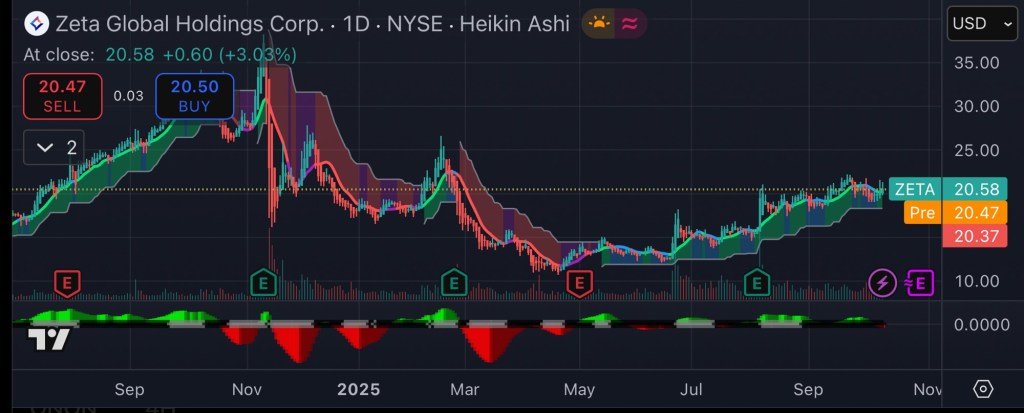
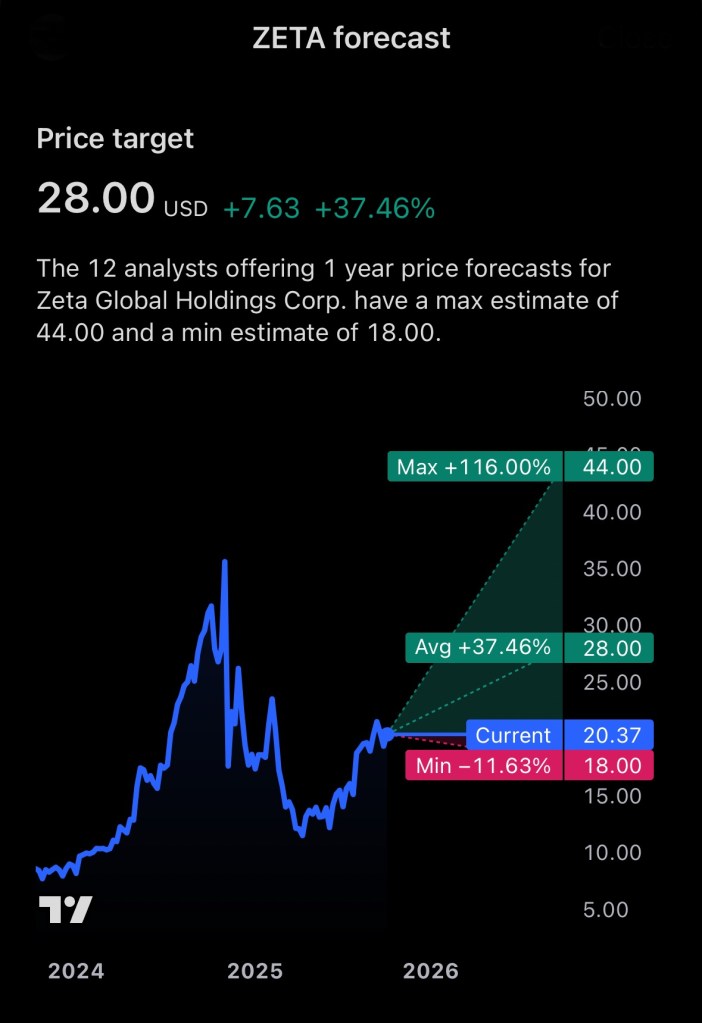
Market snapshot (at time of writing): share price ≈ $20.37 and market cap in the mid-$4 billion range investors are paying for fast growth but also a path to profitability. (Yahoo Finance)
Why this could be an attractive investment (the bull case)
High single- to double-digit top-line growth that’s accelerating. Zeta’s recent quarters show consistent revenue acceleration (Q2 ’25 +35% YoY), a key signal for growth investors in the martech/adtech space. Management’s upward guidance for FY-2025 reinforces that it’s not just one quarter of outperformance. (Nasdaq+1)
Improving operating leverage and cash generation. The company has raised Adjusted-EBITDA and free-cash-flow guidance, pointing to margin expansion. That’s important: investors reward companies that can turn revenue growth into sustainable profits and cash. (Zeta Global)
Strategic M&A that fills capability gaps and expands addressable market. The Marigold enterprise business deal adds loyalty platforms and prominent enterprise customers (and EMEA coverage), enabling more cross-sell inside an existing customer base and a larger recurring revenue pool. If integration goes smoothly, this can boost both revenue and churn resilience. (Zeta Global+1)
Compelling unit economics at scale. Zeta reports improving ARPU (average revenue per scaled customer) and strong net revenue retention metrics, which suggest existing customers are spending more, a powerful multiplier for SaaS-like businesses. (Company disclosures highlight rising Scaled and Super-Scaled customer ARPU.) (Zeta Global+1)
Positive technical / market interest. Stock research outlets have recently upgraded technical scores (e.g., IBD RS rating rise), indicating renewed investor interest that can amplify returns if fundamentals keep improving.( Investors.com)
Visual: revenue comparison (Q2 vs prior year, FY 2024 vs FY 2025 guidance)
I created a compact chart and table comparing:
Q2 2024 (estimate) vs Q2 2025 actual, and
FY 2024 actual vs FY 2025 guidance midpoint.
(Chart and table were prepared from the company reporting and guidance figures cited above).
Sources for the plotted numbers: Q2 2025 revenue and YoY change, FY 2024 totals, and FY 2025 guidance. (Nasdaq+2Zeta Global+2)
Risks — what could go wrong
Execution risk on M&A and integration. The Marigold enterprise assets are substantial; integration issues, customer churn, or higher-than-expected costs could blunt the benefits. (Zeta Global)
Valuation vs. growth tradeoff. The stock price reflects future growth expectations. If revenue growth slows or margin expansion stalls, multiples can compress quickly. (Yahoo Finance)
Adtech / martech competition and cyclicality. The market is competitive (large incumbents and many specialists). Ad/spend cyclicality could affect revenue. Company performance depends on continued client spend and retention. (Zeta Global)
Profitability not yet fully GAAP positive. Zeta has narrowed losses but still reports GAAP net losses; investors should watch sustained EBITDA and free-cash-flow conversion. (Zeta Global)
Bottom line (concise)
Zeta Global presents a classic high-growth martech investment case: accelerating revenue, improving profitability guidance, and strategic M&A that extends its product footprint and international reach. That combination can create durable revenue expansion and margin improvement — the ingredients growth investors pay for. But the stock still carries execution and integration risk and depends on preserving high retention and ARPU. If you like fast growth with a clear path to margin expansion and accept the M&A/integration risk, Zeta is a name to research further; if you are risk-averse or need immediate GAAP profitability, it may not fit.
Disclosure:
I do not own any stock or have any financial interest in Zeta Global Holdings (NYSE: $ZETA). This article is for informational purposes only and should not be considered financial or investment advice. Investing in stocks carries risks, and past performance is not indicative of future results. Always conduct your own research and consult with a qualified financial professional before making any investment decisions.
References
Zeta Global Holdings Corp. (2025, August 8). Zeta reports second quarter 2025 financial results; raises full-year 2025 guidance. Zeta Global Investor Relations. Retrieved from https://investors.zetaglobal.com/
Zeta Global Holdings Corp. (2024, February 28). Zeta reports fourth quarter and full-year 2024 results. Zeta Global Investor Relations. Retrieved from https://investors.zetaglobal.com/
Investor’s Business Daily. (2025, September). Zeta Global stock analysis and relative strength update. Investor’s Business Daily. Retrieved from https://www.investors.com/
Reuters. (2025, September). Zeta Global Holdings Corp. company profile and financial summary (ZETA.O). Reuters Markets. Retrieved from https://www.reuters.com/
MarketWatch. (2025, October). Zeta Global Holdings Corp. stock quote & financials (ZETA). MarketWatch. Retrieved from https://www.marketwatch.com/
Business Wire. (2025, July 31). Zeta Global announces acquisition of Marigold’s enterprise business to expand loyalty and EMEA presence. Business Wire. Retrieved from https://www.businesswire.com/
Yahoo Finance. (2025, October 9). Zeta Global Holdings Corp. (ZETA) stock price and market cap data. Yahoo Finance. Retrieved from https://finance.yahoo.com/