The Fed Raised Rates Again: Here’s Your 15-Minute Money Checkup

The Federal Reserve raised interest rates again on September 16, 2026, increasing its target range for the federal-funds rate by a quarter of a percentage point to 3.75%–4.00%.

The decision was unanimous, and the Fed pointed to inflation that remains above its 2% goal. Economic activity has continued to expand, consumer spending has remained resilient and the labor market has shown stability but persistent inflation convinced policymakers that another rate increase was necessary.

That is the headline. But what does it actually mean for your money?

It does not mean you should immediately sell your investments, lock every dollar into a certificate of deposit or assume that every loan rate will rise overnight. The federal-funds rate is the overnight rate banks charge one another. It influences many other interest rates throughout the economy, but the effect on individual financial products can vary and may take time.

Instead of trying to predict the Fed’s next move, use this decision as a reason to complete a simple review of three areas: your cash, your debt and your investment portfolio.

You can complete the entire checkup in about 15 minutes.
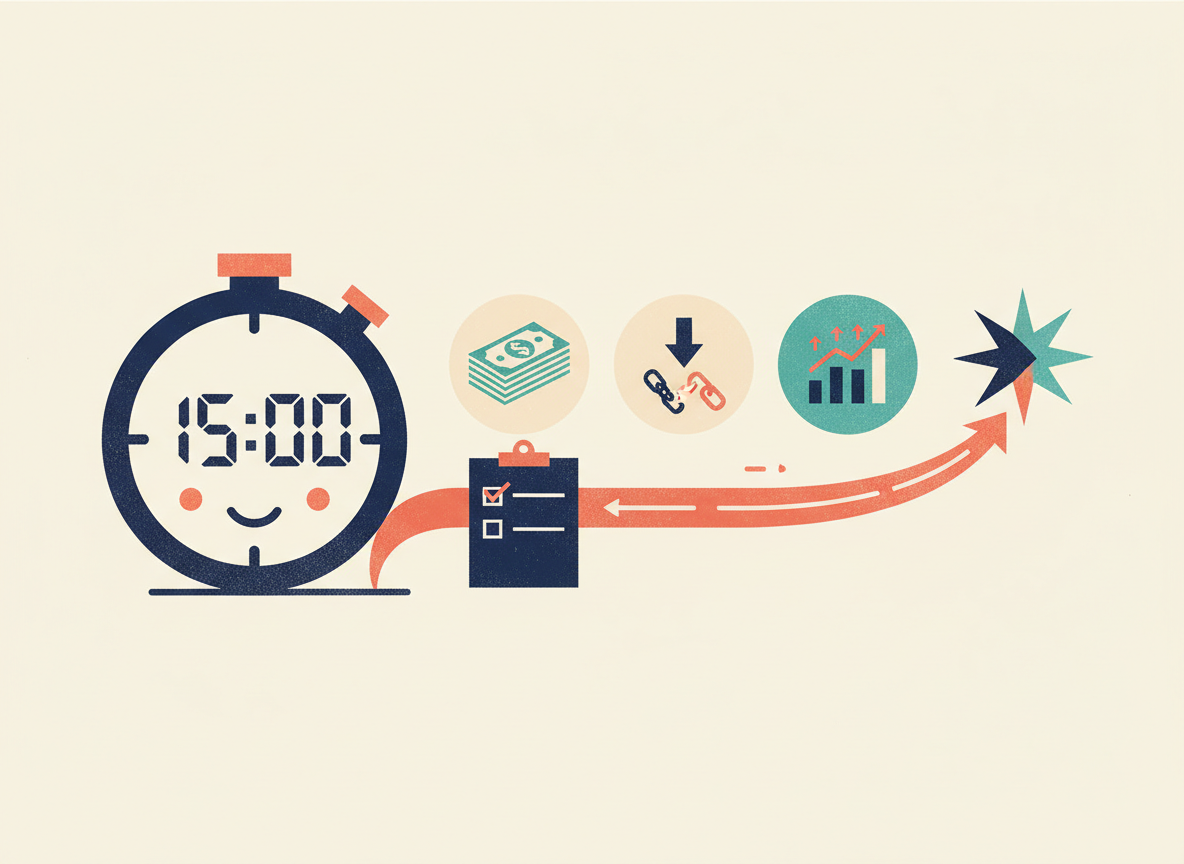
Illustrated editorial image for the conclusion of a personal finance article: a friendly timer set to fifteen minutes beside three simple icons for cash, debt and portfolio, with a small checklist and a confident forward-moving path. Sophisticated newspaper or health-publication editorial art direction, clean shapes, textured print feel, optimistic navy, teal, coral and cream palette. No readable text, no logos, no photorealism.

First, Check Your Cash

Higher interest rates can be good news for savers, but banks do not automatically pass every rate increase along to their customers.

Open your banking app and look at the annual percentage yield, or APY, currently being paid on your checking and savings accounts. If you have a money-market account or certificates of deposit, review those rates and maturity dates as well.

Many people spend hours researching a stock but never check what their bank is paying on thousands of dollars in cash. If your emergency fund is sitting in an account earning very little, it may be worth comparing alternatives from FDIC-insured banks or federally insured credit unions.

The goal is not simply to chase the highest advertised rate. Your emergency savings should remain safe, accessible and free from unnecessary fees or restrictions.

Before moving money, ask:

  • Is the advertised yield temporary?
  • Is there a minimum balance requirement?
  • Are there monthly fees?
  • How quickly can I access the money?
  • Is the institution federally insured?
  • Would transferring the money affect any automatic payments?

You should also separate emergency savings from money that can remain untouched for a specific period. A competitive savings account may be better for funds you could need tomorrow, while a CD might be appropriate for money you are confident you will not need before its maturity date.

A higher yield is valuable, but liquidity has value too.

Next, Check Your Debt

An interest-rate increase can be more painful for borrowers, particularly those carrying variable-rate debt.

Start by making a quick list of your current balances, interest rates and minimum payments. Identify which debts have fixed rates and which have variable rates.

Credit cards deserve special attention. Many issuers calculate interest daily using the account’s average daily balance. That means paying down part of a carried balance sooner, not merely waiting until the due date, may reduce the total interest charged.

Look at the APR printed on each credit-card statement. If you are carrying balances on multiple cards, consider directing additional payments toward the highest-interest balance while maintaining the required minimums on the others.

However, do not drain your entire emergency fund just to eliminate debt. Without a cash cushion, the next car repair, medical expense or home emergency could send you right back to the credit card.

The right balance depends on your income, job stability, household expenses and access to other resources. For many people, the practical approach is to preserve a reasonable emergency reserve while steadily attacking expensive debt.

Also review home-equity lines of credit, adjustable-rate mortgages and other variable-rate loans. The Fed does not directly set your lender’s rate, but variable borrowing costs may respond to changes in broader market benchmarks.

If you have a fixed-rate mortgage, a Fed increase does not change the rate on your existing loan. New mortgage rates are influenced by several forces, including longer-term bond yields, inflation expectations and economic conditions, not just the latest Fed decision.

Then, Check Your Portfolio- Without Panicking

Interest-rate decisions can move the stock and bond markets, but one Fed meeting should not determine your entire investment strategy.

Higher rates can create pressure for companies that depend heavily on borrowing. They can also make bonds and cash-like investments more competitive with dividend stocks. Real estate investment trusts, utilities and other rate-sensitive investments may experience volatility because investors compare their income potential with yields available elsewhere.

At the same time, certain financial companies may benefit from aspects of a higher-rate environment. The results depend on funding costs, loan demand, credit quality and the structure of each business.

There is no simple rule that says one sector must rise while another must fall.

Rather than guessing which asset will react next, review the investments you already own.

Ask yourself:

  • Why did I originally buy this investment?
  • Has the company or fund’s underlying story changed?
  • Has the position grown too large compared with the rest of my portfolio?
  • Am I holding it for income, growth or a shorter-term trade?
  • Would I still buy it today at its current price?
  • Am I reacting to facts or to fear?

My own strategy includes dollar-cost averaging, dividend income, swing trades and occasionally rotating out of a position after taking profits. But rotation should have a reason behind it.

“Rates went up” is information. It is not, by itself, a complete investment thesis.

A quality company does not automatically become a bad investment because the Fed raised rates by a quarter point. Likewise, a struggling company does not become a bargain merely because its share price declined.

Review first. React second.
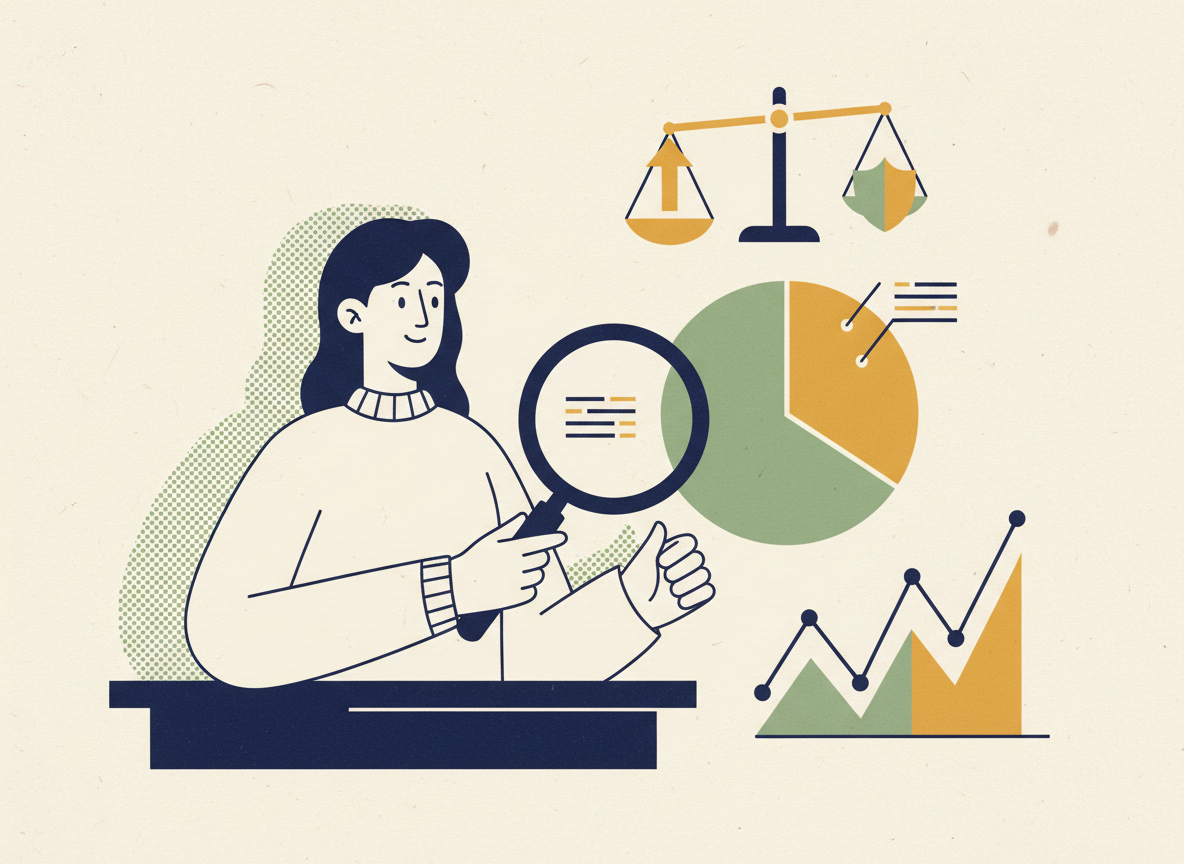
Illustrated editorial image for a personal finance article section about reviewing an investment portfolio without panic. Show a calm person at a desk examining a diversified pie chart, simple market lines and a magnifying glass, with balanced growth and caution symbols. Sophisticated newspaper or health-publication editorial art direction, clean shapes, textured print feel, navy, sage, mustard and cream palette. No readable text, no logos, no photorealism.

Avoid the Temptation to Predict Every Move

The Fed’s next scheduled policy decision is October 28, 2026. Between now and then, investors will analyze inflation, employment, consumer spending and comments from Federal Reserve officials.

Markets will attempt to price in the next decision before it happens. Those expectations may change several times as new information becomes available.

You do not need to predict every turn.

Trying to trade every headline can create unnecessary taxes, transaction costs and emotional decisions. A long-term investor may be better served by maintaining diversification, continuing appropriate contributions and rebalancing when allocations move beyond their intended ranges.

Shorter-term traders still need discipline. Before entering a position, decide what would prove the thesis wrong, where profits might be taken and how much capital is at risk.

The goal is not to be right about every Fed meeting. The goal is to make financial decisions that remain reasonable under more than one possible outcome.
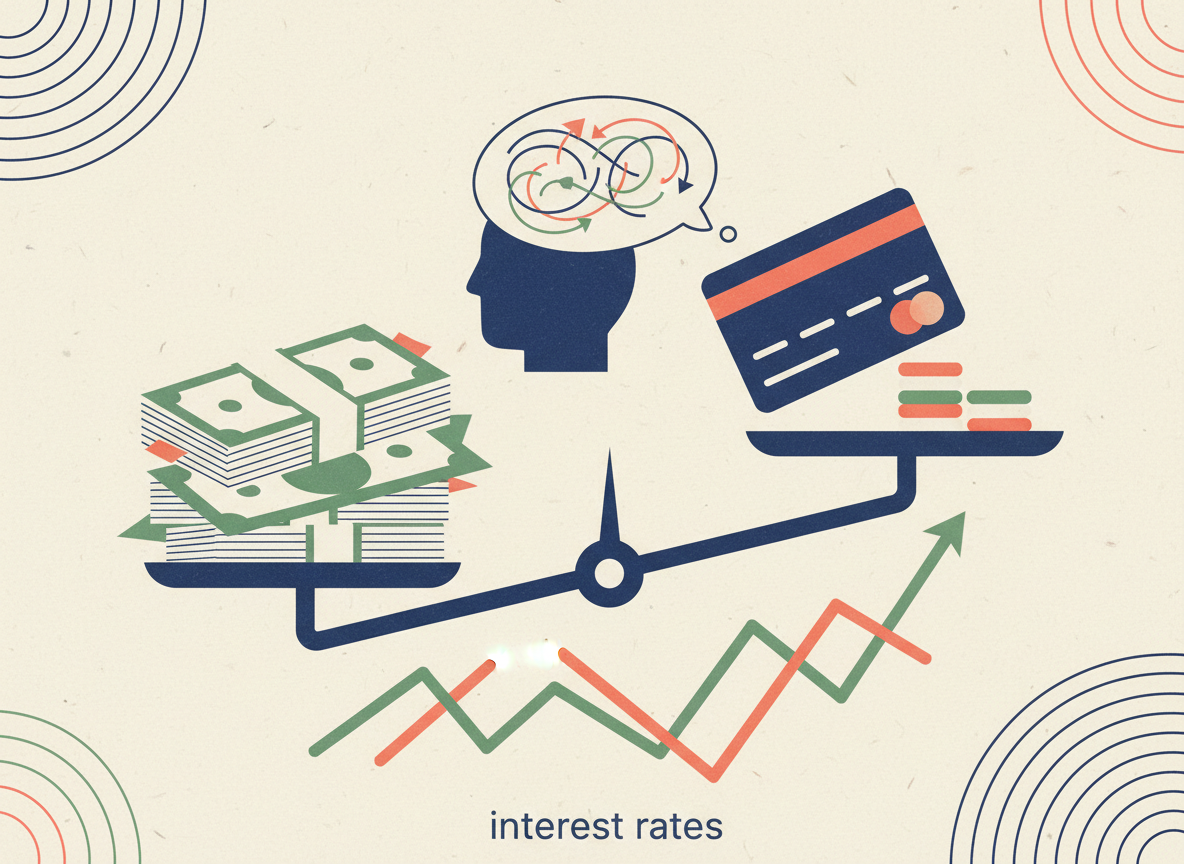
Illustrated editorial image for a personal finance article section about checking debt, credit-card APRs, balances and repayment decisions. Show a stack of bills and a credit card balanced against a measuring scale, with a thoughtful rather than alarming mood. Sophisticated newspaper or health-publication editorial art direction, clean shapes, textured print feel, deep blue, coral, cream and muted green palette. No readable text, no logos, no photorealism.

Your 15-Minute Money Checkup

Set a timer and review these three areas:

Cash

Check the yield, fees, accessibility and insurance status of your savings. Determine whether your emergency fund is working as efficiently as it reasonably can without sacrificing safety.

Debt

Write down every balance and APR. Identify variable-rate debt and choose the highest-cost balance that deserves additional attention.

Portfolio

Review your largest positions. Confirm why you own them, whether their weight is appropriate and whether anything fundamental has changed.

You do not need to overhaul everything today. Find the one area with the clearest opportunity and take one measured action.

That could mean transferring idle cash to a more competitive insured account, increasing a credit-card payment or trimming a position that has grown beyond its intended allocation.

One Informed Move Beats Ten Emotional Trades

Interest rates matter. They influence borrowing, saving, business investment and market valuations. But the most important financial decisions are often the quiet ones that happen away from the daily headlines.

The Federal Reserve will continue making decisions based on changing economic conditions. Investors will continue debating what comes next. Markets will continue moving—sometimes rationally and sometimes emotionally.

Your advantage is not knowing the future.

Your advantage is knowing your own numbers.

Check your cash. Check your debt. Check your portfolio. Then make one informed decision that moves you closer to your financial goals.

One informed adjustment is worth more than ten emotional trades.

That is how we continue moving from health to wealth… one step forward at a time.

Illustrated editorial image for a personal finance article section about checking cash, savings yields, emergency funds, liquidity and bank fees. Show a calm open wallet or savings jar, a banking app-style chart without readable text, and a small safety net motif. Sophisticated newspaper or health-publication editorial art direction, clean shapes, textured print feel, navy, teal, cream and warm gold palette. No readable text, no logos, no photorealism.

Disclaimer: This article is for educational and informational purposes only and does not constitute individualized financial, investment, tax or legal advice. Interest rates, account terms and investment risks vary. Consider your financial circumstances and consult an appropriately qualified professional before making significant financial decisions.

Sources
Pressure, Progress, and the Price of Staying Prepared

This week delivered a useful reminder that health and wealth rarely move on separate tracks. Interest rates, energy prices, public-health concerns, and advances in mental-health treatment can all affect the same household… sometimes simultaneously.

The larger lesson is not to predict every headline. It is to build enough margin into our health, finances, and daily routines that one difficult week does not knock us completely off course.

The Federal Reserve Raises Rates Again

The biggest financial story came from the Federal Reserve. On September 16, the Fed raised its target range for the federal funds rate by a quarter percentage point, bringing it to 3.75%–4.00%. The vote was unanimous.

For consumers, another rate increase can translate into higher borrowing costs on credit cards, variable-rate debt, auto loans, and eventually some mortgages. Savers may benefit if banks and money-market funds pass along higher yields, but that benefit can be offset when household expenses rise at the same time.

Investors should resist making an all-or-nothing move based on one Fed meeting. Higher rates can pressure richly valued growth stocks, real estate, and other rate-sensitive assets. However, they can also create opportunities in cash-equivalent investments, short-term Treasuries, and financially strong companies that generate dependable cash flow.

My approach remains simple: stay diversified, keep some cash available, dollar-cost average into high-conviction positions, and avoid chasing whatever moved the most this week. Volatility is uncomfortable, but it can also reward patience and preparation.

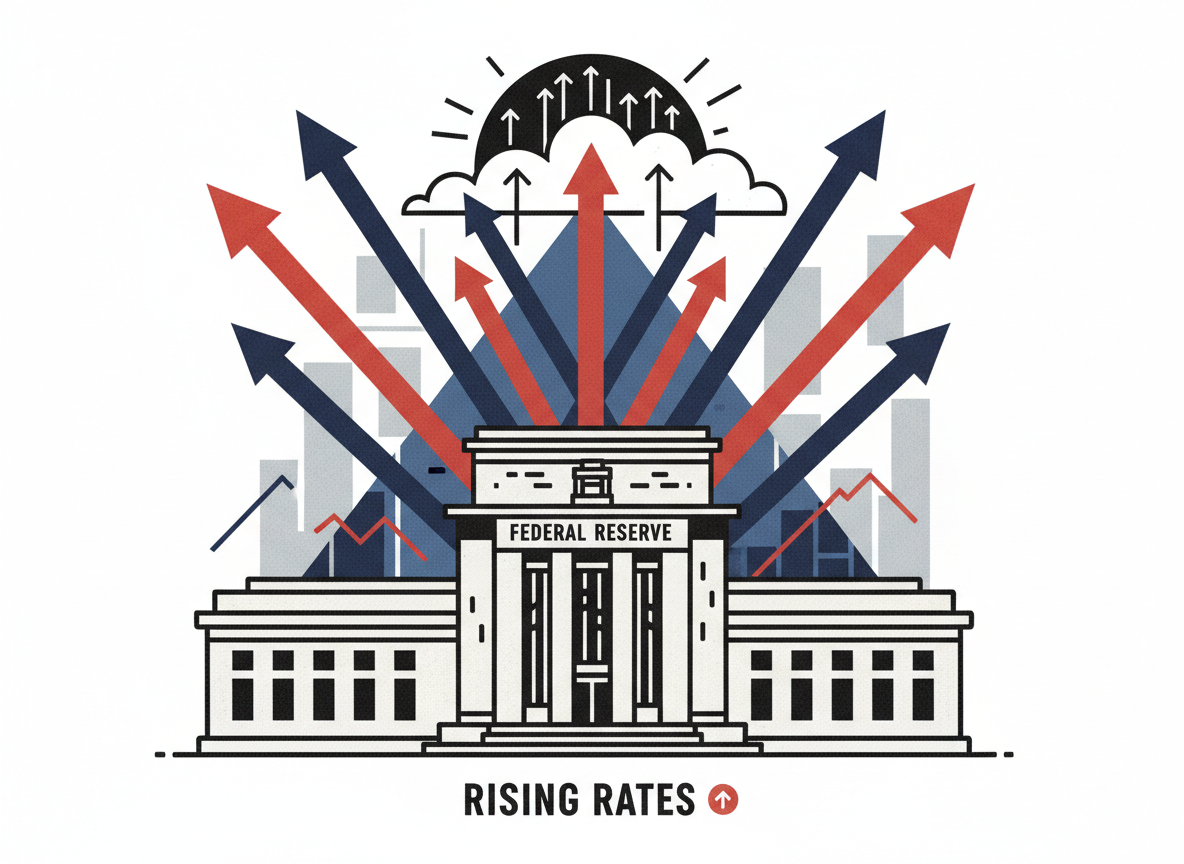
Illustrated editorial style artwork showing a large Federal Reserve building with dramatic upward-pointing arrows symbolizing rising interest rates. Stylized like a newspaper or health-economics publication illustration. Bold lines, limited color palette, serious tone.

Energy Costs Are Becoming a Household Issue Again

Rising gasoline and diesel prices are more than a transportation story. Diesel powers the trucks, equipment, and supply chains that move much of what Americans buy. When those costs increase, businesses often pass at least part of the expense to consumers.

That means higher energy prices can appear in grocery bills, delivery fees, airfare, household goods, and corporate profit margins. They can also complicate the Fed’s inflation fight because energy touches nearly every part of the economy.

For households, this is a good week to review spending rather than panic. Small adjustments combining errands, checking insurance and subscription costs, using fuel rewards wisely, and directing extra cash toward high-interest debt can help absorb rising prices without abandoning long-term investing goals.

Investors should watch companies with heavy transportation, manufacturing, or distribution costs. Revenue growth may look healthy while margins quietly weaken. In this environment, balance-sheet strength and pricing power matter.

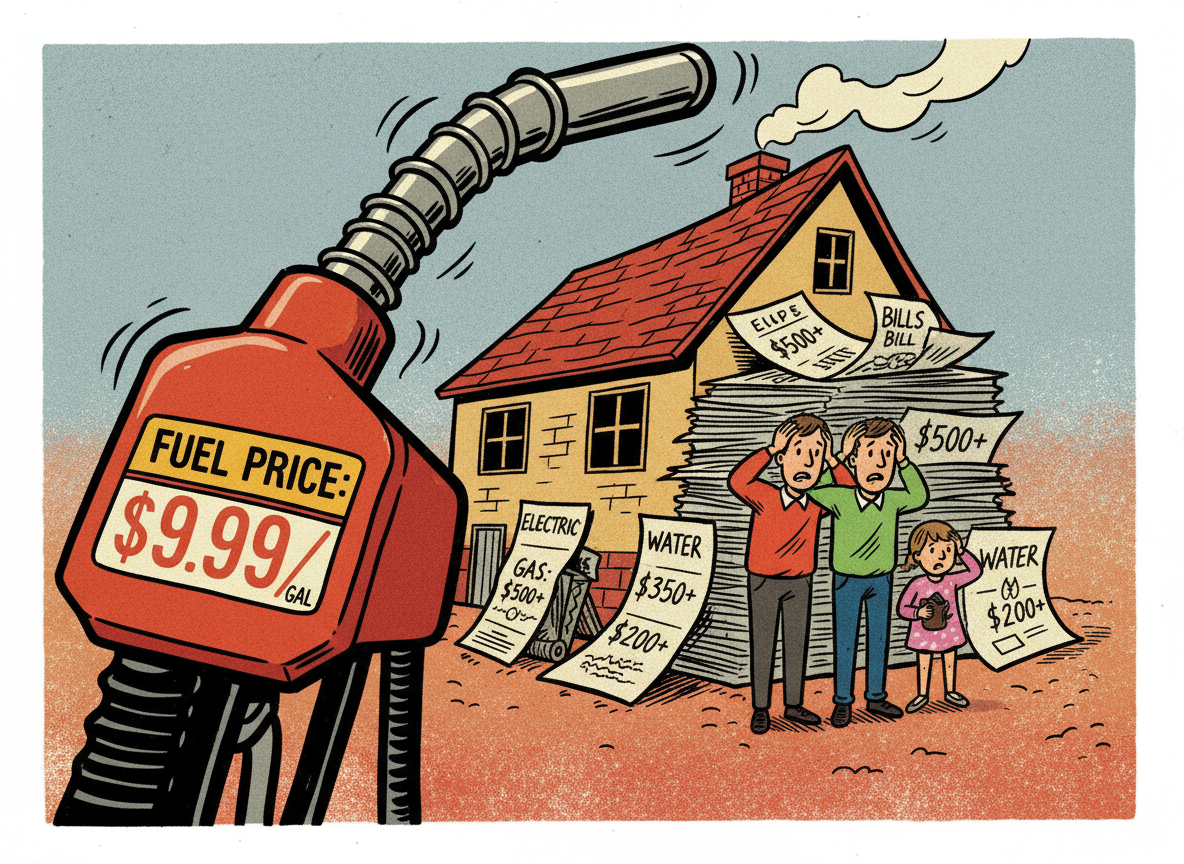
Illustrated editorial artwork of a fuel pump nozzle with a price display showing high numbers, and a household in the background with utility bills. Stylized like a newspaper editorial illustration. Bold, expressive lines, limited warm color palette.

Mental-Health Treatment Continues to Evolve

On September 14, the FDA held a public hearing on the potential future therapeutic use of psychedelic drug products in supervised and supportive settings. The agency gathered perspectives on possible benefits, risks, clinical standards, patient protections, and the evidence that would be required.

This does not mean psychedelic treatments have received broad approval. It does show that federal regulators are seriously examining how emerging therapies might fit into a safe, evidence-based medical framework.

That matters to me personally. After completing TMS and reaching remission from depression, I understand how meaningful it can be when a treatment finally helps after a long struggle.

Innovation deserves hope but also discipline. New mental-health therapies require careful research, qualified medical supervision, honest discussions about risk, and strong protections for vulnerable patients.

The encouraging trend is that mental health is increasingly being treated like health: something worthy of scientific investment, open conversation, and individualized care.

Illustrated editorial artwork of a person sitting in a calm therapy session, warm light, a therapist listening attentively. Stylized like a health publication illustration — hopeful, human, and warm. Soft colors, clean editorial lines.

Public-Health Awareness: Rare Does Not Mean Ignorable

Rabies concerns also received attention this week following several unusual animal-exposure incidents. Human rabies remains rare in the United States, but it is almost always fatal after symptoms appear. The good news is that prompt wound cleaning, medical evaluation, and post-exposure vaccination can prevent the disease when treatment begins in time.

The practical takeaway is straightforward: never dismiss a bite, scratch, or possible saliva exposure involving a bat or an unfamiliar wild or domestic animal. Wash the area thoroughly and contact a healthcare professional or local health department promptly. Pet owners should also keep their animals’ vaccinations current.

Preparedness is not fear. It is knowing what deserves immediate action.

Illustrated editorial artwork of a veterinarian or public health worker in a natural outdoor setting, examining a small animal, with a community awareness poster in the background. Informative, calm, and reassuring editorial illustration style. Clean lines, muted natural colors.

One Step Forward

This week’s health and wealth stories point toward the same principle: protect your margin.

Financial margin means maintaining emergency savings, controlling expensive debt, diversifying investments, and leaving room to take advantage of opportunities.

Health margin means keeping appointments, following treatment plans, remaining active, sleeping as well as possible, and responding promptly when something feels wrong.

My one step forward this week is to review one area of vulnerability instead of trying to fix everything at once. That could mean checking the interest rate on a credit card, adding a little to an emergency fund, scheduling a delayed medical appointment, or simply getting outside for a daily walk.

Progress is rarely one giant decision. More often, it is a series of small choices that make us harder to knock down.

Illustrated editorial artwork of a person taking a confident step forward on a path — symbolic and hopeful. Could show someone walking, journaling, or making a phone call. Warm, optimistic editorial illustration style, like a health or wellness publication. Clean lines, uplifting color palette.

References

Disclaimer: This article is for educational and informational purposes only. It is not medical, investment, tax, or financial advice. Consult qualified professionals regarding your individual circumstances.

About the Author:

David Dandaneau is a client relations analyst that covers the insurance and financial services industry. He is known for his insightful analysis and comprehensive coverage of market trends and regulatory developments.

Bonds Are Back: From Portfolio Stabilizer to Income and Opportunity Engine

For much of the past decade, bonds were viewed primarily as a defensive allocation useful for dampening volatility, but rarely exciting. With historically low yields following the Global Financial Crisis and through the pandemic era, investors increasingly turned toward equities for meaningful returns while bonds played a passive role as a stabilizer.

That narrative is now changing. Bonds are once again emerging not only as a ballast for portfolios but as a legitimate source of income, total return potential, and tactical opportunity particularly for investors who understand how to position themselves across the yield curve.

The Great Reset: Higher Yields Have Changed the Equation

The most important development driving renewed interest in bonds is simple: yields are materially higher than they were just a few years ago.

Following aggressive Federal Reserve rate hikes between 2022 and 2024 to combat inflation, interest rates across maturities reset to levels not seen in over 15 years. As a result:

  • Short-term U.S. Treasury yields have hovered between 4.0% and 5.0%
  • Intermediate-term Treasuries offer yields in the 3.8% to 4.5% range
  • Investment-grade corporate bonds often yield 4.5% to 6.0%
  • Select high-quality municipal bonds provide tax-equivalent yields exceeding 6% for high-income investors

This shift represents a structural change. Investors can now generate meaningful income from bonds without assuming excessive credit risk or volatility.

For retirees, income-focused investors, and balanced portfolio managers, this is a significant opportunity.

Understanding the Yield Curve: Opportunity Lies in Positioning

The yield curve which plots interest rates across different maturities has been unusually dynamic in recent years. In some periods, shorter-term bonds have yielded more than longer-term bonds, creating what is known as an inverted yield curve, often associated with economic transitions.

This environment creates multiple strategic options.

Short-Term Bonds: High Income, Low Duration Risk

Short-term bonds (1–3 years maturity) currently offer attractive yields with minimal sensitivity to interest rate changes. This makes them ideal for:

  • Conservative investors
  • Cash alternatives
  • Capital preservation with income

They provide flexibility, allowing investors to reinvest at higher rates if yields rise further.

Intermediate-Term Bonds: The “Sweet Spot”

Many professional portfolio managers consider the intermediate portion of the yield curve (3–7 years) to offer the best balance of income and risk.

These bonds:

  • Provide strong yields
  • Offer moderate duration exposure
  • Stand to benefit if interest rates decline in the future

If rates fall, intermediate bonds may appreciate in price, delivering both income and capital gains.

Long-Term Bonds: Strategic Opportunity for Rate Declines

Long-duration bonds (10+ years) are more sensitive to interest rate movements but offer significant upside potential if interest rates decline.

When rates fall:

  • Bond prices rise
  • Longer-duration bonds rise more dramatically

This creates potential total return opportunities beyond income alone.

Bonds Are Once Again Competing with Stocks

One of the most important implications of higher yields is that bonds are now competitive with equities from an income perspective.

Consider this comparison:

  • S&P 500 dividend yield: approximately 1.5%
  • Investment-grade bonds: 4.5% to 6.0% yield
  • Treasury bonds: 3.8% to 4.5% yield

For the first time in many years, bonds offer substantially higher income with lower volatility.

This improves the risk-return tradeoff of balanced portfolios.

Portfolio Implications: A Strategic Shift Back Toward Fixed Income

Financial professionals increasingly recommend a renewed allocation to bonds—not just for safety, but for income generation and opportunity capture.

Thoughtful positioning across maturities can provide three simultaneous benefits:

1. Reliable Income Stream

Higher yields allow investors to generate consistent income without relying solely on dividends or equity appreciation.

2. Capital Appreciation Potential

If interest rates decline in the next 12–36 months, as many economists expect bond prices may rise, providing total return potential.

3. Risk Diversification

Bonds help reduce portfolio volatility and provide protection during equity market downturns.

Recommended Portfolio Framework: Laddered and Diversified

Rather than concentrating exposure in a single maturity, many advisors recommend a laddered bond strategy, which distributes investments across multiple maturities.

A sample framework may include:

  • 30% Short-Term Bonds (1–3 years)
    Provides stability and reinvestment flexibility
  • 40% Intermediate-Term Bonds (3–7 years)
    Offers strong income and balanced rate sensitivity
  • 20% Long-Term Bonds (7–20 years)
    Positions portfolio for capital appreciation if rates decline
  • 10% Opportunistic Credit (Investment-grade corporates or municipals)
    Enhances yield without excessive risk

This structure balances income, stability, and growth potential.

The Role of Bonds in 2026 and Beyond

The bond market is no longer an afterthought. It has returned to its traditional role as both a defensive and offensive component of a well-constructed portfolio.

Investors who actively position across the yield curve can benefit from:

  • Elevated income levels
  • Potential capital gains from future rate declines
  • Improved diversification and portfolio stability

After years of offering limited returns, bonds are once again doing what they were always meant to do: generate income, preserve capital, and create opportunity.

For disciplined investors, this is not merely a defensive allocation… it is a strategic advantage.

References

Board of Governors of the Federal Reserve System. (2026). Selected interest rates (daily) – H.15 release. https://www.federalreserve.gov/releases/h15/

U.S. Department of the Treasury. (2026). Daily treasury yield curve rates. https://home.treasury.gov/resource-center/data-chart-center/interest-rates

Federal Reserve Bank of St. Louis. (2026). 10-year treasury constant maturity rate (DGS10). FRED Economic Data. https://fred.stlouisfed.org/series/DGS10

U.S. Securities and Exchange Commission. (2024). Investor bulletin: Bonds. https://www.sec.gov/resources-for-investors/investor-alerts-bulletins/investor-bulletin-bonds

Morningstar, Inc. (2026). Fixed-income outlook and bond market commentary. https://www.morningstar.com

S&P Dow Jones Indices. (2026). S&P 500 dividend yield and index characteristics. https://www.spglobal.com/spdji/en/indices/equity/sp-500/

Vanguard Group. (2026). Economic and market outlook: Fixed income perspectives. https://investor.vanguard.com/investment-products/fixed-income

BlackRock. (2026). Global fixed income outlook. https://www.blackrock.com/institutions/en-us/insights/fixed-income