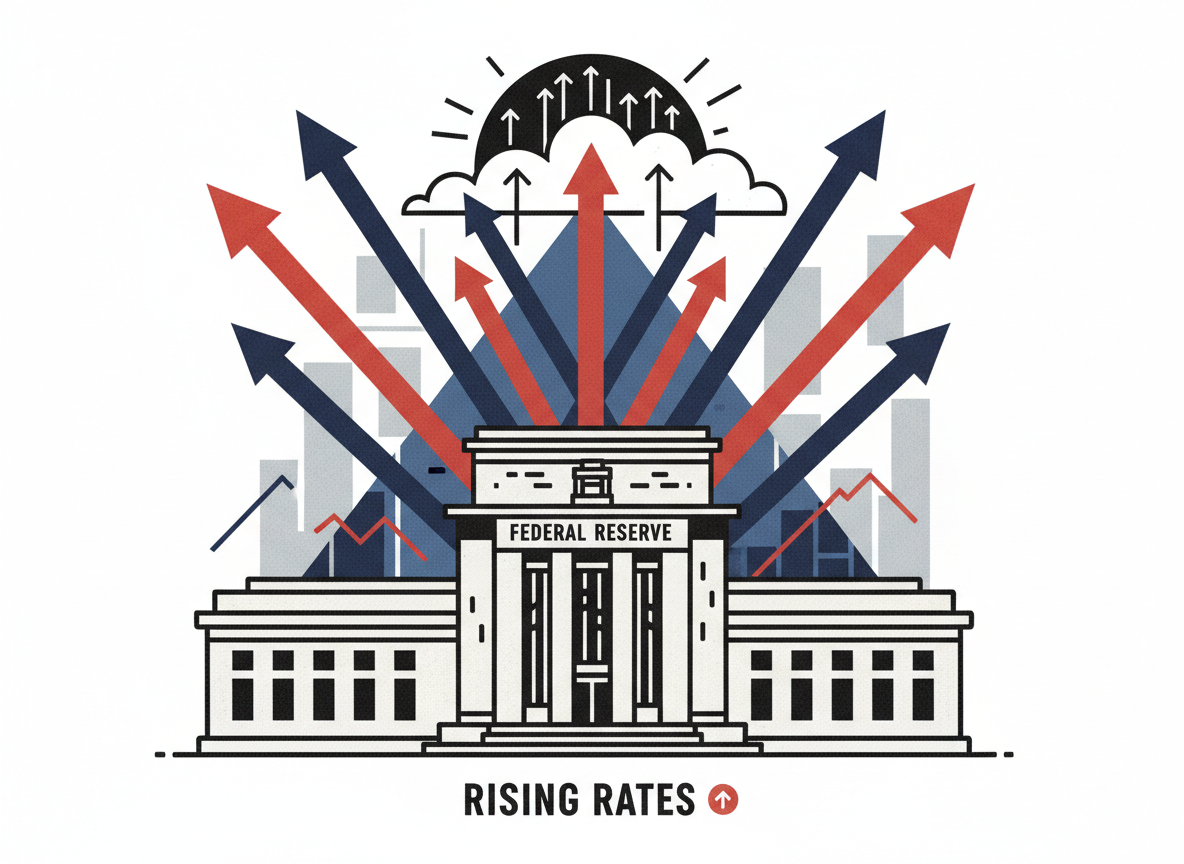
The Federal Reserve raised interest rates again on September 16, 2026, increasing its target range for the federal-funds rate by a quarter of a percentage point to 3.75%–4.00%.
The decision was unanimous, and the Fed pointed to inflation that remains above its 2% goal. Economic activity has continued to expand, consumer spending has remained resilient and the labor market has shown stability but persistent inflation convinced policymakers that another rate increase was necessary.
That is the headline. But what does it actually mean for your money?
It does not mean you should immediately sell your investments, lock every dollar into a certificate of deposit or assume that every loan rate will rise overnight. The federal-funds rate is the overnight rate banks charge one another. It influences many other interest rates throughout the economy, but the effect on individual financial products can vary and may take time.
Instead of trying to predict the Fed’s next move, use this decision as a reason to complete a simple review of three areas: your cash, your debt and your investment portfolio.
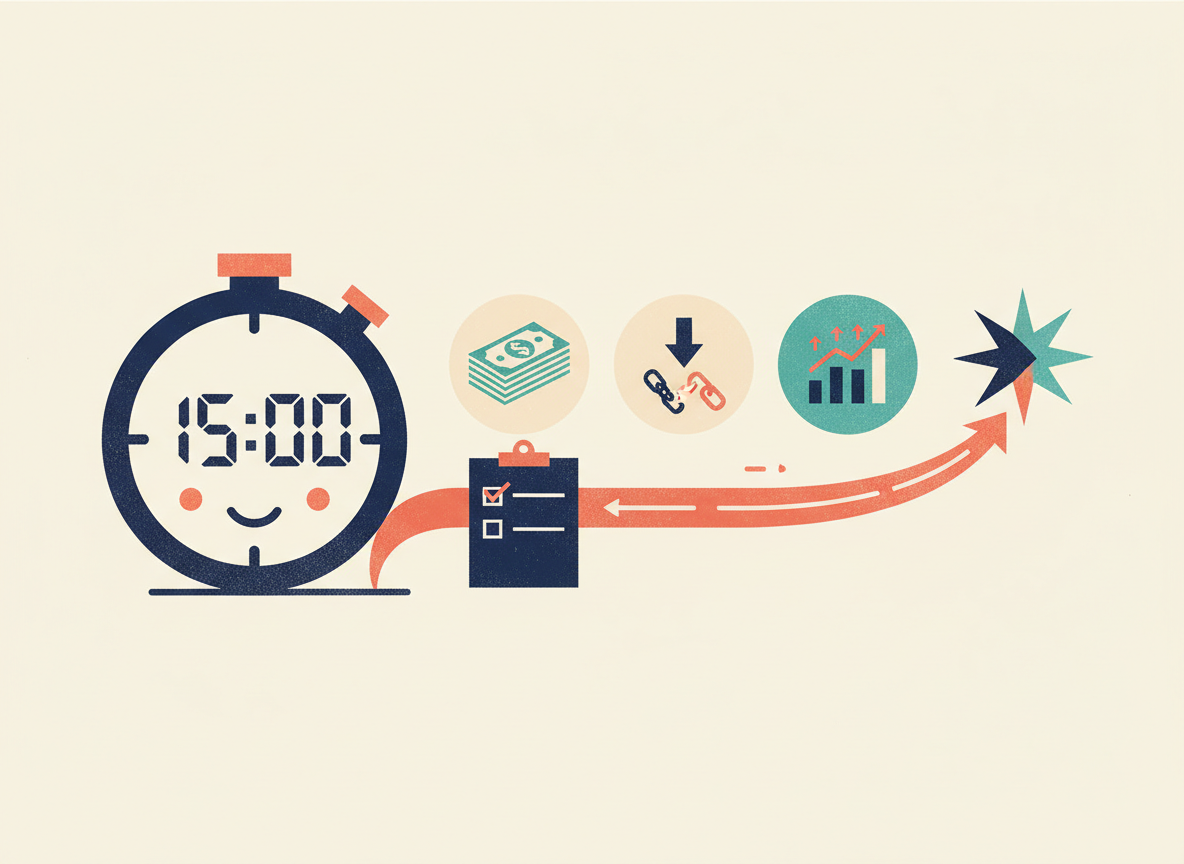
You can complete the entire checkup in about 15 minutes.
First, Check Your Cash
Higher interest rates can be good news for savers, but banks do not automatically pass every rate increase along to their customers.
Open your banking app and look at the annual percentage yield, or APY, currently being paid on your checking and savings accounts. If you have a money-market account or certificates of deposit, review those rates and maturity dates as well.
Many people spend hours researching a stock but never check what their bank is paying on thousands of dollars in cash. If your emergency fund is sitting in an account earning very little, it may be worth comparing alternatives from FDIC-insured banks or federally insured credit unions.
The goal is not simply to chase the highest advertised rate. Your emergency savings should remain safe, accessible and free from unnecessary fees or restrictions.
Before moving money, ask:
- Is the advertised yield temporary?
- Is there a minimum balance requirement?
- Are there monthly fees?
- How quickly can I access the money?
- Is the institution federally insured?
- Would transferring the money affect any automatic payments?
You should also separate emergency savings from money that can remain untouched for a specific period. A competitive savings account may be better for funds you could need tomorrow, while a CD might be appropriate for money you are confident you will not need before its maturity date.
A higher yield is valuable, but liquidity has value too.
Next, Check Your Debt
An interest-rate increase can be more painful for borrowers, particularly those carrying variable-rate debt.
Start by making a quick list of your current balances, interest rates and minimum payments. Identify which debts have fixed rates and which have variable rates.
Credit cards deserve special attention. Many issuers calculate interest daily using the account’s average daily balance. That means paying down part of a carried balance sooner, not merely waiting until the due date, may reduce the total interest charged.
Look at the APR printed on each credit-card statement. If you are carrying balances on multiple cards, consider directing additional payments toward the highest-interest balance while maintaining the required minimums on the others.
However, do not drain your entire emergency fund just to eliminate debt. Without a cash cushion, the next car repair, medical expense or home emergency could send you right back to the credit card.
The right balance depends on your income, job stability, household expenses and access to other resources. For many people, the practical approach is to preserve a reasonable emergency reserve while steadily attacking expensive debt.
Also review home-equity lines of credit, adjustable-rate mortgages and other variable-rate loans. The Fed does not directly set your lender’s rate, but variable borrowing costs may respond to changes in broader market benchmarks.
If you have a fixed-rate mortgage, a Fed increase does not change the rate on your existing loan. New mortgage rates are influenced by several forces, including longer-term bond yields, inflation expectations and economic conditions, not just the latest Fed decision.
Then, Check Your Portfolio- Without Panicking
Interest-rate decisions can move the stock and bond markets, but one Fed meeting should not determine your entire investment strategy.
Higher rates can create pressure for companies that depend heavily on borrowing. They can also make bonds and cash-like investments more competitive with dividend stocks. Real estate investment trusts, utilities and other rate-sensitive investments may experience volatility because investors compare their income potential with yields available elsewhere.
At the same time, certain financial companies may benefit from aspects of a higher-rate environment. The results depend on funding costs, loan demand, credit quality and the structure of each business.
There is no simple rule that says one sector must rise while another must fall.
Rather than guessing which asset will react next, review the investments you already own.
Ask yourself:
- Why did I originally buy this investment?
- Has the company or fund’s underlying story changed?
- Has the position grown too large compared with the rest of my portfolio?
- Am I holding it for income, growth or a shorter-term trade?
- Would I still buy it today at its current price?
- Am I reacting to facts or to fear?
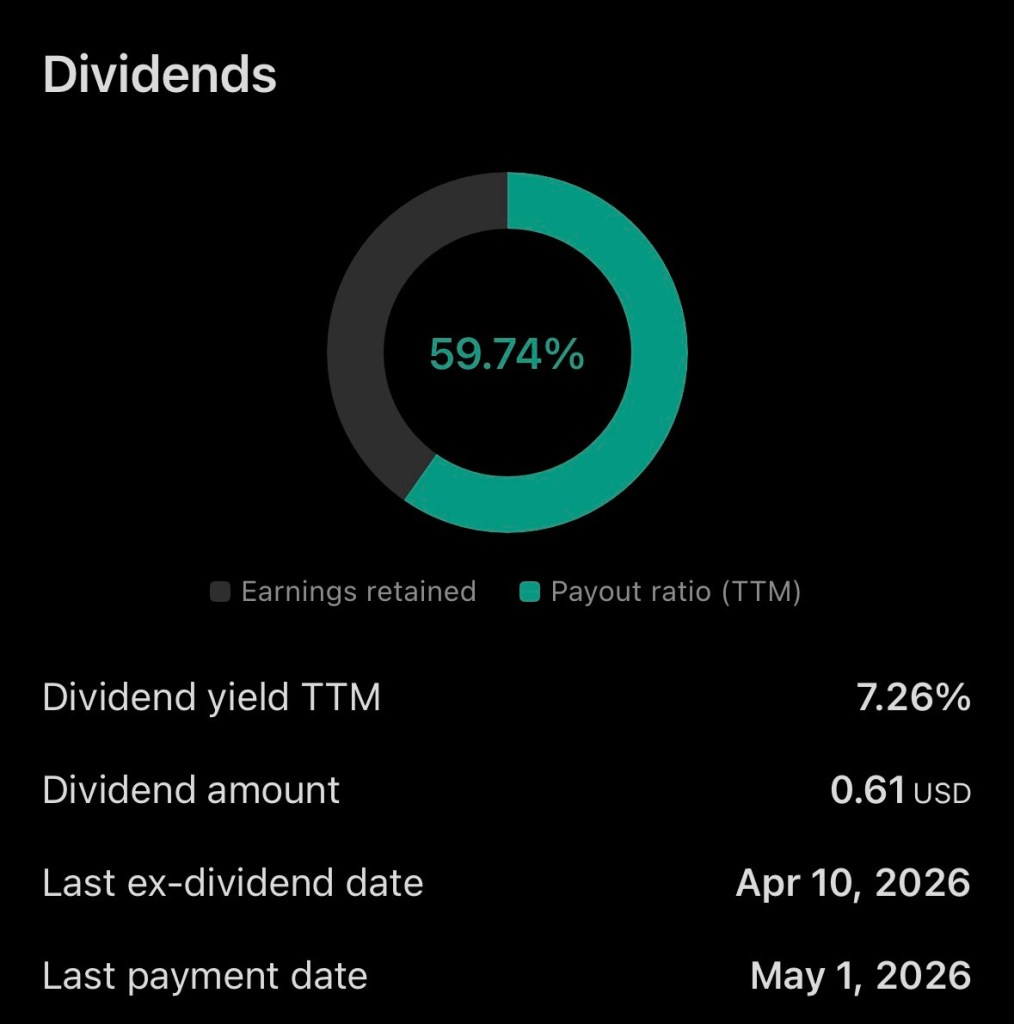
My own strategy includes dollar-cost averaging, dividend income, swing trades and occasionally rotating out of a position after taking profits. But rotation should have a reason behind it.
“Rates went up” is information. It is not, by itself, a complete investment thesis.
A quality company does not automatically become a bad investment because the Fed raised rates by a quarter point. Likewise, a struggling company does not become a bargain merely because its share price declined.
Review first. React second.
Avoid the Temptation to Predict Every Move
The Fed’s next scheduled policy decision is October 28, 2026. Between now and then, investors will analyze inflation, employment, consumer spending and comments from Federal Reserve officials.
Markets will attempt to price in the next decision before it happens. Those expectations may change several times as new information becomes available.
You do not need to predict every turn.
Trying to trade every headline can create unnecessary taxes, transaction costs and emotional decisions. A long-term investor may be better served by maintaining diversification, continuing appropriate contributions and rebalancing when allocations move beyond their intended ranges.
Shorter-term traders still need discipline. Before entering a position, decide what would prove the thesis wrong, where profits might be taken and how much capital is at risk.
The goal is not to be right about every Fed meeting. The goal is to make financial decisions that remain reasonable under more than one possible outcome.
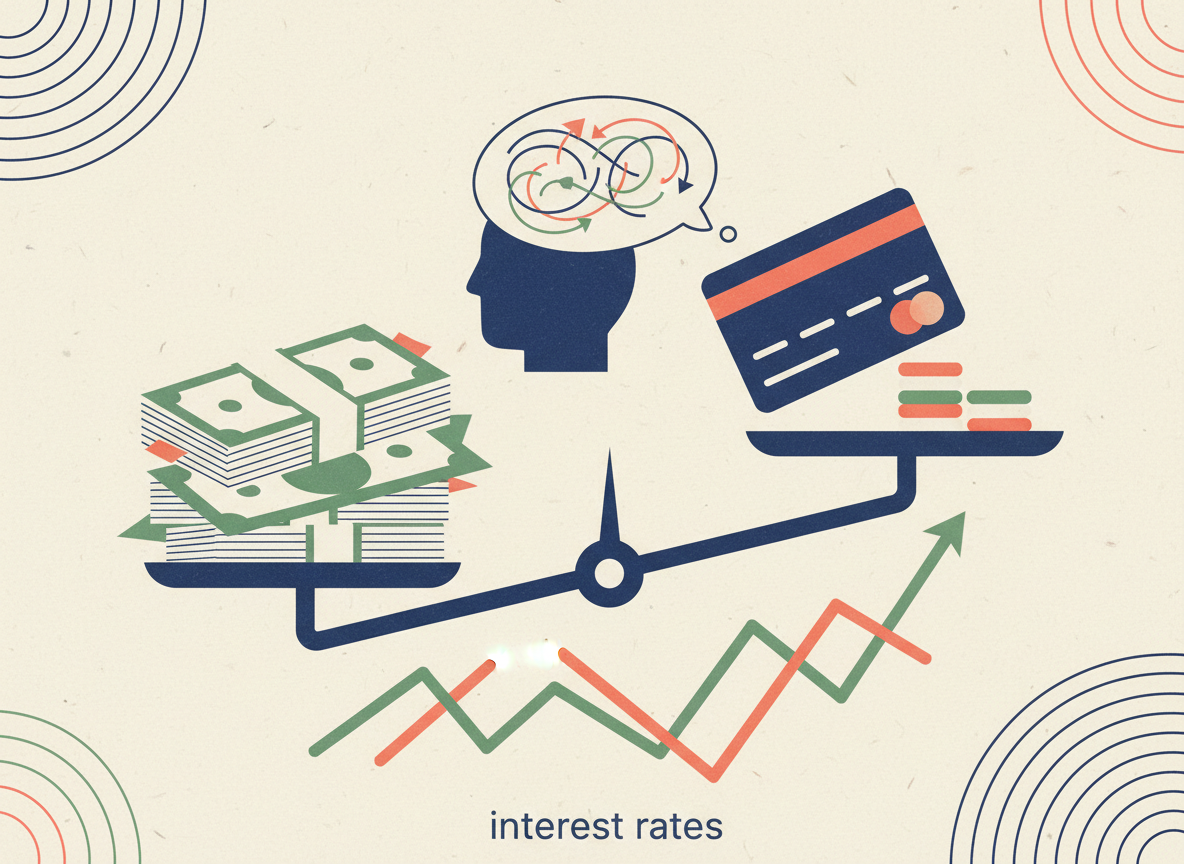
Your 15-Minute Money Checkup
Set a timer and review these three areas:
Cash
Check the yield, fees, accessibility and insurance status of your savings. Determine whether your emergency fund is working as efficiently as it reasonably can without sacrificing safety.
Debt
Write down every balance and APR. Identify variable-rate debt and choose the highest-cost balance that deserves additional attention.
Portfolio
Review your largest positions. Confirm why you own them, whether their weight is appropriate and whether anything fundamental has changed.
You do not need to overhaul everything today. Find the one area with the clearest opportunity and take one measured action.
That could mean transferring idle cash to a more competitive insured account, increasing a credit-card payment or trimming a position that has grown beyond its intended allocation.
One Informed Move Beats Ten Emotional Trades
Interest rates matter. They influence borrowing, saving, business investment and market valuations. But the most important financial decisions are often the quiet ones that happen away from the daily headlines.
The Federal Reserve will continue making decisions based on changing economic conditions. Investors will continue debating what comes next. Markets will continue moving—sometimes rationally and sometimes emotionally.
Your advantage is not knowing the future.
Your advantage is knowing your own numbers.
Check your cash. Check your debt. Check your portfolio. Then make one informed decision that moves you closer to your financial goals.
One informed adjustment is worth more than ten emotional trades.
That is how we continue moving from health to wealth… one step forward at a time.
Disclaimer: This article is for educational and informational purposes only and does not constitute individualized financial, investment, tax or legal advice. Interest rates, account terms and investment risks vary. Consider your financial circumstances and consult an appropriately qualified professional before making significant financial decisions.
Sources