Healthy Eating on a Budget: Top Tips to Save

As grocery prices stay elevated, many households are looking for practical ways to stretch their food budgets without sacrificing nutrition. The good news is that eating healthy does not have to be expensive. With thoughtful planning and informed choices, shoppers can significantly reduce costs while still filling their carts with nutritious options.

Plan Before You Shop

One of the most effective cost-saving strategies begins before stepping into the store. Creating a weekly meal plan and shopping list helps reduce impulse purchases and food waste. Planning meals around ingredients that can be used multiple times such as beans, rice, or vegetables—maximizes value and efficiency.

Shop the Perimeter of the Store

Healthier, less-processed foods are often located around the perimeter of grocery stores. This includes fresh produce, dairy, meats, and frozen fruits and vegetables. While processed foods in the center aisles may appear convenient, they often carry higher prices per serving and less nutritional value.

Choose Store Brands and Buy in Season

Store-brand products frequently offer the same quality as national brands at a lower cost. Additionally, buying fruits and vegetables that are in season can lead to substantial savings. Seasonal produce is often more abundant, fresher, and less expensive than out-of-season alternatives.

Embrace Frozen and Canned Options

Frozen fruits and vegetables are often more affordable than fresh options and retain much of their nutritional value. Canned foods can also be budget-friendly, especially when choosing low-sodium or no-added-sugar varieties. These options reduce spoilage and help keep grocery bills predictable.

Compare Prices by Unit, Not Package

Larger packaging can be misleading. Checking unit prices, cost per ounce or pound, allows shoppers to make accurate comparisons and identify the best deals. This habit alone can lead to noticeable long-term savings.


Budget-Friendly Healthy Foods Chart

Food CategoryHealthy OptionWhy It’s AffordableNutritional Benefit
GrainsBrown riceLow cost per servingFiber, sustained energy
ProteinsDry beans & lentilsInexpensive bulk optionsPlant-based protein, fiber
ProteinsEggsHigh nutrition for low costProtein, vitamins B12 & D
ProduceBananasWidely available year-roundPotassium, energy
ProduceCarrotsLong shelf life, low priceVitamin A, antioxidants
Frozen FoodsFrozen mixed vegetablesLess waste, frequent salesVitamins and minerals
DairyPlain yogurt (store brand)Cheaper than flavored varietiesProtein, probiotics
Canned FoodsTuna (in water)Budget-friendly proteinOmega-3 fatty acids
ProduceCabbageLow cost, versatileVitamin C, fiber
SnacksOatsInexpensive in bulkHeart-healthy fiber

A Healthier Cart, A Healthier Budget

Saving money at the grocery store does not require extreme sacrifices, just smarter choices. By focusing on whole foods, comparing prices carefully, and remaining flexible with seasonal and store-brand options, shoppers can protect both their health and their finances. Over time, these habits can lead to meaningful savings and a more sustainable approach to everyday nutrition.

How a Positive Mindset Enhances Lifespan

I choose to maintain a positive outlook because I believe it directly impacts how long and how well I live. Positivity is not about denying challenges or pretending life is easy; it is about managing stress, protecting mental health, and giving my body and mind the best chance to function at their highest level over time.

Stress, negativity, and constant worry take a measurable toll on the body. I’ve learned that when I focus on optimism, perspective, and emotional balance, I recover faster, think more clearly, and make healthier decisions. A positive mindset encourages better habits, more movement, better sleep, stronger relationships, and greater consistency in self-care… all of which contribute to longevity and life expectancy.

Maintaining a positive outlook also strengthens resilience. Life will always present obstacles, but optimism helps me respond rather than react. That emotional stability reduces chronic stress, which research consistently links to inflammation, heart disease, and shortened lifespan. Choosing positivity becomes a form of preventive care, not just a mental exercise.

Equally important, positivity improves connection. Strong social relationships are one of the most significant predictors of long life, and optimism makes it easier to build and maintain them. Showing up with patience, gratitude, and emotional steadiness strengthens bonds that support both mental and physical health over the long term.

I remind myself daily that positivity is a discipline, not a personality trait. It requires intention, self-awareness, and practice. Some days it means reframing a setback; other days it means simply choosing calm over frustration. Over time, those small decisions compound.

By committing to a positive outlook, I am investing in more than a good mood, I am investing in energy, resilience, and longevity. My goal is not just to add years to my life, but to add life to those years.

The Power of Perseverance: Why You Should Never Give Up

History, business, and everyday life repeatedly prove the same truth: progress belongs to those who refuse to quit. Drive, quiet, relentless determination—is what separates those who merely participate from those who endure and ultimately prevail.

Giving up is often disguised as being “practical.” When obstacles appear, the easier option is to step back, lower expectations, or rationalize retreat. But difficulty is not a signal to stop; it is a signal that the work matters. The presence of resistance confirms that something meaningful is at stake. Without challenge, growth would be unnecessary and excellence impossible.

Drive matters because it compounds. Talent may open a door, but persistence is what keeps it open. Skills can be learned, strategies refined, and mistakes corrected—but only by those willing to stay in the game long enough to learn from failure. The most respected leaders, innovators, and professionals are rarely the most gifted at the start; they are the ones who continued when results were slow and recognition was absent.

There is also a deeper question that exposes the value of perseverance: if everyone could do it, why bother? The answer is simple… because not everyone will. Most people stop when progress becomes uncomfortable. They disengage when the outcome is uncertain. The willingness to push forward when others step aside is precisely what creates distinction. Effort loses its value only when it is common; perseverance remains rare.

Drive is not loud or glamorous. It shows up early, stays late, and keeps moving forward after setbacks. It is choosing consistency over comfort, discipline over excuses, and long-term purpose over short-term relief. It is understanding that success is not a straight line, but a series of recoveries.

The bottom line is clear: never give up. Not because the path is easy, but because quitting guarantees nothing changes. Progress, fulfillment, and meaning all require endurance. Those who keep going, especially when it would be easier not to, are the ones who ultimately shape their outcomes.

In the end, drive is not just about achieving a goal. It is about proving, day after day, that adversity does not get the final word.

Why FR-44 and FS-1 Are Essential After Driving Violations

When securing an automobile insurance policy after certain driving-related incidents, some drivers are surprised to learn that a standard proof of insurance card is not always enough. In specific situations, state regulators require additional filings—most commonly an FR-44 or FS-1—to verify financial responsibility and ensure ongoing compliance with state insurance laws. Understanding what these forms are and why they matter can help drivers avoid lapses in coverage, license suspensions, or further legal complications.


Why States Require FR-44 and FS-1 Filings

Both FR-44 and FS-1 filings are tools used by Departments of Motor Vehicles (DMVs) to confirm that a driver carries the required insurance coverage following a serious violation or a lapse in compliance. These filings are not insurance policies themselves; rather, they are certifications submitted by an insurance carrier on behalf of the driver.

States use these filings to:

  • Monitor high-risk drivers
  • Enforce higher liability requirements where applicable
  • Ensure continuous coverage for a mandated period
  • Protect the public from uninsured or underinsured motorists

What Is an FR-44?

An FR-44 is a certificate of financial responsibility required after serious driving offenses, most commonly DUI or DWI convictions. It is required in certain states, such as Florida and Virginia, and mandates higher liability limits than a standard auto policy.

What an FR-44 Does for You

  • Confirms to the state that higher-than-minimum liability coverage is in force
  • Allows reinstatement or maintenance of driving privileges after a serious offense
  • Keeps the driver legally compliant during the state-mandated filing period
  • Helps avoid additional penalties, such as license suspension or fines, due to noncompliance

Key Characteristics

  • Requires increased bodily injury and property damage limits
  • Must be maintained continuously, often for several years
  • Any lapse in coverage is reported directly to the state

What Is an FS-1?

An FS-1 is a form used in some states to provide proof that a driver had valid insurance coverage at a specific point in time. It is often requested after an accident, citation, or administrative review when coverage is in question.

What an FS-1 Does for You

  • Verifies past or current insurance coverage to the state
  • Helps prevent penalties tied to alleged uninsured driving
  • Supports license or registration reinstatement
  • Resolves disputes related to insurance verification

Key Characteristics

  • Confirms insurance status for a defined date or period
  • Typically submitted directly by the insurance company
  • Often used to close compliance gaps or administrative holds

FR-44 vs. FS-1: At a Glance

FeatureFR-44FS-1
Primary PurposeHigh-risk financial responsibilityProof of insurance verification
Common TriggerDUI/DWI or serious offenseAccident, citation, or insurance lapse inquiry
Coverage RequirementHigher-than-state-minimum limitsConfirms existing or past coverage
DurationMulti-year requirementPoint-in-time or short-term verification
Filed ByInsurance carrierInsurance carrier

Why This Matters When Securing a Policy

Drivers who require an FR-44 or FS-1 cannot rely on a basic policy purchase alone. The policy must be written correctly, meet state-specific requirements, and include the proper filing. Failure to do so can delay reinstatement, increase costs, or result in additional legal consequences.

Working with an insurance professional familiar with state filings can help ensure:

  • Accurate policy structure from the start
  • Timely submission of required forms
  • Ongoing compliance throughout the filing period

Final Thought

FR-44 and FS-1 filings serve a critical role in the insurance and regulatory process. While they often follow stressful driving events, understanding what they are and how they function can make the path back to compliant, legal driving clearer and more manageable. Being properly informed—and properly insured—helps protect both the driver and everyone else on the road.

About the Author:

David Dandaneau is a client relations analyst that covers the insurance and financial services industry. He is known for his insightful analysis and comprehensive coverage of market trends and regulatory developments.

The Power of Vacation: Why Time Away Matters More Than the Destination

Vacation is frequently viewed by many as a luxury rather than a necessity. However, research and real-world experience continue to show that time away from routine is one of the most effective tools for improving mental clarity, emotional health, and long-term performance. Importantly, vacation does not always require travel. In many cases, the most meaningful breaks happen much closer to home.

Why Vacation Is Essential

Vacation serves a critical role in stress reduction and recovery. Continuous work without adequate rest increases burnout, reduces decision-making quality, and negatively impacts physical health. Stepping away—even briefly—allows the brain to reset, improves sleep patterns, and restores perspective. Employees who take regular breaks often return more focused, creative, and resilient.

Beyond professional benefits, time away strengthens personal relationships. Being present without the pressure of schedules or deadlines creates space for deeper connection, reflection, and enjoyment—key components of overall life satisfaction.

Redefining What “Vacation” Means

While traditional vacations involve travel, hotels, and itineraries, the true value of vacation lies in disengaging from routine responsibilities. A vacation is any intentional pause that allows the mind and body to recover. For many people, smaller, more frequent breaks are not only more accessible but also more sustainable.

Everyday Activities That Qualify as a Vacation

Not all restorative time requires packing a bag. The following activities provide many of the same benefits as a traditional vacation, even without leaving town:

ActivityWhy It Feels Like a VacationTime Commitment
Digital detoxReduces mental overload and improves focus1 day
Staycation at homeBreaks routine while remaining comfortableWeekend
Nature walk or park visitLowers stress and boosts mood1–2 hours
Reading without interruptionProvides mental escape and relaxation30–60 minutes
At-home spa nightSupports physical and emotional recoveryEvening
Exploring local restaurantsAdds novelty and enjoyment1–2 hours
Taking a day off with no agendaRestores energy and mental clarity1 day
Early bedtime and slow morningImproves sleep and cognitive functionOvernight
Creative hobbiesEncourages flow and enjoyment30–90 minutes
Protecting personal boundariesPreserves time and reduces stressImmediate

The Takeaway

Vacation is less about distance and more about intention. Whether through a week away or a single unplugged afternoon, purposeful rest is essential to sustained health, productivity, and happiness. By redefining vacation as regular, restorative time—wherever it happens—individuals can build balance into everyday life rather than waiting for a once-a-year escape.

Why Close Calls Matter: A Reminder to Live Intentionally

Some days arrive quietly, slipping into our routine without warning. Others crash in like a wave… loud enough to shake the walls of your life and remind you just how thin the line is between normalcy and catastrophe. Yesterday was one of those days for me. A day when “cheating death” and “just another day working from home” felt like they were separated by inches, seconds, or maybe just luck.

It started like any other morning. Same route. Same coffee. Same rhythm that carries me from one day to the next without much thought. But all it takes is one moment—a car swerving a little too close, a ladder giving way, a near-miss in the driveway, a medical scare that hits you out of nowhere to jolt you awake in a way caffeine never could. I found myself standing there, heart racing, realizing that if one variable had shifted just slightly, today’s story might have ended very differently.

In that instant, everything sharpens. The things you stress about every day suddenly feel small. The people you love seem closer. Even the air feels different, heavier with meaning. And I couldn’t help but ask myself: Was this just another close call… or was I being reminded to live with more intention?

We treat our routines like armor—predictable, reliable, safe. But the truth is, life does not send warnings. It does not offer do-overs. It simply unfolds, moment after moment, whether we’re paying attention or not. And when you brush up against danger, even for a second, it becomes impossible to ignore how fragile all of this really is.

What I realized today is simple: surviving a close call isn’t just about walking away. It’s about what you walk away with. Perspective. Gratitude. Maybe even a renewed sense of purpose. It’s a reminder that every ordinary day is actually extraordinary when you think about the sheer number of things that must go right just for us to make it home.

So yes, maybe it was just another day working from home. Or maybe it was a moment meant to wake me up, slow me down, and push me to appreciate the life I’ve been busy rushing through.

Either way, I’m here. I’m breathing. And that alone is enough to make today another good day.

SR-22 Explained: Filing, Costs, and Requirements

When it comes to staying insured and legally compliant on the road, few documents create more confusion than the SR-22. Contrary to popular belief, an SR-22 is not an insurance policy—it’s a certificate of financial responsibility filed with your state to prove you carry the minimum required auto insurance. For drivers who have encountered serious traffic violations or insurance lapses, filing an SR-22 can be critical to regaining or maintaining driving privileges.

Why You Might Need an SR-22

States typically require an SR-22 after certain high-risk incidents, including:

  • Driving without insurance
    If you’re caught driving uninsured—even once—many states will require an SR-22 to verify you remain insured moving forward.
  • DUI or DWI convictions
    One of the most common triggers. After a DUI/DWI, drivers must often carry an SR-22 for several years.
  • Multiple traffic violations or at-fault accidents
    Repeat offenders or drivers involved in severe collisions may be labeled “high-risk,” prompting the SR-22 requirement.
  • License suspension or revocation
    To reinstate your driver’s license, an SR-22 filing may be mandatory.
  • Serious moving violations
    Excessive speeding, reckless driving, or hit-and-run incidents sometimes lead to SR-22 mandates depending on the state.

How Long You Must Carry an SR-22

Most states require drivers to maintain an SR-22 for 3 years, though this varies by location and offense. If coverage lapses at any point, your insurance company must notify the state—likely resetting the clock on your compliance period.

What an SR-22 Costs

The SR-22 filing fee itself is typically small—around $15–$50.
However, insurance premiums can increase based on your driving record. Working with a knowledgeable insurance agent can help reduce the financial impact by exploring policy options tailored to high-risk drivers.

The Filing Process: Getting Professional Help

The SR-22 must be filed by a licensed insurance provider on your behalf. Here’s how professionals typically assist:

  • Assess Your Situation
    An insurance professional reviews your state’s requirements and the circumstances behind your SR-22 need.
  • Secure an Eligible Policy
    Not all insurers offer SR-22 filings. Agents specializing in high-risk auto insurance can pair you with a policy that meets your state’s minimums.
  • File the SR-22 Electronically
    Most filings are sent directly to the state within 24–48 hours, speeding up reinstatement timelines.
  • Provide Guidance and Follow-Up
    Agents can help you avoid lapses, set up reminders, and secure better rates once your SR-22 period ends.

Suggestions for Drivers Facing an SR-22 Requirement

  • Act quickly to prevent extended license suspensions.
  • Compare quotes—prices vary dramatically among providers.
  • Avoid coverage lapses at all costs.
  • Consider defensive driving courses to improve your record over time.
  • Stay insured continuously to begin rebuilding your driving profile.

Referrals and When to Seek Professional Help

If you’re unsure whether you need an SR-22 or how to file one, your best first step is connecting with:

  • A licensed auto insurance agent specializing in SR-22 filings
  • A traffic attorney if your requirement stems from a DUI, reckless driving, or a serious violation
  • Your state’s Department of Motor Vehicles (DMV) for official reinstatement guidelines

These professionals can clarify requirements, ensure proper filing, and help you move forward with confidence.

About the Author:

David Dandaneau is a client relations analyst that covers the insurance and financial services industry. He is known for his insightful analysis and comprehensive coverage of market trends and regulatory developments.

Estimate Your Social Security Benefits Early for a Secure Retirement

Planning for retirement isn’t something that should wait until your final working years. One of the smartest steps you can take today “no matter your age” is estimating your future Social Security benefits. Understanding these numbers early helps you make more informed financial decisions, set realistic expectations, and build a roadmap toward a more secure retirement.

Why Estimating Your Benefits Early Matters

1. It Helps You Understand How Much You’ll Actually Need
Many Americans overestimate how much Social Security will provide. By checking your personalized benefit estimate now, you can see whether your projected income will cover your essential expenses—and how much more you may need to save.

2. You Can Adjust Your Savings Strategy Ahead of Time
If your estimated monthly benefit is lower than expected, learning this early gives you years—even decades—to increase your contributions to a 401(k), IRA, or other retirement vehicles.

3. It Highlights the Value of Working Longer
Your Social Security payout is based on your highest 35 years of earnings. Seeing your estimate can motivate you to improve your earnings record or reduce low-income years, increasing your benefit when retirement finally comes.

4. Claiming Age Makes a Huge Difference
Whether you claim at 62, 67, or 70 dramatically changes your monthly income. Understanding this now helps you plan the right claiming strategy for your lifestyle and goals.


Estimated Social Security Benefits by Claiming Age

Below is a chart illustrating how estimated monthly benefits generally increase the longer you delay claiming:


How to Estimate Your Benefits Today

You can access your personalized estimate at any age by creating or logging into your mySocialSecurity account at SSA.gov. Once inside, you’ll see:

  • Your projected monthly benefit at age 62
  • Your full retirement age (typically 67)
  • Your estimated benefit at age 70
  • Your complete earnings record

Taking a few minutes to review this information now can help you avoid surprises later and give you the confidence to build a stronger retirement strategy.

About the Author:

David Dandaneau is a client relations analyst that covers the insurance and financial services industry. He is known for his insightful analysis and comprehensive coverage of market trends and regulatory developments.

Younger Boomers Bring a “Life-by-App” Mindset Into Retirement — And It’s Reshaping the Longevity Economy

Technology is becoming inseparable from daily life, as one generation is quietly redefining what it means to age: younger Baby Boomers. Born in the late 1950s to mid-1960s, this group spent the peak of their careers adapting to the rise of digital tools, mobile devices, automated systems, and internet-driven workplaces. Now, as they transition into retirement, they’re carrying those habits forward — and in doing so, they’re reshaping the broader longevity economy.

From Typewriters to Touchscreens: A Generation That Adapted

Unlike older Boomers who spent most of their careers in analog environments, younger Boomers navigated a unique technological evolution. They learned to send their first emails midway through their careers, adopted smartphones while still raising families, and saw entire industries digitize around them.

That exposure created a distinct comfort level with digital convenience — a “life-by-app” approach that now defines how they plan, save, spend, and even socialize during retirement.

How Younger Boomers Are Using Technology to Their Advantage

1. Financial Planning Goes Digital
Younger Boomers are more likely than previous generations to use:

  • Investment and retirement apps
  • Automated budgeting tools
  • Online banking
  • Robo-advisor platforms for risk-managed portfolios

This not only makes retirement planning more accessible but also gives them real-time insights that older retirees rarely had.

2. Healthcare from a Screen
Telehealth visits, wearable health trackers, and medication-management apps are becoming standard tools. Younger Boomers embrace these resources to stay proactive about their health and remain independent longer.

3. Social Connectivity Without Borders
Younger Boomers maintain friendships and family relationships through video calls, social media, and messaging apps — reducing isolation and supporting emotional well-being, especially as they age.

4. Flexible Working in Retirement Years
Many within this group are exploring partial retirement through gig work, consulting, and remote job platforms. Technology allows them to earn supplemental income on their own terms.

The Contrast: Older Boomers and Minimal-Tech Retirement

Older Boomers — those born in the late 1940s to mid-1950s — often approach retirement differently. Many prefer:

  • In-person banking over mobile banking
  • Physical mail over digital statements
  • Human financial advisors over algorithm-driven ones
  • Paper calendars and appointment books
  • Face-to-face healthcare visits

This doesn’t mean they reject technology entirely, but they generally use it as a tool of convenience rather than a lifestyle backbone.

A Growing Generational Technology Gap

This difference isn’t about willingness — it’s about familiarity. Younger Boomers spent decades experiencing technology woven into their work. Older Boomers did not. As a result, younger Boomers:

  • Adopt new tools faster
  • Feel more confident with apps and automation
  • Expect digital customer service
  • Research and make decisions online

This gap is reshaping industries as companies redesign services for a more tech-ready retiree population.

Impact on the Longevity Economy

The longevity economy — the economic activity driven by people aged 50+ — is now valued at trillions. Younger Boomers are accelerating its growth in three major ways:

1. Increased Demand for Digital-Friendly Services
From virtual healthcare to AI-powered retirement tools, industries are rapidly building platforms with older users in mind.

2. Growth of Smart Home and Independent Living Tech
Devices like smart thermostats, automated lighting, fall-detection sensors, and home assistants are booming as younger Boomers look for safe, self-sufficient living.

3. New Expectations for Customer Experience
Retirement planning firms, healthcare providers, retailers, and insurance companies are being forced to modernize their systems or risk losing loyal customers.

Looking Ahead: Retirement Will Never Look the Same

As younger Boomers continue to enter retirement with smartphones in hand and digital habits intact, they are quietly transforming what aging means in America. Their comfort with technology is enabling longer independence, more financial empowerment, and more flexible lifestyles.

The narrative is shifting: retirement is no longer about slowing down — it’s about staying connected, informed, and in control.

And for the generations that follow, this “life-by-app” legacy will likely become the new norm.

Mission Produce ($AVO): The avocado company worth a closer look

Mission Produce, Inc. (NASDAQ: AVO) is a vertically integrated supplier of fresh Hass avocados (and growing categories such as blueberries and mangoes). The company’s mission centers on reliably sourcing, ripening, packing and distributing high-quality avocados year-round while expanding into complementary produce categories to smooth seasonality and add higher-margin lines for customers. (SEC+1)

Why some investors call $AVO a “hidden gem”
• Scale in a tight market: Mission Produce reported trailing-12-month revenue of roughly $1.4B (TTM), driven by higher selling prices and broadening sourcing to Peru, Mexico, Guatemala and other regions — giving it scale in an industry with frequent supply shocks. (Yahoo Finance+1)
• Recent momentum in results: the company reported Q2 fiscal-2025 revenue of $380.3M (up ~28% year-over-year) and continued quarter-to-quarter revenue strength into Q3, reflecting strong demand and price environment for Hass avocados. Those beats have grabbed investor attention. (Mission Produce Investors+1)
• Diversification & supply-footprint: Mission is investing in packhouses and farming operations (including expansion in Guatemala and development of blueberry and mango programs), which helps reduce single-market exposure and gives operational levers when avocado prices swing. (Blue Book Services+1)
• Clean-ish balance sheet for a seasonal ag business: total assets are roughly $1.0B with total liabilities around $402M (SEC filings / investor materials show positive shareholders’ equity and manageable long-term debt) — positioning it to withstand seasonal price swings and invest in capacity. (SEC+1)

Key risks
• Commodity and weather risk: avocados are sensitive to weather (El Niño, droughts) and geopolitical trade/tariff moves; supply disruptions can quickly swing margins. (MarketWatch)
• Price cyclicality: the company’s Marketing & Distribution segment drives most revenue, so falling avocado prices can reduce top-line even as volumes rise. (Cash Flow Templates)

📈 Current Price & 12-Month Outlook

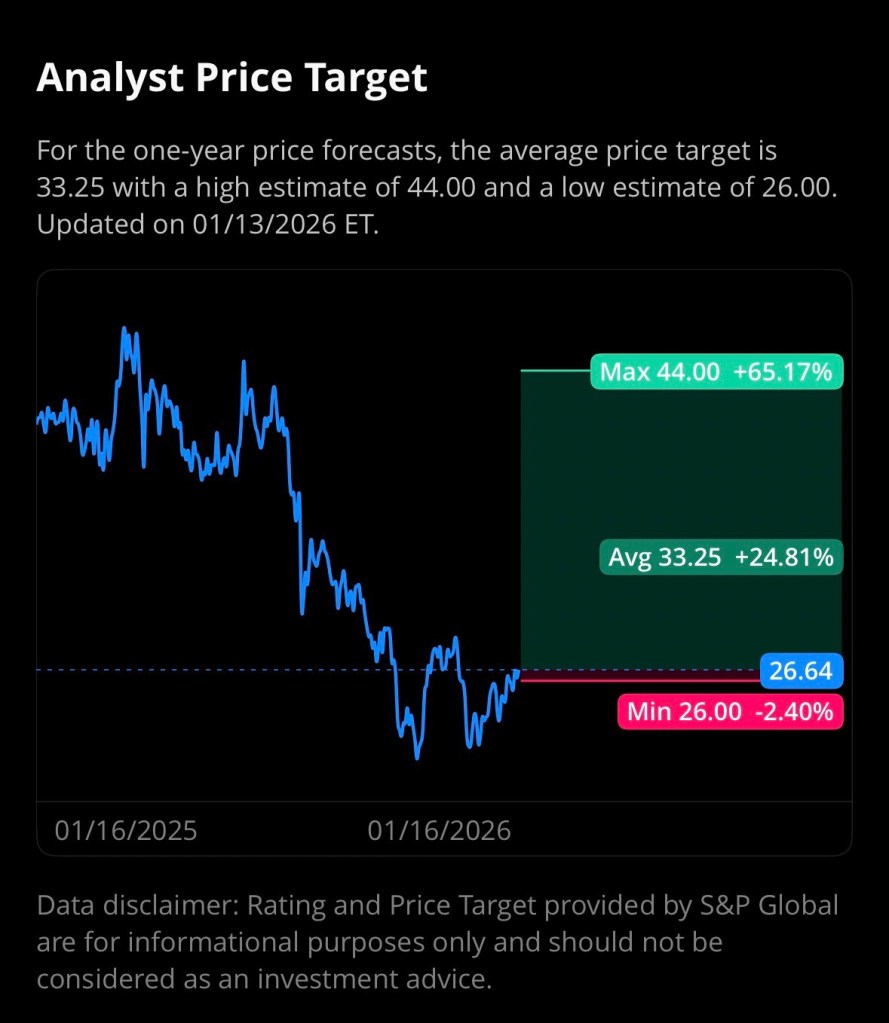
As of December 4, 2025, AVO shares trade around US$12.03 per share. (MarketBeat+2StockAnalysis+2) According to recent analyst consensus, many project a 12-month target price of about US $17.00 — implying a potential upside of roughly 40–45% over the next year. (StockAnalysis+2Zacks+2)

If conditions remain favorable — robust demand for avocados, stable supply (including from diversified growing regions), and continued execution on expansion initiatives — AVO could reach or even modestly exceed that $17 target. However, risks such as commodity-price swings, weather events, and shifting consumer demand could temper gains. As with all agriculture-linked equities, the upside remains meaningful but also volatile.

Bottom line
Mission Produce combines market leadership in a high-growth consumer category (avocados), rising scale and an improving product mix. That combination — plus a balance sheet that appears able to support continued investment — is why some investors view $AVO as a “hidden gem” in ag/food distribution. But it remains a cyclical, weather-sensitive play; prospective buyers should weigh valuation, seasonality, and tariff/volume outlooks before acting. (Yahoo Finance+1)

Disclosure: I currently hold a position in Mission Produce, Inc. (NASDAQ: AVO). All information provided is for informational and educational purposes only and should not be interpreted as financial advice, investment recommendations, or an endorsement to buy or sell any security. Investors should conduct their own research and consult with a qualified financial professional before making investment decisions.

References

MarketBeat. (2025, December 4). Mission Produce (AVO) Stock Forecast & Price Target 2025. https://www.marketbeat.com/stocks/NASDAQ/AVO/forecast/ MarketBeat

StockAnalysis.com. (n.d.). Mission Produce, Inc. (AVO) Stock Price & Overview. https://stockanalysis.com/stocks/avo/ StockAnalysis

Zacks. (n.d.). Mission Produce, Inc. (AVO) Price Target & Stock Forecast. https://www.zacks.com/stock/research/AVO/price-target-stock-forecast Zacks

Investing.com. (n.d.). Mission Produce Inc (AVO) Consensus Estimates. https://www.investing.com/equities/mission-produce-inc-consensus-estimates Investing.com

Yahoo Finance. (n.d.). Mission Produce (AVO) Stock Quote & Summary. https://finance.yahoo.com/quote/AVO/ Yahoo Finance+1