Understanding Auto Insurance Cancellations: Pro-Rata, Short-Rate, and Flat Cancellations Explained

Auto insurance policies are not always kept for their full term. Whether a policyholder sells a vehicle, finds a better rate, moves to another state, or simply decides to switch carriers, insurance policies are often canceled before their expiration date.

What many consumers don’t realize is that not all cancellations are calculated the same way. Depending on who initiates the cancellation and when it occurs, the refund amount may vary significantly.

The three most common types of auto insurance cancellations are Pro-Rata, Short-Rate, and Flat Cancellations.

What Is a Pro-Rata Cancellation?

A pro-rata cancellation occurs when the insurance company cancels the policy or when a cancellation is processed without any penalty.

Under a pro-rata cancellation, the policyholder receives a refund for all unused premium on a straight-line basis.

Example

Assume:

  • Annual premium: $1,200
  • Policy term: 12 months
  • Policy canceled after 3 months

The policyholder used 25% of the coverage period and is entitled to a refund of the remaining 75%.

  • Premium paid: $1,200
  • Earned premium: $300
  • Refund: $900

No cancellation fee is deducted.

Common Reasons for Pro-Rata Cancellations
  • Insurance company non-renews or cancels coverage
  • Vehicle is totaled and coverage ends
  • State regulatory requirements mandate a full refund calculation
  • Certain carrier-specific cancellation provisions

What Is a Short-Rate Cancellation?

A short-rate cancellation is the most common form of cancellation when the policyholder voluntarily cancels coverage before the policy expires.

With a short-rate cancellation, the insurer retains slightly more premium than the exact amount earned. This creates a financial penalty intended to offset administrative costs associated with issuing and canceling the policy.

Example

Assume:

  • Annual premium: $1,200
  • Policy canceled after 3 months
  • Unearned premium: $900

Instead of receiving the full $900 refund, the carrier applies a short-rate penalty.

Potential refund:

  • Unearned premium: $900
  • Short-rate penalty: $45
  • Refund issued: $855

The exact penalty varies by carrier and state regulations.

Typical Short-Rate Fees

Many carriers use:

  • 5% of the unearned premium
  • 10% of the unearned premium
  • A fixed cancellation fee ranging from $25 to $75
  • A state-approved short-rate table
Why Insurers Use Short-Rate Cancellations

Insurance companies incur expenses when policies are issued, including:

  • Underwriting costs
  • Policy processing
  • Commission payments
  • Administrative expenses

Short-rate penalties help recover a portion of those costs when a customer leaves before the policy term ends.

What Is a Flat Cancellation?

A flat cancellation treats the policy as though it never existed.

The insurer returns 100% of the premium paid and no coverage is considered to have been in force.

Example

Assume:

  • Annual premium: $1,200
  • Policy purchased today
  • Customer discovers duplicate coverage and cancels before the policy effective date

Refund:

  • Premium paid: $1,200
  • Refund issued: $1,200

No premium is earned by the insurer.

Common Reasons for Flat Cancellations
  • Policy canceled before the effective date
  • Coverage obtained in error
  • Duplicate policies discovered
  • Underwriting declines coverage before policy inception
  • No claims or coverage exposure occurred

Comparing the Three Types of Cancellations

Cancellation TypeRefund MethodPenalty Applied?Typical Situation
Flat Cancellation100% refundNoPolicy never takes effect
Pro-RataRefund of unused premiumNoInsurer initiates cancellation
Short-RateRefund of unused premium minus feeYesCustomer voluntarily cancels

How Much Could Cancellation Fees Cost?

Consider a policy with a remaining unearned premium of $600:

MethodRefund
Flat Cancellation$600
Pro-Rata Cancellation$600
Short-Rate (5% Penalty)$570
Short-Rate (10% Penalty)$540
Short-Rate + $50 Fee$550

While the difference may seem small, policyholders with higher premiums can lose hundreds of dollars when a short-rate penalty applies.

What Consumers Should Do Before Canceling

Before switching auto insurance companies:

  1. Verify the effective date of your new policy.
  2. Ask your current carrier whether a short-rate penalty applies.
  3. Request the exact refund amount in writing.
  4. Confirm there are no cancellation fees.
  5. Avoid any lapse in coverage that could increase future insurance premiums.

Many consumers focus solely on the new premium savings and overlook cancellation penalties that can reduce the benefit of switching carriers.

Silver sedan under transparent garage model on October 2023 calendar with service dates
A silver car under a transparent garage model on an October 2023 calendar.

The Takeaway Here

Understanding the difference between flat, pro-rata, and short-rate cancellations can help consumers make more informed decisions when changing auto insurance coverage. While flat and pro-rata cancellations generally provide the greatest refund, short-rate cancellations may reduce the amount returned through penalties or administrative fees.

Before canceling any auto policy, ask your insurance company or agent how the refund will be calculated. A simple phone call could prevent an unexpected deduction and help ensure a smooth transition to your new coverage.

Disclosure: This article is intended for educational purposes only. Cancellation rules, refund calculations, and fees vary by insurance carrier and state regulations. Consumers should consult their insurance policy and carrier for specific cancellation provisions.

About the Author:

David Dandaneau is a client relations analyst that covers the insurance and financial services industry. He is known for his insightful analysis and comprehensive coverage of market trends and regulatory developments.

Rising Homeowners Insurance Costs: What You Need to Know

Rising Costs Are Changing the Homeowners Insurance Conversation

Homeowners are facing some of the highest insurance premiums in decades for homeowner’s insurance. Inflation, severe weather events, increased construction costs, and rising litigation expenses have forced many insurers to reevaluate their risk exposure. In states such as Florida, Texas, California, and Louisiana, homeowners have experienced significant premium increases and, in some cases, reduced carrier availability.

As insurance costs continue to rise, many homeowners are asking the same question: “Am I carrying the right coverage, or am I paying for protection I may never use?”

The answer depends on your individual situation, but understanding the major components of a homeowners policy can help you make informed decisions.

Cross-section of house with labels for roof structure, second floor, main floor, foundation walls, and insurance coverage types including general homeowners policy, flood insurance, earthquake coverage, and personal property protection.
A cross-section of a home illustrating various insurance coverage layers and protections.

Coverages Most Homeowners Should Consider Keeping

Dwelling Coverage

Dwelling coverage protects the structure of your home from covered losses such as fire, wind, hail, and other insured perils.

One of the biggest mistakes homeowners make is underinsuring their property. Construction costs have risen dramatically over the last several years, making it more expensive to rebuild a home after a total loss.

Consider: Reviewing your dwelling limit annually to ensure it reflects current rebuilding costs—not necessarily the market value of your home.

Personal Property Coverage

Furniture, electronics, clothing, appliances, and personal belongings can add up quickly. Many homeowners underestimate the value of their possessions until they experience a major loss.

Consider: Creating a home inventory and verifying that your coverage limits are sufficient.

Liability Coverage

Liability coverage protects you if someone is injured on your property or if you accidentally cause damage to another person’s property.

Medical expenses and lawsuits can quickly become expensive.

Consider: Increasing liability limits to $300,000 or $500,000 if your insurer offers affordable options.

Loss of Use Coverage

If your home becomes uninhabitable due to a covered loss, loss-of-use coverage helps pay for temporary housing and living expenses.

This coverage can be invaluable following major storms, fires, or water damage claims.

Coverages Worth Reviewing

High Deductibles vs. Low Deductibles

Many homeowners carry deductibles established years ago when premiums were much lower.

Increasing your deductible from $500 to $2,500 or even $5,000 could significantly reduce annual premiums.

Trade-Off: You’ll pay more out-of-pocket if a claim occurs.

Personal Property Limits

Some homeowners may be carrying higher limits than necessary if they have downsized or replaced expensive items.

Consider: Reviewing current belongings and adjusting coverage accordingly.

Scheduled Personal Property

Items such as jewelry, collectibles, artwork, firearms, and high-end electronics often require additional endorsements.

If you no longer own these items, removing unnecessary endorsements may reduce premium costs.

Additional Structures Coverage

Coverage for detached garages, sheds, fences, and other structures may be higher than needed if structures have been removed or reduced in value.

A periodic policy review can identify potential savings.

Important Coverages Many Homeowners Overlook

Water Backup Coverage

Standard homeowners policies typically do not cover sewer or drain backup losses.

A relatively inexpensive endorsement can help protect against costly water damage.

Flood Insurance

Many homeowners incorrectly assume flood damage is covered under a standard homeowners policy.

In reality, flood losses are generally excluded.

Even homes outside designated flood zones can experience flooding due to heavy rainfall, hurricanes, or drainage issues.

Ordinance or Law Coverage

Building codes change over time. If your home suffers significant damage, you may be required to rebuild portions of it to current code standards.

Ordinance or law coverage helps pay these additional expenses.

Equipment Breakdown Coverage

Many insurers now offer protection for HVAC systems, electrical panels, water heaters, and other major home systems.

This coverage can provide value for homeowners concerned about unexpected repair costs.

When Filing Small Claims May Cost More Than It Saves

A common misconception is that insurance should be used for every loss.

In reality, frequent claims can impact eligibility, renewal options, and future premiums.

For example, filing multiple water damage claims within a few years could make it more difficult to obtain favorable rates in the future.

Homeowners should evaluate whether a smaller loss justifies filing a claim or whether paying out-of-pocket may be the better financial decision.

Miniature house on one side of scale balanced with stacks of coins on the other side.
A scale balancing a miniature house and stacks of coins representing home value.

Final Thoughts

Homeowners insurance should not be viewed as a “set it and forget it” product. As property values, rebuilding costs, and personal circumstances change, coverage needs evolve as well.

A yearly policy review can help identify gaps in protection, uncover potential savings opportunities, and ensure your home remains adequately insured against today’s risks.

The goal is not necessarily to buy the cheapest policy available. Instead, homeowners should focus on balancing affordability with meaningful protection because saving a few dollars today could become extremely costly after a major loss.

Disclosure: This article is for informational purposes only and should not be considered insurance, legal, or financial advice. Coverage availability, exclusions, and policy terms vary by insurer and state. Consult a licensed insurance professional regarding your specific situation.

About the Author:

David Dandaneau is a client relations analyst that covers the insurance and financial services industry. He is known for his insightful analysis and comprehensive coverage of market trends and regulatory developments.

CoreWeave (NASDAQ: CRWV): AI Infrastructure Powerhouse or High-Risk Growth Story?

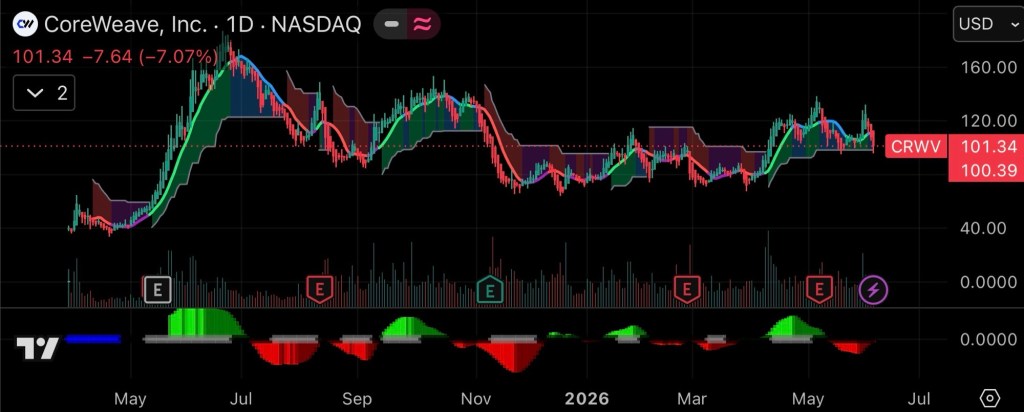
The artificial intelligence revolution has created a new generation of technology winners, and few companies have captured investor attention as quickly as CoreWeave (NASDAQ: CRWV). Since its public debut in 2025, CoreWeave has transformed from a niche cloud computing provider into one of the most closely watched AI infrastructure companies in the market.

As demand for artificial intelligence computing continues to accelerate, investors are asking a simple question: Does CoreWeave still have room to run?

Two technicians walking in a large data center with rows of illuminated AI server racks
Two technicians walk through a massive AI data center filled with illuminated server racks.

A Brief History of CoreWeave

CoreWeave was founded in 2017 and originally focused on cryptocurrency mining infrastructure. As demand for high-performance computing evolved, management pivoted toward providing specialized cloud infrastructure powered by NVIDIA graphics processing units (GPUs). That decision would prove transformational.

The company went public on the Nasdaq under the ticker CRWV in March 2025, pricing its initial public offering at $40 per share and raising approximately $1.5 billion to expand its AI cloud platform.

Since then, CoreWeave has become one of the leading providers of AI-focused cloud infrastructure, serving customers that require enormous amounts of computing power for training and operating large language models and other AI applications.

What’s Driving the Stock?

Several developments have fueled investor enthusiasm during 2026.

Most notably, CoreWeave became the first cloud provider to deploy NVIDIA’s new Vera Rubin NVL72 AI systems, reinforcing its position at the forefront of next-generation AI infrastructure. The announcement helped drive a significant rally in the stock and further strengthened the company’s strategic relationship with NVIDIA.

Earlier this year, NVIDIA expanded its partnership with CoreWeave and invested an additional $2 billion in the company. The two firms announced plans to accelerate the development of large-scale AI infrastructure and AI factories over the coming decade.

The company has also reported remarkable growth in customer demand. CoreWeave disclosed a revenue backlog of approximately $99.4 billion as of March 31, 2026, providing significant visibility into future revenue streams. Major customers include some of the largest names in artificial intelligence and cloud computing.

The Bull Case: Why Investors Remain Excited

Several factors support the bullish argument for CoreWeave.

Explosive AI Demand

Artificial intelligence remains one of the fastest-growing sectors in technology. Companies are racing to build increasingly sophisticated AI models, and all of them require massive amounts of computing power. CoreWeave’s infrastructure is specifically designed to meet that demand.

Strategic NVIDIA Relationship

Few companies have a closer relationship with NVIDIA than CoreWeave. Access to next-generation hardware before competitors could provide a significant advantage as AI workloads continue to grow.

Massive Revenue Backlog

A backlog approaching $100 billion gives investors confidence that demand remains strong despite concerns about the broader economy. Few newly public companies can point to this level of contracted business.

Industry Leadership

CoreWeave has established itself as one of the premier “AI-native” cloud providers. As enterprises increasingly adopt AI, the company may be positioned to capture a growing share of infrastructure spending.

The Bear Case: Risks Investors Should Consider

Despite its impressive growth, CoreWeave is not without risks.

Capital Intensive Business Model

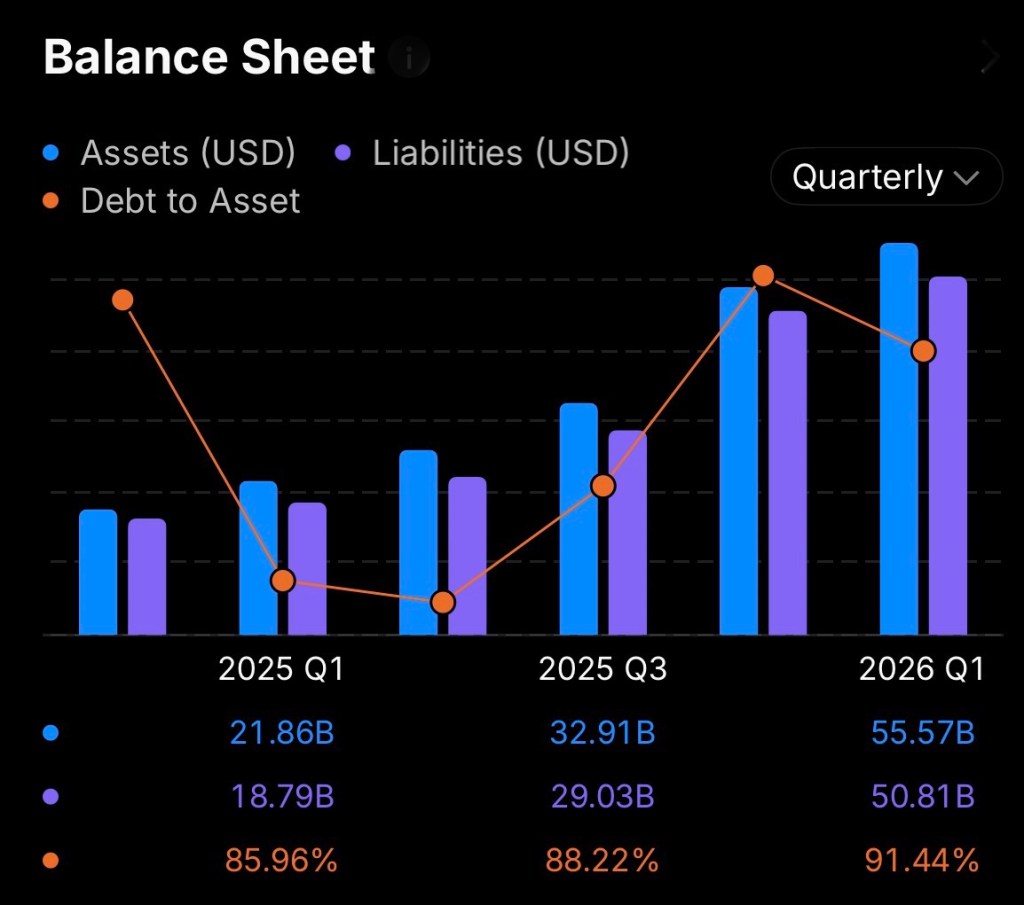
Building AI infrastructure is extraordinarily expensive. CoreWeave continues to spend billions on data centers, GPUs, and power capacity. Management recently increased its capital expenditure outlook as demand for AI hardware continues to surge.

Profitability Remains a Challenge

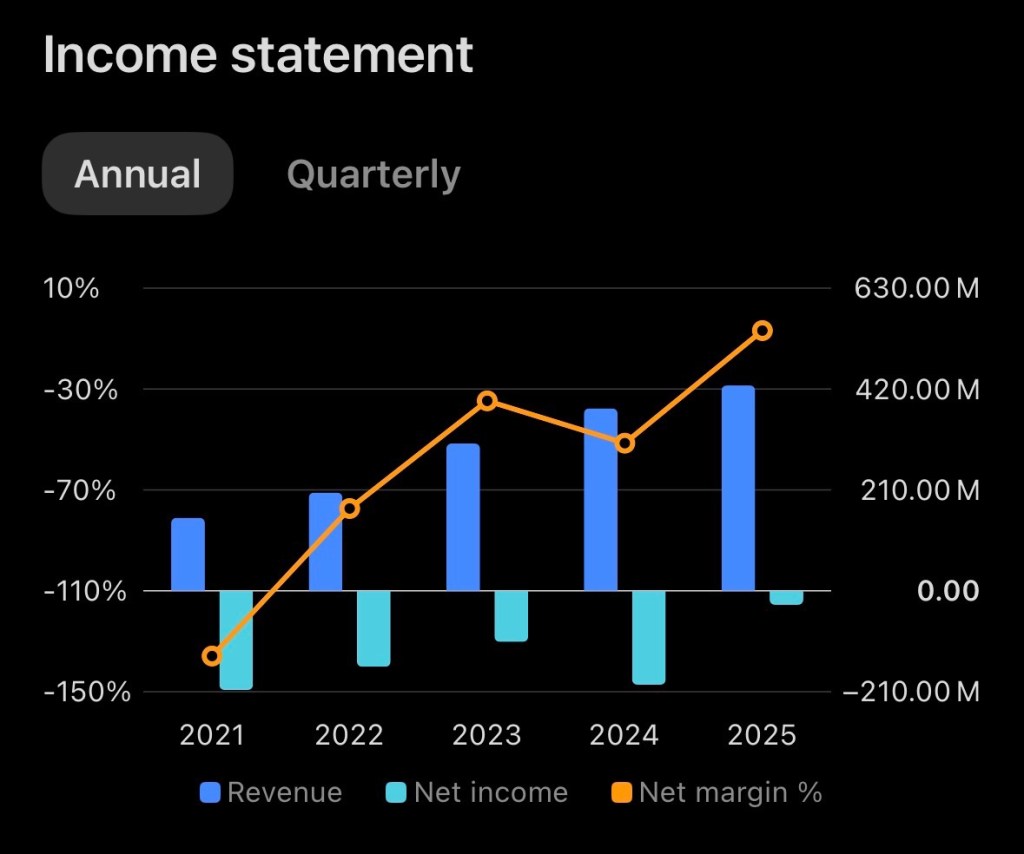
Although revenue growth has been exceptional, the company continues to report significant net losses. Investors are betting that future scale will eventually generate substantial profits. If growth slows before profitability improves, valuation concerns could emerge.

Customer Concentration

A meaningful portion of CoreWeave’s business comes from large AI companies and hyperscale cloud providers. Any reduction in spending from major customers could affect future growth rates.

Valuation Risk

Many AI-related companies trade at premium valuations based on expectations of future growth. If the AI spending cycle cools or investors become more cautious, high-growth stocks like CoreWeave could experience significant volatility.

Is There Still Upside Ahead?

The answer largely depends on whether investors believe AI infrastructure demand will continue expanding over the next decade.

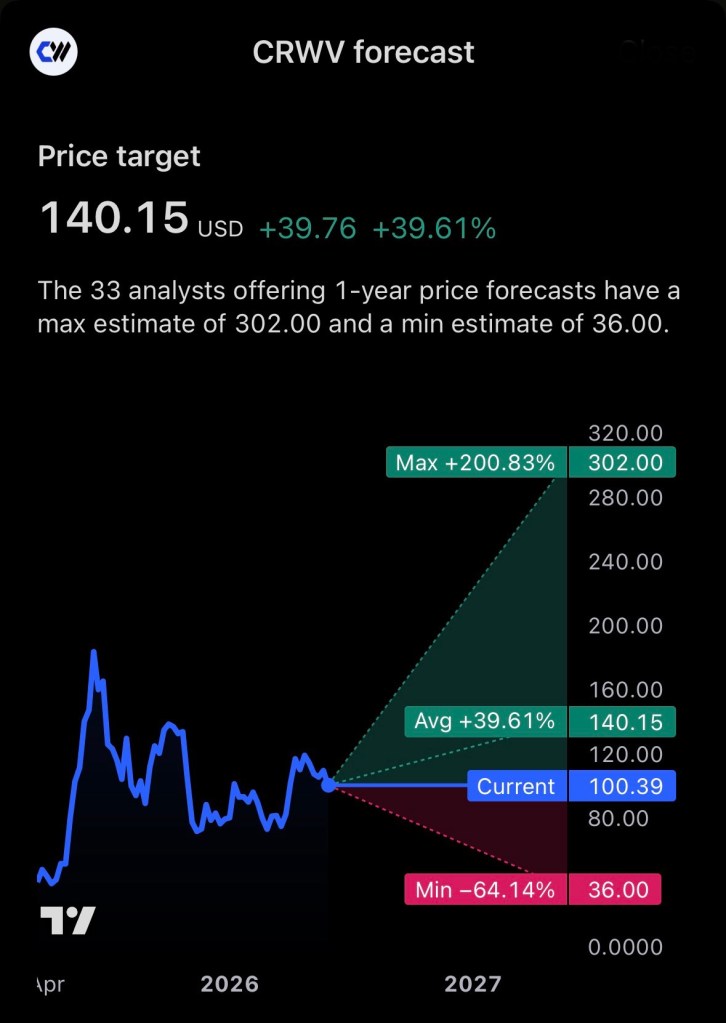
Supporters argue that artificial intelligence is still in its early innings and that the demand for compute power will continue to grow exponentially. If that thesis proves correct, CoreWeave could remain one of the primary beneficiaries of the AI buildout. Recent analyst targets and market commentary suggest many on Wall Street still see meaningful upside potential from current levels.

However, investors should recognize that CoreWeave remains a high-growth, high-risk company. The business must continue executing flawlessly while managing enormous capital expenditures and eventually demonstrating sustained profitability.

Bottom Line

CoreWeave has rapidly emerged as one of the most important infrastructure providers powering the AI revolution. The company’s strategic relationship with NVIDIA, enormous revenue backlog, and leadership position in AI cloud computing have helped fuel investor enthusiasm.

While the stock may continue to benefit from the expanding AI ecosystem, investors should remember that rapid growth often comes with substantial volatility. CoreWeave represents both the promise and the risks of investing in one of the market’s most exciting sectors.

For investors willing to tolerate uncertainty, CRWV remains one of the purest publicly traded plays on the future of artificial intelligence infrastructure.

Disclosure

The author owns shares of CoreWeave (NASDAQ: CRWV). This article is for informational and educational purposes only and should not be considered investment advice. Investors should conduct their own research and consult a qualified financial advisor before making investment decisions.

References

  1. CoreWeave. (2025, March 27). CoreWeave announces pricing of initial public offering. Retrieved from CoreWeave Investor Relations
  2. CoreWeave. (2026, May 7). CoreWeave reports strong first quarter 2026 results. Retrieved from CoreWeave Investor Relations
  3. CoreWeave. (2026). Investor relations overview. Retrieved from CoreWeave Investor Relations Overview
  4. NVIDIA. (2026, January 26). NVIDIA and CoreWeave strengthen collaboration to accelerate buildout of AI factories. Retrieved from NVIDIA Newsroom
  5. Reuters. (2026, May 7). CoreWeave signals higher capex as component costs rise, shares fall.
  6. Reuters. (2026, May 13). Nvidia CEO’s foundation buys $108 million of AI computing from CoreWeave, donates it to researchers.
  7. Barron’s. (2026, June 2). CoreWeave is first to offer NVIDIA’s newest AI system. The stock rises.
  8. Yahoo Finance. (2026). CoreWeave, Inc. (CRWV) stock price, news, quote & history. Retrieved from Yahoo Finance CRWV Page
  9. Stock Analysis. (2026). CoreWeave (CRWV) stock price & overview. Retrieved from Stock Analysis CRWV Overview
  10. MarketWatch. (2026, May 7). CoreWeave shares plunge. Revenue doubles but AI costs are rising.

Why Uninsured Motorist, Comprehensive, and Collision Coverage May Be Worth the Cost

Understanding the Coverages That Protect More Than Just Your Car

When shopping for auto insurance, many drivers focus on finding the lowest premium possible. While saving money is important, reducing coverage can sometimes create much larger financial risks down the road. Three coverages that often generate questions are Uninsured Motorist Coverage, Comprehensive Coverage, and Collision Coverage.

These coverages can add cost to a policy, but they may also provide critical protection when life throws an unexpected curveball.

Gray car surrounded by glowing electric blue shield in a storm with rain and lightning
A car is shielded by a glowing electric barrier during a storm.

Uninsured Motorist Coverage: Protection From Other Drivers’ Mistakes

Despite laws requiring auto insurance in most states, millions of drivers continue to operate vehicles without coverage or with limits too low to fully pay for damages they cause.

Uninsured Motorist (UM) Coverage helps protect you if you’re injured by a driver who has no insurance. In many states, Underinsured Motorist Coverage (UIM) may also help when the at-fault driver’s policy limits are insufficient to cover your losses.

Example

Imagine you’re stopped at a red light and another driver rear-ends your vehicle. You suffer injuries requiring physical therapy and miss several weeks of work. Later, you discover the other driver has no insurance.

Without Uninsured Motorist Coverage:

  • You may have to rely on your health insurance.
  • Lost wages may not be fully covered.
  • Recovering damages could require legal action against someone who may have limited assets.

With Uninsured Motorist Coverage:

  • Your own policy may help pay medical expenses, lost wages, and other covered damages.

Reasons You Might Consider Leaving It Off

  • You have substantial personal assets and alternative protection strategies.
  • You live in an area with relatively low uninsured driver rates.
  • Budget constraints make affordability the top priority.

However, many insurance professionals consider UM coverage one of the most valuable protections available because it safeguards you from risks you cannot control.

Comprehensive Coverage: Protection Against Life’s Surprises

Comprehensive Coverage protects against losses that are generally not caused by a collision.

Common examples include:

  • Theft
  • Vandalism
  • Falling objects
  • Fire
  • Flooding
  • Hail damage
  • Animal strikes

Example

You walk outside one morning and discover a large tree branch has fallen on your parked vehicle during a storm.

Without Comprehensive Coverage:

  • You pay the repair bill entirely out of pocket.

With Comprehensive Coverage:

  • Your insurance company may cover repairs after your deductible is applied.

Another Example

A vehicle owner in Florida parks overnight and wakes up to find their car submerged after a major storm causes flash flooding.

Comprehensive Coverage may help cover the damage, while basic liability insurance would not.

Reasons You Might Consider Leaving It Off

  • Your vehicle has a very low market value.
  • The annual premium approaches the value of the vehicle itself.
  • You could comfortably replace the vehicle from savings if it were totaled.

For many drivers, comprehensive coverage provides peace of mind against unpredictable events that occur when the vehicle isn’t even being driven.

Collision Coverage: Protection for Your Vehicle

Collision Coverage helps pay for damage to your vehicle when it collides with another vehicle or object, regardless of fault.

Example

You’re backing out of a parking space and accidentally strike a concrete pole.

Without Collision Coverage:

  • You are responsible for all repair costs.

With Collision Coverage:

  • Your policy may pay for repairs after your deductible.

Another Example

A driver loses control during heavy rain and slides into a guardrail. The vehicle sustains $12,000 in damage.

With Collision Coverage:

  • The policy may cover repairs, less the deductible.

Without Collision Coverage:

  • The owner must absorb the entire loss.

When It May Make Sense to Drop Collision Coverage

There are situations where removing collision coverage can be financially reasonable.

Consider:

  • The vehicle’s value has significantly declined.
  • You have sufficient savings to replace the vehicle.
  • The premium and deductible together provide little financial benefit compared to the vehicle’s actual cash value.

For example, carrying collision coverage on a vehicle worth only $2,500 may not always make economic sense if the annual premium is high.

A Simple Rule of Thumb

Many insurance professionals suggest periodically reviewing your vehicle’s value. As vehicles age, the cost-benefit analysis of comprehensive and collision coverage changes.

Ask yourself:

  • What is my vehicle worth today?
  • Could I afford to replace it tomorrow?
  • How much would a major repair affect my finances?
  • Am I comfortable assuming more risk in exchange for lower premiums?
Blue car with digital icons indicating theft, fire, flood, and collision protection
A blue car parked with digital icons showing theft, fire, flood, and collision coverage

Final Perspective

Auto insurance isn’t just about satisfying state requirements, it’s about protecting your financial future. Uninsured Motorist, Comprehensive, and Collision Coverage each address different risks that can lead to significant out-of-pocket expenses.

While there are legitimate reasons to decline these coverages, drivers should carefully evaluate the potential savings against the financial consequences of a major accident, theft, storm, or uninsured driver. The cheapest policy is not always the least expensive option when an unexpected loss occurs.

As with any insurance decision, reviewing your coverage annually and discussing your needs with a licensed insurance professional can help ensure your protection keeps pace with your changing circumstances.

Disclaimer: This article is for educational purposes only and is not insurance, legal, or financial advice. Coverage availability, policy terms, exclusions, and requirements vary by state and insurance carrier. Consult a licensed insurance professional regarding your specific situation.

About the Author:

David Dandaneau is a client relations analyst that covers the insurance and financial services industry. He is known for his insightful analysis and comprehensive coverage of market trends and regulatory developments.

Microvast Holdings ($MVST): A High-Risk Battery Bet With Global Ambitions

Microvast Holdings has become one of the more polarizing names in the electric vehicle and energy storage sector. Supporters view the company as an undervalued battery innovator with growing global manufacturing capacity, while critics point to volatile earnings, geopolitical concerns, and persistent financial risks.

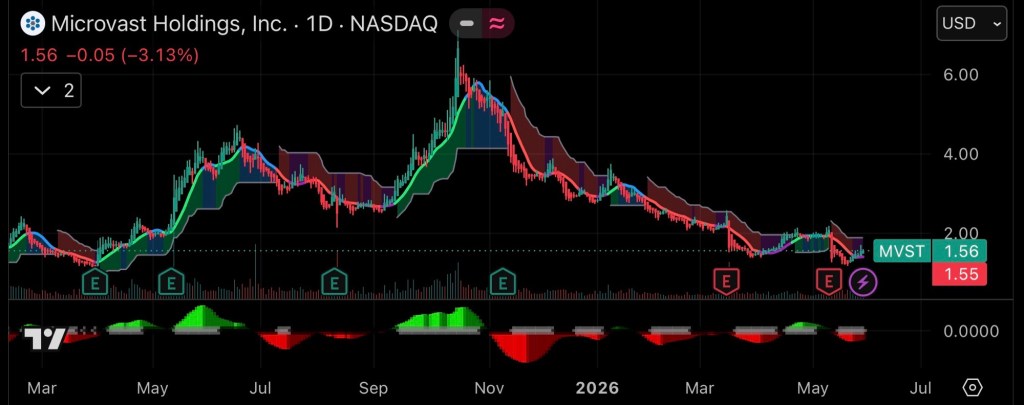
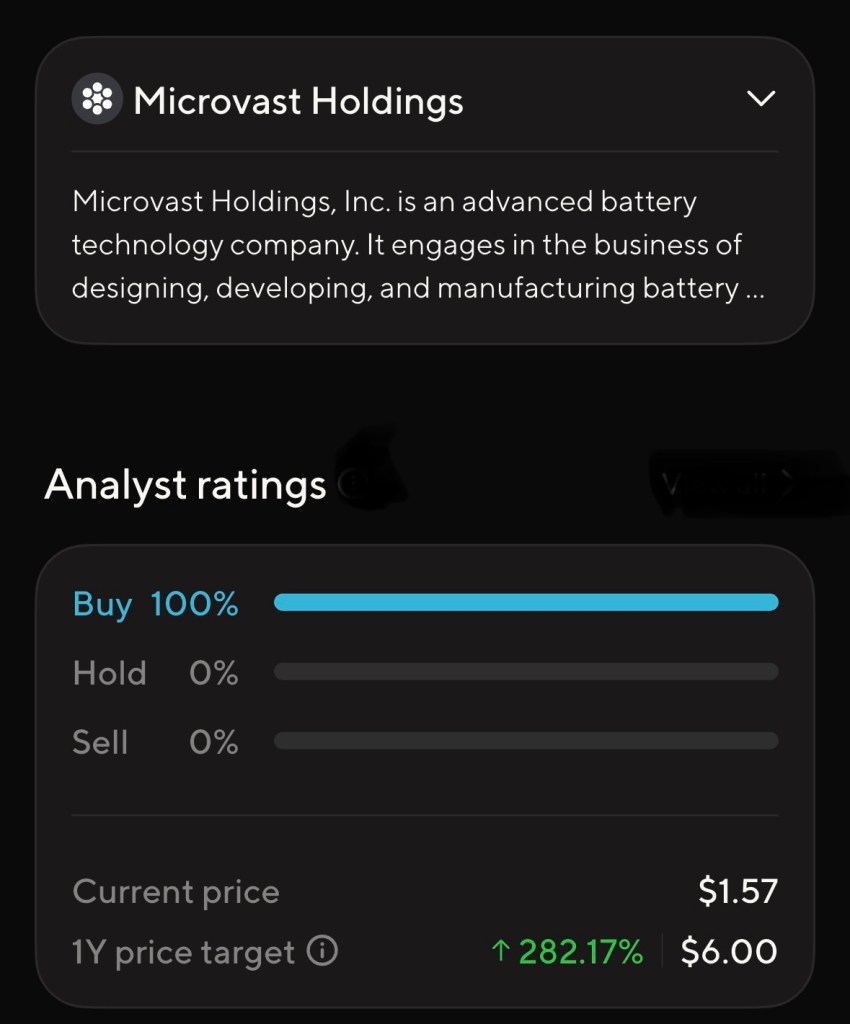
As of late May 2026, shares of MVST have traded near the low single digits after significant volatility over the last several years. Despite the sharp decline from post-SPAC highs, many investors continue to speculate that the company could benefit from the long-term expansion of electrification, commercial EV adoption, and energy storage demand.

Robotic assembly lines in a battery manufacturing plant with multiple blue robots and conveyor belts
A large automated factory floor producing battery modules

The History of Microvast

Founded in 2006 in Houston, Texas, Microvast focuses on lithium-ion battery systems for commercial vehicles, energy storage systems, and industrial applications. The company developed operations across the United States, China, and Germany while building expertise in battery chemistry, separators, electrolytes, and fast-charging systems.

The company gained broader investor attention in 2021 when it went public through a SPAC merger during the peak of EV enthusiasm. Like many SPAC-era companies, MVST initially traded at elevated valuations as investors aggressively pursued battery and clean-energy names.

Microvast later faced controversy surrounding its China operations and the cancellation of a proposed $200 million U.S. Department of Energy grant intended to support battery manufacturing expansion. That decision intensified investor concerns about geopolitical exposure and supply-chain dependency.

Still, the company continued expanding production capacity and investing in next-generation battery technologies. Management has emphasized commercial transportation markets rather than competing directly in the intensely competitive passenger EV battery space.

Current Financial Picture

Microvast’s recent financial results present a mixed picture.

For full-year 2025, the company reported record revenue of approximately $427.5 million, representing year-over-year growth of 12.6%. Gross margins improved materially, and losses narrowed significantly compared with prior years.

However, 2026 has started on a weaker note. In first-quarter 2026 results, revenue fell 48% year over year to $60.6 million due to regulatory pressures, geopolitical uncertainty, delayed OEM platform launches, and softer demand in certain international markets.

While the company remained GAAP profitable during the quarter because of accounting-related gains, adjusted earnings deteriorated sharply. Adjusted EBITDA turned negative, and the company disclosed ongoing operational headwinds tied to tariffs, logistics costs, and reduced factory utilization.

Balance sheet concerns also remain a factor. Some analysts continue monitoring debt levels and liquidity closely as the company works toward sustainable profitability.

Why MVST Could Be a Good Investment

Exposure to Long-Term EV and Energy Storage Growth

The global battery market is expected to expand substantially over the next decade as commercial transportation fleets, grid storage systems, and industrial electrification continue growing. Microvast already operates internationally and has established manufacturing infrastructure that could benefit if demand accelerates.

Vertical Integration

Unlike some battery competitors, Microvast develops multiple components internally, including cathodes, separators, and electrolytes. Investors bullish on the company believe this could improve margins and reduce dependence on third-party suppliers over time.

Improving Historical Revenue Trend

Although 2026 began weakly, revenue growth from 2022 through 2025 was substantial. Company reports show revenue more than doubling during that period while gross profit expanded meaningfully.

Commercial Vehicle Niche

Microvast focuses heavily on buses, industrial fleets, heavy equipment, and commercial transportation. Some investors believe this niche could prove more stable than the intensely competitive passenger EV market dominated by larger battery producers.

Why MVST Could Be a Poor Investment

Financial Volatility

The largest concern surrounding MVST remains inconsistent financial performance. Revenue swings, negative adjusted earnings, and ongoing cash burn have created significant uncertainty. The recent 48% quarterly revenue decline demonstrates how vulnerable the business remains to external disruptions.

Geopolitical Risk

Microvast’s operational footprint includes China, which continues generating political and regulatory concerns among some U.S. investors and policymakers. Tariffs, export controls, and shifting trade policies could continue impacting margins and investor sentiment.

Intense Competition

The battery sector is crowded with large, well-capitalized competitors. Companies across China, South Korea, Japan, Europe, and the United States continue investing aggressively in battery manufacturing capacity and chemistry innovation.

Speculative Nature of the Stock

MVST remains a speculative small-cap growth company. Stocks in this category often experience extreme volatility, dilution risk, and rapid shifts in investor sentiment. The company’s share price history reflects that reality.

Investment Outlook

Microvast represents a classic high-risk, high-reward investment profile. Bulls see an undervalued battery technology company positioned for long-term electrification trends. Bears see a financially unstable company operating in a fiercely competitive industry with geopolitical baggage and inconsistent execution.

For investors considering MVST, the key questions may revolve around whether management can stabilize revenue growth, maintain margin improvements, and achieve sustainable profitability before capital markets become less accommodating for speculative growth companies.

Disclosure

The author owns a position in MVST. This article reflects personal opinions and is intended for informational and educational purposes only. It should not be considered financial advice or a recommendation to buy or sell securities. Investors should conduct their own due diligence and consider their risk tolerance before investing.

References

Microvast Holdings, Inc. (2026, March 16). Microvast reports 2025 financial results. Microvast Investor Relations. https://ir.microvast.com/news-releases/news-release-details/microvast-reports-2025-financial-results

Microvast Holdings, Inc. (2026, May 11). Microvast reports first quarter 2026 financial results. Microvast Investor Relations. https://ir.microvast.com/news-releases/news-release-details/microvast-reports-first-quarter-2026-financial-results

Yahoo Finance. (2026). Microvast Holdings, Inc. (MVST) stock price, news, quote & history. https://finance.yahoo.com/quote/MVST/

Wikipedia contributors. (2026). Microvast. Wikipedia. https://en.wikipedia.org/wiki/Microvast

Investing.com. (2026, March 16). Microvast FY2025 slides show margin strength as US revenue surges. https://www.investing.com/news/company-news/microvast-fy2025-slides-show-margin-strength-as-us-revenue-surges-173-93CH-4564169

MarketBeat. (2026, May 11). Microvast Q1 earnings call highlights. https://www.marketbeat.com/instant-alerts/microvast-q1-earnings-call-highlights-2026-05-11/

From Insurance Insights to Everyday Life: A Look Back at Conversations That Matter

Over the past few years here, one thing has become clear: the topics that matter most are the ones that impact everyday people in real life. From protecting families financially to improving personal health and building long-term wealth, the conversations shared across social media have focused on practical advice, real experiences, and personal growth.

Here’s a look back at some of the biggest themes that resonated with readers and followers alike.

Dirt path winding through grassy hills toward a city skyline at sunset with glowing navigation icons.
A scenic dirt path leads to a city skyline at sunset, with glowing navigation and connectivity icons along the trail.

Insurance Isn’t Just a Bill… It’s a Financial Safety Net

One recurring topic has been the importance of understanding insurance beyond the monthly premium. Conversations around auto insurance scores, homeowner protection, life changes, and shopping for coverage highlighted how important it is to make informed decisions.

Many drivers don’t realize that constantly switching insurance companies can sometimes hurt their long-term pricing and stability. Insurance history, payment consistency, claim frequency, and credit-related factors often play a role in how rates are calculated. The key message shared over time has been simple:

✅ Shop smart
✅ Compare coverage… not just price
✅ Understand what you’re buying
✅ Protect yourself before problems happen

There were also important discussions about protecting families after the loss of a spouse. Topics included updating estate documents, reviewing beneficiaries, adjusting homeowners and auto insurance policies, and making sure financial accounts are organized during difficult times.

Health and Sleep Matter More Than We Admit

Another major focus centered around health and quality of life, especially sleep.

Personal experiences discussing CPAP therapy opened conversations for many people struggling silently with exhaustion, poor sleep quality, and untreated sleep apnea. The message was relatable because it focused on real-life improvements instead of medical jargon.

Many readers connected with the idea that better sleep can improve:

  • Energy levels
  • Mood and mental clarity
  • Blood pressure
  • Productivity
  • Overall quality of life

The discussions also honestly addressed the adjustment period that comes with CPAP use, reminding people that long-term health improvements often require patience and consistency.

Mental Health Conversations Continue to Break Stigma

Mental health awareness became another important topic throughout the years. Rather than focusing only on diagnoses or labels, the message centered around perseverance, growth, and finding purpose despite difficult seasons.

The overall tone remained encouraging:

Every day is another opportunity to keep moving forward.

Readers responded positively to honest conversations about stress, emotional struggles, and the importance of seeking support while continuing to pursue productive and meaningful lives.

Investing Conversations Focused on Long-Term Thinking

Investment-related discussions also attracted strong engagement, especially around dividend-paying companies and emerging growth opportunities.

Articles and commentary involving companies like General Mills (GIS) and Ondas Holdings (ONDS) explored the balance between stability and growth potential.

Topics included:

  • Dividend investing
  • Market volatility
  • Long-term portfolio strategy
  • Risk management
  • Emerging technology opportunities

One consistent theme stood out:

📈 Investing is not about chasing hype every day it’s about building disciplined habits over time.

Transparency also remained important, with disclosures shared whenever positions in discussed companies were personally owned.

Vintage balance scale weighing health symbols, money, tech devices, and family icons.
A vintage scale balancing symbols of health, money, technology, and family.

Technology, Sustainability, and Everyday Innovation

Discussions around sustainability and technology showed how rapidly the world is changing. Topics ranged from electric vehicles and smart homes to how innovation is reshaping the insurance industry itself.

As more households adopt connected devices and cleaner technologies, conversations emphasized how these changes may impact:

  • Insurance pricing
  • Risk assessment
  • Home safety
  • Driving habits
  • Long-term financial savings

The growing overlap between technology and personal finance continues to create opportunities for consumers willing to stay informed.

Why These Conversations Connected With People

The reason these topics gained attention is because they were grounded in real life.

They weren’t just about headlines or trends they focused on:

✔ Protecting families
✔ Improving health
✔ Building financial stability
✔ Encouraging personal growth
✔ Preparing for the unexpected

In a social media environment often dominated by negativity and noise, practical conversations that educate, encourage, and empower people continue to stand out.

Key Takeaway

Over the years, these discussions have shown that everyday decisions can have a lasting impact. Whether it’s reviewing an insurance policy, improving sleep, investing for the future, or simply finding ways to stay positive during difficult times, small steps often create meaningful long-term results.

The conversations will continue because life keeps evolving, and staying informed matters more than ever.

Protecting Yourself Financially and Legally After the Death of a Spouse

The death of a spouse is one of life’s most difficult experiences emotionally, but it can also create immediate financial, legal, and insurance challenges. Experts say surviving spouses who take organized and timely action can avoid costly mistakes, reduce stress, and protect their family’s long-term financial future.

From estate administration to updating insurance policies and securing financial accounts, understanding the steps that should be taken after a spouse passes away is critical.

Desk with project binder labeled 'PROJECT ALANNAH - 2024', stack of papers, pen, daily notes notebook, keys, and desk lamp

The Importance of Acting Early

Many surviving spouses are unaware that insurance policies, bank accounts, mortgages, vehicle titles, and retirement accounts may need immediate attention after a death occurs. Delays can lead to denied claims, lapsed coverage, frozen accounts, missed bills, or probate complications.

Financial planners and estate professionals recommend starting with a structured checklist and keeping copies of all important documents in one secure location.

Key Areas That Need Immediate Attention

1. Obtain Multiple Certified Death Certificates

Funeral homes often assist families with ordering death certificates. Financial institutions, insurance carriers, and government agencies usually require certified copies.

Experts recommend obtaining at least 10 copies to simplify the process.

2. Contact Life Insurance Companies

If the deceased spouse had life insurance through work or an individual policy, beneficiaries should file claims as soon as possible.

Important items to gather include:

  • Policy numbers
  • Death certificate
  • Beneficiary information
  • Employer contact information

Life insurance proceeds are often paid tax-free and can help cover immediate expenses.

3. Review the Estate and Will

If a will or trust exists, the executor or trustee should begin the legal administration process promptly.

Key documents may include:

  • Last will and testament
  • Trust agreements
  • Power of attorney documents
  • Property deeds
  • Financial account information

Consulting an estate attorney may help avoid probate complications and ensure assets transfer properly.

Homeowners Insurance Should Never Be Ignored

One commonly overlooked issue is homeowners insurance. After a spouse dies, surviving family members should notify their insurance company immediately.

Why this matters:

  • The named insured may need to be updated
  • Vacant home provisions could apply
  • Coverage limits may need adjustment
  • Mortgage lender requirements could change

Failure to update a homeowners policy may create claim issues later.

Homeowners should also verify:

  • Current replacement cost coverage
  • Flood or hurricane insurance status
  • Mortgage escrow arrangements
  • Liability protection limits

Auto Insurance Updates Are Critical

Vehicle ownership and auto insurance policies often require updates after a spouse passes away.

Checklist items include:

  • Updating vehicle registration and title
  • Removing or adding drivers
  • Revising garaging address if necessary
  • Reviewing coverage levels
  • Confirming premium payment arrangements

If the deceased spouse handled finances, surviving spouses should confirm policies remain active to avoid accidental lapses in coverage.

Social Security and Government Benefits

The surviving spouse may qualify for benefits through the Social Security Administration.

Potential benefits may include:

  • Survivor benefits
  • Lump-sum death payment
  • Medicare updates
  • Dependent child benefits

Veterans and government employees may also have pension or survivor programs available.

Protecting Against Fraud and Identity Theft

Identity theft targeting deceased individuals is increasingly common.

Experts recommend:

  • Notifying credit bureaus
  • Monitoring financial statements
  • Closing unnecessary accounts
  • Reporting the death to banks and creditors
  • Securing digital accounts and passwords

Mail theft and fraudulent credit applications can occur if accounts remain open.

Emotional Decisions Should Be Avoided

Financial advisors frequently caution widows and widowers against making major financial decisions immediately after a loss.

Avoid rushing decisions involving:

  • Selling the home
  • Large investments
  • Giving money to family members
  • Cashing out retirement accounts
  • Major relocations

Taking time to evaluate options with trusted professionals may help prevent long-term financial setbacks.

Survivor Protection Checklist

Checklist with green checkmarks, shield icon with house and car, documents, and house and car illustrations
A checklist symbolizing home and car insurance coverage and protection.

Immediate Tasks (First Few Days)

  • Obtain certified death certificates
  • Notify close family members
  • Contact funeral home and clergy
  • Secure home, vehicles, and valuables
  • Locate will, trust, and insurance documents
  • Notify employer of death

Financial & Legal Tasks

  • Contact life insurance companies
  • Meet with estate attorney if necessary
  • Notify banks and investment firms
  • Review mortgage and loan obligations
  • Update beneficiaries on accounts
  • Review retirement and pension benefits
  • Notify Social Security Administration
  • Monitor credit reports

Insurance Tasks

  • Update homeowners insurance
  • Review auto insurance policies
  • Confirm health insurance continuation
  • Review umbrella liability coverage
  • Verify flood, windstorm, or specialty coverage
  • Update named insured information

Property & Asset Tasks

  • Transfer vehicle titles if necessary
  • Update deeds and property ownership
  • Inventory valuables and collectibles
  • Secure firearms, jewelry, and important documents
  • Review safe deposit boxes

Digital & Identity Protection

  • Close unused online accounts
  • Update passwords
  • Preserve important photos and files
  • Notify credit bureaus
  • Monitor for identity theft

Family & Long-Term Planning

  • Review household budget
  • Meet with financial advisor
  • Update your own estate plan
  • Reevaluate retirement strategy
  • Review tax filing requirements
  • Create an emergency contact file

Final Thoughts

The loss of a spouse can feel overwhelming, especially when legal and financial responsibilities suddenly fall on one person. While every situation is unique, staying organized and addressing insurance, estate, and financial matters early can help protect surviving family members from unnecessary hardship.

Professionals recommend building a trusted support team that may include an estate attorney, financial advisor, accountant, and insurance professional to help navigate the transition with confidence and stability.

About the Author:

David Dandaneau is a client relations analyst that covers the insurance and financial services industry. He is known for his insightful analysis and comprehensive coverage of market trends and regulatory developments.

Ondas Holdings ($ONDS): A High-Risk, High-Reward Play on Autonomous Defense and AI Infrastructure

Ondas Holdings has rapidly emerged as one of the more closely watched small-cap companies in the autonomous systems and defense technology sector. The company operates through its Ondas Autonomous Systems division, focusing on AI-powered drone platforms, counter-drone defense technologies, and private wireless infrastructure designed for critical industries and government agencies.

Drone flying over a border fence scanning the area with sensors at sunset
A drone scans a border fence at sunset using advanced sensors.

Over the past year, investor interest in ONDS has accelerated as geopolitical tensions, rising defense spending, and demand for autonomous security systems have expanded globally. The company’s partnerships, acquisitions, and expanding backlog have positioned it as a speculative growth stock with significant upside potential but also elevated volatility and execution risk.

According to recent company updates, Ondas reported preliminary 2025 revenue between $49.7 million and $50.7 million, substantially ahead of prior guidance. Management also increased its 2026 revenue outlook to as much as $375 million, supported by growing defense contracts and autonomous drone deployments.

The Core Investment Thesis

Ondas is attempting to build an integrated autonomous intelligence ecosystem combining:

  • Autonomous drones
  • Counter-UAS defense systems
  • AI-driven operational software
  • Remote wireless communications infrastructure
  • Border and critical infrastructure monitoring systems

Its flagship technologies include:

  • Optimus drone systems
  • Iron Drone Raider counter-UAS platforms
  • Scout autonomous systems
  • AI-enabled command-and-control architecture

The company has increasingly focused on military, homeland security, and infrastructure applications where demand has accelerated globally.

One of the most notable developments for investors was Ondas’ partnership with Palantir Technologies to integrate Palantir’s AI and data fusion capabilities into Ondas autonomous systems. Analysts believe this partnership could improve scalability and strengthen Ondas’ positioning in next-generation defense operations.

Short-Term Growth Outlook

In the short term, ONDS remains heavily momentum-driven. Several catalysts could impact the stock over the next 6–12 months:

1. Expanding Defense Contracts

Ondas recently announced:

  • Multi-million-dollar European airport security contracts
  • New Middle East counter-drone orders
  • A $20 million autonomous border security program

These announcements suggest accelerating commercial adoption of autonomous security systems.

2. Revenue Acceleration

Management forecasts dramatic year-over-year growth in 2026 revenue, supported by an expanding backlog and defense demand. Revenue growth has become one of the primary bullish arguments for the stock.

3. Retail and Institutional Interest

ONDS has gained traction among retail traders and defense-focused growth investors. Increased trading volume and short interest could continue to create sharp price swings.

4. Upcoming Earnings

Investors are closely watching the company’s next earnings release scheduled for May 14, 2026, which may provide additional guidance and contract updates.

Long-Term Opportunities

The longer-term opportunity for Ondas centers on becoming a major provider of autonomous infrastructure systems.

Potential long-term drivers include:

  • Global expansion of autonomous defense systems
  • AI-enabled battlefield coordination
  • Smart city and critical infrastructure monitoring
  • Border protection technologies
  • Autonomous aviation and robotics
  • NATO and allied defense modernization

The company also benefits from broader trends in:

  • Defense digitization
  • Drone warfare evolution
  • AI-enhanced surveillance
  • Critical infrastructure protection

If management successfully scales operations and improves profitability, Ondas could evolve from a speculative small-cap into a more established defense technology company over the next 3–5 years.

However, risks remain substantial.

Key Risks Investors Should Monitor

Despite its growth story, ONDS carries elevated risk factors:

  • Continued net losses
  • Potential shareholder dilution
  • Dependence on government contracts
  • Execution risk on scaling production
  • Competitive pressure from larger defense firms
  • High stock volatility
  • Heavy reliance on future growth projections

The company is still in an aggressive expansion phase and has not yet established consistent profitability.

Competitive Landscape

CompanyPrimary FocusMarket PositionRelative Financial Strength
Ondas HoldingsAutonomous drones, counter-UAS, AI systemsEmerging small-cap disruptorSpeculative / growth-stage
AeroVironmentMilitary drones and loitering munitionsEstablished defense contractorStrong
Palantir TechnologiesAI defense software and analyticsAI infrastructure leaderVery strong
Kratos Defense & Security SolutionsAutonomous defense systemsMid-cap defense innovatorModerate to strong
DroneShieldCounter-drone defense technologySpecialized counter-UAS playerModerate

ONDS Stock Performance Snapshot

MetricData
Current Share PriceApproximately $9
52-Week PerformanceSignificant volatility with major upside swings
Market CapApproximately $2.35 billion
SectorAerospace & Defense Technology
ProfitabilityCurrently unprofitable
Revenue TrendRapid growth trajectory
Analyst SentimentBullish but speculative

Market data current as of May 2026.

Financial Strength Overview

CategoryAssessment
Revenue GrowthStrong
Cash PositionImproving
Debt ManagementModerate risk
ProfitabilityWeak currently
Backlog GrowthStrong
Institutional InterestIncreasing
Share Dilution RiskElevated

Final Analysis

Ondas Holdings represents one of the more aggressive speculative opportunities in the autonomous defense and AI-enabled drone market. The company is benefiting from powerful macro trends including rising defense budgets, geopolitical instability, and increased demand for autonomous systems.

For aggressive growth investors, ONDS may offer substantial upside if management successfully executes on revenue expansion and large-scale deployment opportunities. However, the stock remains highly volatile and should likely be viewed as a speculative position within a diversified portfolio rather than a conservative core holding.

Investors considering ONDS should closely monitor:

  • Earnings growth
  • Contract execution
  • Cash burn
  • Share dilution
  • Defense spending trends
  • AI partnership developments

Disclosure

The author currently owns a position in Ondas Holdings $ONDS. This article reflects personal opinions and is intended for informational purposes only. It should not be considered financial advice or a recommendation to buy or sell securities. Investors should conduct their own due diligence and consult a licensed financial advisor before making investment decisions.

References

Broker vs. DIY: Best Way to Shop for Auto Insurance

Auto insurance is one of the most essential and often confusing financial protections drivers carry. Premiums can vary dramatically from one person to another, leaving many wondering what actually determines the cost and whether they’re getting the best deal. Industry professionals point to a mix of personal risk factors, market dynamics, and shopping strategy as the key drivers behind what you pay.

Car insurance policy paper with pen, car keys, toy car, calculator displaying 12345, and cash

What Determines the Cost of Auto Insurance?

At its core, auto insurance pricing is a risk calculation. Insurers assess how likely you are to file a claim and how expensive that claim might be. Several primary variables feed into that equation:

  • Driving Record: Accidents, speeding tickets, and violations increase perceived risk, raising premiums.
  • Location: Urban areas with higher traffic density and theft rates typically result in higher costs than rural regions.
  • Vehicle Type: Expensive cars, high-performance vehicles, and models prone to theft cost more to insure.
  • Coverage Levels: Higher liability limits, lower deductibles, and optional coverages (like comprehensive or uninsured motorist) all increase premiums.
  • Credit-Based Insurance Score: In many states, insurers use credit data as a predictor of claim behavior.
  • Annual Mileage and Usage: More time on the road equals higher exposure to risk.

In short, the more risk you present on paper, the more you’ll pay.

Going It Alone vs. Using a Broker

One of the biggest decisions consumers face is whether to shop for insurance independently or work with a broker or agent.

Comparison of insurance options showing a man with policy from single company versus broker offering multiple tailored coverages

Going It Alone (Direct-to-Consumer Shopping):
Shopping online or directly with carriers can be faster and sometimes cheaper on the surface. You control the process, compare quotes, and avoid intermediary commissions. However, this approach has limitations:

  • You may only see a subset of the market.
  • Policy differences can be difficult to evaluate without expertise.
  • It’s easy to underinsure or miss critical coverage gaps.

Using a Broker or Independent Agent:
A broker represents multiple insurance companies and shops on your behalf. Their role is less about selling a single product and more about risk matching.

  • Pros: Access to multiple carriers, professional guidance, policy comparison expertise, and ongoing service.
  • Cons: Slightly less control over the process and potential bias toward certain carriers (though reputable brokers mitigate this).

For complex situations multiple vehicles, teen drivers, high-value assets a broker often provides measurable value. For simpler needs, confident consumers may find direct shopping sufficient.

The Hidden Risk of Staying With One Carrier Too Long

Loyalty in insurance doesn’t always pay. While some insurers offer retention discounts, long-term customers can experience what industry insiders call “rate creep.”

Here’s what to monitor if you’ve stayed with the same carrier for years:

  • Annual Premium Increases: Even without claims, rates can rise due to broader underwriting changes or inflation in repair costs.
  • Coverage Drift: Your life changes your policy might not. New assets, longer commutes, or lifestyle changes can leave gaps.
  • Discount Erosion: Introductory discounts often expire after the first policy term.
  • Market Competitiveness: New insurers and pricing models enter the market regularly. What was competitive three years ago may not be today.

Experts recommend reviewing your policy at least once a year or after major life events. Even if you don’t switch, understanding your options keeps your current carrier accountable.

The Bottom Line

Auto insurance pricing is not arbitrary it’s a data-driven reflection of risk. Whether you choose to shop independently or work with a broker depends on your comfort level, time investment, and complexity of needs. However, one principle holds true across the board: passive renewal is rarely the optimal strategy.

Consumers who actively review, compare, and adjust their coverage are far more likely to balance cost efficiency with proper protection, an outcome that ultimately defines the value of any insurance policy.

About the Author:

David Dandaneau is a client relations analyst that covers the insurance and financial services industry. He is known for his insightful analysis and comprehensive coverage of market trends and regulatory developments.

The Wealth Mindset Shift: Why Focusing on Positives Beats Fixating on Income

A growing number of professionals and behavioral economists are challenging the narrative: what if the real key to fulfillment isn’t how much you earn, but how you think about what you have?

This shift in perspective often referred to as a “wealth mindset reset” is gaining traction across industries, from finance to mental health. The premise is straightforward: when individuals focus less on income comparisons and more on positive drivers like stability, growth, and purpose, they tend to experience higher levels of satisfaction and long-term success.

The Problem with Income Obsession

For decades, income has been the most visible and measurable indicator of success. Promotions, bonuses, and salary benchmarks are easy to quantify. But that clarity comes with a downside.

“Constantly measuring yourself against others financially creates a moving target,” says one financial wellness expert. “There’s always someone earning more, which can lead to chronic dissatisfaction even when you’re objectively doing well.”

This phenomenon is closely tied to relative income theory, where happiness is influenced less by absolute earnings and more by how one stacks up against peers. The result? Even high earners can feel financially insecure.

Reframing Success

Instead of anchoring self-worth to income, experts recommend shifting focus toward controllable and meaningful metrics:

  • Financial Stability – Are your essential needs covered? Do you have a safety net?
  • Progress – Are you improving your skills, growing your career, or expanding your opportunities?
  • Autonomy – Do you have control over your time and decisions?
  • Purpose – Does your work align with your values or provide a sense of contribution?

These factors, while less tangible than a paycheck, have a stronger correlation with long-term well-being.

The Psychology of Positive Focus

Research in positive psychology suggests that gratitude and forward-looking thinking can significantly improve both mental health and productivity. When individuals focus on what’s working rather than what’s lacking they’re more likely to make better decisions, take calculated risks, and build sustainable habits.

In practical terms, this could mean recognizing consistent income instead of chasing sporadic spikes, or valuing flexibility in a job over a marginal salary increase.

A Financial Strategy Hidden in Plain Sight

Interestingly, this mindset isn’t just about feeling better it can also lead to smarter financial behavior.

People who aren’t fixated on income alone are more likely to:

  • Save consistently rather than spend to “keep up”
  • Invest with a long-term perspective
  • Avoid high-risk decisions driven by short-term gain
  • Build diversified income streams over time

In essence, focusing on positives creates a more disciplined and resilient financial strategy.

Real-World Application

Consider two individuals earning the same salary. One constantly compares themselves to higher earners, feels behind, and takes on unnecessary financial risks. The other focuses on steady growth, appreciates their progress, and makes calculated decisions.

Over time, the second individual is more likely to build sustainable wealth not necessarily because they earn more, but because they think differently.

In the End

Income will always matter it’s a fundamental part of financial security. But it’s not the full picture. By shifting attention away from “how much” and toward “how well,” individuals can unlock a more balanced, productive, and ultimately rewarding financial life.

In a world obsessed with numbers, the real advantage may belong to those who learn to look beyond them.