Ondas Holdings has rapidly emerged as one of the more closely watched small-cap companies in the autonomous systems and defense technology sector. The company operates through its Ondas Autonomous Systems division, focusing on AI-powered drone platforms, counter-drone defense technologies, and private wireless infrastructure designed for critical industries and government agencies.

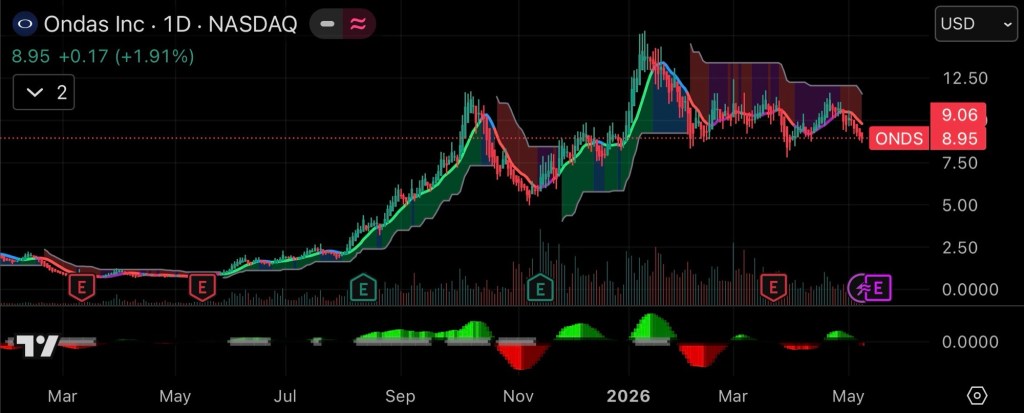
Over the past year, investor interest in ONDS has accelerated as geopolitical tensions, rising defense spending, and demand for autonomous security systems have expanded globally. The company’s partnerships, acquisitions, and expanding backlog have positioned it as a speculative growth stock with significant upside potential but also elevated volatility and execution risk.
According to recent company updates, Ondas reported preliminary 2025 revenue between $49.7 million and $50.7 million, substantially ahead of prior guidance. Management also increased its 2026 revenue outlook to as much as $375 million, supported by growing defense contracts and autonomous drone deployments.
The Core Investment Thesis
Ondas is attempting to build an integrated autonomous intelligence ecosystem combining:
- Autonomous drones
- Counter-UAS defense systems
- AI-driven operational software
- Remote wireless communications infrastructure
- Border and critical infrastructure monitoring systems
Its flagship technologies include:
- Optimus drone systems
- Iron Drone Raider counter-UAS platforms
- Scout autonomous systems
- AI-enabled command-and-control architecture
The company has increasingly focused on military, homeland security, and infrastructure applications where demand has accelerated globally.
One of the most notable developments for investors was Ondas’ partnership with Palantir Technologies to integrate Palantir’s AI and data fusion capabilities into Ondas autonomous systems. Analysts believe this partnership could improve scalability and strengthen Ondas’ positioning in next-generation defense operations.
Short-Term Growth Outlook
In the short term, ONDS remains heavily momentum-driven. Several catalysts could impact the stock over the next 6–12 months:
1. Expanding Defense Contracts
Ondas recently announced:
- Multi-million-dollar European airport security contracts
- New Middle East counter-drone orders
- A $20 million autonomous border security program
These announcements suggest accelerating commercial adoption of autonomous security systems.
2. Revenue Acceleration
Management forecasts dramatic year-over-year growth in 2026 revenue, supported by an expanding backlog and defense demand. Revenue growth has become one of the primary bullish arguments for the stock.
3. Retail and Institutional Interest
ONDS has gained traction among retail traders and defense-focused growth investors. Increased trading volume and short interest could continue to create sharp price swings.
4. Upcoming Earnings
Investors are closely watching the company’s next earnings release scheduled for May 14, 2026, which may provide additional guidance and contract updates.
Long-Term Opportunities
The longer-term opportunity for Ondas centers on becoming a major provider of autonomous infrastructure systems.
Potential long-term drivers include:
- Global expansion of autonomous defense systems
- AI-enabled battlefield coordination
- Smart city and critical infrastructure monitoring
- Border protection technologies
- Autonomous aviation and robotics
- NATO and allied defense modernization
The company also benefits from broader trends in:
- Defense digitization
- Drone warfare evolution
- AI-enhanced surveillance
- Critical infrastructure protection
If management successfully scales operations and improves profitability, Ondas could evolve from a speculative small-cap into a more established defense technology company over the next 3–5 years.
However, risks remain substantial.
Key Risks Investors Should Monitor
Despite its growth story, ONDS carries elevated risk factors:
- Continued net losses
- Potential shareholder dilution
- Dependence on government contracts
- Execution risk on scaling production
- Competitive pressure from larger defense firms
- High stock volatility
- Heavy reliance on future growth projections
The company is still in an aggressive expansion phase and has not yet established consistent profitability.
Competitive Landscape
| Company | Primary Focus | Market Position | Relative Financial Strength |
|---|---|---|---|
| Ondas Holdings | Autonomous drones, counter-UAS, AI systems | Emerging small-cap disruptor | Speculative / growth-stage |
| AeroVironment | Military drones and loitering munitions | Established defense contractor | Strong |
| Palantir Technologies | AI defense software and analytics | AI infrastructure leader | Very strong |
| Kratos Defense & Security Solutions | Autonomous defense systems | Mid-cap defense innovator | Moderate to strong |
| DroneShield | Counter-drone defense technology | Specialized counter-UAS player | Moderate |
ONDS Stock Performance Snapshot
| Metric | Data |
|---|---|
| Current Share Price | Approximately $9 |
| 52-Week Performance | Significant volatility with major upside swings |
| Market Cap | Approximately $2.35 billion |
| Sector | Aerospace & Defense Technology |
| Profitability | Currently unprofitable |
| Revenue Trend | Rapid growth trajectory |
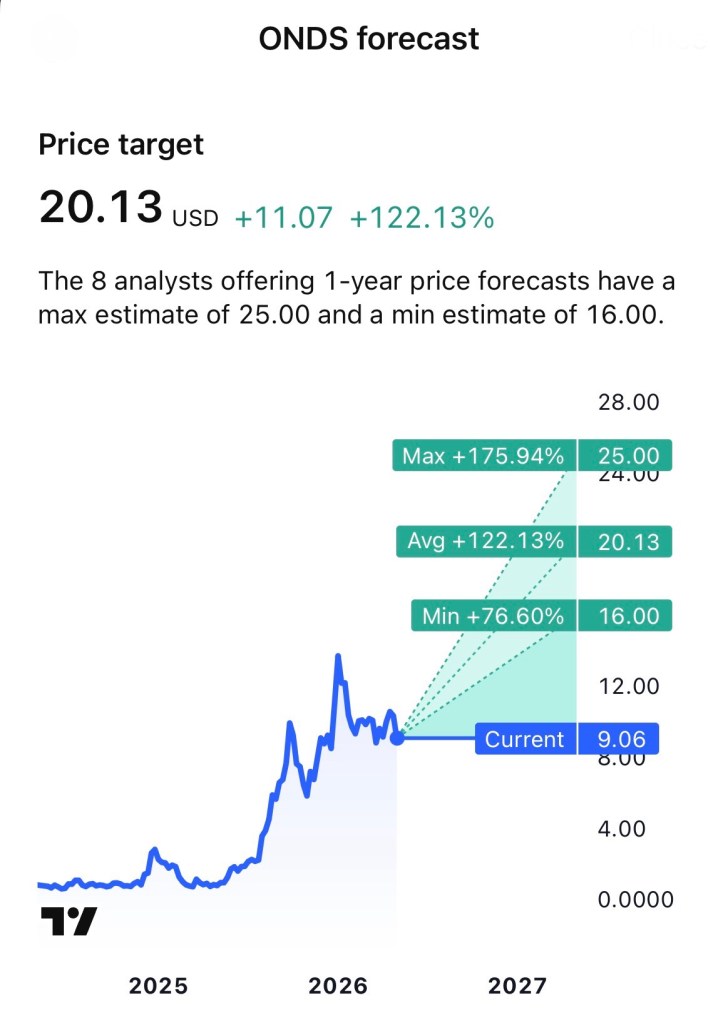
| Analyst Sentiment | Bullish but speculative |
Market data current as of May 2026.
Financial Strength Overview
| Category | Assessment |
|---|---|
| Revenue Growth | Strong |
| Cash Position | Improving |
| Debt Management | Moderate risk |
| Profitability | Weak currently |
| Backlog Growth | Strong |
| Institutional Interest | Increasing |
| Share Dilution Risk | Elevated |
Final Analysis
Ondas Holdings represents one of the more aggressive speculative opportunities in the autonomous defense and AI-enabled drone market. The company is benefiting from powerful macro trends including rising defense budgets, geopolitical instability, and increased demand for autonomous systems.
For aggressive growth investors, ONDS may offer substantial upside if management successfully executes on revenue expansion and large-scale deployment opportunities. However, the stock remains highly volatile and should likely be viewed as a speculative position within a diversified portfolio rather than a conservative core holding.
Investors considering ONDS should closely monitor:
- Earnings growth
- Contract execution
- Cash burn
- Share dilution
- Defense spending trends
- AI partnership developments
Disclosure
The author currently owns a position in Ondas Holdings $ONDS. This article reflects personal opinions and is intended for informational purposes only. It should not be considered financial advice or a recommendation to buy or sell securities. Investors should conduct their own due diligence and consult a licensed financial advisor before making investment decisions.