Pressure, Progress, and the Price of Staying Prepared

This week delivered a useful reminder that health and wealth rarely move on separate tracks. Interest rates, energy prices, public-health concerns, and advances in mental-health treatment can all affect the same household… sometimes simultaneously.

The larger lesson is not to predict every headline. It is to build enough margin into our health, finances, and daily routines that one difficult week does not knock us completely off course.

The Federal Reserve Raises Rates Again

The biggest financial story came from the Federal Reserve. On September 16, the Fed raised its target range for the federal funds rate by a quarter percentage point, bringing it to 3.75%–4.00%. The vote was unanimous.

For consumers, another rate increase can translate into higher borrowing costs on credit cards, variable-rate debt, auto loans, and eventually some mortgages. Savers may benefit if banks and money-market funds pass along higher yields, but that benefit can be offset when household expenses rise at the same time.

Investors should resist making an all-or-nothing move based on one Fed meeting. Higher rates can pressure richly valued growth stocks, real estate, and other rate-sensitive assets. However, they can also create opportunities in cash-equivalent investments, short-term Treasuries, and financially strong companies that generate dependable cash flow.

My approach remains simple: stay diversified, keep some cash available, dollar-cost average into high-conviction positions, and avoid chasing whatever moved the most this week. Volatility is uncomfortable, but it can also reward patience and preparation.
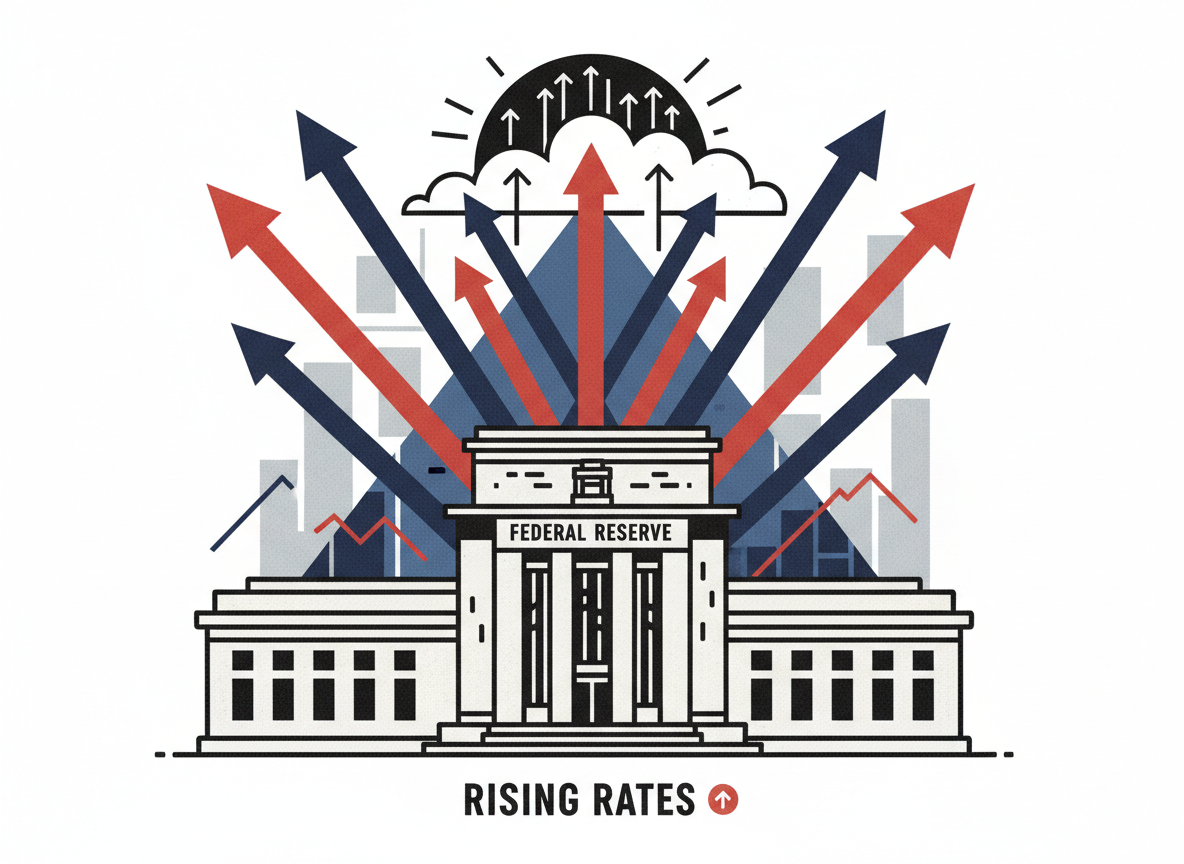
Illustrated editorial style artwork showing a large Federal Reserve building with dramatic upward-pointing arrows symbolizing rising interest rates. Stylized like a newspaper or health-economics publication illustration. Bold lines, limited color palette, serious tone.

Energy Costs Are Becoming a Household Issue Again

Rising gasoline and diesel prices are more than a transportation story. Diesel powers the trucks, equipment, and supply chains that move much of what Americans buy. When those costs increase, businesses often pass at least part of the expense to consumers.

That means higher energy prices can appear in grocery bills, delivery fees, airfare, household goods, and corporate profit margins. They can also complicate the Fed’s inflation fight because energy touches nearly every part of the economy.

For households, this is a good week to review spending rather than panic. Small adjustments combining errands, checking insurance and subscription costs, using fuel rewards wisely, and directing extra cash toward high-interest debt can help absorb rising prices without abandoning long-term investing goals.

Investors should watch companies with heavy transportation, manufacturing, or distribution costs. Revenue growth may look healthy while margins quietly weaken. In this environment, balance-sheet strength and pricing power matter.
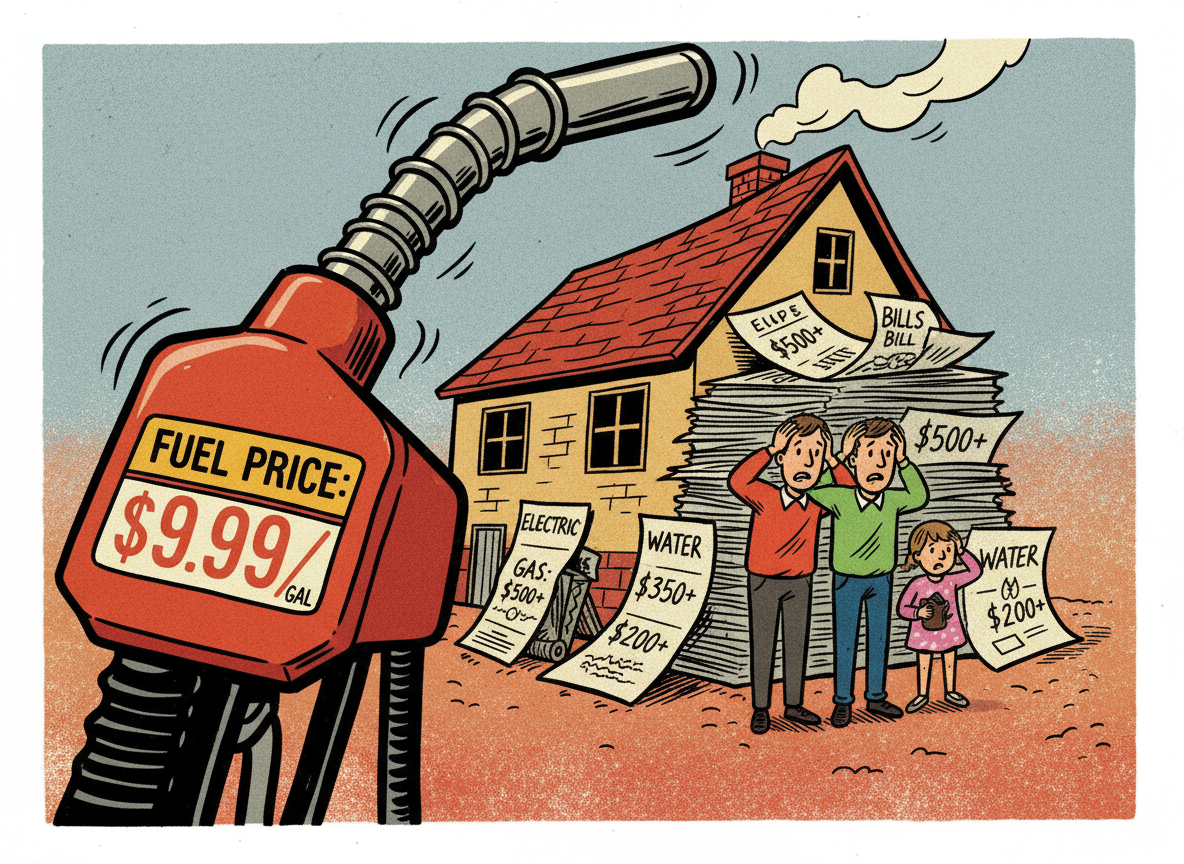
Illustrated editorial artwork of a fuel pump nozzle with a price display showing high numbers, and a household in the background with utility bills. Stylized like a newspaper editorial illustration. Bold, expressive lines, limited warm color palette.

Mental-Health Treatment Continues to Evolve

On September 14, the FDA held a public hearing on the potential future therapeutic use of psychedelic drug products in supervised and supportive settings. The agency gathered perspectives on possible benefits, risks, clinical standards, patient protections, and the evidence that would be required.

This does not mean psychedelic treatments have received broad approval. It does show that federal regulators are seriously examining how emerging therapies might fit into a safe, evidence-based medical framework.

That matters to me personally. After completing TMS and reaching remission from depression, I understand how meaningful it can be when a treatment finally helps after a long struggle.

Innovation deserves hope but also discipline. New mental-health therapies require careful research, qualified medical supervision, honest discussions about risk, and strong protections for vulnerable patients.

The encouraging trend is that mental health is increasingly being treated like health: something worthy of scientific investment, open conversation, and individualized care.

Illustrated editorial artwork of a person sitting in a calm therapy session, warm light, a therapist listening attentively. Stylized like a health publication illustration — hopeful, human, and warm. Soft colors, clean editorial lines.

Public-Health Awareness: Rare Does Not Mean Ignorable

Rabies concerns also received attention this week following several unusual animal-exposure incidents. Human rabies remains rare in the United States, but it is almost always fatal after symptoms appear. The good news is that prompt wound cleaning, medical evaluation, and post-exposure vaccination can prevent the disease when treatment begins in time.

The practical takeaway is straightforward: never dismiss a bite, scratch, or possible saliva exposure involving a bat or an unfamiliar wild or domestic animal. Wash the area thoroughly and contact a healthcare professional or local health department promptly. Pet owners should also keep their animals’ vaccinations current.

Preparedness is not fear. It is knowing what deserves immediate action.

Illustrated editorial artwork of a veterinarian or public health worker in a natural outdoor setting, examining a small animal, with a community awareness poster in the background. Informative, calm, and reassuring editorial illustration style. Clean lines, muted natural colors.

One Step Forward

This week’s health and wealth stories point toward the same principle: protect your margin.

Financial margin means maintaining emergency savings, controlling expensive debt, diversifying investments, and leaving room to take advantage of opportunities.

Health margin means keeping appointments, following treatment plans, remaining active, sleeping as well as possible, and responding promptly when something feels wrong.

My one step forward this week is to review one area of vulnerability instead of trying to fix everything at once. That could mean checking the interest rate on a credit card, adding a little to an emergency fund, scheduling a delayed medical appointment, or simply getting outside for a daily walk.

Progress is rarely one giant decision. More often, it is a series of small choices that make us harder to knock down.

Illustrated editorial artwork of a person taking a confident step forward on a path — symbolic and hopeful. Could show someone walking, journaling, or making a phone call. Warm, optimistic editorial illustration style, like a health or wellness publication. Clean lines, uplifting color palette.

References

Disclaimer: This article is for educational and informational purposes only. It is not medical, investment, tax, or financial advice. Consult qualified professionals regarding your individual circumstances.

About the Author:

David Dandaneau is a client relations analyst that covers the insurance and financial services industry. He is known for his insightful analysis and comprehensive coverage of market trends and regulatory developments.

Bonds Are Back: From Portfolio Stabilizer to Income and Opportunity Engine

For much of the past decade, bonds were viewed primarily as a defensive allocation useful for dampening volatility, but rarely exciting. With historically low yields following the Global Financial Crisis and through the pandemic era, investors increasingly turned toward equities for meaningful returns while bonds played a passive role as a stabilizer.

That narrative is now changing. Bonds are once again emerging not only as a ballast for portfolios but as a legitimate source of income, total return potential, and tactical opportunity particularly for investors who understand how to position themselves across the yield curve.

The Great Reset: Higher Yields Have Changed the Equation

The most important development driving renewed interest in bonds is simple: yields are materially higher than they were just a few years ago.

Following aggressive Federal Reserve rate hikes between 2022 and 2024 to combat inflation, interest rates across maturities reset to levels not seen in over 15 years. As a result:

  • Short-term U.S. Treasury yields have hovered between 4.0% and 5.0%
  • Intermediate-term Treasuries offer yields in the 3.8% to 4.5% range
  • Investment-grade corporate bonds often yield 4.5% to 6.0%
  • Select high-quality municipal bonds provide tax-equivalent yields exceeding 6% for high-income investors

This shift represents a structural change. Investors can now generate meaningful income from bonds without assuming excessive credit risk or volatility.

For retirees, income-focused investors, and balanced portfolio managers, this is a significant opportunity.

Understanding the Yield Curve: Opportunity Lies in Positioning

The yield curve which plots interest rates across different maturities has been unusually dynamic in recent years. In some periods, shorter-term bonds have yielded more than longer-term bonds, creating what is known as an inverted yield curve, often associated with economic transitions.

This environment creates multiple strategic options.

Short-Term Bonds: High Income, Low Duration Risk

Short-term bonds (1–3 years maturity) currently offer attractive yields with minimal sensitivity to interest rate changes. This makes them ideal for:

  • Conservative investors
  • Cash alternatives
  • Capital preservation with income

They provide flexibility, allowing investors to reinvest at higher rates if yields rise further.

Intermediate-Term Bonds: The “Sweet Spot”

Many professional portfolio managers consider the intermediate portion of the yield curve (3–7 years) to offer the best balance of income and risk.

These bonds:

  • Provide strong yields
  • Offer moderate duration exposure
  • Stand to benefit if interest rates decline in the future

If rates fall, intermediate bonds may appreciate in price, delivering both income and capital gains.

Long-Term Bonds: Strategic Opportunity for Rate Declines

Long-duration bonds (10+ years) are more sensitive to interest rate movements but offer significant upside potential if interest rates decline.

When rates fall:

  • Bond prices rise
  • Longer-duration bonds rise more dramatically

This creates potential total return opportunities beyond income alone.

Bonds Are Once Again Competing with Stocks

One of the most important implications of higher yields is that bonds are now competitive with equities from an income perspective.

Consider this comparison:

  • S&P 500 dividend yield: approximately 1.5%
  • Investment-grade bonds: 4.5% to 6.0% yield
  • Treasury bonds: 3.8% to 4.5% yield

For the first time in many years, bonds offer substantially higher income with lower volatility.

This improves the risk-return tradeoff of balanced portfolios.

Portfolio Implications: A Strategic Shift Back Toward Fixed Income

Financial professionals increasingly recommend a renewed allocation to bonds—not just for safety, but for income generation and opportunity capture.

Thoughtful positioning across maturities can provide three simultaneous benefits:

1. Reliable Income Stream

Higher yields allow investors to generate consistent income without relying solely on dividends or equity appreciation.

2. Capital Appreciation Potential

If interest rates decline in the next 12–36 months, as many economists expect bond prices may rise, providing total return potential.

3. Risk Diversification

Bonds help reduce portfolio volatility and provide protection during equity market downturns.

Recommended Portfolio Framework: Laddered and Diversified

Rather than concentrating exposure in a single maturity, many advisors recommend a laddered bond strategy, which distributes investments across multiple maturities.

A sample framework may include:

  • 30% Short-Term Bonds (1–3 years)
    Provides stability and reinvestment flexibility
  • 40% Intermediate-Term Bonds (3–7 years)
    Offers strong income and balanced rate sensitivity
  • 20% Long-Term Bonds (7–20 years)
    Positions portfolio for capital appreciation if rates decline
  • 10% Opportunistic Credit (Investment-grade corporates or municipals)
    Enhances yield without excessive risk

This structure balances income, stability, and growth potential.

The Role of Bonds in 2026 and Beyond

The bond market is no longer an afterthought. It has returned to its traditional role as both a defensive and offensive component of a well-constructed portfolio.

Investors who actively position across the yield curve can benefit from:

  • Elevated income levels
  • Potential capital gains from future rate declines
  • Improved diversification and portfolio stability

After years of offering limited returns, bonds are once again doing what they were always meant to do: generate income, preserve capital, and create opportunity.

For disciplined investors, this is not merely a defensive allocation… it is a strategic advantage.

References

Board of Governors of the Federal Reserve System. (2026). Selected interest rates (daily) – H.15 release. https://www.federalreserve.gov/releases/h15/

U.S. Department of the Treasury. (2026). Daily treasury yield curve rates. https://home.treasury.gov/resource-center/data-chart-center/interest-rates

Federal Reserve Bank of St. Louis. (2026). 10-year treasury constant maturity rate (DGS10). FRED Economic Data. https://fred.stlouisfed.org/series/DGS10

U.S. Securities and Exchange Commission. (2024). Investor bulletin: Bonds. https://www.sec.gov/resources-for-investors/investor-alerts-bulletins/investor-bulletin-bonds

Morningstar, Inc. (2026). Fixed-income outlook and bond market commentary. https://www.morningstar.com

S&P Dow Jones Indices. (2026). S&P 500 dividend yield and index characteristics. https://www.spglobal.com/spdji/en/indices/equity/sp-500/

Vanguard Group. (2026). Economic and market outlook: Fixed income perspectives. https://investor.vanguard.com/investment-products/fixed-income

BlackRock. (2026). Global fixed income outlook. https://www.blackrock.com/institutions/en-us/insights/fixed-income

Talos Energy (NYSE: TALO): A Strategic Energy Investment Entering 2026

Talos Energy Inc. (NYSE: TALO), an independent offshore oil and gas exploration and production company focused primarily on the U.S. Gulf of Mexico, is emerging as a notable energy equity entering 2026. With improving operational efficiency, disciplined capital allocation, and renewed analyst optimism, Talos presents a risk-adjusted opportunity for investors seeking exposure to offshore energy assets.

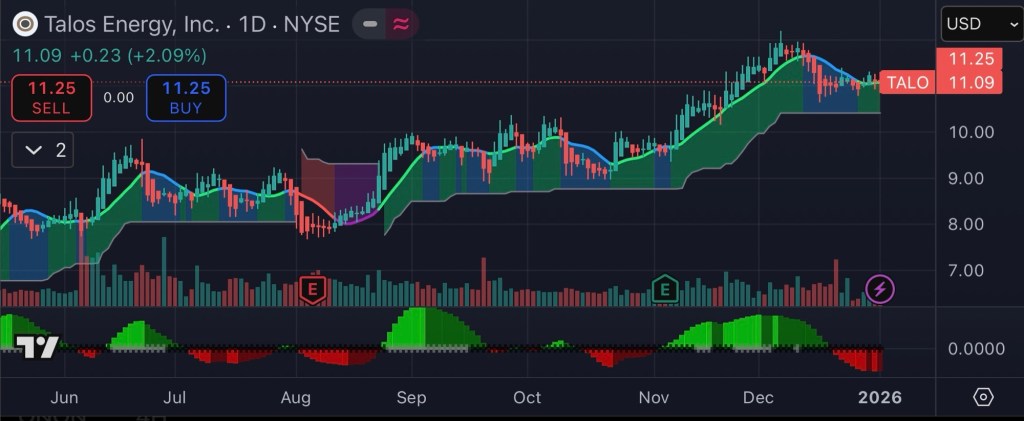
As of early January 2026, Talos Energy shares are trading near $11.25, recently touching a 52-week high of approximately $11.64, reflecting improving technical momentum and investor sentiment (Investing.com, 2025).

Operational Performance and Financial Progress

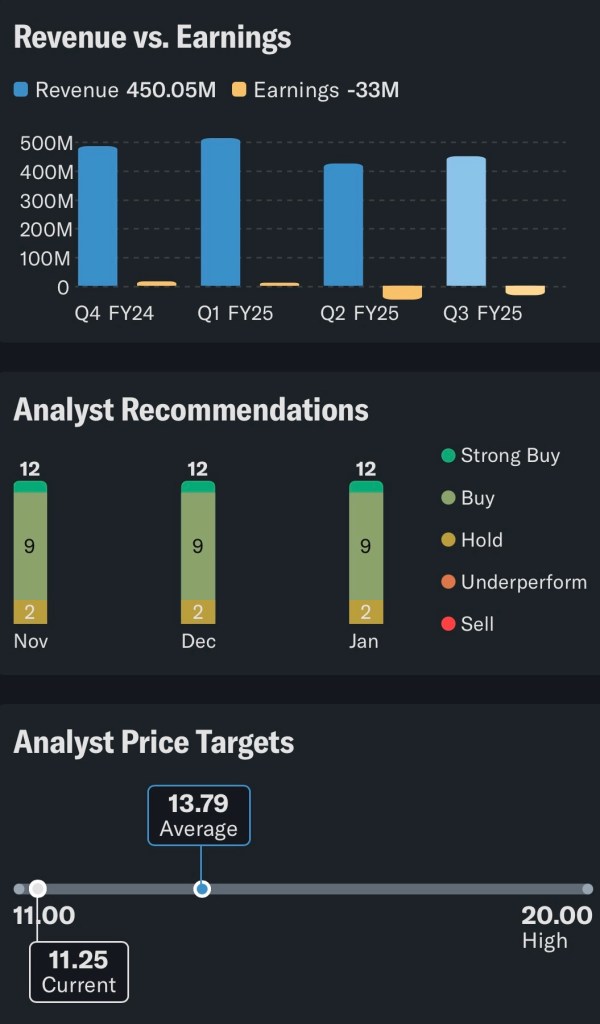
Talos Energy reported solid operational execution throughout 2025 despite a volatile commodity pricing environment. In its third quarter 2025 earnings report, the company disclosed average production of approximately 95.2 thousand barrels of oil equivalent per day (MBoe/d), supported by strong performance across its core offshore assets (Talos Energy Inc., 2025a).

Notably, Talos generated over $100 million in adjusted free cash flow during Q3 2025, enabling share repurchases and reinforcing management’s emphasis on shareholder returns and balance sheet strength (Talos Energy Inc., 2025a). While net income remained pressured by non-cash impairment charges, free cash flow generation has become a central pillar of the company’s investment thesis.

Strategic Initiatives and Growth Drivers

Talos has outlined an enhanced corporate strategy aimed at improving capital efficiency and long-term cash flow sustainability. Management has indicated a goal of achieving approximately $100 million in incremental annualized cash flow entering 2026, driven by operational efficiencies, optimized drilling programs, and cost discipline (Talos Energy Inc., 2025b).

Exploration remains another key catalyst. The company’s Daenerys discovery in the Gulf of Mexico has shown promising results, with appraisal drilling planned for 2026. Successful development could materially expand Talos’ reserve base and future production profile (Talos Energy Inc., 2025a).

In addition, broader offshore industry trends may serve as tailwinds. According to Reuters (2025), improved drilling economics and declining onshore productivity are refocusing attention on offshore Gulf of Mexico assets, potentially supporting higher long-term valuations for companies like Talos.

Market Sentiment and Analyst Outlook

From a technical perspective, Talos Energy has demonstrated improving relative strength. The stock earned a Relative Strength (RS) Rating above 80, signaling outperformance versus the broader market and attracting momentum-oriented investors (Investor’s Business Daily, 2025).

Analyst sentiment is moderately bullish. Consensus estimates reflect an average 12-month price target near $14–$15, with more optimistic forecasts reaching $20 per share, implying meaningful upside if execution and commodity pricing align favorably (StockAnalysis.com, 2025; Investing.com, 2025).

Risks to Consider

Despite improving fundamentals, Talos Energy is not without risk. The company remains sensitive to fluctuations in oil and natural gas prices, and earnings volatility persists due to capital-intensive offshore operations. Exploration results, regulatory considerations, and macroeconomic factors could all impact performance.

Investors should also note that sustained profitability has yet to be firmly established on an annual basis, making execution in 2026 a critical determinant of valuation expansion.

2026 Price Outlook

Based on current fundamentals, analyst projections, and sector trends, several scenarios appear plausible for Talos Energy by the end of 2026:

  • Base Case: Stable commodity prices and continued execution support a valuation in the $14–$16 range.
  • Bullish Case: Successful exploration, higher oil prices, and sustained free cash flow expansion could drive shares toward $18–$20+.
  • Bearish Case: Commodity weakness or operational setbacks may limit upside and keep shares range-bound near current levels.

Conclusion

Talos Energy enters 2026 positioned as a leveraged play on offshore energy resilience and operational discipline. While risks remain inherent, the company’s improving free cash flow profile, exploration upside, and favorable analyst sentiment suggest that TALO may offer attractive long-term potential for investors with a tolerance for volatility.


Disclosure

The author owns a position in Talos Energy (NYSE: TALO). This article is for informational purposes only and does not constitute financial or investment advice. Readers are strongly encouraged to conduct their own research and consult a qualified financial professional before making any investment decisions.


References

Investing.com. (2025, December 3). Talos Energy stock reaches 52-week high at 11.64 USD. Investing.com. https://www.investing.com/news/company-news/talos-energy-stock-reaches-52week-high-at-1164-usd-93CH-4388939

Investor’s Business Daily. (2025, December 30). Stocks showing improving market leadership: Talos Energy earns 81 RS rating. https://www.investors.com/ibd-data-stories/stocks-showing-improving-market-leadership-talos-energy-earns-81-rs-rating/

Reuters. (2025, October 15). Improved drilling to boost Gulf of Mexico offshore oil output as U.S. onshore growth slows. Reuters. https://www.reuters.com/business/energy/improved-drilling-boost-gulf-mexico-offshore-oil-output-us-onshore-growth-slows-2025-10-15/

StockAnalysis.com. (2025). Talos Energy (TALO) stock forecast and analyst price targets. https://stockanalysis.com/stocks/talo/forecast/

Talos Energy Inc. (2025a, November 5). Talos Energy announces third quarter 2025 operational and financial results. https://www.talosenergy.com/investor-relations/news/news-details/2025/Talos-Energy-Announces-Third-Quarter-2025-Operational-and-Financial-Results/

Talos Energy Inc. (2025b, June 17). Talos Energy announces enhanced corporate strategy. https://www.talosenergy.com/investor-relations/news/news-details/2025/Talos-Energy-Announces-Enhanced-Corporate-Strategy/

Younger Boomers Bring a “Life-by-App” Mindset Into Retirement — And It’s Reshaping the Longevity Economy

Technology is becoming inseparable from daily life, as one generation is quietly redefining what it means to age: younger Baby Boomers. Born in the late 1950s to mid-1960s, this group spent the peak of their careers adapting to the rise of digital tools, mobile devices, automated systems, and internet-driven workplaces. Now, as they transition into retirement, they’re carrying those habits forward — and in doing so, they’re reshaping the broader longevity economy.

From Typewriters to Touchscreens: A Generation That Adapted

Unlike older Boomers who spent most of their careers in analog environments, younger Boomers navigated a unique technological evolution. They learned to send their first emails midway through their careers, adopted smartphones while still raising families, and saw entire industries digitize around them.

That exposure created a distinct comfort level with digital convenience — a “life-by-app” approach that now defines how they plan, save, spend, and even socialize during retirement.

How Younger Boomers Are Using Technology to Their Advantage

1. Financial Planning Goes Digital
Younger Boomers are more likely than previous generations to use:

  • Investment and retirement apps
  • Automated budgeting tools
  • Online banking
  • Robo-advisor platforms for risk-managed portfolios

This not only makes retirement planning more accessible but also gives them real-time insights that older retirees rarely had.

2. Healthcare from a Screen
Telehealth visits, wearable health trackers, and medication-management apps are becoming standard tools. Younger Boomers embrace these resources to stay proactive about their health and remain independent longer.

3. Social Connectivity Without Borders
Younger Boomers maintain friendships and family relationships through video calls, social media, and messaging apps — reducing isolation and supporting emotional well-being, especially as they age.

4. Flexible Working in Retirement Years
Many within this group are exploring partial retirement through gig work, consulting, and remote job platforms. Technology allows them to earn supplemental income on their own terms.

The Contrast: Older Boomers and Minimal-Tech Retirement

Older Boomers — those born in the late 1940s to mid-1950s — often approach retirement differently. Many prefer:

  • In-person banking over mobile banking
  • Physical mail over digital statements
  • Human financial advisors over algorithm-driven ones
  • Paper calendars and appointment books
  • Face-to-face healthcare visits

This doesn’t mean they reject technology entirely, but they generally use it as a tool of convenience rather than a lifestyle backbone.

A Growing Generational Technology Gap

This difference isn’t about willingness — it’s about familiarity. Younger Boomers spent decades experiencing technology woven into their work. Older Boomers did not. As a result, younger Boomers:

  • Adopt new tools faster
  • Feel more confident with apps and automation
  • Expect digital customer service
  • Research and make decisions online

This gap is reshaping industries as companies redesign services for a more tech-ready retiree population.

Impact on the Longevity Economy

The longevity economy — the economic activity driven by people aged 50+ — is now valued at trillions. Younger Boomers are accelerating its growth in three major ways:

1. Increased Demand for Digital-Friendly Services
From virtual healthcare to AI-powered retirement tools, industries are rapidly building platforms with older users in mind.

2. Growth of Smart Home and Independent Living Tech
Devices like smart thermostats, automated lighting, fall-detection sensors, and home assistants are booming as younger Boomers look for safe, self-sufficient living.

3. New Expectations for Customer Experience
Retirement planning firms, healthcare providers, retailers, and insurance companies are being forced to modernize their systems or risk losing loyal customers.

Looking Ahead: Retirement Will Never Look the Same

As younger Boomers continue to enter retirement with smartphones in hand and digital habits intact, they are quietly transforming what aging means in America. Their comfort with technology is enabling longer independence, more financial empowerment, and more flexible lifestyles.

The narrative is shifting: retirement is no longer about slowing down — it’s about staying connected, informed, and in control.

And for the generations that follow, this “life-by-app” legacy will likely become the new norm.