Mission Produce ($AVO): The avocado company worth a closer look

Mission Produce, Inc. (NASDAQ: AVO) is a vertically integrated supplier of fresh Hass avocados (and growing categories such as blueberries and mangoes). The company’s mission centers on reliably sourcing, ripening, packing and distributing high-quality avocados year-round while expanding into complementary produce categories to smooth seasonality and add higher-margin lines for customers. (SEC+1)

Why some investors call $AVO a “hidden gem”
• Scale in a tight market: Mission Produce reported trailing-12-month revenue of roughly $1.4B (TTM), driven by higher selling prices and broadening sourcing to Peru, Mexico, Guatemala and other regions — giving it scale in an industry with frequent supply shocks. (Yahoo Finance+1)
• Recent momentum in results: the company reported Q2 fiscal-2025 revenue of $380.3M (up ~28% year-over-year) and continued quarter-to-quarter revenue strength into Q3, reflecting strong demand and price environment for Hass avocados. Those beats have grabbed investor attention. (Mission Produce Investors+1)
• Diversification & supply-footprint: Mission is investing in packhouses and farming operations (including expansion in Guatemala and development of blueberry and mango programs), which helps reduce single-market exposure and gives operational levers when avocado prices swing. (Blue Book Services+1)
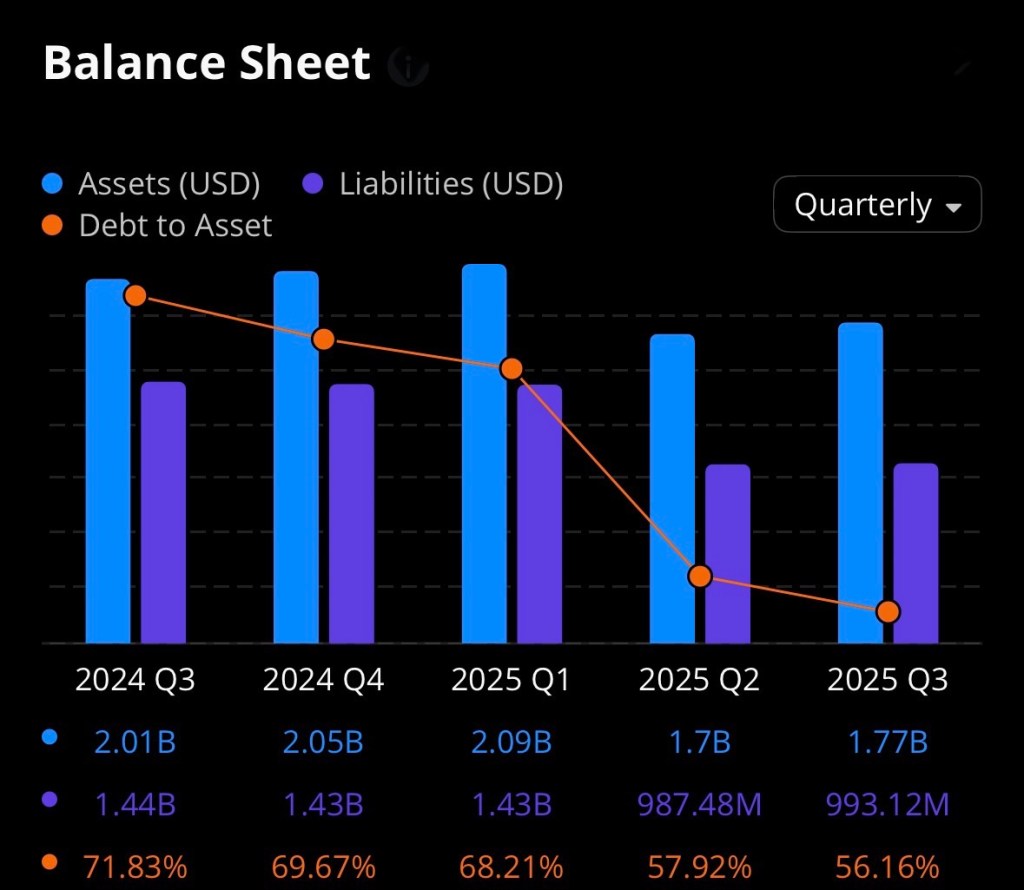
• Clean-ish balance sheet for a seasonal ag business: total assets are roughly $1.0B with total liabilities around $402M (SEC filings / investor materials show positive shareholders’ equity and manageable long-term debt) — positioning it to withstand seasonal price swings and invest in capacity. (SEC+1)

Key risks
• Commodity and weather risk: avocados are sensitive to weather (El Niño, droughts) and geopolitical trade/tariff moves; supply disruptions can quickly swing margins. (MarketWatch)
• Price cyclicality: the company’s Marketing & Distribution segment drives most revenue, so falling avocado prices can reduce top-line even as volumes rise. (Cash Flow Templates)

📈 Current Price & 12-Month Outlook

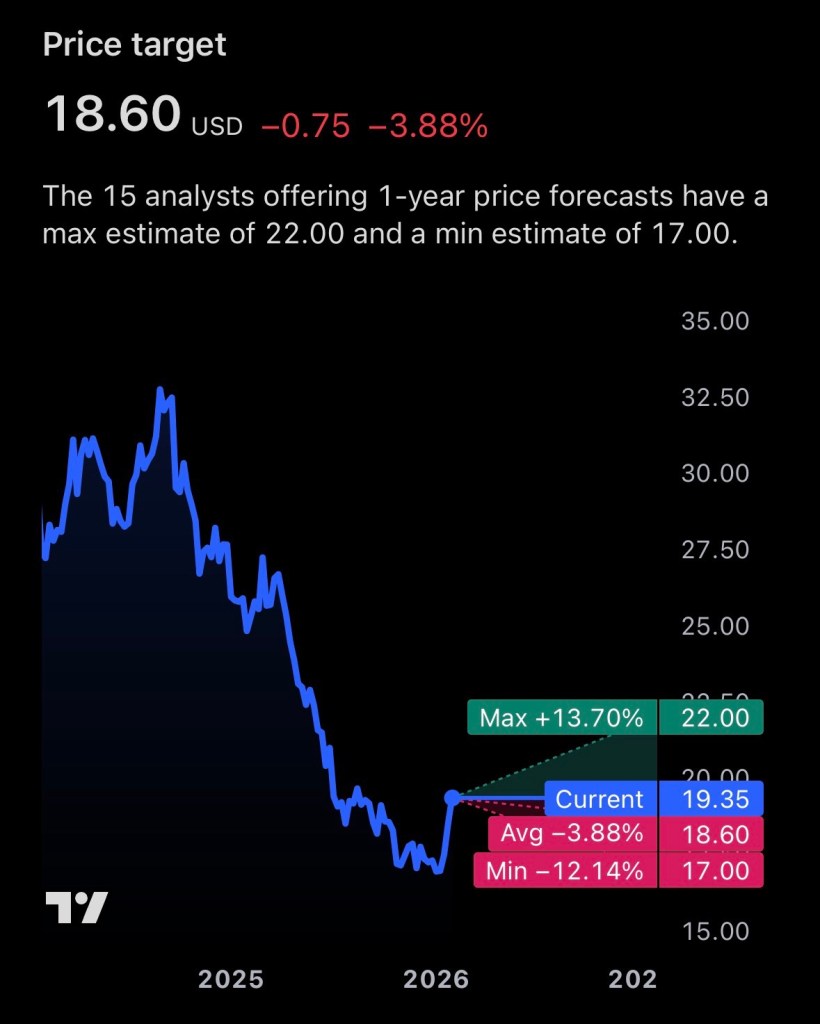
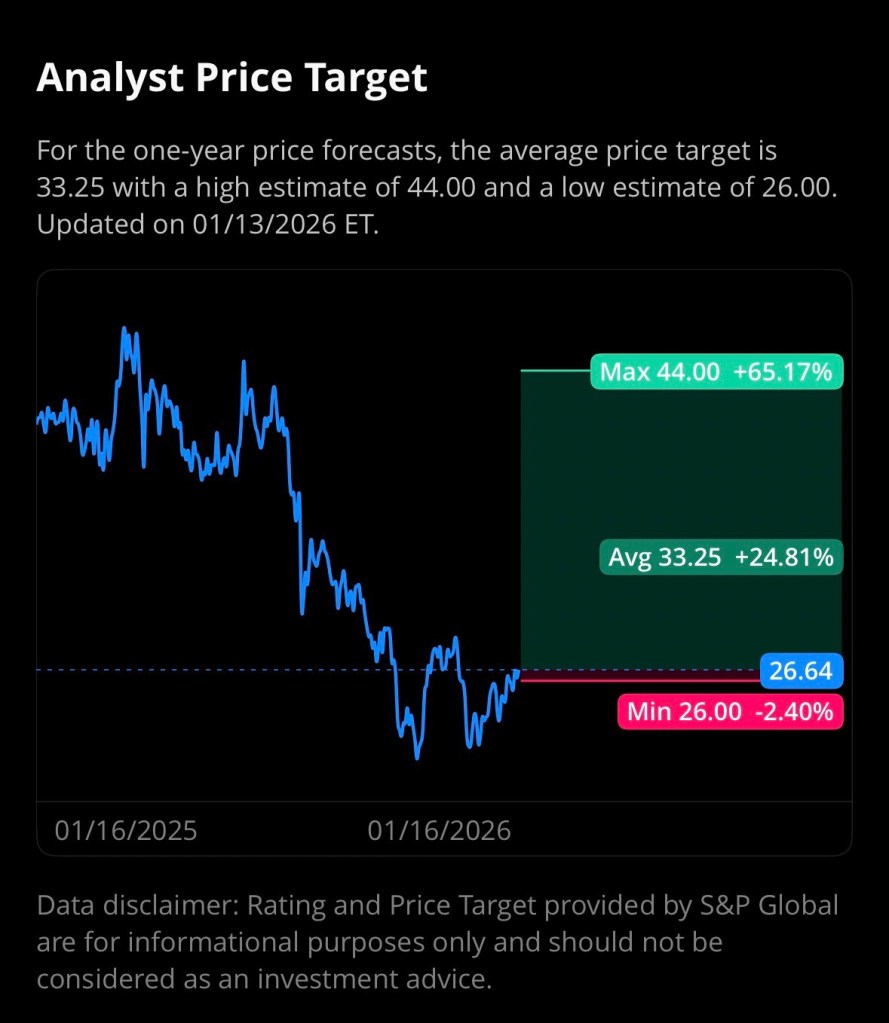
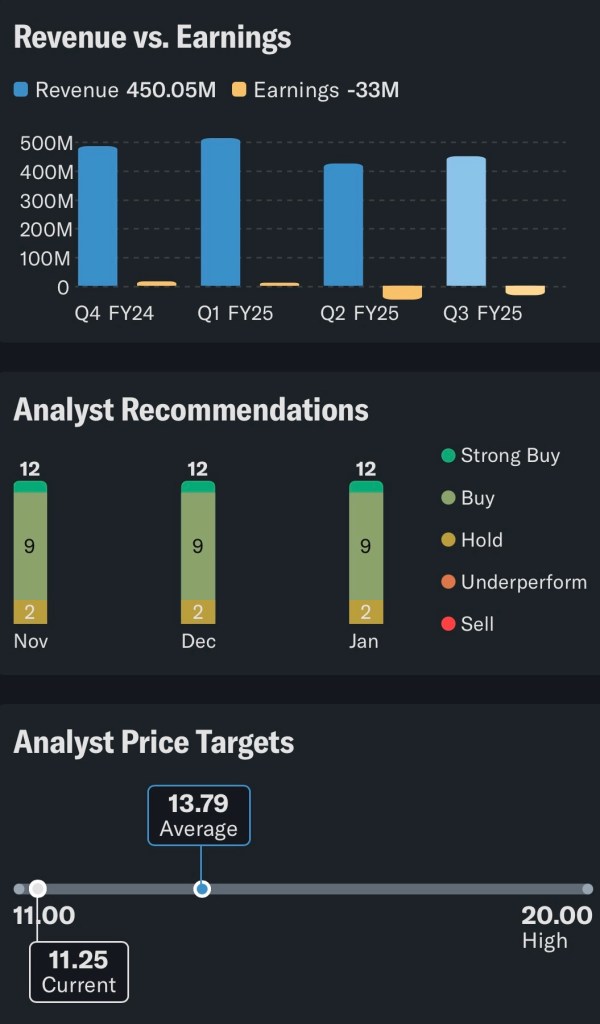
As of December 4, 2025, AVO shares trade around US$12.03 per share. (MarketBeat+2StockAnalysis+2) According to recent analyst consensus, many project a 12-month target price of about US $17.00 — implying a potential upside of roughly 40–45% over the next year. (StockAnalysis+2Zacks+2)

If conditions remain favorable — robust demand for avocados, stable supply (including from diversified growing regions), and continued execution on expansion initiatives — AVO could reach or even modestly exceed that $17 target. However, risks such as commodity-price swings, weather events, and shifting consumer demand could temper gains. As with all agriculture-linked equities, the upside remains meaningful but also volatile.

Bottom line
Mission Produce combines market leadership in a high-growth consumer category (avocados), rising scale and an improving product mix. That combination — plus a balance sheet that appears able to support continued investment — is why some investors view $AVO as a “hidden gem” in ag/food distribution. But it remains a cyclical, weather-sensitive play; prospective buyers should weigh valuation, seasonality, and tariff/volume outlooks before acting. (Yahoo Finance+1)

Disclosure: I currently hold a position in Mission Produce, Inc. (NASDAQ: AVO). All information provided is for informational and educational purposes only and should not be interpreted as financial advice, investment recommendations, or an endorsement to buy or sell any security. Investors should conduct their own research and consult with a qualified financial professional before making investment decisions.

References

MarketBeat. (2025, December 4). Mission Produce (AVO) Stock Forecast & Price Target 2025. https://www.marketbeat.com/stocks/NASDAQ/AVO/forecast/ MarketBeat

StockAnalysis.com. (n.d.). Mission Produce, Inc. (AVO) Stock Price & Overview. https://stockanalysis.com/stocks/avo/ StockAnalysis

Zacks. (n.d.). Mission Produce, Inc. (AVO) Price Target & Stock Forecast. https://www.zacks.com/stock/research/AVO/price-target-stock-forecast Zacks

Investing.com. (n.d.). Mission Produce Inc (AVO) Consensus Estimates. https://www.investing.com/equities/mission-produce-inc-consensus-estimates Investing.com

Yahoo Finance. (n.d.). Mission Produce (AVO) Stock Quote & Summary. https://finance.yahoo.com/quote/AVO/ Yahoo Finance+1

Understanding the Santa Claus Rally: A Swing Trader’s Guide

As the calendar closes out and holiday cheer replaces headline noise, U.S. stock markets often show a predictable burst of strength known as the Santa Claus Rally — a short, historically favorable window that many swing traders lean on for quick, low-risk setups. The rally is narrowly defined, reliably rewarded by the data, and backed by a handful of market mechanics (low volume, year-end flows, tax-related reversals) that can amplify short-term moves — exactly the conditions swing traders seek. (Investopedia+1)

What is the Santa Claus Rally (timeframe)?

The conventional definition — credited to Yale Hirsch and the Stock Trader’s Almanac — is the last five trading days of December plus the first two trading days of January (a seven-trading-day window). That short span is when seasonal strength historically concentrates, rather than across the whole of December. (Stock Trader’s Almanac+1)

The numbers: how the S&P 500 and Dow have performed

  • S&P 500: Since roughly 1950, the S&P 500 has averaged about +1.3% over the seven trading days of the Santa Claus Rally, with positive returns roughly 78–79% of the time. That beats a typical seven-day period’s average return and win-rate. (Investopedia+1)
  • Dow Jones Industrial Average: Using the classic post-Christmas window, the Dow has historically been positive about 77% of the time, with average gains in the same ballpark as the S&P by some measures (studies often report roughly +1.4% in the period). (MarketWatch+1)
  • Relative context: Analysts note the Santa Claus window’s 1.3% average gain contrasts with a much smaller average seven-day return (around 0.3%), underscoring the period’s above-normal edge. (LPL)

(These figures come from long-range studies and market almanacs; different start dates or sample periods shift the precise numbers slightly but not the broad conclusion.) (Stock Trader’s Almanac+1)

Why this period favors swing trading

  1. Condensed upside in a known short window. Swing trading profits from predictable, short moves — a seven-day, high-probability uptick is exactly that. Historical win-rates near the ~78% mark give a favorable edge if position sizing and risk controls are used. (Investopedia)
  2. Lower volatility and thinner volume. Holiday trading often sees lighter volume and fewer market-moving news items; prices can drift more cleanly in one direction, letting swing setups (breakouts, momentum continuations, mean-reversion bounces) play out with less intraday whipsaw. (Lower volume can magnify moves in the direction of flows.) (Corporate Finance Institute+1)
  3. End-of-year flows and positioning. Institutional flows (window dressing, year-end rebalancing, bonus/retirement contributions) and a reversal of tax-loss selling can create concentrated buying pressure around year-end and early January. Big inflows into equities have been cited as a driver in some recent Santa rallies. (MarketWatch+1)
  4. Correlation with January and the new year. Historically, a positive Santa Claus Rally has sometimes preceded stronger January returns and a more bullish full year — a dynamic that can attract more buyers into the short window and amplify momentum. (This is a correlation, not a guarantee.) (LPL+1)

Practical swing-trader playbook (how to trade it)

  • Time the window. Look for entries during the last five trading days of December and use targets or exits by the first two trading days of January (or earlier if your plan dictates). The edge is short-lived — don’t stretch holding periods beyond the seasonality. (Stock Trader’s Almanac)
  • Trade probability, not hope. Use setups with clear technical evidence (breakout on rising RSV/volume, pullback to moving average, bullish RSI divergence). Favor names with existing positive momentum.
  • Risk control is essential. Even periods with high historical win-rates can fail; use tight stops, sensible position sizing, and consider defined-risk instruments (protective puts or small options trades) if you want asymmetric payoff.
  • Use ETFs for broad exposure. If you want to play the seasonal tilt without single-stock risk, liquid ETFs (SPY, QQQ, DIA) can capture the move and provide easy entries/exits.
  • Watch volume & implied volatility. Low volume can help moves trend but can also create thin markets. Options traders should check implied volatility — seasonality can compress IV, affecting premium strategies.
  • Consider small-cap/January effect overlap. If you’re a swing trader who also trades small caps, remember the broader January Effect can lift small-cap names in the early month, offering extra upside for appropriately sized trades. (Plus500)

Indicators and signals traders often monitor

  • Short interest and buybacks — low supply + active buybacks can help push prices.
  • Seasonal inflows / fund flows (ETF inflows, mutual fund windows) — high year-end inflows can sustain rallies. (MarketWatch)
  • Volatility (VIX) trend — falling VIX into year-end often accompanies risk-on moves; a sudden spike can kill momentum.
  • Breadth measures (advance/decline lines, number of stocks above 50-day MA) — confirm whether the rally is broad-based or just a narrow megacap lift. (Broad rallies are more robust for swing trades across sectors.)

A quick caution

Seasonal patterns are statistical tendencies, not certainties. Past performance is not a guarantee of future results. There have been years without a Santa Claus Rally (and even reverse episodes), and macro surprises — policy shocks, geopolitical events, or sudden earnings shocks — can reverse the move. Traders should use the seasonal edge as one input among many, not a sole decision rule. (Morningstar+1)

What this means for investors is simple:

The Santa Claus Rally is a short, well-defined window (last five trading days of December + first two trading days of January) that historically offers above-average returns and a high probability of positive performance for major indices like the S&P 500 and the Dow. Those characteristics — concentrated upside, lower intraday noise, and supportive year-end flows — make it an attractive environment for disciplined swing traders who pair tight risk controls with high-probability setups. Just remember: seasonality improves the odds, it doesn’t eliminate risk. (Investopedia+2MarketWatch+2)

References

Canopy Wealth. (2024, December 19). What is the Santa Claus Rally? https://www.canopy-wealth.com/blog/what-is-the-santa-claus-rally Canopy Wealth Management
Corporate Finance Institute. (n.d.). Santa Claus Rally – Overview, Causes, Retrospective. https://corporatefinanceinstitute.com/resources/career-map/sell-side/capital-markets/santa-claus-rally/ Corporate Finance Institute
Interactive Brokers. (2024, December 13). Chart Advisor: Get Ready for the Real Santa Claus Rally. https://www.interactivebrokers.com/campus/traders-insight/chart-advisor-get-ready-for-the-real-santa-claus-rally/ Interactive Brokers
InvestingNews. (2024, December 24). What Is the Santa Claus Rally and Has it Arrived? https://investingnews.com/santa-claus-rally/ Investing News Network (INN)
Investopedia. (2024, December 20). Santa Claus Rally: What It Is and Means for Investors. https://www.investopedia.com/terms/s/santaclauseffect.asp Investopedia
Investopedia. (n.d.). The Santa Claus Rally. https://www.investopedia.com/the-santa-claus-rally-4779941 Investopedia
LPL Research. (2025, January 2). Santa Claus Rally in Jeopardy. https://www.lpl.com/research/blog/santa-claus-rally-in-jeopardy.html LPL
SmartAsset. (2025, August 14). Is the Santa Claus Rally Real? – 2020 Study. https://smartasset.com/financial-advisor/santa-claus-rally-2020 SmartAsset
TSPSmart. (n.d.). Santa Claus Rally. https://tspsmart.com/Santa-Claus-Rally TSP Smart

Celsius $CELH — A sip, a chart, and why traders/investors are watching

You try a new drink and — boom — the product tastes great. That’s exactly what happened when I tried a CELSIUS energy beverage and then went to check the stock. Celsius Holdings (ticker CELH) has been one of the market’s high-profile consumer names this year: rapid top-line growth, headline M&A and distribution moves, and a volatile but elevated share price. Here’s a concise news-style breakdown of what the company is doing, where the stock sits now, why some investors think it’s attractive, and what risks to keep in mind.


Where the stock sits right now

As of November 22, 2025, CELH is trading in the ~$39 range after a pullback from summer highs. Recent intraday and close prints in mid–late November show the stock around $38–$44 depending on the day and data feed. (Investing.com+1)

(See the chart below for an illustrative monthly price run from Oct 2022 → Nov 2025.)

The chart — price context

(Illustrative monthly closes Oct 2022 → Nov 2025; compiled show how the stock ran from low-$20s into the $50–$60 range in mid-2025, then pulled back into the high-$30s in November.) The chart below uses monthly close data gathered from public historical-price sources (illustrative).


Quick company snapshot

Celsius Holdings is a challenger in the energy and “fitness” drink space, known for zero-sugar, functional energy beverages marketed toward active consumers. Over the past 18 months the company has accelerated growth through product line extensions, international distribution deals, and material M&A — most notably the purchase of Alani Nu earlier in 2025 and the addition of Rockstar’s U.S. rights to its portfolio (with PepsiCo retaining international Rockstar ownership). The company says combined brands have been growing well above the U.S. energy category. (Celsius Holdings+1)

Revenue has moved from hundreds of millions to more than $1.3 billion in 2024 and showed continued expansion into 2025, reflecting distribution gains and the Alani Nu contribution. (Macrotrends)


Major recent catalysts (what moved the stock)

  • PepsiCo strategic expansion & stake: In August 2025 PepsiCo increased its position via convertible preferred shares and agreed to deepen distribution cooperation — PepsiCo’s ownership rose to ~11% and PepsiCo will lead distribution for the combined U.S./Canada energy portfolio. That strategic tie (and a PepsiCo board nomination) materially de-risked parts of Celsius’s distribution story and boosted investor sentiment. (Reuters+1)
  • Acquisitions & brand consolidation: Celsius acquired Alani Nu (female-focused, strong social media presence) and obtained U.S. rights to Rockstar Energy — building a “total energy portfolio.” Those moves give Celsius scale, broader consumer reach, and leverage in retailer negotiations. (Celsius Holdings+1)
  • International expansion & flavors: New distribution agreements (e.g., Suntory in the Netherlands) and new flavor launches support deeper retail penetration outside the U.S. and product innovation. (Celsius Holdings)

Investment thesis — why some investors like CELH now

  1. Distribution muscle via PepsiCo — having PepsiCo handle distribution in major channels materially increases shelf placement potential and reduces execution risk versus trying to scale purely on indie distribution. The partnership also sends a validation signal from a major CPG player. (Reuters+1)
  2. Brand roll-up strategy — combining CELSIUS, Alani Nu and the U.S. Rockstar rights creates cross-sell and SKU strategies, economies of scale on procurement/marketing, and more negotiating power with retailers and foodservice. If integration succeeds, revenue and margin expansion are plausible. (Celsius Holdings)
  3. Strong top-line momentum — year-over-year revenue growth has been large over prior years as the product reached mass retail and new channels; that revenue base makes future earnings expansion possible if margins recover. (Macrotrends)
  4. Growth + trading volatility = alpha opportunity — for traders, CELH’s pronounced swings around news (earnings, deals, distribution announcements) create short-term setups — momentum squeezes, event trades around earnings, and pullback buys after headline consolidation.

Where it might be headed — simple scenario sketch (not investment advice)

Below are illustrative, hypothetical scenarios to frame risk/reward. They are not price targets from an analyst — they are scenario examples based on company catalysts and typical valuation ranges for high-growth consumer names.

  • Bull case (successful integration & continued distribution lift): If combined brands scale and margins improve, revenue multiples could re-rate and push CELH back toward its summer highs in the $55–$75 range over 6–12 months (driven by multiple expansion + execution). Key drivers: faster retail rollouts via PepsiCo, international growth, margin leverage. (Celsius Holdings+1)
  • Base case (steady growth, some margin pressure): Continued revenue growth but slower margin recovery; stock trades in a midrange band around $35–$55 as investors balance growth with execution risk. (Macrotrends)
  • Bear case (integration/competition trouble, macro slowdown): Execution issues, weaker retail sell-through, or broader consumer pullback could push the stock below $25–$30 if growth disappoints or if the market de-rates high-growth consumer names. (FullRatio)

Sources for price and history: market feeds and historical pages (Investing.com, Yahoo Finance and similar). I(nvesting.com+1)


Risks — what could go wrong

  • Integration risk: acquisitions (Alani Nu, Rockstar U.S. rights) need careful integration; cultural or distribution missteps can sap margin and distract management. (Celsius Holdings)
  • Valuation & volatility: CELH has been a volatile, headline-driven name — sharp moves up and down occur on news. Short-term traders may profit, long-term investors must stomach drawdowns. (Investing.com)
  • Competition & category dynamics: energy and functional beverages are crowded (PepsiCo, Monster, Red Bull, private labels); sustained share gains aren’t guaranteed.
  • Profitability swings: EPS over recent trailing periods has been uneven; margins can be pressured by promotional activity and integration costs. (FullRatio)

Bottom line

Celsius is no longer a small niche brand — by revenue and deal activity it has scaled into a major, fast-moving name in energy drinks. The PepsiCo strategic tie and brand acquisitions give a clear pathway for distribution and scale, which is why many investors view CELH as an interesting growth play. That said, the stock’s rapid move higher earlier in 2025 and recent pullbacks underline both the upside and the volatility. For traders, event-driven setups and momentum plays can work; for investors, the key questions are whether integration lifts margins and whether PepsiCo’s distribution materially accelerates sustainable growth.

If you liked the drink and are thinking about buying shares, consider: (1) define whether you’re trading or investing, (2) size the position relative to the volatility, and (3) track integration and distribution KPIs (retail placements, foodservice uptake, international rollouts) as the real operational signs that the thesis is working. Official company releases, earnings calls and retail-level data will be the best evidence to watch. (Celsius Holdings+1)


Disclosure: I’m not a licensed financial advisor. This is market commentary and not personalized investment advice. Do your own research (DYOR) — check the latest filings and the company’s next earnings release — and consider speaking with a licensed professional before trading or investing.


References

Celsius Holdings. (2025). Celsius Holdings reports third quarter 2025 results [Press release]. https://www.celsiusholdingsinc.com/

Investing.com. (2025). Celsius Holdings Inc. (CELH) historical data. Retrieved November 2025, from https://www.investing.com/
(Note: Replace with direct historical-data link if desired.)

Macrotrends. (2025). Celsius Holdings revenue 2015–2025. Retrieved November 2025, from https://www.macrotrends.net/

Reuters. (2025, August 29). PepsiCo boosts stake in energy drink maker Celsius. https://www.reuters.com/

Reuters. (2025). Celsius to buy Alani Nu and combine U.S. rights to Rockstar Energy. https://www.reuters.com/

Yahoo Finance. (2025). Celsius Holdings, Inc. (CELH) stock price & historical data. Retrieved November 2025, from https://finance.yahoo.com/

Why We Always Find Ourselves Waiting: The Hidden Cost of Life’s Slowdowns

Waiting might be one of the few universal human experiences that transcends age, background, income, geography, and even personality. Whether we’re stuck in a doctor’s office long past our appointment time, refreshing a stock chart hoping for a green candle, or watching an insurance claim crawl its way through the system, waiting is a constant companion. And while it can be frustrating, it also reveals a lot about how modern life actually works.

The Doctor Will Be With You… Eventually

Anyone who has ever dealt with healthcare knows that time moves differently in a medical office. You check in early, only to wait 20 minutes to be called, 10 more in the exam room, and maybe another week to get your test results.

Doctors aren’t slow because they want to be; they’re slow because they must be. Every patient brings unpredictability. A quick check-up can instantly turn into a crisis, care requires paperwork, and healthcare systems are overloaded. But as patients, it doesn’t feel like logistics—it feels like we’re just waiting… and waiting.

Many people walk out feeling like they spent more time sitting than being seen. And that’s because they have.

Waiting on the Markets: The Slow Burn of Investing

If there’s any arena that tests patience like a doctor’s office, it’s the stock market. You can research the perfect company, run the numbers, time your entry… and still spend weeks or months waiting for the payoff.

Stocks rarely move on our schedule. Bull markets take time to build, bear markets linger longer than anyone likes, and sideways trading can feel like a cosmic joke designed to test your discipline. You watch your screen, refresh your app, maybe check the news again—just in case something changed in the last 45 seconds.

But over the long run, waiting is the strategy. The real returns historically come not from timing the market, but time in the market. Yet even knowing that, we still find ourselves impatient, hoping our future arrives faster.

Insurance: The Art of Hurry Up and Wait

Insurance is another world where waiting feels baked into the design. You file a claim and expect progress. Instead, you’re asked for more documentation, another photo, a follow-up call, a review, an inspection… and then another review.

Insurance companies aren’t trying to delay—they’re trying to verify. Risk assessment requires accuracy, and accuracy takes time. But when it’s your car, your home, your medical bill, or your livelihood on the line, the process can feel like a slow-motion movie you can’t fast-forward.

Ironically, we pay for insurance to create peace of mind, but the waiting period is often when we feel the least at peace.

Everyday Waiting: The Silent Theme of Modern Life

Outside those big moments, waiting quietly follows us everywhere:

  • Waiting for a package that says “Out for delivery” for eight hours
  • Waiting for traffic to move
  • Waiting for approval, promotion, or a simple call-back
  • Waiting for the next phase of life—marriage, career change, retirement
  • Waiting for things to “finally calm down” (which never seems to happen)

Humans weren’t built to sit in uncertainty. Psychologically, waiting triggers the same stress response as danger. Our brains want clarity and control—two things waiting rarely provides.

The Hidden Reason We Wait: Progress Takes Time

Whether it’s the doctor, the market, insurance, or our daily errands, waiting is ultimately a byproduct of systems in motion. Progress doesn’t happen in a straight line or on a schedule we set.

In many ways, waiting is proof that something is happening:

  • The doctor is giving someone else the attention you’ll soon get
  • The stock market is adjusting, recalibrating, and preparing for the next move
  • The insurance company is verifying everything you need to protect your future
  • Life is unfolding in real time—not rushed, not delayed, simply moving at its own pace

We wait because the world is constantly working behind the scenes, even when we can’t see it.

Turning Waiting Into Something Useful

While we can’t eliminate waiting, we can change what it means to us. Waiting offers a rare chance to pause—a moment to reflect, reset, or simply breathe. It forces us to surrender a little control and trust the process, uncomfortable as that may be.

Because when the moment finally comes—whether it’s the doctor walking in, your stock finally breaking out, or the insurance claim resolving—waiting reminds us that good things often take time.

And maybe, just maybe, learning to wait is one of the most valuable skills we’ll ever develop.

Why Invest in Cohen & Steers $UTF During Market Downturns

Cohen & Steers Infrastructure Fund, Inc. (ticker: UTF) is a closed-end fund that invests primarily in listed infrastructure companies — utilities, pipelines, toll roads, telecoms and similar businesses — with an emphasis on income and total return. The fund targets at least 80% exposure to infrastructure securities and is permitted to hold preferreds and fixed-income as well. (Cohen & Steers+1)

The case for UTF in a downturn

  1. High and steady monthly distribution. UTF pays a monthly cash distribution (recently about $0.155 per share) that translates to a forward annualized dividend around the high-single to mid-single digits (roughly a 7–8% yield at current market prices). That regular payout can make UTF attractive to income-seeking investors during equity market weakness. (Cohen & Steers Resources+1)
  2. Defensive underlying exposure. Infrastructure companies often provide essential services (power, water, roads, telecom) with relatively stable cash flows and regulatory protections that can soften downside in economic contractions compared with cyclical sectors. UTF’s strategy explicitly focuses on these companies and includes income-oriented holdings (common equity plus a portion in preferreds/fixed income). (SEC+1)
  3. Closed-end structure can add opportunity. As a closed-end fund, UTF can trade at a premium or discount to net asset value (NAV) and use leverage or share repurchases to enhance returns. In downturns, discounts can widen and create potential buying opportunities for investors seeking yield and income—though discounts can also persist. Recent fund documents show management tools (repurchase programs, rights offerings) are in use when needed. (Cohen & Steers+1)
  4. Relative price stability historically. While all market securities fall in tough selloffs, UTF’s share price history shows less extreme volatility than many small-cap or tech names because of its income focus and infrastructure holdings. (See sources below for historical price and distribution history.) (Yahoo Finance+1)
  5. Total-return potential from dividends + capital. In a downturn the regular dividend cushions total returns. If the portfolio’s underlying cash flows remain intact, the dividend can provide an attractive yield while capital recoveries occur — particularly for buy-and-hold income investors.

Risks you must weigh

  • Discount/premium risk: CEFs can trade at large, persistent discounts to NAV; the market price might not reflect NAV recovery quickly. (CEF Connect)
  • Leverage and interest-rate sensitivity: Some closed-end funds use leverage that can magnify losses when markets fall and can increase sensitivity to rising rates. UTF’s prospectus and factsheet discuss leverage and fixed-income exposure. (Cohen & Steers Resources+1)
  • Concentration risk: Heavy exposure to infrastructure and related subsectors means sector-specific shocks (regulatory, energy shocks, etc.) can hit performance. (SEC)

Current snapshot (load-bearing facts)

  • Market price (recent close): roughly $24.20. (Yahoo Finance)
  • Forward annualized dividend / distribution: roughly $1.86 per share (monthly payments ≈ $0.155) — forward yield around 7–8% at current prices. (StockAnalysis+1)
  • Investment objective: total return with emphasis on income; invests at least 80% in infrastructure securities. (SEC+1)

12-month stock-price projection (company/analyst estimates-style scenarios)

Analysts don’t always publish a single consensus price target for closed-end funds like UTF; where a consensus target isn’t available, a scenario approach is often more informative. Below I created three plausible projected price scenarios for the next 12 months — Bear (–15% y), Baseline (+4% y) and Bull (+25% y) — starting from the recent market close (~$24.20). These are illustrative projections (not predictions or investment advice), intended to show how price paths and total return dynamics might look under different macro/backdrop outcomes.

Key assumptions used for the chart: start price $24.20, monthly compounding equivalent to the annual scenario rates listed above. These scenarios do not include dividends — they show market-price outcomes only (adding dividends would materially improve total returns, especially at a ~7–8% yield).


Quick takeaways

  • UTF’s monthly dividend and exposure to essential infrastructure make it a reasonable consideration for income-focused investors during market downturns; the dividend can provide cashflow support while equity markets recover. (Cohen & Steers Resources+1)
  • However, because UTF is a closed-end fund, price movements can diverge from underlying NAV and be influenced by fund-specific factors (discounts, leverage, corporate actions). That tradeoff (high yield vs. structural CEF risks) is central to whether UTF is appropriate for any individual portfolio. (Cohen & Steers+1)

Disclosure

I currently hold a position in the Cohen & Steers Infrastructure Fund (UTF). This information is provided for educational and informational purposes only and should not be considered financial advice. Always conduct your own research and consult with a qualified financial professional before making any investment decisions.

References

Cohen & Steers. (n.d.). Cohen & Steers Infrastructure Fund (UTF). Retrieved from https://www.cohenandsteers.com/

Cohen & Steers. (n.d.). UTF: Cohen & Steers Infrastructure Fund—Fact sheet. Cohen & Steers. (Original fund literature.)

Dividend.com. (n.d.). UTF dividend history: Cohen & Steers Infrastructure Fund. Retrieved from https://www.dividend.com/

DividendMax. (n.d.). Cohen & Steers Infrastructure Fund dividend information. Retrieved from https://www.dividendmax.com/

SEC. (n.d.). Cohen & Steers Infrastructure Fund, Inc. (UTF) — Prospectus & filings. U.S. Securities and Exchange Commission. Retrieved from https://www.sec.gov/

StockAnalysis.com. (n.d.). UTF: Cohen & Steers Infrastructure Fund stock dividend & history. Retrieved from https://stockanalysis.com/

Yahoo Finance. (n.d.). UTF — Cohen & Steers Infrastructure Fund price & chart data. Retrieved from https://finance.yahoo.com/

Opendoor Technologies: Rising Star or Risky Bet?

Opendoor Technologies (NASDAQ: $OPEN), the best-known public “iBuyer” that buys, renovates and resells homes, has gone from near-obscurity to the center of a retail-investor frenzy — and to a renewed debate among analysts about whether the company is finally turning a corner or simply a high-risk turnaround story.

Over the last few months OpenDoor’s shares have swung dramatically: the stock traded around $7.70–$8.00 at the end of October 2025 and the company’s market capitalization sits in the $5–6 billion range, after a year of volatile trading that included a multi-hundred-percent YTD gain. (Yahoo Finance+1)

What changed recently

Several headline events have driven sentiment:

  • Leadership and board moves: Opendoor brought in Kaz Nejatian (former Shopify COO) as CEO and welcomed co-founders (including Keith Rabois) back into senior board roles; those governance shifts have been cheered by retail investors and credited with a share-price pop. (Barron’s)
  • Institutional attention and retail momentum: a disclosed stake by trading firm Jane Street and visible retail groups (“Open Army”) helped amplify demand and liquidity in the stock, intensifying swings. (Investopedia+1)
  • Changing operating results: Opendoor reported stronger operating metrics in 2025 quarters, including a notable adjusted-EBITDA improvement (the company posted roughly $23M adjusted EBITDA in Q2 2025), and guidance that signaled more predictable contribution profit heading into Q3 — although management warned of macro and inventory risks. (investor.opendoor.com+1)

Those items explain the run-up in price and the renewed investor conversation — but they do not answer whether the stock is a good investment for a given investor. Below we lay out the primary reasons for and against considering Opendoor as a buy, and then present a compact comparison table against a few direct/adjacent competitors.


Investment case — the arguments for buying

  1. Path to a more capital-light business mix. Management has publicly emphasized diversifying away from pure house flipping and toward capital-light revenue (listings, agent referrals and platform services). If executed, that could reduce inventory/interest-rate exposure and lift margins. (Nasdaq)
  2. Operational improvement indicators. Opendoor reported improved contribution margins/adjusted EBITDA in 2025 quarters, indicating they can be profitable on a run-rate basis under current housing conditions when volumes and pricing cooperate. That shows the business has levers to control costs and marketing spend. (investor.opendoor.com+1)
  3. Retail + selective institutional support can sustain valuation re-rating. The combination of vocal retail investors and large trading desks taking stakes can produce favorable secondary-market momentum and liquidity — often important for smaller, restructuring names. Recent stake disclosures and active retail communities materially contributed to price appreciation. (Investopedia+1)

Investment case — the arguments against buying

  1. Still fundamentally exposed to housing and rates. iBuying profitability depends on narrow purchase/resale spreads. High mortgage rates, slower transaction volumes and inventory carrying costs can quickly turn contribution profit negative; management itself has warned of those macro risks. (AInvest)
  2. Historical unprofitability and scale risk. Despite pockets of positive adjusted EBITDA, Opendoor remains a company that has reported large GAAP losses in recent years and must prove sustained, repeatable profitability at scale. Analysts and some sell-side desks still view the firm skeptically. (Investopedia+1)
  3. Valuation and momentum risk (meme-stock dynamics). Part of the recent price action appears driven by retail fervor and narrative (founder/board changes, social campaigns). If sentiment cools or short interest/unfavorable headlines resume, the stock can be highly volatile. Institutional disclosures (e.g., Jane Street) can be neutral in economic intent — they don’t guarantee long-term fundamental support. (Investopedia+1)

Quick facts & signals investors should check before deciding

  • Recent price / market cap: ~$7.7–$7.8 per share, market cap roughly $5–6B (end of October 2025). (Yahoo Finance+1)
  • Recent operating cue: Q2 2025 reported ~$1.6B revenue and $23M adjusted EBITDA (management said this was their first quarter of positive adjusted EBITDA in the recent cycle). Management gave guidance for Q3 2025 but flagged inventory & macro risks. (investor.opendoor.com+1)
  • Sentiment shocks: Return of co-founders/board changes + Jane Street stake disclosure drove major intraday moves and an extended retail buying wave in mid-to-late 2025. (Barron’s+1)

Comparison table — Opendoor vs. selected competitors (price & recent fluctuations)

Table shows representative market snapshots and price-movement indicators as reported publicly in late Oct 2025. Percent figures are illustrative based on publicly reported YTD or 1-year performance where available; use the cited links to verify live numbers before trading.

Company (ticker)Business focusRepresentative price (late Oct 2025)Market cap (approx.)Notable recent move / comment
Opendoor (OPEN)iBuyer / online home marketplace~$7.7 (Oct 31, 2025). 52-wk range: $0.51–$10.87.$5–6B.Big YTD rally driven by board changes, CEO hire & retail interest; Q2’25 adjusted EBITDA improvement. (Yahoo Finance+2StockAnalysis+2)
Zillow Group (ZG)Online listings, marketplace, mortgages (adjacent)~$71 (Oct 2025)~$17B.Larger, diversified play in online real estate and mortgage; more mature revenue streams. (StockAnalysis+1)
Offerpad (OPAD)iBuyer / home transaction services~$2.3 (Oct 31, 2025); 52-wk range: 0.91–6.35~$80–100M market cap (small-cap)Smaller competitor in same model; more levered to local execution and operational differences; higher volatility. (StockAnalysis+1)
Redfin (RDFN)Brokerage + tech (acquisition announced)Acquisition / deal value $12.50-per-share by Rocket (2025)Deal value ≈ $1.75B (acq. by Rocket Cos.)Redfin was being acquired by Rocket Companies in 2025 — that transaction changes the public-peer landscape. (AP News+1)

Sources: company investor pages, mainstream financial sites and news coverage (see citations). (AP News+4investor.opendoor.com+4Yahoo Finance+4)


How a pragmatic investor might think about sizing a position

  • Risk-aware, small allocation: If you believe management can execute and you want exposure to an asymmetric upside (turnaround + retail momentum), consider a modest, portfolio-hedged allocation (small percent of liquid equities), with strict stop or re-evaluation triggers tied to subsequent earnings and inventory metrics.
  • Event-driven play: Some traders view Opendoor as an event trade (earnings, board/management updates). That strategy requires active monitoring and is not suitable for buy-and-hold retirement capital.
  • Avoid if you need steady income/low volatility: Opendoor is not a conservative equity — it’s a high-volatility name with housing and interest-rate sensitivity.

What to watch next (near-term catalysts)

  1. Q3 2025 earnings / management commentary (Nov 6, 2025): updated revenue, contribution profit, inventory levels and margin guidance will matter. Opendoor plans a novel “Financial Open House” investor presentation that could influence retail interest. (investor.opendoor.com+1)
  2. Inventory and financing costs: how much inventory they hold and the cost to finance that inventory as mortgage rates move. (AInvest)
  3. Any further institutional filings: large 13F/13D/13G filings or insider transactions (adding/removing high-profile board members) can swing sentiment quickly. (Investopedia+1)

Long and Short

Opendoor sits at the intersection of a real operational story (improving contribution metrics, attempts to move into capital-light revenue) and a high-sensation market story (retail fervor, activist board moves, and short-squeeze/meme dynamics). That combination creates both upside and downside:

  • If you believe management can repeat profitable quarters, diversify revenue and steadily shrink inventory risk, Opendoor could be a high-reward turnaround play.
  • If you believe that housing-cycle risk, rate sensitivity, and structurally low flipping spreads will persist, then the stock remains a speculative, momentum-driven bet that could reverse sharply.

Before making any trade, check the latest quarter results, read management’s Q&A from the upcoming November presentation, and confirm up-to-the-minute prices/position filings — the environment around Opendoor is unusually fast-moving and sentiment-sensitive. (investor.opendoor.com+2Quiver Quantitative+2)

Disclaimer

I currently hold a personal position in Opendoor Technologies Inc. (NASDAQ: OPEN).
This article is provided for informational and educational purposes only and does not constitute financial advice or a recommendation to buy, sell, or hold any securities.
Investors should conduct their own research or consult a licensed financial advisor before making investment decisions.

References

Barron’s. (2025, October 31). Opendoor Technologies Inc. (OPEN) stock price, quote, and news. Retrieved from https://www.barrons.com

Business Insider. (2025, October 31). Opendoor Technologies Inc. (OPEN) stock performance and financial data. Retrieved from https://markets.businessinsider.com

CNBC. (2025, October 25). Opendoor shares surge after leadership shake-up and board changes. Retrieved from https://www.cnbc.com

MarketWatch. (2025, October 31). Opendoor Technologies Inc. stock overview and financial results. Retrieved from https://www.marketwatch.com

Nasdaq. (2025, October 30). Opendoor Technologies Inc. (OPEN) company profile and financials. Retrieved from https://www.nasdaq.com

Opendoor Technologies Inc. (2025). Q2 2025 shareholder letter and financial results. Retrieved from https://investor.opendoor.com

Reuters. (2025, October 27). Opendoor Technologies sees EBITDA improvement, guidance for Q3 2025. Retrieved from https://www.reuters.com

Seeking Alpha. (2025, October 28). Opendoor Technologies Q2 earnings report analysis. Retrieved from https://seekingalpha.com

Yahoo Finance. (2025, October 31). Opendoor Technologies Inc. (OPEN) stock price, history, and market cap. Retrieved from https://finance.yahoo.com

Zillow Group Inc. (2025, October 30). Company financials and stock price. Retrieved from https://www.zillowgroup.com

Offerpad Solutions Inc. (2025, October 30). Company profile and stock chart. Retrieved from https://www.offerpad.com

Redfin Corporation. (2025, October 29). Rocket Companies announces acquisition of Redfin at $12.50 per share. Retrieved from https://www.redfin.com/news

📊 Top Technical Indicators Every Trader Should Know

When it comes to trading stocks, investors often fall into two camps — those who focus on company fundamentals and those who rely on technical analysis. While fundamental analysis looks at balance sheets, earnings, and valuations, technical analysis dives into price action, chart patterns, and indicators to forecast future moves.

For traders aiming to make timely buy or sell decisions, technical analysis offers a crucial advantage — helping identify trends, reversals, and potential entry and exit points.

Below are some of the most widely used technical indicators, their purposes, and why they matter in today’s volatile market.


🔍 The Most Common Technical Indicators

IndicatorWhat It MeasuresWhy Traders Use ItBest For
Moving Average (MA)Smooths out price data to identify trend direction over time.Helps confirm whether a stock is in an uptrend or downtrend; filters out noise.Trend-following and long-term investing.
Relative Strength Index (RSI)Measures the magnitude of recent price changes to identify overbought or oversold conditions.Warns when a stock may be overextended and due for a pullback or reversal.Spotting reversals and short-term corrections.
Moving Average Convergence Divergence (MACD)Compares two moving averages to identify changes in momentum.Signals potential buy or sell opportunities when lines cross.Momentum trading and confirming trend shifts.
Bollinger BandsUses standard deviation to define price volatility around a moving average.Shows when prices may be too high or too low relative to recent movements.Volatility trading and breakout detection.
Fibonacci Retracement LevelsHighlights potential reversal zones based on key percentage levels (23.6%, 38.2%, 61.8%).Used to predict potential support or resistance levels.Swing trading and pullback analysis.
VolumeTracks the number of shares traded during a period.Confirms the strength of price movements; rising volume supports the trend.All trading styles.
Stochastic OscillatorCompares a stock’s closing price to its price range over a period.Helps pinpoint overbought and oversold conditions similar to RSI but more sensitive.Short-term timing of trades.
Average True Range (ATR)Measures market volatility by analyzing the range of recent price movements.Helps set realistic stop-loss levels and position sizing.Risk management and volatility assessment.

💡 Why Technical Tools Matter

  1. Better Timing:
    Technical indicators help traders time their entries and exits more effectively — a critical edge in short-term trading.
  2. Objective Decision-Making:
    Instead of relying on emotions or market rumors, indicators provide quantifiable signals based on data.
  3. Risk Management:
    Tools like ATR and volume analysis help traders control risk exposure and avoid chasing unstable moves.
  4. Market Confirmation:
    When multiple indicators align — such as RSI showing strength and MACD confirming a bullish crossover — confidence in a trade setup grows significantly.

⚠️ A Word of Caution

No single indicator guarantees success. In fact, overloading your chart with too many signals can cause “analysis paralysis.” The key is to combine two or three complementary indicators that confirm one another — such as using a moving average for trend, RSI for momentum, and volume for confirmation.


✅ The Takeaway

Technical analysis isn’t about predicting the future — it’s about improving probabilities. When used correctly, these tools help traders manage risk, find higher-probability trades, and stay disciplined through market noise.

Whether you’re day trading or swing trading, understanding the language of charts and indicators can help you make smarter, more confident investing decisions.

“At the Trough” — Why Webull Corporation (NASDAQ: BULL) Might Be Worth a Fresh Look

TAMPA – October 21, 2025 — The brokerage and trading-platform firm Webull Corporation (ticker BULL) finds itself trading near multi-year lows. For value-oriented investors, that raises a classic question: Is this a moment of opportunity, or a warning that things are worse than they appear?

Here’s what investors need to know:


1. The Case For: Potential Upside From a Low Base

  • Webull reported strong top-line growth in recent quarters. In Q1 2025, revenues rose by 32 % year-over-year to about US$117 million, and the company swung from a loss to a net income of around US$12.9 million. (PR Newswire+2StockAnalysis+2)
  • In Q2 2025, revenue came in at roughly US$131.5 million, up ~46 % vs Q2 2024 (~US$90.1 million) — showing accelerating growth in that period. (Investing.com+2WallStreetZen+2)
  • The stock has already fallen steeply from its earlier highs. Some market commentary suggests that when a stock has dropped hard, it might set up for a rebound if fundamentals improve. (Value The Markets+1)
  • Webull’s business model—zero-commission trading, fractional shares, global expansion—remains relevant in the growing world of retail finance and digital investing. Supportive structural tailwinds could help long-term. For example, the company claims global reach and a broad user base. (AInvest+1)

2. The Case Against: Key Risks That Still Loom

  • While revenue is growing, the annual full-year revenue for 2024 was essentially flat compared to 2023 (~US$390.2 million in both years) — indicating growth isn’t guaranteed or smooth. (WallStreetZen+1)
  • Profitability remains a concern: Return on equity and profit margins are weak or negative in many recent periods. (Simply Wall St+1)
  • The company competes in a crowded sector (digital brokerages, fintech platforms) with strong incumbents like Robinhood Markets. Analysts have flagged slower growth vs bigger rivals. (Webull+1)
  • There are corporate-structure complexities and lock-up/share dilution risks. A financial-news piece noted that if the stock trades above US$12 for 20 days, up to 25 % of locked shares might be released, potentially expanding supply. (Money Morning)

3. Why “At All-Time Lows” Could Be a Turning Point

Many stocks trade at depressed levels because the market has lost confidence. That creates a scenario where:

  • The “bad news” may be largely baked into the price, so incremental positive surprises can have outsized impact.
  • A low base offers more upside potential if things go well (i.e., less downside cushion).
    For Webull, if growth continues and profitability improves, the market could reward the turnaround possibility. On the flip side, if risks intensify, the low price could still go lower.

4. What to Monitor Going Forward

Investors considering Webull should keep a close eye on:

  • Upcoming quarterly results: Are revenues continuing to grow at high rates? Are expenses under control?
  • Account growth and trading volume: How many active/funded accounts? What is customer asset growth?
  • Profit margins and net income: Are they trending toward consistent profitability?
  • Share-count / dilution risk: Are there significant new shares coming? Are previously locked shares being released?
  • Competitive dynamics and regulatory risks: Any new regulatory headwinds? How is Webull distinguishing itself vs other brokers?

5. Summary: A High-Risk, High-Potential Setup

In short: Webull is not a safe, boring investment. It carries meaningful operational and structural risk. But the combination of decent recent growth, a depressed share price, and a business model aligned with retail investing trends makes it plausible that at these levels, the upside could be interesting if things go right.

For investors comfortable with risk and looking for speculative exposure in the fintech/brokerage space, BULL might offer a worthwhile “bet.” For more conservative investors, the uncertainty may be too large.

Before investing, one should do their own due diligence, weigh risk vs reward carefully, and consider how this fits into an overall portfolio.


https://content.stockstotrade.com/wp-content/uploads/2025/10/watermarked_BULL_2025-10-10T14-05-scaled.png
https://csv-storage.forexpros.com/slides/ddc6db61fc7fc26d73488dab0804c906c7608c6f44146b9c7b259e50f98c47a1.png
https://csv-storage.forexpros.com/slides/dd5e6af6d041cd8914e7ac5f888864b9d9ff042c7f3bad9d0e458507b3c5eab2.png

Above: Representative charts showing (1) share-price path of Webull (BULL), (2) recent revenue growth, (3) user growth/expansion metrics.


Disclaimer

This is not financial advice. The information above is for educational and informational purposes only. Investing involves risks, including loss of principal. Always consult a qualified financial advisor regarding your specific situation.

References

AINVEST. (2025, April 20). Webull stock: 2 reasons to buy, 4 reasons to sell. AINVEST.com. https://www.ainvest.com/news/webull-stock-2-reasons-buy-4-reasons-sell-2504-63/

Investing.com. (2025, August 8). Webull Q2 2025 slides: Revenue jumps 46%, achieves third profitable quarter. Investing.com. https://www.investing.com/news/company-news/webull-q2-2025-slides-revenue-jumps-46-achieves-third-profitable-quarter-93CH-4215463

Money Morning. (2025, April 14). Warning: Read this before you buy Webull (BULL) stock. MoneyMorning.com. https://moneymorning.com/2025/04/14/warning-read-this-before-you-buy-webull-bull-stock/

PR Newswire. (2025, May 13). Webull reports first quarter 2025 financial results. PR Newswire. https://www.prnewswire.com/news-releases/webull-reports-first-quarter-2025-financial-results-302463555.html

Simply Wall St. (2025). Webull Corporation (NASDAQ: BULL) past performance and analysis. SimplyWall.st. https://simplywall.st/stocks/us/diversified-financials/nasdaq-bull/webull/past

Value The Markets. (2025, June 30). Webull Corporation stock (BULL): Is it a buy at these levels? ValueTheMarkets.com. https://www.valuethemarkets.com/analysis/webull-corporation-stock-bull

WallStreetZen. (2025). Webull (BULL) revenue 2023–2025. WallStreetZen.com. https://www.wallstreetzen.com/stocks/us/nasdaq/bull/revenue

Webull. (2025, July 22). Webull news update: Market and company overview. Webull.com. https://www.webull.com/news/12711197501137920

Zeta Global: A High-Growth Martech Investment Opportunity

Quick take: Zeta Global, the AI-driven marketing cloud, has delivered a string of better-than-expected quarters, is guiding to another year of strong revenue growth, and just made a big acquisition to expand its loyalty and enterprise footprint. That combination — accelerating revenue, improving profitability guidance, and strategic M&A — is why some investors are re-rating the stock. Below: the facts, the catalyst, a compact risk view, and a chart/table that show the growth story.


Headlines and the data points you need

  • Zeta reported Q2 2025 revenue of $308.4 million, a ~35% year-over-year increase vs. the prior year quarter. (Nasdaq)
  • For full-year 2024 Zeta generated about $1.01 billion in revenue. (Zeta Global)
  • Management has repeatedly “beat and raise” — most recently increasing full-year 2025 revenue guidance to $1,258–$1,268 million (midpoint ~$1.263B) and raising Adjusted-EBITDA and free-cash-flow ranges as well. Those revisions reflect faster growth and improving margins. (Zeta Global+1)
  • Zeta announced a large acquisition (Marigold’s enterprise business — including Cheetah Digital, Selligent, Sailthru and other assets) to strengthen loyalty and enterprise offerings, a move management says accelerates international reach and cross-sell opportunities. (Zeta Global+1)
  • Market snapshot (at time of writing): share price ≈ $20.37 and market cap in the mid-$4 billion range — investors are paying for fast growth but also a path to profitability. (Yahoo Finance)

Why this could be an attractive investment (the bull case)

  1. High single- to double-digit top-line growth that’s accelerating. Zeta’s recent quarters show consistent revenue acceleration (Q2 ’25 +35% YoY), a key signal for growth investors in the martech/adtech space. Management’s upward guidance for FY-2025 reinforces that it’s not just one quarter of outperformance. (Nasdaq+1)
  2. Improving operating leverage and cash generation. The company has raised Adjusted-EBITDA and free-cash-flow guidance, pointing to margin expansion. That’s important: investors reward companies that can turn revenue growth into sustainable profits and cash. (Zeta Global)
  3. Strategic M&A that fills capability gaps and expands addressable market. The Marigold enterprise business deal adds loyalty platforms and prominent enterprise customers (and EMEA coverage), enabling more cross-sell inside an existing customer base and a larger recurring revenue pool. If integration goes smoothly, this can boost both revenue and churn resilience. (Zeta Global+1)
  4. Compelling unit economics at scale. Zeta reports improving ARPU (average revenue per scaled customer) and strong net revenue retention metrics, which suggest existing customers are spending more — a powerful multiplier for SaaS-like businesses. (Company disclosures highlight rising Scaled and Super-Scaled customer ARPU.) (Zeta Global+1)
  5. Positive technical / market interest. Stock research outlets have recently upgraded technical scores (e.g., IBD RS rating rise), indicating renewed investor interest that can amplify returns if fundamentals keep improving.( Investors.com)

Compact table: key metrics (source notes below)

MetricValue (most recent / guidance)Source
Q2 2025 revenue$308.4M (+35% YoY)Company results / press release. (Nasdaq)
FY 2024 revenue$1,006M (≈$1.01B)FY 2024 report. (Zeta Global)
FY 2025 revenue guidance$1,258–$1,268M (midpoint ≈ $1.263B)Company guidance (beat & raise). (Zeta Global)
Adjusted-EBITDA guidance (FY-25)~$263.6–$265.6MCompany guidance. (Zeta Global)
Share price (snapshot)~$20.37Market quote (timestamped).
Market cap (approx.)Mid ~$4B–$4.8BMarket data providers. (Yahoo Finance+1)

Visual: revenue comparison (Q2 vs prior year, FY 2024 vs FY 2025 guidance)

I created a compact chart and table comparing:

  • Q2 2024 (estimate) vs Q2 2025 actual, and
  • FY 2024 actual vs FY 2025 guidance midpoint.

(Chart and table were prepared from the company reporting and guidance figures cited above).

Sources for the plotted numbers: Q2 2025 revenue and YoY change, FY 2024 totals, and FY 2025 guidance. (Nasdaq+2Zeta Global+2)


Risks — what could go wrong

  • Execution risk on M&A and integration. The Marigold enterprise assets are substantial; integration issues, customer churn, or higher-than-expected costs could blunt the benefits. (Zeta Global)
  • Valuation vs. growth tradeoff. The stock price reflects future growth expectations. If revenue growth slows or margin expansion stalls, multiples can compress quickly. (Yahoo Finance)
  • Adtech / martech competition and cyclicality. The market is competitive (large incumbents and many specialists). Ad/spend cyclicality could affect revenue. Company performance depends on continued client spend and retention. (Zeta Global)
  • Profitability not yet fully GAAP positive. Zeta has narrowed losses but still reports GAAP net losses; investors should watch sustained EBITDA and free-cash-flow conversion. (Zeta Global)

Bottom line (concise)

Zeta Global presents a classic high-growth martech investment case: accelerating revenue, improving profitability guidance, and strategic M&A that extends its product footprint and international reach. That combination can create durable revenue expansion and margin improvement — the ingredients growth investors pay for. But the stock still carries execution and integration risk and depends on preserving high retention and ARPU. If you like fast growth with a clear path to margin expansion and accept the M&A/integration risk, Zeta is a name to research further; if you are risk-averse or need immediate GAAP profitability, it may not fit.

Disclosure:

I do not own any stock or have any financial interest in Zeta Global Holdings (NYSE: $ZETA). This article is for informational purposes only and should not be considered financial or investment advice. Investing in stocks carries risks, and past performance is not indicative of future results. Always conduct your own research and consult with a qualified financial professional before making any investment decisions.

References

Zeta Global Holdings Corp. (2025, August 8). Zeta reports second quarter 2025 financial results; raises full-year 2025 guidance. Zeta Global Investor Relations. Retrieved from https://investors.zetaglobal.com/

Zeta Global Holdings Corp. (2024, February 28). Zeta reports fourth quarter and full-year 2024 results. Zeta Global Investor Relations. Retrieved from https://investors.zetaglobal.com/

Investor’s Business Daily. (2025, September). Zeta Global stock analysis and relative strength update. Investor’s Business Daily. Retrieved from https://www.investors.com/

Reuters. (2025, September). Zeta Global Holdings Corp. company profile and financial summary (ZETA.O). Reuters Markets. Retrieved from https://www.reuters.com/

MarketWatch. (2025, October). Zeta Global Holdings Corp. stock quote & financials (ZETA). MarketWatch. Retrieved from https://www.marketwatch.com/

Business Wire. (2025, July 31). Zeta Global announces acquisition of Marigold’s enterprise business to expand loyalty and EMEA presence. Business Wire. Retrieved from https://www.businesswire.com/

Yahoo Finance. (2025, October 9). Zeta Global Holdings Corp. (ZETA) stock price and market cap data. Yahoo Finance. Retrieved from https://finance.yahoo.com/

Beamr Imaging (BMR): A Speculative Bet with Potential Upside

Herzliya, Israel / U.S. Markets — Beamr Imaging Ltd. (NASDAQ: BMR) is a tiny, high-volatility tech play in the video compression / optimization space. In recent months, it has attracted attention from speculative investors betting on its ability to break into high-growth verticals like autonomous vehicles (AV). Below is a breakdown of its recent developments, risks, and upside potential.


What Does Beamr Do?

Beamr provides software and hardware-accelerated video encoding, transcoding, and optimization solutions. Its product lineup includes:

  • Beamr 4 / 5 (H.264, HEVC) content-adaptive encoders
  • Beamr Cloud (SaaS offering)
  • Beamr IP blocks (for integration into ASICs / GPUs / application processors)
  • JPEGmini photo optimization technology

Its customer base spans streaming platforms, media companies, content distributors, and now increasingly, autonomous vehicle and machine-vision use cases. (Yahoo Finance+2investors.beamr.com+2)

In 2025, the company has doubled down on pushing into the AV market by unveiling a GPU-accelerated video compression solution designed to handle petabyte-scale video data generated by autonomous vehicle fleets. (Investing.com+2Stock Titan+2)

A key value proposition: its compression technology reportedly delivers 20%–50% savings in storage and data transfer costs for customers, without degrading model accuracy in machine vision applications. (Stock Titan+1)


Recent Financials & Metrics

Below is a simplified financial snapshot based on the public disclosures (primarily for 1H 2025). Because Beamr is small and reporting is limited, the data should be taken as directional rather than precise.

Metric1H 2025YoY Change / Notes
Revenue~$1.07 million+7% vs 1H 2024 (Stock Titan+3Investing.com+3Quiver Quantitative+3)
Gross Margin~86%Down from ~91.5% (due to amortization of internal software) (Investing.com+2Quiver Quantitative+2)
R&D Expense~$2.04 million+104% YoY (hiring, subcontractors, cloud costs) (Investing.com+2Quiver Quantitative+2)
Sales & Marketing Expense~$1.06 million+242% YoY (expanding marketing, conferences) (Investing.com+2Stock Titan+2)
Net Loss~$3.18 millionvs $1.96 million loss in 1H 2024 (Investing.com+2Quiver Quantitative+2)
Cash & Equivalents~$13.9 millionRepresents a substantial cushion for a microcap (Investing.com+2Stock Titan+2)

From alternative data sources, Reuters lists Beamr’s total assets at USD 22.095M (latest) and notes negative cash flows from operations, consistent with a growth / development stage firm. (Reuters)

Caveats & caveats:

  • The company is unprofitable and burning cash.
  • Operating expenses are rising aggressively.
  • Revenue scale is still extremely modest.
  • Reporting is limited, making forecasting uncertain.
  • The stock is highly volatile and likely illiquid in many trading periods.

Recent Developments & Catalyst Events

  • AV Market Push: In mid-2025, Beamr formally launched its GPU-accelerated video compression solution for autonomous vehicles, executing multiple proof-of-concept (PoC) deals and aiming to position itself as a bridge between AV fleets (which generate enormous video data) and cost-efficient storage/processing infrastructure. (Yahoo Finance+4Investing.com+4Stock Titan+4)
  • Strong Price Movement on Announcement: When Beamr announced the AV compression launch at the NVIDIA GTC Paris event, the stock spiked ~17% intraday. (RTT News)
  • Oracle Cloud Marketplace Listing & Recognition: Beamr’s product became available in Oracle’s Marketplace (earning “Powered by Oracle Cloud Expertise” status), driving a stock move of ~48% on that news. (The Wall Street Journal)
  • Partnership & Ecosystem Moves: The company joined AWS’s ISV Accelerate program, participated in major industry events (NVIDIA GTC, NAB Show), and secured awards (e.g. NAB Show Product of the Year) for its video technology. (Quiver Quantitative+3Stock Titan+3investors.beamr.com+3)
  • Strong Liquidity Ratio: Reports suggest Beamr had a current ratio (current assets / current liabilities) of ~17.77 in H1 2025, indicating a solid short-term liquidity buffer. (Investing.com)

Why Some Speculators Believe Upside Is Possible

Here’s the bullish thesis (with caveats) for why investors might view Beamr as a high-risk, high-reward play:

  1. Large addressable markets
    • The explosion of video data (streaming, 5G, ML/AI, edge computing) presents tailwinds for efficient compression/optimization.
    • The AV industry is a nascent but rapidly expanding consumer of video/vision data; any solution that materially reduces cost could attract high-value contracts.
  2. Technical differentiation (if proven)
    • If Beamr’s compression can deliver promised 20–50% reductions in storage + network cost without compromising model accuracy or visual quality, that’s a compelling ROI proposition for customers.
    • Their GPU-accelerated and content-adaptive approach may be more scalable and future-forward than legacy compression tools.
  3. Low valuation / optionality
    • As a microcap trading near its cash value, much of the upside is tied to growth and execution (i.e., if they convert PoCs to commercial contracts).
    • If one or two large AV or cloud customers adopt their technology, the “optional upside” is significant.
  4. Momentum & narrative-driven upside
    • In small, speculative tech stocks, favorable press, partnerships, and media hype can drive rapid re-rating.
    • Their association with big names (NVIDIA, AWS, Oracle) lends credibility and can accelerate business traction.
  5. Liquidity cushion
    • Having nearly $14M in cash for a company of this size gives it runway to invest in growth, product development, and marketing (assuming no major execution failure).

Risks That Temper the Speculation

To balance the bullish perspective, here are key risks:

  • Execution risk: Converting PoCs into recurring, large-scale revenue is harder than it looks.
  • Competitive risk: Many large players (cloud providers, codec developers, chipmakers) might replicate or undercut.
  • Burn & dilution risk: Continued losses may force equity raises, which could dilute existing holders.
  • Thin trading / volatility: Stock may swing wildly on news (or lack thereof).
  • Dependence on marquee wins: A few large contracts must validate the model.
  • Technology risk: Compression for human vision is a different problem than “machine vision / AV grade” compression; errors or compromises in accuracy could kill the value proposition.

Outlook & Scenarios

  • Base Case (moderate success): Beamr secures a handful of mid-sized AV or cloud contracts over the next 1–2 years; revenue grows meaningfully, losses narrow, and the stock re-rates modestly (e.g. 2×–3× current valuation).
  • Bull Case (breakthrough): A marquee deal or partnership (e.g. with a top AV OEM or cloud provider) turns into a large recurring revenue stream. The market begins to value Beamr as a strategic infrastructure play, leading to 5×+ upside.
  • Bear Case: Execution falters, PoCs don’t convert, cash burns down, and the company faces liquidity or solvency challenges, dragging the stock back toward cash value (or below).

Disclosure: I currently hold a position in Beamr Imaging Ltd. (NASDAQ: BMR). This article reflects my personal opinions and analysis, and is not intended as financial advice. Please conduct your own research or consult a financial advisor before making any investment decisions.

References

Investing.com. (2025, August 22). Beamr reports 7% revenue growth in first half 2025; launches AV solution. Investing.com. https://www.investing.com/news/company-news/beamr-reports-7-revenue-growth-in-first-half-2025-launches-av-solution-93CH-4187902

Reuters. (2025). Beamr Imaging Ltd (BMR.OQ) company profile & facts. Reuters. https://www.reuters.com/markets/companies/BMR.N/

RTTNews. (2025, March 19). Beamr Imaging stock soars 17% on launch of video compression tech for autonomous vehicles. RTTNews. https://www.rttnews.com/3545934/beamr-imaging-stock-soars-17-on-launch-of-video-compression-tech-for-autonomous-vehicles.aspx

StockTitan. (2025, July 1). Beamr in Q2 2025: Demonstrating the validation of its solution for autonomous vehicles. StockTitan. https://www.stocktitan.net/news/BMR/beamr-in-q2-2025-demonstrating-the-validation-of-its-solution-for-kfcmamrn7nhw.html

The Wall Street Journal. (2025, May 12). Beamr Imaging shares surge 48% on Oracle recognition. The Wall Street Journal. https://www.wsj.com/articles/beamr-imaging-shares-surge-48-on-oracle-recognition-85584b6a

Yahoo Finance. (2025). Beamr Imaging Ltd. (BMR) stock price & news. Yahoo Finance. https://finance.yahoo.com/quote/BMR/