Finding Hope in Life’s Setbacks

There’s a moment in life that doesn’t arrive with fireworks or a parade. It arrives quietly. A door opens that was once locked. A problem that lingered finally resolves. An opportunity appears after years of waiting. And when it happens, the first reaction is often disbelief.

“Why now?”

But perhaps the better question is: Why not now?

Because life, despite its detours and delays, has a way of working out especially for those who refuse to lose hope.


The Illusion of Permanent Setbacks

When you’re in the middle of a difficult season, it feels permanent. That’s the illusion hardship creates. It convinces you that today’s conditions will last forever. Careers stall. Investments underperform. Personal goals slip further away. You start to wonder if the momentum you once had is gone for good.

But life rarely moves in straight lines. It moves in cycles.

What feels like stagnation is often preparation. Skills are building beneath the surface. Perspective is sharpening. Resilience is forming. These invisible gains rarely get credit but they are often the foundation of future breakthroughs.

The truth is, many successes arrive long after the effort that made them possible.


Progress Is Happening Even When You Can’t See It

One of the most dangerous moments in any journey is the point just before progress becomes visible. This is when most people quit. Not because they lack ability but because they lack evidence.

Progress often works quietly before it works visibly.

Consider how investments grow. For years, the gains appear modest. Then suddenly, compounding takes over, and growth accelerates. Life operates the same way. Effort compounds. Discipline compounds. Persistence compounds.

And eventually, outcomes compound.

What once seemed impossible becomes inevitable.


Resilience Is the Ultimate Advantage

Hope is not blind optimism. It’s a strategic advantage.

People who maintain hope continue taking action. They continue showing up. They continue positioning themselves where opportunity can find them.

Those who lose hope withdraw. They stop trying. They unintentionally remove themselves from the path of possibility.

Over time, the difference becomes enormous.

The individuals who succeed are rarely the ones who never faced setbacks. They’re the ones who stayed in the game long enough for things to turn in their favor.


Timing Often Matters More Than Talent

Many people underestimate the role timing plays in success. You can do everything right and still have to wait. Markets shift. Industries evolve. Relationships develop. Circumstances align.

What feels like delay is often alignment.

You’re not starting over you’re starting from experience.

And experience has value that can’t be rushed.


When Things Finally Turn, It Feels Sudden But It Wasn’t

To outsiders, success often appears sudden. But to the person experiencing it, it’s anything but sudden. It’s the result of countless days when nothing seemed to change. Days when effort felt invisible. Days when quitting would have been easier.

The breakthrough isn’t the beginning of success. It’s the visible confirmation of work that’s been happening all along.

That’s why you shouldn’t be surprised when things finally work out.

You’ve been building toward it longer than you realize.


The Key Is Simple: Be Resilient and Don’t Lose Hope

Hope keeps you moving. It keeps your mind open. It keeps your effort consistent.

Hope doesn’t guarantee immediate results but it guarantees you remain in position for future ones.

Life has a remarkable tendency to reward persistence.

Not always on your timeline.

Not always in the way you expected.

But often in ways that make the journey worthwhile.

So if things haven’t worked out yet, it doesn’t mean they won’t.

It may simply mean the story isn’t finished.

And the people who see things work out in the end are almost always the ones who refused to lose hope along the way.

Odds of Living Longer Than You Think Are Pretty High & Here’s How to Be Better Prepared

Recent research and demographic data suggest that many people will live substantially longer than commonly expected and not just by a few years. Improvements in healthcare, lifestyle shifts, and expanding longevity science have shifted survival odds upward for large segments of the population.

Life Expectancy Trends in 2026

In the United States, life expectancy recently climbed to a record high after decades of plateauing and declines due to the COVID-19 pandemic and drug overdose deaths. Data from 2024 showed life expectancy rising to 79 years overall, with women averaging about 81.4 years and men around 76.5 years, largely due to significant declines in overdose mortality.

Moreover, mortality data analyzed by longevity researchers indicate that adults who reach older ages, such as 67 have substantial chances of living into their 90s. For example, one actuarial table projects that a 67-year-old has about a 25% chance of living to 95 and nearly a 10% chance of making it to 100.

Why the Odds of Longevity Are Increasing

Longevity researchers have identified a variety of factors genetic, behavioral, and environmental that contribute to longer life spans:

1. Healthy Lifestyle Habits Have Large Effects
Research shows that basic health-promoting behaviors can extend life substantially. The National Institutes of Health highlights that adults who avoid smoking, maintain a healthy weight, exercise regularly, eat nutritiously, and limit alcohol use can live more than a decade longer than those who adopt none of these habits.

Physical activity in particular has strong impacts: recent studies suggest that even small increases in daily moderate activity — such as an extra five minutes of brisk walking can reduce mortality risk by about 10%. Mixing different kinds of physical activity (walking, resistance training, cycling) may reduce risk of early death by nearly 19% compared with those who remain inactive.

2. Social Factors and Psychological Traits Matter
Strong social connections are linked with longer life, with evidence showing that social isolation carries mortality risks comparable to smoking. Psychological resilience, optimism, and purpose also correlate with surviving into advanced ages.

3. Genetics Plays a Role But Isn’t Destiny
A high-profile twin study recently estimated that genetic factors may account for around 50% of lifespan variance, a much larger share than previously thought. However, genetics interacts with lifestyle meaning healthy lived experience can significantly modulate outcomes.

4. Broader Public Health and Medical Advances
Socio-economic improvements, widespread vaccinations, antibiotics, better sanitation, and modern medical care have already dramatically raised life expectancy compared to a century ago.

Preparing to Live a Long Life

With an increasing chance of living past 90 or even 100, experts emphasize proactive preparation:

  • Adopt healthy behaviors early and consistently. The cumulative effect of diet, exercise, sleep, and avoiding harmful substances is large.
  • Plan financially for longer life spans. Given the potential for decades of retirement, financial planning that assumes advanced age survival is prudent.
  • Prioritize preventive care and health monitoring. Regular checkups and disease screening can detect risk factors long before they become life-limiting conditions.
  • Build and maintain strong social networks. Longevity research indicates social connectivity improves not just quality of life but length of life.

Conclusion

Across a range of studies, the trend is clear: the odds of living longer than many people expect are substantial. While genetics matters, choices about health behaviors, social connection, and routine care play a powerful role. Coupled with continued progress in medicine and public health, many individuals alive today may reach ages once considered exceptional.


References

Goodman, B. (2023). Longevity literacy: Preparing for 100-year lives? TIAA Institute.
Harvard Health. (2026). Longevity: Lifestyle strategies for living a healthy, long life.
National Institutes of Health & AltaMed. (2026). Understanding Life Expectancy.
PRB. (2026). Longevity Research: Unraveling the determinants of healthy aging and longer life spans.
Reuters. (2026). Study finds greater role for genetics in driving human lifespan.
The Wall Street Journal. (2026). Drop in Drug Overdoses Boosts U.S. Life Expectancy to All-Time High.
Washington Post. (2026, Jan 31). Adding exercise to your daily routine may boost longevity.
Washington Post. (2026, Feb 3). Stop taking the elevator. Your life depends on it.

Guide to Effective Estate Planning for Families

Passing on an inheritance is about far more than money. It’s about clarity, continuity, and care for the people you leave behind. Too often, families are left navigating confusion, legal delays, and emotional stress because preparation was postponed. From my perspective, the most successful inheritances are not the largest, they’re the most organized.

Below are several essential steps you should take now to ensure your assets are transferred smoothly and according to your wishes.


1. Get Your Estate Documents in Order

At the foundation of any inheritance plan are clear, legally valid documents. A will outlines who receives what, while trusts can help manage assets during your lifetime and after your death.

Key documents to consider:

  • Last will and testament
  • Revocable or irrevocable trusts (if appropriate)
  • Durable power of attorney
  • Healthcare proxy or living will

These documents should be reviewed periodically, especially after major life events such as marriage, divorce, births, or deaths in the family.


2. Take Inventory of Your Assets

One of the biggest challenges heirs face is simply figuring out what exists. Creating a comprehensive inventory removes uncertainty and saves time.

Your inventory should include:

  • Bank and investment accounts
  • Retirement plans (401(k), IRA, pensions)
  • Real estate and business interests
  • Life insurance policies
  • Digital assets (online accounts, crypto, subscriptions)
  • Personal property of significant value

Include account numbers, institutions, and contact information but store this securely.


3. Review Beneficiaries and Titling

Many assets pass outside of a will through beneficiary designations. If these are outdated, your intentions may not be honored.

Make sure:

  • Beneficiary designations align with your current wishes
  • Assets are titled correctly (individual, joint, trust-owned)
  • Contingent beneficiaries are named

This step alone can prevent costly legal disputes.


4. Plan for Taxes and Expenses

While not all estates are subject to estate taxes, other costs, such as income taxes, final medical bills, and administrative expenses can reduce what heirs receive.

Consider:

  • Consulting a tax or estate professional
  • Using trusts or gifting strategies where appropriate
  • Ensuring sufficient liquidity to cover short-term expenses

Proactive planning helps preserve more of your legacy.


5. Communicate Your Intentions

One of the most overlooked steps is communication. A thoughtful conversation with heirs can prevent misunderstandings and resentment later.

You don’t need to disclose exact dollar amounts, but explaining:

  • Why decisions were made
  • Who is responsible for what
  • Where documents are stored

can make a meaningful difference.


Inheritance Preparation Checklist

Use this checklist as a quick reference and update it regularly:

  • Create or update your will
  • Establish trusts if appropriate
  • Assign power of attorney and healthcare proxy
  • List all financial, physical, and digital assets
  • Review and update beneficiaries
  • Confirm proper asset titling
  • Plan for taxes, debts, and final expenses
  • Organize and securely store important documents
  • Communicate your plan with key family members
  • Review your plan every 2–3 years or after major life changes

Final Thought

Preparing to pass on an inheritance is one of the most responsible financial steps you can take. It’s not just about wealth, it’s about reducing stress, protecting relationships, and ensuring your life’s work continues to serve the people you care about most. A little planning today can make an immeasurable difference tomorrow.

ServiceNow Navigates Market Volatility With Strong Fundamentals and AI Momentum

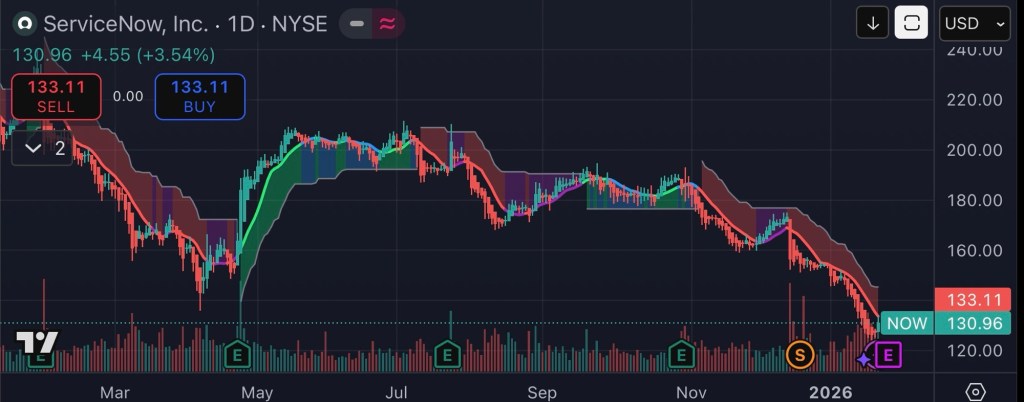
ServiceNow, Inc. (NYSE: NOW), the enterprise workflow automation and AI-driven software company, is attracting renewed investor attention as it enters its next earnings period with mixed signals from the market. After a prolonged sell-off in 2025 and early 2026, shares have shown signs of stabilization ahead of quarterly results due this week, while analysts revise forecasts on both the upside and downside.

Market Context:
As of the most recent close, ServiceNow’s stock price finished at $133.11, up 3.5% on positive sentiment ahead of earnings week. (TechStock²) The company’s shares have experienced significant pressure over the past year, falling roughly 30–50 percent from prior highs, signaling broader investor caution within the enterprise software sector. (TradingView+1)


Recent Financial Performance

ServiceNow’s underlying financial performance remains robust despite stock price challenges:

MetricMost Recent Reported
Q3 2025 Revenue$3.407 billion (+22% YoY) (GuruFocus)
Subscription Revenue$3.299 billion (+21.5% YoY) (GuruFocus)
Q3 2025 EPS$2.40 (beats expectations) (GuruFocus)
Q2 2025 Subscription Revenue$3.113 billion (+22.5% YoY) (ServiceNow Investor Relations)
Performance Obligations (RPO)$23.9 billion (+29% YoY) (ServiceNow Investor Relations)

ServiceNow also continues to expand its customer base, with strong demand in large enterprises and sustained growth in contract value obligations. (ServiceNow Investor Relations)

Financial Chart (Selected Historical & Forecast Data):

Metric / Timeframe2024 Actual2025 ActualAnalyst 2026 Avg Target
Revenue Growth~21% YoY~22% YoY— (Estimated Stable Growth)
Stock Price (Year-End)~$239.62 (52-wk high) (MarketWatch)~$128–134 range (MarketWatch)Consensus ~ $209.07 Avg (MarketBeat)
Analyst Price Target Range$170–$263 (TipRanks)Consensus Moderate Buy$209.07 Average 12-mo (MarketBeat)

Catalysts and Risks

Positive Drivers:

  • AI Integration and Partnerships: The company’s strategic deployment of AI capabilities particularly through deepening enterprise AI products and partnerships positions it within one of the fastest-growing segments of enterprise software. (The Wall Street Journal)
  • Earnings Beats: Recent quarters have seen revenue and EPS exceed consensus estimates, reinforcing the company’s pricing power and durability even in more cautious macro environments. (Nasdaq)
  • Stock Split Authorization: A board-approved 5-for-1 stock split aims to improve liquidity and broaden retail investor ownership. (Yahoo Finance)

Challenges:

  • Valuation Compression: Analysts have trimmed price targets in light of broader software sector rotation, leading to downward revisions that reflect caution ahead of earnings and uncertain macro conditions. (Ad Hoc News)
  • Market Sentiment: Software stocks broadly have underperformed amid shifting investor preferences toward semiconductors and AI infrastructure names, contributing to valuation pressure for ServiceNow. (Investopedia)

Analyst Forward Outlook & Stock Price Forecast (Next 12 Months)

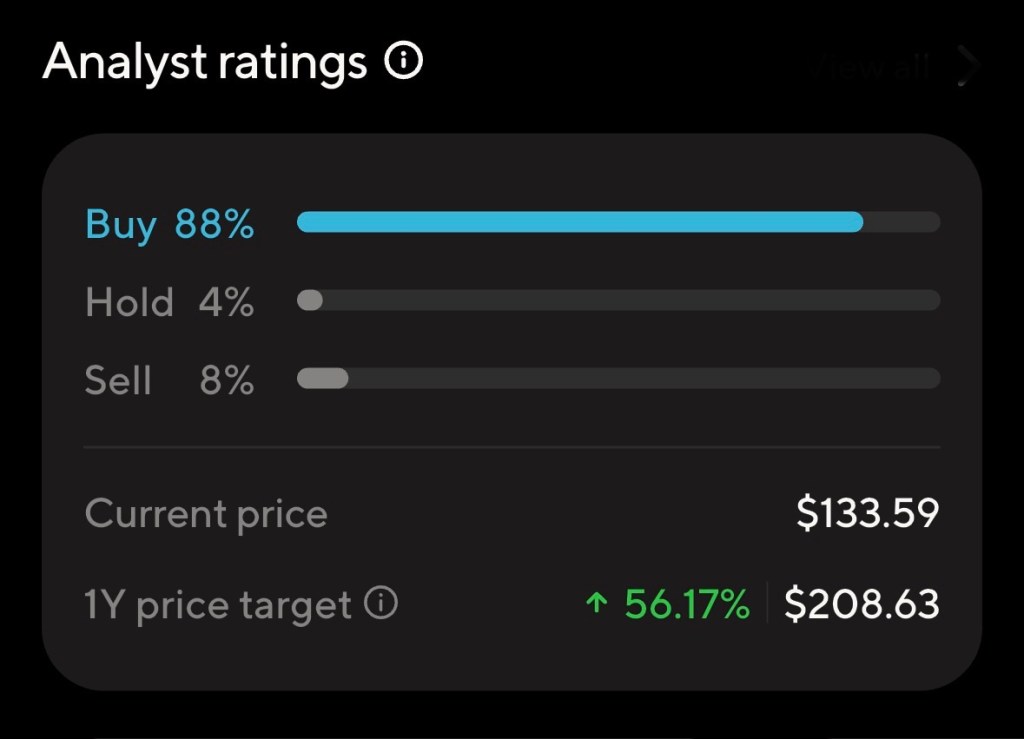
Market forecasts reflect a moderate buy consensus for NOW with meaningful upside potential despite short-term volatility:

  • MarketBeat Consensus: Average 12-month price target of $209.07 — implying approximately 57% potential upside from current levels. (MarketBeat)
  • TipRanks Data: Average analyst target range of $170 to $263, with a “Strong Buy” consensus overall. (TipRanks)
  • Bullish Scenarios: Some analysts project further expansion toward historical peer valuations if growth and AI monetization accelerate. (TIKR.com)

Projected Price Range in One Year: $180–$250, contingent upon execution of AI initiatives, macro stability, and continued enterprise software demand.


Disclosure

I currently hold a position in ServiceNow (NYSE: NOW). This article is for informational purposes only and does not constitute financial advice. Investors should conduct independent research before making investment decisions.


References

Investing.com. (2025, October 30). Wells Fargo raises ServiceNow stock price target to $1,275 on higher estimates. Retrieved from Investing.com. Investing.com
MarketBeat. (2026). ServiceNow (NOW) Stock Forecast & Price Target. Retrieved from MarketBeat. MarketBeat
MarketWatch. (2026, January). ServiceNow Inc. stock data. Retrieved from MarketWatch. MarketWatch
TradingView/ Invezz. (2026). Here’s why the ServiceNow stock price is tanking. Retrieved from TradingView. TradingView
TechSite (TS2.Tech). (2026, January 24). ServiceNow stock price jumps 3.5% into earnings week. Retrieved from TS2.Tech. TechStock²
Tikr (2026). After a 31% fall in the last 12 months, can ServiceNow recover in 2026? Retrieved from Tikr. TIKR.com
WSJ. (2026). OpenAI and ServiceNow Strike Deal to Put AI Agents in Business Software. Retrieved from The Wall Street Journal. The Wall Street Journal
ServiceNow Investor Relations. (2025). ServiceNow Reports Second Quarter 2025 Financial Results. Retrieved from ServiceNow IR. ServiceNow Investor Relations
GuruFocus News. (2025, October 30). ServiceNow Inc (NOW) Q3 2025 Earnings: EPS of $2.40 Beats Estimates. Retrieved from GuruFocus. GuruFocus

What Is the No. 1 Piece of Financial Advice I Wish I’d Known When I Was Younger?

If I could go back and give my younger self just one piece of financial advice, it would be this: start earlier no matter how small the amount and stay consistent.

When you’re young, money feels like something you’ll “figure out later.” Bills are manageable, time feels endless, and retirement sounds abstract. I believed that once I made more money, I’d start investing, saving, and planning seriously. What I didn’t understand then and understand clearly now is that time is the most powerful asset you will ever have in building wealth.

The difference between starting at 22 versus 32 isn’t just ten years of contributions. It’s decades of compounded growth that you can never fully recover. That realization reshaped how I think about money, risk, and discipline and it’s the foundation of every sound financial decision I make today.

To help others forge a smarter, more intentional path, here is a practical list I wish I had followed earlier.


1. Start Before You Feel Ready

You don’t need the perfect job, perfect budget, or perfect market conditions. Waiting for “ready” is often just procrastination disguised as prudence. Even small, imperfect steps compound into meaningful results over time.

2. Consistency Beats Brilliance

You do not need to be a stock-picking genius or market-timing expert. Regular contributions whether monthly, automatic, and boring will outperform most emotional or reactive strategies. Discipline matters more than intelligence.

3. Pay Yourself First

Saving what’s left over rarely works. Treat saving and investing like a non-negotiable bill. When money is set aside first, you learn to live well on what remains.

4. Understand Compound Interest Early

Compound interest is not linear… it accelerates. The early years do the heaviest lifting. Missing those years is far more damaging than missing higher contributions later in life.

5. Avoid Lifestyle Inflation

Earning more does not mean you need more. Every raise is an opportunity to strengthen your financial foundation, not weaken it with permanent new expenses.

6. Build an Emergency Fund Before Chasing Returns

Unexpected expenses are not rare they are guaranteed. An emergency fund prevents debt, protects investments, and buys peace of mind. It is a financial shock absorber.

7. Learn the Difference Between Good Debt and Bad Debt

Not all debt is equal. High-interest consumer debt quietly erodes your future. Understanding this early can save years of financial stress.

8. Invest in Financial Literacy

No one will care about your money more than you do. Learning the basics budgeting, investing, taxes, and risk pays dividends for life.

9. Ignore Noise, Focus on the Plan

Markets move. Headlines change. Emotions fluctuate. A long-term plan grounded in fundamentals is far more powerful than reacting to short-term fear or hype.

10. Time Is More Valuable Than Money

You can earn more income, but you cannot earn more years. Every financial decision should respect that reality.


The Payoff

The greatest financial advantage isn’t luck, timing, or even income it’s starting early and staying consistent. I wish I had known that wealth is built quietly, patiently, and long before it becomes visible.

If you’re younger and reading this, start now even if it feels small. If you’re older, start today. The best time may have been years ago, but the second-best time is always now.

The Baldwin Group (NASDAQ: BWIN) Strengthens Market Position Through Strategic Acquisitions and Growth Initiatives

January 15, 2026 – Tampa, FLThe Baldwin Group (NASDAQ: BWIN), a leading independent insurance brokerage and advisory firm, is making notable strides in expanding its national footprint through a series of strategic acquisitions and corporate actions, moves that have attracted investor interest and helped support recent gains in its stock price.

In the last several months, Baldwin has completed multiple significant transactions. The company finalized its acquisition of Obie, a Chicago-based embedded landlord insurance distribution platform that has delivered extraordinary revenue growth since 2021. Obie’s insurance technology and nationwide distribution capabilities are expected to strengthen Baldwin’s real estate investor solutions and support broader adoption of embedded insurance offerings. (Stock Titan)

Shortly after the Obie announcement in mid-January 2026, Baldwin’s stock experienced a noticeable uptick, with shares rising over 3.6% on acquisition news a clear sign of investor confidence in Baldwin’s growth strategy. (IndexBox)

In early 2026, Baldwin also completed the acquisition of Capstone Group, a full-service Philadelphia-area insurance brokerage firm. Capstone expands Baldwin’s regional reach and adds new capabilities in risk management, group health, and ancillary benefit lines further diversifying Baldwin’s portfolio of services. (Investing.com)

Perhaps most transformational is the company’s $1.026 billion merger with CAC Group, a specialty and middle-market insurance brokerage transaction completed in early January 2026. This strategic combination positions Baldwin among the largest independent insurance advisory platforms in the U.S., adding unparalleled specialty expertise in sectors like cyber, financial lines, construction, natural resources, and private equity. (Stock Titan+1)

Financially, Baldwin has shown consistent growth in revenue and organic expansion across reporting periods in 2025. Third-quarter results reported revenue growth of 8% and continued adjusted earnings momentum, even as the company navigates through net losses on a GAAP basis. (Business Wire)

According to recent stock data, BWIN’s share price has reflected both volatility and opportunity. As of mid-January 2026, BWIN shares traded near $25.48, with a 52-week range of approximately $21.26 to $47.15. Analysts maintain a mixed outlook, with a consensus price target higher than current levels but tempered by risks related to integration and profitability challenges. (StockAnalysis)

Capital and Debt Strategy
Alongside these strategic acquisitions, The Baldwin Group has successfully priced an incremental $600 million Term Loan B, which upsizes its existing credit facility and provides flexibility to fund acquisitions and refinance existing borrowings. This capital strategy supports Baldwin’s expansion while managing leverage levels that accompany rapid growth. (Stock Titan)

Investment Considerations and Risks
Investors considering exposure to BWIN should be aware that, while the company is scaling rapidly, it continues to report net losses on a GAAP basis and carries a significant debt load tied to its acquisition strategy. Meanwhile, adjusted performance metrics demonstrate improving profitability trends that could support future valuation performance if realized. (Baldwin+1)

Disclosure: I hold a position in The Baldwin Group (BWIN), and the views expressed above reflect only general observations of recent developments and publicly available data.


References

IndexBox. (2026, January 15). Baldwin Insurance Group stock rises on Obie acquisition news.
Stockanalysis.com. (2026). The Baldwin Insurance Group (BWIN) Stock Price & Overview.
Business Wire. (2025). The Baldwin Group announces fourth quarter and full year 2024 results.
Business Wire. (2025, November 4). The Baldwin Group announces third quarter 2025 results.
StockTitan. (2026, January). The Baldwin Group completes acquisition of Obie and Capstone Group.
BeyondSPX. (2026, January). Baldwin Group completes $1.026 billion merger with CAC Group.
StockTitan. (2024). The Baldwin Group announces successful pricing of $600 million incremental Term Loan B.

Understanding the Impact of Missing Debt Payments

I’ve been paying close attention to a troubling trend in recent consumer data: more Americans now expect they may miss a debt payment in the months ahead. This isn’t just a headline meant to scare people it reflects real financial pressure building beneath the surface of the economy. Rising living costs, elevated interest rates, and depleted savings are colliding at the same time, and many households are starting to feel the strain.

What concerns me most isn’t just the missed payment itself, but what follows because the impact on your credit score can be swift, severe, and long-lasting.

Why So Many People Are Falling Behind

From what I see, this wave of financial stress is not driven by reckless spending alone. In many cases, people are doing “everything right” and still struggling. Inflation has pushed essentials like food, insurance, rent, and utilities higher. Credit card interest rates are hovering near record highs. Student loan payments have resumed. Emergency savings that once provided a cushion have been drawn down.

When budgets tighten, something eventually gives. For many Americans, that breaking point is a credit card, auto loan, or personal loan payment.

What Happens the Moment You Miss a Payment

Here’s the part many people underestimate: your credit score doesn’t wait patiently for you to catch up.

If a payment is less than 30 days late, your lender may charge a late fee, but it typically won’t be reported to the credit bureaus. Once you cross the 30-day late mark, the damage begins.

A single 30-day late payment can drop a good credit score by 60 to 100 points or more. The higher your score to begin with, the harder the fall. And it doesn’t stop there.

  • 60 days late: Additional score damage and higher risk classification
  • 90 days late: Severe credit harm; lenders view this as serious delinquency
  • 120+ days late: Accounts may be sent to collections or charged off

Each missed milestone compounds the problem.

How Long That Damage Sticks With You

One of the hardest truths I have to explain to people is this: a missed payment doesn’t disappear quickly.

Late payments can remain on your credit report for up to seven years. While their impact fades over time, the first two years are particularly damaging especially if you’re applying for a mortgage, auto loan, or even insurance.

Yes, you can rebuild. But rebuilding takes discipline, consistency, and patience. There are no shortcuts.

The Hidden Costs Beyond Your Credit Score

The credit score drop is only part of the story. Missed payments often trigger a cascade of financial consequences:

  • Higher interest rates on future loans
  • Reduced credit limits or closed accounts
  • Difficulty renting an apartment
  • Higher insurance premiums in some states
  • Increased stress and reduced financial flexibility

In other words, one missed payment can quietly make everything else more expensive.

What I Believe Matters Most Right Now

If there’s one takeaway I want people to understand, it’s this: communication beats silence.

If you believe you may miss a payment, contact your lender before it happens. Many lenders offer hardship programs, temporary payment deferrals, or modified payment plans but those options are far more accessible before your account becomes delinquent.

I also believe this moment calls for honesty with ourselves. If debt payments are becoming unmanageable, that’s not a moral failure. It’s a signal. And signals are meant to be acted on, not ignored.

The Bottom Line

More Americans expecting to miss debt payments is a warning sign not just for the economy, but for individual households. Credit scores are unforgiving, and missed payments can linger far longer than the financial hardship that caused them.

From my perspective, protecting your credit during uncertain times isn’t about perfection. It’s about awareness, early action, and making deliberate choices before the damage is done.

Your credit score is not just a number. It’s leverage. And in times like these, leverage matters more than ever.

Transform Your Spending: Smart Tips for Retirement Savings

Americans feel as though saving for retirement is becoming increasingly out of reach. Yet for most households, the problem is not income alone it is spending habits. Small, recurring expenses and lifestyle inflation quietly erode long-term wealth, often without people realizing the cumulative damage.

Understanding what people commonly waste money on and redirecting those dollars toward smarter priorities can be the difference between financial stress and financial security later in life.

Common Ways People Waste Money

1. Convenience Spending
Daily purchases such as coffee, food delivery, and grab-and-go meals are among the biggest silent budget killers. A $15 lunch or a $6 coffee may seem insignificant, but over the course of a year these habits can add up to thousands of dollars that could otherwise be invested.

2. Subscription Overload
Streaming platforms, premium apps, cloud storage, fitness apps, and unused memberships quietly drain bank accounts each month. Many consumers pay for services they rarely use or forget they even have.

3. Lifestyle Inflation
As income rises, spending often rises with it larger homes, newer cars, more expensive vacations. While lifestyle upgrades feel deserved, they frequently come at the expense of increased savings and investing.

4. High-Interest Debt
Interest on credit cards and personal loans represents money spent with no lasting benefit. Carrying balances month to month can severely limit the ability to save or invest for the future.

5. Impulse Purchases
Online shopping, flash sales, and “buy now, pay later” offers make it easier than ever to spend emotionally rather than intentionally.

What You Should Be Spending Money On Instead

Redirecting money away from waste does not mean deprivation it means prioritization. The goal is to spend in ways that build stability, flexibility, and long-term wealth.

1. Retirement Contributions
Consistently funding retirement accounts such as a 401(k), IRA, or Roth IRA should be a top priority. Employer matches, tax advantages, and compound growth make these contributions far more powerful than most short-term purchases.

2. Emergency Savings
A properly funded emergency fund typically three to six months of essential expenses prevents unexpected costs from turning into high-interest debt.

3. Debt Reduction
Paying down high-interest debt offers a guaranteed return on your money. Eliminating credit card balances improves cash flow and accelerates your ability to invest.

4. Health and Insurance Protection
Preventive healthcare, adequate insurance coverage, and wellness spending may not feel exciting, but they reduce the risk of catastrophic financial setbacks later in life.

5. Skills and Education
Spending money to improve earning potential through certifications, professional development, or continuing education often delivers a far greater return than consumer purchases.

6. Low-Cost Experiences That Align With Values
Intentional spending on experiences that bring lasting satisfaction rather than habitual convenience purchases can improve quality of life without undermining financial goals.

The Bigger Picture

Saving for retirement is not about cutting all enjoyment from your life. It is about recognizing trade-offs. Every dollar spent today is a dollar that cannot grow for tomorrow. By becoming more aware of where money is wasted and intentionally reallocating those funds, individuals can regain control of their financial future without waiting for a higher income or a perfect market environment.

The most effective financial plans are not built on drastic changes, but on consistent, thoughtful decisions made over time.

How to Build Wealth: 12 Timeless Financial Tips

With financial advice, most guidance comes with caveats, fine print, and a familiar refrain: “It depends.” While nuance has its place, long-term financial stability is built on a small set of non-negotiable principles. These rules hold up across income levels, market cycles, and life stages. They are not trendy. They are not complicated. And they work consistently.

Below is a clear, practical list of rock-solid financial rules that stand the test of time. Bookmark them. Revisit them. Live by them.


1. Spend Less Than You Earn… Always

This is the foundation of every sound financial plan. No investment strategy, side hustle, or tax trick can compensate for chronic overspending. If your expenses exceed your income, wealth accumulation is mathematically impossible.

Rule: Control spending first. Everything else is secondary.


2. Pay Yourself First

Saving what’s “left over” doesn’t work because there’s rarely anything left. Automating savings before discretionary spending removes willpower from the equation.

Rule: Savings is not optional. It is a fixed expense.


3. Build an Emergency Fund Before You Invest

Life will interrupt your plans, job loss, medical expenses, unexpected repairs. An emergency fund prevents short-term crises from becoming long-term financial damage.

Rule: Maintain 3–6 months of essential expenses in cash or cash equivalents.


4. Avoid High-Interest Debt Like the Plague

High-interest debt (especially credit cards) compounds against you, eroding progress faster than most investments can offset.

Rule: If the interest rate is double digits, eliminate it aggressively.


5. If You Don’t Understand It, Don’t Invest in It

Complexity is often used to disguise risk. If you cannot clearly explain how an investment works, how it makes money, and what could cause it to fail, you are speculating not investing.

Rule: Clarity beats excitement every time.


6. Time in the Market Beats Timing the Market

Consistently investing over time outperforms trying to predict short-term market movements. Emotional decision-making is the enemy of long-term returns.

Rule: Invest regularly. Stay invested. Ignore the noise.


7. Diversification Is Non-Negotiable

Concentration creates the illusion of wealth; diversification preserves it. No single stock, sector, or asset class deserves absolute confidence.

Rule: Spread risk intentionally without over complicating.


8. Lifestyle Inflation Is a Silent Wealth Killer

Earning more does not automatically mean living better unless the additional income is managed wisely. Increasing expenses in lockstep with income delays financial independence indefinitely.

Rule: Upgrade your savings rate before upgrading your lifestyle.


9. Protect What You’re Building

Insurance is not an investment it’s risk management. Adequate coverage safeguards years of progress from being wiped out by a single event.

Rule: Insure against catastrophic loss, not minor inconveniences.


10. Long-Term Thinking Wins Every Time

Short-term gratification often conflicts with long-term goals. Financial success favors patience, discipline, and consistency not impulse.

Rule: Make decisions today that your future self will thank you for.


11. Fees Matter More Than You Think

Small percentage fees compound just like returns only in the opposite direction. Over decades, high fees can cost hundreds of thousands of dollars.

Rule: Keep investment and advisory fees as low as reasonably possible.


12. Have a Plan and Review It Annually

A financial plan is not static. Life changes, goals evolve, and assumptions need updating.

Rule: Written plans create accountability. Annual reviews create alignment.


End Result

Financial freedom is not built on clever shortcuts or perfect timing. It is built on unbreakable rules applied consistently over time. These principles require discipline but not genius. Follow them without exception, and the results will follow with certainty.

When in doubt, return to the rules. They will not steer you wrong.

Talos Energy (NYSE: TALO): A Strategic Energy Investment Entering 2026

Talos Energy Inc. (NYSE: TALO), an independent offshore oil and gas exploration and production company focused primarily on the U.S. Gulf of Mexico, is emerging as a notable energy equity entering 2026. With improving operational efficiency, disciplined capital allocation, and renewed analyst optimism, Talos presents a risk-adjusted opportunity for investors seeking exposure to offshore energy assets.

As of early January 2026, Talos Energy shares are trading near $11.25, recently touching a 52-week high of approximately $11.64, reflecting improving technical momentum and investor sentiment (Investing.com, 2025).

Operational Performance and Financial Progress

Talos Energy reported solid operational execution throughout 2025 despite a volatile commodity pricing environment. In its third quarter 2025 earnings report, the company disclosed average production of approximately 95.2 thousand barrels of oil equivalent per day (MBoe/d), supported by strong performance across its core offshore assets (Talos Energy Inc., 2025a).

Notably, Talos generated over $100 million in adjusted free cash flow during Q3 2025, enabling share repurchases and reinforcing management’s emphasis on shareholder returns and balance sheet strength (Talos Energy Inc., 2025a). While net income remained pressured by non-cash impairment charges, free cash flow generation has become a central pillar of the company’s investment thesis.

Strategic Initiatives and Growth Drivers

Talos has outlined an enhanced corporate strategy aimed at improving capital efficiency and long-term cash flow sustainability. Management has indicated a goal of achieving approximately $100 million in incremental annualized cash flow entering 2026, driven by operational efficiencies, optimized drilling programs, and cost discipline (Talos Energy Inc., 2025b).

Exploration remains another key catalyst. The company’s Daenerys discovery in the Gulf of Mexico has shown promising results, with appraisal drilling planned for 2026. Successful development could materially expand Talos’ reserve base and future production profile (Talos Energy Inc., 2025a).

In addition, broader offshore industry trends may serve as tailwinds. According to Reuters (2025), improved drilling economics and declining onshore productivity are refocusing attention on offshore Gulf of Mexico assets, potentially supporting higher long-term valuations for companies like Talos.

Market Sentiment and Analyst Outlook

From a technical perspective, Talos Energy has demonstrated improving relative strength. The stock earned a Relative Strength (RS) Rating above 80, signaling outperformance versus the broader market and attracting momentum-oriented investors (Investor’s Business Daily, 2025).

Analyst sentiment is moderately bullish. Consensus estimates reflect an average 12-month price target near $14–$15, with more optimistic forecasts reaching $20 per share, implying meaningful upside if execution and commodity pricing align favorably (StockAnalysis.com, 2025; Investing.com, 2025).

Risks to Consider

Despite improving fundamentals, Talos Energy is not without risk. The company remains sensitive to fluctuations in oil and natural gas prices, and earnings volatility persists due to capital-intensive offshore operations. Exploration results, regulatory considerations, and macroeconomic factors could all impact performance.

Investors should also note that sustained profitability has yet to be firmly established on an annual basis, making execution in 2026 a critical determinant of valuation expansion.

2026 Price Outlook

Based on current fundamentals, analyst projections, and sector trends, several scenarios appear plausible for Talos Energy by the end of 2026:

  • Base Case: Stable commodity prices and continued execution support a valuation in the $14–$16 range.
  • Bullish Case: Successful exploration, higher oil prices, and sustained free cash flow expansion could drive shares toward $18–$20+.
  • Bearish Case: Commodity weakness or operational setbacks may limit upside and keep shares range-bound near current levels.

Conclusion

Talos Energy enters 2026 positioned as a leveraged play on offshore energy resilience and operational discipline. While risks remain inherent, the company’s improving free cash flow profile, exploration upside, and favorable analyst sentiment suggest that TALO may offer attractive long-term potential for investors with a tolerance for volatility.


Disclosure

The author owns a position in Talos Energy (NYSE: TALO). This article is for informational purposes only and does not constitute financial or investment advice. Readers are strongly encouraged to conduct their own research and consult a qualified financial professional before making any investment decisions.


References

Investing.com. (2025, December 3). Talos Energy stock reaches 52-week high at 11.64 USD. Investing.com. https://www.investing.com/news/company-news/talos-energy-stock-reaches-52week-high-at-1164-usd-93CH-4388939

Investor’s Business Daily. (2025, December 30). Stocks showing improving market leadership: Talos Energy earns 81 RS rating. https://www.investors.com/ibd-data-stories/stocks-showing-improving-market-leadership-talos-energy-earns-81-rs-rating/

Reuters. (2025, October 15). Improved drilling to boost Gulf of Mexico offshore oil output as U.S. onshore growth slows. Reuters. https://www.reuters.com/business/energy/improved-drilling-boost-gulf-mexico-offshore-oil-output-us-onshore-growth-slows-2025-10-15/

StockAnalysis.com. (2025). Talos Energy (TALO) stock forecast and analyst price targets. https://stockanalysis.com/stocks/talo/forecast/

Talos Energy Inc. (2025a, November 5). Talos Energy announces third quarter 2025 operational and financial results. https://www.talosenergy.com/investor-relations/news/news-details/2025/Talos-Energy-Announces-Third-Quarter-2025-Operational-and-Financial-Results/

Talos Energy Inc. (2025b, June 17). Talos Energy announces enhanced corporate strategy. https://www.talosenergy.com/investor-relations/news/news-details/2025/Talos-Energy-Announces-Enhanced-Corporate-Strategy/