Why UiPath’s AI Strategy Could Shape Future Investments

UiPath Inc. (NYSE: PATH), a leading company in robotic process automation (RPA) and artificial intelligence (AI), has recently garnered attention from investors due to its strategic advancements and market positioning.

Financial Performance and Outlook

In its fiscal second quarter, UiPath reported a 10% revenue increase to $316 million, surpassing Wall Street expectations. Adjusted earnings stood at 4 cents per share, exceeding analysts’ predictions of 3 cents per share. This performance underscores the growing demand for AI and automation technologies. The company has also approved a $500 million share buyback program, reflecting confidence in its financial health.

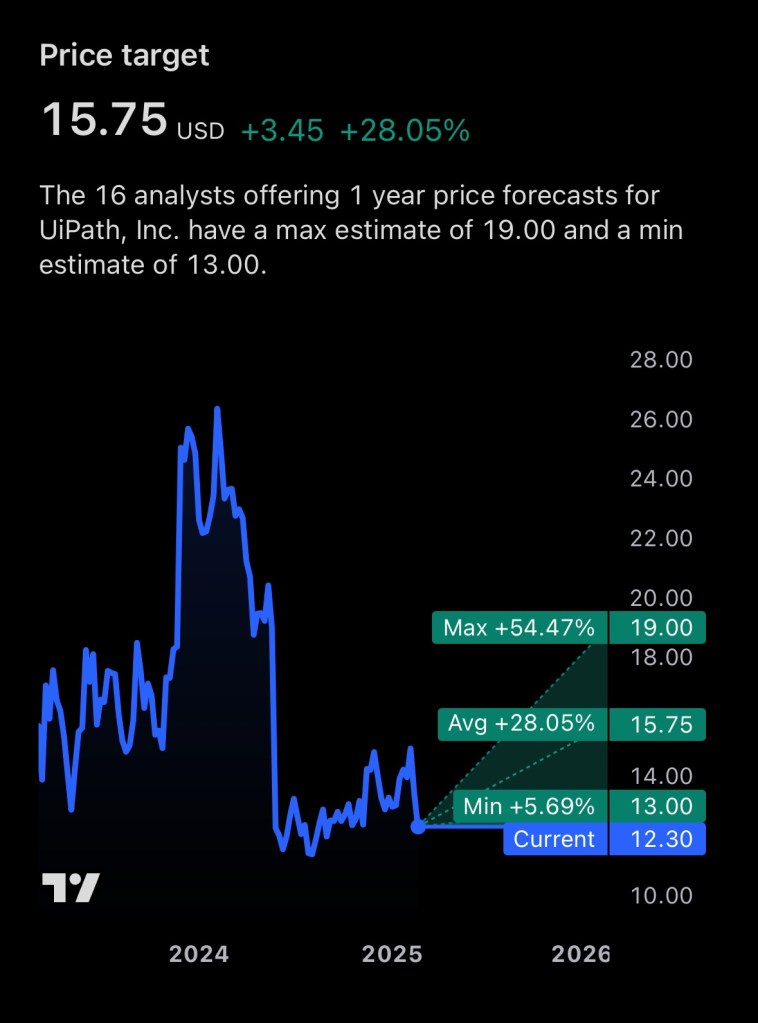
Despite these positive indicators, UiPath’s stock has experienced volatility. Shares fell 5% in premarket trading after the company maintained its fourth-quarter revenue forecast, leading to investor disappointment. The stock has declined approximately 40% in 2024, reflecting broader market challenges.

Strategic Positioning in AI and Automation

UiPath continues to innovate within the RPA and AI sectors. The company leverages AI to transform RPA, enabling complex automation and market growth while addressing profitability challenges. This strategic focus positions UiPath to capitalize on the increasing need for intelligent automation solutions across various industries.

Analyst Perspectives

Analysts present mixed views on UiPath’s prospects. Some highlight the company’s potential in the evolving AI landscape, while others express caution due to profitability concerns. Investors are advised to consider these diverse perspectives when evaluating UiPath’s investment potential.

UiPath’s advancements in AI and automation, coupled with its solid financial performance, position it as a noteworthy player in the technology sector. However, potential investors should remain mindful of market volatility and conduct comprehensive research before making investment decisions.

Disclosure:

I do not own any stock or have any financial interest in UiPath Inc. (NYSE: PATH). This article is for informational purposes only and should not be considered financial or investment advice. Investing in stocks carries risks, and past performance is not indicative of future results. Always conduct your own research and consult with a qualified financial professional before making any investment decisions.

References

MarketWatch. (2024, February 29). UiPath sees 10% revenue jump on ‘increasing need’ for AI; stock rallies. MarketWatch. https://www.marketwatch.com/story/uipath-sees-10-revenue-jump-on-increasing-need-for-ai-stock-rallies-f4587d09

MarketWatch. (2024, February 29). UiPath shares drop as Cathie Wood-backed software developer holds guidance. MarketWatch. https://www.marketwatch.com/story/uipath-shares-drop-as-cathie-wood-backed-software-developer-holds-guidance-9ffa2bc0

Investopedia. (2024, February 29). UiPath stock is falling after earnings and the company is boosting its buyback plan. Investopedia. https://www.investopedia.com/uipath-posts-results-and-guidance-on-ai-demand-buyback-8707490

Seeking Alpha. (2024, February 28). UiPath: AI potential vs. margin reality. Seeking Alpha. https://seekingalpha.com/article/4762394-uipath-ai-potential-vs-margin-reality

Clover Health ($CLOV): Key Growth and Profitability Insights

Clover Health Investments Corp. (NASDAQ: $CLOV), a physician enablement company focused on improving healthcare for Medicare beneficiaries, has recently demonstrated significant growth and strategic initiatives that may appeal to investors.

Robust Membership Growth

As of January 2025, Clover Health reported a 27% increase in Medicare Advantage membership, surpassing 100,000 members. Notably, approximately 95% of these members are enrolled in the company’s flagship 4-Star Preferred Provider Organization (PPO) plan, reflecting Clover’s commitment to delivering high-quality care.

Strategic Focus on Profitability

In December 2023, Clover Health announced its decision to exit the Centers for Medicare and Medicaid Services’ (CMS) ACO REACH program. This move allows the company to concentrate resources on its core Medicare Advantage insurance business and the Clover Assistant platform, aiming to achieve profitability on an Adjusted EBITDA basis for the full year 2024.

Financial Performance and Outlook

The company’s financial trajectory shows promise, with earnings expected to improve from a loss of $0.12 per share to $0.07 per share in the coming year. Analysts have set a 12-month price target of $5.00 for Clover Health’s stock, suggesting potential upside from its current trading price of $4.46 as of February 16, 2025.

Investment Considerations

While Clover Health’s recent membership growth and strategic refocusing are positive indicators, potential investors should be mindful of market volatility. The stock has experienced fluctuations, and with a significant portion of retail ownership, there is a risk of profit-taking following earnings reports. Therefore, a cautious approach is advisable, possibly awaiting the upcoming Q4 2024 earnings release for more clarity on the company’s financial health.

Clover Health’s strategic initiatives and growth in the Medicare Advantage sector position it as a noteworthy contender in the healthcare market. However, investors should conduct thorough research and consider market dynamics before making investment decisions.

Disclosure: I currently hold a position in Clover Health Investments Corp. (NASDAQ: $CLOV). This article reflects my personal opinions and analysis, and is not intended as financial advice. Please conduct your own research or consult a financial advisor before making any investment decisions.

References

Clover Health. (2023, December 15). Clover Health exits ACO REACH to accelerate path to profitability. Clover Health Investors. https://investors.cloverhealth.com/news-releases/news-release-details/clover-health-exits-aco-reach-accelerate-path-profitability

Finance Yahoo. (2025, January 10). Clover Health reports 27% growth in Medicare Advantage membership. Yahoo Finance. https://finance.yahoo.com/news/clover-health-reports-27-growth-140000713.html

Seeking Alpha. (2025, February 10). Clover Health: Watch out for volatility following Q4 earnings results. Seeking Alpha. https://seekingalpha.com/article/4756994-clover-health-watch-out-for-volatility-following-q4-earnings-results

Stock Analysis. (2025, February 15). Clover Health (CLOV) stock forecast and price target. Stock Analysis. https://stockanalysis.com/stocks/clov/forecast

AMD’s Strategic Rise in the Semiconductor Market

Advanced Micro Devices (AMD) has emerged as a formidable player in the semiconductor industry, showcasing significant growth and strategic initiatives that position it as a compelling investment opportunity.

Financial Performance and Market Position

As of January 19, 2025, AMD’s stock is trading at $121.46, reflecting a 2.54% increase from the previous close. This upward trend underscores investor confidence in AMD’s market strategies and financial health. Notably, AMD’s market valuation surpassed $300 billion in March 2024, highlighting its substantial growth trajectory.

Strategic Acquisitions and AI Expansion

AMD has made significant strides in the artificial intelligence (AI) sector through strategic acquisitions. In July 2024, the company acquired Finnish AI startup Silo AI for $665 million, aiming to enhance its AI capabilities and compete more effectively with industry leader Nvidia. Additionally, AMD’s $4.9 billion acquisition of ZT Systems in August 2024 bolstered its AI infrastructure, providing access to a team of 1,000 design engineers to strengthen its AI system designs.

Leadership and Innovation

Under the leadership of CEO Lisa Su, AMD has transformed from a struggling entity into a semiconductor powerhouse. Since she took charge in 2014, AMD’s stock price has surged from $3 to approximately $140, with the company’s market value surpassing that of Intel. Su’s strategic focus on product redesign, customer relationships, and capitalizing on the AI boom has been instrumental in this turnaround.

Analyst Perspectives

Wall Street analysts have shown optimism regarding AMD’s prospects. UBS identified AMD as a top semiconductor pick, citing its competitive pricing and performance in AI chips compared to Nvidia. Despite a 5.8% drop in shares earlier in the year, UBS analysts remain positive about AMD’s future in the AI market. However, some analysts urge caution, noting that while AMD’s AI accelerator chips show promise, the company faces challenges in closing the performance gap with Nvidia. Following announcements about AI chip revenue forecasts, AMD shares experienced a nearly 8% decline, reflecting market skepticism about its competitive positioning.

AMD’s robust financial performance, strategic acquisitions, and visionary leadership under Lisa Su position it as a strong contender in the semiconductor industry. While the company faces challenges, particularly in the competitive AI sector dominated by Nvidia, its proactive strategies and market responsiveness suggest a promising outlook for investors considering AMD as part of their portfolio.

Disclosure: I currently hold a position in Advanced Micro Devices ($AMD). This article reflects my personal opinions and analysis, and is not intended as financial advice. Please conduct your own research or consult a financial advisor before making any investment decisions.

References

MarketWatch. (2024, August 15). AMD to make $4.9 billion AI acquisition as it steps up race against Nvidia. MarketWatch. https://www.marketwatch.com/story/amd-to-make-4-9-billion-ai-acquisition-as-it-steps-up-race-against-nvidia-7c2d4d34

Cunningham, A. (2024, August 18). AMD deal shows AI chip business isn’t just about chips. The Wall Street Journal. https://www.wsj.com/tech/ai/amd-deal-shows-ai-chip-business-isnt-just-about-chips-81fb46d9

Toh, M. (2024, December 7). Lisa Su: TIME’s CEO of the year 2024. TIME. https://time.com/7200909/ceo-of-the-year-2024-lisa-su

The Realities of Running a Business

By David Dandaneau

Running a business is often portrayed as a glamorous pursuit—a life of freedom, creativity, and endless opportunity. However, beneath the surface lies a complex journey filled with triumphs and challenges that test the resilience and adaptability of entrepreneurs.

The Thrill of Success
Every business owner knows the unparalleled joy of achieving a goal, whether it’s securing a major client, hitting revenue milestones, or simply surviving the first year. These wins serve as validation for the sleepless nights, financial risks, and relentless effort.

Take the example of local café owner Sarah Patel, who saw her business thrive after introducing a unique farm-to-table menu. “The response was overwhelming,” she says. “It felt like all the hard work finally paid off.” Such moments can rejuvenate an entrepreneur’s passion and motivate them to push even further.

The Pressure of Challenges
But the journey is far from smooth. From navigating cash flow issues and employee turnover to adapting to market changes, business owners face a litany of obstacles. Economic downturns or unexpected global events, such as the COVID-19 pandemic, have also forced many businesses to pivot their strategies overnight.

“During the pandemic, we had to shift to online sales almost immediately,” recalls tech store owner Marcus Lee. “It was a sink-or-swim moment, and not every business had the resources to make it work.”

The Emotional Toll
The mental and emotional challenges of entrepreneurship are often underestimated. Long hours, financial strain, and the pressure to succeed can lead to burnout. Studies have shown that business owners are more likely to experience anxiety and depression compared to those in traditional jobs.

Despite this, many entrepreneurs find ways to cope. Networking groups, mentorship programs, and therapy have become valuable tools for maintaining mental health and fostering resilience.

Adaptability Is Key
One constant in the world of business is change. Consumer preferences, technological advancements, and market trends can shift rapidly, requiring business owners to stay agile and innovative. Those who can anticipate change and adapt quickly are often the ones who thrive.

For example, fashion retailer Mia Gonzalez shifted her business model to focus on sustainable clothing as consumer demand for eco-friendly products grew. “You have to evolve with your customers,” she explains.

The Bigger Picture
For many, the ultimate reward of running a business goes beyond profits. It’s about creating something meaningful, contributing to the community, and building a legacy. These factors often keep entrepreneurs going, even when times get tough.

“Seeing how my business impacts people’s lives gives me purpose,” says John Whitaker, who runs a nonprofit consulting firm. “It’s not just about me—it’s about making a difference.”


Running a business is not for the faint of heart. It’s a journey filled with highs and lows, requiring persistence, adaptability, and an unwavering belief in one’s vision. While the road may be challenging, for those who dare to take the leap, the rewards—both tangible and intangible—can make the journey worthwhile.

For aspiring entrepreneurs, the message is clear: Be prepared for the rollercoaster, but don’t forget to enjoy the ride.

Why Renters Insurance is a Must-Have for Renters

By David Dandaneau

Renting a home or apartment can be a convenient and flexible way to live, but many renters overlook a critical aspect of their financial security: renters insurance. If you’re currently renting, here’s why this affordable coverage should be on your radar.

  1. Protect Your Personal Belongings
    Did you know your landlord’s insurance only covers the building structure, not your personal belongings? In the event of a fire, theft, or water damage, renters insurance can reimburse you for lost or damaged items such as electronics, furniture, and clothing.
  2. Liability Coverage
    Accidents happen. If someone gets injured in your rental or you accidentally damage someone else’s property, renters insurance can help cover medical and legal costs. This liability coverage can save you thousands in out-of-pocket expenses.
  3. Temporary Housing Costs
    If your rental becomes uninhabitable due to a covered event like a fire, renters insurance can help pay for temporary housing expenses, ensuring you have a safe place to stay while repairs are made.
  4. It’s Surprisingly Affordable
    Most renters insurance policies cost less than a daily cup of coffee, with monthly premiums averaging around $15–$30. This small investment provides peace of mind and financial protection against unexpected events.
  5. Peace of Mind
    Renters insurance eliminates the “what if” worries that come with renting. Knowing that you’re protected against unforeseen circumstances can help you focus on enjoying your home.

Don’t Wait Until It’s Too Late
Disasters strike when you least expect them, and the cost of replacing everything you own or dealing with liability claims can be overwhelming. By getting renters insurance, you’re taking a proactive step to safeguard your financial future.

For more information or to get started with a renters insurance policy, contact me today. I’m here to help you find affordable coverage that fits your needs and protects what matters most.

About the Author:

David Dandaneau is a insurance agent that covers the insurance and financial services industry. He is known for his insightful analysis and comprehensive coverage of market trends and regulatory developments.

Overcome Distractions: 10 Ways to Improve Focus and Efficiency

From constant notifications to the pressures of multitasking, distractions are everywhere these days. Yet, for those who master the art of focus, the rewards are immense—better efficiency, reduced stress, and greater satisfaction in achieving their goals. Here are some strategies that have been proven to help boost productivity and maintain focus in an increasingly distracted environment.

  1. Start with Clear Goals
    Productivity begins with clarity. Setting specific, measurable goals helps you prioritize tasks and avoid the overwhelm of trying to do too much. Whether it’s a daily to-do list or long-term milestones, knowing what you’re working towards is essential.
  2. Practice Time Blocking
    One of the most effective ways to structure your day is time blocking—a method where you schedule specific periods for focused work on tasks. This approach eliminates decision fatigue and creates a sense of accountability to stick to your planned tasks.
  3. Minimize Distractions
    In a world filled with buzzing phones and endless social media updates, creating a distraction-free workspace is crucial. Consider putting your phone on “Do Not Disturb,” using website blockers for distracting sites, or simply finding a quiet environment to work.
  4. Leverage Technology Wisely
    While technology can be a source of distraction, it can also be a powerful tool for productivity. Apps like Trello, Notion, or Focus@Will offer organization, task tracking, and focus-enhancing tools to keep you on track.
  5. Take Regular Breaks
    Counterintuitive as it may seem, taking breaks improves productivity. Techniques like the Pomodoro Technique—working for 25 minutes and then taking a 5-minute break—help sustain focus by preventing burnout.
  6. Practice Mindfulness and Meditation
    Mindfulness techniques, including meditation, can train your brain to stay present and avoid being pulled in multiple directions. Even a five-minute breathing exercise can sharpen focus and reduce stress.
  7. Get Moving
    Physical activity is not just for your body—it’s for your brain too. A quick walk, stretching, or even a full workout can boost mental clarity and energy levels, ensuring you stay productive throughout the day.
  8. Nourish Your Body and Mind
    What you consume plays a huge role in your productivity. Eating balanced meals, staying hydrated, and avoiding excess caffeine can keep energy levels stable and your brain sharp.
  9. Reflect and Adjust
    At the end of each day or week, take time to evaluate your productivity. Ask yourself what worked, what didn’t, and how you can improve. Productivity is a skill that evolves with practice and self-awareness.
  10. Find Your Motivation
    Finally, staying productive is easier when you’re inspired. Connecting your tasks to a bigger purpose—whether it’s professional growth, personal fulfillment, or helping others—can reignite your drive when motivation wanes.

Staying productive and focused is not about working harder—it’s about working smarter. By adopting these habits and finding what works best for you, you can navigate distractions and achieve your goals with greater ease. In a world where attention is the ultimate currency, mastering focus is a skill that truly pays off.

How AI is Transforming Personal Finance Strategies

Artificial intelligence (AI) and cutting-edge technologies are revolutionizing the way individuals and institutions invest in their future. From personalized financial planning to sustainable investment strategies, the integration of AI into financial systems is shaping a new era of opportunity and efficiency.

AI in Personal Finance
Gone are the days when financial advice was solely the domain of human advisors. AI-driven platforms like robo-advisors are providing investors with tailored advice at a fraction of the cost. By analyzing vast amounts of data in real time, these tools offer personalized investment strategies that account for individual goals, risk tolerance, and market trends.

For instance, platforms such as Wealthfront and Betterment leverage AI to automate portfolio management, ensuring investments are optimized and rebalanced regularly. This technology empowers even novice investors to take control of their financial futures with confidence.

Predictive Analytics for Smarter Decisions
AI’s ability to process and interpret data at lightning speed is revolutionizing predictive analytics. Investors and financial institutions use machine learning algorithms to identify market trends, detect anomalies, and predict economic shifts. This insight helps mitigate risks and uncover profitable opportunities, making investment strategies more robust than ever.

Democratizing Access to Wealth-Building Tools
Technological advancements are also breaking down barriers to entry in the investment world. Apps like Robinhood and Acorns make it easy for individuals to start investing with as little as a few dollars. These platforms, often powered by AI, offer features like micro-investing, automated savings, and financial education, helping more people build wealth over time.

AI and Sustainable Investing
The growing emphasis on environmental, social, and governance (ESG) factors in investment decisions is another area where AI is making a difference. By analyzing non-financial data—such as carbon emissions, labor practices, and governance policies—AI helps investors identify companies that align with their values while delivering strong financial returns.

Challenges and Ethical Considerations
Despite its many benefits, the rise of AI in investing raises concerns about data privacy, algorithmic bias, and the potential for over-automation. Experts caution against over-reliance on AI, emphasizing the need for human oversight to ensure ethical and responsible decision-making.

A Glimpse Into the Future
As AI and technology continue to evolve, the future of investing looks increasingly dynamic and inclusive. Blockchain technology is paving the way for decentralized finance (DeFi), while advancements in quantum computing promise to unlock even greater predictive capabilities.

The integration of AI into financial systems is not merely a trend but a fundamental shift. By embracing these innovations, individuals and institutions alike can navigate the complexities of modern markets and secure their financial futures with unprecedented precision.

The Rise of Altcoins and Bitcoin: What Every Investor Should Know

The world of cryptocurrency has captured the attention of investors across the globe, with Bitcoin leading the charge as the pioneer of the digital currency era. Alongside Bitcoin, a multitude of alternative cryptocurrencies, known as altcoins, have emerged, offering unique features and investment opportunities. If you’re considering venturing into this dynamic market, understanding its fundamentals is crucial.

Bitcoin: The Foundation of Cryptocurrency
Bitcoin, created in 2009 by the pseudonymous Satoshi Nakamoto, is the first decentralized digital currency. It operates on blockchain technology, ensuring transparency and security through a distributed ledger system. Bitcoin’s scarcity—it’s capped at 21 million coins—has contributed to its reputation as “digital gold.”

Bitcoin is often viewed as a store of value and a hedge against inflation, with increasing adoption by major corporations and institutional investors. However, its price volatility remains a significant factor, requiring careful consideration before investing.

What Are Altcoins?
Altcoins refer to all cryptocurrencies other than Bitcoin. The term encompasses thousands of digital currencies with diverse purposes, from Ethereum, which facilitates decentralized applications (dApps) and smart contracts, to niche coins like Dogecoin and Cardano.

Each altcoin is designed with a specific use case. For instance:

  • Ethereum (ETH): Known for enabling smart contracts and decentralized finance (DeFi).
  • Ripple (XRP): Focused on cross-border payments and financial institution adoption.
  • Cardano (ADA): Promotes sustainability and scalability in blockchain technology.
    While altcoins can offer high returns, they often come with higher risks due to lower liquidity, lesser adoption, and a lack of widespread trust compared to Bitcoin.

Key Considerations for Investing
1) Volatility: Cryptocurrency markets are highly volatile, with prices swinging dramatically in short periods. Bitcoin and altcoins alike are subject to these fluctuations.
2) Research: Before investing in any altcoin, understand its purpose, development team, market trends, and community support. Avoid making decisions based on hype alone.
3) Security: Store your assets in secure wallets. Hardware wallets are preferred for long-term holdings, while software wallets are suitable for frequent transactions.
4) Regulatory Environment: Cryptocurrency regulations vary by country and can impact market prices. Stay informed about government policies and potential restrictions.
5) Diversification: Avoid putting all your funds into a single cryptocurrency. Diversifying between Bitcoin and selected altcoins can mitigate risks.

Risks to Watch
The cryptocurrency market is not without risks:

  • Scams: Rug pulls and fraudulent projects are common among altcoins.
  • Market Manipulation: Low-liquidity altcoins are susceptible to price manipulation by “whales.”
  • Technological Failures: Bugs, hacks, or failed upgrades can render cryptocurrencies worthless.

The Future of Cryptocurrency
Bitcoin remains the anchor of the cryptocurrency market, but altcoins are driving innovation in blockchain technology. Decentralized finance (DeFi), non-fungible tokens (NFTs), and Web3 applications are shaping the next phase of the digital economy, with altcoins playing a vital role.

For those prepared to navigate its complexities, cryptocurrency offers an exciting frontier. However, thorough research, a strong risk appetite, and a long-term perspective are essential for success in this evolving space.

Disclaimer: Cryptocurrency investments are speculative and involve substantial risk. Consult with a financial advisor before making investment decisions.

Finding Gratitude: A Thanksgiving Reflection in 2024

As Thanksgiving arrives, millions across the nation gather around tables adorned with turkey, stuffing, and pumpkin pie. But beyond the feast, Thanksgiving 2024 serves as a poignant reminder to reflect on the importance of gratitude in a rapidly changing world.

In a year marked by economic shifts, technological advancements, and global challenges, many are finding renewed appreciation for life’s simple pleasures. Families are reconnecting over shared meals, communities are banding together to support those in need, and people everywhere are pausing to reflect on their blessings—both big and small.

A Renewed Sense of Togetherness
This year, community-driven initiatives are making a significant impact. Across the country, food drives, volunteer efforts, and acts of kindness are fostering a spirit of unity. Local organizations report record numbers of volunteers for Thanksgiving outreach programs, helping to provide meals to those facing hardship.

“We’ve seen an overwhelming response this year,” said Maria Thompson, director of a community food bank in Chicago. “People are eager to give back, showing that even in tough times, gratitude brings out the best in us.”

Gratitude Beyond the Table
For many, Thanksgiving isn’t just about one day but a season of reflection. Schools are teaching students about the historical and cultural significance of the holiday, emphasizing kindness and empathy. Workplace gratitude initiatives have also gained popularity, with employers encouraging employees to express thanks to colleagues, fostering a positive and supportive environment.

Social media platforms are buzzing with messages of thankfulness, as users share personal stories of resilience and hope. The hashtag #Thankful2024 has trended across multiple platforms, with posts ranging from gratitude for family and health to appreciation for everyday moments like a sunrise or a shared laugh.

The Healing Power of Gratitude
Research continues to highlight the mental health benefits of practicing gratitude. Studies show that people who regularly reflect on what they’re thankful for experience reduced stress, increased happiness, and stronger relationships. In a year where uncertainty has touched many, gratitude offers a grounding force.

Dr. Emily Carter, a psychologist specializing in wellness, notes, “Gratitude shifts our focus from what’s missing to what we have. It doesn’t erase challenges, but it reminds us of the strength we possess and the support we can lean on.”

Looking Ahead with Hope
As families gather this Thanksgiving, there’s a shared understanding that gratitude is more than a tradition—it’s a mindset that can guide us through adversity. Whether through small gestures of kindness, heartfelt conversations, or quiet moments of reflection, being thankful remains a powerful way to connect with others and ourselves.

This Thanksgiving, as you carve the turkey or raise a glass, take a moment to embrace the spirit of gratitude. In doing so, we not only honor the past but also pave the way for a future filled with hope, compassion, and connection.

Happy Thanksgiving!

Rekindle Your Hobbies for Health and Happiness

In life where the demands of work, family, and social obligations often take precedence, it’s easy to let personal hobbies and interests slide down the priority list. Many of us set aside our hobbies with the promise that we’ll pick them up again “when life slows down” — but that time rarely arrives. More than just a way to fill spare moments, hobbies are essential to our well-being, offering a range of benefits from stress relief to personal growth. Here’s why it’s worth rekindling those passions and why letting go of hobbies can be a loss.

Hobbies for Health
According to recent research, people who engage in hobbies experience lower stress levels and improved mental health. Pursuing a hobby can lower cortisol levels, which in turn reduces the risk of high blood pressure, heart disease, and other stress-related illnesses. Engaging in a creative pursuit, such as painting, writing, or crafting, can act as a form of self-expression, offering emotional release and a way to process feelings. Physical hobbies, like hiking or cycling, benefit the body as well as the mind, providing a sense of accomplishment and physical fitness.

Building Skills and Self-Confidence
Hobbies are not just for relaxation; they also offer opportunities to develop new skills and hone existing ones. Whether it’s learning an instrument, mastering a sport, or improving your culinary skills, hobbies provide a sense of growth and progress. This pursuit of knowledge and skill can be incredibly satisfying, leading to greater self-confidence and resilience.

Engaging in a hobby, particularly one that requires practice and improvement, can also foster patience and determination. Persevering through challenging stages in a hobby often reflects positively on other areas of life, where overcoming obstacles requires a similar commitment. In a way, hobbies act as training grounds for perseverance.

Enhancing Social Connections
Hobbies also offer the chance to build new social connections with like-minded people. Group activities, such as sports teams, book clubs, or dance classes, provide opportunities to bond over shared interests. This sense of community can help combat loneliness and add a meaningful layer to our social interactions. Even solo hobbies can offer social opportunities, as people connect online over forums, groups, or local meet-ups dedicated to shared interests.

A Break from Technology
In a time when screen time is at an all-time high, physical or creative hobbies offer a refreshing break from technology. Gardening, knitting, woodworking, or painting, for example, can provide a calming escape and give our eyes a much-needed rest from the constant glow of screens. Studies have shown that hobbies which do not involve digital screens can improve focus, creativity, and overall mental clarity.

Rediscovering a Sense of Purpose and Joy
Hobbies can be profoundly rewarding, offering moments of joy and a sense of accomplishment outside of work or family duties. They allow us to explore our own interests and reconnect with ourselves on a personal level, often sparking a deep sense of purpose. In the grind of daily life, this sense of intrinsic motivation can be a powerful force for mental health and life satisfaction.

In addition, hobbies can remind us of our younger selves, helping to rekindle memories of what we once enjoyed and valued before adult responsibilities took over. They are a way to keep a part of our personal history alive, enriching our identities and reminding us of the broad spectrum of our interests and abilities.

Balancing Hobbies with Life’s Demands
It’s important to acknowledge that fitting hobbies into a busy life isn’t always easy. However, even small moments spent on a hobby can be valuable. Fifteen minutes of drawing before bed, a quick walk during lunch, or a few pages of reading in the morning can make a difference. Scheduling these moments regularly can turn hobbies into consistent practices, helping maintain a sense of balance and joy.

Rekindling Your Passions
In a fast-paced world, hobbies may seem like a luxury — but they’re really an essential part of a fulfilling life. They add depth, satisfaction, and often a dose of much-needed happiness. The next time you’re tempted to shelve a hobby in favor of productivity or obligations, consider the long-term benefits it brings to your well-being. Whether you pick up a new hobby or revisit an old one, remember that these pursuits are a worthwhile investment in your health, happiness, and sense of self. So, don’t give up on your hobbies. Instead, embrace them as an integral part of a richer, more joyful life.