“At the Trough” — Why Webull Corporation (NASDAQ: BULL) Might Be Worth a Fresh Look

TAMPA – October 21, 2025 — The brokerage and trading-platform firm Webull Corporation (ticker BULL) finds itself trading near multi-year lows. For value-oriented investors, that raises a classic question: Is this a moment of opportunity, or a warning that things are worse than they appear?

Here’s what investors need to know:


1. The Case For: Potential Upside From a Low Base

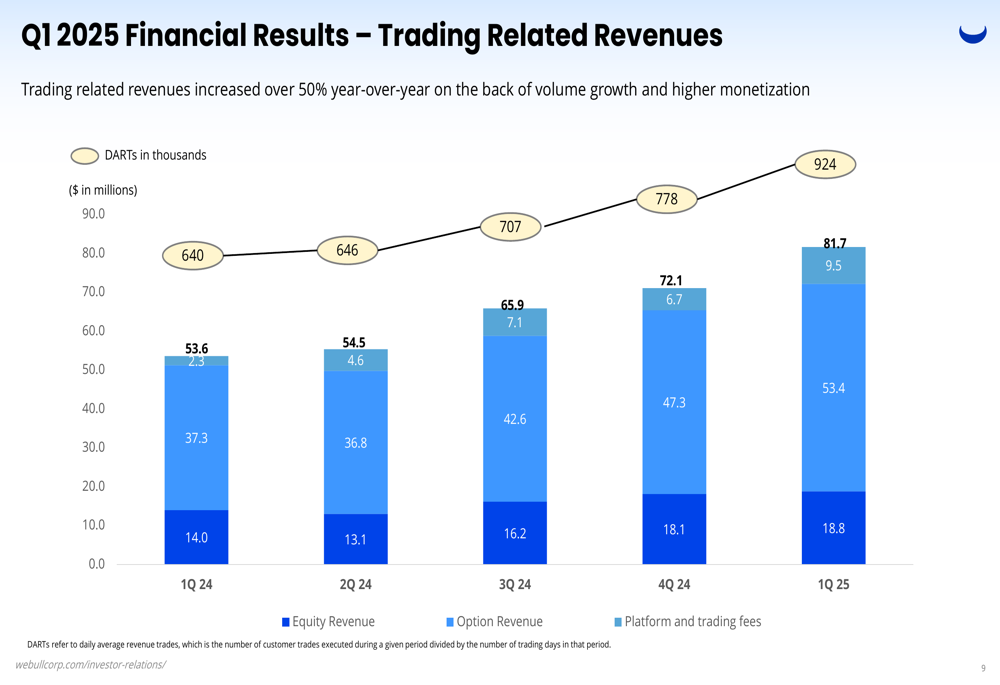
  • Webull reported strong top-line growth in recent quarters. In Q1 2025, revenues rose by 32 % year-over-year to about US$117 million, and the company swung from a loss to a net income of around US$12.9 million. (PR Newswire+2StockAnalysis+2)
  • In Q2 2025, revenue came in at roughly US$131.5 million, up ~46 % vs Q2 2024 (~US$90.1 million) — showing accelerating growth in that period. (Investing.com+2WallStreetZen+2)
  • The stock has already fallen steeply from its earlier highs. Some market commentary suggests that when a stock has dropped hard, it might set up for a rebound if fundamentals improve. (Value The Markets+1)
  • Webull’s business model—zero-commission trading, fractional shares, global expansion—remains relevant in the growing world of retail finance and digital investing. Supportive structural tailwinds could help long-term. For example, the company claims global reach and a broad user base. (AInvest+1)

2. The Case Against: Key Risks That Still Loom

  • While revenue is growing, the annual full-year revenue for 2024 was essentially flat compared to 2023 (~US$390.2 million in both years) — indicating growth isn’t guaranteed or smooth. (WallStreetZen+1)
  • Profitability remains a concern: Return on equity and profit margins are weak or negative in many recent periods. (Simply Wall St+1)
  • The company competes in a crowded sector (digital brokerages, fintech platforms) with strong incumbents like Robinhood Markets. Analysts have flagged slower growth vs bigger rivals. (Webull+1)
  • There are corporate-structure complexities and lock-up/share dilution risks. A financial-news piece noted that if the stock trades above US$12 for 20 days, up to 25 % of locked shares might be released, potentially expanding supply. (Money Morning)

3. Why “At All-Time Lows” Could Be a Turning Point

Many stocks trade at depressed levels because the market has lost confidence. That creates a scenario where:

  • The “bad news” may be largely baked into the price, so incremental positive surprises can have outsized impact.
  • A low base offers more upside potential if things go well (i.e., less downside cushion).
    For Webull, if growth continues and profitability improves, the market could reward the turnaround possibility. On the flip side, if risks intensify, the low price could still go lower.

4. What to Monitor Going Forward

Investors considering Webull should keep a close eye on:

  • Upcoming quarterly results: Are revenues continuing to grow at high rates? Are expenses under control?
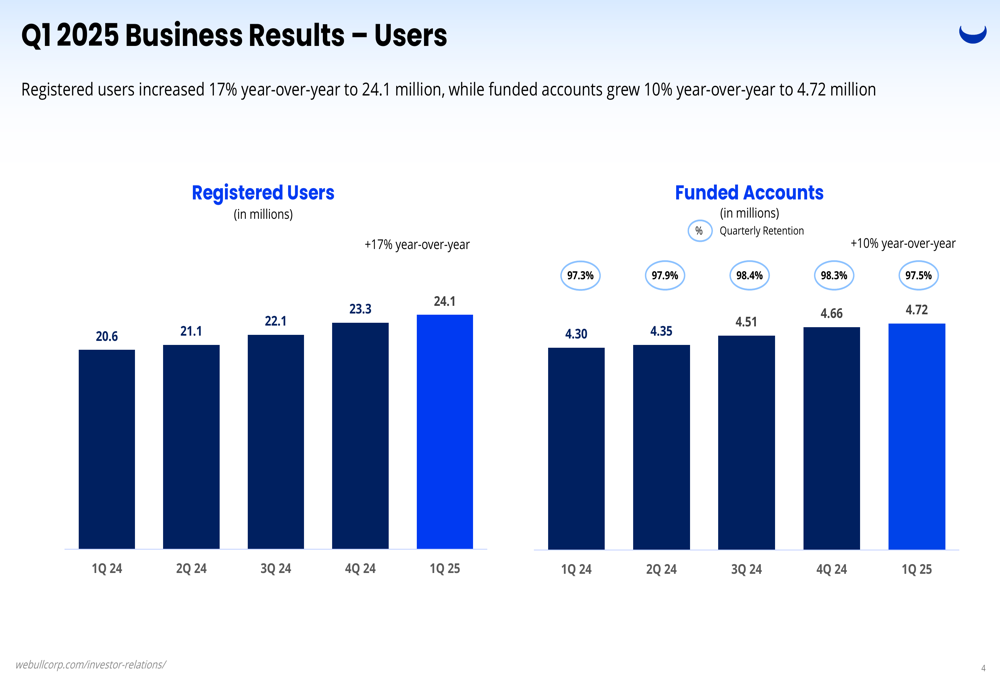
  • Account growth and trading volume: How many active/funded accounts? What is customer asset growth?
  • Profit margins and net income: Are they trending toward consistent profitability?
  • Share-count / dilution risk: Are there significant new shares coming? Are previously locked shares being released?
  • Competitive dynamics and regulatory risks: Any new regulatory headwinds? How is Webull distinguishing itself vs other brokers?

5. Summary: A High-Risk, High-Potential Setup

In short: Webull is not a safe, boring investment. It carries meaningful operational and structural risk. But the combination of decent recent growth, a depressed share price, and a business model aligned with retail investing trends makes it plausible that at these levels, the upside could be interesting if things go right.

For investors comfortable with risk and looking for speculative exposure in the fintech/brokerage space, BULL might offer a worthwhile “bet.” For more conservative investors, the uncertainty may be too large.

Before investing, one should do their own due diligence, weigh risk vs reward carefully, and consider how this fits into an overall portfolio.


https://content.stockstotrade.com/wp-content/uploads/2025/10/watermarked_BULL_2025-10-10T14-05-scaled.png
https://csv-storage.forexpros.com/slides/ddc6db61fc7fc26d73488dab0804c906c7608c6f44146b9c7b259e50f98c47a1.png
https://csv-storage.forexpros.com/slides/dd5e6af6d041cd8914e7ac5f888864b9d9ff042c7f3bad9d0e458507b3c5eab2.png

Above: Representative charts showing (1) share-price path of Webull (BULL), (2) recent revenue growth, (3) user growth/expansion metrics.


Disclaimer

This is not financial advice. The information above is for educational and informational purposes only. Investing involves risks, including loss of principal. Always consult a qualified financial advisor regarding your specific situation.

References

AINVEST. (2025, April 20). Webull stock: 2 reasons to buy, 4 reasons to sell. AINVEST.com. https://www.ainvest.com/news/webull-stock-2-reasons-buy-4-reasons-sell-2504-63/

Investing.com. (2025, August 8). Webull Q2 2025 slides: Revenue jumps 46%, achieves third profitable quarter. Investing.com. https://www.investing.com/news/company-news/webull-q2-2025-slides-revenue-jumps-46-achieves-third-profitable-quarter-93CH-4215463

Money Morning. (2025, April 14). Warning: Read this before you buy Webull (BULL) stock. MoneyMorning.com. https://moneymorning.com/2025/04/14/warning-read-this-before-you-buy-webull-bull-stock/

PR Newswire. (2025, May 13). Webull reports first quarter 2025 financial results. PR Newswire. https://www.prnewswire.com/news-releases/webull-reports-first-quarter-2025-financial-results-302463555.html

Simply Wall St. (2025). Webull Corporation (NASDAQ: BULL) past performance and analysis. SimplyWall.st. https://simplywall.st/stocks/us/diversified-financials/nasdaq-bull/webull/past

Value The Markets. (2025, June 30). Webull Corporation stock (BULL): Is it a buy at these levels? ValueTheMarkets.com. https://www.valuethemarkets.com/analysis/webull-corporation-stock-bull

WallStreetZen. (2025). Webull (BULL) revenue 2023–2025. WallStreetZen.com. https://www.wallstreetzen.com/stocks/us/nasdaq/bull/revenue

Webull. (2025, July 22). Webull news update: Market and company overview. Webull.com. https://www.webull.com/news/12711197501137920

Using Home Equity to Pay Off Debt or Improve Your Home — What You Need to Know Before You Borrow

For many homeowners, rising home values have created an opportunity to tap into their property’s equity — the difference between what you owe on your mortgage and what your home is worth. Using home equity can be a smart financial move, especially if you’re looking to pay off high-interest debt or fund major home improvements. But it’s not without risk.

Turning Equity Into Opportunity

Home equity loans and home equity lines of credit (HELOCs) allow you to borrow against the value of your home, often at lower interest rates than credit cards or personal loans. This can make them an appealing tool for consolidating high-interest debt, such as credit card balances that can quickly spiral out of control.

For example, replacing 25% interest credit card debt with a 7% home equity loan can save thousands in interest payments. Others use their home’s equity to finance renovations that can increase property value — like updating kitchens, adding energy-efficient systems, or finishing basements.

Understanding the Risks

While the benefits are clear, borrowing against your home’s equity comes with significant responsibilities. If you can’t make payments, you risk losing your home through foreclosure.

Home equity loans also increase your overall debt load, and if home prices fall, you could owe more than your property is worth — a situation known as being “underwater.” It’s also easy to fall into a debt cycle: paying off high-interest credit cards with a home loan only to run up balances again.

When It Makes Sense — and When It Doesn’t

Experts suggest using home equity strategically — for investments that add long-term value, like home improvements or education, not for short-term expenses or vacations. If you’re consolidating debt, make sure to address the spending habits that created it in the first place.

Before borrowing, compare rates, fees, and terms from multiple lenders, and consider talking to a financial advisor.

Key Takeaway

Home equity can be a valuable financial tool when used wisely — but it’s not “free money.” Every dollar you borrow is secured by the roof over your head. The best strategy is to borrow with purpose, have a clear repayment plan, and ensure the benefits outweigh the long-term costs.

What “Healthy and Wealthy” Means to Me

Success is often measured in numbers—bank accounts, investments, or even social media followers—the deeper meaning of being both healthy and wealthy can sometimes get lost. For me, the phrase isn’t about chasing material excess, but about balance, fulfillment, and sustainability in both body and mind.

Health as the Foundation
Health is more than the absence of illness; it’s the daily practice of treating your body and mind with respect. For me, that includes maintaining energy to do the things I love, fueling my body with good food, and taking time to reduce stress. Without health, even the greatest fortune feels empty. Wealth is meaningless if you don’t have the strength or clarity to enjoy it.

Wealth Beyond Money
When I think of being “wealthy,” I don’t immediately picture luxury cars or sprawling mansions. Instead, I see freedom—the freedom to spend time with loved ones, pursue passions, and give back to the community. True wealth, to me, includes financial security, but also peace of mind, strong relationships, and opportunities to grow.

Healthy and Wealthy Together
The two go hand in hand. Being healthy allows me to work toward financial stability with focus and determination. Being financially stable allows me to invest in my health—whether that’s quality healthcare, nutritious food, or the ability to take time off when I need it. Together, they create a cycle that builds not just a lifestyle, but a legacy.

A Personal Vision
Ultimately, “healthy and wealthy” means living in a way that supports long-term happiness. It’s about waking up each day with energy, knowing I have the resources to handle life’s challenges, and feeling grateful for both the small and big wins. To me, that’s real success—being rich in health, rich in love, and rich in purpose.

Why More Families Are Turning to Trusts to Protect Their Assets

When it comes to protecting wealth and passing it on to loved ones, many families are discovering that a simple will may not be enough. Increasingly, individuals are turning to trusts as a more effective way to manage their assets and provide security for beneficiaries. While wills remain common, trusts offer unique advantages that make them an essential tool in modern estate planning.

A trust is a legal arrangement in which a trustee manages assets on behalf of beneficiaries. Unlike a will, which becomes public during probate, a trust can keep family financial matters private while ensuring assets are distributed according to the grantor’s wishes.

Avoiding Probate Delays and Costs
One of the main reasons individuals choose a trust is to avoid probate—the court-supervised process of distributing an estate after death. Probate can take months or even years, and legal fees can significantly reduce what heirs actually receive. With a trust, assets are transferred more quickly and with fewer administrative costs.

Tax Efficiency and Asset Protection
Certain types of trusts can also provide tax advantages. For high-net-worth individuals, this can mean minimizing estate taxes, while others use trusts to shield assets from creditors or lawsuits. Parents of minor children often create trusts to ensure their children’s financial needs are met in the event of an untimely death.

Control Over Distribution
Unlike a will, which typically results in a lump-sum transfer of assets, a trust allows for customized distribution. For example, beneficiaries can receive funds at certain ages, in installments, or for specific purposes such as education or healthcare. This level of control provides peace of mind for those worried about heirs’ financial responsibility.

Peace of Mind for Families
“Trusts aren’t just for the wealthy,” says estate planning attorney Sarah Mitchell. “They’re tools that provide structure, protection, and clarity—things every family can benefit from. For many clients, it’s about peace of mind knowing their loved ones are taken care of.”

As life expectancy increases and wealth is passed down through generations, experts predict that more families will explore trusts as part of their financial planning. Whether it’s avoiding probate, protecting assets, or ensuring responsible inheritance, trusts are becoming a cornerstone of modern estate planning.

About the Author:

David Dandaneau is a client relations analyst that covers the insurance and financial services industry. He is known for his insightful analysis and comprehensive coverage of market trends and regulatory developments.

Why You Need Coverage for Your Recreational Vehicles

When it comes to motorcycles, boats, golf carts, and ATVs, most people think about the thrill of the ride, the open water, or a sunny day on the course-not the financial risks. But accidents, theft, and unexpected liabilities don’t take a holiday, and that’s why insurance for your recreational “toys” is worth serious consideration.

Required vs. Optional Coverage

The first step in understanding toy insurance is knowing what’s required by law and what’s optional.

  • Motorcycles: Like cars, most states require liability insurance if you’re taking your motorcycle on public roads. This covers injury or damage you may cause to others, but not your own bike. Collision and comprehensive coverage—protecting your motorcycle against accidents, theft, or weather damage are optional but highly recommended.
  • Boats: While boat insurance isn’t federally mandated, some states and marinas require proof of coverage. Even if it’s not required, carrying liability and property protection can shield you from costly repairs or lawsuits if an accident occurs on the water.
  • ATVs & Dirt Bikes: If you’re riding on private land, insurance is usually optional. However, many state parks, trails, and off-road areas require proof of coverage to operate. Considering the high rate of ATV accidents and theft, insuring your four-wheeler is a smart move.
  • Golf Carts: Most neighborhoods and golf courses don’t require golf cart insurance, but if you’re using the cart on public roads-or even just around your community-liability coverage can protect you if an accident happens. Some homeowners’ policies provide limited coverage, but standalone golf cart insurance can fill the gaps.

Why You Should Insure Even When It’s Optional

Just because coverage isn’t required doesn’t mean it isn’t essential. Repair costs, medical bills, or liability lawsuits can quickly outweigh the value of your toy itself. Theft is another growing concern-ATVs, motorcycles, and even boats are among the most commonly stolen recreational vehicles.

Insurance not only protects your investment but also your financial stability. For many, the peace of mind of knowing that a fun weekend won’t turn into a financial nightmare is worth the modest premium.

A Smarter Way to Protect Your Fun

Your recreational vehicles are more than just “toys”-they’re part of your lifestyle. Adding the right insurance ensures that your good times don’t come with unnecessary risks. Before the next ride, round of golf, or day on the water, check your coverage and make sure your adventures are backed by protection as strong as your passion.

About the Author:

David Dandaneau is a client relations analyst that covers the insurance and financial services industry. He is known for his insightful analysis and comprehensive coverage of market trends and regulatory developments.

Permissive Use of a Vehicle: What It Means and Why You Should Understand It

When you hand over your car keys to a friend or family member, you might not think twice. But in the world of auto insurance, that moment is about more than just trust-it’s about something called permissive use.

What Is Permissive Use?

Permissive use simply means you’ve allowed someone else to drive your vehicle with your permission. That permission can be:

  • Express – You clearly told them they could drive your car.
  • Implied – It’s understood based on your relationship or past behavior (e.g., your spouse or roommate regularly uses your car without asking each time).

In most standard auto insurance policies, permissive users are covered under the vehicle owner’s liability coverage. That means if the driver gets into an accident while using your car with your consent, your policy can help pay for damages or injuries to others.


Why Understanding Permissive Use Matters

  1. You Could Be Financially Responsible
    Even if you weren’t behind the wheel, your insurance may still be the first to pay if a permissive user causes an accident. If damages exceed your policy limits, you could be responsible for the difference.
  2. Coverage Isn’t Always Unlimited
    Some insurance companies provide reduced coverage limits for permissive drivers-especially if they’re not listed on your policy. Others might exclude certain drivers altogether.
  3. Not All Situations Are Covered
    If the person using your car is engaging in excluded activities-like delivering food for a rideshare app, racing, or using the vehicle without permission—your insurance might not apply.
  4. Claims Can Affect Your Record
    An accident caused by a permissive user can still appear on your insurance history and may impact your premiums.

How to Protect Yourself When Sharing Your Vehicle

  • Know Your Policy – Check your policy documents or talk to your agent to understand how your insurer handles permissive use.
  • Be Selective – Only allow responsible, licensed drivers to use your vehicle.
  • Clarify Restrictions – If you don’t want someone driving for certain purposes (like work deliveries), make that clear.
  • List Regular Drivers – If someone uses your car often, consider adding them to your policy to avoid coverage gaps.

Key Takeaway for Drivers

Permissive use may feel like a small favor, but it carries big insurance implications. By knowing the rules, choosing drivers wisely, and keeping your policy updated, you can avoid unpleasant surprises and keep both your car and your finances protected.

About the Author:

David Dandaneau is a client relations analyst that covers the insurance and financial services industry. He is known for his insightful analysis and comprehensive coverage of market trends and regulatory developments.

Should You Shop Your Homeowners Insurance? Here’s Why (And Why Not)

When was the last time you looked at your homeowners insurance policy? Many homeowners set it and forget it often paying premiums for years without comparing rates or coverage. But in today’s changing insurance landscape, shopping your policy could make a big difference to your wallet and your peace of mind.

Why You Might Want to Shop Your Homeowners Insurance
One of the biggest reasons to shop around is simple: savings. Insurance markets change constantly, and different companies assess risk in different ways. You may find the same coverage elsewhere for a lower premium, or better coverage for the same price. Additionally, shopping your policy gives you the chance to update your coverage. Maybe you’ve renovated, added a home office, installed a security system, or made energy-efficient upgrades—these can affect your premium or even qualify you for discounts. Finally, shopping around lets you evaluate customer service and claims satisfaction. Not all insurers handle claims equally, and a few bad experiences can turn a cheap policy into an expensive headache when you need it most.

Why You Might Not Want to Shop Your Homeowners Insurance
Staying put with your current insurer can have benefits, too. Loyalty discounts can add up over time, and bundling your homeowners insurance with auto or other policies often unlocks extra savings that you might lose if you switch. If you have a history of claims or live in a high-risk area, your current company may be offering you more favorable terms than a new insurer would… especially if you’ve built trust over years without filing major claims. Finally, switching companies can be time-consuming and confusing. If your current agent or company provides excellent service, quick claims resolution, and clear communication, that peace of mind might be worth more than a small annual savings.

Bottom Line
Shopping your homeowners insurance doesn’t mean you have to switch, but it does mean you’re informed. Compare rates every few years, check for discounts, and make sure your policy still fits your home and lifestyle. Whether you stay or go, you’ll know you’re making the best choice for your coverage and your wallet.

About the Author:

David Dandaneau is a client relations analyst that covers the insurance and financial services industry. He is known for his insightful analysis and comprehensive coverage of market trends and regulatory developments.

How Bundling Home and Auto Insurance Saves You Money

In today’s economy, every dollar saved counts — and when it comes to insurance, combining your policies could be one of the easiest ways to keep more money in your pocket.

Many Americans carry multiple insurance policies — auto, home, renters, sometimes even umbrella coverage — but fewer realize that bundling these policies with the same provider can unlock significant discounts. According to industry studies, customers who bundle their car and home insurance can often save anywhere from 5% to 25% on their total premium.

Why do insurance companies offer bundling discounts?
Insurance providers like it when customers keep multiple policies under one roof. Bundled customers are more likely to stick around long-term, which reduces the company’s costs to acquire and retain new business. Insurers pass some of those savings on to customers as an incentive to bundle.

How much can you really save?
The exact amount varies by state, provider, and individual circumstances. For example, homeowners generally see larger discounts than renters, and those with good credit and safe driving records may qualify for the biggest savings. In some cases, discounts can total hundreds of dollars a year — money that can be redirected toward other household expenses or savings.

Other perks beyond the discount
Bundling often makes life simpler, too. Instead of juggling different renewal dates, agents, and billing statements, you can manage your policies through one account. Some companies even offer a single deductible option for claims involving both home and auto — for example, if a storm damages your garage and your car at the same time.

A real-life savings story
I saw the benefits firsthand when I decided to bundle my own home and auto insurance. Before bundling, I was paying separate premiums with two different companies and never really thought much about it. After one quick conversation, I switched both policies to the same provider and ended up saving nearly $4500 a year. Not only did it cut my costs, but it made managing my insurance so much easier — one company, one bill, one renewal date.

Smart coverage, smart savings
Insurance might not be the most exciting thing on your to-do list, but spending a few minutes reviewing your policies could pay off. Ask your insurance agent about bundling options, compare quotes, and see if consolidating your coverage could drive down your costs — without compromising the protection you and your family need.

About the Author:

David Dandaneau is a client relations analyst that covers the insurance and financial services industry. He is known for his insightful analysis and comprehensive coverage of market trends and regulatory developments.

How to Cut Costs and Save Money Everyday

When inflation continues to chip away at household budgets, finding ways to save on daily expenses can have a big impact over time. Fortunately, a few small changes to your routine can lead to significant savings without drastically altering your lifestyle.

Here are some practical strategies to cut costs on common daily expenses:

  1. Cut the Coffee Shop Habit
    If you’re stopping by your local café every day, you’re likely spending more than you think. Brewing your coffee at home can save hundreds per year, and with so many quality at-home brewers on the market, the taste doesn’t have to suffer.
  2. Switch to Generic Brands
    From groceries to medicine, store-brand products often offer the same quality as name brands at a fraction of the price. A weekly grocery trip can be trimmed by 20–30% just by switching brands.
  3. Reduce Energy Use
    Turn off lights when you leave the room, unplug electronics not in use, and consider upgrading to energy-efficient bulbs and appliances. Small efforts add up on your utility bill.
  4. Use Public Transportation or Carpool
    Gas, maintenance, and parking costs can eat into your budget. Using public transit or sharing a ride just a few times per week can make a noticeable difference.
  5. Cook at Home More Often
    Dining out “even fast food” can cost two to three times more than a home-cooked meal. Planning meals and prepping ingredients ahead of time can save both money and stress.
  6. Shop Smarter
    Use cashback apps, look for sales, and take advantage of store loyalty programs. Planning your shopping trips and making a list can prevent impulse buys.
Expense CategoryStrategyEstimated Monthly Savings
Coffee/DrinksBrew at home\$60
GroceriesSwitch to generic/store brands\$50
ElectricityUse LED bulbs, unplug devices\$30
TransportationCarpool/public transport\$80
Dining OutCook at home more frequently\$100
ShoppingUse discounts, avoid impulse buys\$40
Total Potential Savings\$360/month

While saving $360 per month may not sound dramatic at first glance, it adds up to $4,320 per year enough for a vacation, a healthy emergency fund, or investing in long-term financial goals.

Bottom line: Small, mindful changes to your daily routine can make a big difference. By identifying where your money goes and being proactive, you can take control of your finances one dollar at a time.

Essential Auto Insurance Coverages Explained

Auto insurance is a necessity for drivers across the U.S., not only because it’s legally required in most states, but also because it provides vital financial protection in the event of an accident. However, understanding the different parts of an auto insurance policy—and knowing which coverages are essential versus optional—can save drivers hundreds of dollars a year.

Here’s a breakdown of the key components of a typical auto insurance policy and expert insight into which ones you really need—and which you might consider skipping.

  1. Liability Coverage (Required)
    What it covers: Bodily injury and property damage you cause to others in an accident.
    Do you need it? Yes. This is the foundation of any auto policy and is required in nearly every state. Minimum limits vary, but experts recommend opting for higher coverage than the legal minimum to protect your assets in case of a serious accident.
  2. Collision Coverage (Optional, but often essential)
    What it covers: Repairs to your vehicle after a crash, regardless of who’s at fault.
    Do you need it? It depends. If your car is financed or leased, the lender will require it. If you own your car outright, consider the vehicle’s value. For newer or high-value cars, it’s worth it. But for older vehicles, the premium may not justify the potential payout.
  3. Comprehensive Coverage (Optional)
    What it covers: Non-collision events like theft, vandalism, natural disasters, or hitting an animal.
    Do you need it? Probably. Comprehensive coverage is relatively inexpensive and offers peace of mind for unpredictable losses. Like collision, it may not be worth it for low-value vehicles.
  4. Uninsured/Underinsured Motorist Coverage (Highly Recommended)
    What it covers: Your injuries and property damage caused by a driver with insufficient or no insurance.
    Do you need it? Yes. With nearly 1 in 8 drivers uninsured in the U.S., this coverage can be a lifesaver—literally and financially.
  5. Personal Injury Protection (PIP) or Medical Payments (MedPay)
    What it covers: Medical expenses for you and your passengers, regardless of fault.
    Do you need it? Depends on your state and health coverage. PIP is mandatory in no-fault states. If you have good health insurance, you might skip this or opt for the minimum.
  6. Roadside Assistance & Rental Reimbursement (Optional)
    What they cover: Towing, lockouts, flat tires (roadside), and rental costs while your car is being repaired (rental reimbursement).
    Do you need them? Maybe. If your car is new and still under warranty, or you have AAA or another provider, you can skip these. Otherwise, they’re convenient and affordable add-ons.
  7. Gap Insurance (Optional but Critical for New Cars)
    What it covers: The difference between your car’s value and what you owe on it if it’s totaled.
    Do you need it? Yes—if you’re leasing or have a loan. Without gap insurance, you could owe thousands on a car you can’t drive.

How to Decide What to Keep or Cut
Evaluate your vehicle’s age, your financial situation, and how much risk you’re willing to take on personally. While saving money by dropping coverage can be tempting, going bare-bones can backfire if you’re ever in a serious accident.

“Think of insurance as a financial safety net,” says David Dandaneau, a licensed agent with Health to Wealth Ventures. “You don’t want to find out it’s full of holes when you need it most.”

Bottom Line: Not every auto insurance coverage is essential for every driver. Focus on meeting your state’s legal requirements, protecting your financial well-being, and balancing cost with coverage. A quick policy review with your insurance agent can help you trim the fat—without leaving you exposed.

About the Author:

David Dandaneau is a insurance agent that covers the insurance and financial services industry. He is known for his insightful analysis and comprehensive coverage of market trends and regulatory developments.