Understanding Auto Insurance Cancellations: Pro-Rata, Short-Rate, and Flat Cancellations Explained

Auto insurance policies are not always kept for their full term. Whether a policyholder sells a vehicle, finds a better rate, moves to another state, or simply decides to switch carriers, insurance policies are often canceled before their expiration date.

What many consumers don’t realize is that not all cancellations are calculated the same way. Depending on who initiates the cancellation and when it occurs, the refund amount may vary significantly.

The three most common types of auto insurance cancellations are Pro-Rata, Short-Rate, and Flat Cancellations.

What Is a Pro-Rata Cancellation?

A pro-rata cancellation occurs when the insurance company cancels the policy or when a cancellation is processed without any penalty.

Under a pro-rata cancellation, the policyholder receives a refund for all unused premium on a straight-line basis.

Example

Assume:

  • Annual premium: $1,200
  • Policy term: 12 months
  • Policy canceled after 3 months

The policyholder used 25% of the coverage period and is entitled to a refund of the remaining 75%.

  • Premium paid: $1,200
  • Earned premium: $300
  • Refund: $900

No cancellation fee is deducted.

Common Reasons for Pro-Rata Cancellations
  • Insurance company non-renews or cancels coverage
  • Vehicle is totaled and coverage ends
  • State regulatory requirements mandate a full refund calculation
  • Certain carrier-specific cancellation provisions

What Is a Short-Rate Cancellation?

A short-rate cancellation is the most common form of cancellation when the policyholder voluntarily cancels coverage before the policy expires.

With a short-rate cancellation, the insurer retains slightly more premium than the exact amount earned. This creates a financial penalty intended to offset administrative costs associated with issuing and canceling the policy.

Example

Assume:

  • Annual premium: $1,200
  • Policy canceled after 3 months
  • Unearned premium: $900

Instead of receiving the full $900 refund, the carrier applies a short-rate penalty.

Potential refund:

  • Unearned premium: $900
  • Short-rate penalty: $45
  • Refund issued: $855

The exact penalty varies by carrier and state regulations.

Typical Short-Rate Fees

Many carriers use:

  • 5% of the unearned premium
  • 10% of the unearned premium
  • A fixed cancellation fee ranging from $25 to $75
  • A state-approved short-rate table
Why Insurers Use Short-Rate Cancellations

Insurance companies incur expenses when policies are issued, including:

  • Underwriting costs
  • Policy processing
  • Commission payments
  • Administrative expenses

Short-rate penalties help recover a portion of those costs when a customer leaves before the policy term ends.

What Is a Flat Cancellation?

A flat cancellation treats the policy as though it never existed.

The insurer returns 100% of the premium paid and no coverage is considered to have been in force.

Example

Assume:

  • Annual premium: $1,200
  • Policy purchased today
  • Customer discovers duplicate coverage and cancels before the policy effective date

Refund:

  • Premium paid: $1,200
  • Refund issued: $1,200

No premium is earned by the insurer.

Common Reasons for Flat Cancellations
  • Policy canceled before the effective date
  • Coverage obtained in error
  • Duplicate policies discovered
  • Underwriting declines coverage before policy inception
  • No claims or coverage exposure occurred

Comparing the Three Types of Cancellations

Cancellation TypeRefund MethodPenalty Applied?Typical Situation
Flat Cancellation100% refundNoPolicy never takes effect
Pro-RataRefund of unused premiumNoInsurer initiates cancellation
Short-RateRefund of unused premium minus feeYesCustomer voluntarily cancels

How Much Could Cancellation Fees Cost?

Consider a policy with a remaining unearned premium of $600:

MethodRefund
Flat Cancellation$600
Pro-Rata Cancellation$600
Short-Rate (5% Penalty)$570
Short-Rate (10% Penalty)$540
Short-Rate + $50 Fee$550

While the difference may seem small, policyholders with higher premiums can lose hundreds of dollars when a short-rate penalty applies.

What Consumers Should Do Before Canceling

Before switching auto insurance companies:

  1. Verify the effective date of your new policy.
  2. Ask your current carrier whether a short-rate penalty applies.
  3. Request the exact refund amount in writing.
  4. Confirm there are no cancellation fees.
  5. Avoid any lapse in coverage that could increase future insurance premiums.

Many consumers focus solely on the new premium savings and overlook cancellation penalties that can reduce the benefit of switching carriers.

Silver sedan under transparent garage model on October 2023 calendar with service dates
A silver car under a transparent garage model on an October 2023 calendar.

The Takeaway Here

Understanding the difference between flat, pro-rata, and short-rate cancellations can help consumers make more informed decisions when changing auto insurance coverage. While flat and pro-rata cancellations generally provide the greatest refund, short-rate cancellations may reduce the amount returned through penalties or administrative fees.

Before canceling any auto policy, ask your insurance company or agent how the refund will be calculated. A simple phone call could prevent an unexpected deduction and help ensure a smooth transition to your new coverage.

Disclosure: This article is intended for educational purposes only. Cancellation rules, refund calculations, and fees vary by insurance carrier and state regulations. Consumers should consult their insurance policy and carrier for specific cancellation provisions.

About the Author:

David Dandaneau is a client relations analyst that covers the insurance and financial services industry. He is known for his insightful analysis and comprehensive coverage of market trends and regulatory developments.


Strengthening Relationships: The Power of Weekend Rituals

I used to think strong relationships were built on grand gestures such as vacations, expensive dinners, and anniversary surprises. Over time, I realized something far more practical and far more powerful:

The strongest couples don’t rely on occasional fireworks.
They rely on consistent weekends.

After observing couples I admire and evaluating what has worked in my own life I’ve noticed a couple behaviors that show up again and again. They’re not complicated. They’re intentional.

Here’s what I’ve learned.


1. We Reset: Together

Weekdays are operational. Work, obligations, responsibilities.

Weekends are relational.

Every Saturday morning, before the noise starts, we check in. Not logistics. Not bills. Not errands.

We ask:

  • How are you really doing?
  • What felt heavy this week?
  • What felt good?

This ritual prevents emotional backlog. In relationship psychology, unresolved micro-tensions accumulate into macro-conflict. Strong couples clear the emotional ledger weekly.

We don’t let small things compound.


2. We Protect Unstructured Time

High-performing couples schedule everything… except presence.

One of the most stabilizing habits we’ve built is blocking out time with no agenda. A walk around the pool. Coffee on the porch. Sitting in silence.

Research from the Gottman Institute shows that couples who build “love maps” detailed knowledge of each other’s inner worlds have higher long-term satisfaction. You don’t build love maps in rushed 10-minute conversations.

You build them in unstructured time.

So we slow down on purpose.


3. We Do Something Hard Together

Shared adversity strengthens bonds.

Whether it’s a workout, tackling a home project, or having a difficult conversation, strong couples lean into productive discomfort side by side.

There’s neuroscience behind this. Oxytocin (bonding hormone) and dopamine (reward pathway) are both activated when partners overcome challenges together. The shared win rewires the relationship positively.

When we sweat together, build together, or solve together, we trust more together.


4. We Disconnect From the World to Reconnect With Each Other

Phones are relationship disruptors.

According to research published in the American Psychological Association journals, perceived partner distraction by devices (often called “technoference”) correlates with lower relationship satisfaction.

So one thing I wish we did every weekend and something more people should consider:
Put your devices away during meals and conversations.

No scrolling. No divided attention.

Attention is the most valuable currency in a relationship.
What I focus on grows.


5. We Reaffirm the Vision

The strongest couples aren’t just surviving the present they are building a shared future.

At least once each weekend, we talk about:

  • Goals
  • Finances
  • Health
  • Travel
  • What kind of life we’re designing

This habit aligns with principles highlighted in positive psychology research from institutions like Harvard University, where shared meaning and future orientation are strongly correlated with life satisfaction.

We don’t drift.
We design together.


The Bigger Truth

Strong relationships aren’t built in dramatic moments.
They’re built in repeated, deliberate weekends.

I’ve learned that love isn’t sustained by intensity… it’s sustained by consistency.

Every weekend is an opportunity:

  • To reconnect
  • To repair
  • To realign
  • To recommit

The couples who thrive aren’t lucky.
They’re disciplined.

And the discipline isn’t complicated.

It’s these small things… repeated every single weekend.

Winter Is Coming: What You Should Never Leave in Your Car During the Cold Months

Dropping temperatures bring more than icy roads and frosted windshields, they also pose hidden risks to everyday items left inside your vehicle. While a parked car may feel like a convenient storage space, freezing conditions can quickly turn it into an environment that damages belongings, creates safety hazards, and leads to unnecessary expenses.

Cold weather affects materials in different ways. Liquids expand when frozen, batteries lose charge, and certain products can become unstable or ineffective. Knowing what not to leave in your car during winter can help protect both your property and your personal safety.

Electronics are among the most vulnerable items. Smartphones, laptops, and tablets rely on lithium-ion batteries, which drain rapidly in cold temperatures and may suffer permanent damage. Screens can also crack when exposed to extreme cold, especially if the device is used before warming up.

Medications are another critical concern. Many prescriptions and over-the-counter drugs must be stored within a specific temperature range to remain effective. Insulin, inhalers, liquid medicines, and EpiPens can lose potency or fail altogether when frozen posing serious health risks.

Aerosol cans, including deodorant, hairspray, and cooking spray, should also be removed from vehicles in winter. When exposed to freezing temperatures, these pressurized containers can leak or burst, damaging your car’s interior and creating a potential safety hazard.

Food and beverages are commonly overlooked. Bottled water, canned goods, and sealed drinks can freeze and expand, causing containers to crack or explode. Glass bottles are especially risky, as they can shatter and leave sharp debris behind.

Personal care products such as lotions, shampoos, cosmetics, and toothpaste often freeze or separate in cold weather, making them unusable. Similarly, adhesives and glues can lose their bonding strength once frozen, rendering them ineffective for future use.

Musical instruments should never be left in a cold car. Wood and metal components react poorly to temperature fluctuations, leading to warping, cracking, or tuning instability, damage that can be costly or irreversible.

Important documents, including insurance papers and legal forms, can also suffer. Moisture and condensation inside a cold vehicle may cause papers to warp, smudge, or deteriorate over time.

Even safety equipment is not immune. Some fire extinguishers may lose pressure or fail to operate properly in extreme cold unless they are specifically rated for low temperatures.

As winter weather becomes more unpredictable, a simple habit of clearing your car at the end of the day can go a long way. Protecting these items not only saves money but also helps ensure your safety and peace of mind throughout the colder months.

The Power of Vacation: Why Time Away Matters More Than the Destination

Vacation is frequently viewed by many as a luxury rather than a necessity. However, research and real-world experience continue to show that time away from routine is one of the most effective tools for improving mental clarity, emotional health, and long-term performance. Importantly, vacation does not always require travel. In many cases, the most meaningful breaks happen much closer to home.

Why Vacation Is Essential

Vacation serves a critical role in stress reduction and recovery. Continuous work without adequate rest increases burnout, reduces decision-making quality, and negatively impacts physical health. Stepping away even briefly allows the brain to reset, improves sleep patterns, and restores perspective. Employees who take regular breaks often return more focused, creative, and resilient.

Beyond professional benefits, time away strengthens personal relationships. Being present without the pressure of schedules or deadlines creates space for deeper connection, reflection, and enjoyment—key components of overall life satisfaction.

Redefining What “Vacation” Means

While traditional vacations involve travel, hotels, and itineraries, the true value of vacation lies in disengaging from routine responsibilities. A vacation is any intentional pause that allows the mind and body to recover. For many people, smaller, more frequent breaks are not only more accessible but also more sustainable.

Everyday Activities That Qualify as a Vacation

Not all restorative time requires packing a bag. The following activities provide many of the same benefits as a traditional vacation, even without leaving town:

ActivityWhy It Feels Like a VacationTime Commitment
Digital detoxReduces mental overload and improves focus1 day
Staycation at homeBreaks routine while remaining comfortableWeekend
Nature walk or park visitLowers stress and boosts mood1–2 hours
Reading without interruptionProvides mental escape and relaxation30–60 minutes
At-home spa nightSupports physical and emotional recoveryEvening
Exploring local restaurantsAdds novelty and enjoyment1–2 hours
Taking a day off with no agendaRestores energy and mental clarity1 day
Early bedtime and slow morningImproves sleep and cognitive functionOvernight
Creative hobbiesEncourages flow and enjoyment30–90 minutes
Protecting personal boundariesPreserves time and reduces stressImmediate

The Takeaway

Vacation is less about distance and more about intention. Whether through a week away or a single unplugged afternoon, purposeful rest is essential to sustained health, productivity, and happiness. By redefining vacation as regular, restorative time wherever it happens individuals can build balance into everyday life rather than waiting for a once-a-year escape.

Why Headlight Maintenance Could Save Your Life: The Hidden Dangers of Night Driving

As daylight fades and drivers take to the roads after sunset, the risks rise dramatically. According to the National Safety Council, the fatal crash rate at night is about three times higher than during the day. Despite making up only a small portion of total driving time, nighttime driving accounts for nearly 50% of all traffic deaths in the United States each year.

Experts point to one primary reason: reduced visibility. Even with streetlights and modern vehicle technology, the human eye struggles in low-light conditions. But what many drivers don’t realize is how much their own vehicle’s headlights can contribute to the danger.

Over time, headlight lenses become cloudy or yellowed from oxidation, cutting light output by as much as 50%. Bulbs can also dim gradually, often without the driver noticing, and misaligned headlights may shine too low or too high, limiting visibility or blinding oncoming traffic.

“Headlights are your first line of defense at night,” says a local automotive safety technician. “Keeping them clean, bright, and properly aimed can make the difference between spotting a hazard in time or not at all.”

Regular maintenance—such as cleaning lenses, checking bulb brightness, and ensuring correct alignment—can dramatically improve safety. Replacing bulbs in pairs and restoring headlight covers can also restore lost visibility and reduce glare for others.

Drivers should also be mindful of when they’re on the road. Statistics show that the hours after midnight are the most dangerous, as fatigue, alcohol impairment, and reduced alertness peak. For the safest travel, experts recommend getting home before midnight whenever possible.

In short, maintaining your headlights isn’t just about looks—it’s about safety. As nights grow longer, take a few minutes to check your car’s lights. It could be one of the simplest ways to protect yourself and everyone else on the road.

About the Author:

David Dandaneau is a client relations analyst that covers the insurance and financial services industry. He is known for his insightful analysis and comprehensive coverage of market trends and regulatory developments.

FS-1 Form Explained: Your DMV Insurance Checklist

When renewing your registration or handling certain vehicle-related matters at the Department of Motor Vehicles (DMV), you may be asked to provide an FS-1. For many drivers, the request sparks confusion—but the form is a crucial part of verifying compliance with state insurance laws.

What Is an FS-1?
An FS-1, sometimes called a “Certificate of Insurance,” is an official document issued by your auto insurance company. It confirms that you currently carry liability insurance that meets or exceeds the minimum coverage required by your state. Unlike a regular insurance ID card, the FS-1 is not something you automatically receive when you buy a policy; it’s generated only when the DMV requests it.

Why the DMV Requests an FS-1
The DMV may request an FS-1 for several reasons, including:

  • Registration Renewals: To confirm your vehicle has active coverage before issuing new tags.
  • New Vehicle Registration: When adding a car to the road for the first time, proof of proper insurance is mandatory.
  • Insurance Verification Programs: States often run audits to catch lapsed or fraudulent insurance, and an FS-1 is one way to confirm coverage directly from your insurer.
  • After Accidents or Violations: If you’ve been cited for driving uninsured or been involved in a crash, the DMV may require the FS-1 to prove you now carry valid insurance.

What the FS-1 Does
The FS-1 serves as an official communication between your insurance company and the DMV. Unlike simply showing your insurance card, the FS-1 provides legal assurance that your coverage is valid, active, and issued by a licensed carrier. It protects the state—and other drivers on the road—by helping ensure that every registered vehicle is financially responsible in case of an accident.

The Bottom Line
If the DMV asks you for an FS-1, don’t panic. It doesn’t necessarily mean you’re in trouble—it simply means they need official verification of your insurance. Contact your insurance agent or company right away, and they can file the FS-1 directly with the DMV on your behalf.

About the Author:

David Dandaneau is a client relations analyst that covers the insurance and financial services industry. He is known for his insightful analysis and comprehensive coverage of market trends and regulatory developments.

How I Keep My Brain Sharp as I Age

As I’ve gotten older, I’ve realized that taking care of my mind is just as important as taking care of my body. It’s not just about preventing memory lapses; it’s about staying sharp, curious, and engaged with life. Over the years, I’ve adopted several habits that I truly believe have helped me keep my brain in good shape—and the science backs it up.

Exercise Is My Non-Negotiable
I’ve found that moving my body daily, whether it’s a brisk walk, yoga, or light weightlifting, doesn’t just keep me physically fit—it clears my mind. Research shows that exercise increases blood flow to the brain and encourages the growth of new brain cells. I can feel the difference in my focus and energy on the days I move versus the days I don’t.

Food as Brain Fuel
What I eat has changed a lot. I’ve cut back on processed foods and leaned more into fresh vegetables, fruits, nuts, and fish. The Mediterranean diet, which many doctors recommend, isn’t just about longevity—it’s about mental clarity. When I eat clean, my thoughts feel sharper and my mood steadier.

Protecting My Sleep
In my younger years, I thought burning the candle at both ends was normal. Now, I treat sleep like medicine. Deep sleep helps my brain “clean house,” and when I get a solid 7–8 hours, my memory and problem-solving are noticeably better.

The Power of People
I’ve learned that socializing isn’t just about fun—it’s brain protection. Conversations, laughter, and community keep me engaged and emotionally balanced. Isolation, on the other hand, makes my mind feel sluggish.

Challenging My Mind Daily
Reading books, doing puzzles, or even trying to learn new skills keeps my brain on its toes. Recently, I started learning a new language—it’s humbling, but I can feel my brain stretching in ways it hasn’t in years.

Managing Stress the Hard Way
Stress used to be my constant companion. Over time, I noticed how it clouded my judgment and wore me down mentally. Now, I practice mindfulness and deep breathing. Even a few minutes of stillness in the morning changes how my entire day feels.

Checking In on My Health
Finally, I don’t ignore routine checkups anymore. Managing blood pressure, cholesterol, and overall health directly affects brain health. I’ve seen too many people neglect this, only to face cognitive issues later in life.

At the end of the day, brain health is not about one magic trick—it’s about small, consistent habits. For me, it’s a mix of movement, nourishment, rest, connection, curiosity, peace of mind, and medical awareness. And I can honestly say, these practices make me feel sharper, more alive, and ready for whatever comes next.

Why You Need Coverage for Your Recreational Vehicles

When it comes to motorcycles, boats, golf carts, and ATVs, most people think about the thrill of the ride, the open water, or a sunny day on the course-not the financial risks. But accidents, theft, and unexpected liabilities don’t take a holiday, and that’s why insurance for your recreational “toys” is worth serious consideration.

Required vs. Optional Coverage

The first step in understanding toy insurance is knowing what’s required by law and what’s optional.

  • Motorcycles: Like cars, most states require liability insurance if you’re taking your motorcycle on public roads. This covers injury or damage you may cause to others, but not your own bike. Collision and comprehensive coverage—protecting your motorcycle against accidents, theft, or weather damage are optional but highly recommended.
  • Boats: While boat insurance isn’t federally mandated, some states and marinas require proof of coverage. Even if it’s not required, carrying liability and property protection can shield you from costly repairs or lawsuits if an accident occurs on the water.
  • ATVs & Dirt Bikes: If you’re riding on private land, insurance is usually optional. However, many state parks, trails, and off-road areas require proof of coverage to operate. Considering the high rate of ATV accidents and theft, insuring your four-wheeler is a smart move.
  • Golf Carts: Most neighborhoods and golf courses don’t require golf cart insurance, but if you’re using the cart on public roads-or even just around your community-liability coverage can protect you if an accident happens. Some homeowners’ policies provide limited coverage, but standalone golf cart insurance can fill the gaps.

Why You Should Insure Even When It’s Optional

Just because coverage isn’t required doesn’t mean it isn’t essential. Repair costs, medical bills, or liability lawsuits can quickly outweigh the value of your toy itself. Theft is another growing concern-ATVs, motorcycles, and even boats are among the most commonly stolen recreational vehicles.

Insurance not only protects your investment but also your financial stability. For many, the peace of mind of knowing that a fun weekend won’t turn into a financial nightmare is worth the modest premium.

A Smarter Way to Protect Your Fun

Your recreational vehicles are more than just “toys”-they’re part of your lifestyle. Adding the right insurance ensures that your good times don’t come with unnecessary risks. Before the next ride, round of golf, or day on the water, check your coverage and make sure your adventures are backed by protection as strong as your passion.

About the Author:

David Dandaneau is a client relations analyst that covers the insurance and financial services industry. He is known for his insightful analysis and comprehensive coverage of market trends and regulatory developments.

Why Airbnb (ABNB) Might Be a Strong Long-Term Investment

1. Robust Financials & Market Leadership

Airbnb delivered $11.1 billion in revenue for 2024, marking a 12% year-over-year increase, driven by higher booking volume and sustained average daily rates. Gross booking value surged to $81.8 billion (+10.6% YoY), while free cash flow hit $458 million in Q4 (18% margin) (AInvest).

Moreover, Airbnb’s global market share in short-term rentals climbed to 44% in 2024, up from 28% in 2019—far ahead of Booking.com (18%) and Expedia/Vrbo (9%) (AInvest).

2. Efficient Asset-Light Business Model

Airbnb’s strategy avoids owning properties, enabling high-margin operations. Their gross margin soared to approximately 83% in early 2024 (The Motley Fool), and their asset utilization metrics demonstrate tightening efficiency. Notably, the net fixed-asset turnover leaped from 12.5 in 2020 to 75.5 in 2024, reflecting strong revenue delivery with minimal asset base (Stock Analysis on Net).

3. Strategic Diversification into Services & Experiences

In recent quarters, Airbnb has repositioned itself beyond homestays into an integrated travel ecosystem-offering localized experiences, services like spa treatments, personal training, and lodging alternatives-all within its revamped app ecosystem (AInvestMarketWatch).

This diversification is not trivial: management projects that the “Services & Experiences” vertical could generate $1 billion in annual revenue within 3–5 years, backed by a $200–250 million investment earmarked for 2025 (AInvestMarketWatch).

4. Recent Strong Earnings Momentum

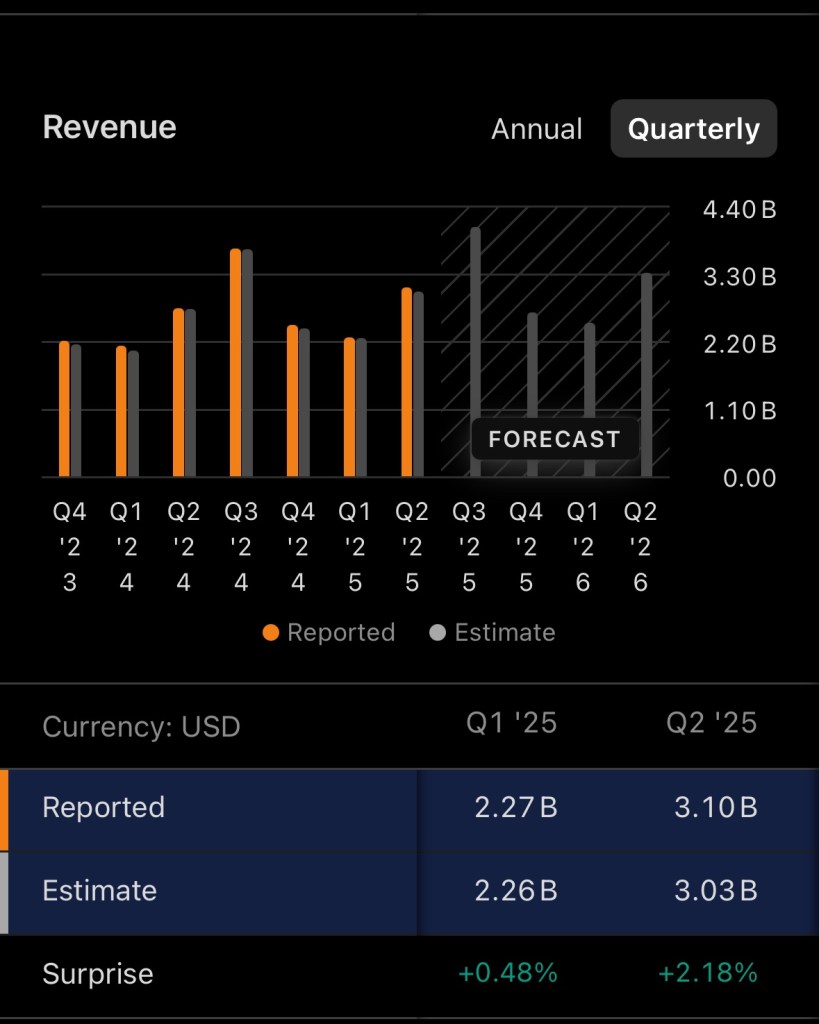
Airbnb outperformed expectations in Q2 2025:

  • Earnings per share: $1.03 (+99% YoY vs. $0.94 expected)
  • Revenue: $3.1 billion (+13% YoY)
  • Gross bookings: $23.5 billion (+11% YoY)

Despite these strong results, caution around margin trajectory and investment pace weighed on sentiment, causing a ~7% dip in premarket trading Investors.

Simultaneously, long-term confidence remains steady-Akre Capital boosted its Airbnb allocation by 10%, signaling belief in the company’s growth trajectory (AInvest).

5. Favorable Industry Trends

In the broader travel space, analysts remain positive. A recent Barron’s feature highlights secular travel growth outpacing GDP and the rising demand for experiences. Although other travel players like hotels and airlines benefit, OTAs and platforms like Airbnb must adapt and diversify to stay competitive-something Airbnb is actively doing (Barron’s).


Industry Positioning: How Airbnb Compares

Here’s a snapshot comparing Airbnb to its main competitors in the travel lodging and experiences sector:

CompanyMarket Share (2024)Business ModelKey Differentiator
Airbnb44%Asset-light platformLarge host network, high margins, diversified services
Booking.com18%Hybrid (hotels + rentals)Strong hotel partnerships, AI integration
Expedia/Vrbo9%Hybrid OTABundle offerings, traditional OTA presence

Airbnb leads clearly in short-term rental share and continues to build stronger differentiation through vertical integration and digital enhancements (AInvest+1MarketWatchBarron’s).


Points of Caution

  • Valuation: Forward P/E sits above 30x (e.g., ~34.5x), relatively high compared to peers like Expedia (~10x) or Booking (~18x) (The Motley FooleToro).
  • Regulatory Headwinds: Local restrictions (e.g., New York City) and evolving laws could curtail growth in certain markets (eToroMarketWatch).
  • Execution Risk: Scaling new offerings and achieving the $1 billion services target will take time—short-term margins may remain under pressure (AInvestInvestorsMarketWatch).

Final Take

Airbnb demonstrates the hallmarks of a high-upside, long-term growth stock:

  • Strong financials, efficient operations, and leading share in a growing market.
  • Expanding revenue streams beyond traditional listings.
  • Strategic execution evidenced by earnings beats and fund manager conviction.

That said, elevated valuation and near-term execution risks suggest that patient investors may benefit from disciplined entry points or staged allocation.

Disclaimer: The author holds a position in $ABNB AIR BNB and this article should not be considered financial advice. Always conduct your own research before making any investment decisions.

References

Ainvest. (2025, February 8). Airbnb resilient growth: Deep dive into profitability, market share, and long-term competitive positioning. Ainvest. https://www.ainvest.com/news/airbnb-resilient-growth-deep-dive-profitability-market-share-long-term-competitive-positioning-2508

Ainvest. (2025, February 8). Airbnb’s strategic shift: Competing with hotels and expanding into services. Ainvest. https://www.ainvest.com/news/airbnb-strategic-shift-competing-hotels-expanding-services-2508

Ainvest. (2025, February 8). Akre Capital’s sudden 53% cut in American Tower: A signal or a slip? Ainvest. https://www.ainvest.com/news/akre-capital-sudden-53-cut-american-tower-signal-slip-2508

Barron’s. (2025, February 10). Travel stocks are surging. United, Delta, Hyatt, and more stand out. Barron’s. https://www.barrons.com/articles/travel-stocks-united-delta-hyatt-cb139268

EToro. (2024, August 12). Analyzing Airbnb’s Q2 2024 earnings report. eToro. https://www.etoro.com/news-and-analysis/market-insights/analyzing-airbnbs-q2-2024

Fool.com. (2025, January 26). I just bought Airbnb stock for the 1st time since the IPO. Here’s why. The Motley Fool. https://www.fool.com/investing/2025/01/26/i-just-bought-airbnb-stock-for-the-1st-time-since

Fool.com. (2025, February 27). 3 must-know reasons to buy Airbnb—and 1 reason to be cautious. The Motley Fool. https://www.fool.com/investing/2025/02/27/3-must-know-reasons-to-buy-airbnb-and-1-reason

Investors.com. (2025, August 13). Airbnb growth accelerates as Q2 earnings beat. Why the stock is falling anyway. Investor’s Business Daily. https://www.investors.com/news/technology/airbnb-stock-abnb-q2-2025-earnings-news

MarketWatch. (2025, February 5). Airbnb wants to be an “anything” app. The debate for investors hinges on these issues. MarketWatch. https://www.marketwatch.com/story/airbnb-wants-to-be-an-anything-app-the-debate-for-investors-hinges-on-these-issues-ca692140

Stock-Analysis-On.net. (2025). Airbnb Inc. long-term investment activity ratios. Stock Analysis On. https://www.stock-analysis-on.net/NASDAQ/Company/Airbnb-Inc/Ratios/Long-term-Investment-Activity

Permissive Use of a Vehicle: What It Means and Why You Should Understand It

When you hand over your car keys to a friend or family member, you might not think twice. But in the world of auto insurance, that moment is about more than just trust-it’s about something called permissive use.

What Is Permissive Use?

Permissive use simply means you’ve allowed someone else to drive your vehicle with your permission. That permission can be:

  • Express – You clearly told them they could drive your car.
  • Implied – It’s understood based on your relationship or past behavior (e.g., your spouse or roommate regularly uses your car without asking each time).

In most standard auto insurance policies, permissive users are covered under the vehicle owner’s liability coverage. That means if the driver gets into an accident while using your car with your consent, your policy can help pay for damages or injuries to others.


Why Understanding Permissive Use Matters

  1. You Could Be Financially Responsible
    Even if you weren’t behind the wheel, your insurance may still be the first to pay if a permissive user causes an accident. If damages exceed your policy limits, you could be responsible for the difference.
  2. Coverage Isn’t Always Unlimited
    Some insurance companies provide reduced coverage limits for permissive drivers-especially if they’re not listed on your policy. Others might exclude certain drivers altogether.
  3. Not All Situations Are Covered
    If the person using your car is engaging in excluded activities-like delivering food for a rideshare app, racing, or using the vehicle without permission—your insurance might not apply.
  4. Claims Can Affect Your Record
    An accident caused by a permissive user can still appear on your insurance history and may impact your premiums.

How to Protect Yourself When Sharing Your Vehicle

  • Know Your Policy – Check your policy documents or talk to your agent to understand how your insurer handles permissive use.
  • Be Selective – Only allow responsible, licensed drivers to use your vehicle.
  • Clarify Restrictions – If you don’t want someone driving for certain purposes (like work deliveries), make that clear.
  • List Regular Drivers – If someone uses your car often, consider adding them to your policy to avoid coverage gaps.

Key Takeaway for Drivers

Permissive use may feel like a small favor, but it carries big insurance implications. By knowing the rules, choosing drivers wisely, and keeping your policy updated, you can avoid unpleasant surprises and keep both your car and your finances protected.

About the Author:

David Dandaneau is a client relations analyst that covers the insurance and financial services industry. He is known for his insightful analysis and comprehensive coverage of market trends and regulatory developments.