
Rising Homeowners Insurance Costs: What You Need to Know

Rising Costs Are Changing the Homeowners Insurance Conversation

Homeowners are facing some of the highest insurance premiums in decades for homeowner’s insurance. Inflation, severe weather events, increased construction costs, and rising litigation expenses have forced many insurers to reevaluate their risk exposure. In states such as Florida, Texas, California, and Louisiana, homeowners have experienced significant premium increases and, in some cases, reduced carrier availability.

As insurance costs continue to rise, many homeowners are asking the same question: “Am I carrying the right coverage, or am I paying for protection I may never use?”

The answer depends on your individual situation, but understanding the major components of a homeowners policy can help you make informed decisions.
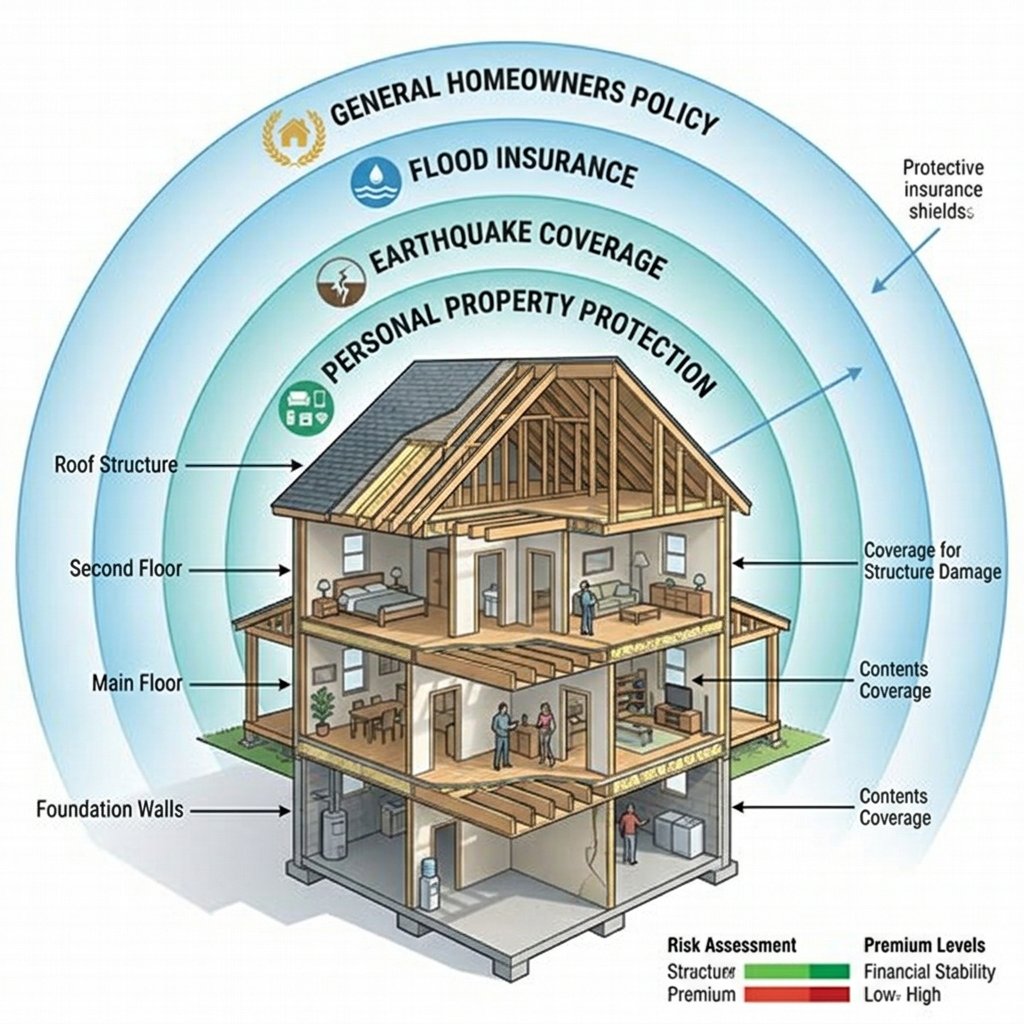
Cross-section of house with labels for roof structure, second floor, main floor, foundation walls, and insurance coverage types including general homeowners policy, flood insurance, earthquake coverage, and personal property protection.
A cross-section of a home illustrating various insurance coverage layers and protections.

Coverages Most Homeowners Should Consider Keeping

Dwelling Coverage

Dwelling coverage protects the structure of your home from covered losses such as fire, wind, hail, and other insured perils.

One of the biggest mistakes homeowners make is underinsuring their property. Construction costs have risen dramatically over the last several years, making it more expensive to rebuild a home after a total loss.

Consider: Reviewing your dwelling limit annually to ensure it reflects current rebuilding costs—not necessarily the market value of your home.

Personal Property Coverage

Furniture, electronics, clothing, appliances, and personal belongings can add up quickly. Many homeowners underestimate the value of their possessions until they experience a major loss.

Consider: Creating a home inventory and verifying that your coverage limits are sufficient.

Liability Coverage

Liability coverage protects you if someone is injured on your property or if you accidentally cause damage to another person’s property.

Medical expenses and lawsuits can quickly become expensive.

Consider: Increasing liability limits to $300,000 or $500,000 if your insurer offers affordable options.

Loss of Use Coverage

If your home becomes uninhabitable due to a covered loss, loss-of-use coverage helps pay for temporary housing and living expenses.

This coverage can be invaluable following major storms, fires, or water damage claims.

Coverages Worth Reviewing

High Deductibles vs. Low Deductibles

Many homeowners carry deductibles established years ago when premiums were much lower.

Increasing your deductible from $500 to $2,500 or even $5,000 could significantly reduce annual premiums.

Trade-Off: You’ll pay more out-of-pocket if a claim occurs.

Personal Property Limits

Some homeowners may be carrying higher limits than necessary if they have downsized or replaced expensive items.

Consider: Reviewing current belongings and adjusting coverage accordingly.

Scheduled Personal Property

Items such as jewelry, collectibles, artwork, firearms, and high-end electronics often require additional endorsements.

If you no longer own these items, removing unnecessary endorsements may reduce premium costs.

Additional Structures Coverage

Coverage for detached garages, sheds, fences, and other structures may be higher than needed if structures have been removed or reduced in value.

A periodic policy review can identify potential savings.

Important Coverages Many Homeowners Overlook

Water Backup Coverage

Standard homeowners policies typically do not cover sewer or drain backup losses.

A relatively inexpensive endorsement can help protect against costly water damage.

Flood Insurance

Many homeowners incorrectly assume flood damage is covered under a standard homeowners policy.

In reality, flood losses are generally excluded.

Even homes outside designated flood zones can experience flooding due to heavy rainfall, hurricanes, or drainage issues.

Ordinance or Law Coverage

Building codes change over time. If your home suffers significant damage, you may be required to rebuild portions of it to current code standards.

Ordinance or law coverage helps pay these additional expenses.

Equipment Breakdown Coverage

Many insurers now offer protection for HVAC systems, electrical panels, water heaters, and other major home systems.

This coverage can provide value for homeowners concerned about unexpected repair costs.

When Filing Small Claims May Cost More Than It Saves

A common misconception is that insurance should be used for every loss.

In reality, frequent claims can impact eligibility, renewal options, and future premiums.

For example, filing multiple water damage claims within a few years could make it more difficult to obtain favorable rates in the future.

Homeowners should evaluate whether a smaller loss justifies filing a claim or whether paying out-of-pocket may be the better financial decision.

Miniature house on one side of scale balanced with stacks of coins on the other side.
A scale balancing a miniature house and stacks of coins representing home value.

Final Thoughts

Homeowners insurance should not be viewed as a “set it and forget it” product. As property values, rebuilding costs, and personal circumstances change, coverage needs evolve as well.

A yearly policy review can help identify gaps in protection, uncover potential savings opportunities, and ensure your home remains adequately insured against today’s risks.

The goal is not necessarily to buy the cheapest policy available. Instead, homeowners should focus on balancing affordability with meaningful protection because saving a few dollars today could become extremely costly after a major loss.

Disclosure: This article is for informational purposes only and should not be considered insurance, legal, or financial advice. Coverage availability, exclusions, and policy terms vary by insurer and state. Consult a licensed insurance professional regarding your specific situation.

About the Author:

David Dandaneau is a client relations analyst that covers the insurance and financial services industry. He is known for his insightful analysis and comprehensive coverage of market trends and regulatory developments.

Why Uninsured Motorist, Comprehensive, and Collision Coverage May Be Worth the Cost

Understanding the Coverages That Protect More Than Just Your Car

When shopping for auto insurance, many drivers focus on finding the lowest premium possible. While saving money is important, reducing coverage can sometimes create much larger financial risks down the road. Three coverages that often generate questions are Uninsured Motorist Coverage, Comprehensive Coverage, and Collision Coverage.

These coverages can add cost to a policy, but they may also provide critical protection when life throws an unexpected curveball.

Gray car surrounded by glowing electric blue shield in a storm with rain and lightning
A car is shielded by a glowing electric barrier during a storm.

Uninsured Motorist Coverage: Protection From Other Drivers’ Mistakes

Despite laws requiring auto insurance in most states, millions of drivers continue to operate vehicles without coverage or with limits too low to fully pay for damages they cause.

Uninsured Motorist (UM) Coverage helps protect you if you’re injured by a driver who has no insurance. In many states, Underinsured Motorist Coverage (UIM) may also help when the at-fault driver’s policy limits are insufficient to cover your losses.

Example

Imagine you’re stopped at a red light and another driver rear-ends your vehicle. You suffer injuries requiring physical therapy and miss several weeks of work. Later, you discover the other driver has no insurance.

Without Uninsured Motorist Coverage:

  • You may have to rely on your health insurance.
  • Lost wages may not be fully covered.
  • Recovering damages could require legal action against someone who may have limited assets.

With Uninsured Motorist Coverage:

  • Your own policy may help pay medical expenses, lost wages, and other covered damages.

Reasons You Might Consider Leaving It Off

  • You have substantial personal assets and alternative protection strategies.
  • You live in an area with relatively low uninsured driver rates.
  • Budget constraints make affordability the top priority.

However, many insurance professionals consider UM coverage one of the most valuable protections available because it safeguards you from risks you cannot control.

Comprehensive Coverage: Protection Against Life’s Surprises

Comprehensive Coverage protects against losses that are generally not caused by a collision.

Common examples include:

  • Theft
  • Vandalism
  • Falling objects
  • Fire
  • Flooding
  • Hail damage
  • Animal strikes

Example

You walk outside one morning and discover a large tree branch has fallen on your parked vehicle during a storm.

Without Comprehensive Coverage:

  • You pay the repair bill entirely out of pocket.

With Comprehensive Coverage:

  • Your insurance company may cover repairs after your deductible is applied.

Another Example

A vehicle owner in Florida parks overnight and wakes up to find their car submerged after a major storm causes flash flooding.

Comprehensive Coverage may help cover the damage, while basic liability insurance would not.

Reasons You Might Consider Leaving It Off

  • Your vehicle has a very low market value.
  • The annual premium approaches the value of the vehicle itself.
  • You could comfortably replace the vehicle from savings if it were totaled.

For many drivers, comprehensive coverage provides peace of mind against unpredictable events that occur when the vehicle isn’t even being driven.

Collision Coverage: Protection for Your Vehicle

Collision Coverage helps pay for damage to your vehicle when it collides with another vehicle or object, regardless of fault.

Example

You’re backing out of a parking space and accidentally strike a concrete pole.

Without Collision Coverage:

  • You are responsible for all repair costs.

With Collision Coverage:

  • Your policy may pay for repairs after your deductible.

Another Example

A driver loses control during heavy rain and slides into a guardrail. The vehicle sustains $12,000 in damage.

With Collision Coverage:

  • The policy may cover repairs, less the deductible.

Without Collision Coverage:

  • The owner must absorb the entire loss.

When It May Make Sense to Drop Collision Coverage

There are situations where removing collision coverage can be financially reasonable.

Consider:

  • The vehicle’s value has significantly declined.
  • You have sufficient savings to replace the vehicle.
  • The premium and deductible together provide little financial benefit compared to the vehicle’s actual cash value.

For example, carrying collision coverage on a vehicle worth only $2,500 may not always make economic sense if the annual premium is high.

A Simple Rule of Thumb

Many insurance professionals suggest periodically reviewing your vehicle’s value. As vehicles age, the cost-benefit analysis of comprehensive and collision coverage changes.

Ask yourself:

  • What is my vehicle worth today?
  • Could I afford to replace it tomorrow?
  • How much would a major repair affect my finances?
  • Am I comfortable assuming more risk in exchange for lower premiums?
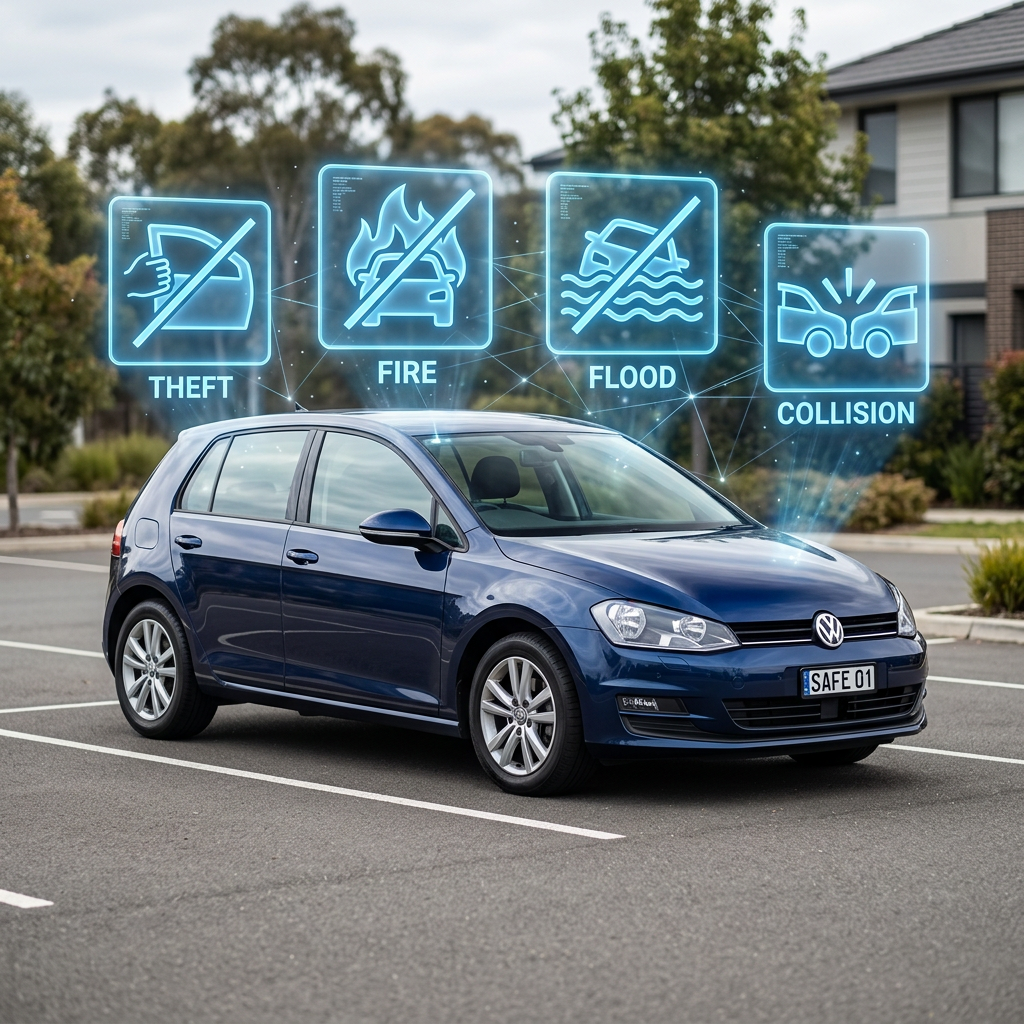
Blue car with digital icons indicating theft, fire, flood, and collision protection
A blue car parked with digital icons showing theft, fire, flood, and collision coverage

Final Perspective

Auto insurance isn’t just about satisfying state requirements, it’s about protecting your financial future. Uninsured Motorist, Comprehensive, and Collision Coverage each address different risks that can lead to significant out-of-pocket expenses.

While there are legitimate reasons to decline these coverages, drivers should carefully evaluate the potential savings against the financial consequences of a major accident, theft, storm, or uninsured driver. The cheapest policy is not always the least expensive option when an unexpected loss occurs.

As with any insurance decision, reviewing your coverage annually and discussing your needs with a licensed insurance professional can help ensure your protection keeps pace with your changing circumstances.

Disclaimer: This article is for educational purposes only and is not insurance, legal, or financial advice. Coverage availability, policy terms, exclusions, and requirements vary by state and insurance carrier. Consult a licensed insurance professional regarding your specific situation.

About the Author:

David Dandaneau is a client relations analyst that covers the insurance and financial services industry. He is known for his insightful analysis and comprehensive coverage of market trends and regulatory developments.

Essential Guide to Homeowners Liability Coverage

When it comes to homeowners insurance, most people focus on protecting their property from fire, theft, or storm damage. But one of the most overlooked—and most important—aspects of your policy is liability coverage. This protection kicks in when someone is injured on your property or if you accidentally cause damage to someone else’s property. And if you’re hiring contractors to work on your home, ensuring they’re properly insured could save you from financial disaster.

Understanding Liability Limits

Every homeowners insurance policy includes personal liability coverage, typically starting around $100,000 but often ranging up to $500,000 or more. This coverage helps pay for medical bills, legal fees, and settlements if you’re found responsible for an injury or property damage.

For example, if a guest slips on your icy driveway or a tree from your yard damages your neighbor’s fence, your liability coverage helps cover those costs. But here’s the catch—if damages exceed your policy limit, you’re personally responsible for the rest.

That’s why many insurance professionals recommend reviewing your limits regularly and considering an umbrella policy for extra protection. An umbrella policy can provide an additional $1 million or more in liability coverage for a relatively small cost each year.

The Hidden Risk of Uninsured Contractors

Home improvement projects often involve hiring outside help—roofers, electricians, painters, or landscapers. But before you hand over the keys or cut that first check, it’s critical to make sure any contractor working on your property carries their own liability and workers’ compensation insurance.

If a contractor is uninsured and one of their workers gets hurt on your property, you could be held liable for medical expenses, lost wages, or even lawsuits. Similarly, if they accidentally damage your home or a neighbor’s property, and they’re not covered, your own insurance might have to step in—potentially driving up your premiums or leaving you with out-of-pocket costs.

Protecting Yourself and Your Investment

Your homeowners insurance does more than protect your house—it protects your financial future. By maintaining sufficient liability limits and ensuring contractors are properly insured, you can avoid costly surprises if something goes wrong. A few minutes of due diligence today can save you thousands—and a lot of stress—tomorrow.

About the Author:

David Dandaneau is a client relations analyst that covers the insurance and financial services industry. He is known for his insightful analysis and comprehensive coverage of market trends and regulatory developments.

Essential Auto Insurance Coverages Explained

Auto insurance is a necessity for drivers across the U.S., not only because it’s legally required in most states, but also because it provides vital financial protection in the event of an accident. However, understanding the different parts of an auto insurance policy—and knowing which coverages are essential versus optional—can save drivers hundreds of dollars a year.

Here’s a breakdown of the key components of a typical auto insurance policy and expert insight into which ones you really need—and which you might consider skipping.

  1. Liability Coverage (Required)
    What it covers: Bodily injury and property damage you cause to others in an accident.
    Do you need it? Yes. This is the foundation of any auto policy and is required in nearly every state. Minimum limits vary, but experts recommend opting for higher coverage than the legal minimum to protect your assets in case of a serious accident.
  2. Collision Coverage (Optional, but often essential)
    What it covers: Repairs to your vehicle after a crash, regardless of who’s at fault.
    Do you need it? It depends. If your car is financed or leased, the lender will require it. If you own your car outright, consider the vehicle’s value. For newer or high-value cars, it’s worth it. But for older vehicles, the premium may not justify the potential payout.
  3. Comprehensive Coverage (Optional)
    What it covers: Non-collision events like theft, vandalism, natural disasters, or hitting an animal.
    Do you need it? Probably. Comprehensive coverage is relatively inexpensive and offers peace of mind for unpredictable losses. Like collision, it may not be worth it for low-value vehicles.
  4. Uninsured/Underinsured Motorist Coverage (Highly Recommended)
    What it covers: Your injuries and property damage caused by a driver with insufficient or no insurance.
    Do you need it? Yes. With nearly 1 in 8 drivers uninsured in the U.S., this coverage can be a lifesaver—literally and financially.
  5. Personal Injury Protection (PIP) or Medical Payments (MedPay)
    What it covers: Medical expenses for you and your passengers, regardless of fault.
    Do you need it? Depends on your state and health coverage. PIP is mandatory in no-fault states. If you have good health insurance, you might skip this or opt for the minimum.
  6. Roadside Assistance & Rental Reimbursement (Optional)
    What they cover: Towing, lockouts, flat tires (roadside), and rental costs while your car is being repaired (rental reimbursement).
    Do you need them? Maybe. If your car is new and still under warranty, or you have AAA or another provider, you can skip these. Otherwise, they’re convenient and affordable add-ons.
  7. Gap Insurance (Optional but Critical for New Cars)
    What it covers: The difference between your car’s value and what you owe on it if it’s totaled.
    Do you need it? Yes—if you’re leasing or have a loan. Without gap insurance, you could owe thousands on a car you can’t drive.

How to Decide What to Keep or Cut
Evaluate your vehicle’s age, your financial situation, and how much risk you’re willing to take on personally. While saving money by dropping coverage can be tempting, going bare-bones can backfire if you’re ever in a serious accident.

“Think of insurance as a financial safety net,” says David Dandaneau, a licensed agent with Health to Wealth Ventures. “You don’t want to find out it’s full of holes when you need it most.”

Bottom Line: Not every auto insurance coverage is essential for every driver. Focus on meeting your state’s legal requirements, protecting your financial well-being, and balancing cost with coverage. A quick policy review with your insurance agent can help you trim the fat—without leaving you exposed.

About the Author:

David Dandaneau is a insurance agent that covers the insurance and financial services industry. He is known for his insightful analysis and comprehensive coverage of market trends and regulatory developments.

Why Boat Insurance is Essential for Recreational Boating

As recreational boating gains popularity across the United States, the importance of boat insurance becomes increasingly evident. Whether you’re navigating serene lakes or coastal waters, unforeseen accidents can lead to substantial financial burdens without adequate coverage.​


In 2023, the U.S. witnessed over 4,000 recreational boating accidents, resulting in more than 500 fatalities and nearly 3,000 injuries. These incidents underscore the unpredictable nature of boating and the potential risks involved.​

Financial repercussions from such accidents are significant. Property damage alone amounted to approximately $63.42 million in 2023, marking a slight increase from the previous year.​

Common Causes of Boating Accidents
Understanding prevalent causes of boating mishaps can highlight the necessity of insurance:​

  • Collisions with Other Vessels or Objects: Account for 26% of all boat insurance claims.
  • Grounding: Involves 16% of claims, often due to navigating shallow waters or unseen obstacles.
  • Theft: Represents 6% of claims, emphasizing the need for comprehensive coverage.
  • Fire and Explosion: Though less common, these incidents can lead to total vessel loss .​

The Role of Boat Insurance
Boat insurance serves as a financial safeguard, covering damages to your vessel, liability for injuries to others, and protection against theft or natural disasters. Without it, boat owners may face out-of-pocket expenses for repairs, medical bills, or legal fees.​

For instance, the sinking of the Bayesian superyacht off Sicily in 2024 resulted in anticipated insurance claims of at least $150 million, highlighting the potential financial magnitude of maritime accidents.


Boating offers unparalleled freedom and enjoyment, but it also comes with inherent risks. Investing in comprehensive boat insurance ensures that you’re protected against unforeseen events, allowing you to navigate the waters with peace of mind.​

About the Author:

David Dandaneau is a insurance agent that covers the insurance and financial services industry. He is known for his insightful analysis and comprehensive coverage of market trends and regulatory developments.

References
Statista. (2024). Damages caused by recreational boating accidents in the United States from 2001 to 2023. Retrieved from https://www.statista.com/statistics/240641/recreational-boating-accidents-in-the-us-total-damages/

G.M. Insurance Center, Inc. (2024). Boat Insurance Claims Stats. Retrieved from https://www.gmins.com/boat-insurance-claims-stats/

Worth Insurance. (2024). 49+ Boating Industry & Boating Accident Statistics. Retrieved from https://www.worthinsurance.com/post/boating-statistics

Reuters. (2024, August 29). Sunk superyacht likely to cost insurers at least $150 million, experts say. Retrieved from https://www.reuters.com/world/europe/sunk-superyacht-likely-cost-insurers-least-150-million-experts-say-2024-08-29/

The Importance of Business and Professional Liability Insurance in Today’s Market

In an increasingly litigious society, businesses of all sizes face a variety of risks that could lead to devastating financial losses. Business and professional liability insurance have become essential tools for safeguarding companies against potential lawsuits, ensuring that they can operate confidently and sustainably.

Understanding Business Liability Insurance
Business liability insurance, often referred to as general liability insurance, protects companies from financial loss resulting from claims of injury or property damage caused by the business’s operations, products, or services. This coverage is crucial for businesses that interact with customers, clients, or the public, as it covers legal fees, settlements, and medical expenses that could arise from accidents or damages linked to the business.

“Even a minor slip-and-fall accident in your store can lead to a significant lawsuit,” explains John Reynolds, a small business owner and insurance advocate. “Without liability insurance, one lawsuit could potentially bankrupt a small business.”

The Role of Professional Liability Insurance
Professional liability insurance, also known as errors and omissions (E&O) insurance, is equally important, particularly for businesses that provide professional services. This type of insurance covers legal costs and damages resulting from negligence, errors, or omissions in the professional services provided by the business.

Professionals such as doctors, lawyers, consultants, and architects often face high-stakes decisions and actions that can have serious consequences if mistakes occur. In such cases, professional liability insurance acts as a safety net, protecting the professional’s reputation and financial stability.

“Clients trust us with critical aspects of their lives and businesses, and sometimes things don’t go as planned,” says Dr. Sarah Mitchell, a healthcare professional. “Professional liability insurance ensures that we can address these issues without the added stress of financial ruin.”

Why These Insurances Are More Critical Than Ever
The modern business landscape is marked by increased regulation, higher customer expectations, and a more litigious culture. With the rise of social media, dissatisfied clients or customers can quickly amplify negative experiences, leading to reputational damage and potential legal action.

Moreover, as businesses embrace digital transformation, new risks such as cyberattacks and data breaches emerge. While general liability insurance may not cover these specific risks, the broader spectrum of liability insurance, including specialized policies, provides a comprehensive safety net.

“In today’s fast-paced and interconnected world, the potential for a lawsuit is higher than ever,” notes Laura Gomez, a risk management expert. “Having robust liability insurance is not just a precaution—it’s a necessity for any business that wants to thrive in the long term.”

The Financial Impact
The financial implications of being uninsured or underinsured can be staggering. A single lawsuit, even if unfounded, can cost tens of thousands of dollars in legal fees alone. For small businesses, these costs can be catastrophic. Liability insurance mitigates this risk, allowing businesses to allocate resources to growth and innovation rather than legal battles.

Furthermore, many clients and partners now require proof of liability insurance before engaging in business, making it a critical component of building trust and credibility in the marketplace.


Business and professional liability insurance are not merely optional add-ons—they are fundamental to the sustainability and growth of any business. As risks evolve and the business environment becomes more complex, investing in comprehensive liability coverage is one of the smartest decisions a business owner can make.

By protecting against unforeseen legal challenges, these insurances provide peace of mind and allow businesses to focus on what they do best—serving their customers and growing their operations. As the old adage goes, it’s better to be safe than sorry, and in the case of liability insurance, being safe can also mean being solvent.

About the Author:

David Dandaneau is a insurance agent that covers the insurance and financial services industry. He is known for his insightful analysis and comprehensive coverage of market trends and regulatory developments.