Why Uninsured Motorist, Comprehensive, and Collision Coverage May Be Worth the Cost

Understanding the Coverages That Protect More Than Just Your Car

When shopping for auto insurance, many drivers focus on finding the lowest premium possible. While saving money is important, reducing coverage can sometimes create much larger financial risks down the road. Three coverages that often generate questions are Uninsured Motorist Coverage, Comprehensive Coverage, and Collision Coverage.

These coverages can add cost to a policy, but they may also provide critical protection when life throws an unexpected curveball.

Gray car surrounded by glowing electric blue shield in a storm with rain and lightning
A car is shielded by a glowing electric barrier during a storm.

Uninsured Motorist Coverage: Protection From Other Drivers’ Mistakes

Despite laws requiring auto insurance in most states, millions of drivers continue to operate vehicles without coverage or with limits too low to fully pay for damages they cause.

Uninsured Motorist (UM) Coverage helps protect you if you’re injured by a driver who has no insurance. In many states, Underinsured Motorist Coverage (UIM) may also help when the at-fault driver’s policy limits are insufficient to cover your losses.

Example

Imagine you’re stopped at a red light and another driver rear-ends your vehicle. You suffer injuries requiring physical therapy and miss several weeks of work. Later, you discover the other driver has no insurance.

Without Uninsured Motorist Coverage:

  • You may have to rely on your health insurance.
  • Lost wages may not be fully covered.
  • Recovering damages could require legal action against someone who may have limited assets.

With Uninsured Motorist Coverage:

  • Your own policy may help pay medical expenses, lost wages, and other covered damages.

Reasons You Might Consider Leaving It Off

  • You have substantial personal assets and alternative protection strategies.
  • You live in an area with relatively low uninsured driver rates.
  • Budget constraints make affordability the top priority.

However, many insurance professionals consider UM coverage one of the most valuable protections available because it safeguards you from risks you cannot control.

Comprehensive Coverage: Protection Against Life’s Surprises

Comprehensive Coverage protects against losses that are generally not caused by a collision.

Common examples include:

  • Theft
  • Vandalism
  • Falling objects
  • Fire
  • Flooding
  • Hail damage
  • Animal strikes

Example

You walk outside one morning and discover a large tree branch has fallen on your parked vehicle during a storm.

Without Comprehensive Coverage:

  • You pay the repair bill entirely out of pocket.

With Comprehensive Coverage:

  • Your insurance company may cover repairs after your deductible is applied.

Another Example

A vehicle owner in Florida parks overnight and wakes up to find their car submerged after a major storm causes flash flooding.

Comprehensive Coverage may help cover the damage, while basic liability insurance would not.

Reasons You Might Consider Leaving It Off

  • Your vehicle has a very low market value.
  • The annual premium approaches the value of the vehicle itself.
  • You could comfortably replace the vehicle from savings if it were totaled.

For many drivers, comprehensive coverage provides peace of mind against unpredictable events that occur when the vehicle isn’t even being driven.

Collision Coverage: Protection for Your Vehicle

Collision Coverage helps pay for damage to your vehicle when it collides with another vehicle or object, regardless of fault.

Example

You’re backing out of a parking space and accidentally strike a concrete pole.

Without Collision Coverage:

  • You are responsible for all repair costs.

With Collision Coverage:

  • Your policy may pay for repairs after your deductible.

Another Example

A driver loses control during heavy rain and slides into a guardrail. The vehicle sustains $12,000 in damage.

With Collision Coverage:

  • The policy may cover repairs, less the deductible.

Without Collision Coverage:

  • The owner must absorb the entire loss.

When It May Make Sense to Drop Collision Coverage

There are situations where removing collision coverage can be financially reasonable.

Consider:

  • The vehicle’s value has significantly declined.
  • You have sufficient savings to replace the vehicle.
  • The premium and deductible together provide little financial benefit compared to the vehicle’s actual cash value.

For example, carrying collision coverage on a vehicle worth only $2,500 may not always make economic sense if the annual premium is high.

A Simple Rule of Thumb

Many insurance professionals suggest periodically reviewing your vehicle’s value. As vehicles age, the cost-benefit analysis of comprehensive and collision coverage changes.

Ask yourself:

  • What is my vehicle worth today?
  • Could I afford to replace it tomorrow?
  • How much would a major repair affect my finances?
  • Am I comfortable assuming more risk in exchange for lower premiums?
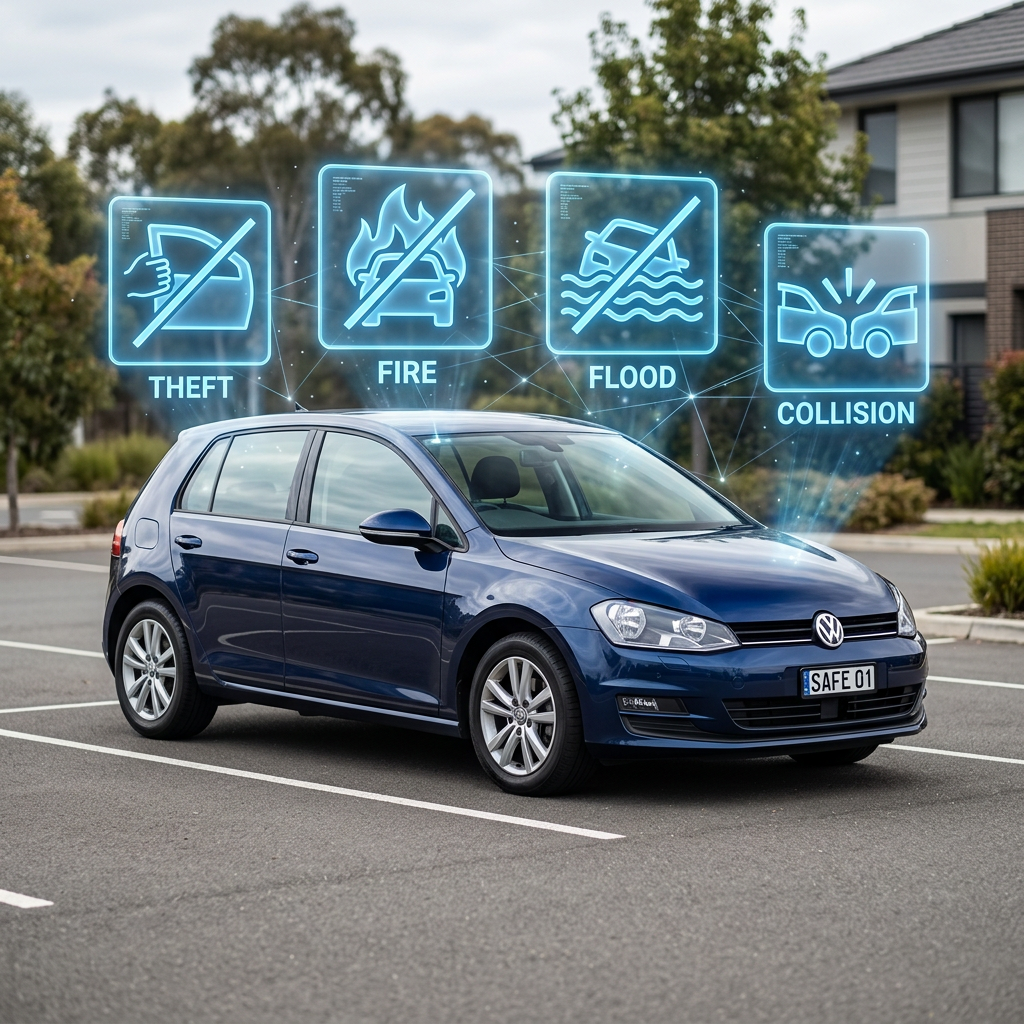
Blue car with digital icons indicating theft, fire, flood, and collision protection
A blue car parked with digital icons showing theft, fire, flood, and collision coverage

Final Perspective

Auto insurance isn’t just about satisfying state requirements, it’s about protecting your financial future. Uninsured Motorist, Comprehensive, and Collision Coverage each address different risks that can lead to significant out-of-pocket expenses.

While there are legitimate reasons to decline these coverages, drivers should carefully evaluate the potential savings against the financial consequences of a major accident, theft, storm, or uninsured driver. The cheapest policy is not always the least expensive option when an unexpected loss occurs.

As with any insurance decision, reviewing your coverage annually and discussing your needs with a licensed insurance professional can help ensure your protection keeps pace with your changing circumstances.

Disclaimer: This article is for educational purposes only and is not insurance, legal, or financial advice. Coverage availability, policy terms, exclusions, and requirements vary by state and insurance carrier. Consult a licensed insurance professional regarding your specific situation.

About the Author:

David Dandaneau is a client relations analyst that covers the insurance and financial services industry. He is known for his insightful analysis and comprehensive coverage of market trends and regulatory developments.
Uninsured Motorist Coverage: Essential or Unnecessary?

When shopping for car insurance, most drivers focus on the basics—liability, collision, and comprehensive coverage. But one part of your policy that often gets overlooked could end up being your financial lifeline in an accident: Uninsured Motorist (UM) coverage. At the same time, some drivers question whether it’s necessary. So, should you add it to your policy? The answer depends on several factors.

The Case For Uninsured Motorist Coverage
Despite mandatory insurance laws in most states, millions of drivers remain uninsured. According to the Insurance Research Council, about 1 in 8 drivers in the U.S. is uninsured. That means if you’re hit by one of them, you could be left paying out-of-pocket for injuries and damages—unless you have UM coverage.

Uninsured Motorist Bodily Injury (UMBI) covers your medical expenses, lost wages, and even pain and suffering if you’re injured by an at-fault driver who doesn’t have insurance. Uninsured Motorist Property Damage (UMPD), where available, helps pay for repairs to your vehicle.

“Uninsured motorist coverage acts like a safety net,” says Karen Simmons, a claims manager at Midwest Auto Insurance. “It protects you and your passengers when someone else’s irresponsibility puts you at risk.”

It can also protect you in hit-and-run accidents, which are legally treated as if the other driver is uninsured in many states. Given rising medical costs, even a minor accident could leave you with thousands in bills.

The Case Against Uninsured Motorist Coverage
On the other hand, some argue that UM coverage may not be essential—particularly if you already have strong health and collision coverage.

If your health insurance plan is comprehensive and has low deductibles, you might already be covered for medical treatment resulting from an accident. Likewise, if you carry collision coverage, your car repairs could be handled without relying on UMPD.

“In some situations, uninsured motorist coverage may duplicate benefits you already have,” explains Joseph Martinez, a financial advisor in Houston. “If you’re budget-conscious and have overlapping protection, it might be an area to consider trimming.”

In states where no-fault laws apply, your own insurance pays for injury-related expenses regardless of who caused the accident—making UM coverage less critical.

Additionally, if you rarely drive, live in a state with low uninsured rates, or have a well-funded emergency savings account, the risk of going without may seem acceptable.

Ultimately, the decision to carry uninsured motorist coverage comes down to your personal risk tolerance, financial situation, and existing insurance portfolio.

It tends to be one of the more affordable add-ons to a policy, offering valuable peace of mind. But for others with overlapping coverage, it may be a redundant cost.

Before making a decision, it’s smart to consult with a licensed insurance agent who can help you evaluate your exposure and craft a policy that works for you.

About the Author:

David Dandaneau is a insurance agent that covers the insurance and financial services industry. He is known for his insightful analysis and comprehensive coverage of market trends and regulatory developments.

Why Uninsured Motorist Coverage Is a Crucial Addition to Your Auto Insurance Policy

When it comes to shopping for auto insurance, many drivers prioritize liability coverage, collision, and comprehensive policies. However, one often-overlooked option that can be a lifesaver in the event of an accident is uninsured motorist (UM) coverage.

The Growing Concern: Uninsured Drivers
According to a recent report by the Insurance Research Council (IRC), nearly 1 in 8 drivers in the United States is uninsured. In some states, the percentage is even higher, posing a significant risk to insured motorists. If you are involved in an accident with an uninsured driver, you could be left footing the bill for medical expenses, vehicle repairs, and other damages—costs that can quickly add up to tens of thousands of dollars.

What Is Uninsured Motorist Coverage?
Uninsured motorist coverage is designed to protect you financially if you are hit by a driver who doesn’t carry auto insurance. In many cases, it also covers underinsured motorists—drivers whose insurance limits are too low to fully compensate for the damages they cause.

UM coverage typically applies to:

  • Medical expenses for you and your passengers.
  • Lost wages due to injuries sustained in the accident.
  • Pain and suffering caused by the collision.
  • Funeral expenses, if applicable.


Benefits of Uninsured Motorist Coverage
1) Peace of Mind: Knowing you’re protected against the financial fallout of an uninsured driver gives you one less thing to worry about on the road.
2) Affordable Protection: Adding UM coverage to your policy is often relatively inexpensive, especially when compared to the potential costs of being hit by an uninsured driver.
3) Broader Coverage: In some cases, UM coverage extends beyond just your car. It can also apply if you’re struck as a pedestrian or while riding a bicycle.


Real-Life Scenarios: Why UM Coverage Matters
Imagine being rear-ended at a red light, only to discover the at-fault driver lacks insurance. Without UM coverage, you’d be forced to rely on your own savings or health insurance to cover expenses. UM coverage steps in where the other driver’s policy should have, ensuring you aren’t left in financial ruin.

Is It Required?
While some states mandate uninsured motorist coverage, in many others, it’s optional. Even if it’s not required, insurance experts strongly recommend including it in your policy.

How to Choose the Right Coverage
When shopping for UM coverage, consider factors like:

  • The likelihood of encountering uninsured drivers in your area.
  • The limits of your health insurance, which may not fully cover accident-related injuries.
  • The value of your vehicle and any potential out-of-pocket repair costs.

Final Thoughts
Uninsured motorist coverage isn’t just an add-on; it’s a safety net. With the number of uninsured drivers on the road today, ensuring you’re covered is a practical and smart financial decision. When discussing your options with an insurance agent, be sure to explore UM coverage and how it can protect you and your loved ones from life’s unexpected moments.

For more information or a personalized quote, contact me directly or your local insurance agent today.

About the Author:

David Dandaneau is a insurance agent that covers the insurance and financial services industry. He is known for his insightful analysis and comprehensive coverage of market trends and regulatory developments.