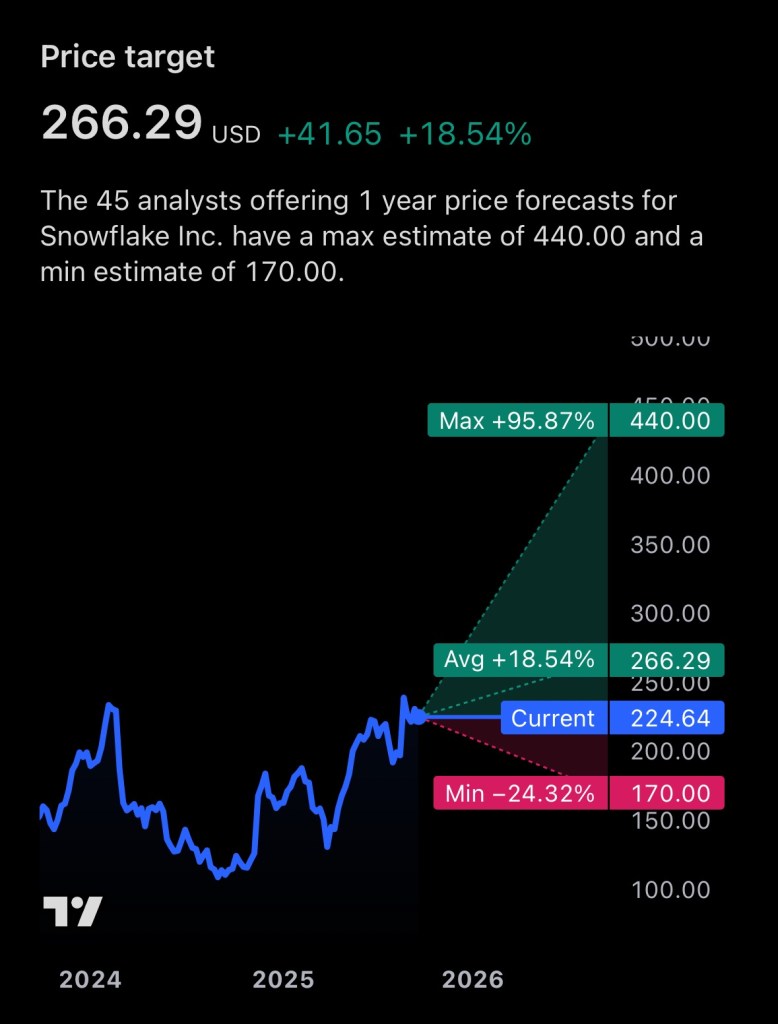
Snowflake (SNOW) Posts Strong Q2, Eyes Deeper AI Integration — Here’s Why It’s Catching Investor Interest

Snowflake Inc. (NYSE: $SNOW) released its second quarter (fiscal 2026) results, reinforcing its role as a data and AI infrastructure play while navigating challenges in profitability and valuation. The reaction in markets suggests that investors are increasingly viewing Snowflake as more than just a cloud data warehousing provider — but as a core enabler of “AI Data Cloud” strategies. Here’s a breakdown of what’s happening, and the bull vs bear cases moving forward.


What the Numbers Say: Q2 & Recent Financials

Revenue, Margins & Growth

  • In Q2 FY2026, Snowflake reported product revenue of $1,090.5 million (i.e. from compute, storage, and data transfer). (Snowflake Investors)
  • The company continues to emphasize net revenue retention, which remains elevated (125%) as of July 31, 2025 — indicating that existing customers are expanding usage. (Snowflake Investors)
  • In its Q4 FY2025 results (ended January 31, 2025), Snowflake posted total revenue of $986.8 million, with product revenue of $943.3 million — up ~28% year-over-year. (Snowflake)
  • The Q4 gross profit margin (GAAP) was ~ 66%, and non-GAAP adjusted gross margin (excluding stock-based comp, amortization, etc.) was ~ 73%. (Snowflake)
  • Snowflake’s Q4 operating loss (GAAP) was about –$386.7 million, but on a non-GAAP basis it posted operating income of $92.8 million (≈ 9% margin). (Snowflake)
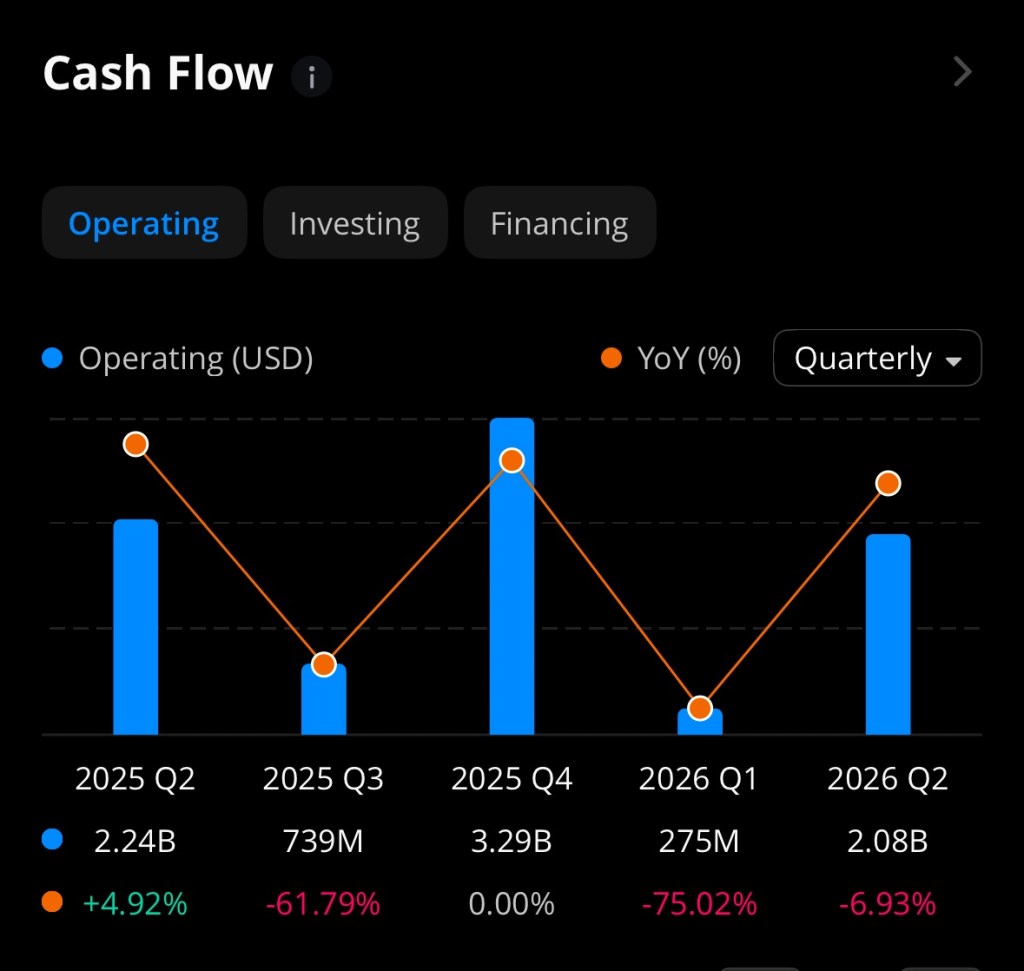
  • Its free cash flow in that quarter was ~$415.4 million (≈ 42% of revenue) and adjusted free cash flow ~$423.1 million. (Snowflake)

These numbers show both strength and tension: strong top-line growth and healthy non-GAAP profit conversions, but continued GAAP losses driven by sizable investments, stock compensation, and amortization.

Balance Sheet & Liquidity

  • As of January 31, 2025, Snowflake held ~$2,698.7 million in cash, cash equivalents, and restricted cash. (Snowflake)
  • Total debt (short-term + long-term) is more modest — for example, in recent annual balance sheet summaries, SNOW’s short-term and current portion of long-term debt is listed in the range of ~ $36 million. (The Wall Street Journal)
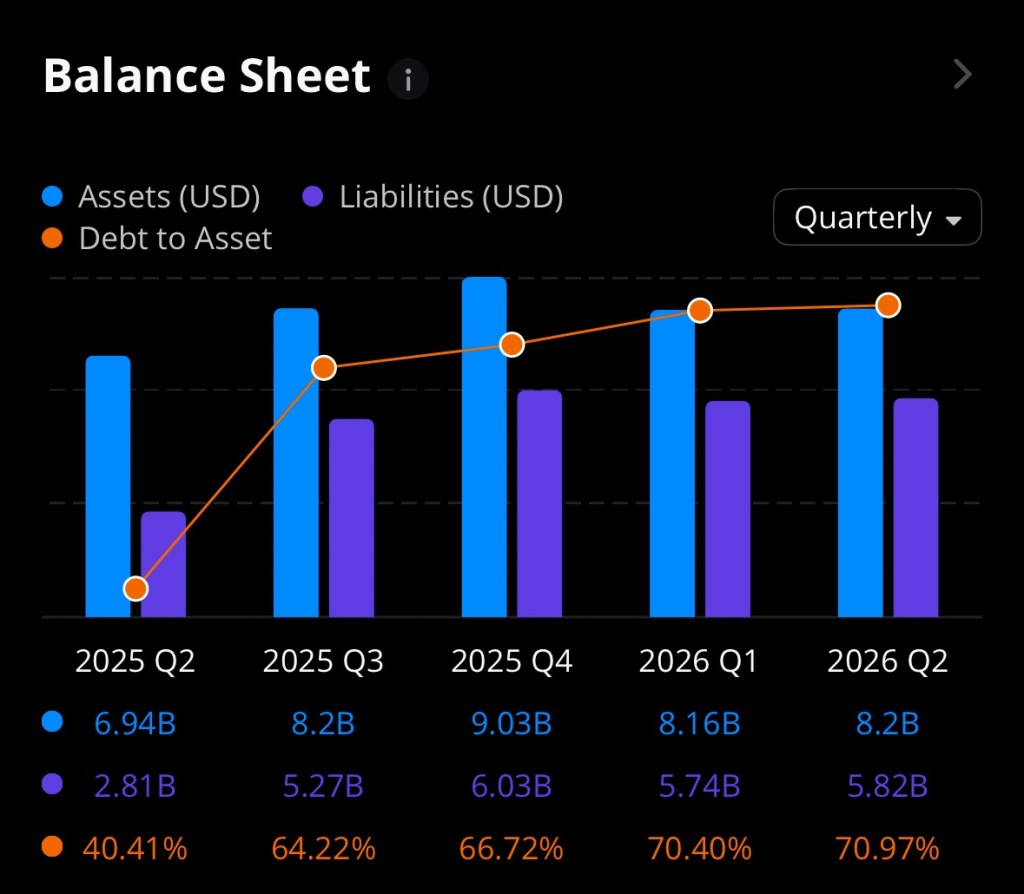
  • On the assets side, total assets are in the realm of several billions (over $8B to $9B in some reports) with growth trends consistent among public disclosures. (Investing.com+1)
  • The company carries significant liabilities as well (deferred revenue, vendor payables, deferred costs), but its liquidity cushion offers some buffer against short-term shocks. (Investing.com)

Business & Strategic Metrics

  • Snowflake’s remaining performance obligations (RPO) — i.e., contracted but not-yet-recognized revenue — stood at $6.9 billion, growing ~33% year-over-year. (Snowflake)
  • The company serves 580 customers whose trailing 12-month product revenues exceed $1 million, and 745 Forbes Global 2000 customers as of Q4 FY2025. (Snowflake)
  • The 125% dollar-based net revenue retention underlines that Snowflake is often able to upsell or expand within its installed base. (Snowflake Investors)
  • More recently, Snowflake announced its acquisition of Crunchy Data (for ~ $250 million) to integrate Postgres capabilities into its ecosystem, enabling developers to more easily build AI agents and manage data workloads. (The Wall Street Journal+1)
  • The company is also partnering or aligning more closely with AI/LLM providers (e.g., Anthropic), seeking to embed language model capabilities into its platform. (Reuters+2markets.businessinsider.com+2)

What’s Driving the Recent Move & Market Sentiment

In response to its Q4 FY2025 earnings (released earlier in 2025), Snowflake’s stock jumped ~10.9% after hours, as the company beat on earnings (30 cents per share vs ~18 cents expected) and revenue (nearly $987 million vs $957 million consensus). Barron’s It also raised its forecast for product revenue and delivered upbeat guidance for FY2026, projecting ~24% growth to ~$4.28 billion. (MarketWatch+2Barron’s+2)

Investors have taken notice of Snowflake’s push into AI, including more sophisticated integrations with large language models, and its efforts to position itself not just as a data platform but an “AI data cloud” enabler. (markets.businessinsider.com+2Reuters+2)

That said, concerns still linger over valuation multiples (Snowflake trades at high forward multiples), GAAP losses, and macro risk to enterprise IT spending.


Why Some Investors Might Find SNOW Attractive (and Its Risks)

Bull Case

  1. Exposure to Secular Trends in Data + AI
    As enterprises shift toward AI, data modeling, real-time analytics, and agent-based applications, Snowflake sits at a nexus: you need scalable, secure data infrastructure. Its existing customer base, product maturity, and retention metrics lend credibility to that positioning.
  2. Upsell & Expansion Potential
    Snowflake’s high net revenue retention and expanding average spend per customer suggest that a lot of value lies in selling more compute/storage or ancillary AI features to its installed base.
  3. Strategic Acquisitions & Technology Stack Expansion
    The Crunchy Data deal, combined with its AI platform integrations, may help lock in more workloads (especially developer, data app, and AI agent workloads) and reduce friction for adoption.
  4. Cash Generative Capacity (Non-GAAP / FCF)
    Despite GAAP losses, Snowflake has shown strong adjusted free cash flow generation, which gives it flexibility to invest, defend, or expand without complete reliance on external financing.
  5. Backlog / Contracted Revenue Visibility
    The RPO metric provides a view into future revenue, giving some predictability to growth expectations and lessening the reliance purely on new deals.

Risks & Challenges

  • Profitability & Cost Pressure
    Snowflake still runs GAAP losses. Its heavy investment in R&D, sales & marketing, and stock-based compensation make margins sensitive. If growth slows, the pressure on margins will intensify.
  • Valuation Overhang
    At high multiples, the stock’s valuation leaves little room for mistakes. A small slip in guidance or macro softness in enterprise IT spending could cause multiple compression.
  • Competition & Execution Risk
    The competitive landscape is fierce (e.g. Databricks, AWS, Google, Microsoft) and execution (product development, scaling, integrating acquisitions) will matter enormously.
  • Dependence on Cloud Providers
    Snowflake relies on underlying public clouds (AWS, Azure, GCP) for infrastructure. Any changes in pricing, caps, or ecosystem dynamics could affect its cost structure or competitiveness. (Wikipedia+1)
  • Macro / IT Spend Weakness
    In a downturn or with tightening enterprise budgets, large IT and data platform spends may get deferred, impacting growth.
  • Integration and Engineering Complexity
    Adding deeper database, AI, and application layers increases complexity — integrating acquisitions and maintaining stability and performance across features will be demanding.

Outlook & Near-Term Catalysts

  • Snowflake’s guidance for Q1 FY2026 product revenue is in the range $955 million to $960 million. (Snowflake)
  • For full-year FY2026, the company expects ~ 24% product revenue growth to ~$4.28 billion, with non-GAAP product gross margins reaching ~75%. (Snowflake)
  • The success of its Crunchy Data acquisition (Postgres integration), traction of AI integrations (e.g., embedding LLMs for analytics), and customer growth in large enterprises will be closely watched.

If Snowflake can continue delivering above expectations on product revenue, manage its cost base, and ensure that its AI/data additions translate into incremental revenue without diluting execution, it may justify its premium valuation post its recent run.


Verdict & Investor Fit

Snowflake is not a “safe” stock in the sense of predictable earnings or low volatility, but it is a compelling pick for investors with conviction in the data + AI transition and a willingness to ride through lumps. For those looking for asymmetric upside exposure to the AI/data infrastructure stack, SNOW has a profile worth watching — especially if bought during periods of market softness.

Disclosure:

I do not own any stock or have any financial interest in Snowflake Inc. (NYSE: $SNOW). This article is for informational purposes only and should not be considered financial or investment advice. Investing in stocks carries risks, and past performance is not indicative of future results. Always conduct your own research and consult with a qualified financial professional before making any investment decisions.

Barron’s. (2025, August 28). Snowflake stock jumps after earnings beat. Here’s what analysts are saying. Dow Jones & Company. https://www.barrons.com/articles/snowflake-stock-price-earnings-ai-1f2b9a5e

MarketWatch. (2025, August 28). Snowflake’s earnings and revenue beat expectations. Dow Jones & Company. https://www.marketwatch.com/story/snowflakes-earnings-and-revenue-beat-expectations-11695946094

Snowflake Inc. (2025, August 28). Snowflake reports second quarter fiscal 2025 financial results [Press release]. Snowflake Investor Relations. https://investors.snowflake.com/

Yahoo Finance. (2025). Snowflake Inc. (SNOW) financials. Retrieved September 27, 2025, from https://finance.yahoo.com/quote/SNOW/financials

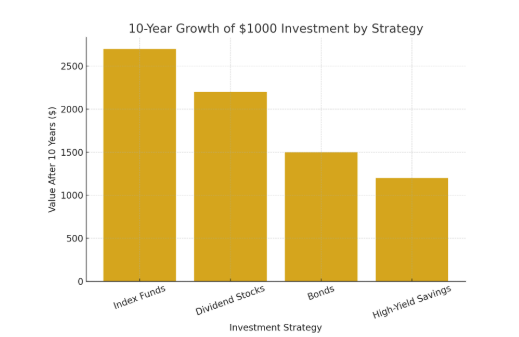
Exploring Investment Strategies: How to Start with Just $1,000

Many people believe you need a large sum of money to start investing, but the truth is you can begin building wealth with as little as $1,000. The key lies in choosing the right strategy that fits your goals, risk tolerance, and timeline.

1. Index Funds

Index funds are one of the simplest and most effective ways to invest. By tracking the performance of a broad market index (like the S&P 500), they offer diversification and steady long-term growth. Historically, index funds have returned around 7–10% annually. With $1,000 invested, the potential compound growth over 10 years could more than double your money.

2. Dividend Stocks

Dividend-paying stocks provide the dual benefit of potential stock price appreciation and regular income through dividend payouts. This strategy appeals to investors who want to generate passive income while also building long-term value. Though returns may vary, reinvesting dividends can accelerate portfolio growth.

3. Bonds

For those seeking stability, bonds remain a trusted option. While the returns are lower compared to stocks, they provide predictable income and are less volatile. A $1,000 bond investment won’t skyrocket in value, but it can help protect capital while earning modest interest.

4. High-Yield Savings Accounts

Technically not an investment in the traditional sense, high-yield savings accounts are a safe place to grow your money while maintaining liquidity. While returns are the smallest of the group, they offer security and immediate access to funds, which is ideal for short-term goals.

Bottom Line

Starting with $1,000 may not make you rich overnight, but it sets the foundation for long-term financial growth. By choosing a strategy that aligns with your needs—whether it’s the steady growth of index funds, the income from dividends, the safety of bonds, or the liquidity of savings—you can begin your journey to building wealth today.

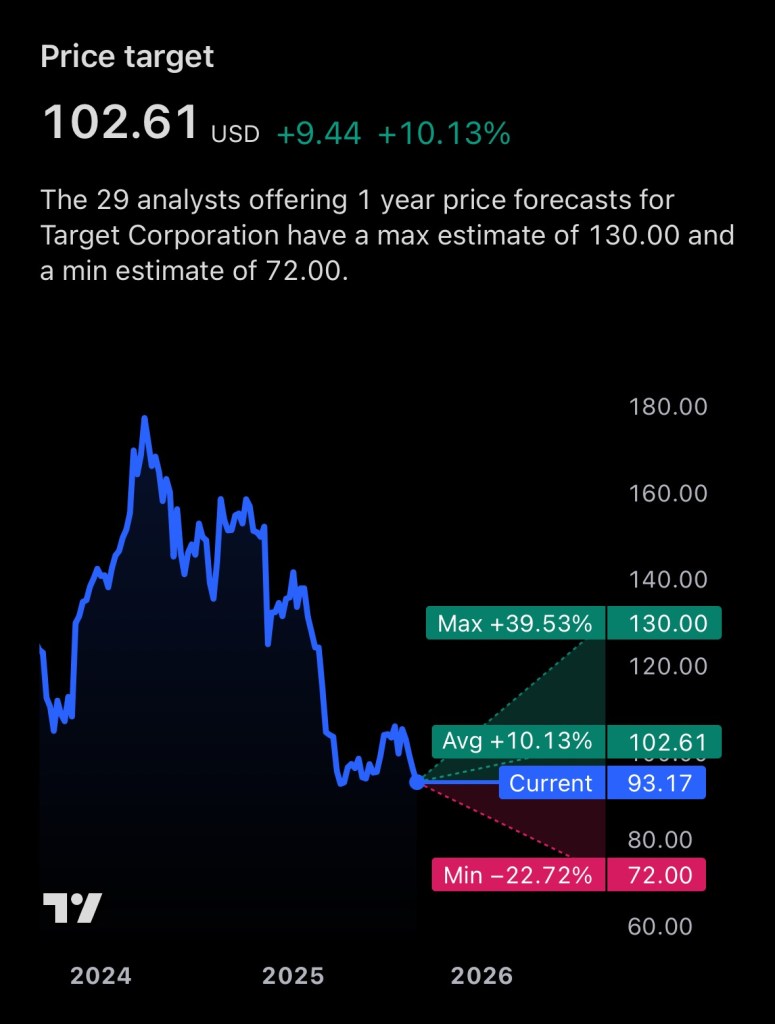
📈 Why Target $TGT Could Be a Solid Income + Growth Pick

High Dividend Yield & Track Record
Target currently pays $4.56 annually ($1.14 per quarter), translating into a robust ~4.9% yield on today’s ~$93 share price (StockAnalysisTipRanks). The company has increased its dividend for 54 consecutive years, a hallmark Dividend King that inspires investor confidence (NasdaqStockAnalysis). Its most recent raise (1.8%) was declared in June 2025, effective with the $1.14 quarterly payment on Sept 1, 2025 (ex-div Aug 13) (Target Corporation).

Payout Coverage & Sustainability
Target retains a payout ratio of roughly 52%—meaning it distributes just over half of earnings as dividends, leaving room to reinvest and buffer downturns (KoyfinStockAnalysis). It also generated ~$2.9 B in free cash flow over the past 12 months, comfortably above its roughly $2 B annual dividend obligation (Nasdaq).

Valuation Lean vs Peers
At a P/E near 11×, Target trades well below peers like Walmart (~37×), suggesting the market has priced in current headwinds—offering potential upside if operational trends normalize over time (Nasdaq).


🧾 Balance Sheet Overview (as of latest trailing 12 mo / August 2025)

Based on S&P-compiled data (StockAnalysisMarketBeat):

📌 Metric💰 Value (USD mm)
Total Assets~$57.9 B
Cash & Equivalents~$4.34 B
Inventories~$12.9 B
PPE (net)~$33.6 B
Total Liabilities~$42.4 B
└ Current Liabilities~$19.2 B
└ Long-Term Debt~$15.4 B
Shareholders’ Equity~$15.4 B (book value ~ $33.9/share)
Net Debt~$16.1 B

Target maintains a healthy asset base, anchored by substantial property, inventory, and cash buffers. Long‐term debt is sizable but manageable given recurring cash flow. Equity has grown steadily (~$14.7 B in FY 2024 to ~$15.4 B TTM), with tangible book value per share near $34—over one-third of share price (StockAnalysis).


🔍 Business Momentum & Outlook

  • Recent performance (Q2 FY 2025):
    Net sales declined ~0.9% YoY and comp sales fell ~1.9%, though digital sales rose ~4.3%. Operating income slipped ~19% to $1.3 B. Full-year EPS guidance remains at $8.00–$10.00 GAAP (adjusted ~$7–$9) (Target Corporation).
  • Strategic tailwinds:
    Investments in same-day fulfillment via Shipt, modernization of logistics, and omnichannel integration are expected to drive margin recovery (expected to improve toward ~6% by FY 2028) (University of Iowa).

💡 Investment Case: Why Consider TGT

  1. Reliable, high income: ~4.9–5.0% yield, backed by decades of increases.
  2. Dividend sustainability: Strong cash flow vs payout; modest payout ratio.
  3. Undemanding valuation: Trading at low P/E, offering value if business stabilizes.
  4. Solid balance sheet: Ample liquidity, reasonable leverage, growing equity.
  5. Long-term turnaround potential: Operational improvements could bolster margins and share price over time.

Risks include macro-sensitive retail environment, margin pressures, inventory mismanagement, and stiff competition. However, the dividend acts as a buffer while strategic moves take root.


📌 Bottom Line

For income-focused investors looking to pair dividend yield with capital appreciation potential, Target (TGT) stands out as a compelling blended opportunity. Its long-standing dividend credibility, backed by solid free cash flow and a durable balance sheet, makes it a defensive anchor in a portfolio. Coupled with low valuation and a clear path to operational recovery, TGT offers both yield today and upside tomorrow.

Disclosure: I currently hold a position in Target Corporation (NASDAQ: $TGT). This article reflects my personal opinions and analysis, and is not intended as financial advice. Please conduct your own research or consult a financial advisor before making any investment decisions.

References

Corporate Target. (2025, June 12). Target Corporation increases quarterly dividend by 1.8 percent. Target Corporate. https://corporate.target.com/press/release/2025/06/target-corporation-increases-quarterly-dividend-by-1-8-percent

Corporate Target. (2025, August 21). Target Corporation reports second quarter 2025 earnings. Target Corporate. https://corporate.target.com/press/release/2025/08/target-corporation-reports-second-quarter-earnings

Koyfin. (2025). Target Corp (TGT) dividend overview. Koyfin. https://www.koyfin.com/company/tgt/dividends/

MarketBeat. (2025). Target financials (NYSE: TGT). MarketBeat. https://www.marketbeat.com/stocks/NYSE/TGT/financials/

Nasdaq. (2025, August 27). 1 green flag for Target stock right now. Nasdaq. https://www.nasdaq.com/articles/1-green-flag-target-stock-right-now-0

Stock Analysis. (2025). Target (TGT) dividend history and growth. Stock Analysis. https://stockanalysis.com/stocks/tgt/dividend/

Stock Analysis. (2025). Target balance sheet (TGT). Stock Analysis. https://stockanalysis.com/stocks/tgt/financials/balance-sheet/

TipRanks. (2025). Target dividend and payout ratio (TGT). TipRanks. https://www.tipranks.com/stocks/tgt/dividends

University of Iowa – Tippie College of Business. (2024). Target Corporation equity research report. https://www.biz.uiowa.edu/henry/download/f24_TGT.pdf

Pfizer’s Dividend Strengthens Case for Long-Term Investors

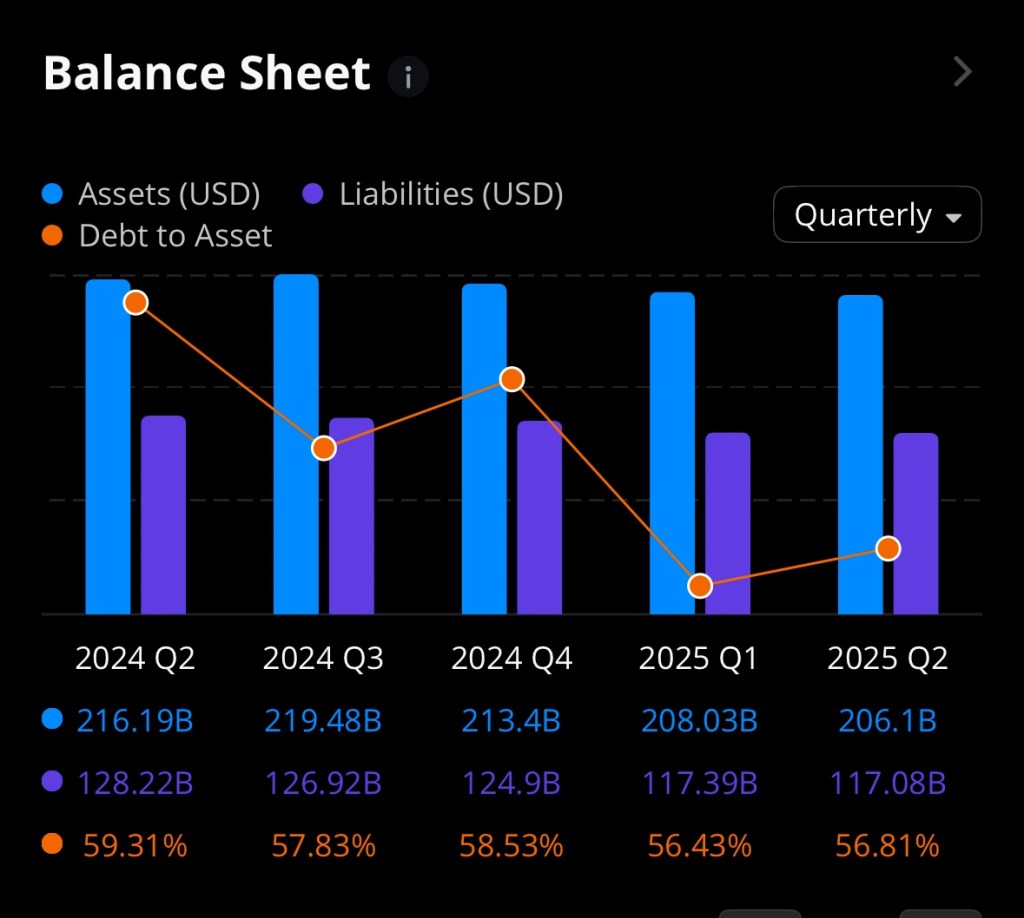
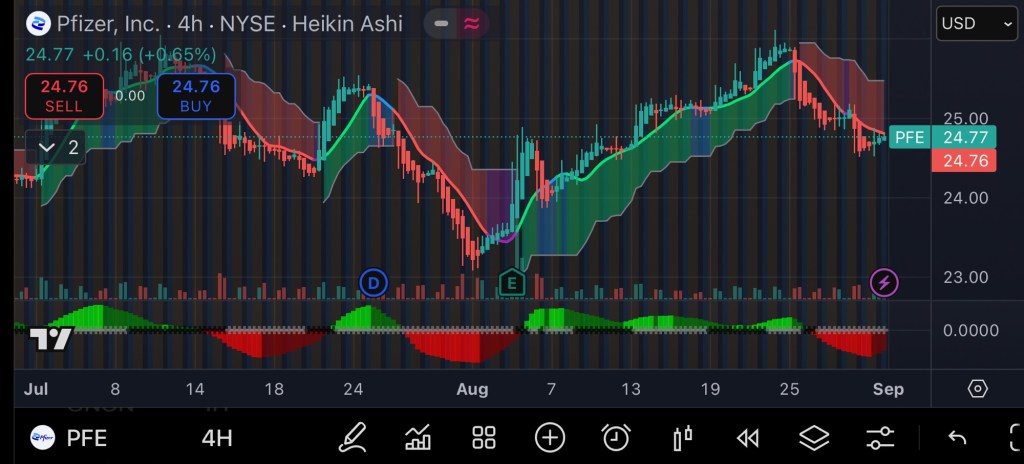
Pfizer Inc. ($PFE), one of the world’s largest pharmaceutical companies, continues to make a strong case for long-term investors seeking both stability and income. While the stock has faced recent volatility due to a decline in COVID-19 vaccine sales, its solid fundamentals, diversified pipeline, and consistent dividend payouts remain key reasons why investors may want to hold shares for the long haul.

Pfizer currently offers an attractive dividend yield—well above the S&P 500 average—making it a compelling choice for income-focused portfolios. The company has a long track record of reliable dividend payments and has shown commitment to rewarding shareholders even during periods of industry and market uncertainty. With a payout ratio supported by its robust cash flow, Pfizer’s dividend looks sustainable in the years ahead.

Beyond dividends, Pfizer’s pipeline of treatments in oncology, immunology, and rare diseases provides investors with growth opportunities outside of its COVID-19 products. Recent strategic acquisitions, such as the purchase of Seagen to bolster its oncology portfolio, reinforce the company’s long-term vision. These moves are designed to balance near-term headwinds with future revenue expansion.


Financial Snapshot: Strengths and Weaknesses

Strengths

  • Dividend Yield & Stability: Pfizer’s dividend yield is significantly higher than the S&P 500 average, appealing to income-focused investors.
  • Strong Balance Sheet: Despite recent revenue declines, Pfizer maintains healthy cash reserves and strong operating cash flow, supporting its dividend and acquisition strategy.
  • Attractive Valuation: Shares are trading at a discount compared to peers in the pharmaceutical sector, offering a margin of safety for value investors.
  • Diversified Revenue Base: Expansion in oncology, vaccines, and rare diseases provides multiple future growth drivers beyond COVID-19.

Weaknesses

  • COVID-19 Dependency Hangover: A sharp decline in vaccine and antiviral demand has pressured revenue, highlighting reliance on pandemic-era products.
  • R&D Risk: Heavy investment in research and development may not always lead to successful approvals, leaving earnings vulnerable.
  • Debt from Acquisitions: The Seagen deal adds to Pfizer’s debt load, which, while manageable, could strain resources if integration challenges arise.
  • Patent Expirations: Like many pharmaceutical giants, Pfizer faces long-term risks from patent cliffs that could erode future revenue streams.

Stock Price Outlook: 1 to 5 Years

Pfizer’s current share price reflects market concerns over post-COVID revenue declines, but its fundamentals suggest room for recovery.

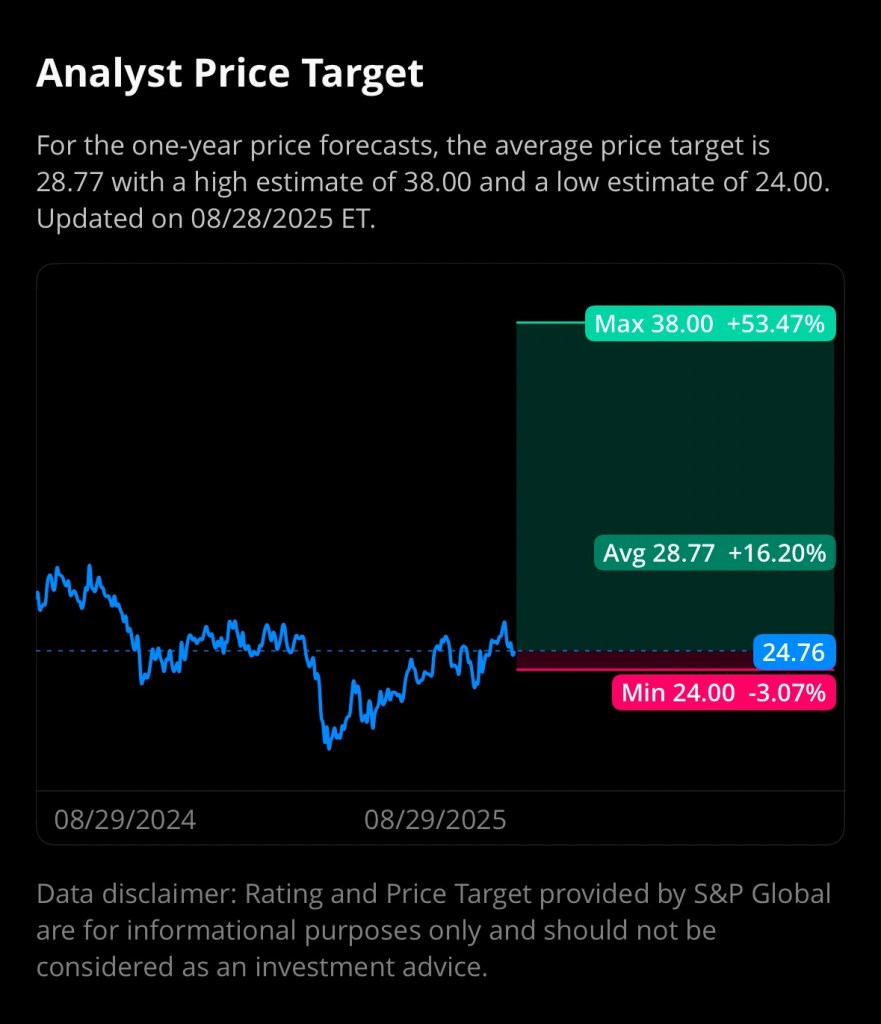
  • 12-Month View (2025–2026): Analysts see potential for modest gains, with shares trading in the $32–$38 range as the market digests lower vaccine revenues but begins to price in oncology and pipeline growth. The dividend will continue to anchor returns even if share price growth is muted.
  • 3-Year View (2027): As new oncology therapies, rare-disease drugs, and vaccine innovations mature, Pfizer could see revenue stabilize and return to growth. A reasonable target range could be $40–$48 per share, supported by mid-single-digit revenue growth and steady dividends.
  • 5-Year View (2029–2030): If Pfizer successfully integrates Seagen, brings key drugs to market, and manages upcoming patent expirations, long-term investors could see shares trading in the $50–$60 range. Dividend reinvestment along the way would enhance total returns, making Pfizer a solid long-term hold for income plus growth.

While uncertainty remains in the short term, Pfizer’s combination of a reliable dividend, undervaluation relative to peers, and a promising pipeline suggests patient investors may be rewarded over a 5-year horizon.

Disclosure: I currently hold a position in Pifzer (NASDAQ: $PFE). This article reflects my personal opinions and analysis, and is not intended as financial advice. Please conduct your own research or consult a financial advisor before making any investment decisions.

A Brighter Outlook (Despite Skepticism): Could OSCR Reach $40 by Christmas 2025?

1. Highly Bullish Long-Term Forecasts

Some quantitative models project a steep upward trajectory. One forecasting service estimates an average December 2025 price of $34.67, with a low of $32.18 and a high of $35.72—implying over 100% upside from current levels (StockScan). If investor sentiment catches up with this model, the stock could indeed flirt with $40 before year-end.

2. Financing Strength and Cash Position

As of March 31, 2025, Oscar Health reported a fortified balance sheet: $4.86 billion in cash, equivalents, and investments, up from $3.97 billion at the end of 2024. Total assets rose 21% YoY, while operating cash flow increased 38% (Michael Burry’s Insights). This cash cushion gives Oscar flexibility to invest in growth, navigate regulatory headwinds, and drive further value.

3. Strategic Expansion Through New Partnerships

Oscar’s deal with Hy-Vee to launch “Hy-Vee Health with Oscar” in Des Moines, covering about 400,000 employees in the individual marketplace starting Jan 1, 2026, signals a bold move into employer-backed coverage. The ICHRA model aims to save businesses 20–30% and deliver substantial cost-savings to employees-this could create significant scale and margin tailwinds (Benzinga).

4. Accelerating Revenue Growth

While Q2 revenue of $2.86 billion fell slightly short of the $2.91 billion estimate, it still marked a 29% increase YoY. The company reaffirmed its full-year 2025 revenue guidance at $12–12.2 billion (versus Wall Street’s $11.32 billion estimate), underscoring underlying growth momentum (BenzingaYahoo FinanceStockAnalysis).

5. Valuation Appears Undervalued for Growth Potential

Oscar trades at over 101x forward EV/EBITDA, a lofty multiple—but some analysts argue this valuation is justified by its “quality characteristics” and disruptive business model (StockStory). Others see it as deeply undervalued despite near-term uncertainty tied to ACA policy risks (Seeking Alpha+1).


Why Analysts Are Still Cautious

  • Low Analyst Price Targets: Consensus 12-month forecasts range between $8 and $14, with averages clustered around $11–$12—well below the $40 mark (ZacksThe Wall Street JournalPriceTargetsInvesting.com).
  • Skeptical Market Sentiment: Many brokerages hold “Sell,” “Hold,” or “Neutral” ratings. Notably, Piper Sandler cut its target from $14 to $13, citing uncertainties around risk adjustments and path to profitability (Benzinga). MarketBeat’s consensus is “Strong Sell,” and TipRanks flags a “Downside potential” of ~30% (MarketBeat).
  • Profitability Still Out of Reach in 2025: OSCR is expected to operate at a loss—losses projected around $200–300 million for the year (Yahoo Finance). Its Q2 GAAP loss was $0.89/share, and medical loss ratio (MLR) swelled from 79% in 2024 to 91.1% in Q2 2025 (BenzingaStockAnalysis). These factors dampen bullish expectations.

Headlines-Style Article: “Oscar Health: Can It Make the Leap to $40 by Christmas 2025?”

New York, August 23, 2025 – Oscar Health Inc. (NYSE: OSCR) currently trades near $16.98, buoyed by stellar revenue growth, robust liquidity, and a landmark new partnership but Wall Street’s confidence remains tepid.

Why $40 isn’t implausible:

  • Long-term algorithmic forecasts place December 2025 prices in the low-$30s, including a possible high of $35.72 (StockScan).
  • Strengthened cash position of $4.86 billion, coupled with rising operating cash flows, enhances the company’s financial flexibility (Michael Burry’s Insights).
  • Innovative ventures like the Hy-Vee collaboration, targeting 400,000 employees, position Oscar to disrupt cost structures and tap new revenue streams (Benzinga).
  • A confirmed revenue guidance of $12–12.2 billion highlights strong underlying demand despite macro-healthcare headwinds (Yahoo FinanceStockAnalysis).

But hurdles remain:

  • Analyst targets remain pessimistic, ranging mostly between $8 and $14, with an average nearer $11–12 (ZacksThe Wall Street JournalPriceTargetsInvesting.com).
  • Profitability is still elusive: projected operational losses of up to $300 million in 2025, and increased medical loss ratios (MLR) eroding margins (BenzingaYahoo FinanceStockAnalysis).
  • Sentiment skews negative, with ratings from “Hold” to “Strong Sell” prevailing, reflecting elevated policy-related and insurance-market risks (MarketBeat).

Final Thoughts: While consensus targets place Oscar Health under $15, a confluence of strong cash reserves, growth initiatives, and bullish long-term models could propel the stock into the low $30s by Christmas-though doing so would require sustained execution and favorable market sentiment in the face of continued near-term challenges.

Disclaimer: The author holds a position in $OSCR Oscar Healthcare and this article should not be considered financial advice. Always conduct your own research before making any investment decisions.

References

Benzinga. (2025, August 20). Oscar Health faces analyst questions on path to profitability. Benzinga. https://www.benzinga.com/analyst-stock-ratings/analyst-color/25/08/47133490/oscar-health-faces-analyst-questions-on-path-to-profitability

Benzinga. (2025, August 21). What’s going on with Oscar Health stock on Wednesday? Benzinga. https://www.benzinga.com/news/health-care/25/08/47240234/whats-going-on-with-oscar-health-stock-on-wednesday

Finance Yahoo. (2025, August 19). Oscar Health (OSCR) updates 2025 revenue guidance. Yahoo! Finance. https://finance.yahoo.com/news/oscar-health-oscr-updates-2025-174216635.html

MarketBeat. (2025). Oscar Health analyst ratings and price targets. MarketBeat. https://www.marketbeat.com/stocks/NYSE/OSCR/

Michael-Burry.com. (2025, August). Oscar Health stock analysis. Michael-Burry.com. https://www.michael-burry.com/oscr-stock-analysis/

Seeking Alpha. (2025, July 30). Oscar Health stock: Undervalued, but not without risk. Seeking Alpha. https://seekingalpha.com/article/4814520-oscar-health-stock-undervalued-but-not-without-risk

Stockanalysis.com. (2025). Oscar Health (OSCR) financials and stock data. Stock Analysis. https://stockanalysis.com/stocks/oscr/

Stockscan.io. (2025). Oscar Health stock forecast. StockScan. https://stockscan.io/stocks/OSCR/forecast

StockStory.org. (2025). Oscar Health stock insights. StockStory. https://stockstory.org/us/stocks/nyse/oscr

The Wall Street Journal. (2025). Oscar Health Inc. research ratings & reports. WSJ. https://www.wsj.com/market-data/quotes/OSCR/research-ratings

Zacks Investment Research. (2025). Oscar Health (OSCR) price targets & forecasts. Zacks. https://www.zacks.com/stock/research/OSCR/price-target-stock-forecast

Why Airbnb (ABNB) Might Be a Strong Long-Term Investment

1. Robust Financials & Market Leadership

Airbnb delivered $11.1 billion in revenue for 2024, marking a 12% year-over-year increase, driven by higher booking volume and sustained average daily rates. Gross booking value surged to $81.8 billion (+10.6% YoY), while free cash flow hit $458 million in Q4 (18% margin) (AInvest).

Moreover, Airbnb’s global market share in short-term rentals climbed to 44% in 2024, up from 28% in 2019—far ahead of Booking.com (18%) and Expedia/Vrbo (9%) (AInvest).

2. Efficient Asset-Light Business Model

Airbnb’s strategy avoids owning properties, enabling high-margin operations. Their gross margin soared to approximately 83% in early 2024 (The Motley Fool), and their asset utilization metrics demonstrate tightening efficiency. Notably, the net fixed-asset turnover leaped from 12.5 in 2020 to 75.5 in 2024, reflecting strong revenue delivery with minimal asset base (Stock Analysis on Net).

3. Strategic Diversification into Services & Experiences

In recent quarters, Airbnb has repositioned itself beyond homestays into an integrated travel ecosystem-offering localized experiences, services like spa treatments, personal training, and lodging alternatives-all within its revamped app ecosystem (AInvestMarketWatch).

This diversification is not trivial: management projects that the “Services & Experiences” vertical could generate $1 billion in annual revenue within 3–5 years, backed by a $200–250 million investment earmarked for 2025 (AInvestMarketWatch).

4. Recent Strong Earnings Momentum

Airbnb outperformed expectations in Q2 2025:

  • Earnings per share: $1.03 (+99% YoY vs. $0.94 expected)
  • Revenue: $3.1 billion (+13% YoY)
  • Gross bookings: $23.5 billion (+11% YoY)

Despite these strong results, caution around margin trajectory and investment pace weighed on sentiment, causing a ~7% dip in premarket trading Investors.

Simultaneously, long-term confidence remains steady-Akre Capital boosted its Airbnb allocation by 10%, signaling belief in the company’s growth trajectory (AInvest).

5. Favorable Industry Trends

In the broader travel space, analysts remain positive. A recent Barron’s feature highlights secular travel growth outpacing GDP and the rising demand for experiences. Although other travel players like hotels and airlines benefit, OTAs and platforms like Airbnb must adapt and diversify to stay competitive-something Airbnb is actively doing (Barron’s).


Industry Positioning: How Airbnb Compares

Here’s a snapshot comparing Airbnb to its main competitors in the travel lodging and experiences sector:

CompanyMarket Share (2024)Business ModelKey Differentiator
Airbnb44%Asset-light platformLarge host network, high margins, diversified services
Booking.com18%Hybrid (hotels + rentals)Strong hotel partnerships, AI integration
Expedia/Vrbo9%Hybrid OTABundle offerings, traditional OTA presence

Airbnb leads clearly in short-term rental share and continues to build stronger differentiation through vertical integration and digital enhancements (AInvest+1MarketWatchBarron’s).


Points of Caution

  • Valuation: Forward P/E sits above 30x (e.g., ~34.5x), relatively high compared to peers like Expedia (~10x) or Booking (~18x) (The Motley FooleToro).
  • Regulatory Headwinds: Local restrictions (e.g., New York City) and evolving laws could curtail growth in certain markets (eToroMarketWatch).
  • Execution Risk: Scaling new offerings and achieving the $1 billion services target will take time—short-term margins may remain under pressure (AInvestInvestorsMarketWatch).

Final Take

Airbnb demonstrates the hallmarks of a high-upside, long-term growth stock:

  • Strong financials, efficient operations, and leading share in a growing market.
  • Expanding revenue streams beyond traditional listings.
  • Strategic execution evidenced by earnings beats and fund manager conviction.

That said, elevated valuation and near-term execution risks suggest that patient investors may benefit from disciplined entry points or staged allocation.

Disclaimer: The author holds a position in $ABNB AIR BNB and this article should not be considered financial advice. Always conduct your own research before making any investment decisions.

References

Ainvest. (2025, February 8). Airbnb resilient growth: Deep dive into profitability, market share, and long-term competitive positioning. Ainvest. https://www.ainvest.com/news/airbnb-resilient-growth-deep-dive-profitability-market-share-long-term-competitive-positioning-2508

Ainvest. (2025, February 8). Airbnb’s strategic shift: Competing with hotels and expanding into services. Ainvest. https://www.ainvest.com/news/airbnb-strategic-shift-competing-hotels-expanding-services-2508

Ainvest. (2025, February 8). Akre Capital’s sudden 53% cut in American Tower: A signal or a slip? Ainvest. https://www.ainvest.com/news/akre-capital-sudden-53-cut-american-tower-signal-slip-2508

Barron’s. (2025, February 10). Travel stocks are surging. United, Delta, Hyatt, and more stand out. Barron’s. https://www.barrons.com/articles/travel-stocks-united-delta-hyatt-cb139268

EToro. (2024, August 12). Analyzing Airbnb’s Q2 2024 earnings report. eToro. https://www.etoro.com/news-and-analysis/market-insights/analyzing-airbnbs-q2-2024

Fool.com. (2025, January 26). I just bought Airbnb stock for the 1st time since the IPO. Here’s why. The Motley Fool. https://www.fool.com/investing/2025/01/26/i-just-bought-airbnb-stock-for-the-1st-time-since

Fool.com. (2025, February 27). 3 must-know reasons to buy Airbnb—and 1 reason to be cautious. The Motley Fool. https://www.fool.com/investing/2025/02/27/3-must-know-reasons-to-buy-airbnb-and-1-reason

Investors.com. (2025, August 13). Airbnb growth accelerates as Q2 earnings beat. Why the stock is falling anyway. Investor’s Business Daily. https://www.investors.com/news/technology/airbnb-stock-abnb-q2-2025-earnings-news

MarketWatch. (2025, February 5). Airbnb wants to be an “anything” app. The debate for investors hinges on these issues. MarketWatch. https://www.marketwatch.com/story/airbnb-wants-to-be-an-anything-app-the-debate-for-investors-hinges-on-these-issues-ca692140

Stock-Analysis-On.net. (2025). Airbnb Inc. long-term investment activity ratios. Stock Analysis On. https://www.stock-analysis-on.net/NASDAQ/Company/Airbnb-Inc/Ratios/Long-term-Investment-Activity

Sei Network ($SEI) Picks Up Steam: Strong Fundamentals Fuel Short- and Long-Term Interest

Rising Momentum & Market Performance

Sei (SEI) is a cryptocurrency
  • Breakouts & Price Rally: SEI recently broke above the pivotal $0.33–$0.34 resistance, delivering a nearly 40% surge in price within a week. A 10% spike over 24 hours further amplifies growing interest in the token. (The Market Periodical)
  • Stable Support, Upward Targets: As of August 8, 2025, SEI is holding steady around the key $0.285 support level. Should bullish momentum continue, investors are eyeing Fibonacci resistance targets at $0.48, $0.56, and even $0.67. But a dip below $0.285 could bring a pullback risk. (Blockonomi)

On-Chain Adoption & Ecosystem Growth

  • Transaction Volume & User Activity: The network is seeing explosive activity. Daily transactions have topped 1.5 million, while active wallets now exceed 616,000. (The Currency analytics)
  • TVL & DeFi Expansion: Total Value Locked (TVL) has climbed dramatically-from $500M to $680M+ in recent updates, and, according to some reports, has soared to as high as $1.13B. This doubles early-2025 levels, underlining robust DeFi growth. (The Market PeriodicalCryptodamusCoinCentral)
  • Institutional & Regulatory Recognition: A wave of institutional interest is tied to an ETF filing; SEI’s user base has ballooned to over 8.1 million addresses, placing it as the #2 EVM-compatible chain by user count. TVL jumped 24% to above $535M. (Cryptonews)

Technical and Sentiment Indicators

  • Technical tools are flashing bullish signals: RSI and MACD suggest further upside potential, particularly if SEI maintains position above its 200-day EMA. (OneSafe)
  • Analysts highlight a possible higher-low formation, reminiscent of past wave patterns, potentially marking the start of a broader “Wave C” rally. (Blockonomi)

SEI’s Token Supply & Volume Overview

MetricKey Data (as of August 2025)
Circulating SupplyApproximately 5.78 billion SEI (CryptoMarketCapCoinStatsTokenomist)
Maximum / Total Supply10 billion SEI (CryptoMarketCapCoinStatsBinance)
Supply UnlocksLinear vesting underway; upcoming unlocks scheduled around mid-August 2025 (Tokenomist)
24-Hour Trading VolumeBetween $143M and $160M depending on data source (CryptoMarketCapCryptoRankBlockonomi)

Investment Summary: Short- vs. Long-Term Outlook

Short-Term:
SEI is in a critical zone-holding support at ~$0.285 could drive a breakout toward $0.48 or beyond. High trading volume and technical momentum support this scenario. However, watch for potential pullbacks if the support fails.

Long-Term:
Strong ecosystem fundamentals, increasing TVL, active users, and institutional interest (ETF-based momentum) give SEI solid traction. Continued infrastructure development and adoption could support sustained growth, especially as token unlocks are phased in without sudden floods of supply.

Risks to Note:

  • Supply unlocks (e.g., mid-August) may generate selling pressure.
  • Over-reliance on DeFi and gaming applications may limit ecosystem diversification. (Gate.com)

Final Take

Sei Network is gaining serious traction, backed by strong on-chain growth, technical momentum, and institutional recognition. For short-term traders, current support zones and bullish setups offer attractive opportunities, so long as key levels hold. For long-term investors, SEI’s expanding ecosystem, increasing utility, and vesting transparency suggest meaningful upside as the chain matures. Always balance optimism with awareness of unlocking events and ecosystem concentration risks.

Disclaimer: The author holds a position in $SEI Network and this article should not be considered financial advice. Always conduct your own research before making any investment decisions.

References

Blockonomi. (2025, July 28). Sei price holds $0.28 support, targets $0.48 and beyond. Blockonomi. https://blockonomi.com/sei-price-holds-0-28-support-targets-0-48-and-beyond

Blockonomi. (2025, August 3). Sei crypto signals reversal with price surge and on-chain momentum. Blockonomi. https://blockonomi.com/sei-crypto-signals-reversal-with-price-surge-and-on-chain-momentum

CoinCentral. (2025, July 21). SEI price surges 33% as DeFi ecosystem explodes to new heights. CoinCentral. https://coincentral.com/sei-sei-price-surges-33-as-defi-ecosystem-explodes-to-new-heights

CoinStats. (2025). Sei Network price and market data. CoinStats. https://coinstats.app/coins/sei-network

CryptoMarketCap. (2025). Sei Network price, supply, and market capitalization. CryptoMarketCap. https://cryptomarketcap.com/coins/sei

CryptoNews. (2025, July 19). Sei ETF filing sparks 40% rally as it becomes #2 EVM chain—$0.30 next? CryptoNews. https://cryptonews.com/news/sei-etf-filing-sparks-40-rally-as-it-becomes-2-evm-chain-0-30-next

CryptoRank. (2025). Sei Network trading volume and market data. CryptoRank. https://cryptorank.io/price/sei-network

Cryptodamus. (2025, July 25). Sei Network explodes: Downtrend broken—see key metrics and institutional DeFi surge. Cryptodamus. https://cryptodamus.io/en/articles/news/sei-network-explodes-downtrend-broken-see-key-metrics-institutional-defi-surge

Gate.com. (2025, July 29). Sei hits a 6-month high: What’s driving the ecosystem’s momentum? Gate.com. https://www.gate.com/learn/articles/sei-hits-a-6-month-high-whats-driving-the-ecosystems-momentum/10401

OneSafe.io. (2025, July 27). Sei price surge: Driving momentum in crypto payments. OneSafe.io. https://www.onesafe.io/blog/sei-price-surge-driving-momentum-crypto-payments

The Currency Analytics. (2025, July 22). Sei Network hits 1.5M transactions: Is a sharp price surge next? The Currency Analytics. https://thecurrencyanalytics.com/altcoins/sei-network-hits-1-5m-transactions-is-a-sharp-price-surge-next-181371

The Market Periodical. (2025, July 16). Sei price breaks out: What’s fueling the 10% rally? The Market Periodical. https://themarketperiodical.com/2025/07/16/sei-price-breaks-out-whats-fueling-the-10-rally

Tokenomist.ai. (2025). Sei Network token supply and unlock schedule. Tokenomist.ai. https://tokenomist.ai/sei-network

Why Apple Stock Remains a Strong Buy in 2025

Apple remains a compelling long-term investment, thanks to its robust ecosystem, accelerating AI strategy, and disciplined capital returns.


🏛️ Reliable Business Model & Ecosystem Moat

Apple now supports over 2.3 billion active devices, forming one of the most durable customer ecosystems in tech. This massive footprint reinforces high switching costs and recurring revenue streams via services like the App Store, Apple Pay, and suite of subscriptions (now over 38% of gross profit) (Forbes). Its strategy of integrating hardware, software, and services creates a differentiation moat that’s hard to replicate.


🚀 Catalysts Behind Future Growth

▪ Apple Intelligence: A Privacy-First AI Pivot

At WWDC 2025, Apple unveiled its “Apple Intelligence” initiative—20+ AI-powered features like real-time translation and email summarization designed for on-device performance and privacy. A major upgrade to Siri is expected in 2026. While it’s lagging peers in sheer AI spend, Apple is now investing aggressively and open to strategic M&A, having acquired at least seven AI startups in 2025..

▪ iPhone Refresh Cycles & Hardware Upside

Morgan Stanley projects a 12% rebound in iPhone shipments by fiscal 2026 as AI features boost upgrade demand. The favorable reception to new iPhone 16 models ahead of the holiday season supports this optimistic view (marketwatch.com).


🌍 Strategic Resilience Amid Geopolitical Risks

Apple’s architecture strategy includes over $500 billion in U.S. investment over four years—from expanding chip-making capacity to creating manufacturing academies and AI server production facilities to help offset tariff risks. At the same time, it has shifted much iPhone production for U.S. markets to India, diversifying supply chain risk away from China.


💰 Financial Strength & Shareholder Returns

Apple posted $94 billion in Q3 2025 revenue—a 10% year-over-year gain—and services revenue reached a record $27.4 billion. EPS came in above expectations, and despite $800 million+ in tariff impacts, Apple demonstrated operational resilience.

It continues to return capital aggressively, with $15.2 billion paid in dividends in 2025 and a long-term track record of dividend increases and share repurchases. Analysts expect this capital discipline to endure, offering downside protection and steady income (The Motley FoolForbes).


📉 Valuation: Discount with Upside Potential

Despite its strengths, Apple is currently down roughly 20% year-to-date, underperforming other major tech names amid tariff fears, AI lags, and macro uncertainty (Business Insider). Its forward P/E sits at around 33.6×, above the S&P 500 average (~23×), making valuation relative to its growth prospects a mixed story (Forbes). Still, analysts at BofA, Goldman Sachs, Wedbush, and others issue “Buy” ratings with 12–18 month targets of $235–300, implying double-digit upside from today’s ~$200 price levels.


🧭 Risks to Watch

While Apple’s fundamentals remain solid, investors should monitor:

  • Delays or execution risk in AI deployment or acquisitions
  • Regulatory scrutiny around antitrust, App Store rules, and global expansion
  • U.S.–China relations and implications for supply chain resilience

📈 Final Verdict: Long-Term Buy, Tactical Caution

Apple’s dominant ecosystem, balanced growth from hardware and high-margin services, disciplined capital returns, and accelerated AI pivot position it as a long-term winner. While near-term volatility and tariff uncertainty add caution, the current valuation discount provides an attractive entry point for investors with a multiyear horizon.

Disclosure:

I do not own any stock or have any financial interest in Apple Inc. (NYSE: AAPL). This article is for informational purposes only and should not be considered financial or investment advice. Investing in stocks carries risks, and past performance is not indicative of future results. Always conduct your own research and consult with a qualified financial professional before making any investment decisions.

📚 References

Apple Inc. (2025, February 24). Apple will spend more than $500 billion USD in the US over the next four years. Apple Newsroom. https://www.apple.com/newsroom/2025/02/apple-will-spend-more-than-500-billion-usd-in-the-us-over-the-next-four-years/

Barrons. (2025, August 1). Apple stock has ‘significant,’ long-term opportunities. The case for buying now. Barrons. https://www.barrons.com/articles/apple-stock-ai-value-buy-6a2ee154

Business Insider. (2025, May 1). Apple is the worst-performing Mag 7 stock this year. Here’s what analysts and investors say about whether you should buy the dip. Business Insider. https://www.businessinsider.com/apple-stock-price-outlook-aapl-mag-7-buy-the-dip-2025-5

Business Insider. (2025, July 31). Apple Q3 earnings: iPhone demand, AI, and tariffs. Business Insider. https://www.businessinsider.com/apple-q3-earnings-aapl-stock-price-iphone-demand-ai-tariffs-2025-7

Cinco Días. (2025, August 1). Apple aumenta su inversión en IA y compras estratégicas. Cinco Días. https://cincodias.elpais.com/smartlife/lifestyle/2025-08-01/apple-ia-aumento-inversion-compras.html

Forbes. (2025, July 12). Where will Apple (AAPL) stock be in 5 years? Forbes. https://www.forbes.com/sites/investor-hub/article/where-will-apple-aapl-stock-be-in-5-years/

Lens LunarTech. (2025). Apple’s 2025 playbook: Navigating tariffs, expanding manufacturing, and sustaining growth. LunarTech Lens. https://lens.lunartech.ai/post/apples-2025-playbook-navigating-tariffs-expanding-manufacturing-and-sustaining-growth

MarketWatch. (2025). Apple bears have missed out on more than $1 trillion of stock gains, says this bull. MarketWatch. https://www.marketwatch.com/story/apple-bears-have-missed-out-on-more-than-1-trillion-of-stock-gains-says-this-bull-41116074

Panmore Institute. (n.d.). Apple Inc.’s generic strategy & intensive growth strategies. Panmore Institute. https://panmore.com/apple-inc-generic-strategy-intensive-growth-strategies

Why Ethena’s Synthetic Dollar Model is Gaining Attention

Ethena ($ENA) has recently caught the crypto market’s eye — its price is hovering around $0.49, up nearly 24% in the last 24 hours, with trading volumes topping $700 million. This surge follows fresh momentum triggered by both favorable technical signals and a broader shift in how stablecoins are being regulated globally.

⚙️ What Does Ethena Actually Do?
The Ethena Network isn’t your typical crypto project — it’s a DeFi-native synthetic dollar protocol. At its core, Ethena issues USDe, a “synthetic stablecoin” that aims to hold its peg to the US dollar without relying on centralized, real-world assets like US Treasury bills.

Instead, Ethena uses a delta-neutral strategy:

  • Long ETH spot: It holds actual Ethereum tokens.
  • Short ETH perpetual futures: It simultaneously shorts ETH through perpetual futures contracts.

This setup balances out price swings in ETH and generates a yield from funding rates in the perpetual futures market. The resulting system keeps USDe stable, fully backed and on-chain — a big draw for crypto-native users who prefer trustless, censorship-resistant stable assets.

📈 Why Is Ethena Growing Now?
Recent regulatory crackdowns are putting pressure on traditional stablecoins like USDT and USDC to maintain larger reserves, stricter reporting, and tighter banking relationships. Ethena’s on-chain, algorithmic approach offers an alternative — one that some see as more transparent and decentralized.

The project also supports liquid staking, meaning it earns additional yield from staking ETH while hedging its volatility. Combined, these strategies create yield opportunities for holders, which initially topped 60% APY (though rates have since compressed closer to 5% as more capital has flowed in).

🪙 Investment Case: Why Some See Potential
Here’s why some investors are eyeing ENA:
✅ Innovation Edge: Ethena’s delta-neutral synthetic dollar is an innovative twist on the stablecoin model — if it holds its peg and scales, it could become a go-to DeFi collateral or savings option.
Regulatory Advantage: With regulators tightening the screws on off-chain reserves, an on-chain model could shine — especially for users who value transparency.
Strong Community: Backed by notable DeFi developers and supported by deep liquidity, Ethena has quickly climbed into the top 40 cryptos by market cap (now ~$3.1 billion).

However, there are real risks too:
️ Yield Compression: Those eye-popping yields don’t last forever — as more capital joins, returns shrink.
⚠️ Funding Rate Volatility: The delta-neutral strategy depends on favorable perpetual futures funding — a big market swing could disrupt the peg.
⚠️ Token Unlocks: With $10 million+ worth of ENA unlocking soon, short-term sell pressure could dampen gains.

📊 Current ENA Snapshot
Metric Value
– Price (USD) ~$0.49
– 24h Price Change +24%
– 24h Trading Volume ~$700 million
– Market Cap ~$3.1 billion
– Synthetic Stable USDe (~$3 billion issued)

🔭 Looking Ahead
The Ethena story is still unfolding — can a synthetic dollar survive big market swings and keep its peg when volatility strikes? Will regulators clamp down on algorithmic stablecoins again, like they did with Terra USD in 2022?

Investors intrigued by innovation, DeFi-native strategies, and the idea of a transparent, yield-generating dollar are keeping Ethena on their radar — but seasoned traders know this space is not for the faint-hearted.

📢 Thoughts?
Ethena is making waves by reinventing the stablecoin model. If its approach works and its peg holds, ENA could carve out a big niche in the future of decentralized finance. But like all crypto bets, the risks are real — and the next few months will test whether the synthetic dollar dream holds up under pressure.

Disclaimer: The author holds a position in ENA Ethena and this article should not be considered financial advice. Always conduct your own research before making any investment decisions.

Beginner’s Guide to Stock Market Investing

Investing in the stock market has long been a cornerstone of personal finance and wealth building. Yet, for many beginners, the world of stocks can seem intimidating and complex. Understanding the fundamentals of how the stock market works is the first step toward making informed, confident investment decisions.

What Is the Stock Market?
The stock market is a platform where investors buy and sell shares of publicly traded companies. These shares represent ownership in a company, and their prices fluctuate based on factors such as company performance, industry trends, and broader economic indicators.

Major stock exchanges, such as the New York Stock Exchange (NYSE) and the Nasdaq, serve as centralized marketplaces where these transactions occur. Investors can participate through brokerage firms or online trading platforms, many of which now offer user-friendly apps and educational tools for beginners.

Why Do People Invest in Stocks?
Stocks are a popular investment vehicle because they offer the potential for significant long-term returns. When you invest in a stock, you’re essentially betting on a company’s future success. If the company grows and becomes more profitable, the value of its shares typically increases, allowing investors to sell at a profit. Additionally, some stocks pay dividends—regular cash payments to shareholders—which can be a source of passive income.

Key Concepts for Beginners
To navigate the stock market successfully, new investors should become familiar with several essential concepts:

  • Diversification: This strategy involves spreading your investments across different sectors or asset classes to reduce risk. Rather than putting all your money into a single stock, a diversified portfolio can help weather market volatility.
  • Risk and Return: All investments carry some degree of risk. Generally, higher potential returns come with higher risk. Understanding your risk tolerance is crucial in shaping your investment strategy.
  • Time Horizon: The length of time you plan to hold an investment affects your strategy. Long-term investors often ride out short-term market fluctuations in pursuit of steady growth over years or decades.
  • Market Orders vs. Limit Orders: A market order buys or sells a stock immediately at the best available price, while a limit order sets a specific price at which you’re willing to buy or sell. Understanding these order types helps manage how you enter or exit investments.

Getting Started
Starting with investing doesn’t require large sums of money. Many platforms allow users to begin with as little as $10, and some offer fractional shares, letting you invest in expensive stocks like Amazon or Tesla with a small budget.

Experts recommend starting with index funds or exchange-traded funds (ETFs) for beginners. These funds track a market index, such as the S&P 500, and offer built-in diversification.

Stock market investing can be a powerful tool for building long-term wealth. While there are risks involved, gaining a solid understanding of the basics, maintaining realistic expectations, and staying informed can help investors make wise decisions. As with any financial decision, it’s also wise to consult a financial advisor to tailor a strategy that fits your personal goals and situation.

Whether you’re saving for retirement, a home, or future education expenses, learning how to invest smartly in the stock market is a valuable skill that pays dividends over time.