Cerebras Systems (CBRS): Could This AI Chip Challenger Be One of the Next Big AI Growth Stories?

Cerebras Systems Inc. (NASDAQ: CBRS) has emerged as one of the more intriguing and volatile public companies attempting to reshape how artificial intelligence models are trained and, increasingly, how quickly they can perform inference.

Cerebras went public in May 2026 in one of the year’s most closely watched technology IPOs. Shares were priced at $185, and the completed offering raised approximately $6.38 billion in gross proceeds.

Four months later, the investment thesis is becoming clearer: Cerebras has extraordinary growth opportunities, but investors are paying a substantial valuation for that opportunity.

The artificial-intelligence infrastructure race is no longer simply about NVIDIA and GPUs.

Rows of illuminated server racks in a large data center with two workers
Rows of illuminated servers and overhead cabling power this expansive modern data center.

What Makes Cerebras Different?

Cerebras attacks the AI computing problem differently from traditional GPU manufacturers.

Its core technological innovation is the Wafer Scale Engine (WSE). Rather than cutting a semiconductor wafer into numerous individual chips and connecting those processors together, Cerebras essentially turns an enormous portion of the wafer itself into one processor.

The objective is straightforward: eliminate many of the communication bottlenecks associated with moving information between individual chips.

Cerebras has increasingly focused this technology on high-speed AI inference the process of actually running trained AI models and generating answers for users and applications.

That distinction is important.

As AI moves from experimentation toward widespread commercial deployment, inference could become an enormous recurring infrastructure market. Every AI search, coding agent, autonomous workflow, enterprise chatbot and reasoning system consumes inference compute.

Cerebras wants to supply a meaningful portion of that compute.

Revenue Growth Is Accelerating

The company’s financial trajectory illustrates why investors are paying attention.

Cerebras generated approximately $290.3 million of revenue in 2024, increasing to roughly $510 million in 2025, representing 76% year-over-year growth.

Growth accelerated further during 2026.

First-quarter core revenue reached $191.3 million, up 92% year over year, including $111.6 million of hardware revenue and $79.8 million from cloud and other services.

Then came Q2.

Cerebras reported approximately $210 million of core revenue, while its core cloud business grew 287% year over year. The company also reported that it had secured approximately 600 megawatts of data-center capacity and planned to expand manufacturing capacity by more than tenfold during 2026.

Management subsequently increased its full-year outlook.

Cerebras now expects 2026 core revenue of approximately $880 million to $890 million, with core gross margins between 41% and 43% and core operating margins between negative 19% and negative 17%.

At the midpoint, $885 million would represent roughly 74% growth over 2025 revenue.

That is serious growth.

But it comes with an important caveat: Cerebras is still spending heavily to build the infrastructure necessary to capture that opportunity.
The $20+ Billion OpenAI Opportunity

Potentially the biggest component of the Cerebras growth story is its relationship with OpenAI.

Cerebras announced a multi-year agreement involving 750 MW of capacity valued at more than $20 billion. The company has also announced a multi-year partnership with Amazon to bring Cerebras inference technology to AWS.

These relationships potentially accomplish something extremely important for Cerebras: validation.

Competing against entrenched semiconductor and cloud-computing ecosystems requires more than superior benchmark performance. Customers need confidence that Cerebras can deploy its technology reliably and at enormous scale.

Large AI customers and cloud partners can help establish that credibility.

Cerebras has additionally disclosed customers or relationships involving companies such as Cognition, Lovable, Block, Figma, AlphaSense, GSK and CrowdStrike.

The company is therefore beginning to look less like an experimental AI-chip developer and more like an emerging AI infrastructure platform.

The CS-4 Could Be the Next Catalyst

Cerebras unveiled its next-generation CS-4 system in August, claiming performance of up to 30 times faster than GPU-based alternatives in certain workloads. The company is simultaneously expanding its global infrastructure footprint, including a recently announced 165 MW AI data center in Finland.

Those developments are worth watching closely.

AI infrastructure ultimately becomes an economics problem. Performance matters, but customers also care about cost per token, power consumption, latency, reliability and scalability.

If Cerebras can consistently demonstrate materially better inference economics—not merely impressive benchmark speeds—it could capture a meaningful piece of the rapidly expanding inference market.

The Financial Risk Investors Shouldn’t Ignore

The bull case is compelling, but CBRS isn’t a low-risk semiconductor investment.

First, profitability remains a work in progress.

Although Cerebras reported GAAP net income of $237.8 million during 2025, its filing shows a non-GAAP net loss of approximately $75.7 million, and the company explicitly warns investors that it has a history of generating losses.

Management’s 2026 guidance still calls for a substantially negative core operating margin.

Second, gross margins deserve close attention.

Q1 core gross margin was an impressive 47%, but Cerebras has been investing aggressively in cloud infrastructure and data-center capacity. The company currently expects full-year core gross margin of approximately 41%-43%.

Third, customer concentration has historically been significant. Large contracts can produce extraordinary revenue growth, but dependence on a relatively small number of enormous customers can also create significant volatility if deployments are delayed, renegotiated or canceled.

Finally, there is competition.

Cerebras isn’t operating in an empty market. NVIDIA dominates AI accelerators, while AMD, hyperscale cloud providers and custom silicon developers are all pursuing the same enormous AI-compute opportunity.

Cerebras doesn’t necessarily need to defeat NVIDIA to succeed.

It does, however, need to prove that wafer-scale computing occupies a sufficiently valuable niche within the broader AI infrastructure ecosystem.

Valuation: This Is Where Things Get Interesting

CBRS currently trades around $184, putting the company near its original $185 IPO price after experiencing substantial volatility since its May debut.
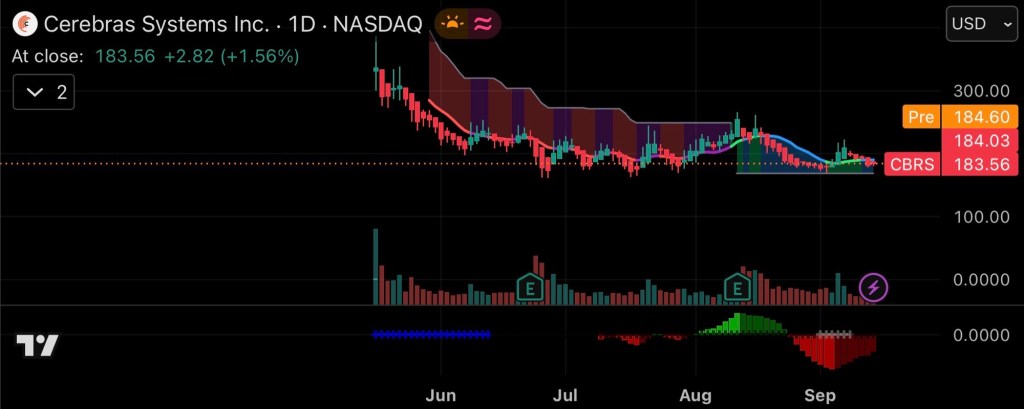
That matters psychologically, but the more important question is valuation.

With management forecasting approximately $885 million of 2026 core revenue, investors are already assigning Cerebras a substantial premium based on expectations of continued hypergrowth.

In other words, today’s CBRS valuation isn’t primarily based on what Cerebras earns today.

Investors are buying expectations for what the company could become several years from now.

That makes execution extremely important.

A company growing revenue 60%-80% annually can grow into a seemingly expensive valuation remarkably quickly. But if growth falls toward 20%-30% while profitability remains elusive, valuation compression can be equally dramatic.

My 12-Month CBRS Scenario Analysis

Forecasting a recently public, high-growth AI semiconductor company to a single price would create a false sense of precision. A scenario framework is more useful.

Bear Case: $120-$150

This scenario could develop if revenue growth decelerates, cloud margins deteriorate, major capacity deployments are delayed, customer concentration becomes problematic or investors broadly reduce the multiples they are willing to pay for AI infrastructure companies.

From approximately $184 today, that represents meaningful downside.

Base Case: $240-$300

This scenario assumes Cerebras continues producing strong revenue growth, approaches or exceeds its current guidance, demonstrates improving operating leverage and successfully converts its enormous infrastructure commitments into recurring cloud revenue.

Interestingly, current Wall Street research sits in roughly this neighborhood. Needham reiterated a $300 price target following the company’s first-quarter results.

Aggregated analyst data recently showed an average target around $292, although analyst targets should always be viewed as estimates rather than predictions.

Bull Case: $350-$425

For Cerebras to reach this range, I would want to see several things happen simultaneously: revenue expectations moving materially above $1 billion, continued triple-digit or near-triple-digit cloud growth, successful OpenAI capacity deployments, evidence of attractive CS-4 economics, improving gross margins and a credible path toward operating profitability.

A sustained AI infrastructure spending cycle could provide an additional tailwind.

This is the highest-risk scenario because it requires both strong fundamental execution and investors continuing to award CBRS a premium valuation.
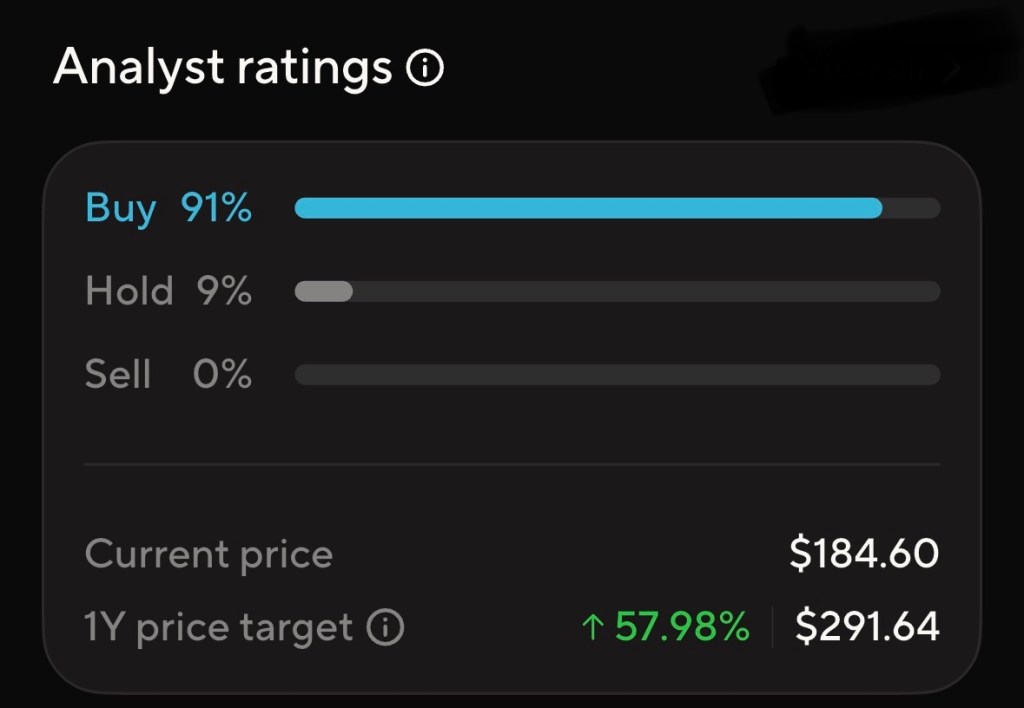
What I’m Watching Next

For investors holding CBRS, I believe five metrics deserve particular attention over the coming quarters:

  1. Cloud revenue growth: arguably the most important long-term metric because recurring inference revenue could eventually be more valuable than one-time hardware sales.
  2. Gross margin: rapid revenue growth means much less if infrastructure costs consume the economics.
  3. OpenAI deployment progress: successful conversion of the announced $20+ billion relationship into actual revenue could fundamentally alter Cerebras’ financial profile.
  4. Operating losses: Cerebras needs to demonstrate that revenue can eventually grow considerably faster than operating expenses.
  5. Customer diversification: additional enterprise and hyperscale customers would reduce dependence on a handful of massive relationships.

The Bigger Picture

Cerebras represents a particularly interesting kind of AI investment.

This isn’t simply another company adding artificial intelligence to an existing product.

Cerebras is building the physical infrastructure required to run AI itself.

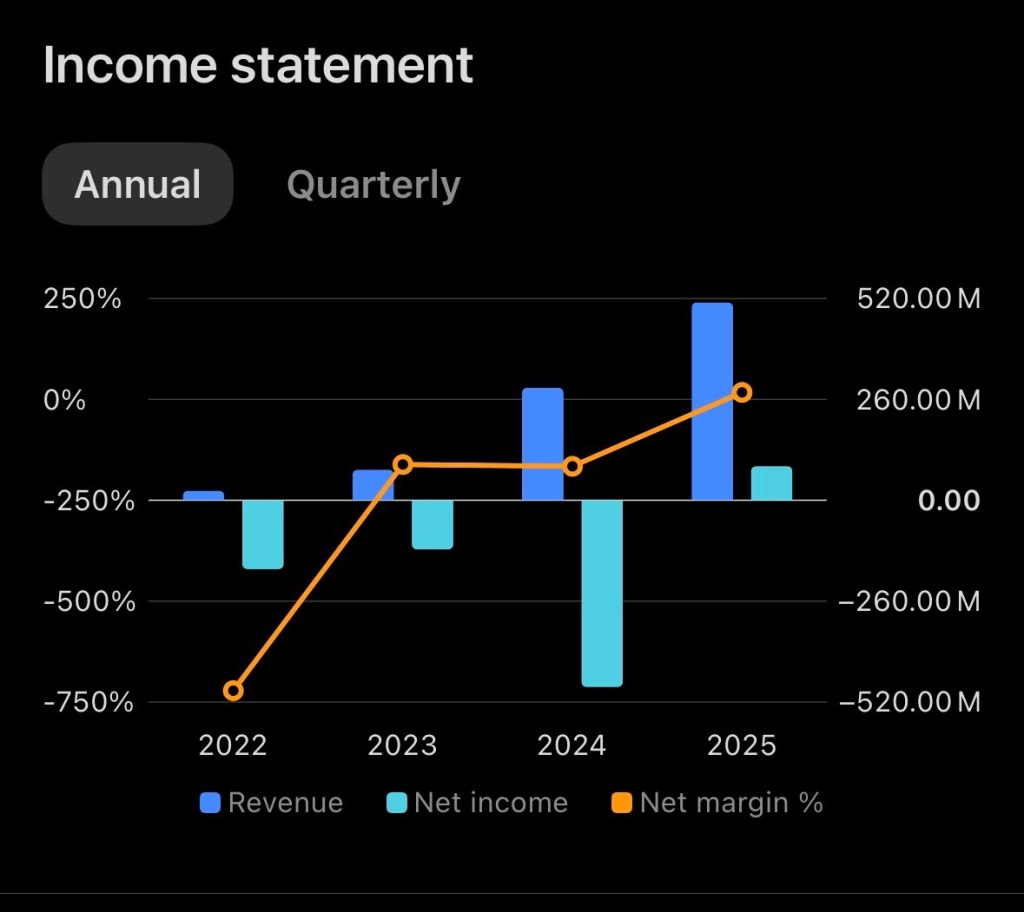
The company increased revenue from just $24.6 million in 2022 to $510 million in 2025, and management now expects approximately $880-$890 million in core revenue during 2026.

Meanwhile, cloud revenue is growing at nearly 300%, manufacturing capacity is expanding dramatically, hundreds of megawatts of data-center capacity are under contract, and Cerebras is developing relationships with some of the most important companies in artificial intelligence.

That’s the opportunity.

The risk is that investors already recognize much of it.

At approximately $184 per share, CBRS remains a high-growth, high-expectation investment where quarterly execution can produce enormous price swings, as demonstrated when shares dropped sharply following the company’s August earnings release despite management raising its annual outlook.

My working 12-month framework therefore puts $240-$300 as a reasonable base-case range, with approximately $120-$150 representing a bearish execution/valuation scenario and $350-$425 representing a strong-execution bull scenario.

Those ranges aren’t price targets or guarantees. They are a framework for measuring future results against the expectations embedded in the stock.

For investors already holding Cerebras, the central question isn’t simply whether artificial intelligence will continue growing.

It almost certainly will.

The more important question is whether Cerebras can convert its technological advantage, enormous customer agreements and rapidly expanding infrastructure footprint into durable revenue growth and ultimately durable profits.

If it can, CBRS could become one of the more important publicly traded AI infrastructure companies to emerge from this generation of the technology boom.

Disclosure: I currently hold a position in Cerebras Systems (NASDAQ: CBRS). This article reflects personal research and analysis and is provided for informational purposes only. It is not financial advice or a recommendation to buy or sell any security. Investing involves risk, including the possible loss of principal.

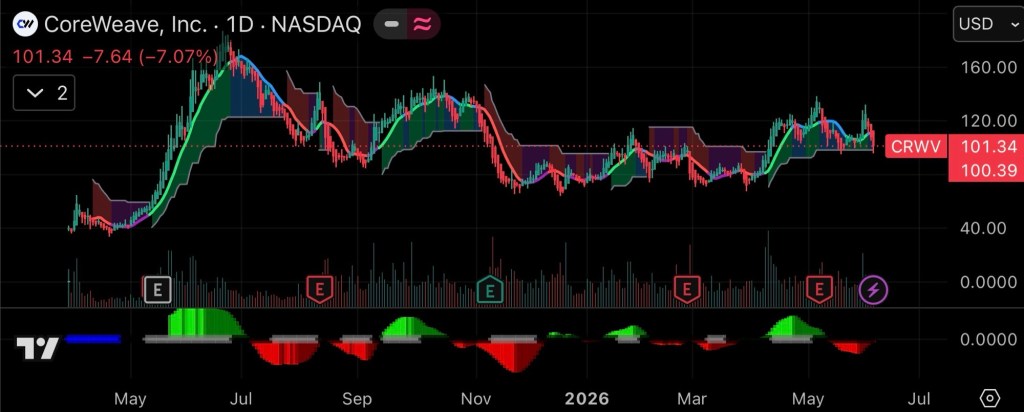
CoreWeave (NASDAQ: CRWV): AI Infrastructure Powerhouse or High-Risk Growth Story?

The artificial intelligence revolution has created a new generation of technology winners, and few companies have captured investor attention as quickly as CoreWeave (NASDAQ: CRWV). Since its public debut in 2025, CoreWeave has transformed from a niche cloud computing provider into one of the most closely watched AI infrastructure companies in the market.

As demand for artificial intelligence computing continues to accelerate, investors are asking a simple question: Does CoreWeave still have room to run?

Two technicians walking in a large data center with rows of illuminated AI server racks
Two technicians walk through a massive AI data center filled with illuminated server racks.

A Brief History of CoreWeave

CoreWeave was founded in 2017 and originally focused on cryptocurrency mining infrastructure. As demand for high-performance computing evolved, management pivoted toward providing specialized cloud infrastructure powered by NVIDIA graphics processing units (GPUs). That decision would prove transformational.

The company went public on the Nasdaq under the ticker CRWV in March 2025, pricing its initial public offering at $40 per share and raising approximately $1.5 billion to expand its AI cloud platform.

Since then, CoreWeave has become one of the leading providers of AI-focused cloud infrastructure, serving customers that require enormous amounts of computing power for training and operating large language models and other AI applications.

What’s Driving the Stock?

Several developments have fueled investor enthusiasm during 2026.

Most notably, CoreWeave became the first cloud provider to deploy NVIDIA’s new Vera Rubin NVL72 AI systems, reinforcing its position at the forefront of next-generation AI infrastructure. The announcement helped drive a significant rally in the stock and further strengthened the company’s strategic relationship with NVIDIA.

Earlier this year, NVIDIA expanded its partnership with CoreWeave and invested an additional $2 billion in the company. The two firms announced plans to accelerate the development of large-scale AI infrastructure and AI factories over the coming decade.

The company has also reported remarkable growth in customer demand. CoreWeave disclosed a revenue backlog of approximately $99.4 billion as of March 31, 2026, providing significant visibility into future revenue streams. Major customers include some of the largest names in artificial intelligence and cloud computing.

The Bull Case: Why Investors Remain Excited

Several factors support the bullish argument for CoreWeave.

Explosive AI Demand

Artificial intelligence remains one of the fastest-growing sectors in technology. Companies are racing to build increasingly sophisticated AI models, and all of them require massive amounts of computing power. CoreWeave’s infrastructure is specifically designed to meet that demand.

Strategic NVIDIA Relationship

Few companies have a closer relationship with NVIDIA than CoreWeave. Access to next-generation hardware before competitors could provide a significant advantage as AI workloads continue to grow.

Massive Revenue Backlog

A backlog approaching $100 billion gives investors confidence that demand remains strong despite concerns about the broader economy. Few newly public companies can point to this level of contracted business.

Industry Leadership

CoreWeave has established itself as one of the premier “AI-native” cloud providers. As enterprises increasingly adopt AI, the company may be positioned to capture a growing share of infrastructure spending.

The Bear Case: Risks Investors Should Consider

Despite its impressive growth, CoreWeave is not without risks.

Capital Intensive Business Model

Building AI infrastructure is extraordinarily expensive. CoreWeave continues to spend billions on data centers, GPUs, and power capacity. Management recently increased its capital expenditure outlook as demand for AI hardware continues to surge.

Profitability Remains a Challenge

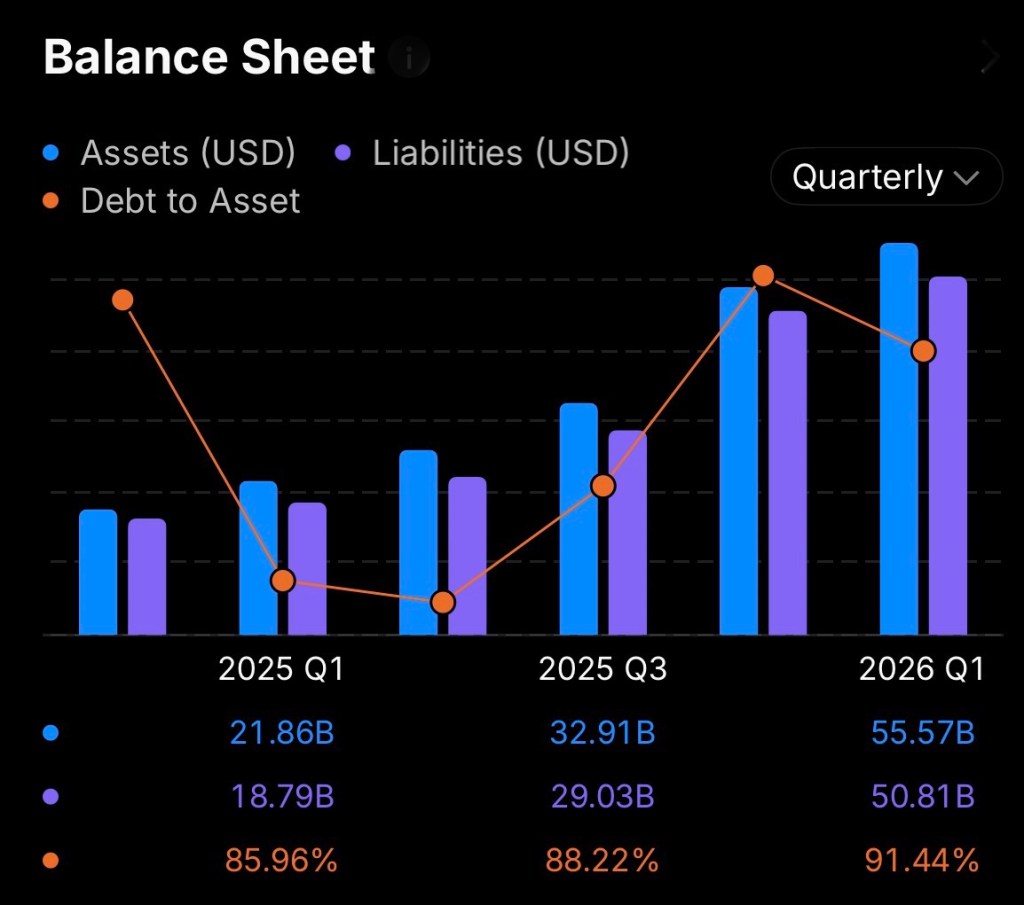
Although revenue growth has been exceptional, the company continues to report significant net losses. Investors are betting that future scale will eventually generate substantial profits. If growth slows before profitability improves, valuation concerns could emerge.

Customer Concentration

A meaningful portion of CoreWeave’s business comes from large AI companies and hyperscale cloud providers. Any reduction in spending from major customers could affect future growth rates.

Valuation Risk

Many AI-related companies trade at premium valuations based on expectations of future growth. If the AI spending cycle cools or investors become more cautious, high-growth stocks like CoreWeave could experience significant volatility.

Is There Still Upside Ahead?

The answer largely depends on whether investors believe AI infrastructure demand will continue expanding over the next decade.

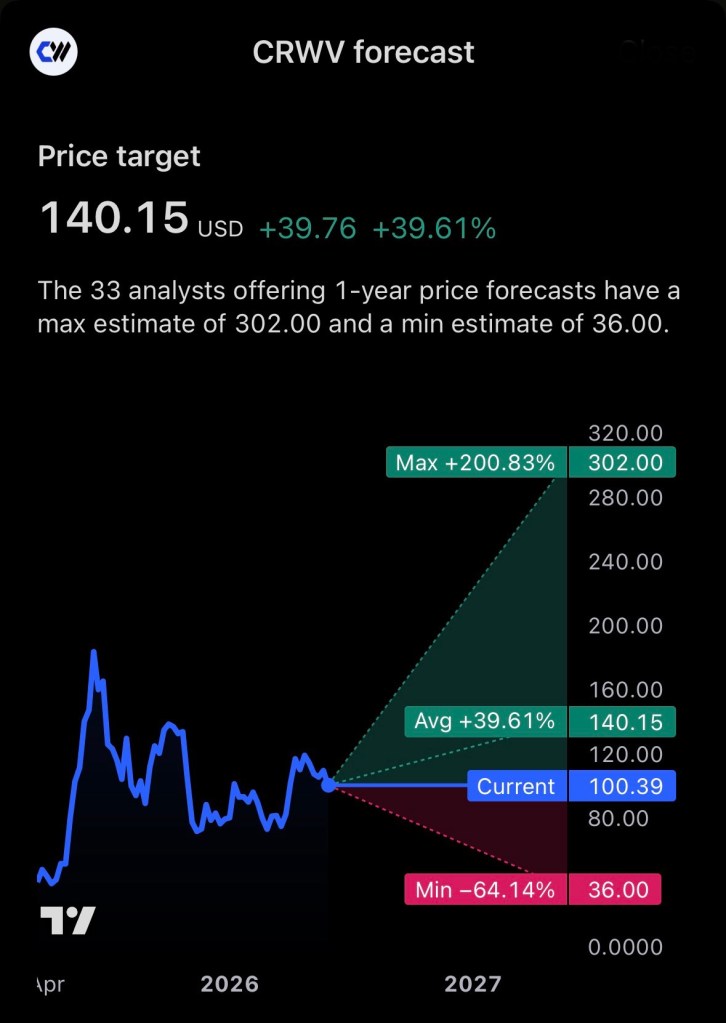
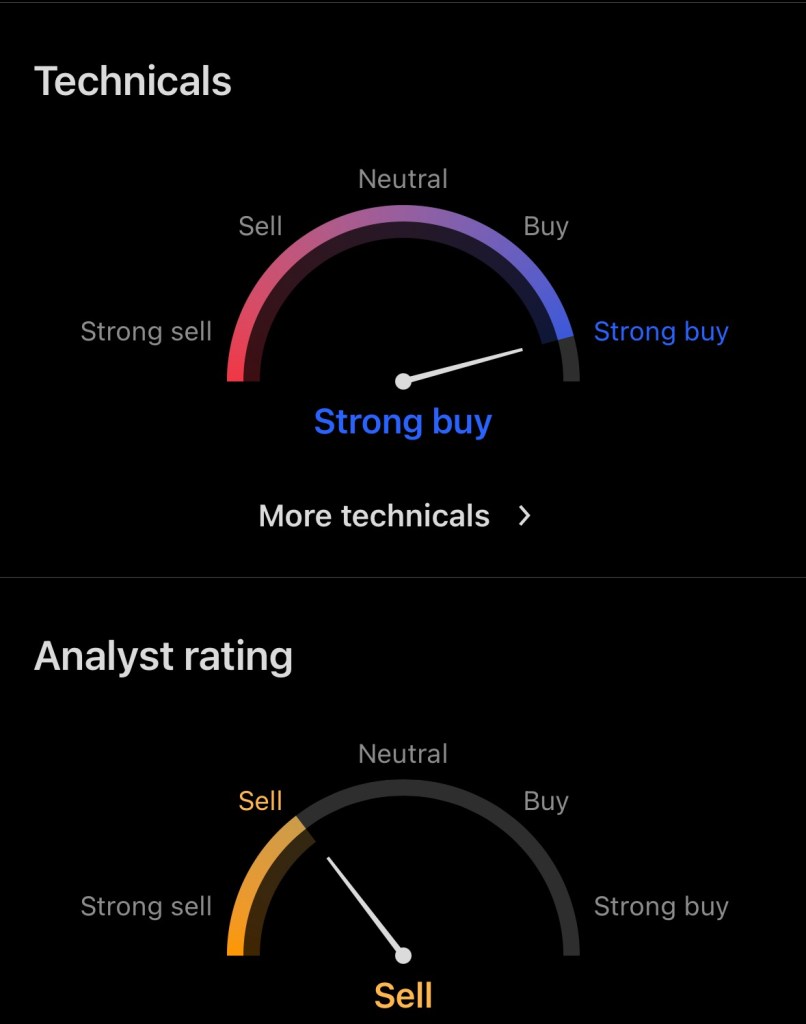
Supporters argue that artificial intelligence is still in its early innings and that the demand for compute power will continue to grow exponentially. If that thesis proves correct, CoreWeave could remain one of the primary beneficiaries of the AI buildout. Recent analyst targets and market commentary suggest many on Wall Street still see meaningful upside potential from current levels.

However, investors should recognize that CoreWeave remains a high-growth, high-risk company. The business must continue executing flawlessly while managing enormous capital expenditures and eventually demonstrating sustained profitability.

Bottom Line

CoreWeave has rapidly emerged as one of the most important infrastructure providers powering the AI revolution. The company’s strategic relationship with NVIDIA, enormous revenue backlog, and leadership position in AI cloud computing have helped fuel investor enthusiasm.

While the stock may continue to benefit from the expanding AI ecosystem, investors should remember that rapid growth often comes with substantial volatility. CoreWeave represents both the promise and the risks of investing in one of the market’s most exciting sectors.

For investors willing to tolerate uncertainty, CRWV remains one of the purest publicly traded plays on the future of artificial intelligence infrastructure.

Disclosure

The author owns shares of CoreWeave (NASDAQ: CRWV). This article is for informational and educational purposes only and should not be considered investment advice. Investors should conduct their own research and consult a qualified financial advisor before making investment decisions.

References

  1. CoreWeave. (2025, March 27). CoreWeave announces pricing of initial public offering. Retrieved from CoreWeave Investor Relations
  2. CoreWeave. (2026, May 7). CoreWeave reports strong first quarter 2026 results. Retrieved from CoreWeave Investor Relations
  3. CoreWeave. (2026). Investor relations overview. Retrieved from CoreWeave Investor Relations Overview
  4. NVIDIA. (2026, January 26). NVIDIA and CoreWeave strengthen collaboration to accelerate buildout of AI factories. Retrieved from NVIDIA Newsroom
  5. Reuters. (2026, May 7). CoreWeave signals higher capex as component costs rise, shares fall.
  6. Reuters. (2026, May 13). Nvidia CEO’s foundation buys $108 million of AI computing from CoreWeave, donates it to researchers.
  7. Barron’s. (2026, June 2). CoreWeave is first to offer NVIDIA’s newest AI system. The stock rises.
  8. Yahoo Finance. (2026). CoreWeave, Inc. (CRWV) stock price, news, quote & history. Retrieved from Yahoo Finance CRWV Page
  9. Stock Analysis. (2026). CoreWeave (CRWV) stock price & overview. Retrieved from Stock Analysis CRWV Overview
  10. MarketWatch. (2026, May 7). CoreWeave shares plunge. Revenue doubles but AI costs are rising.

A Brighter Outlook (Despite Skepticism): Could OSCR Reach $40 by Christmas 2025?

1. Highly Bullish Long-Term Forecasts

Some quantitative models project a steep upward trajectory. One forecasting service estimates an average December 2025 price of $34.67, with a low of $32.18 and a high of $35.72—implying over 100% upside from current levels (StockScan). If investor sentiment catches up with this model, the stock could indeed flirt with $40 before year-end.

2. Financing Strength and Cash Position

As of March 31, 2025, Oscar Health reported a fortified balance sheet: $4.86 billion in cash, equivalents, and investments, up from $3.97 billion at the end of 2024. Total assets rose 21% YoY, while operating cash flow increased 38% (Michael Burry’s Insights). This cash cushion gives Oscar flexibility to invest in growth, navigate regulatory headwinds, and drive further value.

3. Strategic Expansion Through New Partnerships

Oscar’s deal with Hy-Vee to launch “Hy-Vee Health with Oscar” in Des Moines, covering about 400,000 employees in the individual marketplace starting Jan 1, 2026, signals a bold move into employer-backed coverage. The ICHRA model aims to save businesses 20–30% and deliver substantial cost-savings to employees-this could create significant scale and margin tailwinds (Benzinga).

4. Accelerating Revenue Growth

While Q2 revenue of $2.86 billion fell slightly short of the $2.91 billion estimate, it still marked a 29% increase YoY. The company reaffirmed its full-year 2025 revenue guidance at $12–12.2 billion (versus Wall Street’s $11.32 billion estimate), underscoring underlying growth momentum (BenzingaYahoo FinanceStockAnalysis).

5. Valuation Appears Undervalued for Growth Potential

Oscar trades at over 101x forward EV/EBITDA, a lofty multiple—but some analysts argue this valuation is justified by its “quality characteristics” and disruptive business model (StockStory). Others see it as deeply undervalued despite near-term uncertainty tied to ACA policy risks (Seeking Alpha+1).


Why Analysts Are Still Cautious

  • Low Analyst Price Targets: Consensus 12-month forecasts range between $8 and $14, with averages clustered around $11–$12—well below the $40 mark (ZacksThe Wall Street JournalPriceTargetsInvesting.com).
  • Skeptical Market Sentiment: Many brokerages hold “Sell,” “Hold,” or “Neutral” ratings. Notably, Piper Sandler cut its target from $14 to $13, citing uncertainties around risk adjustments and path to profitability (Benzinga). MarketBeat’s consensus is “Strong Sell,” and TipRanks flags a “Downside potential” of ~30% (MarketBeat).
  • Profitability Still Out of Reach in 2025: OSCR is expected to operate at a loss—losses projected around $200–300 million for the year (Yahoo Finance). Its Q2 GAAP loss was $0.89/share, and medical loss ratio (MLR) swelled from 79% in 2024 to 91.1% in Q2 2025 (BenzingaStockAnalysis). These factors dampen bullish expectations.

Headlines-Style Article: “Oscar Health: Can It Make the Leap to $40 by Christmas 2025?”

New York, August 23, 2025 – Oscar Health Inc. (NYSE: OSCR) currently trades near $16.98, buoyed by stellar revenue growth, robust liquidity, and a landmark new partnership but Wall Street’s confidence remains tepid.

Why $40 isn’t implausible:

  • Long-term algorithmic forecasts place December 2025 prices in the low-$30s, including a possible high of $35.72 (StockScan).
  • Strengthened cash position of $4.86 billion, coupled with rising operating cash flows, enhances the company’s financial flexibility (Michael Burry’s Insights).
  • Innovative ventures like the Hy-Vee collaboration, targeting 400,000 employees, position Oscar to disrupt cost structures and tap new revenue streams (Benzinga).
  • A confirmed revenue guidance of $12–12.2 billion highlights strong underlying demand despite macro-healthcare headwinds (Yahoo FinanceStockAnalysis).

But hurdles remain:

  • Analyst targets remain pessimistic, ranging mostly between $8 and $14, with an average nearer $11–12 (ZacksThe Wall Street JournalPriceTargetsInvesting.com).
  • Profitability is still elusive: projected operational losses of up to $300 million in 2025, and increased medical loss ratios (MLR) eroding margins (BenzingaYahoo FinanceStockAnalysis).
  • Sentiment skews negative, with ratings from “Hold” to “Strong Sell” prevailing, reflecting elevated policy-related and insurance-market risks (MarketBeat).

Final Thoughts: While consensus targets place Oscar Health under $15, a confluence of strong cash reserves, growth initiatives, and bullish long-term models could propel the stock into the low $30s by Christmas-though doing so would require sustained execution and favorable market sentiment in the face of continued near-term challenges.

Disclaimer: The author holds a position in $OSCR Oscar Healthcare and this article should not be considered financial advice. Always conduct your own research before making any investment decisions.

References

Benzinga. (2025, August 20). Oscar Health faces analyst questions on path to profitability. Benzinga. https://www.benzinga.com/analyst-stock-ratings/analyst-color/25/08/47133490/oscar-health-faces-analyst-questions-on-path-to-profitability

Benzinga. (2025, August 21). What’s going on with Oscar Health stock on Wednesday? Benzinga. https://www.benzinga.com/news/health-care/25/08/47240234/whats-going-on-with-oscar-health-stock-on-wednesday

Finance Yahoo. (2025, August 19). Oscar Health (OSCR) updates 2025 revenue guidance. Yahoo! Finance. https://finance.yahoo.com/news/oscar-health-oscr-updates-2025-174216635.html

MarketBeat. (2025). Oscar Health analyst ratings and price targets. MarketBeat. https://www.marketbeat.com/stocks/NYSE/OSCR/

Michael-Burry.com. (2025, August). Oscar Health stock analysis. Michael-Burry.com. https://www.michael-burry.com/oscr-stock-analysis/

Seeking Alpha. (2025, July 30). Oscar Health stock: Undervalued, but not without risk. Seeking Alpha. https://seekingalpha.com/article/4814520-oscar-health-stock-undervalued-but-not-without-risk

Stockanalysis.com. (2025). Oscar Health (OSCR) financials and stock data. Stock Analysis. https://stockanalysis.com/stocks/oscr/

Stockscan.io. (2025). Oscar Health stock forecast. StockScan. https://stockscan.io/stocks/OSCR/forecast

StockStory.org. (2025). Oscar Health stock insights. StockStory. https://stockstory.org/us/stocks/nyse/oscr

The Wall Street Journal. (2025). Oscar Health Inc. research ratings & reports. WSJ. https://www.wsj.com/market-data/quotes/OSCR/research-ratings

Zacks Investment Research. (2025). Oscar Health (OSCR) price targets & forecasts. Zacks. https://www.zacks.com/stock/research/OSCR/price-target-stock-forecast