Why UiPath’s AI Strategy Could Shape Future Investments

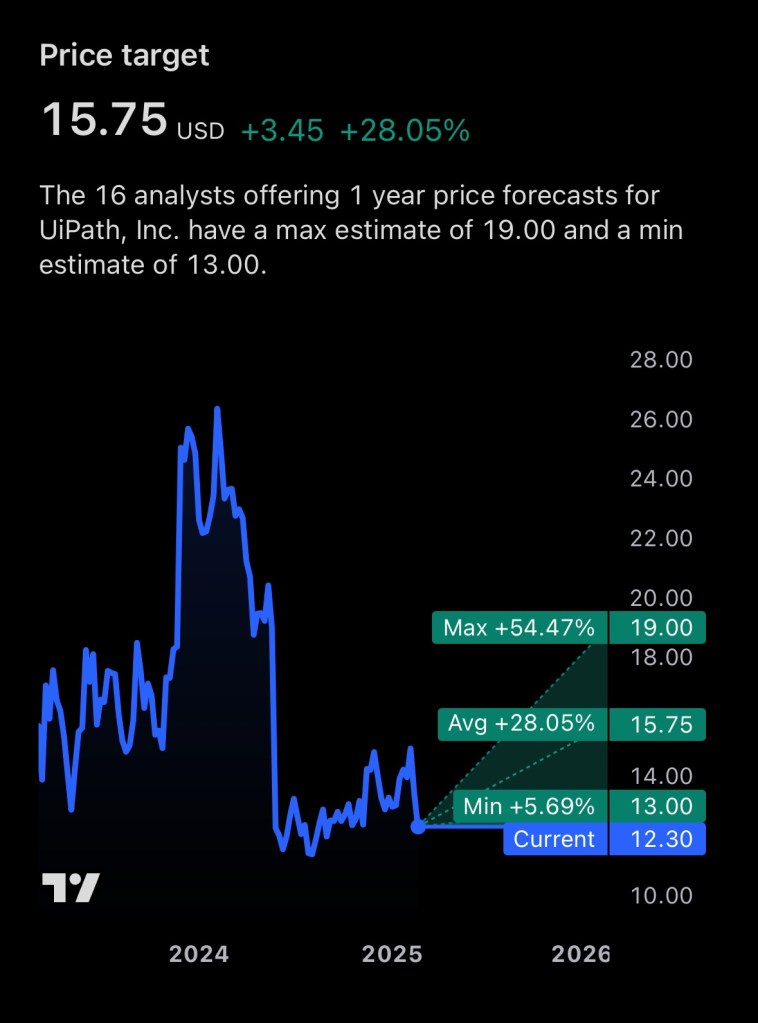
UiPath Inc. (NYSE: PATH), a leading company in robotic process automation (RPA) and artificial intelligence (AI), has recently garnered attention from investors due to its strategic advancements and market positioning.

Financial Performance and Outlook

In its fiscal second quarter, UiPath reported a 10% revenue increase to $316 million, surpassing Wall Street expectations. Adjusted earnings stood at 4 cents per share, exceeding analysts’ predictions of 3 cents per share. This performance underscores the growing demand for AI and automation technologies. The company has also approved a $500 million share buyback program, reflecting confidence in its financial health.

Despite these positive indicators, UiPath’s stock has experienced volatility. Shares fell 5% in premarket trading after the company maintained its fourth-quarter revenue forecast, leading to investor disappointment. The stock has declined approximately 40% in 2024, reflecting broader market challenges.

Strategic Positioning in AI and Automation

UiPath continues to innovate within the RPA and AI sectors. The company leverages AI to transform RPA, enabling complex automation and market growth while addressing profitability challenges. This strategic focus positions UiPath to capitalize on the increasing need for intelligent automation solutions across various industries.

Analyst Perspectives

Analysts present mixed views on UiPath’s prospects. Some highlight the company’s potential in the evolving AI landscape, while others express caution due to profitability concerns. Investors are advised to consider these diverse perspectives when evaluating UiPath’s investment potential.

UiPath’s advancements in AI and automation, coupled with its solid financial performance, position it as a noteworthy player in the technology sector. However, potential investors should remain mindful of market volatility and conduct comprehensive research before making investment decisions.

Disclosure:

I do not own any stock or have any financial interest in UiPath Inc. (NYSE: PATH). This article is for informational purposes only and should not be considered financial or investment advice. Investing in stocks carries risks, and past performance is not indicative of future results. Always conduct your own research and consult with a qualified financial professional before making any investment decisions.

References

MarketWatch. (2024, February 29). UiPath sees 10% revenue jump on ‘increasing need’ for AI; stock rallies. MarketWatch. https://www.marketwatch.com/story/uipath-sees-10-revenue-jump-on-increasing-need-for-ai-stock-rallies-f4587d09

MarketWatch. (2024, February 29). UiPath shares drop as Cathie Wood-backed software developer holds guidance. MarketWatch. https://www.marketwatch.com/story/uipath-shares-drop-as-cathie-wood-backed-software-developer-holds-guidance-9ffa2bc0

Investopedia. (2024, February 29). UiPath stock is falling after earnings and the company is boosting its buyback plan. Investopedia. https://www.investopedia.com/uipath-posts-results-and-guidance-on-ai-demand-buyback-8707490

Seeking Alpha. (2024, February 28). UiPath: AI potential vs. margin reality. Seeking Alpha. https://seekingalpha.com/article/4762394-uipath-ai-potential-vs-margin-reality

Clover Health ($CLOV): Key Growth and Profitability Insights

Clover Health Investments Corp. (NASDAQ: $CLOV), a physician enablement company focused on improving healthcare for Medicare beneficiaries, has recently demonstrated significant growth and strategic initiatives that may appeal to investors.

Robust Membership Growth

As of January 2025, Clover Health reported a 27% increase in Medicare Advantage membership, surpassing 100,000 members. Notably, approximately 95% of these members are enrolled in the company’s flagship 4-Star Preferred Provider Organization (PPO) plan, reflecting Clover’s commitment to delivering high-quality care.

Strategic Focus on Profitability

In December 2023, Clover Health announced its decision to exit the Centers for Medicare and Medicaid Services’ (CMS) ACO REACH program. This move allows the company to concentrate resources on its core Medicare Advantage insurance business and the Clover Assistant platform, aiming to achieve profitability on an Adjusted EBITDA basis for the full year 2024.

Financial Performance and Outlook

The company’s financial trajectory shows promise, with earnings expected to improve from a loss of $0.12 per share to $0.07 per share in the coming year. Analysts have set a 12-month price target of $5.00 for Clover Health’s stock, suggesting potential upside from its current trading price of $4.46 as of February 16, 2025.

Investment Considerations

While Clover Health’s recent membership growth and strategic refocusing are positive indicators, potential investors should be mindful of market volatility. The stock has experienced fluctuations, and with a significant portion of retail ownership, there is a risk of profit-taking following earnings reports. Therefore, a cautious approach is advisable, possibly awaiting the upcoming Q4 2024 earnings release for more clarity on the company’s financial health.

Clover Health’s strategic initiatives and growth in the Medicare Advantage sector position it as a noteworthy contender in the healthcare market. However, investors should conduct thorough research and consider market dynamics before making investment decisions.

Disclosure: I currently hold a position in Clover Health Investments Corp. (NASDAQ: $CLOV). This article reflects my personal opinions and analysis, and is not intended as financial advice. Please conduct your own research or consult a financial advisor before making any investment decisions.

References

Clover Health. (2023, December 15). Clover Health exits ACO REACH to accelerate path to profitability. Clover Health Investors. https://investors.cloverhealth.com/news-releases/news-release-details/clover-health-exits-aco-reach-accelerate-path-profitability

Finance Yahoo. (2025, January 10). Clover Health reports 27% growth in Medicare Advantage membership. Yahoo Finance. https://finance.yahoo.com/news/clover-health-reports-27-growth-140000713.html

Seeking Alpha. (2025, February 10). Clover Health: Watch out for volatility following Q4 earnings results. Seeking Alpha. https://seekingalpha.com/article/4756994-clover-health-watch-out-for-volatility-following-q4-earnings-results

Stock Analysis. (2025, February 15). Clover Health (CLOV) stock forecast and price target. Stock Analysis. https://stockanalysis.com/stocks/clov/forecast

UPS Stock Drops 16%: What’s Next for Investors?

United Parcel Service (UPS) has recently experienced a significant decline in its stock value, with shares dropping over 16% following the announcement of a strategic shift to reduce its business with Amazon by more than 50% by the second half of 2026. This decision is part of UPS’s broader strategy to focus on more profitable segments, such as healthcare logistics and business-to-business deliveries, aiming to improve profit margins and reduce dependency on Amazon.

Despite the immediate negative market reaction, some analysts view this move as a positive step for UPS’s long-term profitability. By decreasing reliance on high-volume, low-margin shipments from Amazon, UPS plans to enhance operational efficiency and focus on higher-margin businesses. This strategic pivot is expected to save the company approximately $1 billion annually.

Additionally, UPS’s decision to insource operations previously handled by the U.S. Postal Service, such as the SurePost product, is aimed at optimizing service and reducing costs. While these changes may present short-term challenges, they are designed to position the company for sustainable growth and improved profitability in the future.

For long-term investors, UPS’s current stock decline may present a buying opportunity. The company’s strategic initiatives to focus on higher-margin segments and reduce operational dependencies are expected to strengthen its market position over time. While the transition may involve near-term uncertainties, UPS’s efforts to enhance profitability and operational efficiency could lead to substantial long-term gains for patient investors.

Disclosure: I currently hold a position in United Parcel Service ($UPS). This article reflects my personal opinions and analysis, and is not intended as financial advice. Please conduct your own research or consult a financial advisor before making any investment decisions.


References

Barron’s. (2024, January 30). UPS and Amazon may be headed for a split—and the stock is paying the price. Retrieved from https://www.barrons.com/articles/ups-earnings-stock-price-amazon-1a32be4f

Business Insider. (2025, January 30). UPS plunged after saying it would deliver fewer Amazon packages. Its CEO says it’s about ‘taking control of our destiny.’ Retrieved from https://www.businessinsider.com/ups-ship-fewer-amazon-packages-shares-drop-2025-1

Investopedia. (2024, January 30). UPS Q4 earnings report FY2024. Retrieved from https://www.investopedia.com/ups-earnings-q4-fy2024-8780982

MarketWatch. (2024, January 30). UPS’s stock falls after a revenue miss, deal with largest customer to cut volume. Retrieved from https://www.marketwatch.com/story/upss-stock-falls-after-a-revenue-miss-deal-with-largest-customer-to-cut-volume-1984fcb7

The Motley Fool. (2025, January 30). Why UPS stock is plunging today. Retrieved from https://www.fool.com/investing/2025/01/30/why-ups-stock-is-plunging-today

The Wall Street Journal. (2024, January 30). UPS’s boss is under pressure from unhappy investors—its own retirees. Retrieved from https://www.wsj.com/business/logistics/upss-boss-is-under-pressure-from-unhappy-investorsits-own-retirees-f01a8dd3

Nike Stock Decline: Key Factors and Recovery Strategies

Nike’s stock has experienced a significant decline over the past year, with shares dropping from a high of $175 to approximately $77, marking a decrease of over 55%.

Factors Contributing to the Decline

  1. Overvaluation Concerns: In 2021, Nike’s stock reached an all-time peak at over $170 per share, a valuation some experts considered overhyped. The market is now adjusting to more realistic valuations. sneakerfreaker.com
  2. Increased Competition: Brands like Hoka and On have gained popularity, capturing market share from Nike. sneakerfreaker.com
  3. Sales and Revenue Challenges: In its fiscal Q4 2024, Nike reported a 2% year-over-year revenue decline to $12.6 billion, missing analyst expectations. The company also projected a 10% sales decline for the current quarter, attributing it to aggressive management of classic footwear lines and challenges in digital sales. Fast Company

Strategic Initiatives for Recovery

Under the leadership of new CEO Elliott Hill, Nike is implementing a turnaround plan focusing on:

  • Refocusing on Sports: Hill emphasizes a return to Nike’s roots by prioritizing athlete-centered product innovation and storytelling, targeting key categories such as running, basketball, and training. Business Insider
  • Reducing Discounting: To protect brand integrity, Nike plans to limit promotional sales and focus on full-price, premium products. Business Insider
  • Rebuilding Retail Partnerships: The company aims to strengthen relationships with wholesale partners, recognizing that previous strategies may have strained these collaborations. Business Insider

Investment Considerations

Despite recent challenges, several factors may make Nike an attractive investment opportunity:

  • Strong Brand Equity: Nike remains a globally recognized brand with a loyal customer base.
  • Strategic Leadership: The new CEO’s initiatives are designed to address current issues and position the company for long-term growth.
  • Market Position: Nike’s extensive distribution network and innovative product lines provide a solid foundation for recovery.

While the turnaround strategy may impact short-term results, the focus on core strengths and strategic realignment could enhance long-term shareholder value. Investors should monitor the company’s progress and consider the potential for future growth when evaluating Nike as an investment.

Disclosure: The author of this article may hold a position in Nike, Inc. ($NKE) stock at the time of publication. This article is for informational purposes only and should not be construed as investment advice. Readers are encouraged to conduct their own research or consult with a financial advisor before making any investment decisions.

References

Barrons. (n.d.). Nike unveils its new CEO’s turnaround plan. Can it get its mojo back? Retrieved January 25, 2025, from https://www.barrons.com/articles/nike-earnings-new-ceo-turnaround-plan-0dba83f3

Business Insider. (2024). Nike’s new CEO said the company messed up 3 key areas that he’s trying to fix — and it’s bad news for customers who like cheap stuff. Retrieved January 25, 2025, from https://www.businessinsider.com/nike-new-ceo-elliott-hill-change-sport-sales-wholesalers-turnaround-2024-12

MarketWatch. (n.d.). Nike just laid out an ambitious turnaround plan. But it will come at a cost. Retrieved January 25, 2025, from https://www.marketwatch.com/story/nikes-ceo-touts-immediate-action-to-please-shareholders-shares-are-rallying-after-earnings-e22764a8

Sneaker Freaker. (n.d.). Why is Nike stock down? Revenue loss explained. Retrieved January 25, 2025, from https://www.sneakerfreaker.com/features/why-nike-stock-down-revenue-loss-explainer

Fast Company. (2025). Nike stock price drops after earnings miss and new CEO’s challenges. Retrieved January 25, 2025, from https://www.fastcompany.com/91148691/nike-stock-price-today-shares-decline-reason-2025-outlook

AMD’s Strategic Rise in the Semiconductor Market

Advanced Micro Devices (AMD) has emerged as a formidable player in the semiconductor industry, showcasing significant growth and strategic initiatives that position it as a compelling investment opportunity.

Financial Performance and Market Position

As of January 19, 2025, AMD’s stock is trading at $121.46, reflecting a 2.54% increase from the previous close. This upward trend underscores investor confidence in AMD’s market strategies and financial health. Notably, AMD’s market valuation surpassed $300 billion in March 2024, highlighting its substantial growth trajectory.

Strategic Acquisitions and AI Expansion

AMD has made significant strides in the artificial intelligence (AI) sector through strategic acquisitions. In July 2024, the company acquired Finnish AI startup Silo AI for $665 million, aiming to enhance its AI capabilities and compete more effectively with industry leader Nvidia. Additionally, AMD’s $4.9 billion acquisition of ZT Systems in August 2024 bolstered its AI infrastructure, providing access to a team of 1,000 design engineers to strengthen its AI system designs.

Leadership and Innovation

Under the leadership of CEO Lisa Su, AMD has transformed from a struggling entity into a semiconductor powerhouse. Since she took charge in 2014, AMD’s stock price has surged from $3 to approximately $140, with the company’s market value surpassing that of Intel. Su’s strategic focus on product redesign, customer relationships, and capitalizing on the AI boom has been instrumental in this turnaround.

Analyst Perspectives

Wall Street analysts have shown optimism regarding AMD’s prospects. UBS identified AMD as a top semiconductor pick, citing its competitive pricing and performance in AI chips compared to Nvidia. Despite a 5.8% drop in shares earlier in the year, UBS analysts remain positive about AMD’s future in the AI market. However, some analysts urge caution, noting that while AMD’s AI accelerator chips show promise, the company faces challenges in closing the performance gap with Nvidia. Following announcements about AI chip revenue forecasts, AMD shares experienced a nearly 8% decline, reflecting market skepticism about its competitive positioning.

AMD’s robust financial performance, strategic acquisitions, and visionary leadership under Lisa Su position it as a strong contender in the semiconductor industry. While the company faces challenges, particularly in the competitive AI sector dominated by Nvidia, its proactive strategies and market responsiveness suggest a promising outlook for investors considering AMD as part of their portfolio.

Disclosure: I currently hold a position in Advanced Micro Devices ($AMD). This article reflects my personal opinions and analysis, and is not intended as financial advice. Please conduct your own research or consult a financial advisor before making any investment decisions.

References

MarketWatch. (2024, August 15). AMD to make $4.9 billion AI acquisition as it steps up race against Nvidia. MarketWatch. https://www.marketwatch.com/story/amd-to-make-4-9-billion-ai-acquisition-as-it-steps-up-race-against-nvidia-7c2d4d34

Cunningham, A. (2024, August 18). AMD deal shows AI chip business isn’t just about chips. The Wall Street Journal. https://www.wsj.com/tech/ai/amd-deal-shows-ai-chip-business-isnt-just-about-chips-81fb46d9

Toh, M. (2024, December 7). Lisa Su: TIME’s CEO of the year 2024. TIME. https://time.com/7200909/ceo-of-the-year-2024-lisa-su

Diversifying Your Financial Portfolio for Stability and Growth

By spreading investments across various financial instruments such as annuities, life insurance, certificates of deposit (CDs), money market accounts, stocks, and individual retirement accounts (IRAs), individuals can mitigate risk, ensure financial stability, and secure long-term growth. Here’s a closer look at why diversifying your financial holdings with these assets is a prudent strategy.

Annuities: Guaranteed Income for Life

Annuities are insurance products that provide a steady income stream, typically for life, making them a valuable component of a diversified portfolio. They are particularly beneficial for retirees seeking a reliable income source. Annuities can be fixed or variable, with fixed annuities offering guaranteed payments and variable annuities linked to the performance of underlying investments.

Why Consider Annuities?

  • Stability: Annuities provide a predictable income, which can help cover living expenses and reduce reliance on fluctuating markets.
  • Longevity Protection: With increasing life expectancy, annuities can ensure you don’t outlive your savings.
  • Tax Advantages: Earnings from annuities grow tax-deferred until withdrawal, allowing your investment to compound over time.

Life Insurance: Protecting Your Loved Ones

Life insurance is a crucial financial tool that offers protection and peace of mind. By incorporating life insurance into your financial plan, you ensure that your loved ones are financially secure in the event of your untimely death. Life insurance comes in various forms, including term life, whole life, and universal life insurance, each with its unique benefits.

Why Consider Life Insurance?

  • Financial Security: Life insurance provides a death benefit to beneficiaries, helping them cover expenses such as funeral costs, debts, and living expenses.
  • Wealth Transfer: It can be an effective way to transfer wealth to heirs or charitable organizations.
  • Cash Value Growth: Permanent life insurance policies build cash value over time, which can be borrowed against or withdrawn under certain conditions.

Certificates of Deposit (CDs): Safe and Predictable Returns

CDs are low-risk, time-bound deposits offered by banks and credit unions. They pay a fixed interest rate over a specified period, ranging from a few months to several years. While they may not offer high returns, CDs are a safe investment option, particularly in a volatile market.

Why Consider CDs?

  • Safety: CDs are insured by the FDIC up to $250,000 per depositor, per institution, providing a high level of security.
  • Predictable Returns: The fixed interest rate guarantees a known return on investment.
  • No Market Risk: CDs are not subject to market fluctuations, ensuring your principal investment is secure.

Money Market Accounts: Flexible and Accessible

Money market accounts (MMAs) are interest-bearing accounts that offer higher interest rates than regular savings accounts while providing easy access to funds. They are ideal for maintaining liquidity while earning a reasonable return on your savings.

Why Consider Money Market Accounts?

  • Liquidity: MMAs allow easy access to your funds, making them suitable for emergency savings or short-term financial goals.
  • Higher Interest Rates: Typically, MMAs offer better interest rates compared to standard savings accounts.
  • Security: Like CDs, MMAs are insured by the FDIC, ensuring your money is protected.

Stocks: Growth Potential and Dividends

Stocks represent ownership in a company and can provide substantial returns through capital appreciation and dividends. They are a fundamental part of any diversified portfolio, offering the potential for significant growth.

Why Consider Stocks?

  • High Growth Potential: Stocks have historically outperformed other asset classes over the long term.
  • Dividends: Many companies pay dividends, providing a steady income stream in addition to potential capital gains.
  • Ownership: Owning stock gives you a stake in a company’s success and the right to vote on corporate matters.

Individual Retirement Accounts (IRAs): Tax-Advantaged Growth

IRAs are tax-advantaged accounts designed to help individuals save for retirement. They come in two main types: Traditional IRAs, which offer tax-deductible contributions and tax-deferred growth, and Roth IRAs, which provide tax-free growth and withdrawals.

Why Consider IRAs?

  • Tax Advantages: Traditional IRAs offer tax-deferred growth, while Roth IRAs provide tax-free growth and withdrawals.
  • Flexibility: IRAs can hold a wide range of investments, including stocks, bonds, and mutual funds, allowing for diversified growth.
  • Retirement Security: IRAs are a key component of a comprehensive retirement plan, helping ensure financial security in your later years.

Diversifying your financial holdings with annuities, life insurance, CDs, money market accounts, stocks, and IRAs offers a balanced approach to managing risk and achieving financial goals. Each of these instruments serves a unique purpose, from providing steady income and protecting loved ones to ensuring safety, liquidity, and growth potential. By integrating these assets into your financial strategy, you can build a robust and resilient portfolio capable of weathering economic uncertainties and securing your financial future. If you need help deciding on your best investment strategy drop me a line, send me an email or give me a call and we can talk about what strategy fits your risk tolerances.

About the Author:

David Dandaneau is a insurance agent that covers the insurance and financial services industry. He is known for his insightful analysis and comprehensive coverage of market trends and regulatory developments.

The Investment Outlook: Equities vs. Cryptocurrency

In the ever-evolving world of finance, investors are faced with a multitude of options, each offering unique opportunities and risks. Among the most debated choices are traditional equities and the relatively new player in the game, cryptocurrency. Let’s explore the key factors that investors should consider when deciding where to allocate their funds.

Equities: A Time-Tested Classic

Equities, or stocks, represent ownership in a company and a claim to its assets and earnings. Historically, equities have been a cornerstone of investment portfolios, providing investors with the potential for capital appreciation and dividend income. The stock market has a long track record of delivering solid returns over the long term, albeit with occasional periods of volatility.

One of the primary advantages of investing in equities is the opportunity for diversification. With thousands of publicly traded companies across various sectors, investors can build a well-rounded portfolio to mitigate risk. Additionally, stocks offer the possibility of receiving dividends, providing a regular income stream for income-focused investors.

Cryptocurrency: The Digital Frontier

On the flip side, cryptocurrencies like Bitcoin and Ethereum have gained prominence as alternative investments, particularly among those seeking high-risk, high-reward opportunities. These digital assets operate on decentralized blockchain technology, offering transparency and security. The appeal of cryptocurrencies lies in their potential for rapid and substantial price appreciation, often outpacing traditional markets.

However, the volatile nature of cryptocurrencies is a double-edged sword. While some investors have reaped significant profits during bull markets, others have experienced sharp losses during market downturns. The lack of regulatory oversight and the relatively short history of cryptocurrencies also contribute to the uncertainty surrounding their long-term viability.

Considerations for Investors

When deciding between equities and cryptocurrencies, investors must assess their risk tolerance, investment goals, and time horizon. Equities generally appeal to those seeking a more stable and established market, while cryptocurrencies may attract risk-tolerant individuals seeking exponential returns.

Diversification remains a key principle for any investor, and a balanced approach that includes both equities and cryptocurrencies could provide a middle ground. However, it’s crucial to conduct thorough research and stay informed about the dynamics of each market.

Ultimately, the decision between equities and cryptocurrencies should align with an investor’s individual financial objectives and risk appetite. While equities offer a proven track record and stability, cryptocurrencies present an exciting frontier with the potential for substantial gains. As the investment landscape continues to evolve, staying informed and adapting to changing market conditions will be paramount for success. Never put all your eggs in one basket and remember diversification is key to long term investing. Have a plan and stick to it! or as I like to say plan the work and work the plan!