Understanding the Santa Claus Rally: A Swing Trader’s Guide

As the calendar closes out and holiday cheer replaces headline noise, U.S. stock markets often show a predictable burst of strength known as the Santa Claus Rally — a short, historically favorable window that many swing traders lean on for quick, low-risk setups. The rally is narrowly defined, reliably rewarded by the data, and backed by a handful of market mechanics (low volume, year-end flows, tax-related reversals) that can amplify short-term moves — exactly the conditions swing traders seek. (Investopedia+1)

What is the Santa Claus Rally (timeframe)?

The conventional definition — credited to Yale Hirsch and the Stock Trader’s Almanac — is the last five trading days of December plus the first two trading days of January (a seven-trading-day window). That short span is when seasonal strength historically concentrates, rather than across the whole of December. (Stock Trader’s Almanac+1)

The numbers: how the S&P 500 and Dow have performed

  • S&P 500: Since roughly 1950, the S&P 500 has averaged about +1.3% over the seven trading days of the Santa Claus Rally, with positive returns roughly 78–79% of the time. That beats a typical seven-day period’s average return and win-rate. (Investopedia+1)
  • Dow Jones Industrial Average: Using the classic post-Christmas window, the Dow has historically been positive about 77% of the time, with average gains in the same ballpark as the S&P by some measures (studies often report roughly +1.4% in the period). (MarketWatch+1)
  • Relative context: Analysts note the Santa Claus window’s 1.3% average gain contrasts with a much smaller average seven-day return (around 0.3%), underscoring the period’s above-normal edge. (LPL)

(These figures come from long-range studies and market almanacs; different start dates or sample periods shift the precise numbers slightly but not the broad conclusion.) (Stock Trader’s Almanac+1)

Why this period favors swing trading

  1. Condensed upside in a known short window. Swing trading profits from predictable, short moves — a seven-day, high-probability uptick is exactly that. Historical win-rates near the ~78% mark give a favorable edge if position sizing and risk controls are used. (Investopedia)
  2. Lower volatility and thinner volume. Holiday trading often sees lighter volume and fewer market-moving news items; prices can drift more cleanly in one direction, letting swing setups (breakouts, momentum continuations, mean-reversion bounces) play out with less intraday whipsaw. (Lower volume can magnify moves in the direction of flows.) (Corporate Finance Institute+1)
  3. End-of-year flows and positioning. Institutional flows (window dressing, year-end rebalancing, bonus/retirement contributions) and a reversal of tax-loss selling can create concentrated buying pressure around year-end and early January. Big inflows into equities have been cited as a driver in some recent Santa rallies. (MarketWatch+1)
  4. Correlation with January and the new year. Historically, a positive Santa Claus Rally has sometimes preceded stronger January returns and a more bullish full year — a dynamic that can attract more buyers into the short window and amplify momentum. (This is a correlation, not a guarantee.) (LPL+1)

Practical swing-trader playbook (how to trade it)

  • Time the window. Look for entries during the last five trading days of December and use targets or exits by the first two trading days of January (or earlier if your plan dictates). The edge is short-lived — don’t stretch holding periods beyond the seasonality. (Stock Trader’s Almanac)
  • Trade probability, not hope. Use setups with clear technical evidence (breakout on rising RSV/volume, pullback to moving average, bullish RSI divergence). Favor names with existing positive momentum.
  • Risk control is essential. Even periods with high historical win-rates can fail; use tight stops, sensible position sizing, and consider defined-risk instruments (protective puts or small options trades) if you want asymmetric payoff.
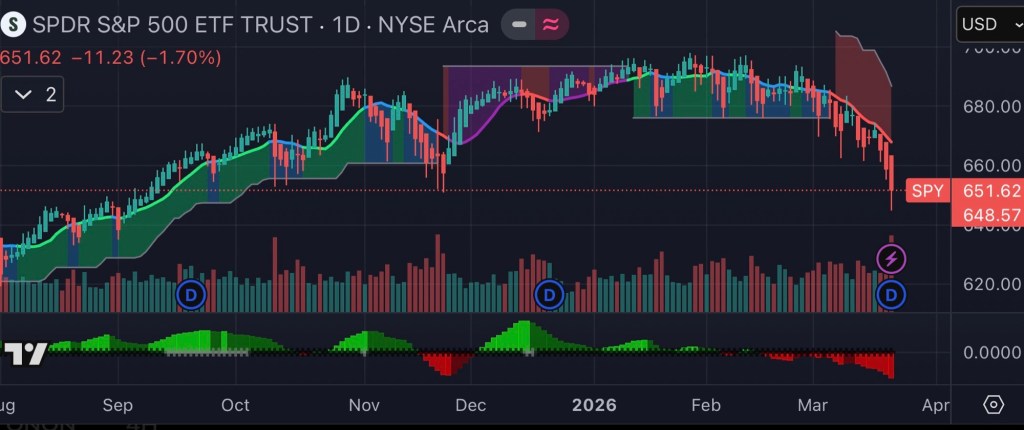
  • Use ETFs for broad exposure. If you want to play the seasonal tilt without single-stock risk, liquid ETFs (SPY, QQQ, DIA) can capture the move and provide easy entries/exits.
  • Watch volume & implied volatility. Low volume can help moves trend but can also create thin markets. Options traders should check implied volatility — seasonality can compress IV, affecting premium strategies.
  • Consider small-cap/January effect overlap. If you’re a swing trader who also trades small caps, remember the broader January Effect can lift small-cap names in the early month, offering extra upside for appropriately sized trades. (Plus500)

Indicators and signals traders often monitor

  • Short interest and buybacks — low supply + active buybacks can help push prices.
  • Seasonal inflows / fund flows (ETF inflows, mutual fund windows) — high year-end inflows can sustain rallies. (MarketWatch)
  • Volatility (VIX) trend — falling VIX into year-end often accompanies risk-on moves; a sudden spike can kill momentum.
  • Breadth measures (advance/decline lines, number of stocks above 50-day MA) — confirm whether the rally is broad-based or just a narrow megacap lift. (Broad rallies are more robust for swing trades across sectors.)

A quick caution

Seasonal patterns are statistical tendencies, not certainties. Past performance is not a guarantee of future results. There have been years without a Santa Claus Rally (and even reverse episodes), and macro surprises — policy shocks, geopolitical events, or sudden earnings shocks — can reverse the move. Traders should use the seasonal edge as one input among many, not a sole decision rule. (Morningstar+1)

What this means for investors is simple:

The Santa Claus Rally is a short, well-defined window (last five trading days of December + first two trading days of January) that historically offers above-average returns and a high probability of positive performance for major indices like the S&P 500 and the Dow. Those characteristics — concentrated upside, lower intraday noise, and supportive year-end flows — make it an attractive environment for disciplined swing traders who pair tight risk controls with high-probability setups. Just remember: seasonality improves the odds, it doesn’t eliminate risk. (Investopedia+2MarketWatch+2)

References

Canopy Wealth. (2024, December 19). What is the Santa Claus Rally? https://www.canopy-wealth.com/blog/what-is-the-santa-claus-rally Canopy Wealth Management
Corporate Finance Institute. (n.d.). Santa Claus Rally – Overview, Causes, Retrospective. https://corporatefinanceinstitute.com/resources/career-map/sell-side/capital-markets/santa-claus-rally/ Corporate Finance Institute
Interactive Brokers. (2024, December 13). Chart Advisor: Get Ready for the Real Santa Claus Rally. https://www.interactivebrokers.com/campus/traders-insight/chart-advisor-get-ready-for-the-real-santa-claus-rally/ Interactive Brokers
InvestingNews. (2024, December 24). What Is the Santa Claus Rally and Has it Arrived? https://investingnews.com/santa-claus-rally/ Investing News Network (INN)
Investopedia. (2024, December 20). Santa Claus Rally: What It Is and Means for Investors. https://www.investopedia.com/terms/s/santaclauseffect.asp Investopedia
Investopedia. (n.d.). The Santa Claus Rally. https://www.investopedia.com/the-santa-claus-rally-4779941 Investopedia
LPL Research. (2025, January 2). Santa Claus Rally in Jeopardy. https://www.lpl.com/research/blog/santa-claus-rally-in-jeopardy.html LPL
SmartAsset. (2025, August 14). Is the Santa Claus Rally Real? – 2020 Study. https://smartasset.com/financial-advisor/santa-claus-rally-2020 SmartAsset
TSPSmart. (n.d.). Santa Claus Rally. https://tspsmart.com/Santa-Claus-Rally TSP Smart

Pfizer’s Dividend Strengthens Case for Long-Term Investors

Pfizer Inc. ($PFE), one of the world’s largest pharmaceutical companies, continues to make a strong case for long-term investors seeking both stability and income. While the stock has faced recent volatility due to a decline in COVID-19 vaccine sales, its solid fundamentals, diversified pipeline, and consistent dividend payouts remain key reasons why investors may want to hold shares for the long haul.

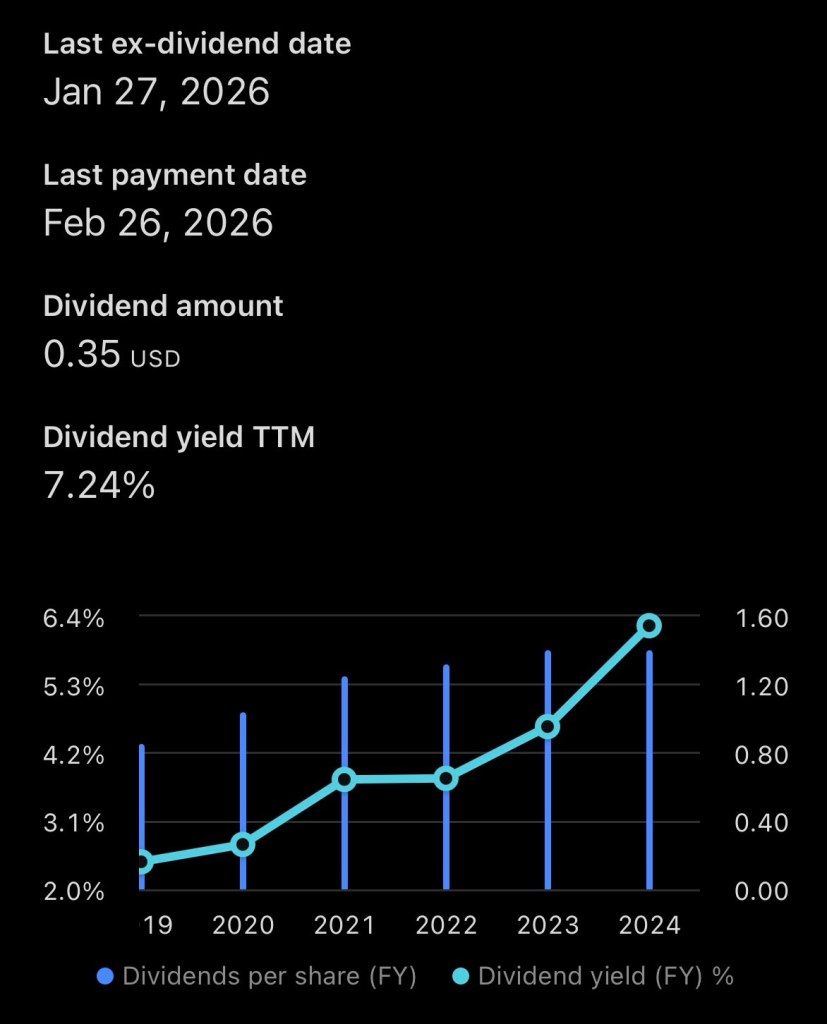
Pfizer currently offers an attractive dividend yield—well above the S&P 500 average—making it a compelling choice for income-focused portfolios. The company has a long track record of reliable dividend payments and has shown commitment to rewarding shareholders even during periods of industry and market uncertainty. With a payout ratio supported by its robust cash flow, Pfizer’s dividend looks sustainable in the years ahead.

Beyond dividends, Pfizer’s pipeline of treatments in oncology, immunology, and rare diseases provides investors with growth opportunities outside of its COVID-19 products. Recent strategic acquisitions, such as the purchase of Seagen to bolster its oncology portfolio, reinforce the company’s long-term vision. These moves are designed to balance near-term headwinds with future revenue expansion.


Financial Snapshot: Strengths and Weaknesses

Strengths

  • Dividend Yield & Stability: Pfizer’s dividend yield is significantly higher than the S&P 500 average, appealing to income-focused investors.
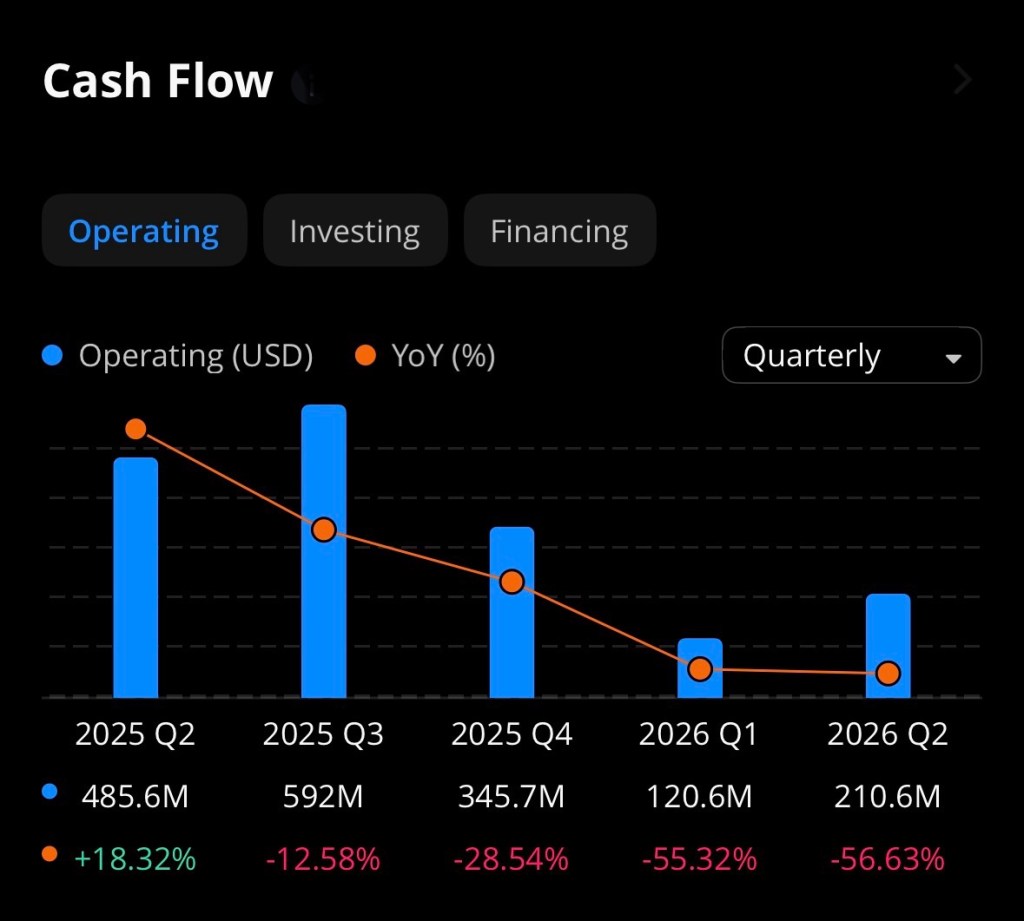
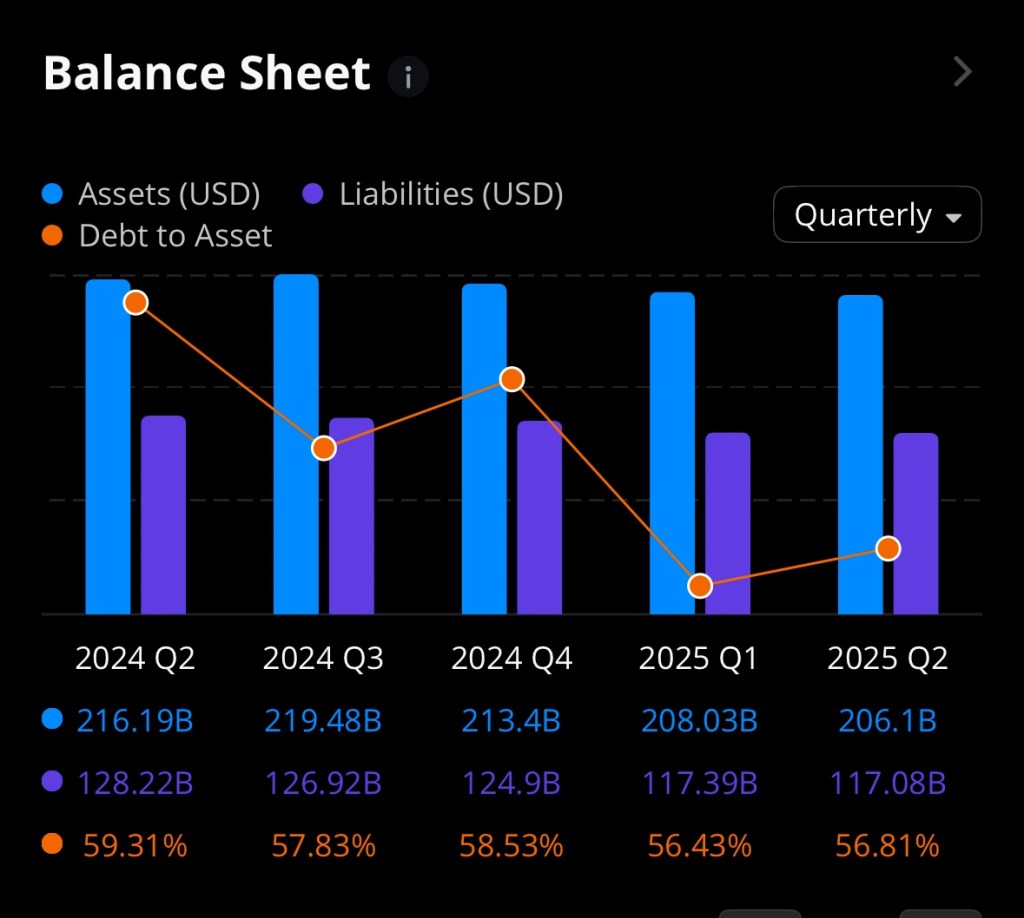
  • Strong Balance Sheet: Despite recent revenue declines, Pfizer maintains healthy cash reserves and strong operating cash flow, supporting its dividend and acquisition strategy.
  • Attractive Valuation: Shares are trading at a discount compared to peers in the pharmaceutical sector, offering a margin of safety for value investors.
  • Diversified Revenue Base: Expansion in oncology, vaccines, and rare diseases provides multiple future growth drivers beyond COVID-19.

Weaknesses

  • COVID-19 Dependency Hangover: A sharp decline in vaccine and antiviral demand has pressured revenue, highlighting reliance on pandemic-era products.
  • R&D Risk: Heavy investment in research and development may not always lead to successful approvals, leaving earnings vulnerable.
  • Debt from Acquisitions: The Seagen deal adds to Pfizer’s debt load, which, while manageable, could strain resources if integration challenges arise.
  • Patent Expirations: Like many pharmaceutical giants, Pfizer faces long-term risks from patent cliffs that could erode future revenue streams.

Stock Price Outlook: 1 to 5 Years

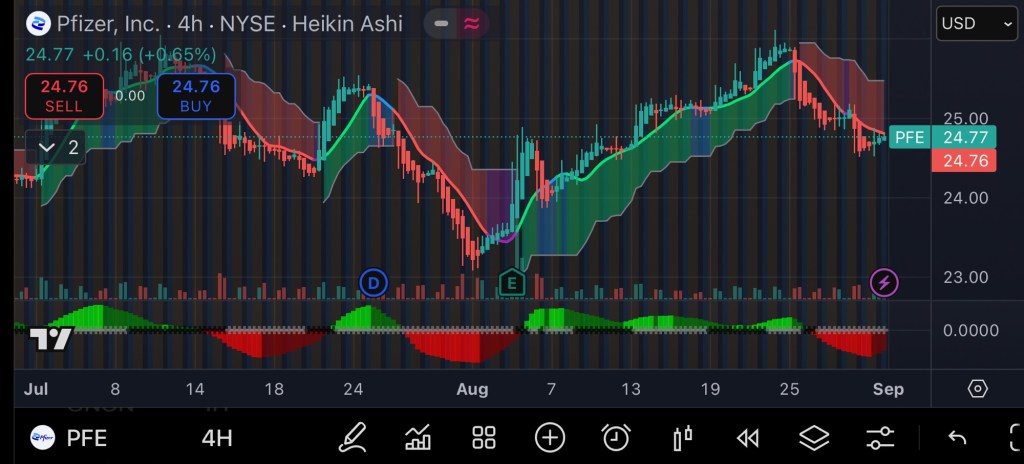
Pfizer’s current share price reflects market concerns over post-COVID revenue declines, but its fundamentals suggest room for recovery.

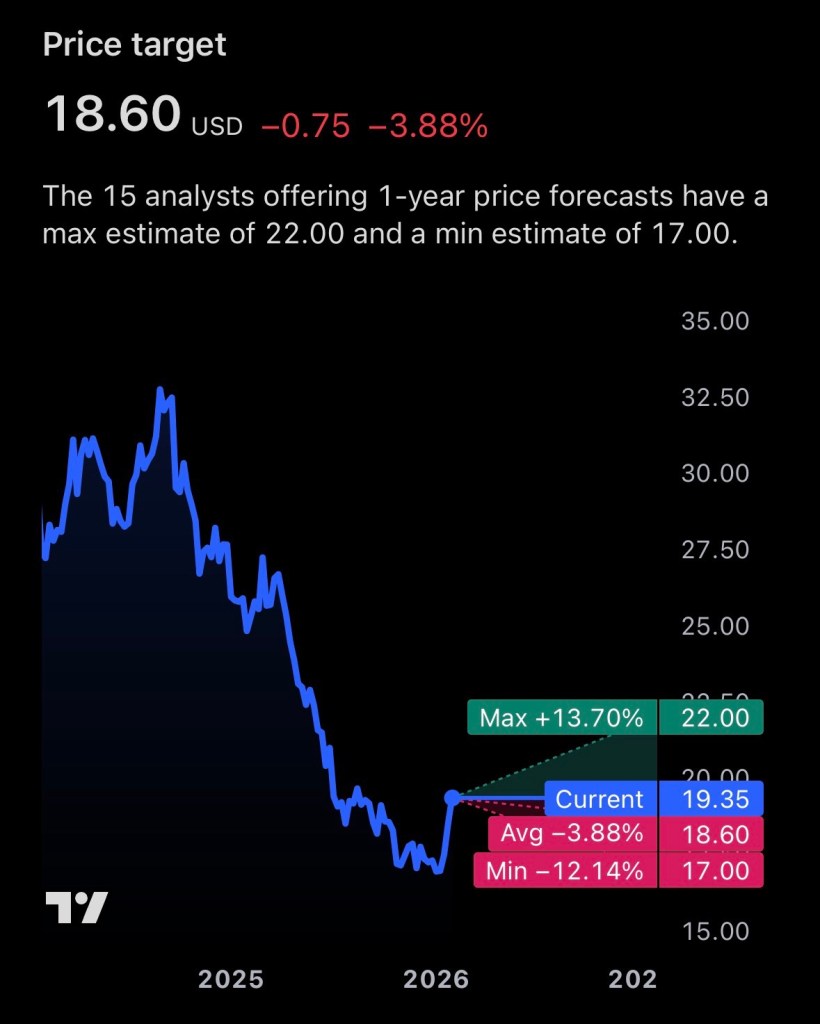
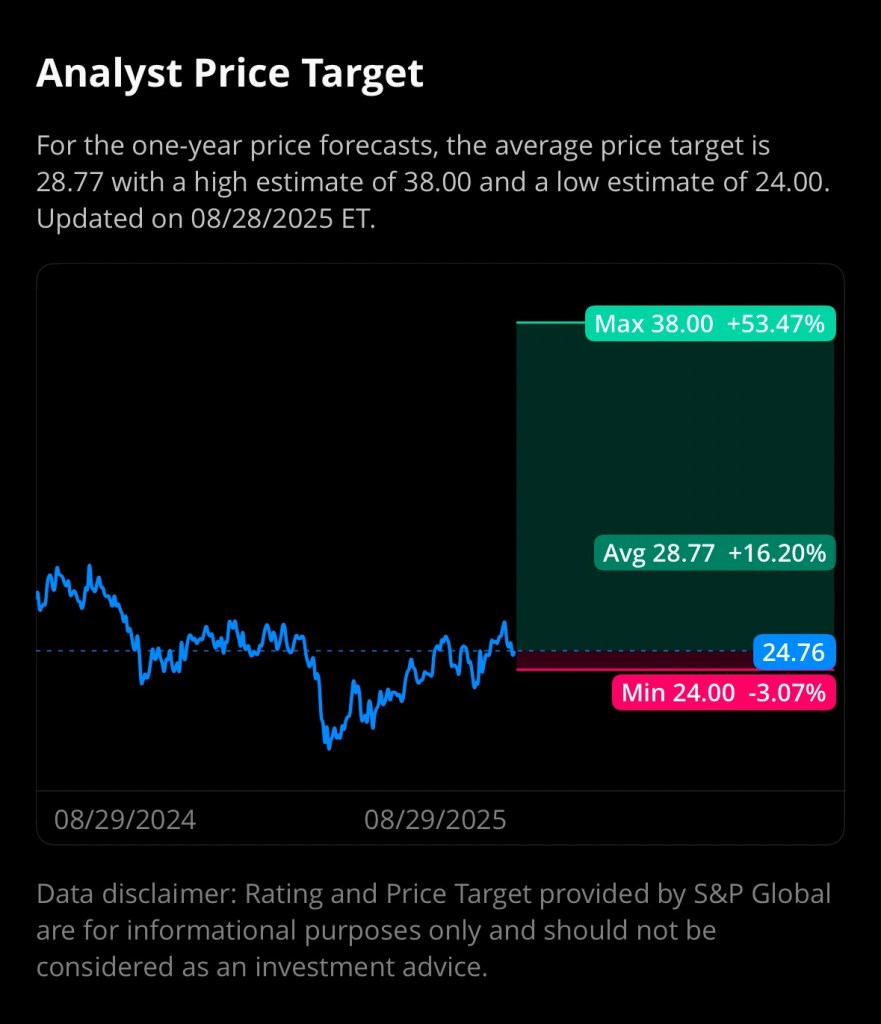
  • 12-Month View (2025–2026): Analysts see potential for modest gains, with shares trading in the $32–$38 range as the market digests lower vaccine revenues but begins to price in oncology and pipeline growth. The dividend will continue to anchor returns even if share price growth is muted.
  • 3-Year View (2027): As new oncology therapies, rare-disease drugs, and vaccine innovations mature, Pfizer could see revenue stabilize and return to growth. A reasonable target range could be $40–$48 per share, supported by mid-single-digit revenue growth and steady dividends.
  • 5-Year View (2029–2030): If Pfizer successfully integrates Seagen, brings key drugs to market, and manages upcoming patent expirations, long-term investors could see shares trading in the $50–$60 range. Dividend reinvestment along the way would enhance total returns, making Pfizer a solid long-term hold for income plus growth.

While uncertainty remains in the short term, Pfizer’s combination of a reliable dividend, undervaluation relative to peers, and a promising pipeline suggests patient investors may be rewarded over a 5-year horizon.

Disclosure: I currently hold a position in Pifzer (NASDAQ: $PFE). This article reflects my personal opinions and analysis, and is not intended as financial advice. Please conduct your own research or consult a financial advisor before making any investment decisions.

Why Apple Stock Remains a Strong Buy in 2025

Apple remains a compelling long-term investment, thanks to its robust ecosystem, accelerating AI strategy, and disciplined capital returns.


🏛️ Reliable Business Model & Ecosystem Moat

Apple now supports over 2.3 billion active devices, forming one of the most durable customer ecosystems in tech. This massive footprint reinforces high switching costs and recurring revenue streams via services like the App Store, Apple Pay, and suite of subscriptions (now over 38% of gross profit) (Forbes). Its strategy of integrating hardware, software, and services creates a differentiation moat that’s hard to replicate.


🚀 Catalysts Behind Future Growth

▪ Apple Intelligence: A Privacy-First AI Pivot

At WWDC 2025, Apple unveiled its “Apple Intelligence” initiative—20+ AI-powered features like real-time translation and email summarization designed for on-device performance and privacy. A major upgrade to Siri is expected in 2026. While it’s lagging peers in sheer AI spend, Apple is now investing aggressively and open to strategic M&A, having acquired at least seven AI startups in 2025..

▪ iPhone Refresh Cycles & Hardware Upside

Morgan Stanley projects a 12% rebound in iPhone shipments by fiscal 2026 as AI features boost upgrade demand. The favorable reception to new iPhone 16 models ahead of the holiday season supports this optimistic view (marketwatch.com).


🌍 Strategic Resilience Amid Geopolitical Risks

Apple’s architecture strategy includes over $500 billion in U.S. investment over four years—from expanding chip-making capacity to creating manufacturing academies and AI server production facilities to help offset tariff risks. At the same time, it has shifted much iPhone production for U.S. markets to India, diversifying supply chain risk away from China.


💰 Financial Strength & Shareholder Returns

Apple posted $94 billion in Q3 2025 revenue—a 10% year-over-year gain—and services revenue reached a record $27.4 billion. EPS came in above expectations, and despite $800 million+ in tariff impacts, Apple demonstrated operational resilience.

It continues to return capital aggressively, with $15.2 billion paid in dividends in 2025 and a long-term track record of dividend increases and share repurchases. Analysts expect this capital discipline to endure, offering downside protection and steady income (The Motley FoolForbes).


📉 Valuation: Discount with Upside Potential

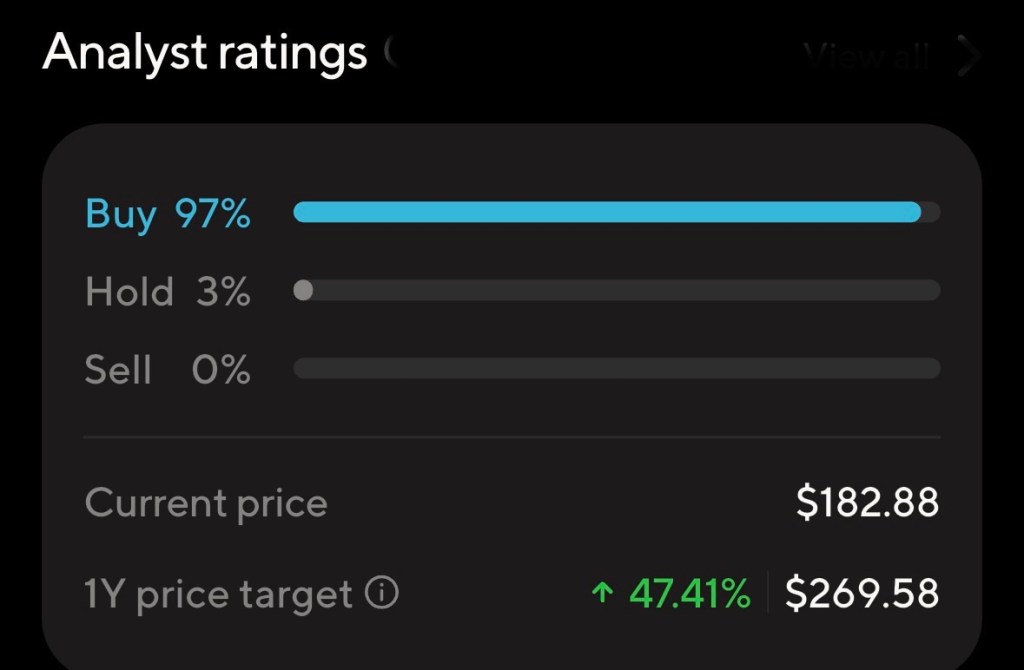
Despite its strengths, Apple is currently down roughly 20% year-to-date, underperforming other major tech names amid tariff fears, AI lags, and macro uncertainty (Business Insider). Its forward P/E sits at around 33.6×, above the S&P 500 average (~23×), making valuation relative to its growth prospects a mixed story (Forbes). Still, analysts at BofA, Goldman Sachs, Wedbush, and others issue “Buy” ratings with 12–18 month targets of $235–300, implying double-digit upside from today’s ~$200 price levels.


🧭 Risks to Watch

While Apple’s fundamentals remain solid, investors should monitor:

  • Delays or execution risk in AI deployment or acquisitions
  • Regulatory scrutiny around antitrust, App Store rules, and global expansion
  • U.S.–China relations and implications for supply chain resilience

📈 Final Verdict: Long-Term Buy, Tactical Caution

Apple’s dominant ecosystem, balanced growth from hardware and high-margin services, disciplined capital returns, and accelerated AI pivot position it as a long-term winner. While near-term volatility and tariff uncertainty add caution, the current valuation discount provides an attractive entry point for investors with a multiyear horizon.

Disclosure:

I do not own any stock or have any financial interest in Apple Inc. (NYSE: AAPL). This article is for informational purposes only and should not be considered financial or investment advice. Investing in stocks carries risks, and past performance is not indicative of future results. Always conduct your own research and consult with a qualified financial professional before making any investment decisions.

📚 References

Apple Inc. (2025, February 24). Apple will spend more than $500 billion USD in the US over the next four years. Apple Newsroom. https://www.apple.com/newsroom/2025/02/apple-will-spend-more-than-500-billion-usd-in-the-us-over-the-next-four-years/

Barrons. (2025, August 1). Apple stock has ‘significant,’ long-term opportunities. The case for buying now. Barrons. https://www.barrons.com/articles/apple-stock-ai-value-buy-6a2ee154

Business Insider. (2025, May 1). Apple is the worst-performing Mag 7 stock this year. Here’s what analysts and investors say about whether you should buy the dip. Business Insider. https://www.businessinsider.com/apple-stock-price-outlook-aapl-mag-7-buy-the-dip-2025-5

Business Insider. (2025, July 31). Apple Q3 earnings: iPhone demand, AI, and tariffs. Business Insider. https://www.businessinsider.com/apple-q3-earnings-aapl-stock-price-iphone-demand-ai-tariffs-2025-7

Cinco Días. (2025, August 1). Apple aumenta su inversión en IA y compras estratégicas. Cinco Días. https://cincodias.elpais.com/smartlife/lifestyle/2025-08-01/apple-ia-aumento-inversion-compras.html

Forbes. (2025, July 12). Where will Apple (AAPL) stock be in 5 years? Forbes. https://www.forbes.com/sites/investor-hub/article/where-will-apple-aapl-stock-be-in-5-years/

Lens LunarTech. (2025). Apple’s 2025 playbook: Navigating tariffs, expanding manufacturing, and sustaining growth. LunarTech Lens. https://lens.lunartech.ai/post/apples-2025-playbook-navigating-tariffs-expanding-manufacturing-and-sustaining-growth

MarketWatch. (2025). Apple bears have missed out on more than $1 trillion of stock gains, says this bull. MarketWatch. https://www.marketwatch.com/story/apple-bears-have-missed-out-on-more-than-1-trillion-of-stock-gains-says-this-bull-41116074

Panmore Institute. (n.d.). Apple Inc.’s generic strategy & intensive growth strategies. Panmore Institute. https://panmore.com/apple-inc-generic-strategy-intensive-growth-strategies