When it comes to protecting wealth and passing it on to loved ones, many families are discovering that a simple will may not be enough. Increasingly, individuals are turning to trusts as a more effective way to manage their assets and provide security for beneficiaries. While wills remain common, trusts offer unique advantages that make them an essential tool in modern estate planning.
A trust is a legal arrangement in which a trustee manages assets on behalf of beneficiaries. Unlike a will, which becomes public during probate, a trust can keep family financial matters private while ensuring assets are distributed according to the grantor’s wishes.
Avoiding Probate Delays and Costs One of the main reasons individuals choose a trust is to avoid probate—the court-supervised process of distributing an estate after death. Probate can take months or even years, and legal fees can significantly reduce what heirs actually receive. With a trust, assets are transferred more quickly and with fewer administrative costs.
Tax Efficiency and Asset Protection Certain types of trusts can also provide tax advantages. For high-net-worth individuals, this can mean minimizing estate taxes, while others use trusts to shield assets from creditors or lawsuits. Parents of minor children often create trusts to ensure their children’s financial needs are met in the event of an untimely death.
Control Over Distribution Unlike a will, which typically results in a lump-sum transfer of assets, a trust allows for customized distribution. For example, beneficiaries can receive funds at certain ages, in installments, or for specific purposes such as education or healthcare. This level of control provides peace of mind for those worried about heirs’ financial responsibility.
Peace of Mind for Families “Trusts aren’t just for the wealthy,” says estate planning attorney Sarah Mitchell. “They’re tools that provide structure, protection, and clarity—things every family can benefit from. For many clients, it’s about peace of mind knowing their loved ones are taken care of.”
As life expectancy increases and wealth is passed down through generations, experts predict that more families will explore trusts as part of their financial planning. Whether it’s avoiding probate, protecting assets, or ensuring responsible inheritance, trusts are becoming a cornerstone of modern estate planning.
About the Author:
David Dandaneau is a client relations analyst that covers the insurance and financial services industry. He is known for his insightful analysis and comprehensive coverage of market trends and regulatory developments.
Apple remains a compelling long-term investment, thanks to its robust ecosystem, accelerating AI strategy, and disciplined capital returns.
🏛️ Reliable Business Model & Ecosystem Moat
Apple now supports over 2.3 billion active devices, forming one of the most durable customer ecosystems in tech. This massive footprint reinforces high switching costs and recurring revenue streams via services like the App Store, Apple Pay, and suite of subscriptions (now over 38% of gross profit) (Forbes). Its strategy of integrating hardware, software, and services creates a differentiation moat that’s hard to replicate.
🚀 Catalysts Behind Future Growth
▪ Apple Intelligence: A Privacy-First AI Pivot
At WWDC 2025, Apple unveiled its “Apple Intelligence” initiative—20+ AI-powered features like real-time translation and email summarization designed for on-device performance and privacy. A major upgrade to Siri is expected in 2026. While it’s lagging peers in sheer AI spend, Apple is now investing aggressively and open to strategic M&A, having acquired at least seven AI startups in 2025..
▪ iPhone Refresh Cycles & Hardware Upside
Morgan Stanley projects a 12% rebound in iPhone shipments by fiscal 2026 as AI features boost upgrade demand. The favorable reception to new iPhone 16 models ahead of the holiday season supports this optimistic view (marketwatch.com).
🌍 Strategic Resilience Amid Geopolitical Risks
Apple’s architecture strategy includes over $500 billion in U.S. investment over four years—from expanding chip-making capacity to creating manufacturing academies and AI server production facilities to help offset tariff risks. At the same time, it has shifted much iPhone production for U.S. markets to India, diversifying supply chain risk away from China.
💰 Financial Strength & Shareholder Returns
Apple posted $94 billion in Q3 2025 revenue—a 10% year-over-year gain—and services revenue reached a record $27.4 billion. EPS came in above expectations, and despite $800 million+ in tariff impacts, Apple demonstrated operational resilience.
It continues to return capital aggressively, with $15.2 billion paid in dividends in 2025 and a long-term track record of dividend increases and share repurchases. Analysts expect this capital discipline to endure, offering downside protection and steady income (The Motley FoolForbes).
📉 Valuation: Discount with Upside Potential
Despite its strengths, Apple is currently down roughly 20% year-to-date, underperforming other major tech names amid tariff fears, AI lags, and macro uncertainty (Business Insider). Its forward P/E sits at around 33.6×, above the S&P 500 average (~23×), making valuation relative to its growth prospects a mixed story (Forbes). Still, analysts at BofA, Goldman Sachs, Wedbush, and others issue “Buy” ratings with 12–18 month targets of $235–300, implying double-digit upside from today’s ~$200 price levels.
🧭 Risks to Watch
While Apple’s fundamentals remain solid, investors should monitor:
Delays or execution risk in AI deployment or acquisitions
Regulatory scrutiny around antitrust, App Store rules, and global expansion
U.S.–China relations and implications for supply chain resilience
📈 Final Verdict: Long-Term Buy, Tactical Caution
Apple’s dominant ecosystem, balanced growth from hardware and high-margin services, disciplined capital returns, and accelerated AI pivot position it as a long-term winner. While near-term volatility and tariff uncertainty add caution, the current valuation discount provides an attractive entry point for investors with a multiyear horizon.
Disclosure:
I do not own any stock or have any financial interest in Apple Inc. (NYSE: AAPL). This article is for informational purposes only and should not be considered financial or investment advice. Investing in stocks carries risks, and past performance is not indicative of future results. Always conduct your own research and consult with a qualified financial professional before making any investment decisions.
Finding balance between work and family has been one of the biggest challenges- and greatest lessons- of my life. For a long time, I thought I could achieve some magical state where everything stayed perfectly organized and everyone’s needs were met without any hiccups. I quickly learned that life doesn’t work that way. What I’ve discovered instead is that balance is a daily choice, a constant practice, and a mindset that helps me stay grounded when life gets messy.
It starts with being honest about my priorities. I know there will always be more emails to answer, calls to return, and projects to complete. But my family only gets one version of me-and I want that version to be fully present. That’s why I carve out dedicated time on my calendar for family dinners, school events, and quiet evenings at home. I block those moments off the same way I would for an important meeting with a client because, to me, they’re just as important.
Another thing that helps is clear and open communication. I talk to my family about my work schedule, and I keep my team at work updated on my family commitments. When everyone’s on the same page, it’s easier to manage expectations and avoid unnecessary stress. I’ve learned that it’s okay to ask for help or to say “no” when my plate is too full. It doesn’t make me any less dedicated-it just makes me human.
I also try to protect small moments for myself. These pockets of time-like enjoying my morning coffee before anyone else is awake, squeezing in a quick workout, or reading a few pages of a book before bed-give me the energy to show up for both work and family. I’ve found that when I neglect my own needs, it catches up with me fast. Self-care isn’t selfish; it’s essential.
Flexibility is another big piece of the puzzle. Some days, work will demand more of my time. Other days, family emergencies or milestones take priority. Instead of getting frustrated when plans change, I remind myself that balance isn’t about splitting my time evenly every day-it’s about adjusting as life unfolds. I try to be kind to myself when things don’t go perfectly.
Finding balance will always be a moving target for me, but over time, I’ve gotten better at recognizing what works and what doesn’t. I’ve stopped trying to do it all at once. Instead, I focus on being fully present wherever I am-whether I’m leading a meeting, helping with homework, or just laughing around the dinner table.
In the end, my biggest takeaway is that balance doesn’t come from rigid rules-it comes from giving myself grace, staying flexible, and remembering what matters most. And as long as I keep showing up for both my work and my family with intention and love, I know I’m doing something right.
As temperatures rise and backyard grills fire up, summer is often synonymous with indulgent foods from ice cream cones and cheeseburgers to sugary cocktails and deep-fried fair treats. But this year, health-conscious eaters are proving that you don’t have to sacrifice flavor to stay on track with your wellness goals.
Nutritionists and chefs alike are championing simple food swaps that cut down on calories and saturated fat, boost nutrients, and still deliver the mouthwatering taste people crave during the sunny season.
Frozen Yogurt Over Ice Cream Swap out sugar-laden ice cream for creamy Greek frozen yogurt. It satisfies that sweet tooth while packing in protein and probiotics that aid digestion — a win-win after a heavy BBQ meal.
Grilled Veggies Instead of Chips Potato chips are a picnic staple, but grilled veggies like zucchini, bell peppers, and eggplant are quickly taking over summer spreads. Tossed with olive oil and herbs, they’re crisp, colorful, and bursting with flavor — minus the trans fats and sodium overload.
Turkey or Veggie Burgers in Place of Beef Summer cookouts and burgers go hand in hand, but swapping a fatty beef patty for a lean turkey or plant-based burger reduces saturated fat without skimping on the smoky taste. Pile it high with fresh greens and tomatoes for added crunch and nutrients.
Infused Water Beats Soda Sugary sodas and sweet teas can derail a healthy summer day fast. Instead, stay hydrated with naturally flavored water. Add fresh berries, cucumber slices, or mint to your pitcher — it’s refreshing, festive, and free of empty calories.
Nice Cream for Dessert Banana “nice cream” is trending for good reason: blend frozen bananas with a splash of almond milk, and you’ve got a creamy, dairy-free dessert that rivals traditional soft serve — without the sugar crash.
Fresh Fruit Kabobs Instead of Candy Summer means peak season for juicy fruits like watermelon, pineapple, and strawberries. Thread them onto skewers for colorful, fun-to-eat kabobs that beat processed sweets and satisfy a sugar craving naturally.
Whole-Wheat Buns and Wraps For those summer sandwiches and hot dogs, opt for whole-wheat buns or lettuce wraps. You’ll up your fiber intake and avoid the blood sugar spikes that come with refined white bread.
These swaps aren’t about deprivation they’re about finding creative ways to celebrate the season’s best flavors while giving your body what it needs to feel its best.
So, whether you’re hosting a backyard barbecue or packing a picnic for the beach, try one (or all) of these healthy swaps and taste how satisfying smart choices can be.
What’s your favorite healthy summer swap? Let us know in the comments!
As Americans continue to grapple with economic uncertainty, rising living costs, and increasing life expectancy, the importance of retirement planning has never been more pressing. One of the biggest debates among financial experts and everyday workers alike is this: Is it better to start saving early, or can a late start still lead to a secure retirement?
The Power of Starting Early Financial advisors almost universally agree—when it comes to retirement, time is your greatest asset. Starting in your 20s or early 30s allows compound interest to work its magic.
Take, for example, a 25-year-old who invests $300 a month in a retirement account with an average annual return of 7%. By the time they turn 65, they could accumulate nearly $725,000. On the other hand, someone who begins investing the same amount at age 40 would end up with just over $225,000 at retirement.
“Starting early doesn’t just mean you’ll have more saved—it also means you can afford to take less risk, contribute less monthly, and still enjoy financial freedom later,” says Michelle Harris, a certified financial planner in Chicago.
Early starters also have the advantage of weathering market volatility. They have decades to recover from downturns, allowing for a more aggressive, growth-oriented investment approach early on.
The Challenges—and Hope—of Starting Late Still, not everyone has the means or knowledge to begin saving in their 20s. Life events such as student debt, low-paying jobs, or unexpected medical expenses can push retirement planning to the back burner.
“If you’re starting in your 40s or even 50s, the hill is steeper, but it’s not insurmountable,” says Tony Kim, a retirement strategist based in San Diego. “The key is discipline, increased contributions, and possibly working a bit longer.”
Late starters are often advised to max out retirement accounts like 401(k)s and IRAs, take advantage of catch-up contributions (available to those 50 and older), and consider delaying Social Security benefits to increase monthly payouts.
Financial experts also emphasize the importance of budgeting, eliminating debt, and making intentional lifestyle choices to accelerate savings.
A Matter of Mindset Whether you start at 25 or 55, the most important step is simply to start. Procrastination is often the biggest enemy of retirement planning.
“Too many people think they have time or that it’s too late,” says Harris. “Both beliefs are harmful. The sooner you face your financial future, the better your options will be.”
Retirement planning is not a one-size-fits-all journey. Starting early gives investors more flexibility and freedom, but starting late doesn’t mean the game is over. With the right strategy, discipline, and mindset, it’s possible to secure a comfortable retirement at any age.
About the Author:
David Dandaneau is a insurance agent that covers the insurance and financial services industry. He is known for his insightful analysis and comprehensive coverage of market trends and regulatory developments.
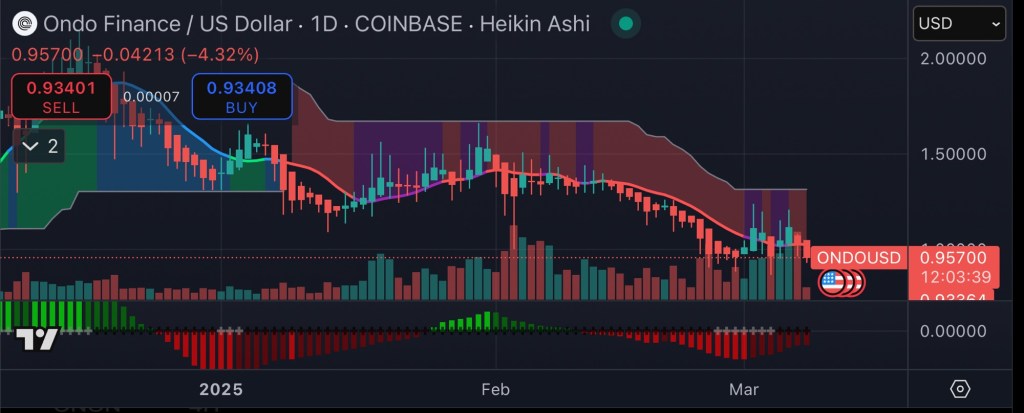
The cryptocurrency market continues to evolve, with new projects constantly emerging that aim to redefine finance. One such project making waves is ONDO Finance. This innovative platform bridges traditional finance with decentralized finance (DeFi), providing investors with unique opportunities to gain exposure to real-world assets on the blockchain.
What is ONDO Finance? ONDO Finance is a decentralized finance protocol that focuses on tokenizing traditional financial assets, such as bonds, treasury securities, and other stable investments. By leveraging blockchain technology, ONDO Finance offers transparency, security, and ease of access to investors seeking diversified income streams.
The ONDO token is the platform’s utility and governance token, allowing holders to participate in decision-making processes, earn rewards, and access exclusive investment opportunities.
Why is ONDO Finance Gaining Attention?
Real-World Asset Integration: ONDO Finance bridges traditional finance with crypto by tokenizing real-world assets. This unique model offers stability and predictable returns, attracting risk-averse investors seeking consistent yields.
Transparency and Security: Blockchain technology ensures that all transactions are recorded and verifiable, reducing fraud risk and enhancing trust among investors.
Yield Opportunities: ONDO Finance offers structured investment products designed to maximize returns, making it an attractive platform for both retail and institutional investors.
Institutional Partnerships: The project has forged partnerships with major financial institutions, reinforcing its credibility and growth potential.
DeFi Growth Potential: As DeFi continues to expand, platforms like ONDO Finance that focus on real-world asset integration are poised for strong growth.
Investment Considerations While ONDO Finance presents an exciting opportunity, potential investors should be mindful of the risks inherent to the crypto market. Market volatility, regulatory changes, and platform-specific risks should be carefully considered. Conducting thorough research and diversifying investments is crucial.
ONDO Finance is emerging as a significant player in the crypto landscape by combining traditional finance stability with blockchain innovation. For investors seeking exposure to real-world assets with the added benefits of DeFi, ONDO Finance may offer a promising avenue for growth. However, as with any investment, due diligence is key to making informed decisions.
Disclaimer: The author holds a position in ONDO Finance and this article should not be considered financial advice. Always conduct your own research before making any investment decisions.
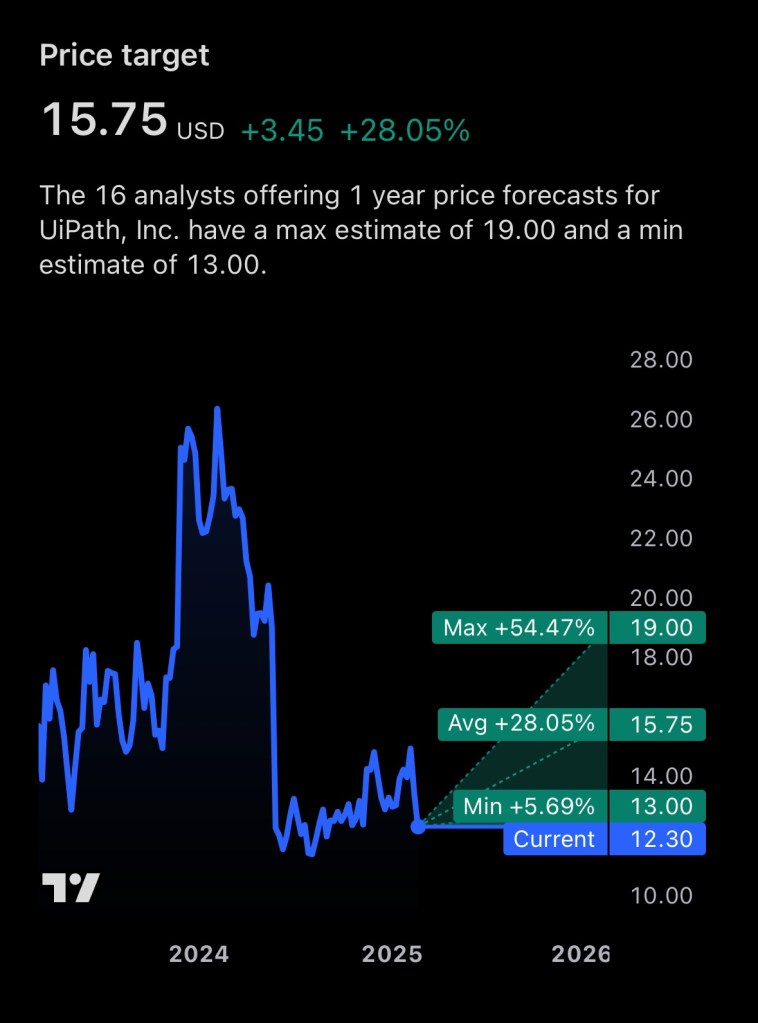
UiPath Inc. (NYSE: PATH), a leading company in robotic process automation (RPA) and artificial intelligence (AI), has recently garnered attention from investors due to its strategic advancements and market positioning.
Financial Performance and Outlook
In its fiscal second quarter, UiPath reported a 10% revenue increase to $316 million, surpassing Wall Street expectations. Adjusted earnings stood at 4 cents per share, exceeding analysts’ predictions of 3 cents per share. This performance underscores the growing demand for AI and automation technologies. The company has also approved a $500 million share buyback program, reflecting confidence in its financial health.
Despite these positive indicators, UiPath’s stock has experienced volatility. Shares fell 5% in premarket trading after the company maintained its fourth-quarter revenue forecast, leading to investor disappointment. The stock has declined approximately 40% in 2024, reflecting broader market challenges.
Strategic Positioning in AI and Automation
UiPath continues to innovate within the RPA and AI sectors. The company leverages AI to transform RPA, enabling complex automation and market growth while addressing profitability challenges. This strategic focus positions UiPath to capitalize on the increasing need for intelligent automation solutions across various industries.
Analyst Perspectives
Analysts present mixed views on UiPath’s prospects. Some highlight the company’s potential in the evolving AI landscape, while others express caution due to profitability concerns. Investors are advised to consider these diverse perspectives when evaluating UiPath’s investment potential.
UiPath’s advancements in AI and automation, coupled with its solid financial performance, position it as a noteworthy player in the technology sector. However, potential investors should remain mindful of market volatility and conduct comprehensive research before making investment decisions.
Disclosure:
I do not own any stock or have any financial interest in UiPath Inc. (NYSE: PATH). This article is for informational purposes only and should not be considered financial or investment advice. Investing in stocks carries risks, and past performance is not indicative of future results. Always conduct your own research and consult with a qualified financial professional before making any investment decisions.
Clover Health Investments Corp. (NASDAQ: $CLOV), a physician enablement company focused on improving healthcare for Medicare beneficiaries, has recently demonstrated significant growth and strategic initiatives that may appeal to investors.
Robust Membership Growth
As of January 2025, Clover Health reported a 27% increase in Medicare Advantage membership, surpassing 100,000 members. Notably, approximately 95% of these members are enrolled in the company’s flagship 4-Star Preferred Provider Organization (PPO) plan, reflecting Clover’s commitment to delivering high-quality care.
Strategic Focus on Profitability
In December 2023, Clover Health announced its decision to exit the Centers for Medicare and Medicaid Services’ (CMS) ACO REACH program. This move allows the company to concentrate resources on its core Medicare Advantage insurance business and the Clover Assistant platform, aiming to achieve profitability on an Adjusted EBITDA basis for the full year 2024.
Financial Performance and Outlook
The company’s financial trajectory shows promise, with earnings expected to improve from a loss of $0.12 per share to $0.07 per share in the coming year. Analysts have set a 12-month price target of $5.00 for Clover Health’s stock, suggesting potential upside from its current trading price of $4.46 as of February 16, 2025.
Investment Considerations
While Clover Health’s recent membership growth and strategic refocusing are positive indicators, potential investors should be mindful of market volatility. The stock has experienced fluctuations, and with a significant portion of retail ownership, there is a risk of profit-taking following earnings reports. Therefore, a cautious approach is advisable, possibly awaiting the upcoming Q4 2024 earnings release for more clarity on the company’s financial health.
Clover Health’s strategic initiatives and growth in the Medicare Advantage sector position it as a noteworthy contender in the healthcare market. However, investors should conduct thorough research and consider market dynamics before making investment decisions.
Disclosure: I currently hold a position in Clover Health Investments Corp. (NASDAQ: $CLOV). This article reflects my personal opinions and analysis, and is not intended as financial advice. Please conduct your own research or consult a financial advisor before making any investment decisions.
Advanced Micro Devices (AMD) has emerged as a formidable player in the semiconductor industry, showcasing significant growth and strategic initiatives that position it as a compelling investment opportunity.
Financial Performance and Market Position
As of January 19, 2025, AMD’s stock is trading at $121.46, reflecting a 2.54% increase from the previous close. This upward trend underscores investor confidence in AMD’s market strategies and financial health. Notably, AMD’s market valuation surpassed $300 billion in March 2024, highlighting its substantial growth trajectory.
Strategic Acquisitions and AI Expansion
AMD has made significant strides in the artificial intelligence (AI) sector through strategic acquisitions. In July 2024, the company acquired Finnish AI startup Silo AI for $665 million, aiming to enhance its AI capabilities and compete more effectively with industry leader Nvidia. Additionally, AMD’s $4.9 billion acquisition of ZT Systems in August 2024 bolstered its AI infrastructure, providing access to a team of 1,000 design engineers to strengthen its AI system designs.
Leadership and Innovation
Under the leadership of CEO Lisa Su, AMD has transformed from a struggling entity into a semiconductor powerhouse. Since she took charge in 2014, AMD’s stock price has surged from $3 to approximately $140, with the company’s market value surpassing that of Intel. Su’s strategic focus on product redesign, customer relationships, and capitalizing on the AI boom has been instrumental in this turnaround.
Analyst Perspectives
Wall Street analysts have shown optimism regarding AMD’s prospects. UBS identified AMD as a top semiconductor pick, citing its competitive pricing and performance in AI chips compared to Nvidia. Despite a 5.8% drop in shares earlier in the year, UBS analysts remain positive about AMD’s future in the AI market. However, some analysts urge caution, noting that while AMD’s AI accelerator chips show promise, the company faces challenges in closing the performance gap with Nvidia. Following announcements about AI chip revenue forecasts, AMD shares experienced a nearly 8% decline, reflecting market skepticism about its competitive positioning.
AMD’s robust financial performance, strategic acquisitions, and visionary leadership under Lisa Su position it as a strong contender in the semiconductor industry. While the company faces challenges, particularly in the competitive AI sector dominated by Nvidia, its proactive strategies and market responsiveness suggest a promising outlook for investors considering AMD as part of their portfolio.
Disclosure: I currently hold a position in Advanced Micro Devices ($AMD). This article reflects my personal opinions and analysis, and is not intended as financial advice. Please conduct your own research or consult a financial advisor before making any investment decisions.
Running a business is often portrayed as a glamorous pursuit—a life of freedom, creativity, and endless opportunity. However, beneath the surface lies a complex journey filled with triumphs and challenges that test the resilience and adaptability of entrepreneurs.
The Thrill of Success Every business owner knows the unparalleled joy of achieving a goal, whether it’s securing a major client, hitting revenue milestones, or simply surviving the first year. These wins serve as validation for the sleepless nights, financial risks, and relentless effort.
Take the example of local café owner Sarah Patel, who saw her business thrive after introducing a unique farm-to-table menu. “The response was overwhelming,” she says. “It felt like all the hard work finally paid off.” Such moments can rejuvenate an entrepreneur’s passion and motivate them to push even further.
The Pressure of Challenges But the journey is far from smooth. From navigating cash flow issues and employee turnover to adapting to market changes, business owners face a litany of obstacles. Economic downturns or unexpected global events, such as the COVID-19 pandemic, have also forced many businesses to pivot their strategies overnight.
“During the pandemic, we had to shift to online sales almost immediately,” recalls tech store owner Marcus Lee. “It was a sink-or-swim moment, and not every business had the resources to make it work.”
The Emotional Toll The mental and emotional challenges of entrepreneurship are often underestimated. Long hours, financial strain, and the pressure to succeed can lead to burnout. Studies have shown that business owners are more likely to experience anxiety and depression compared to those in traditional jobs.
Despite this, many entrepreneurs find ways to cope. Networking groups, mentorship programs, and therapy have become valuable tools for maintaining mental health and fostering resilience.
Adaptability Is Key One constant in the world of business is change. Consumer preferences, technological advancements, and market trends can shift rapidly, requiring business owners to stay agile and innovative. Those who can anticipate change and adapt quickly are often the ones who thrive.
For example, fashion retailer Mia Gonzalez shifted her business model to focus on sustainable clothing as consumer demand for eco-friendly products grew. “You have to evolve with your customers,” she explains.
The Bigger Picture For many, the ultimate reward of running a business goes beyond profits. It’s about creating something meaningful, contributing to the community, and building a legacy. These factors often keep entrepreneurs going, even when times get tough.
“Seeing how my business impacts people’s lives gives me purpose,” says John Whitaker, who runs a nonprofit consulting firm. “It’s not just about me—it’s about making a difference.”
Running a business is not for the faint of heart. It’s a journey filled with highs and lows, requiring persistence, adaptability, and an unwavering belief in one’s vision. While the road may be challenging, for those who dare to take the leap, the rewards—both tangible and intangible—can make the journey worthwhile.
For aspiring entrepreneurs, the message is clear: Be prepared for the rollercoaster, but don’t forget to enjoy the ride.















 Health to Wealth Ventures