Estimate Your Social Security Benefits Early for a Secure Retirement

Planning for retirement isn’t something that should wait until your final working years. One of the smartest steps you can take today “no matter your age” is estimating your future Social Security benefits. Understanding these numbers early helps you make more informed financial decisions, set realistic expectations, and build a roadmap toward a more secure retirement.

Why Estimating Your Benefits Early Matters

1. It Helps You Understand How Much You’ll Actually Need
Many Americans overestimate how much Social Security will provide. By checking your personalized benefit estimate now, you can see whether your projected income will cover your essential expenses—and how much more you may need to save.

2. You Can Adjust Your Savings Strategy Ahead of Time
If your estimated monthly benefit is lower than expected, learning this early gives you years—even decades—to increase your contributions to a 401(k), IRA, or other retirement vehicles.

3. It Highlights the Value of Working Longer
Your Social Security payout is based on your highest 35 years of earnings. Seeing your estimate can motivate you to improve your earnings record or reduce low-income years, increasing your benefit when retirement finally comes.

4. Claiming Age Makes a Huge Difference
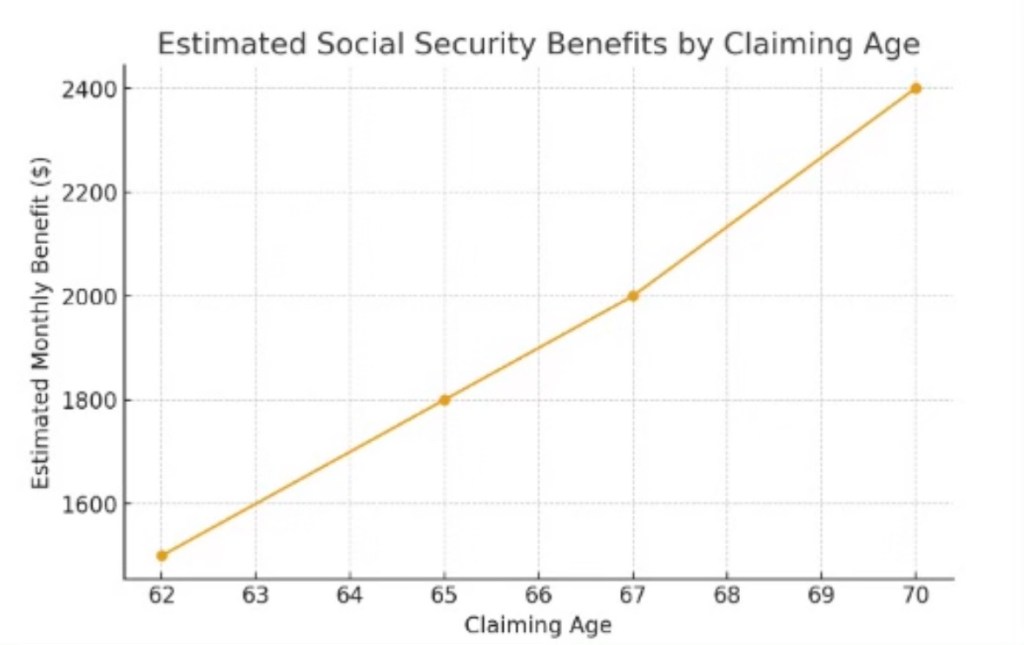
Whether you claim at 62, 67, or 70 dramatically changes your monthly income. Understanding this now helps you plan the right claiming strategy for your lifestyle and goals.


Estimated Social Security Benefits by Claiming Age

Below is a chart illustrating how estimated monthly benefits generally increase the longer you delay claiming:


How to Estimate Your Benefits Today

You can access your personalized estimate at any age by creating or logging into your mySocialSecurity account at SSA.gov. Once inside, you’ll see:

  • Your projected monthly benefit at age 62
  • Your full retirement age (typically 67)
  • Your estimated benefit at age 70
  • Your complete earnings record

Taking a few minutes to review this information now can help you avoid surprises later and give you the confidence to build a stronger retirement strategy.

About the Author:

David Dandaneau is a client relations analyst that covers the insurance and financial services industry. He is known for his insightful analysis and comprehensive coverage of market trends and regulatory developments.

Younger Boomers Bring a “Life-by-App” Mindset Into Retirement — And It’s Reshaping the Longevity Economy

Technology is becoming inseparable from daily life, as one generation is quietly redefining what it means to age: younger Baby Boomers. Born in the late 1950s to mid-1960s, this group spent the peak of their careers adapting to the rise of digital tools, mobile devices, automated systems, and internet-driven workplaces. Now, as they transition into retirement, they’re carrying those habits forward — and in doing so, they’re reshaping the broader longevity economy.

From Typewriters to Touchscreens: A Generation That Adapted

Unlike older Boomers who spent most of their careers in analog environments, younger Boomers navigated a unique technological evolution. They learned to send their first emails midway through their careers, adopted smartphones while still raising families, and saw entire industries digitize around them.

That exposure created a distinct comfort level with digital convenience — a “life-by-app” approach that now defines how they plan, save, spend, and even socialize during retirement.

How Younger Boomers Are Using Technology to Their Advantage

1. Financial Planning Goes Digital
Younger Boomers are more likely than previous generations to use:

  • Investment and retirement apps
  • Automated budgeting tools
  • Online banking
  • Robo-advisor platforms for risk-managed portfolios

This not only makes retirement planning more accessible but also gives them real-time insights that older retirees rarely had.

2. Healthcare from a Screen
Telehealth visits, wearable health trackers, and medication-management apps are becoming standard tools. Younger Boomers embrace these resources to stay proactive about their health and remain independent longer.

3. Social Connectivity Without Borders
Younger Boomers maintain friendships and family relationships through video calls, social media, and messaging apps — reducing isolation and supporting emotional well-being, especially as they age.

4. Flexible Working in Retirement Years
Many within this group are exploring partial retirement through gig work, consulting, and remote job platforms. Technology allows them to earn supplemental income on their own terms.

The Contrast: Older Boomers and Minimal-Tech Retirement

Older Boomers — those born in the late 1940s to mid-1950s — often approach retirement differently. Many prefer:

  • In-person banking over mobile banking
  • Physical mail over digital statements
  • Human financial advisors over algorithm-driven ones
  • Paper calendars and appointment books
  • Face-to-face healthcare visits

This doesn’t mean they reject technology entirely, but they generally use it as a tool of convenience rather than a lifestyle backbone.

A Growing Generational Technology Gap

This difference isn’t about willingness — it’s about familiarity. Younger Boomers spent decades experiencing technology woven into their work. Older Boomers did not. As a result, younger Boomers:

  • Adopt new tools faster
  • Feel more confident with apps and automation
  • Expect digital customer service
  • Research and make decisions online

This gap is reshaping industries as companies redesign services for a more tech-ready retiree population.

Impact on the Longevity Economy

The longevity economy — the economic activity driven by people aged 50+ — is now valued at trillions. Younger Boomers are accelerating its growth in three major ways:

1. Increased Demand for Digital-Friendly Services
From virtual healthcare to AI-powered retirement tools, industries are rapidly building platforms with older users in mind.

2. Growth of Smart Home and Independent Living Tech
Devices like smart thermostats, automated lighting, fall-detection sensors, and home assistants are booming as younger Boomers look for safe, self-sufficient living.

3. New Expectations for Customer Experience
Retirement planning firms, healthcare providers, retailers, and insurance companies are being forced to modernize their systems or risk losing loyal customers.

Looking Ahead: Retirement Will Never Look the Same

As younger Boomers continue to enter retirement with smartphones in hand and digital habits intact, they are quietly transforming what aging means in America. Their comfort with technology is enabling longer independence, more financial empowerment, and more flexible lifestyles.

The narrative is shifting: retirement is no longer about slowing down — it’s about staying connected, informed, and in control.

And for the generations that follow, this “life-by-app” legacy will likely become the new norm.

Top Retirement Mistakes and How to Avoid Them

As more Americans approach retirement, many are finding that the path to a secure and fulfilling post-work life is more complex than they expected. While saving money is an important first step, a successful retirement hinges on avoiding common pitfalls that can derail even the most carefully built plans. Here are some of the most frequent retirement traps—and smarter strategies to consider instead.


Trap 1: Relying Too Heavily on Social Security

Many retirees assume Social Security will replace most of their income, only to discover their benefits cover far less than expected. With the average monthly benefit hovering around modest levels, relying on Social Security alone can put retirees at risk of falling behind rising costs of living and healthcare expenses.

A smarter alternative:
Build a layered income plan that includes Social Security, retirement accounts like 401(k)s or IRAs, pensions (if available), and supplemental income sources. Consider part-time work or consulting if feasible. The key is diversifying your income streams so one isn’t carrying the entire load.


Trap 2: Underestimating Healthcare Costs

Healthcare is one of the biggest retirement expenses, and Medicare doesn’t cover everything. Many retirees are shocked by premiums, deductibles, dental costs, and long-term care needs.

A smarter alternative:
Plan early. Look into long-term care insurance or hybrid life-insurance policies with LTC riders. Create a dedicated healthcare fund within your retirement savings. And don’t overlook supplemental Medicare plans that can greatly reduce out-of-pocket expenses.


Trap 3: Cashing Out Retirement Accounts Too Early

Taking large withdrawals early in retirement—especially before age 59½—can trigger steep taxes and penalties, diminishing your long-term nest egg. Even after that age, withdrawing too aggressively can make savings run out sooner than expected.

A smarter alternative:
Use a structured withdrawal plan, such as the 4% rule or dynamic withdrawal strategies that adjust based on market performance. Pair withdrawals with tax-efficient strategies like Roth conversions before RMD age to reduce future tax burdens.


Trap 4: Failing to Account for Inflation

Inflation has made a fierce comeback in recent years. Retirees with fixed incomes or overly conservative portfolios risk losing purchasing power over time.

A smarter alternative:
Include growth investments—like diversified stock funds—even in retirement, to stay ahead of inflation. Treasury Inflation-Protected Securities (TIPS) and annuities that offer inflation adjustments can also provide peace of mind.


Trap 5: Overlooking Housing Costs

Many retirees assume their housing expenses will drop once the mortgage is gone, but property taxes, insurance, and maintenance continue—and often increase.

A smarter alternative:
Evaluate your housing situation realistically. Downsizing, relocating to a lower-cost area, or exploring 55+ communities may reduce expenses. Some retirees also use a portion of home equity strategically through downsizing or a Home Equity Conversion Mortgage (HECM) as part of their financial plan.


Trap 6: Not Preparing Emotionally for Retirement

Retirement isn’t just a financial transition—it’s a lifestyle change. Without structure, purpose, or social engagement, many retirees face loneliness, boredom, or even depression.

A smarter alternative:
Design your retirement life as intentionally as your financial strategy. Volunteer, join clubs, take classes, or explore part-time work in a field you enjoy. Staying mentally and socially active is essential for long-term well-being.


Smart Alternatives for Soon-to-Be and Current Retirees

Beyond avoiding traps, here are simple, proactive steps that make retirement more stable and satisfying:

  • Create a retirement income roadmap that outlines exactly where your money will come from and how long it should last.
  • Meet with a financial professional to stress-test your plan against inflation, market downturns, and health surprises.
  • Diversify income, including predictable sources like annuities, rental income, dividends, or guaranteed pension payouts.
  • Stay flexible—your retirement plan should evolve as life, health, and markets change.
  • Review your insurance coverage, including life, home, auto, and long-term care, to ensure you’re protected.
  • Stay active and engaged, both socially and physically, to support overall happiness and health.

Long and Short

Retirement doesn’t have to be uncertain. By steering clear of common traps and embracing a well-rounded financial and lifestyle strategy, retirees can build a future that’s not only secure—but rewarding. With thoughtful planning and the right support, this next chapter can be the best one yet.

About the Author:

David Dandaneau is a client relations analyst that covers the insurance and financial services industry. He is known for his insightful analysis and comprehensive coverage of market trends and regulatory developments.

Navigating Major Life Transitions with Confidence

Life is full of transitions—whether it’s buying your first home, changing careers, starting a family, or preparing for retirement. While these moments bring opportunity and excitement, they can also create uncertainty and stress. The good news: with proactive planning and professional guidance, individuals can navigate these turning points with greater confidence and clarity.

“Transitions can feel overwhelming because they often involve financial, emotional, and lifestyle changes all at once,” says certified financial planner Jenna Morales. “Having a plan and a professional partner to guide you helps you make informed decisions rather than emotional ones.”

The Power of Planning Ahead

Proactive planning means thinking ahead—mapping out potential outcomes and creating strategies that align with your long-term goals. It’s not about predicting the future but preparing for it. Whether you’re moving to a new city, managing an inheritance, or downsizing in retirement, foresight helps reduce risk and stress.

Professional advisors, from financial planners to insurance agents and career coaches, can offer valuable expertise to help identify blind spots and opportunities. They can also act as objective voices when emotions run high, ensuring you stay focused on your priorities.


Top Tips for Navigating Major Life Transitions

  1. Start Early: Begin planning before the change happens. The earlier you prepare, the more control you’ll have over your options.
  2. Clarify Your Goals: Define what success looks like for you—financially, emotionally, and personally.
  3. Seek Professional Advice: Don’t go it alone. Certified experts can provide insights and structure your plan for maximum benefit.
  4. Review Your Insurance and Finances: Major changes often affect your coverage needs and cash flow. Make sure your policies and budget reflect your new circumstances.
  5. Build a Safety Net: Set aside emergency savings to cushion unexpected costs during transitions.
  6. Stay Organized: Keep key documents—such as wills, policies, and financial records—accessible and updated.
  7. Adjust as You Go: Life plans are not one-size-fits-all. Revisit and revise your strategy regularly as your needs evolve.
  8. Focus on Mental Well-Being: Change can be stressful. Prioritize self-care and seek support when needed.

Moving Forward with Confidence

While no one can avoid life’s major transitions, being proactive and seeking professional guidance can transform uncertainty into opportunity. It’s about taking control of what you can—and having trusted experts help you navigate what you can’t.

“Confidence comes from preparation,” Morales adds. “When you plan ahead and surround yourself with knowledgeable support, you move forward not with fear—but with clarity.”

“At the Trough” — Why Webull Corporation (NASDAQ: BULL) Might Be Worth a Fresh Look

TAMPA – October 21, 2025 — The brokerage and trading-platform firm Webull Corporation (ticker BULL) finds itself trading near multi-year lows. For value-oriented investors, that raises a classic question: Is this a moment of opportunity, or a warning that things are worse than they appear?

Here’s what investors need to know:


1. The Case For: Potential Upside From a Low Base

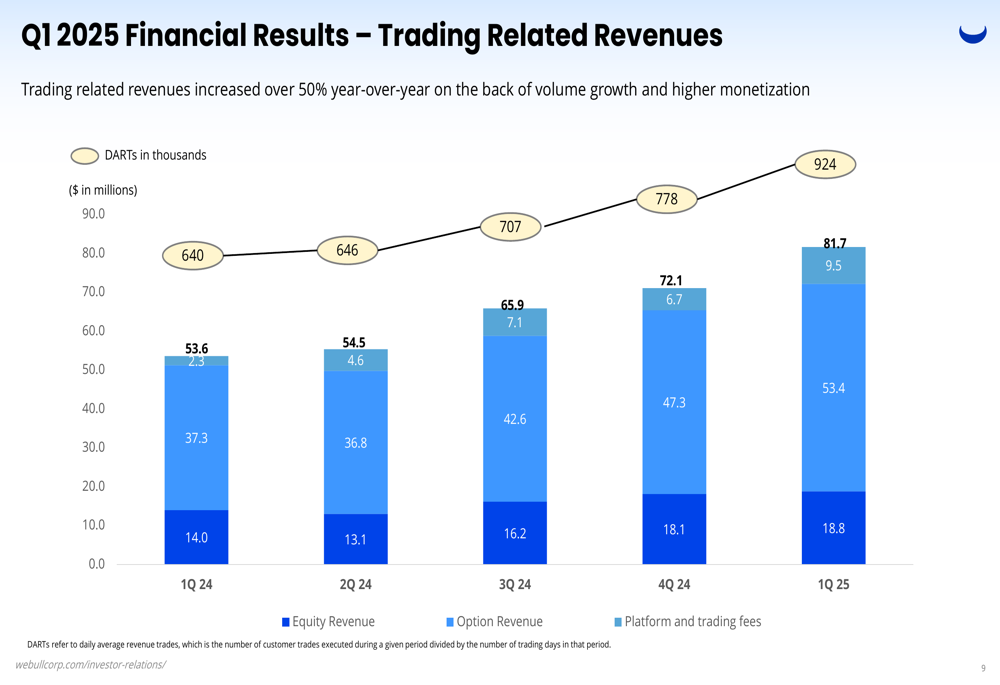
  • Webull reported strong top-line growth in recent quarters. In Q1 2025, revenues rose by 32 % year-over-year to about US$117 million, and the company swung from a loss to a net income of around US$12.9 million. (PR Newswire+2StockAnalysis+2)
  • In Q2 2025, revenue came in at roughly US$131.5 million, up ~46 % vs Q2 2024 (~US$90.1 million) — showing accelerating growth in that period. (Investing.com+2WallStreetZen+2)
  • The stock has already fallen steeply from its earlier highs. Some market commentary suggests that when a stock has dropped hard, it might set up for a rebound if fundamentals improve. (Value The Markets+1)
  • Webull’s business model—zero-commission trading, fractional shares, global expansion—remains relevant in the growing world of retail finance and digital investing. Supportive structural tailwinds could help long-term. For example, the company claims global reach and a broad user base. (AInvest+1)

2. The Case Against: Key Risks That Still Loom

  • While revenue is growing, the annual full-year revenue for 2024 was essentially flat compared to 2023 (~US$390.2 million in both years) — indicating growth isn’t guaranteed or smooth. (WallStreetZen+1)
  • Profitability remains a concern: Return on equity and profit margins are weak or negative in many recent periods. (Simply Wall St+1)
  • The company competes in a crowded sector (digital brokerages, fintech platforms) with strong incumbents like Robinhood Markets. Analysts have flagged slower growth vs bigger rivals. (Webull+1)
  • There are corporate-structure complexities and lock-up/share dilution risks. A financial-news piece noted that if the stock trades above US$12 for 20 days, up to 25 % of locked shares might be released, potentially expanding supply. (Money Morning)

3. Why “At All-Time Lows” Could Be a Turning Point

Many stocks trade at depressed levels because the market has lost confidence. That creates a scenario where:

  • The “bad news” may be largely baked into the price, so incremental positive surprises can have outsized impact.
  • A low base offers more upside potential if things go well (i.e., less downside cushion).
    For Webull, if growth continues and profitability improves, the market could reward the turnaround possibility. On the flip side, if risks intensify, the low price could still go lower.

4. What to Monitor Going Forward

Investors considering Webull should keep a close eye on:

  • Upcoming quarterly results: Are revenues continuing to grow at high rates? Are expenses under control?
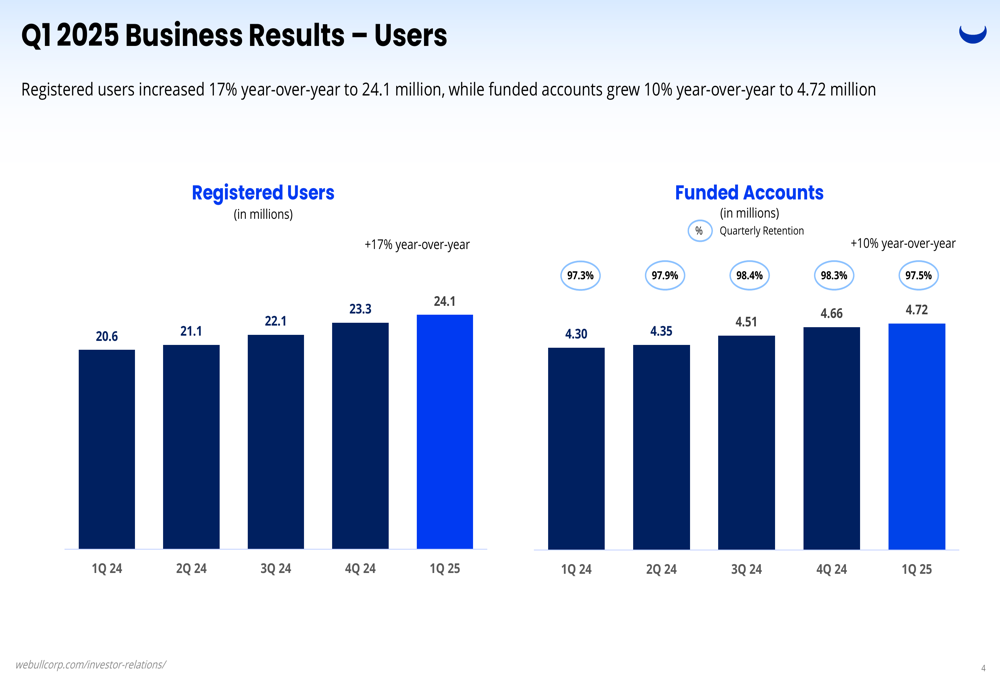
  • Account growth and trading volume: How many active/funded accounts? What is customer asset growth?
  • Profit margins and net income: Are they trending toward consistent profitability?
  • Share-count / dilution risk: Are there significant new shares coming? Are previously locked shares being released?
  • Competitive dynamics and regulatory risks: Any new regulatory headwinds? How is Webull distinguishing itself vs other brokers?

5. Summary: A High-Risk, High-Potential Setup

In short: Webull is not a safe, boring investment. It carries meaningful operational and structural risk. But the combination of decent recent growth, a depressed share price, and a business model aligned with retail investing trends makes it plausible that at these levels, the upside could be interesting if things go right.

For investors comfortable with risk and looking for speculative exposure in the fintech/brokerage space, BULL might offer a worthwhile “bet.” For more conservative investors, the uncertainty may be too large.

Before investing, one should do their own due diligence, weigh risk vs reward carefully, and consider how this fits into an overall portfolio.


https://content.stockstotrade.com/wp-content/uploads/2025/10/watermarked_BULL_2025-10-10T14-05-scaled.png
https://csv-storage.forexpros.com/slides/ddc6db61fc7fc26d73488dab0804c906c7608c6f44146b9c7b259e50f98c47a1.png
https://csv-storage.forexpros.com/slides/dd5e6af6d041cd8914e7ac5f888864b9d9ff042c7f3bad9d0e458507b3c5eab2.png

Above: Representative charts showing (1) share-price path of Webull (BULL), (2) recent revenue growth, (3) user growth/expansion metrics.


Disclaimer

This is not financial advice. The information above is for educational and informational purposes only. Investing involves risks, including loss of principal. Always consult a qualified financial advisor regarding your specific situation.

References

AINVEST. (2025, April 20). Webull stock: 2 reasons to buy, 4 reasons to sell. AINVEST.com. https://www.ainvest.com/news/webull-stock-2-reasons-buy-4-reasons-sell-2504-63/

Investing.com. (2025, August 8). Webull Q2 2025 slides: Revenue jumps 46%, achieves third profitable quarter. Investing.com. https://www.investing.com/news/company-news/webull-q2-2025-slides-revenue-jumps-46-achieves-third-profitable-quarter-93CH-4215463

Money Morning. (2025, April 14). Warning: Read this before you buy Webull (BULL) stock. MoneyMorning.com. https://moneymorning.com/2025/04/14/warning-read-this-before-you-buy-webull-bull-stock/

PR Newswire. (2025, May 13). Webull reports first quarter 2025 financial results. PR Newswire. https://www.prnewswire.com/news-releases/webull-reports-first-quarter-2025-financial-results-302463555.html

Simply Wall St. (2025). Webull Corporation (NASDAQ: BULL) past performance and analysis. SimplyWall.st. https://simplywall.st/stocks/us/diversified-financials/nasdaq-bull/webull/past

Value The Markets. (2025, June 30). Webull Corporation stock (BULL): Is it a buy at these levels? ValueTheMarkets.com. https://www.valuethemarkets.com/analysis/webull-corporation-stock-bull

WallStreetZen. (2025). Webull (BULL) revenue 2023–2025. WallStreetZen.com. https://www.wallstreetzen.com/stocks/us/nasdaq/bull/revenue

Webull. (2025, July 22). Webull news update: Market and company overview. Webull.com. https://www.webull.com/news/12711197501137920

Being a Caregiver: Supporting Others While Remembering to Care for Yourself

Being a caregiver is often described as one of the most selfless roles a person can take on. Whether caring for an aging parent, a child with special needs, or a loved one facing illness, caregivers provide daily support, patience, and compassion that are nothing short of extraordinary. But while they devote themselves to others, many caregivers struggle to prioritize their own well-being.

According to recent studies, caregivers are more likely to experience stress, fatigue, and health challenges due to the demands of their responsibilities. Experts agree that while the focus is naturally on the person receiving care, it’s just as important to provide resources and relief for those who give it.

So where can caregivers turn when it’s time to think about their own needs? The answer lies in small but meaningful acts of support from the community. If you know a caregiver who may need a helping hand, here are some simple yet effective ways you can make a difference:

  • Offer Practical Help – Everyday tasks like grocery shopping, meal prep, or running errands can be a heavy burden. Volunteering your time for these chores can give caregivers much-needed breathing room.
  • Be a Listening Ear – Sometimes, what a caregiver needs most is someone to talk to. Offering compassion and a safe space to share can ease feelings of isolation.
  • Encourage Self-Care – Remind caregivers that their health matters, too. Encourage them to rest, exercise, or take short breaks without guilt.
  • Connect Them to Resources – Local support groups, respite care services, and online communities can provide additional help and understanding.

“Caregivers are the backbone of our communities, but they can’t pour from an empty cup,” said one local health advocate. “Showing kindness and offering support ensures that they, too, have the strength to continue their vital role.”

Being a caregiver is about love and responsibility—but it should never mean going it alone. By recognizing the challenges caregivers face and stepping in with support, friends, neighbors, and family members can play a key role in making their journey a little lighter.

What Sundays Mean to Me: A Day of Rest, Reflection, and Renewal

For many, Sunday is more than just another square on the calendar—it’s a reset button, a pause, and a chance to breathe before the week ahead. For me, Sundays hold a deeper significance. They represent balance: the space between productivity and rest, routine and spontaneity, silence and connection.

Sundays often begin slower than the rest of the week. The alarm clock stays quiet, and the world outside seems to move at a gentler pace. “Sunday clears away the rust of the whole week,” wrote Joseph Addison, and I couldn’t agree more. It’s a time to shake off the weight of deadlines, appointments, and responsibilities, even if only for a few hours.

For some, Sundays carry spiritual importance. Whether it’s attending a church service, practicing meditation, or simply reflecting on life, Sunday encourages grounding. As Mahatma Gandhi once said, “There is more to life than increasing its speed.” Sundays remind me of that truth.

It’s also a day for simple joys: a family meal, a walk in the park, catching up on reading, or even just sitting quietly with a cup of coffee. In those small rituals, I find peace. Henry Wadsworth Longfellow described it best: “Sunday is the golden clasp that binds together the volume of the week.”

But Sundays aren’t only about slowing down—they’re also about preparation. They give me space to plan, to envision what’s ahead, and to step into Monday with clarity rather than chaos. In that way, Sunday serves as both an ending and a beginning.

Ultimately, Sundays mean presence. They remind me that life isn’t just about moving forward; it’s also about standing still, appreciating where I am, and finding gratitude for the moment I’m in.

Why More Families Are Turning to Trusts to Protect Their Assets

When it comes to protecting wealth and passing it on to loved ones, many families are discovering that a simple will may not be enough. Increasingly, individuals are turning to trusts as a more effective way to manage their assets and provide security for beneficiaries. While wills remain common, trusts offer unique advantages that make them an essential tool in modern estate planning.

A trust is a legal arrangement in which a trustee manages assets on behalf of beneficiaries. Unlike a will, which becomes public during probate, a trust can keep family financial matters private while ensuring assets are distributed according to the grantor’s wishes.

Avoiding Probate Delays and Costs
One of the main reasons individuals choose a trust is to avoid probate—the court-supervised process of distributing an estate after death. Probate can take months or even years, and legal fees can significantly reduce what heirs actually receive. With a trust, assets are transferred more quickly and with fewer administrative costs.

Tax Efficiency and Asset Protection
Certain types of trusts can also provide tax advantages. For high-net-worth individuals, this can mean minimizing estate taxes, while others use trusts to shield assets from creditors or lawsuits. Parents of minor children often create trusts to ensure their children’s financial needs are met in the event of an untimely death.

Control Over Distribution
Unlike a will, which typically results in a lump-sum transfer of assets, a trust allows for customized distribution. For example, beneficiaries can receive funds at certain ages, in installments, or for specific purposes such as education or healthcare. This level of control provides peace of mind for those worried about heirs’ financial responsibility.

Peace of Mind for Families
“Trusts aren’t just for the wealthy,” says estate planning attorney Sarah Mitchell. “They’re tools that provide structure, protection, and clarity—things every family can benefit from. For many clients, it’s about peace of mind knowing their loved ones are taken care of.”

As life expectancy increases and wealth is passed down through generations, experts predict that more families will explore trusts as part of their financial planning. Whether it’s avoiding probate, protecting assets, or ensuring responsible inheritance, trusts are becoming a cornerstone of modern estate planning.

About the Author:

David Dandaneau is a client relations analyst that covers the insurance and financial services industry. He is known for his insightful analysis and comprehensive coverage of market trends and regulatory developments.

Retirement Planning: Starting Early vs. Starting Late – The Financial Fork in the Road

As Americans continue to grapple with economic uncertainty, rising living costs, and increasing life expectancy, the importance of retirement planning has never been more pressing. One of the biggest debates among financial experts and everyday workers alike is this: Is it better to start saving early, or can a late start still lead to a secure retirement?

The Power of Starting Early
Financial advisors almost universally agree—when it comes to retirement, time is your greatest asset. Starting in your 20s or early 30s allows compound interest to work its magic.

Take, for example, a 25-year-old who invests $300 a month in a retirement account with an average annual return of 7%. By the time they turn 65, they could accumulate nearly $725,000. On the other hand, someone who begins investing the same amount at age 40 would end up with just over $225,000 at retirement.

“Starting early doesn’t just mean you’ll have more saved—it also means you can afford to take less risk, contribute less monthly, and still enjoy financial freedom later,” says Michelle Harris, a certified financial planner in Chicago.

Early starters also have the advantage of weathering market volatility. They have decades to recover from downturns, allowing for a more aggressive, growth-oriented investment approach early on.

The Challenges—and Hope—of Starting Late
Still, not everyone has the means or knowledge to begin saving in their 20s. Life events such as student debt, low-paying jobs, or unexpected medical expenses can push retirement planning to the back burner.

“If you’re starting in your 40s or even 50s, the hill is steeper, but it’s not insurmountable,” says Tony Kim, a retirement strategist based in San Diego. “The key is discipline, increased contributions, and possibly working a bit longer.”

Late starters are often advised to max out retirement accounts like 401(k)s and IRAs, take advantage of catch-up contributions (available to those 50 and older), and consider delaying Social Security benefits to increase monthly payouts.

Financial experts also emphasize the importance of budgeting, eliminating debt, and making intentional lifestyle choices to accelerate savings.

A Matter of Mindset
Whether you start at 25 or 55, the most important step is simply to start. Procrastination is often the biggest enemy of retirement planning.

“Too many people think they have time or that it’s too late,” says Harris. “Both beliefs are harmful. The sooner you face your financial future, the better your options will be.”


Retirement planning is not a one-size-fits-all journey. Starting early gives investors more flexibility and freedom, but starting late doesn’t mean the game is over. With the right strategy, discipline, and mindset, it’s possible to secure a comfortable retirement at any age.

About the Author:

David Dandaneau is a insurance agent that covers the insurance and financial services industry. He is known for his insightful analysis and comprehensive coverage of market trends and regulatory developments.

Maximizing Retirement Planning: Choosing Between Roth IRAs and Annuities

Roth IRAs and annuities are two popular financial vehicles, each offering unique advantages and considerations for retirement planning, Understanding the differences between these two options is crucial for anyone looking to secure their financial future. This article will explore the key distinctions between Roth IRAs and annuities, helping you make an informed decision.

Roth IRA: Tax-Free Growth with Flexibility
A Roth IRA (Individual Retirement Account) is a retirement savings account that allows individuals to contribute after-tax dollars. The primary advantage of a Roth IRA is that withdrawals during retirement are tax-free, provided certain conditions are met.

Key Features of Roth IRAs:
Tax-Free Withdrawals:
Contributions to a Roth IRA are made with after-tax dollars, meaning you don’t get a tax deduction upfront. However, the significant advantage is that both the contributions and the earnings can be withdrawn tax-free during retirement, provided the account has been open for at least five years and the account holder is at least 59½ years old.

Contribution Limits: For 2024, the maximum contribution limit for a Roth IRA is $6,500, or $7,500 for individuals aged 50 and older. However, these limits are subject to income thresholds. High-income earners may have reduced contribution limits or may not be eligible to contribute directly to a Roth IRA.

Investment Flexibility: Roth IRAs offer a wide range of investment options, including stocks, bonds, mutual funds, ETFs, and more. This flexibility allows account holders to tailor their investment strategy to their risk tolerance and retirement goals.

No Required Minimum Distributions (RMDs): Unlike traditional IRAs, Roth IRAs do not have required minimum distributions (RMDs) during the account holder’s lifetime. This means you can let your money grow tax-free for as long as you like, making Roth IRAs an excellent tool for wealth transfer.

Annuities: Guaranteed Income with Stability
Annuities are financial products offered by insurance companies that provide a guaranteed income stream, typically for life. They are often used to supplement other retirement income sources, such as Social Security or a pension.

Key Features of Annuities:
Guaranteed Income:
One of the most attractive features of annuities is the promise of a guaranteed income stream. Depending on the type of annuity, this income can last for a specific period or for the rest of your life. This can provide a sense of financial security, knowing you have a steady income regardless of market fluctuations.

Tax-Deferred Growth: Annuities offer tax-deferred growth, meaning you don’t pay taxes on the earnings until you start receiving payments. This feature allows your investment to grow more quickly since the money that would have gone to taxes remains invested.

Variety of Options: There are several types of annuities, including fixed, variable, and indexed annuities, each with different risk levels and potential returns. Fixed annuities offer a guaranteed rate of return, while variable annuities’ returns depend on the performance of the underlying investments. Indexed annuities offer returns based on a stock market index while providing some downside protection.

Fees and Costs: Annuities can be complex and often come with various fees, including administrative fees, mortality and expense risk charges, and investment management fees. These costs can reduce the overall return on your investment, so it’s essential to understand the fee structure before purchasing an annuity.

Roth IRA vs. Annuities: Which Is Right for You?
Choosing between a Roth IRA and an annuity depends on your financial goals, risk tolerance, and retirement strategy.

If you prioritize tax-free growth and flexibility, a Roth IRA might be the better option. It offers investment freedom, no RMDs, and the potential for significant tax savings during retirement.

If you value guaranteed income and financial stability, an annuity could be more suitable. Annuities provide a predictable income stream, making them an attractive option for those concerned about outliving their savings or needing a steady income regardless of market conditions.


Both Roth IRAs and annuities have their distinct advantages, and in many cases, they can complement each other within a well-rounded retirement plan. While a Roth IRA offers tax-free growth and flexibility, an annuity provides guaranteed income and stability. Consulting with a financial advisor can help you determine the best approach for your specific situation, ensuring a secure and comfortable retirement. If you need help deciding on what investment vehicle is right for you give me a call, shoot me an email, or comment below and we can discuss your options.

About the Author:

David Dandaneau is a insurance agent that covers the insurance and financial services industry. He is known for his insightful analysis and comprehensive coverage of market trends and regulatory developments.