Labor Day: A Time for Reflection and Preparing for Fall

As the sun rises on another Labor Day weekend, I can’t help but reflect on what this holiday really means to me. For most, it’s barbecues, beach trips, or one last long weekend before fall routines take over. But for me, Labor Day always feels like a bookmark—closing one chapter and opening another.

Summer has its own rhythm. The long days, the warmth, the freedom to move at a slower pace. Whether it’s evenings spent outside, family get-togethers, or just the simple joy of not having to rush through life, summer always seems to remind us that there’s more to living than just schedules and obligations.

Labor Day weekend, though, comes with a quiet shift. You feel it in the air—cooler mornings, earlier sunsets, a subtle reminder that fall is just around the corner. It’s not sad, exactly, but it does feel like the end of something special. Almost like the universe nudging us to reset, regroup, and get ready for what’s next.

For me, this weekend is less about mourning summer and more about appreciating it. I think about the memories made, the laughs shared, and the little adventures tucked in between ordinary days. Then I start looking forward to what fall brings: a new sense of focus, cooler weather, football season, and maybe even the motivation to chase down goals I let simmer over the summer months.

Labor Day is a reminder that every season has its purpose. Summer is about energy and freedom; fall is about discipline and progress. The balance between the two keeps life moving in the right direction. And so, while I say goodbye to summer with a smile, I also say hello to what’s next—with the same optimism that every new season deserves.

Pfizer’s Dividend Strengthens Case for Long-Term Investors

Pfizer Inc. ($PFE), one of the world’s largest pharmaceutical companies, continues to make a strong case for long-term investors seeking both stability and income. While the stock has faced recent volatility due to a decline in COVID-19 vaccine sales, its solid fundamentals, diversified pipeline, and consistent dividend payouts remain key reasons why investors may want to hold shares for the long haul.

Pfizer currently offers an attractive dividend yield—well above the S&P 500 average—making it a compelling choice for income-focused portfolios. The company has a long track record of reliable dividend payments and has shown commitment to rewarding shareholders even during periods of industry and market uncertainty. With a payout ratio supported by its robust cash flow, Pfizer’s dividend looks sustainable in the years ahead.

Beyond dividends, Pfizer’s pipeline of treatments in oncology, immunology, and rare diseases provides investors with growth opportunities outside of its COVID-19 products. Recent strategic acquisitions, such as the purchase of Seagen to bolster its oncology portfolio, reinforce the company’s long-term vision. These moves are designed to balance near-term headwinds with future revenue expansion.


Financial Snapshot: Strengths and Weaknesses

Strengths

  • Dividend Yield & Stability: Pfizer’s dividend yield is significantly higher than the S&P 500 average, appealing to income-focused investors.
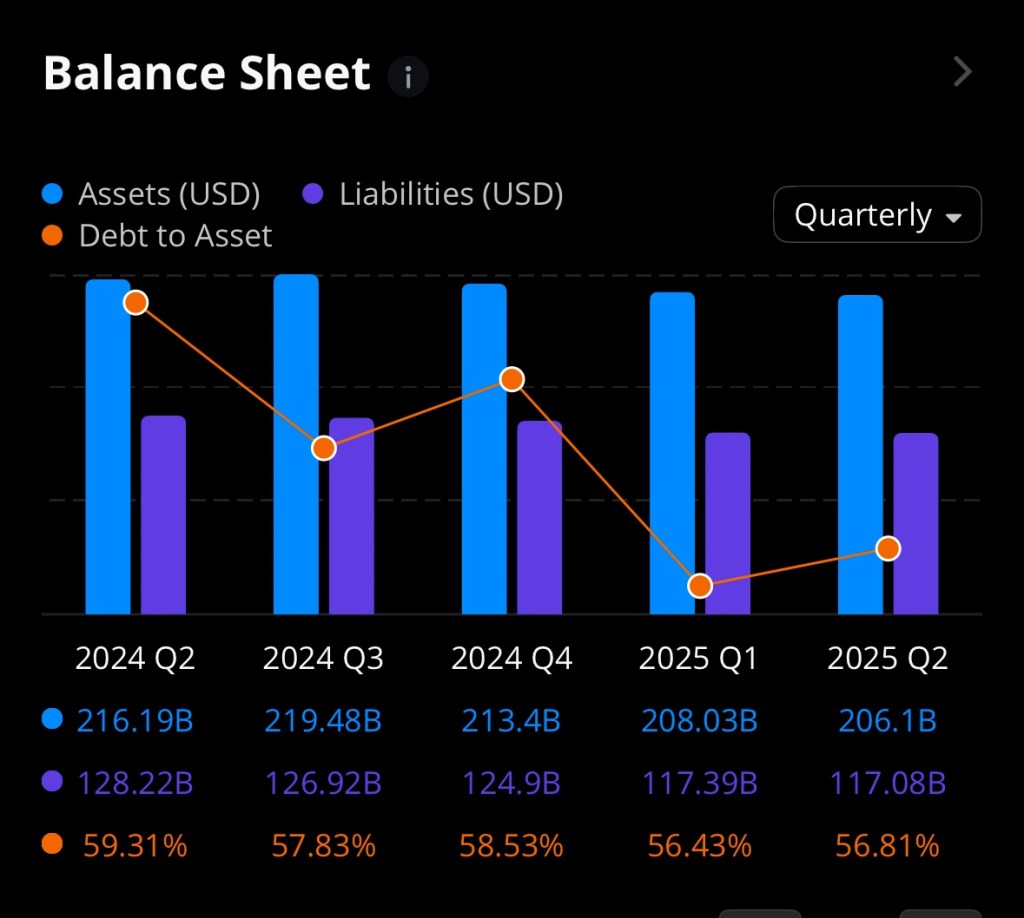
  • Strong Balance Sheet: Despite recent revenue declines, Pfizer maintains healthy cash reserves and strong operating cash flow, supporting its dividend and acquisition strategy.
  • Attractive Valuation: Shares are trading at a discount compared to peers in the pharmaceutical sector, offering a margin of safety for value investors.
  • Diversified Revenue Base: Expansion in oncology, vaccines, and rare diseases provides multiple future growth drivers beyond COVID-19.

Weaknesses

  • COVID-19 Dependency Hangover: A sharp decline in vaccine and antiviral demand has pressured revenue, highlighting reliance on pandemic-era products.
  • R&D Risk: Heavy investment in research and development may not always lead to successful approvals, leaving earnings vulnerable.
  • Debt from Acquisitions: The Seagen deal adds to Pfizer’s debt load, which, while manageable, could strain resources if integration challenges arise.
  • Patent Expirations: Like many pharmaceutical giants, Pfizer faces long-term risks from patent cliffs that could erode future revenue streams.

Stock Price Outlook: 1 to 5 Years

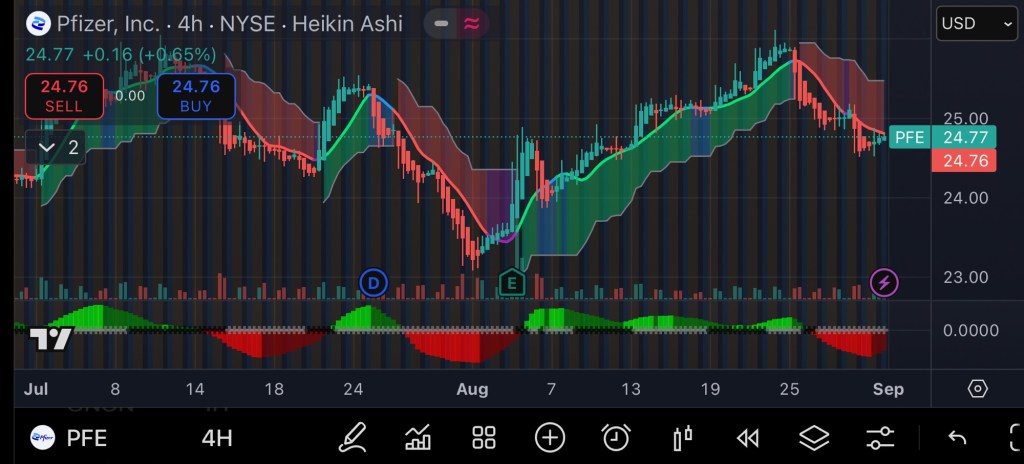
Pfizer’s current share price reflects market concerns over post-COVID revenue declines, but its fundamentals suggest room for recovery.

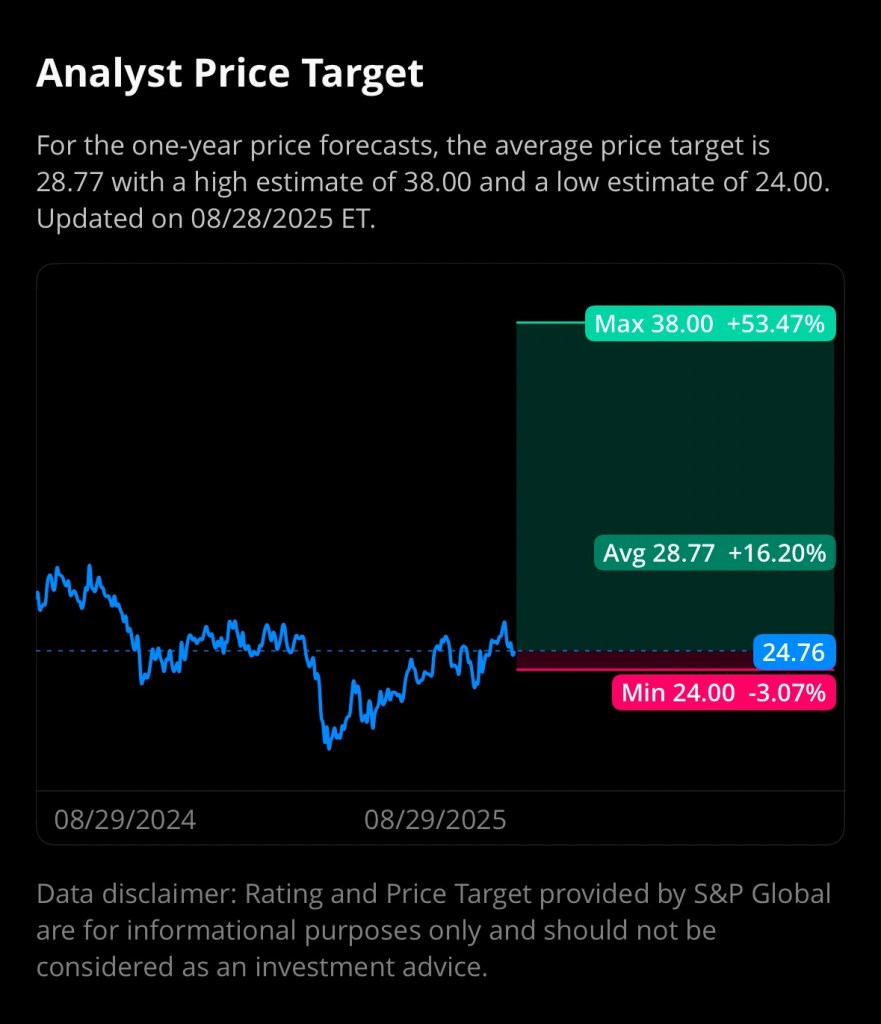
  • 12-Month View (2025–2026): Analysts see potential for modest gains, with shares trading in the $32–$38 range as the market digests lower vaccine revenues but begins to price in oncology and pipeline growth. The dividend will continue to anchor returns even if share price growth is muted.
  • 3-Year View (2027): As new oncology therapies, rare-disease drugs, and vaccine innovations mature, Pfizer could see revenue stabilize and return to growth. A reasonable target range could be $40–$48 per share, supported by mid-single-digit revenue growth and steady dividends.
  • 5-Year View (2029–2030): If Pfizer successfully integrates Seagen, brings key drugs to market, and manages upcoming patent expirations, long-term investors could see shares trading in the $50–$60 range. Dividend reinvestment along the way would enhance total returns, making Pfizer a solid long-term hold for income plus growth.

While uncertainty remains in the short term, Pfizer’s combination of a reliable dividend, undervaluation relative to peers, and a promising pipeline suggests patient investors may be rewarded over a 5-year horizon.

Disclosure: I currently hold a position in Pifzer (NASDAQ: $PFE). This article reflects my personal opinions and analysis, and is not intended as financial advice. Please conduct your own research or consult a financial advisor before making any investment decisions.

Why More Families Are Turning to Trusts to Protect Their Assets

When it comes to protecting wealth and passing it on to loved ones, many families are discovering that a simple will may not be enough. Increasingly, individuals are turning to trusts as a more effective way to manage their assets and provide security for beneficiaries. While wills remain common, trusts offer unique advantages that make them an essential tool in modern estate planning.

A trust is a legal arrangement in which a trustee manages assets on behalf of beneficiaries. Unlike a will, which becomes public during probate, a trust can keep family financial matters private while ensuring assets are distributed according to the grantor’s wishes.

Avoiding Probate Delays and Costs
One of the main reasons individuals choose a trust is to avoid probate—the court-supervised process of distributing an estate after death. Probate can take months or even years, and legal fees can significantly reduce what heirs actually receive. With a trust, assets are transferred more quickly and with fewer administrative costs.

Tax Efficiency and Asset Protection
Certain types of trusts can also provide tax advantages. For high-net-worth individuals, this can mean minimizing estate taxes, while others use trusts to shield assets from creditors or lawsuits. Parents of minor children often create trusts to ensure their children’s financial needs are met in the event of an untimely death.

Control Over Distribution
Unlike a will, which typically results in a lump-sum transfer of assets, a trust allows for customized distribution. For example, beneficiaries can receive funds at certain ages, in installments, or for specific purposes such as education or healthcare. This level of control provides peace of mind for those worried about heirs’ financial responsibility.

Peace of Mind for Families
“Trusts aren’t just for the wealthy,” says estate planning attorney Sarah Mitchell. “They’re tools that provide structure, protection, and clarity—things every family can benefit from. For many clients, it’s about peace of mind knowing their loved ones are taken care of.”

As life expectancy increases and wealth is passed down through generations, experts predict that more families will explore trusts as part of their financial planning. Whether it’s avoiding probate, protecting assets, or ensuring responsible inheritance, trusts are becoming a cornerstone of modern estate planning.

About the Author:

David Dandaneau is a client relations analyst that covers the insurance and financial services industry. He is known for his insightful analysis and comprehensive coverage of market trends and regulatory developments.

Permissive Use of a Vehicle: What It Means and Why You Should Understand It

When you hand over your car keys to a friend or family member, you might not think twice. But in the world of auto insurance, that moment is about more than just trust-it’s about something called permissive use.

What Is Permissive Use?

Permissive use simply means you’ve allowed someone else to drive your vehicle with your permission. That permission can be:

  • Express – You clearly told them they could drive your car.
  • Implied – It’s understood based on your relationship or past behavior (e.g., your spouse or roommate regularly uses your car without asking each time).

In most standard auto insurance policies, permissive users are covered under the vehicle owner’s liability coverage. That means if the driver gets into an accident while using your car with your consent, your policy can help pay for damages or injuries to others.


Why Understanding Permissive Use Matters

  1. You Could Be Financially Responsible
    Even if you weren’t behind the wheel, your insurance may still be the first to pay if a permissive user causes an accident. If damages exceed your policy limits, you could be responsible for the difference.
  2. Coverage Isn’t Always Unlimited
    Some insurance companies provide reduced coverage limits for permissive drivers-especially if they’re not listed on your policy. Others might exclude certain drivers altogether.
  3. Not All Situations Are Covered
    If the person using your car is engaging in excluded activities-like delivering food for a rideshare app, racing, or using the vehicle without permission—your insurance might not apply.
  4. Claims Can Affect Your Record
    An accident caused by a permissive user can still appear on your insurance history and may impact your premiums.

How to Protect Yourself When Sharing Your Vehicle

  • Know Your Policy – Check your policy documents or talk to your agent to understand how your insurer handles permissive use.
  • Be Selective – Only allow responsible, licensed drivers to use your vehicle.
  • Clarify Restrictions – If you don’t want someone driving for certain purposes (like work deliveries), make that clear.
  • List Regular Drivers – If someone uses your car often, consider adding them to your policy to avoid coverage gaps.

Key Takeaway for Drivers

Permissive use may feel like a small favor, but it carries big insurance implications. By knowing the rules, choosing drivers wisely, and keeping your policy updated, you can avoid unpleasant surprises and keep both your car and your finances protected.

About the Author:

David Dandaneau is a client relations analyst that covers the insurance and financial services industry. He is known for his insightful analysis and comprehensive coverage of market trends and regulatory developments.

Empty Nest on the Horizon: My Mixed Emotions as Both Kids Head to College

As August rolls on, I’m preparing for a major life shift-sending not one, but two kids off to college.

This fall, my daughter will begin her journey as a freshman at Florida Gulf Coast University (FGCU), ready to explore a new chapter in the sunshine-filled town of Fort Myers. Meanwhile, my son is entering his second year at the University of South Florida (USF), well on his way toward earning his degree and carving out his own path.

I’m incredibly proud of both of them. But I’d be lying if I said it wasn’t bittersweet.

The house that once echoed with teenage chatter, shared meals, and last-minute school deadlines is starting to feel a little quieter-and emptier.

I’ve been bracing for the ‘empty nest’ for a while. And now that it’s actually happening, it feels surreal.

Watching Their Independence Take Flight

One of the most rewarding parts of parenting-yet also the most emotional-is watching your kids grow into their independence. It’s happening right before my eyes. They’re making decisions for themselves, solving their own problems, setting their own goals. And while I’ll always be their biggest cheerleader, I know this next stage is about them leading their own lives.

My daughter is eager to make new friends, figure out her place in the world, and maybe even learn how to do laundry without help. My son is more confident this year-he’s navigating his classes, campus life, and adulthood with a little more ease. It’s a beautiful thing to witness, even if it tugs at my heart.

This growing independence doesn’t mean I’m any less involved. It just means I’m learning how to support them from a different seat-more in the stands now than on the field.

While emotions are running high, so is the excitement. My daughter is already shopping for dorm supplies and dreaming of beachside study breaks, while my son is eager to reunite with friends and dive deeper into his major at USF.

Still, the looming quiet at home is a reality that’s setting in fast.

Everything is changing-the routines, the conversations-it’s all shifting. I’ll miss them deeply, but this is their time to soar.

As the suitcases pile up and the goodbyes draw near, one thing is clear: while my nest may be emptying, my heart is fuller than ever-with love, pride, and hope for what’s ahead.

Should You Shop Your Homeowners Insurance? Here’s Why (And Why Not)

When was the last time you looked at your homeowners insurance policy? Many homeowners set it and forget it often paying premiums for years without comparing rates or coverage. But in today’s changing insurance landscape, shopping your policy could make a big difference to your wallet and your peace of mind.

Why You Might Want to Shop Your Homeowners Insurance
One of the biggest reasons to shop around is simple: savings. Insurance markets change constantly, and different companies assess risk in different ways. You may find the same coverage elsewhere for a lower premium, or better coverage for the same price. Additionally, shopping your policy gives you the chance to update your coverage. Maybe you’ve renovated, added a home office, installed a security system, or made energy-efficient upgrades—these can affect your premium or even qualify you for discounts. Finally, shopping around lets you evaluate customer service and claims satisfaction. Not all insurers handle claims equally, and a few bad experiences can turn a cheap policy into an expensive headache when you need it most.

Why You Might Not Want to Shop Your Homeowners Insurance
Staying put with your current insurer can have benefits, too. Loyalty discounts can add up over time, and bundling your homeowners insurance with auto or other policies often unlocks extra savings that you might lose if you switch. If you have a history of claims or live in a high-risk area, your current company may be offering you more favorable terms than a new insurer would… especially if you’ve built trust over years without filing major claims. Finally, switching companies can be time-consuming and confusing. If your current agent or company provides excellent service, quick claims resolution, and clear communication, that peace of mind might be worth more than a small annual savings.

Bottom Line
Shopping your homeowners insurance doesn’t mean you have to switch, but it does mean you’re informed. Compare rates every few years, check for discounts, and make sure your policy still fits your home and lifestyle. Whether you stay or go, you’ll know you’re making the best choice for your coverage and your wallet.

About the Author:

David Dandaneau is a client relations analyst that covers the insurance and financial services industry. He is known for his insightful analysis and comprehensive coverage of market trends and regulatory developments.

Mastering Work-Life Balance: A Personal Journey

Finding balance between work and family has been one of the biggest challenges- and greatest lessons- of my life. For a long time, I thought I could achieve some magical state where everything stayed perfectly organized and everyone’s needs were met without any hiccups. I quickly learned that life doesn’t work that way. What I’ve discovered instead is that balance is a daily choice, a constant practice, and a mindset that helps me stay grounded when life gets messy.

It starts with being honest about my priorities. I know there will always be more emails to answer, calls to return, and projects to complete. But my family only gets one version of me-and I want that version to be fully present. That’s why I carve out dedicated time on my calendar for family dinners, school events, and quiet evenings at home. I block those moments off the same way I would for an important meeting with a client because, to me, they’re just as important.

Another thing that helps is clear and open communication. I talk to my family about my work schedule, and I keep my team at work updated on my family commitments. When everyone’s on the same page, it’s easier to manage expectations and avoid unnecessary stress. I’ve learned that it’s okay to ask for help or to say “no” when my plate is too full. It doesn’t make me any less dedicated-it just makes me human.

I also try to protect small moments for myself. These pockets of time-like enjoying my morning coffee before anyone else is awake, squeezing in a quick workout, or reading a few pages of a book before bed-give me the energy to show up for both work and family. I’ve found that when I neglect my own needs, it catches up with me fast. Self-care isn’t selfish; it’s essential.

Flexibility is another big piece of the puzzle. Some days, work will demand more of my time. Other days, family emergencies or milestones take priority. Instead of getting frustrated when plans change, I remind myself that balance isn’t about splitting my time evenly every day-it’s about adjusting as life unfolds. I try to be kind to myself when things don’t go perfectly.

Finding balance will always be a moving target for me, but over time, I’ve gotten better at recognizing what works and what doesn’t. I’ve stopped trying to do it all at once. Instead, I focus on being fully present wherever I am-whether I’m leading a meeting, helping with homework, or just laughing around the dinner table.

In the end, my biggest takeaway is that balance doesn’t come from rigid rules-it comes from giving myself grace, staying flexible, and remembering what matters most. And as long as I keep showing up for both my work and my family with intention and love, I know I’m doing something right.

How Bundling Home and Auto Insurance Saves You Money

In today’s economy, every dollar saved counts — and when it comes to insurance, combining your policies could be one of the easiest ways to keep more money in your pocket.

Many Americans carry multiple insurance policies — auto, home, renters, sometimes even umbrella coverage — but fewer realize that bundling these policies with the same provider can unlock significant discounts. According to industry studies, customers who bundle their car and home insurance can often save anywhere from 5% to 25% on their total premium.

Why do insurance companies offer bundling discounts?
Insurance providers like it when customers keep multiple policies under one roof. Bundled customers are more likely to stick around long-term, which reduces the company’s costs to acquire and retain new business. Insurers pass some of those savings on to customers as an incentive to bundle.

How much can you really save?
The exact amount varies by state, provider, and individual circumstances. For example, homeowners generally see larger discounts than renters, and those with good credit and safe driving records may qualify for the biggest savings. In some cases, discounts can total hundreds of dollars a year — money that can be redirected toward other household expenses or savings.

Other perks beyond the discount
Bundling often makes life simpler, too. Instead of juggling different renewal dates, agents, and billing statements, you can manage your policies through one account. Some companies even offer a single deductible option for claims involving both home and auto — for example, if a storm damages your garage and your car at the same time.

A real-life savings story
I saw the benefits firsthand when I decided to bundle my own home and auto insurance. Before bundling, I was paying separate premiums with two different companies and never really thought much about it. After one quick conversation, I switched both policies to the same provider and ended up saving nearly $4500 a year. Not only did it cut my costs, but it made managing my insurance so much easier — one company, one bill, one renewal date.

Smart coverage, smart savings
Insurance might not be the most exciting thing on your to-do list, but spending a few minutes reviewing your policies could pay off. Ask your insurance agent about bundling options, compare quotes, and see if consolidating your coverage could drive down your costs — without compromising the protection you and your family need.

About the Author:

David Dandaneau is a client relations analyst that covers the insurance and financial services industry. He is known for his insightful analysis and comprehensive coverage of market trends and regulatory developments.

Delicious Alternatives to Summer Comfort Foods

As temperatures rise and backyard grills fire up, summer is often synonymous with indulgent foods from ice cream cones and cheeseburgers to sugary cocktails and deep-fried fair treats. But this year, health-conscious eaters are proving that you don’t have to sacrifice flavor to stay on track with your wellness goals.

Nutritionists and chefs alike are championing simple food swaps that cut down on calories and saturated fat, boost nutrients, and still deliver the mouthwatering taste people crave during the sunny season.

  1. Frozen Yogurt Over Ice Cream
    Swap out sugar-laden ice cream for creamy Greek frozen yogurt. It satisfies that sweet tooth while packing in protein and probiotics that aid digestion — a win-win after a heavy BBQ meal.
  2. Grilled Veggies Instead of Chips
    Potato chips are a picnic staple, but grilled veggies like zucchini, bell peppers, and eggplant are quickly taking over summer spreads. Tossed with olive oil and herbs, they’re crisp, colorful, and bursting with flavor — minus the trans fats and sodium overload.
  3. Turkey or Veggie Burgers in Place of Beef
    Summer cookouts and burgers go hand in hand, but swapping a fatty beef patty for a lean turkey or plant-based burger reduces saturated fat without skimping on the smoky taste. Pile it high with fresh greens and tomatoes for added crunch and nutrients.
  4. Infused Water Beats Soda
    Sugary sodas and sweet teas can derail a healthy summer day fast. Instead, stay hydrated with naturally flavored water. Add fresh berries, cucumber slices, or mint to your pitcher — it’s refreshing, festive, and free of empty calories.
  5. Nice Cream for Dessert
    Banana “nice cream” is trending for good reason: blend frozen bananas with a splash of almond milk, and you’ve got a creamy, dairy-free dessert that rivals traditional soft serve — without the sugar crash.
  6. Fresh Fruit Kabobs Instead of Candy
    Summer means peak season for juicy fruits like watermelon, pineapple, and strawberries. Thread them onto skewers for colorful, fun-to-eat kabobs that beat processed sweets and satisfy a sugar craving naturally.
  7. Whole-Wheat Buns and Wraps
    For those summer sandwiches and hot dogs, opt for whole-wheat buns or lettuce wraps. You’ll up your fiber intake and avoid the blood sugar spikes that come with refined white bread.

These swaps aren’t about deprivation they’re about finding creative ways to celebrate the season’s best flavors while giving your body what it needs to feel its best.

So, whether you’re hosting a backyard barbecue or packing a picnic for the beach, try one (or all) of these healthy swaps and taste how satisfying smart choices can be.

What’s your favorite healthy summer swap? Let us know in the comments!

Summer Skies and Snags: Navigating Airline Delays While Still Making the Most of Your Vacation

As summer 2025 takes flight, so do the travelers—millions of them—crisscrossing the globe in search of sun, adventure, and relaxation. But with high demand, weather unpredictability, and stretched airline resources, delays are becoming a familiar part of the journey.

According to recent data from the International Air Transport Association (IATA), global airline delays in June rose by 18% compared to last summer, largely driven by increased travel demand, pilot shortages, and weather-related disruptions. Major hubs like New York’s JFK, London Heathrow, and Frankfurt have all experienced bottlenecks, frustrating travelers eager to begin their holidays.

But here’s the twist: despite the delays, travelers aren’t letting the turbulence ground their good vibes.

“We were stuck at the airport for ten hours,” said David Dandaneau, an Insurance Analyst from Tampa en route to Lisbon. “But we made it fun. We played cards with a couple from Italy, shared snacks, and swapped travel tips. It ended up being one of the most memorable parts of our trip.”

Social media is awash with similar stories. From impromptu yoga sessions in gate areas to mini-concerts by musicians waiting for their flights, travelers are finding creative ways to turn delay-induced downtime into shared moments of joy.

Travel experts recommend keeping expectations flexible and packing patience alongside your passport. Here are a few ways to keep spirits high even when your departure time isn’t:

Pack a travel-friendly game or book. Delays are less annoying when you’re entertained.

Download shows or podcasts in advance. Wi-Fi isn’t always reliable during layovers.

Stay hydrated and fueled. Hunger and frustration are a bad combo.

See delays as bonus time. Use it to reflect, journal, or make a new friend.

“Travel is never perfect—and it doesn’t need to be,” says psychologist and travel blogger Dr. Ayesha Reed. “It’s all part of the story you’ll tell when you get home.”

So, whether your flight takes off on time or fashionably late, remember: summer isn’t about sticking to a schedule—it’s about soaking in the experience. Even if it starts at Gate B12 with a three-hour wait and a lukewarm coffee.

Because the journey, delays and all, is half the adventure. ✈️🌞