Five9, Inc. (NASDAQ: FIVN): Evaluating a Cloud Communications Leader Heading Into 2026

Five9, Inc. is a leading provider of cloud-based contact center software, operating within the rapidly expanding Contact Center as a Service (CCaaS) market. As enterprises continue to modernize customer engagement through artificial intelligence and cloud infrastructure, Five9’s platform positions the company at the intersection of digital transformation and customer experience optimization (Five9, Inc., 2025).


Company Overview

Founded in 2001, Five9 delivers cloud-native contact center solutions that integrate voice, digital channels, workforce optimization, and AI-powered automation. The company’s offerings are designed to help enterprises improve customer satisfaction while reducing operational complexity and costs. Five9 primarily serves mid-market and large enterprise customers, with a business model heavily weighted toward recurring subscription revenue (Trefis, 2025).

The CCaaS market continues to benefit from long-term secular tailwinds, including remote work adoption, omnichannel customer engagement, and enterprise investment in AI-driven customer support solutions (Seeking Alpha, 2025).


Financial Performance and Health Snapshot

Revenue and Growth

Five9 reported record full-year revenue exceeding $1 billion, reflecting consistent double-digit growth driven by enterprise adoption and expanding AI-enabled services (Five9, Inc., 2024). Recent quarterly results show revenue growth in the low double-digit range, signaling moderation from prior hypergrowth years but still outperforming many legacy contact center competitors (Investing.com, 2025a).

Profitability and Margins

Operational efficiency has improved as the company scales. Adjusted EBITDA margins have expanded into the low-to-mid 20% range, supported by higher software margins and disciplined cost management (Seeking Alpha, 2025). While GAAP profitability remains pressured by stock-based compensation, non-GAAP earnings and free cash flow generation have shown steady improvement (NASDAQ, 2025).

Balance Sheet Strength

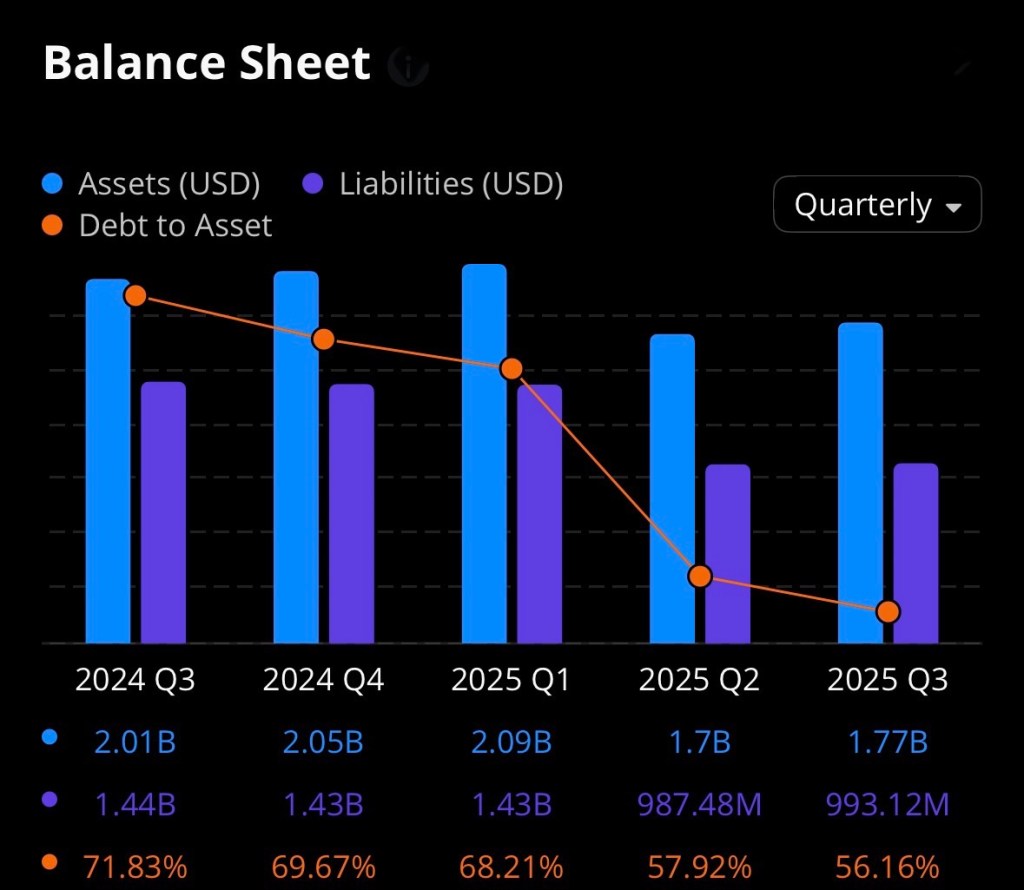
Five9 maintains a solid liquidity position, supported by cash reserves and manageable debt levels. The company has also authorized share repurchase activity, signaling management confidence in long-term value creation despite near-term stock volatility (Investing.com, 2025b).


Stock Price and Market Performance

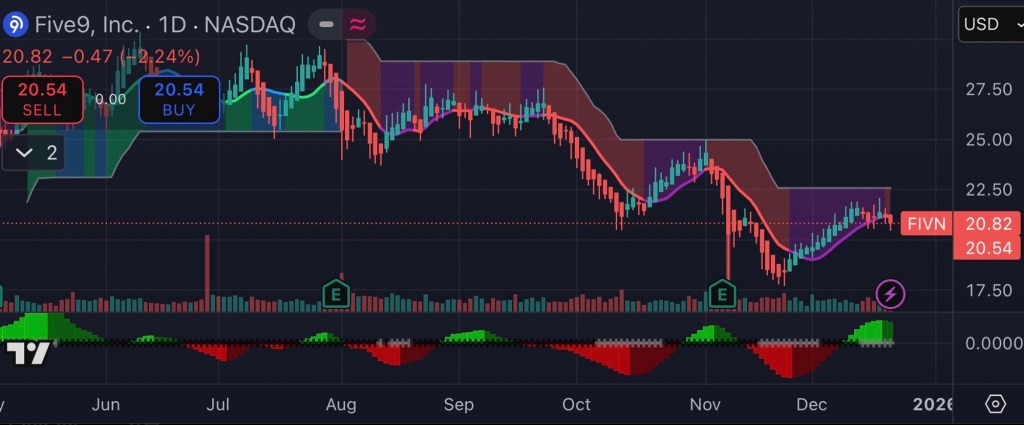
As of late 2025, Five9 shares have experienced significant price compression, trading well below prior cycle highs. The stock recently touched a 52-week low, reflecting broader SaaS sector multiple contraction, investor caution around growth deceleration, and macroeconomic uncertainty (Investing.com, 2025c).

Despite the decline, valuation metrics such as price-to-sales and enterprise-value-to-revenue ratios now sit below historical averages for high-quality SaaS peers, suggesting the market may be discounting future growth more aggressively than current fundamentals justify (NASDAQ, 2025).


Why Five9 May Be an Attractive Investment Heading Into 2026

1. AI-Driven Product Expansion

Five9 continues to embed artificial intelligence across its platform, including intelligent virtual agents, real-time analytics, and automation tools. AI-related revenue has grown faster than the company’s core business, positioning Five9 to benefit from rising enterprise demand for scalable, automated customer engagement (Seeking Alpha, 2025).

2. Recurring Revenue Visibility

A substantial majority of Five9’s revenue is derived from subscriptions, providing predictable cash flows and improved earnings visibility. This recurring model is a key attribute investors seek in mature SaaS companies navigating economic cycles (Trefis, 2025).

3. Margin Expansion Potential

As growth stabilizes and operating leverage improves, Five9 has the potential to further expand margins, particularly if AI-driven products command premium pricing and reduce customer churn (NASDAQ, 2025).

4. Strategic Optionality

Ongoing consolidation within the cloud communications and enterprise software space creates potential upside through partnerships, acquisitions, or strategic interest from larger technology firms seeking to expand their customer experience portfolios (Investing.com, 2025b).


Risks and Considerations

While the long-term outlook remains constructive, investors should remain mindful of several risks. These include intensified competition from well-capitalized rivals, potential delays in enterprise spending, and the possibility that revenue growth continues to decelerate more rapidly than expected (Investing.com, 2025a). Additionally, broader market sentiment toward technology stocks could continue to influence valuation multiples independent of company performance.


Conclusion

Five9 enters 2026 as a financially stable, AI-focused SaaS company operating in a structurally growing market. Although near-term growth has moderated and share price volatility remains elevated, improving margins, recurring revenue strength, and expanding AI capabilities provide a foundation for potential long-term value creation. For investors willing to tolerate short-term uncertainty, Five9 represents a company where fundamentals and market valuation may diverge heading into the next phase of the cloud communications cycle (Five9, Inc., 2025; Seeking Alpha, 2025).

Disclosure:
I do not hold, directly or indirectly, any equity position in Five9, Inc. (NASDAQ: FIVN) at the time of writing. This article is provided for informational and educational purposes only and should not be construed as investment advice, a recommendation to buy or sell securities, or a solicitation of any investment strategy. Readers should conduct their own due diligence and consult a qualified financial professional before making any investment decisions.


References (APA Format)

Five9, Inc. (2024). Five9 reports record full-year revenue exceeding $1 billion. Five9 Investor Relations.
https://investors.five9.com

Five9, Inc. (2025). Quarterly earnings and financial results. Five9 Investor Relations.
https://investors.five9.com/financials

Investing.com. (2025). Five9 stock hits 52-week low amid market volatility.
https://www.investing.com

Investing.com. (2025). Cantor Fitzgerald lowers Five9 price target citing growth moderation.
https://www.investing.com

NASDAQ. (2025). Five9, Inc. (FIVN) stock quote, financials, and performance data.
https://www.nasdaq.com

Seeking Alpha. (2025). Five9: AI-driven contact center growth and margin expansion.
https://www.seekingalpha.com

Trefis. (2025). Five9 business model, revenue mix, and valuation analysis.
https://www.trefis.com

Younger Boomers Bring a “Life-by-App” Mindset Into Retirement — And It’s Reshaping the Longevity Economy

Technology is becoming inseparable from daily life, as one generation is quietly redefining what it means to age: younger Baby Boomers. Born in the late 1950s to mid-1960s, this group spent the peak of their careers adapting to the rise of digital tools, mobile devices, automated systems, and internet-driven workplaces. Now, as they transition into retirement, they’re carrying those habits forward — and in doing so, they’re reshaping the broader longevity economy.

From Typewriters to Touchscreens: A Generation That Adapted

Unlike older Boomers who spent most of their careers in analog environments, younger Boomers navigated a unique technological evolution. They learned to send their first emails midway through their careers, adopted smartphones while still raising families, and saw entire industries digitize around them.

That exposure created a distinct comfort level with digital convenience — a “life-by-app” approach that now defines how they plan, save, spend, and even socialize during retirement.

How Younger Boomers Are Using Technology to Their Advantage

1. Financial Planning Goes Digital
Younger Boomers are more likely than previous generations to use:

  • Investment and retirement apps
  • Automated budgeting tools
  • Online banking
  • Robo-advisor platforms for risk-managed portfolios

This not only makes retirement planning more accessible but also gives them real-time insights that older retirees rarely had.

2. Healthcare from a Screen
Telehealth visits, wearable health trackers, and medication-management apps are becoming standard tools. Younger Boomers embrace these resources to stay proactive about their health and remain independent longer.

3. Social Connectivity Without Borders
Younger Boomers maintain friendships and family relationships through video calls, social media, and messaging apps — reducing isolation and supporting emotional well-being, especially as they age.

4. Flexible Working in Retirement Years
Many within this group are exploring partial retirement through gig work, consulting, and remote job platforms. Technology allows them to earn supplemental income on their own terms.

The Contrast: Older Boomers and Minimal-Tech Retirement

Older Boomers — those born in the late 1940s to mid-1950s — often approach retirement differently. Many prefer:

  • In-person banking over mobile banking
  • Physical mail over digital statements
  • Human financial advisors over algorithm-driven ones
  • Paper calendars and appointment books
  • Face-to-face healthcare visits

This doesn’t mean they reject technology entirely, but they generally use it as a tool of convenience rather than a lifestyle backbone.

A Growing Generational Technology Gap

This difference isn’t about willingness — it’s about familiarity. Younger Boomers spent decades experiencing technology woven into their work. Older Boomers did not. As a result, younger Boomers:

  • Adopt new tools faster
  • Feel more confident with apps and automation
  • Expect digital customer service
  • Research and make decisions online

This gap is reshaping industries as companies redesign services for a more tech-ready retiree population.

Impact on the Longevity Economy

The longevity economy — the economic activity driven by people aged 50+ — is now valued at trillions. Younger Boomers are accelerating its growth in three major ways:

1. Increased Demand for Digital-Friendly Services
From virtual healthcare to AI-powered retirement tools, industries are rapidly building platforms with older users in mind.

2. Growth of Smart Home and Independent Living Tech
Devices like smart thermostats, automated lighting, fall-detection sensors, and home assistants are booming as younger Boomers look for safe, self-sufficient living.

3. New Expectations for Customer Experience
Retirement planning firms, healthcare providers, retailers, and insurance companies are being forced to modernize their systems or risk losing loyal customers.

Looking Ahead: Retirement Will Never Look the Same

As younger Boomers continue to enter retirement with smartphones in hand and digital habits intact, they are quietly transforming what aging means in America. Their comfort with technology is enabling longer independence, more financial empowerment, and more flexible lifestyles.

The narrative is shifting: retirement is no longer about slowing down — it’s about staying connected, informed, and in control.

And for the generations that follow, this “life-by-app” legacy will likely become the new norm.

Trends to Watch as We Close Out 2025: The Property Insurance Market

As we approach the end of 2025, the property insurance marketplace is navigating a mix of change, challenge and opportunity. Here’s a look at the key trends shaping the sector — and what they might mean for insurers, brokers and property owners alike.


1. Climate-Driven Losses Are Now the New Normal

The pace and severity of natural catastrophes continue to place major pressure on the property insurance market. The Swiss Re Institute estimates that global insured losses from natural catastrophes hit roughly US $80 billion in the first half of 2025, nearly double the 10-year average. (Reuters+2Insurance Journal+2)
For insurers, that means heavier claims, tougher underwriting decisions and heightened scrutiny of exposures in high-risk zones.

What to watch:

  • Insurers will increasingly pull back or raise rates in high-catastrophe zones — e.g., coastal and wildfire-prone areas.
  • Property owners in those zones will receive stronger signals to invest in resilience (storm hardening, wildfire mitigation, flood defence).
  • Coverage gaps may grow where private insurers no longer provide adequate support, leading to more reliance on state/last-resort markets.

2. Pricing and Coverage Conditions Are Mixed — Softening in Some Segments, Hardening in Others

While recent years were characterised by sharp rate increases and tightening terms, there are signs that some parts of the market are stabilising or even softening. For example:

  • The Alera Group in its 2025 P&C update notes greater market stability, with disciplined underwriting, improving investment yields, and signs that premium growth may moderate. (Alera Group)
  • In commercial property, accounts with favourable loss history and limited catastrophe exposure may now see flat to single-digit rate increases, rather than the double-digit hikes of earlier years. (Dominion Risk+1)
  • On the flip side, in the homeowners/home-insurance space, average premiums remain elevated, and the insurers’ “combined ratio” suggests limited profitability in some segments. (Rate)

Key take-aways:

  • For well-performing risks, carriers are competing — more capacity, more flexible terms.
  • For high-risk exposures (wildfire zones, flood zones, older properties in hazard-prone states) terms remain challenging: higher deductibles, non-standard exclusions, pressured availability.
  • Brokers and agents who can help clients demonstrate strong mitigation/maintenance will be in demand.

3. Technology & Risk-Modelling Innovations Are Moving From “Nice to Have” to “Must-Have”

Insurers are rapidly expanding their use of technology — sensors, drones, satellite imagery, IoT monitoring, artificial intelligence — to refine risk assessments, improve underwriting and streamline claims. According to a recent legal-firm insight, insurers are deploying drones, satellite-imagery and IoT to track damage and property condition in real time. (Greenberg Traurig)
Meanwhile, homeowners are seeing insurers push risk-mitigation incentives (smart-home sensors, leak detectors, fire-resistant construction) as a way to differentiate risk. (Rate)

What this means:

  • Risk-differentiation will widen: properties with upgraded resilience features may enjoy better terms/discounts.
  • Older or non-mitigated properties may face fewer options or harsher terms.
  • Agents and insurers who embrace these tools will have a competitive edge, especially in emerging hazard-zones.

4. Reinsurance and Capacity Pressures Remain Real

While direct insurance pricing may be moderating for some risks, the broader ecosystem — especially reinsurance — remains under strain. The costs of reinsurance for catastrophe risk continue to climb as global natural hazard exposures grow. (Greenberg Traurig)
Also, some last-resort markets (state-backed, residual lines) are under pressure to raise rates or adjust eligibility, particularly in states with chronic exposure. (San Francisco Chronicle)

Implication:
Insurers must manage their reinsurance treaties carefully, be selective about exposures they carry, and pass through appropriate pricing and terms to stay sustainable.


5. Market Size is Growing — With Geographic and Product Gaps Emerging

From a volume perspective, the property-insurance market remains on a growth path. For example, in North America the market for property insurance was projected to reach about US $365 billion in 2025, with a five-to-seven-year compound annual growth rate (CAGR) of nearly 7%. (Statista) Globally, a report projects the property-insurance market to be around US $364.75 billion in 2025, growing toward ~US$591 billion by 2034. (Business Research Insights)

Yet, growth is uneven:

  • Regions with escalating risk (wildfire, flood, storm) may struggle with supply and affordability.
  • Specialized products (wildfire-only, flood-only, resiliency add-ons) are gaining traction.
  • Bundled products (home + auto) and value-added services (risk-engineering, smart-home upgrades) are becoming differentiators.

6. Homeowners Face Increasing Burden — Affordability, Availability and Risk

For homeowners, especially in climate-exposed states (e.g., coastal Florida, wildfire-prone California), the challenges are mounting:

  • Rising premiums and deductibles: some reports show average home-insurance premiums nationally up ~20 % year-over-year in certain markets. (Rate+1)
  • Higher deductibles and more peril-specific deductibles (wind/hail, wildfire, flood) are becoming more common. (Matic Insurance)
  • Coverage availability is still strained in many high-risk ZIP codes; the E&S (Excess & Surplus) market is filling gaps. (Matic Insurance)

For agents and homeowners:

  • Risk mitigation (roof upgrades, fire-resistant landscaping, flood mitigation) is no longer optional—it can materially affect access and cost of coverage.
  • The choice of market (traditional carrier vs. surplus market) matters more than ever; early renewal/placement is advised.
  • For homeowners in highly exposed zones, budgeting for rising insurance costs (and potential policy non-renewals) is prudent.

7. Regulatory & Geographic Regulation Shifts

Regulators in states like Hawaii, Florida and California are responding to the stability challenges in property-insurance markets. For example, in Hawaii legislators pledged efforts to stabilise the market in the face of rising rates and insurers pulling out. (AP News)
Rate filings and underwriting criteria adjustments are happening in several jurisdictions — meaning agents must stay abreast of local regulatory changes that could affect availability, coverage form, or premium.


Looking Ahead to Late 2025 and Early 2026

As we close out 2025, a few strategic themes for stakeholders:

  • For insurers and brokers: Market segmentation will deepen. Strong, well-mitigated risks will benefit from capacity and competition. Weakly mitigated risks will face greater terms and possibly coverage erosion.
  • For homeowners/property owners: Now is a contact point: review your property’s risk profile, invest in mitigation where possible, explore multiple carriers, and monitor renewal dates early.
  • For agents in your position (auto/property insurance): There’s an opportunity to advise clients on the “property side” in addition to auto — helping them understand risk exposures, mitigation, bundling opportunities, and market shifts. For example, bundling home + auto may give you more leverage.
  • For regulatory watchers: The interplay of climate risk, insurance affordability, and public policy will remain front-and-centre. Watch for state-level reforms, changes in last-resort insurers, and potential new coverage mandates or premium subsidies.

What Lies Ahead

The property-insurance market at the end of 2025 is in a state of transition. Big picture: demand is growing, but risk is mounting and not evenly distributed. Pricing and terms are moderating in some segments — yet for high-exposure zones the pressure remains acute. Technology, mitigation and geographic nuance will distinguish winners from laggards.

For you (and your clients) this means: be proactive. Know the risks. Position properties (or clients’ homes) for reward (through mitigation) rather than punishment. And stay flexible — the “next renewal” is likely to look quite different from the last.

About the Author:

David Dandaneau is a client relations analyst that covers the insurance and financial services industry. He is known for his insightful analysis and comprehensive coverage of market trends and regulatory developments.

References

Alera Group. (2025, January 15). 2025 property and casualty market update. Alera Group. https://aleragroup.com/insights/alera-groups-2025-property-and-casualty-market-update

Associated Press. (2025, March 10). Hawaii lawmakers pledge to stabilize property insurance market amid rate increases. AP News. https://apnews.com/article/9119f220251bb44eced5ffb4ddd80b15

Business Research Insights. (2025). Property insurance market size, share, growth, and forecast 2025–2034. https://www.businessresearchinsights.com/market-reports/property-insurance-market-125238

Domrisk. (2025, March 5). 2025 market outlook: Commercial property insurance. https://domrisk.com/2025/03/2025-market-outlook-commercial-property-insurance

Greenberg Traurig, LLP. (2025, March 1). Five trends to watch in the 2025 property insurance market. https://www.gtlaw.com/en/insights/2025/3/5-trends-to-watch-in-2025-property-insurance-market

Matic Insurance. (2025, April). 2025 home insurance report. https://matic.com/blog/2025-home-insurance-report

Rate.com. (2025, May 20). Consumer insights: Home insurance trends for 2025. Guaranteed Rate Insurance. https://www.rate.com/insurance/resources/consumer-insights-home-insurance-trends-for-2025

Reuters. (2025, August 6). Global insured catastrophe losses hit $80 billion in first half of 2025, report shows. Reuters. https://www.reuters.com/business/environment/global-insured-catastrophe-losses-hit-80-billion-first-half-2025-report-shows-2025-08-06

San Francisco Chronicle. (2025, August 21). California FAIR Plan seeks huge rate hike: Map shows which ZIPs hit hardest. https://www.sfchronicle.com/california-wildfires/article/fair-plan-insurance-rate-21081370.php

Statista. (2025). Property insurance market in North America — Revenue forecast 2025. https://www.statista.com/outlook/fmo/insurances/non-life-insurances/property-insurance/north-america

Beamr Imaging (BMR): A Speculative Bet with Potential Upside

Herzliya, Israel / U.S. Markets — Beamr Imaging Ltd. (NASDAQ: BMR) is a tiny, high-volatility tech play in the video compression / optimization space. In recent months, it has attracted attention from speculative investors betting on its ability to break into high-growth verticals like autonomous vehicles (AV). Below is a breakdown of its recent developments, risks, and upside potential.


What Does Beamr Do?

Beamr provides software and hardware-accelerated video encoding, transcoding, and optimization solutions. Its product lineup includes:

  • Beamr 4 / 5 (H.264, HEVC) content-adaptive encoders
  • Beamr Cloud (SaaS offering)
  • Beamr IP blocks (for integration into ASICs / GPUs / application processors)
  • JPEGmini photo optimization technology

Its customer base spans streaming platforms, media companies, content distributors, and now increasingly, autonomous vehicle and machine-vision use cases. (Yahoo Finance+2investors.beamr.com+2)

In 2025, the company has doubled down on pushing into the AV market by unveiling a GPU-accelerated video compression solution designed to handle petabyte-scale video data generated by autonomous vehicle fleets. (Investing.com+2Stock Titan+2)

A key value proposition: its compression technology reportedly delivers 20%–50% savings in storage and data transfer costs for customers, without degrading model accuracy in machine vision applications. (Stock Titan+1)


Recent Financials & Metrics

Below is a simplified financial snapshot based on the public disclosures (primarily for 1H 2025). Because Beamr is small and reporting is limited, the data should be taken as directional rather than precise.

Metric1H 2025YoY Change / Notes
Revenue~$1.07 million+7% vs 1H 2024 (Stock Titan+3Investing.com+3Quiver Quantitative+3)
Gross Margin~86%Down from ~91.5% (due to amortization of internal software) (Investing.com+2Quiver Quantitative+2)
R&D Expense~$2.04 million+104% YoY (hiring, subcontractors, cloud costs) (Investing.com+2Quiver Quantitative+2)
Sales & Marketing Expense~$1.06 million+242% YoY (expanding marketing, conferences) (Investing.com+2Stock Titan+2)
Net Loss~$3.18 millionvs $1.96 million loss in 1H 2024 (Investing.com+2Quiver Quantitative+2)
Cash & Equivalents~$13.9 millionRepresents a substantial cushion for a microcap (Investing.com+2Stock Titan+2)

From alternative data sources, Reuters lists Beamr’s total assets at USD 22.095M (latest) and notes negative cash flows from operations, consistent with a growth / development stage firm. (Reuters)

Caveats & caveats:

  • The company is unprofitable and burning cash.
  • Operating expenses are rising aggressively.
  • Revenue scale is still extremely modest.
  • Reporting is limited, making forecasting uncertain.
  • The stock is highly volatile and likely illiquid in many trading periods.

Recent Developments & Catalyst Events

  • AV Market Push: In mid-2025, Beamr formally launched its GPU-accelerated video compression solution for autonomous vehicles, executing multiple proof-of-concept (PoC) deals and aiming to position itself as a bridge between AV fleets (which generate enormous video data) and cost-efficient storage/processing infrastructure. (Yahoo Finance+4Investing.com+4Stock Titan+4)
  • Strong Price Movement on Announcement: When Beamr announced the AV compression launch at the NVIDIA GTC Paris event, the stock spiked ~17% intraday. (RTT News)
  • Oracle Cloud Marketplace Listing & Recognition: Beamr’s product became available in Oracle’s Marketplace (earning “Powered by Oracle Cloud Expertise” status), driving a stock move of ~48% on that news. (The Wall Street Journal)
  • Partnership & Ecosystem Moves: The company joined AWS’s ISV Accelerate program, participated in major industry events (NVIDIA GTC, NAB Show), and secured awards (e.g. NAB Show Product of the Year) for its video technology. (Quiver Quantitative+3Stock Titan+3investors.beamr.com+3)
  • Strong Liquidity Ratio: Reports suggest Beamr had a current ratio (current assets / current liabilities) of ~17.77 in H1 2025, indicating a solid short-term liquidity buffer. (Investing.com)

Why Some Speculators Believe Upside Is Possible

Here’s the bullish thesis (with caveats) for why investors might view Beamr as a high-risk, high-reward play:

  1. Large addressable markets
    • The explosion of video data (streaming, 5G, ML/AI, edge computing) presents tailwinds for efficient compression/optimization.
    • The AV industry is a nascent but rapidly expanding consumer of video/vision data; any solution that materially reduces cost could attract high-value contracts.
  2. Technical differentiation (if proven)
    • If Beamr’s compression can deliver promised 20–50% reductions in storage + network cost without compromising model accuracy or visual quality, that’s a compelling ROI proposition for customers.
    • Their GPU-accelerated and content-adaptive approach may be more scalable and future-forward than legacy compression tools.
  3. Low valuation / optionality
    • As a microcap trading near its cash value, much of the upside is tied to growth and execution (i.e., if they convert PoCs to commercial contracts).
    • If one or two large AV or cloud customers adopt their technology, the “optional upside” is significant.
  4. Momentum & narrative-driven upside
    • In small, speculative tech stocks, favorable press, partnerships, and media hype can drive rapid re-rating.
    • Their association with big names (NVIDIA, AWS, Oracle) lends credibility and can accelerate business traction.
  5. Liquidity cushion
    • Having nearly $14M in cash for a company of this size gives it runway to invest in growth, product development, and marketing (assuming no major execution failure).

Risks That Temper the Speculation

To balance the bullish perspective, here are key risks:

  • Execution risk: Converting PoCs into recurring, large-scale revenue is harder than it looks.
  • Competitive risk: Many large players (cloud providers, codec developers, chipmakers) might replicate or undercut.
  • Burn & dilution risk: Continued losses may force equity raises, which could dilute existing holders.
  • Thin trading / volatility: Stock may swing wildly on news (or lack thereof).
  • Dependence on marquee wins: A few large contracts must validate the model.
  • Technology risk: Compression for human vision is a different problem than “machine vision / AV grade” compression; errors or compromises in accuracy could kill the value proposition.

Outlook & Scenarios

  • Base Case (moderate success): Beamr secures a handful of mid-sized AV or cloud contracts over the next 1–2 years; revenue grows meaningfully, losses narrow, and the stock re-rates modestly (e.g. 2×–3× current valuation).
  • Bull Case (breakthrough): A marquee deal or partnership (e.g. with a top AV OEM or cloud provider) turns into a large recurring revenue stream. The market begins to value Beamr as a strategic infrastructure play, leading to 5×+ upside.
  • Bear Case: Execution falters, PoCs don’t convert, cash burns down, and the company faces liquidity or solvency challenges, dragging the stock back toward cash value (or below).

Disclosure: I currently hold a position in Beamr Imaging Ltd. (NASDAQ: BMR). This article reflects my personal opinions and analysis, and is not intended as financial advice. Please conduct your own research or consult a financial advisor before making any investment decisions.

References

Investing.com. (2025, August 22). Beamr reports 7% revenue growth in first half 2025; launches AV solution. Investing.com. https://www.investing.com/news/company-news/beamr-reports-7-revenue-growth-in-first-half-2025-launches-av-solution-93CH-4187902

Reuters. (2025). Beamr Imaging Ltd (BMR.OQ) company profile & facts. Reuters. https://www.reuters.com/markets/companies/BMR.N/

RTTNews. (2025, March 19). Beamr Imaging stock soars 17% on launch of video compression tech for autonomous vehicles. RTTNews. https://www.rttnews.com/3545934/beamr-imaging-stock-soars-17-on-launch-of-video-compression-tech-for-autonomous-vehicles.aspx

StockTitan. (2025, July 1). Beamr in Q2 2025: Demonstrating the validation of its solution for autonomous vehicles. StockTitan. https://www.stocktitan.net/news/BMR/beamr-in-q2-2025-demonstrating-the-validation-of-its-solution-for-kfcmamrn7nhw.html

The Wall Street Journal. (2025, May 12). Beamr Imaging shares surge 48% on Oracle recognition. The Wall Street Journal. https://www.wsj.com/articles/beamr-imaging-shares-surge-48-on-oracle-recognition-85584b6a

Yahoo Finance. (2025). Beamr Imaging Ltd. (BMR) stock price & news. Yahoo Finance. https://finance.yahoo.com/quote/BMR/

Snowflake (SNOW) Posts Strong Q2, Eyes Deeper AI Integration — Here’s Why It’s Catching Investor Interest

Snowflake Inc. (NYSE: $SNOW) released its second quarter (fiscal 2026) results, reinforcing its role as a data and AI infrastructure play while navigating challenges in profitability and valuation. The reaction in markets suggests that investors are increasingly viewing Snowflake as more than just a cloud data warehousing provider — but as a core enabler of “AI Data Cloud” strategies. Here’s a breakdown of what’s happening, and the bull vs bear cases moving forward.


What the Numbers Say: Q2 & Recent Financials

Revenue, Margins & Growth

  • In Q2 FY2026, Snowflake reported product revenue of $1,090.5 million (i.e. from compute, storage, and data transfer). (Snowflake Investors)
  • The company continues to emphasize net revenue retention, which remains elevated (125%) as of July 31, 2025 — indicating that existing customers are expanding usage. (Snowflake Investors)
  • In its Q4 FY2025 results (ended January 31, 2025), Snowflake posted total revenue of $986.8 million, with product revenue of $943.3 million — up ~28% year-over-year. (Snowflake)
  • The Q4 gross profit margin (GAAP) was ~ 66%, and non-GAAP adjusted gross margin (excluding stock-based comp, amortization, etc.) was ~ 73%. (Snowflake)
  • Snowflake’s Q4 operating loss (GAAP) was about –$386.7 million, but on a non-GAAP basis it posted operating income of $92.8 million (≈ 9% margin). (Snowflake)
  • Its free cash flow in that quarter was ~$415.4 million (≈ 42% of revenue) and adjusted free cash flow ~$423.1 million. (Snowflake)

These numbers show both strength and tension: strong top-line growth and healthy non-GAAP profit conversions, but continued GAAP losses driven by sizable investments, stock compensation, and amortization.

Balance Sheet & Liquidity

  • As of January 31, 2025, Snowflake held ~$2,698.7 million in cash, cash equivalents, and restricted cash. (Snowflake)
  • Total debt (short-term + long-term) is more modest — for example, in recent annual balance sheet summaries, SNOW’s short-term and current portion of long-term debt is listed in the range of ~ $36 million. (The Wall Street Journal)
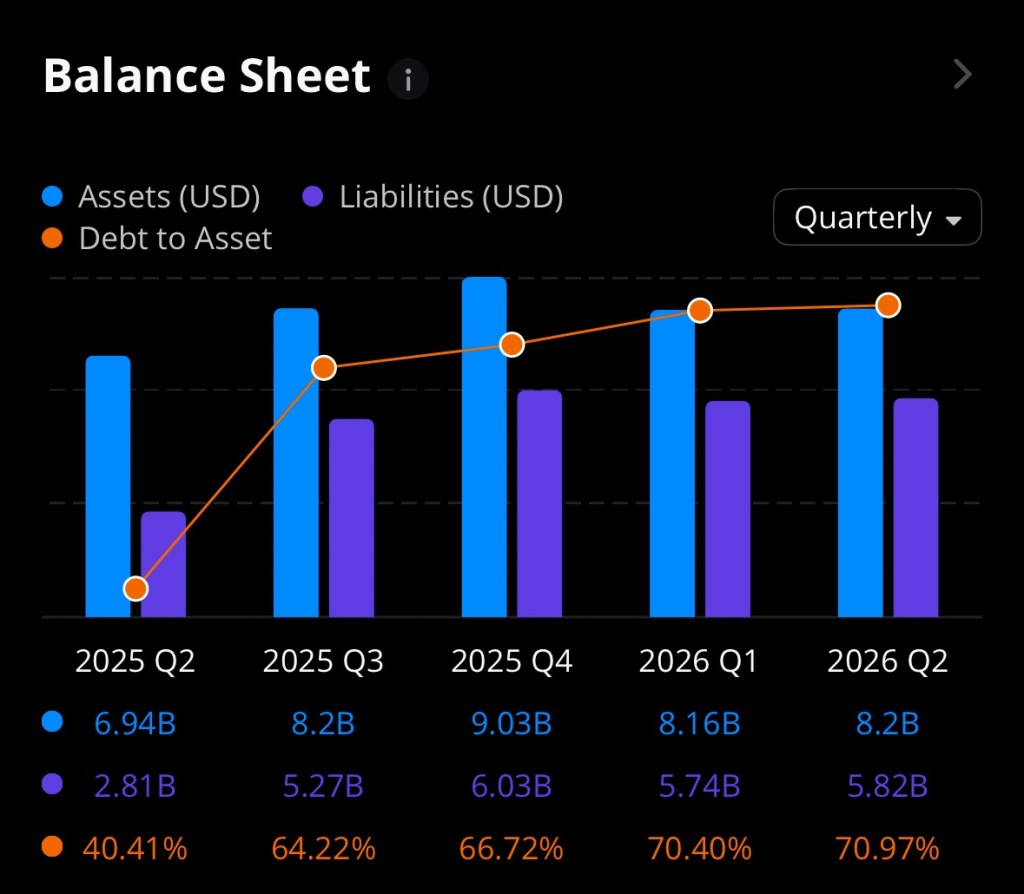
  • On the assets side, total assets are in the realm of several billions (over $8B to $9B in some reports) with growth trends consistent among public disclosures. (Investing.com+1)
  • The company carries significant liabilities as well (deferred revenue, vendor payables, deferred costs), but its liquidity cushion offers some buffer against short-term shocks. (Investing.com)

Business & Strategic Metrics

  • Snowflake’s remaining performance obligations (RPO) — i.e., contracted but not-yet-recognized revenue — stood at $6.9 billion, growing ~33% year-over-year. (Snowflake)
  • The company serves 580 customers whose trailing 12-month product revenues exceed $1 million, and 745 Forbes Global 2000 customers as of Q4 FY2025. (Snowflake)
  • The 125% dollar-based net revenue retention underlines that Snowflake is often able to upsell or expand within its installed base. (Snowflake Investors)
  • More recently, Snowflake announced its acquisition of Crunchy Data (for ~ $250 million) to integrate Postgres capabilities into its ecosystem, enabling developers to more easily build AI agents and manage data workloads. (The Wall Street Journal+1)
  • The company is also partnering or aligning more closely with AI/LLM providers (e.g., Anthropic), seeking to embed language model capabilities into its platform. (Reuters+2markets.businessinsider.com+2)

What’s Driving the Recent Move & Market Sentiment

In response to its Q4 FY2025 earnings (released earlier in 2025), Snowflake’s stock jumped ~10.9% after hours, as the company beat on earnings (30 cents per share vs ~18 cents expected) and revenue (nearly $987 million vs $957 million consensus). Barron’s It also raised its forecast for product revenue and delivered upbeat guidance for FY2026, projecting ~24% growth to ~$4.28 billion. (MarketWatch+2Barron’s+2)

Investors have taken notice of Snowflake’s push into AI, including more sophisticated integrations with large language models, and its efforts to position itself not just as a data platform but an “AI data cloud” enabler. (markets.businessinsider.com+2Reuters+2)

That said, concerns still linger over valuation multiples (Snowflake trades at high forward multiples), GAAP losses, and macro risk to enterprise IT spending.


Why Some Investors Might Find SNOW Attractive (and Its Risks)

Bull Case

  1. Exposure to Secular Trends in Data + AI
    As enterprises shift toward AI, data modeling, real-time analytics, and agent-based applications, Snowflake sits at a nexus: you need scalable, secure data infrastructure. Its existing customer base, product maturity, and retention metrics lend credibility to that positioning.
  2. Upsell & Expansion Potential
    Snowflake’s high net revenue retention and expanding average spend per customer suggest that a lot of value lies in selling more compute/storage or ancillary AI features to its installed base.
  3. Strategic Acquisitions & Technology Stack Expansion
    The Crunchy Data deal, combined with its AI platform integrations, may help lock in more workloads (especially developer, data app, and AI agent workloads) and reduce friction for adoption.
  4. Cash Generative Capacity (Non-GAAP / FCF)
    Despite GAAP losses, Snowflake has shown strong adjusted free cash flow generation, which gives it flexibility to invest, defend, or expand without complete reliance on external financing.
  5. Backlog / Contracted Revenue Visibility
    The RPO metric provides a view into future revenue, giving some predictability to growth expectations and lessening the reliance purely on new deals.

Risks & Challenges

  • Profitability & Cost Pressure
    Snowflake still runs GAAP losses. Its heavy investment in R&D, sales & marketing, and stock-based compensation make margins sensitive. If growth slows, the pressure on margins will intensify.
  • Valuation Overhang
    At high multiples, the stock’s valuation leaves little room for mistakes. A small slip in guidance or macro softness in enterprise IT spending could cause multiple compression.
  • Competition & Execution Risk
    The competitive landscape is fierce (e.g. Databricks, AWS, Google, Microsoft) and execution (product development, scaling, integrating acquisitions) will matter enormously.
  • Dependence on Cloud Providers
    Snowflake relies on underlying public clouds (AWS, Azure, GCP) for infrastructure. Any changes in pricing, caps, or ecosystem dynamics could affect its cost structure or competitiveness. (Wikipedia+1)
  • Macro / IT Spend Weakness
    In a downturn or with tightening enterprise budgets, large IT and data platform spends may get deferred, impacting growth.
  • Integration and Engineering Complexity
    Adding deeper database, AI, and application layers increases complexity — integrating acquisitions and maintaining stability and performance across features will be demanding.

Outlook & Near-Term Catalysts

  • Snowflake’s guidance for Q1 FY2026 product revenue is in the range $955 million to $960 million. (Snowflake)
  • For full-year FY2026, the company expects ~ 24% product revenue growth to ~$4.28 billion, with non-GAAP product gross margins reaching ~75%. (Snowflake)
  • The success of its Crunchy Data acquisition (Postgres integration), traction of AI integrations (e.g., embedding LLMs for analytics), and customer growth in large enterprises will be closely watched.

If Snowflake can continue delivering above expectations on product revenue, manage its cost base, and ensure that its AI/data additions translate into incremental revenue without diluting execution, it may justify its premium valuation post its recent run.


Verdict & Investor Fit

Snowflake is not a “safe” stock in the sense of predictable earnings or low volatility, but it is a compelling pick for investors with conviction in the data + AI transition and a willingness to ride through lumps. For those looking for asymmetric upside exposure to the AI/data infrastructure stack, SNOW has a profile worth watching — especially if bought during periods of market softness.

Disclosure:

I do not own any stock or have any financial interest in Snowflake Inc. (NYSE: $SNOW). This article is for informational purposes only and should not be considered financial or investment advice. Investing in stocks carries risks, and past performance is not indicative of future results. Always conduct your own research and consult with a qualified financial professional before making any investment decisions.

Barron’s. (2025, August 28). Snowflake stock jumps after earnings beat. Here’s what analysts are saying. Dow Jones & Company. https://www.barrons.com/articles/snowflake-stock-price-earnings-ai-1f2b9a5e

MarketWatch. (2025, August 28). Snowflake’s earnings and revenue beat expectations. Dow Jones & Company. https://www.marketwatch.com/story/snowflakes-earnings-and-revenue-beat-expectations-11695946094

Snowflake Inc. (2025, August 28). Snowflake reports second quarter fiscal 2025 financial results [Press release]. Snowflake Investor Relations. https://investors.snowflake.com/

Yahoo Finance. (2025). Snowflake Inc. (SNOW) financials. Retrieved September 27, 2025, from https://finance.yahoo.com/quote/SNOW/financials

Why Apple Stock Remains a Strong Buy in 2025

Apple remains a compelling long-term investment, thanks to its robust ecosystem, accelerating AI strategy, and disciplined capital returns.


🏛️ Reliable Business Model & Ecosystem Moat

Apple now supports over 2.3 billion active devices, forming one of the most durable customer ecosystems in tech. This massive footprint reinforces high switching costs and recurring revenue streams via services like the App Store, Apple Pay, and suite of subscriptions (now over 38% of gross profit) (Forbes). Its strategy of integrating hardware, software, and services creates a differentiation moat that’s hard to replicate.


🚀 Catalysts Behind Future Growth

▪ Apple Intelligence: A Privacy-First AI Pivot

At WWDC 2025, Apple unveiled its “Apple Intelligence” initiative—20+ AI-powered features like real-time translation and email summarization designed for on-device performance and privacy. A major upgrade to Siri is expected in 2026. While it’s lagging peers in sheer AI spend, Apple is now investing aggressively and open to strategic M&A, having acquired at least seven AI startups in 2025..

▪ iPhone Refresh Cycles & Hardware Upside

Morgan Stanley projects a 12% rebound in iPhone shipments by fiscal 2026 as AI features boost upgrade demand. The favorable reception to new iPhone 16 models ahead of the holiday season supports this optimistic view (marketwatch.com).


🌍 Strategic Resilience Amid Geopolitical Risks

Apple’s architecture strategy includes over $500 billion in U.S. investment over four years—from expanding chip-making capacity to creating manufacturing academies and AI server production facilities to help offset tariff risks. At the same time, it has shifted much iPhone production for U.S. markets to India, diversifying supply chain risk away from China.


💰 Financial Strength & Shareholder Returns

Apple posted $94 billion in Q3 2025 revenue—a 10% year-over-year gain—and services revenue reached a record $27.4 billion. EPS came in above expectations, and despite $800 million+ in tariff impacts, Apple demonstrated operational resilience.

It continues to return capital aggressively, with $15.2 billion paid in dividends in 2025 and a long-term track record of dividend increases and share repurchases. Analysts expect this capital discipline to endure, offering downside protection and steady income (The Motley FoolForbes).


📉 Valuation: Discount with Upside Potential

Despite its strengths, Apple is currently down roughly 20% year-to-date, underperforming other major tech names amid tariff fears, AI lags, and macro uncertainty (Business Insider). Its forward P/E sits at around 33.6×, above the S&P 500 average (~23×), making valuation relative to its growth prospects a mixed story (Forbes). Still, analysts at BofA, Goldman Sachs, Wedbush, and others issue “Buy” ratings with 12–18 month targets of $235–300, implying double-digit upside from today’s ~$200 price levels.


🧭 Risks to Watch

While Apple’s fundamentals remain solid, investors should monitor:

  • Delays or execution risk in AI deployment or acquisitions
  • Regulatory scrutiny around antitrust, App Store rules, and global expansion
  • U.S.–China relations and implications for supply chain resilience

📈 Final Verdict: Long-Term Buy, Tactical Caution

Apple’s dominant ecosystem, balanced growth from hardware and high-margin services, disciplined capital returns, and accelerated AI pivot position it as a long-term winner. While near-term volatility and tariff uncertainty add caution, the current valuation discount provides an attractive entry point for investors with a multiyear horizon.

Disclosure:

I do not own any stock or have any financial interest in Apple Inc. (NYSE: AAPL). This article is for informational purposes only and should not be considered financial or investment advice. Investing in stocks carries risks, and past performance is not indicative of future results. Always conduct your own research and consult with a qualified financial professional before making any investment decisions.

📚 References

Apple Inc. (2025, February 24). Apple will spend more than $500 billion USD in the US over the next four years. Apple Newsroom. https://www.apple.com/newsroom/2025/02/apple-will-spend-more-than-500-billion-usd-in-the-us-over-the-next-four-years/

Barrons. (2025, August 1). Apple stock has ‘significant,’ long-term opportunities. The case for buying now. Barrons. https://www.barrons.com/articles/apple-stock-ai-value-buy-6a2ee154

Business Insider. (2025, May 1). Apple is the worst-performing Mag 7 stock this year. Here’s what analysts and investors say about whether you should buy the dip. Business Insider. https://www.businessinsider.com/apple-stock-price-outlook-aapl-mag-7-buy-the-dip-2025-5

Business Insider. (2025, July 31). Apple Q3 earnings: iPhone demand, AI, and tariffs. Business Insider. https://www.businessinsider.com/apple-q3-earnings-aapl-stock-price-iphone-demand-ai-tariffs-2025-7

Cinco Días. (2025, August 1). Apple aumenta su inversión en IA y compras estratégicas. Cinco Días. https://cincodias.elpais.com/smartlife/lifestyle/2025-08-01/apple-ia-aumento-inversion-compras.html

Forbes. (2025, July 12). Where will Apple (AAPL) stock be in 5 years? Forbes. https://www.forbes.com/sites/investor-hub/article/where-will-apple-aapl-stock-be-in-5-years/

Lens LunarTech. (2025). Apple’s 2025 playbook: Navigating tariffs, expanding manufacturing, and sustaining growth. LunarTech Lens. https://lens.lunartech.ai/post/apples-2025-playbook-navigating-tariffs-expanding-manufacturing-and-sustaining-growth

MarketWatch. (2025). Apple bears have missed out on more than $1 trillion of stock gains, says this bull. MarketWatch. https://www.marketwatch.com/story/apple-bears-have-missed-out-on-more-than-1-trillion-of-stock-gains-says-this-bull-41116074

Panmore Institute. (n.d.). Apple Inc.’s generic strategy & intensive growth strategies. Panmore Institute. https://panmore.com/apple-inc-generic-strategy-intensive-growth-strategies

The Impact of 5G on Everyday Life: Faster, Smarter, and More Connected

The rollout of 5G networks is transforming the way we live, work, and connect—ushering in a new era of speed, responsiveness, and innovation. As more cities, towns, and rural areas gain access to fifth-generation wireless technology, the effects are becoming increasingly visible in our daily routines.

Speed and Efficiency at Your Fingertips
At its core, 5G promises data speeds up to 100 times faster than 4G. For the average user, this means smoother video streaming, faster downloads, and nearly instant web page loading. But the real transformation goes far beyond entertainment. With ultra-low latency, 5G enables real-time communication between devices, opening the door to new possibilities in healthcare, transportation, and education.

Remote workers and students benefit from stronger, more stable video conferencing with fewer glitches and lags. Cloud-based tools respond almost instantly, making collaboration more efficient. Businesses, from small startups to large corporations, can operate with a level of agility and responsiveness previously unattainable.

A Smarter World
The true power of 5G lies in its ability to support billions of connected devices simultaneously. This is fueling the growth of the Internet of Things (IoT)—from smart thermostats and connected cars to wearable health monitors and automated factories.

For instance, smart homes equipped with 5G-enabled devices can respond more quickly and accurately to user commands, improving energy efficiency and security. In cities, 5G supports smart infrastructure like traffic control systems that adapt to real-time conditions, reducing congestion and improving safety.

Healthcare Revolution
Telemedicine, already on the rise, has taken a major leap forward with 5G. Doctors can now conduct remote examinations with HD video clarity and access large medical imaging files without delays. Emergency response teams benefit from real-time data sharing en route to hospitals, and remote surgeries powered by robotics and 5G are now a reality in some parts of the world.

Challenges and Considerations
Despite its promise, the transition to 5G is not without challenges. Infrastructure upgrades are costly and time-consuming, especially in rural or less-developed regions. Concerns about data privacy and cybersecurity are also growing, as more devices become interconnected and reliant on real-time data.

There are also health and environmental concerns—though no conclusive evidence has shown that 5G poses any greater risk than previous generations of wireless technology, public debate continues.

What Lies Ahead
The full potential of 5G is still unfolding, but one thing is clear: it’s reshaping everyday life in profound ways. As the technology matures and access becomes more widespread, it will serve as a backbone for innovations yet to come—fueling autonomous vehicles, augmented reality, and a more connected global economy.

For now, 5G is not just about faster smartphones. It’s about building a smarter, more efficient, and more responsive world.

Mastering Work-Life Balance in a Digital Age

The boundaries between work and personal life have become increasingly blurred. Smartphones, laptops, and collaboration tools make it easier than ever to stay connected to work—sometimes too connected. While this digital connectivity has its advantages, it also presents new challenges to maintaining a healthy work-life balance.

The Double-Edged Sword of Connectivity
Technology has transformed the modern workplace, enabling remote work, flexible schedules, and real-time collaboration across time zones. For many, this has opened up opportunities to balance personal responsibilities with professional demands more effectively. However, the same tools that provide freedom also tether employees to their jobs around the clock.

The expectation to be constantly available can lead to burnout, stress, and reduced productivity. Emails after dinner, Slack messages on weekends, and Zoom calls outside of regular hours can erode the boundary that once clearly separated work from life.

Understanding the Importance of Work-Life Balance
Work-life balance isn’t just a trendy phrase; it’s a vital component of mental and physical health. Research shows that employees who maintain a healthy balance are more engaged, creative, and resilient. They also tend to have better relationships, sleep quality, and overall well-being.

Without balance, overworking can lead to anxiety, depression, and even serious health problems like cardiovascular disease. For employers, an imbalanced workforce can result in higher turnover rates, lower morale, and decreased performance.

Strategies for Achieving Balance

  1. Set Clear Boundaries
    Create a defined start and end to your workday. Turn off work notifications during personal time and use tools like calendar blocking to separate work tasks from personal obligations.
  2. Embrace Flexibility—Wisely
    Flexibility is a benefit, but it should serve you, not control you. Use flexible schedules to accommodate your life, but be cautious not to let work bleed into every free moment.
  3. Prioritize and Delegate
    Focus on high-impact tasks and delegate where possible. Not every task needs your immediate attention or direct involvement. Learn to say “no” or “not right now” to non-essential demands.
  4. Take Regular Breaks
    Stepping away from your screen helps reset your brain. Incorporate short breaks during the day and make time for longer stretches away from work, such as weekend unplugging or vacations.
  5. Communicate Openly
    Whether you’re an employee or a leader, talk openly about work-life balance. Set realistic expectations and encourage a culture where taking personal time is respected.
  6. Use Technology Intentionally
    Use digital tools to enhance, not hinder, balance. Apps that promote mindfulness, track screen time, or automate tasks can be powerful allies in managing digital overload.

The Role of Employers
Employers have a crucial role in promoting work-life balance. Forward-thinking companies offer wellness programs, flexible work arrangements, and support systems for mental health. Encouraging regular time off, discouraging after-hours communications, and recognizing efforts to maintain balance can create a healthier work culture.

Balance Is a Moving Target
In the digital age, achieving work-life balance isn’t about perfect symmetry—it’s about creating harmony between work and personal priorities. It requires intention, discipline, and adaptability. As technology continues to evolve, so too must our strategies for staying grounded. By being mindful of how we engage with digital tools and setting healthy boundaries, we can reclaim balance and build more fulfilling lives—both at work and at home.

How Tampa is Pioneering Smart City Innovations

A new kind of city is emerging—one where data flows like electricity, sensors track everything from traffic to trash collection, and digital connectivity makes urban life more efficient, sustainable, and responsive. These are smart cities, and their rise is rapidly reshaping how people live, work, and interact with their communities.

At the heart of this transformation is the integration of technology into the very fabric of city infrastructure. Smart traffic lights that reduce congestion, public Wi-Fi that bridges the digital divide, and environmental monitoring systems that track air and water quality are just a few hallmarks of a smart city. While major metropolises like Singapore and Amsterdam often take the spotlight, many U.S. cities—Tampa included—are quietly undergoing their own tech-powered evolutions.

A Personal View from Downtown Tampa
For longtime Tampa resident and business owner Maria Alvarez, the transformation isn’t just theoretical—it’s personal.

“I opened my café in downtown Tampa ten years ago,” Maria said. “Back then, traffic was a nightmare during rush hour, parking meters were clunky and cash-only, and our power would go out during every summer storm.”

Today, Maria sees a different city outside her storefront.

“Now, I get real-time alerts about parking availability through an app. The city installed solar-powered trash compactors that alert waste management when they’re full, and the traffic flow is noticeably smoother thanks to smart signals that adapt in real time.”

Tampa’s smart city initiatives have been steadily expanding, particularly in its downtown core. The city has installed a network of sensors and cameras that monitor pedestrian and vehicle movement, which helps city planners make data-informed decisions about infrastructure and public safety. Public transit riders benefit from GPS-tracked trolleys and buses that display accurate arrival times. Even streetlights have gone smart—some now automatically dim when foot traffic is low, saving energy and reducing light pollution.

“I’ve noticed the difference in my electric bill, too,” Maria added. “The building upgraded to smart thermostats and lighting last year, part of a city-sponsored energy efficiency program. My costs dropped almost 20%.”

Building Smarter, Living Better
The appeal of smart cities goes beyond convenience. They offer solutions to some of the most pressing urban challenges, including climate change, population growth, and strained infrastructure. Smart water meters detect leaks before they cause major damage. Digital kiosks provide up-to-date information to tourists and residents alike. And emergency responders can use connected infrastructure to arrive faster during critical situations.

Tampa Mayor Jane Castor has championed the city’s digital transformation. In a recent statement, she said, “We’re committed to making Tampa not only a great place to live but a model for how mid-sized cities can thrive in the digital age. Smart technologies are helping us do more with less—delivering better services while being responsible stewards of taxpayer dollars.”

Looking Ahead
As the global push toward urban innovation continues, Tampa’s example shows that even incremental changes can make a big difference. For Maria Alvarez, the city’s evolution has breathed new life into her business and daily routine.

“It’s not just about the tech,” she said, smiling. “It’s about how that tech helps us feel more connected, more informed, and more at home in our city.”

Smart cities may be powered by technology, but their success depends on the people who live in them—and Tampa’s residents are proving that when community and innovation work hand in hand, the future looks brighter than ever.

Why Boat Insurance is Essential for Recreational Boating

As recreational boating gains popularity across the United States, the importance of boat insurance becomes increasingly evident. Whether you’re navigating serene lakes or coastal waters, unforeseen accidents can lead to substantial financial burdens without adequate coverage.​


In 2023, the U.S. witnessed over 4,000 recreational boating accidents, resulting in more than 500 fatalities and nearly 3,000 injuries. These incidents underscore the unpredictable nature of boating and the potential risks involved.​

Financial repercussions from such accidents are significant. Property damage alone amounted to approximately $63.42 million in 2023, marking a slight increase from the previous year.​

Common Causes of Boating Accidents
Understanding prevalent causes of boating mishaps can highlight the necessity of insurance:​

  • Collisions with Other Vessels or Objects: Account for 26% of all boat insurance claims.
  • Grounding: Involves 16% of claims, often due to navigating shallow waters or unseen obstacles.
  • Theft: Represents 6% of claims, emphasizing the need for comprehensive coverage.
  • Fire and Explosion: Though less common, these incidents can lead to total vessel loss .​

The Role of Boat Insurance
Boat insurance serves as a financial safeguard, covering damages to your vessel, liability for injuries to others, and protection against theft or natural disasters. Without it, boat owners may face out-of-pocket expenses for repairs, medical bills, or legal fees.​

For instance, the sinking of the Bayesian superyacht off Sicily in 2024 resulted in anticipated insurance claims of at least $150 million, highlighting the potential financial magnitude of maritime accidents.


Boating offers unparalleled freedom and enjoyment, but it also comes with inherent risks. Investing in comprehensive boat insurance ensures that you’re protected against unforeseen events, allowing you to navigate the waters with peace of mind.​

About the Author:

David Dandaneau is a insurance agent that covers the insurance and financial services industry. He is known for his insightful analysis and comprehensive coverage of market trends and regulatory developments.

References
Statista. (2024). Damages caused by recreational boating accidents in the United States from 2001 to 2023. Retrieved from https://www.statista.com/statistics/240641/recreational-boating-accidents-in-the-us-total-damages/

G.M. Insurance Center, Inc. (2024). Boat Insurance Claims Stats. Retrieved from https://www.gmins.com/boat-insurance-claims-stats/

Worth Insurance. (2024). 49+ Boating Industry & Boating Accident Statistics. Retrieved from https://www.worthinsurance.com/post/boating-statistics

Reuters. (2024, August 29). Sunk superyacht likely to cost insurers at least $150 million, experts say. Retrieved from https://www.reuters.com/world/europe/sunk-superyacht-likely-cost-insurers-least-150-million-experts-say-2024-08-29/