Mortgage vs. Cash: Best Strategy for Retirees

As retirement approaches, one of the biggest financial questions homeowners face is whether to pay off their mortgage early or hold on to the cash for flexibility and investments. Both paths have strong arguments, and the right choice often depends on your personal goals, financial stability, and tolerance for risk.


🔹 The Case for Paying Off Your Mortgage

1. Peace of Mind and Lower Expenses
Eliminating your mortgage before retirement means you’ll enter your golden years without one of your biggest monthly bills. This can bring enormous peace of mind—especially for retirees living on a fixed income. Without a mortgage, your monthly expenses drop dramatically, making it easier to stretch your retirement savings further.

2. Guaranteed Return on Investment
Paying off your mortgage is like earning a “risk-free” return equal to your interest rate. For example, if your mortgage rate is 6%, you’re effectively earning a guaranteed 6% return by eliminating that debt—a tough benchmark for low-risk investments to match.

3. Emotional and Financial Freedom
Many homeowners simply like the feeling of owning their home outright. It provides a sense of security knowing that, no matter what happens to the market or the economy, you have a paid-off place to live.


🔸 The Case for Keeping the Mortgage and Saving the Cash

1. Liquidity and Flexibility
Once you pay off your mortgage, that cash is locked into your home’s equity. While you can access it through a home equity line or reverse mortgage, those options can be costly or hard to qualify for in retirement. Keeping cash in savings or investments gives you flexibility for emergencies, healthcare costs, or opportunities.

2. Potential for Higher Returns
If your mortgage rate is relatively low—say, under 4%—you might earn more by investing your money instead of paying off the loan. Historically, diversified portfolios have returned more than typical mortgage rates over the long term, allowing your wealth to grow faster while you continue making manageable payments.

3. Tax and Inflation Advantages
For some retirees, mortgage interest may still be tax-deductible, reducing overall borrowing costs. Additionally, with inflation, the real value of your fixed mortgage payments decreases over time—meaning you’re repaying the loan with “cheaper” dollars in the future.


⚖️ Finding the Right Balance

Many experts suggest a hybrid strategy:

  • Pay down your mortgage enough to feel comfortable with the lower balance and payments.
  • Keep a healthy cash reserve or investment portfolio for flexibility.

Ultimately, the best choice depends on your individual circumstances—your mortgage rate, your savings, your risk tolerance, and how much you value financial security versus potential growth.


🧭 Final Thought

There’s no one-size-fits-all answer. The “right” move is the one that helps you sleep well at night, knowing your finances are positioned to support your lifestyle and goals. Whether that means living debt-free or keeping your investments working, it’s about creating a retirement plan that gives you confidence, comfort, and control.

“At the Trough” — Why Webull Corporation (NASDAQ: BULL) Might Be Worth a Fresh Look

TAMPA – October 21, 2025 — The brokerage and trading-platform firm Webull Corporation (ticker BULL) finds itself trading near multi-year lows. For value-oriented investors, that raises a classic question: Is this a moment of opportunity, or a warning that things are worse than they appear?

Here’s what investors need to know:


1. The Case For: Potential Upside From a Low Base

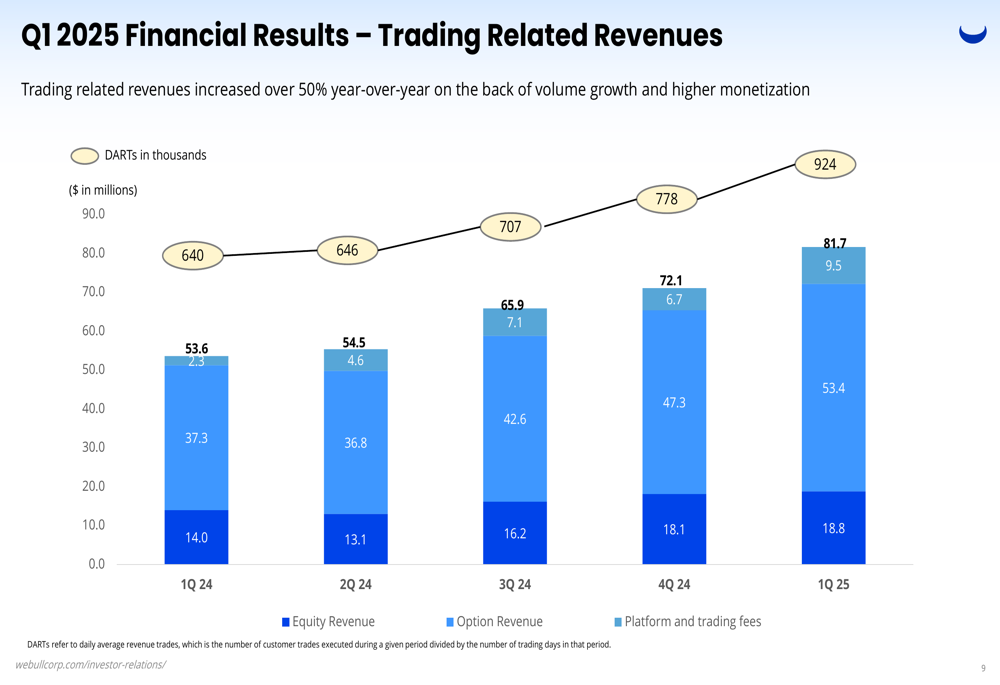
  • Webull reported strong top-line growth in recent quarters. In Q1 2025, revenues rose by 32 % year-over-year to about US$117 million, and the company swung from a loss to a net income of around US$12.9 million. (PR Newswire+2StockAnalysis+2)
  • In Q2 2025, revenue came in at roughly US$131.5 million, up ~46 % vs Q2 2024 (~US$90.1 million) — showing accelerating growth in that period. (Investing.com+2WallStreetZen+2)
  • The stock has already fallen steeply from its earlier highs. Some market commentary suggests that when a stock has dropped hard, it might set up for a rebound if fundamentals improve. (Value The Markets+1)
  • Webull’s business model—zero-commission trading, fractional shares, global expansion—remains relevant in the growing world of retail finance and digital investing. Supportive structural tailwinds could help long-term. For example, the company claims global reach and a broad user base. (AInvest+1)

2. The Case Against: Key Risks That Still Loom

  • While revenue is growing, the annual full-year revenue for 2024 was essentially flat compared to 2023 (~US$390.2 million in both years) — indicating growth isn’t guaranteed or smooth. (WallStreetZen+1)
  • Profitability remains a concern: Return on equity and profit margins are weak or negative in many recent periods. (Simply Wall St+1)
  • The company competes in a crowded sector (digital brokerages, fintech platforms) with strong incumbents like Robinhood Markets. Analysts have flagged slower growth vs bigger rivals. (Webull+1)
  • There are corporate-structure complexities and lock-up/share dilution risks. A financial-news piece noted that if the stock trades above US$12 for 20 days, up to 25 % of locked shares might be released, potentially expanding supply. (Money Morning)

3. Why “At All-Time Lows” Could Be a Turning Point

Many stocks trade at depressed levels because the market has lost confidence. That creates a scenario where:

  • The “bad news” may be largely baked into the price, so incremental positive surprises can have outsized impact.
  • A low base offers more upside potential if things go well (i.e., less downside cushion).
    For Webull, if growth continues and profitability improves, the market could reward the turnaround possibility. On the flip side, if risks intensify, the low price could still go lower.

4. What to Monitor Going Forward

Investors considering Webull should keep a close eye on:

  • Upcoming quarterly results: Are revenues continuing to grow at high rates? Are expenses under control?
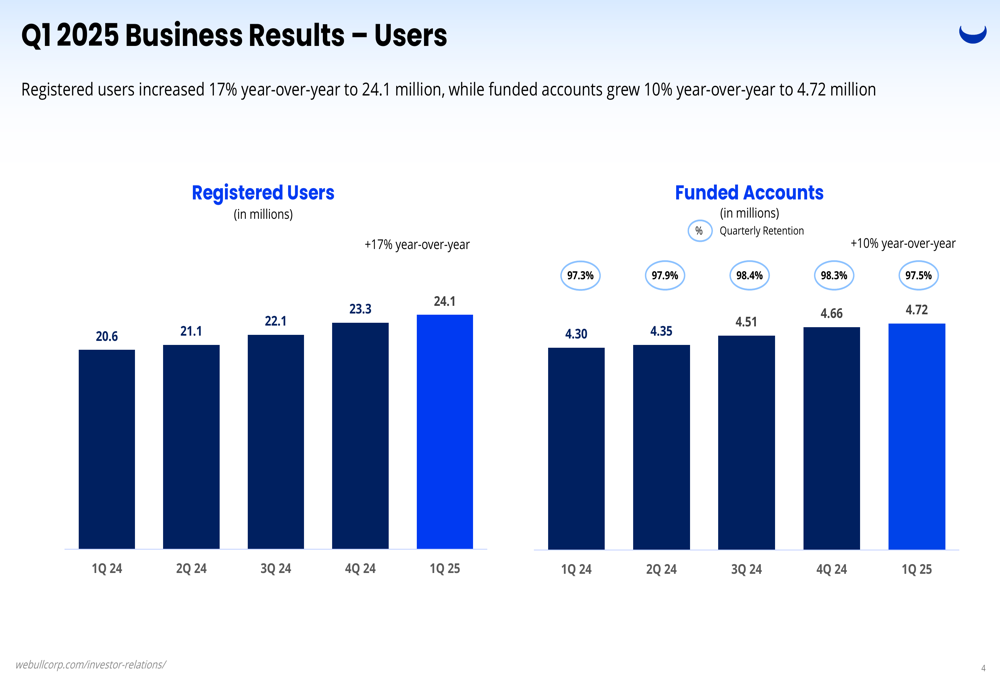
  • Account growth and trading volume: How many active/funded accounts? What is customer asset growth?
  • Profit margins and net income: Are they trending toward consistent profitability?
  • Share-count / dilution risk: Are there significant new shares coming? Are previously locked shares being released?
  • Competitive dynamics and regulatory risks: Any new regulatory headwinds? How is Webull distinguishing itself vs other brokers?

5. Summary: A High-Risk, High-Potential Setup

In short: Webull is not a safe, boring investment. It carries meaningful operational and structural risk. But the combination of decent recent growth, a depressed share price, and a business model aligned with retail investing trends makes it plausible that at these levels, the upside could be interesting if things go right.

For investors comfortable with risk and looking for speculative exposure in the fintech/brokerage space, BULL might offer a worthwhile “bet.” For more conservative investors, the uncertainty may be too large.

Before investing, one should do their own due diligence, weigh risk vs reward carefully, and consider how this fits into an overall portfolio.


https://content.stockstotrade.com/wp-content/uploads/2025/10/watermarked_BULL_2025-10-10T14-05-scaled.png
https://csv-storage.forexpros.com/slides/ddc6db61fc7fc26d73488dab0804c906c7608c6f44146b9c7b259e50f98c47a1.png
https://csv-storage.forexpros.com/slides/dd5e6af6d041cd8914e7ac5f888864b9d9ff042c7f3bad9d0e458507b3c5eab2.png

Above: Representative charts showing (1) share-price path of Webull (BULL), (2) recent revenue growth, (3) user growth/expansion metrics.


Disclaimer

This is not financial advice. The information above is for educational and informational purposes only. Investing involves risks, including loss of principal. Always consult a qualified financial advisor regarding your specific situation.

References

AINVEST. (2025, April 20). Webull stock: 2 reasons to buy, 4 reasons to sell. AINVEST.com. https://www.ainvest.com/news/webull-stock-2-reasons-buy-4-reasons-sell-2504-63/

Investing.com. (2025, August 8). Webull Q2 2025 slides: Revenue jumps 46%, achieves third profitable quarter. Investing.com. https://www.investing.com/news/company-news/webull-q2-2025-slides-revenue-jumps-46-achieves-third-profitable-quarter-93CH-4215463

Money Morning. (2025, April 14). Warning: Read this before you buy Webull (BULL) stock. MoneyMorning.com. https://moneymorning.com/2025/04/14/warning-read-this-before-you-buy-webull-bull-stock/

PR Newswire. (2025, May 13). Webull reports first quarter 2025 financial results. PR Newswire. https://www.prnewswire.com/news-releases/webull-reports-first-quarter-2025-financial-results-302463555.html

Simply Wall St. (2025). Webull Corporation (NASDAQ: BULL) past performance and analysis. SimplyWall.st. https://simplywall.st/stocks/us/diversified-financials/nasdaq-bull/webull/past

Value The Markets. (2025, June 30). Webull Corporation stock (BULL): Is it a buy at these levels? ValueTheMarkets.com. https://www.valuethemarkets.com/analysis/webull-corporation-stock-bull

WallStreetZen. (2025). Webull (BULL) revenue 2023–2025. WallStreetZen.com. https://www.wallstreetzen.com/stocks/us/nasdaq/bull/revenue

Webull. (2025, July 22). Webull news update: Market and company overview. Webull.com. https://www.webull.com/news/12711197501137920

Understanding Your Body’s Alarm Systems

Our bodies are incredible machines—constantly adjusting, healing, and protecting us from harm. But when something goes wrong, from infection to stress or injury, the body has a built-in set of alarms and defense systems that kick into gear. Understanding these reactions can help you recognize early warning signs and take better care of your health.


1. The Stress Response

When the brain senses danger—physical or emotional—it signals the adrenal glands to release adrenaline and cortisol. This is the “fight or flight” reaction. Your heart rate speeds up, blood pressure rises, and muscles tense, preparing your body to act fast.

Common triggers: Anxiety, trauma, or sudden physical exertion.
What to watch for: Rapid heartbeat, sweating, or feeling “on edge.”


2. The Immune Response

When bacteria, viruses, or toxins invade, the immune system launches an attack. White blood cells swarm to the area, causing inflammation—redness, swelling, and warmth—as part of the healing process.

Common triggers: Infection, injury, or allergic reactions.
What to watch for: Fever, fatigue, or localized pain.


3. The Pain Response

Pain is the body’s alarm system. Nerves send signals to the brain to warn that something is wrong. Acute pain helps you react quickly—like pulling your hand away from a hot surface—while chronic pain can signal ongoing issues that need attention.

Common triggers: Injury, inflammation, or nerve damage.
What to watch for: Persistent pain that doesn’t improve with rest or medication.


4. The Hormonal Response

Hormones regulate nearly every process in the body. When something goes off balance—like blood sugar or thyroid function—the body compensates by adjusting hormone levels. Over time, these shifts can lead to fatigue, mood swings, or weight changes.

Common triggers: Stress, poor diet, lack of sleep, or illness.
What to watch for: Sudden changes in energy, appetite, or emotional state.


5. The Cellular Repair Response

Cells are constantly repairing themselves. When DNA is damaged—by sun exposure, toxins, or normal aging—the body sends repair enzymes to fix it. If this process fails, it can lead to mutations or diseases.

Common triggers: UV light, pollution, smoking, or aging.
What to watch for: Slow healing wounds or unusual skin changes.


📊 Chart: How the Body Responds When Something Goes Wrong

Body SystemTriggerResponseCommon SymptomsPurpose
Nervous SystemStress, fear, traumaFight-or-flight (adrenaline surge)Fast heartbeat, sweating, tensionPrepare for danger
Immune SystemInfection or injuryInflammation, feverSwelling, fatigue, painDestroy invaders and heal tissue
Endocrine SystemHormonal imbalanceHormone release or suppressionMood swings, weight changeMaintain internal balance (homeostasis)
MusculoskeletalInjury or strainMuscle contraction, repair signalsPain, swelling, stiffnessProtect and heal damaged tissue
Cellular/DNA RepairUV, toxins, agingDNA repair or apoptosisSlow healing, fatiguePrevent mutation and maintain function

Why it Matters

Recognizing how your body responds to stress, injury, or imbalance helps you take control of your health. Awareness leads to action—and action leads to prevention.

Zeta Global: A High-Growth Martech Investment Opportunity

Quick take: Zeta Global, the AI-driven marketing cloud, has delivered a string of better-than-expected quarters, is guiding to another year of strong revenue growth, and just made a big acquisition to expand its loyalty and enterprise footprint. That combination — accelerating revenue, improving profitability guidance, and strategic M&A — is why some investors are re-rating the stock. Below: the facts, the catalyst, a compact risk view, and a chart/table that show the growth story.


Headlines and the data points you need

  • Zeta reported Q2 2025 revenue of $308.4 million, a ~35% year-over-year increase vs. the prior year quarter. (Nasdaq)
  • For full-year 2024 Zeta generated about $1.01 billion in revenue. (Zeta Global)
  • Management has repeatedly “beat and raise” — most recently increasing full-year 2025 revenue guidance to $1,258–$1,268 million (midpoint ~$1.263B) and raising Adjusted-EBITDA and free-cash-flow ranges as well. Those revisions reflect faster growth and improving margins. (Zeta Global+1)
  • Zeta announced a large acquisition (Marigold’s enterprise business — including Cheetah Digital, Selligent, Sailthru and other assets) to strengthen loyalty and enterprise offerings, a move management says accelerates international reach and cross-sell opportunities. (Zeta Global+1)
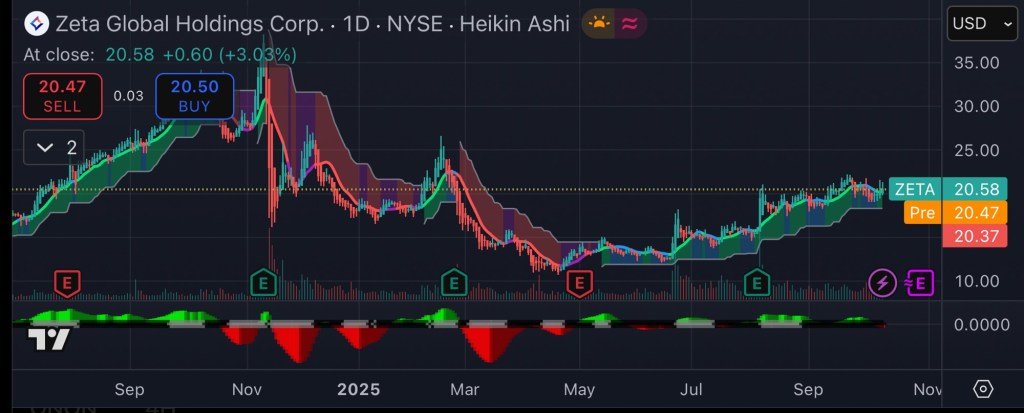
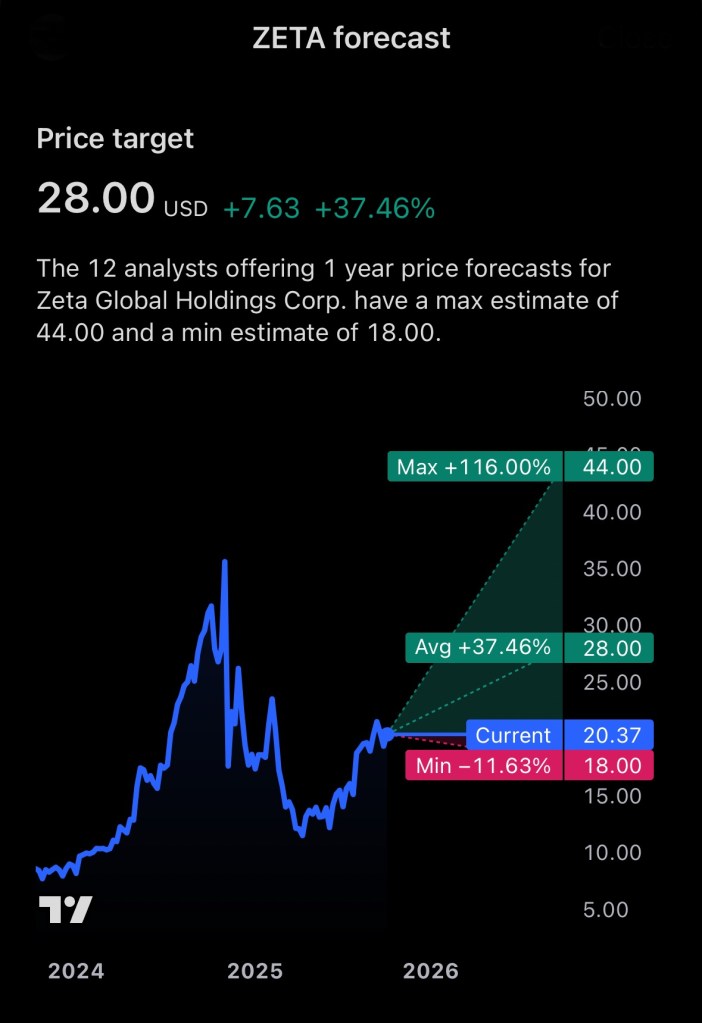
  • Market snapshot (at time of writing): share price ≈ $20.37 and market cap in the mid-$4 billion range — investors are paying for fast growth but also a path to profitability. (Yahoo Finance)

Why this could be an attractive investment (the bull case)

  1. High single- to double-digit top-line growth that’s accelerating. Zeta’s recent quarters show consistent revenue acceleration (Q2 ’25 +35% YoY), a key signal for growth investors in the martech/adtech space. Management’s upward guidance for FY-2025 reinforces that it’s not just one quarter of outperformance. (Nasdaq+1)
  2. Improving operating leverage and cash generation. The company has raised Adjusted-EBITDA and free-cash-flow guidance, pointing to margin expansion. That’s important: investors reward companies that can turn revenue growth into sustainable profits and cash. (Zeta Global)
  3. Strategic M&A that fills capability gaps and expands addressable market. The Marigold enterprise business deal adds loyalty platforms and prominent enterprise customers (and EMEA coverage), enabling more cross-sell inside an existing customer base and a larger recurring revenue pool. If integration goes smoothly, this can boost both revenue and churn resilience. (Zeta Global+1)
  4. Compelling unit economics at scale. Zeta reports improving ARPU (average revenue per scaled customer) and strong net revenue retention metrics, which suggest existing customers are spending more — a powerful multiplier for SaaS-like businesses. (Company disclosures highlight rising Scaled and Super-Scaled customer ARPU.) (Zeta Global+1)
  5. Positive technical / market interest. Stock research outlets have recently upgraded technical scores (e.g., IBD RS rating rise), indicating renewed investor interest that can amplify returns if fundamentals keep improving.( Investors.com)

Compact table: key metrics (source notes below)

MetricValue (most recent / guidance)Source
Q2 2025 revenue$308.4M (+35% YoY)Company results / press release. (Nasdaq)
FY 2024 revenue$1,006M (≈$1.01B)FY 2024 report. (Zeta Global)
FY 2025 revenue guidance$1,258–$1,268M (midpoint ≈ $1.263B)Company guidance (beat & raise). (Zeta Global)
Adjusted-EBITDA guidance (FY-25)~$263.6–$265.6MCompany guidance. (Zeta Global)
Share price (snapshot)~$20.37Market quote (timestamped).
Market cap (approx.)Mid ~$4B–$4.8BMarket data providers. (Yahoo Finance+1)

Visual: revenue comparison (Q2 vs prior year, FY 2024 vs FY 2025 guidance)

I created a compact chart and table comparing:

  • Q2 2024 (estimate) vs Q2 2025 actual, and
  • FY 2024 actual vs FY 2025 guidance midpoint.

(Chart and table were prepared from the company reporting and guidance figures cited above).

Sources for the plotted numbers: Q2 2025 revenue and YoY change, FY 2024 totals, and FY 2025 guidance. (Nasdaq+2Zeta Global+2)


Risks — what could go wrong

  • Execution risk on M&A and integration. The Marigold enterprise assets are substantial; integration issues, customer churn, or higher-than-expected costs could blunt the benefits. (Zeta Global)
  • Valuation vs. growth tradeoff. The stock price reflects future growth expectations. If revenue growth slows or margin expansion stalls, multiples can compress quickly. (Yahoo Finance)
  • Adtech / martech competition and cyclicality. The market is competitive (large incumbents and many specialists). Ad/spend cyclicality could affect revenue. Company performance depends on continued client spend and retention. (Zeta Global)
  • Profitability not yet fully GAAP positive. Zeta has narrowed losses but still reports GAAP net losses; investors should watch sustained EBITDA and free-cash-flow conversion. (Zeta Global)

Bottom line (concise)

Zeta Global presents a classic high-growth martech investment case: accelerating revenue, improving profitability guidance, and strategic M&A that extends its product footprint and international reach. That combination can create durable revenue expansion and margin improvement — the ingredients growth investors pay for. But the stock still carries execution and integration risk and depends on preserving high retention and ARPU. If you like fast growth with a clear path to margin expansion and accept the M&A/integration risk, Zeta is a name to research further; if you are risk-averse or need immediate GAAP profitability, it may not fit.

Disclosure:

I do not own any stock or have any financial interest in Zeta Global Holdings (NYSE: $ZETA). This article is for informational purposes only and should not be considered financial or investment advice. Investing in stocks carries risks, and past performance is not indicative of future results. Always conduct your own research and consult with a qualified financial professional before making any investment decisions.

References

Zeta Global Holdings Corp. (2025, August 8). Zeta reports second quarter 2025 financial results; raises full-year 2025 guidance. Zeta Global Investor Relations. Retrieved from https://investors.zetaglobal.com/

Zeta Global Holdings Corp. (2024, February 28). Zeta reports fourth quarter and full-year 2024 results. Zeta Global Investor Relations. Retrieved from https://investors.zetaglobal.com/

Investor’s Business Daily. (2025, September). Zeta Global stock analysis and relative strength update. Investor’s Business Daily. Retrieved from https://www.investors.com/

Reuters. (2025, September). Zeta Global Holdings Corp. company profile and financial summary (ZETA.O). Reuters Markets. Retrieved from https://www.reuters.com/

MarketWatch. (2025, October). Zeta Global Holdings Corp. stock quote & financials (ZETA). MarketWatch. Retrieved from https://www.marketwatch.com/

Business Wire. (2025, July 31). Zeta Global announces acquisition of Marigold’s enterprise business to expand loyalty and EMEA presence. Business Wire. Retrieved from https://www.businesswire.com/

Yahoo Finance. (2025, October 9). Zeta Global Holdings Corp. (ZETA) stock price and market cap data. Yahoo Finance. Retrieved from https://finance.yahoo.com/

Being a Caregiver: Supporting Others While Remembering to Care for Yourself

Being a caregiver is often described as one of the most selfless roles a person can take on. Whether caring for an aging parent, a child with special needs, or a loved one facing illness, caregivers provide daily support, patience, and compassion that are nothing short of extraordinary. But while they devote themselves to others, many caregivers struggle to prioritize their own well-being.

According to recent studies, caregivers are more likely to experience stress, fatigue, and health challenges due to the demands of their responsibilities. Experts agree that while the focus is naturally on the person receiving care, it’s just as important to provide resources and relief for those who give it.

So where can caregivers turn when it’s time to think about their own needs? The answer lies in small but meaningful acts of support from the community. If you know a caregiver who may need a helping hand, here are some simple yet effective ways you can make a difference:

  • Offer Practical Help – Everyday tasks like grocery shopping, meal prep, or running errands can be a heavy burden. Volunteering your time for these chores can give caregivers much-needed breathing room.
  • Be a Listening Ear – Sometimes, what a caregiver needs most is someone to talk to. Offering compassion and a safe space to share can ease feelings of isolation.
  • Encourage Self-Care – Remind caregivers that their health matters, too. Encourage them to rest, exercise, or take short breaks without guilt.
  • Connect Them to Resources – Local support groups, respite care services, and online communities can provide additional help and understanding.

“Caregivers are the backbone of our communities, but they can’t pour from an empty cup,” said one local health advocate. “Showing kindness and offering support ensures that they, too, have the strength to continue their vital role.”

Being a caregiver is about love and responsibility—but it should never mean going it alone. By recognizing the challenges caregivers face and stepping in with support, friends, neighbors, and family members can play a key role in making their journey a little lighter.

What Sundays Mean to Me: A Day of Rest, Reflection, and Renewal

For many, Sunday is more than just another square on the calendar—it’s a reset button, a pause, and a chance to breathe before the week ahead. For me, Sundays hold a deeper significance. They represent balance: the space between productivity and rest, routine and spontaneity, silence and connection.

Sundays often begin slower than the rest of the week. The alarm clock stays quiet, and the world outside seems to move at a gentler pace. “Sunday clears away the rust of the whole week,” wrote Joseph Addison, and I couldn’t agree more. It’s a time to shake off the weight of deadlines, appointments, and responsibilities, even if only for a few hours.

For some, Sundays carry spiritual importance. Whether it’s attending a church service, practicing meditation, or simply reflecting on life, Sunday encourages grounding. As Mahatma Gandhi once said, “There is more to life than increasing its speed.” Sundays remind me of that truth.

It’s also a day for simple joys: a family meal, a walk in the park, catching up on reading, or even just sitting quietly with a cup of coffee. In those small rituals, I find peace. Henry Wadsworth Longfellow described it best: “Sunday is the golden clasp that binds together the volume of the week.”

But Sundays aren’t only about slowing down—they’re also about preparation. They give me space to plan, to envision what’s ahead, and to step into Monday with clarity rather than chaos. In that way, Sunday serves as both an ending and a beginning.

Ultimately, Sundays mean presence. They remind me that life isn’t just about moving forward; it’s also about standing still, appreciating where I am, and finding gratitude for the moment I’m in.

10 Quotes to Embrace True Happiness: Wisdom for Everyday Life

Amid busy schedules, constant digital noise, and everyday stressors, the pursuit of true happiness remains a timeless quest. While philosophers, poets, and leaders throughout history have debated the meaning of joy, many have also offered words of wisdom that continue to inspire generations.

Here are ten quotes to embrace true happiness, reminding us that contentment often lies in perspective rather than possessions:

  1. Aristotle“Happiness depends upon ourselves.”
    A reminder that joy is cultivated from within, not handed to us by circumstance.
  2. Dalai Lama“Happiness is not something ready-made. It comes from your own actions.”
    Echoing the idea that daily choices and kindness shape our state of mind.
  3. Eleanor Roosevelt“Happiness is not a goal… it’s a by-product of a life well lived.”
    Joy emerges as a natural result of living with purpose and integrity.
  4. Albert Schweitzer“Happiness is nothing more than good health and a bad memory.”
    A humorous yet practical perspective on letting go of the past and valuing well-being.
  5. Victor Hugo“The supreme happiness of life is the conviction that we are loved.”
    Happiness often thrives in the warmth of human connection.
  6. Marcus Aurelius“Very little is needed to make a happy life; it is all within yourself.”
    A Stoic truth that joy is less about excess and more about appreciation.
  7. Audrey Hepburn“The most important thing is to enjoy your life—to be happy—it’s all that matters.”
    A simple yet profound truth from a timeless icon.
  8. Mahatma Gandhi“Happiness is when what you think, what you say, and what you do are in harmony.”
    Alignment of values and actions remains key to peace of mind.
  9. Buddha“There is no path to happiness: happiness is the path.”
    A spiritual perspective emphasizing that joy is a way of living, not a final destination.
  10. Ralph Waldo Emerson“For every minute you are angry you lose sixty seconds of happiness.”
    A gentle reminder to choose joy over resentment.

Taken together, these insights highlight that happiness is less about external gains and more about cultivating gratitude, love, simplicity, and authenticity. In today’s fast-paced society, pausing to reflect on these words may help us rediscover the power of joy in everyday life.

How I Keep My Brain Sharp as I Age

As I’ve gotten older, I’ve realized that taking care of my mind is just as important as taking care of my body. It’s not just about preventing memory lapses; it’s about staying sharp, curious, and engaged with life. Over the years, I’ve adopted several habits that I truly believe have helped me keep my brain in good shape—and the science backs it up.

Exercise Is My Non-Negotiable
I’ve found that moving my body daily, whether it’s a brisk walk, yoga, or light weightlifting, doesn’t just keep me physically fit—it clears my mind. Research shows that exercise increases blood flow to the brain and encourages the growth of new brain cells. I can feel the difference in my focus and energy on the days I move versus the days I don’t.

Food as Brain Fuel
What I eat has changed a lot. I’ve cut back on processed foods and leaned more into fresh vegetables, fruits, nuts, and fish. The Mediterranean diet, which many doctors recommend, isn’t just about longevity—it’s about mental clarity. When I eat clean, my thoughts feel sharper and my mood steadier.

Protecting My Sleep
In my younger years, I thought burning the candle at both ends was normal. Now, I treat sleep like medicine. Deep sleep helps my brain “clean house,” and when I get a solid 7–8 hours, my memory and problem-solving are noticeably better.

The Power of People
I’ve learned that socializing isn’t just about fun—it’s brain protection. Conversations, laughter, and community keep me engaged and emotionally balanced. Isolation, on the other hand, makes my mind feel sluggish.

Challenging My Mind Daily
Reading books, doing puzzles, or even trying to learn new skills keeps my brain on its toes. Recently, I started learning a new language—it’s humbling, but I can feel my brain stretching in ways it hasn’t in years.

Managing Stress the Hard Way
Stress used to be my constant companion. Over time, I noticed how it clouded my judgment and wore me down mentally. Now, I practice mindfulness and deep breathing. Even a few minutes of stillness in the morning changes how my entire day feels.

Checking In on My Health
Finally, I don’t ignore routine checkups anymore. Managing blood pressure, cholesterol, and overall health directly affects brain health. I’ve seen too many people neglect this, only to face cognitive issues later in life.

At the end of the day, brain health is not about one magic trick—it’s about small, consistent habits. For me, it’s a mix of movement, nourishment, rest, connection, curiosity, peace of mind, and medical awareness. And I can honestly say, these practices make me feel sharper, more alive, and ready for whatever comes next.

How Sports Have Enhanced My Health and Can Improve Yours Too

When I think about the biggest changes I’ve made to improve my health, sports are at the top of the list. For me, playing and staying active isn’t just about competition—it’s about feeling stronger, clearer, and more energized in my daily life.

Over the years, I’ve noticed how much better I feel when I make time for sports. My body is healthier, my mind is sharper, and even my outlook on life improves. The more I commit to staying active, the more I see the benefits build on each other.

What Sports Do for Me (and Can Do for You)

Here are some of the ways sports have made a positive impact on my health:

  • Boost my heart health – I can feel the difference in my stamina and endurance.
  • Build stronger muscles and bones – Staying active has helped me feel stronger and more balanced.
  • Help me manage weight – Playing sports burns off stress (and calories) at the same time.
  • Improve my flexibility and coordination – I move better and feel less stiff.
  • Reduce my stress and anxiety – There’s nothing like the mood boost after a good workout or game.
  • Help me sleep better – When I stay active, I fall asleep faster and rest deeper.
  • Strengthen my immune system – I notice I get sick less often.
  • Give me social connections – Team sports especially help me bond with others and feel part of something bigger.
  • Sharpen my focus – I concentrate better and make clearer decisions.
  • Add years to my life – Staying active makes me feel younger and healthier every day.

Why I Keep Playing

For me, sports are more than exercise—they’re a way to build confidence, relieve stress, and invest in my future health. No matter your age or skill level, there’s a sport out there for you. The key is finding something you enjoy and sticking with it.

I’ve learned that when I make time for sports, I’m not just playing a game—I’m building a better version of myself. And you can too.

What “Healthy and Wealthy” Means to Me

Success is often measured in numbers—bank accounts, investments, or even social media followers—the deeper meaning of being both healthy and wealthy can sometimes get lost. For me, the phrase isn’t about chasing material excess, but about balance, fulfillment, and sustainability in both body and mind.

Health as the Foundation
Health is more than the absence of illness; it’s the daily practice of treating your body and mind with respect. For me, that includes maintaining energy to do the things I love, fueling my body with good food, and taking time to reduce stress. Without health, even the greatest fortune feels empty. Wealth is meaningless if you don’t have the strength or clarity to enjoy it.

Wealth Beyond Money
When I think of being “wealthy,” I don’t immediately picture luxury cars or sprawling mansions. Instead, I see freedom—the freedom to spend time with loved ones, pursue passions, and give back to the community. True wealth, to me, includes financial security, but also peace of mind, strong relationships, and opportunities to grow.

Healthy and Wealthy Together
The two go hand in hand. Being healthy allows me to work toward financial stability with focus and determination. Being financially stable allows me to invest in my health—whether that’s quality healthcare, nutritious food, or the ability to take time off when I need it. Together, they create a cycle that builds not just a lifestyle, but a legacy.

A Personal Vision
Ultimately, “healthy and wealthy” means living in a way that supports long-term happiness. It’s about waking up each day with energy, knowing I have the resources to handle life’s challenges, and feeling grateful for both the small and big wins. To me, that’s real success—being rich in health, rich in love, and rich in purpose.