“At the Trough” — Why Webull Corporation (NASDAQ: BULL) Might Be Worth a Fresh Look

TAMPA – October 21, 2025 — The brokerage and trading-platform firm Webull Corporation (ticker BULL) finds itself trading near multi-year lows. For value-oriented investors, that raises a classic question: Is this a moment of opportunity, or a warning that things are worse than they appear?

Here’s what investors need to know:


1. The Case For: Potential Upside From a Low Base

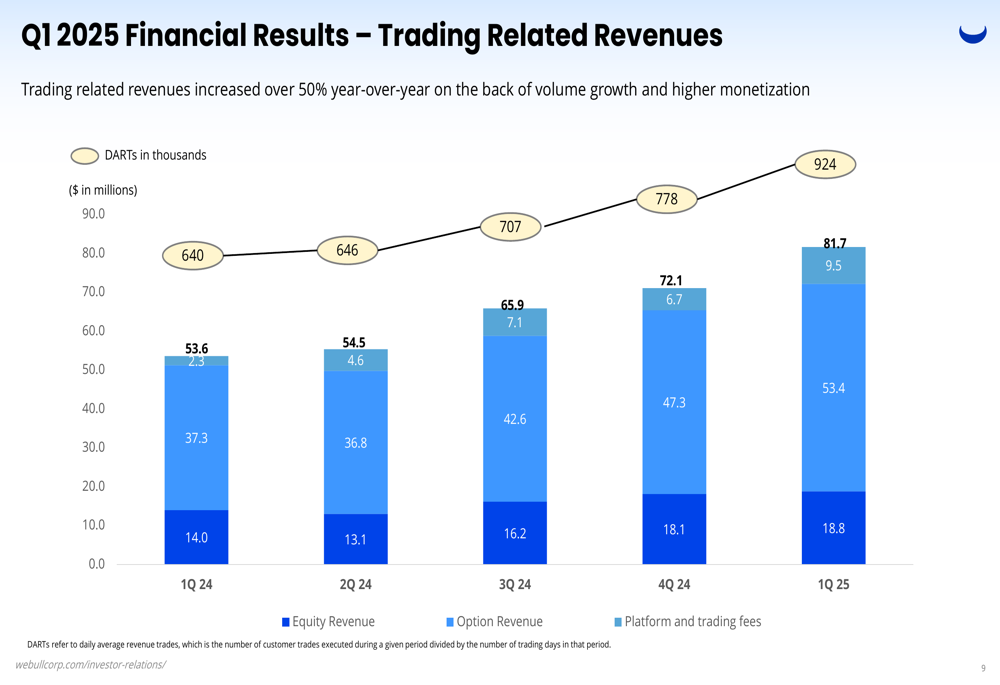
  • Webull reported strong top-line growth in recent quarters. In Q1 2025, revenues rose by 32 % year-over-year to about US$117 million, and the company swung from a loss to a net income of around US$12.9 million. (PR Newswire+2StockAnalysis+2)
  • In Q2 2025, revenue came in at roughly US$131.5 million, up ~46 % vs Q2 2024 (~US$90.1 million) — showing accelerating growth in that period. (Investing.com+2WallStreetZen+2)
  • The stock has already fallen steeply from its earlier highs. Some market commentary suggests that when a stock has dropped hard, it might set up for a rebound if fundamentals improve. (Value The Markets+1)
  • Webull’s business model—zero-commission trading, fractional shares, global expansion—remains relevant in the growing world of retail finance and digital investing. Supportive structural tailwinds could help long-term. For example, the company claims global reach and a broad user base. (AInvest+1)

2. The Case Against: Key Risks That Still Loom

  • While revenue is growing, the annual full-year revenue for 2024 was essentially flat compared to 2023 (~US$390.2 million in both years) — indicating growth isn’t guaranteed or smooth. (WallStreetZen+1)
  • Profitability remains a concern: Return on equity and profit margins are weak or negative in many recent periods. (Simply Wall St+1)
  • The company competes in a crowded sector (digital brokerages, fintech platforms) with strong incumbents like Robinhood Markets. Analysts have flagged slower growth vs bigger rivals. (Webull+1)
  • There are corporate-structure complexities and lock-up/share dilution risks. A financial-news piece noted that if the stock trades above US$12 for 20 days, up to 25 % of locked shares might be released, potentially expanding supply. (Money Morning)

3. Why “At All-Time Lows” Could Be a Turning Point

Many stocks trade at depressed levels because the market has lost confidence. That creates a scenario where:

  • The “bad news” may be largely baked into the price, so incremental positive surprises can have outsized impact.
  • A low base offers more upside potential if things go well (i.e., less downside cushion).
    For Webull, if growth continues and profitability improves, the market could reward the turnaround possibility. On the flip side, if risks intensify, the low price could still go lower.

4. What to Monitor Going Forward

Investors considering Webull should keep a close eye on:

  • Upcoming quarterly results: Are revenues continuing to grow at high rates? Are expenses under control?
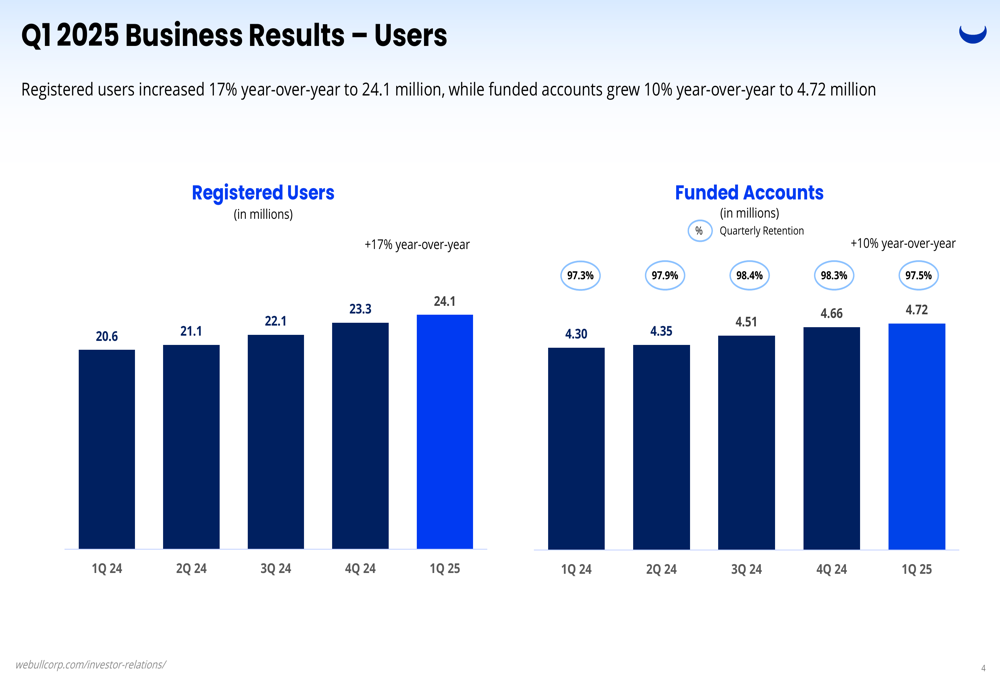
  • Account growth and trading volume: How many active/funded accounts? What is customer asset growth?
  • Profit margins and net income: Are they trending toward consistent profitability?
  • Share-count / dilution risk: Are there significant new shares coming? Are previously locked shares being released?
  • Competitive dynamics and regulatory risks: Any new regulatory headwinds? How is Webull distinguishing itself vs other brokers?

5. Summary: A High-Risk, High-Potential Setup

In short: Webull is not a safe, boring investment. It carries meaningful operational and structural risk. But the combination of decent recent growth, a depressed share price, and a business model aligned with retail investing trends makes it plausible that at these levels, the upside could be interesting if things go right.

For investors comfortable with risk and looking for speculative exposure in the fintech/brokerage space, BULL might offer a worthwhile “bet.” For more conservative investors, the uncertainty may be too large.

Before investing, one should do their own due diligence, weigh risk vs reward carefully, and consider how this fits into an overall portfolio.

https://content.stockstotrade.com/wp-content/uploads/2025/10/watermarked_BULL_2025-10-10T14-05-scaled.png
https://csv-storage.forexpros.com/slides/ddc6db61fc7fc26d73488dab0804c906c7608c6f44146b9c7b259e50f98c47a1.png
https://csv-storage.forexpros.com/slides/dd5e6af6d041cd8914e7ac5f888864b9d9ff042c7f3bad9d0e458507b3c5eab2.png

Above: Representative charts showing (1) share-price path of Webull (BULL), (2) recent revenue growth, (3) user growth/expansion metrics.


Disclaimer

This is not financial advice. The information above is for educational and informational purposes only. Investing involves risks, including loss of principal. Always consult a qualified financial advisor regarding your specific situation.

References

AINVEST. (2025, April 20). Webull stock: 2 reasons to buy, 4 reasons to sell. AINVEST.com. https://www.ainvest.com/news/webull-stock-2-reasons-buy-4-reasons-sell-2504-63/

Investing.com. (2025, August 8). Webull Q2 2025 slides: Revenue jumps 46%, achieves third profitable quarter. Investing.com. https://www.investing.com/news/company-news/webull-q2-2025-slides-revenue-jumps-46-achieves-third-profitable-quarter-93CH-4215463

Money Morning. (2025, April 14). Warning: Read this before you buy Webull (BULL) stock. MoneyMorning.com. https://moneymorning.com/2025/04/14/warning-read-this-before-you-buy-webull-bull-stock/

PR Newswire. (2025, May 13). Webull reports first quarter 2025 financial results. PR Newswire. https://www.prnewswire.com/news-releases/webull-reports-first-quarter-2025-financial-results-302463555.html

Simply Wall St. (2025). Webull Corporation (NASDAQ: BULL) past performance and analysis. SimplyWall.st. https://simplywall.st/stocks/us/diversified-financials/nasdaq-bull/webull/past

Value The Markets. (2025, June 30). Webull Corporation stock (BULL): Is it a buy at these levels? ValueTheMarkets.com. https://www.valuethemarkets.com/analysis/webull-corporation-stock-bull

WallStreetZen. (2025). Webull (BULL) revenue 2023–2025. WallStreetZen.com. https://www.wallstreetzen.com/stocks/us/nasdaq/bull/revenue

Webull. (2025, July 22). Webull news update: Market and company overview. Webull.com. https://www.webull.com/news/12711197501137920

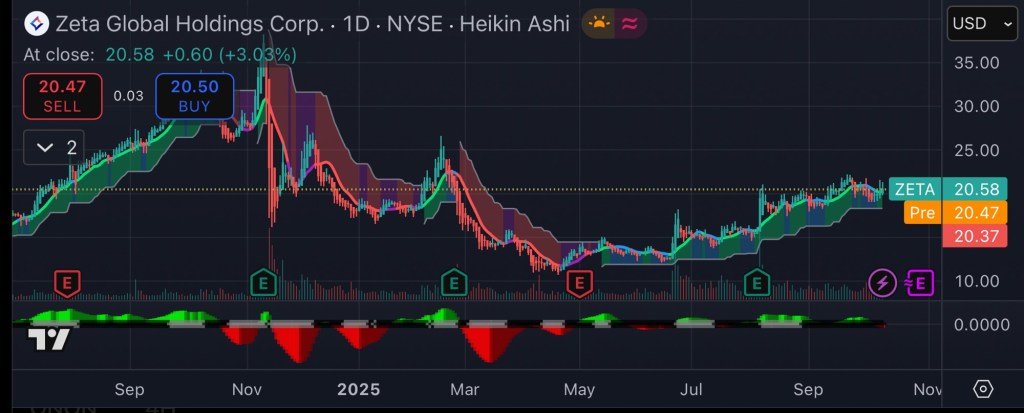
Zeta Global: A High-Growth Martech Investment Opportunity

Quick take: Zeta Global, the AI-driven marketing cloud, has delivered a string of better-than-expected quarters, is guiding to another year of strong revenue growth, and just made a big acquisition to expand its loyalty and enterprise footprint. That combination — accelerating revenue, improving profitability guidance, and strategic M&A — is why some investors are re-rating the stock. Below: the facts, the catalyst, a compact risk view, and a chart/table that show the growth story.


Headlines and the data points you need

  • Zeta reported Q2 2025 revenue of $308.4 million, a ~35% year-over-year increase vs. the prior year quarter. (Nasdaq)
  • For full-year 2024 Zeta generated about $1.01 billion in revenue. (Zeta Global)
  • Management has repeatedly “beat and raise” — most recently increasing full-year 2025 revenue guidance to $1,258–$1,268 million (midpoint ~$1.263B) and raising Adjusted-EBITDA and free-cash-flow ranges as well. Those revisions reflect faster growth and improving margins. (Zeta Global+1)
  • Zeta announced a large acquisition (Marigold’s enterprise business — including Cheetah Digital, Selligent, Sailthru and other assets) to strengthen loyalty and enterprise offerings, a move management says accelerates international reach and cross-sell opportunities. (Zeta Global+1)
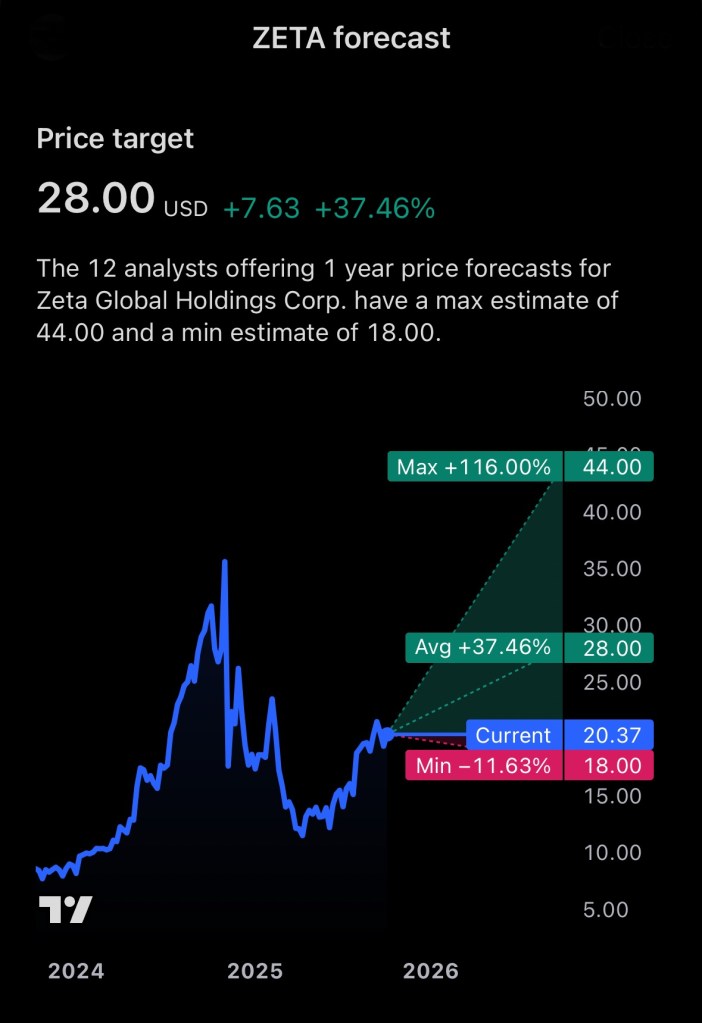
  • Market snapshot (at time of writing): share price ≈ $20.37 and market cap in the mid-$4 billion range — investors are paying for fast growth but also a path to profitability. (Yahoo Finance)

Why this could be an attractive investment (the bull case)

  1. High single- to double-digit top-line growth that’s accelerating. Zeta’s recent quarters show consistent revenue acceleration (Q2 ’25 +35% YoY), a key signal for growth investors in the martech/adtech space. Management’s upward guidance for FY-2025 reinforces that it’s not just one quarter of outperformance. (Nasdaq+1)
  2. Improving operating leverage and cash generation. The company has raised Adjusted-EBITDA and free-cash-flow guidance, pointing to margin expansion. That’s important: investors reward companies that can turn revenue growth into sustainable profits and cash. (Zeta Global)
  3. Strategic M&A that fills capability gaps and expands addressable market. The Marigold enterprise business deal adds loyalty platforms and prominent enterprise customers (and EMEA coverage), enabling more cross-sell inside an existing customer base and a larger recurring revenue pool. If integration goes smoothly, this can boost both revenue and churn resilience. (Zeta Global+1)
  4. Compelling unit economics at scale. Zeta reports improving ARPU (average revenue per scaled customer) and strong net revenue retention metrics, which suggest existing customers are spending more — a powerful multiplier for SaaS-like businesses. (Company disclosures highlight rising Scaled and Super-Scaled customer ARPU.) (Zeta Global+1)
  5. Positive technical / market interest. Stock research outlets have recently upgraded technical scores (e.g., IBD RS rating rise), indicating renewed investor interest that can amplify returns if fundamentals keep improving.( Investors.com)

Compact table: key metrics (source notes below)

MetricValue (most recent / guidance)Source
Q2 2025 revenue$308.4M (+35% YoY)Company results / press release. (Nasdaq)
FY 2024 revenue$1,006M (≈$1.01B)FY 2024 report. (Zeta Global)
FY 2025 revenue guidance$1,258–$1,268M (midpoint ≈ $1.263B)Company guidance (beat & raise). (Zeta Global)
Adjusted-EBITDA guidance (FY-25)~$263.6–$265.6MCompany guidance. (Zeta Global)
Share price (snapshot)~$20.37Market quote (timestamped).
Market cap (approx.)Mid ~$4B–$4.8BMarket data providers. (Yahoo Finance+1)

Visual: revenue comparison (Q2 vs prior year, FY 2024 vs FY 2025 guidance)

I created a compact chart and table comparing:

  • Q2 2024 (estimate) vs Q2 2025 actual, and
  • FY 2024 actual vs FY 2025 guidance midpoint.

(Chart and table were prepared from the company reporting and guidance figures cited above).

Sources for the plotted numbers: Q2 2025 revenue and YoY change, FY 2024 totals, and FY 2025 guidance. (Nasdaq+2Zeta Global+2)


Risks — what could go wrong

  • Execution risk on M&A and integration. The Marigold enterprise assets are substantial; integration issues, customer churn, or higher-than-expected costs could blunt the benefits. (Zeta Global)
  • Valuation vs. growth tradeoff. The stock price reflects future growth expectations. If revenue growth slows or margin expansion stalls, multiples can compress quickly. (Yahoo Finance)
  • Adtech / martech competition and cyclicality. The market is competitive (large incumbents and many specialists). Ad/spend cyclicality could affect revenue. Company performance depends on continued client spend and retention. (Zeta Global)
  • Profitability not yet fully GAAP positive. Zeta has narrowed losses but still reports GAAP net losses; investors should watch sustained EBITDA and free-cash-flow conversion. (Zeta Global)

Bottom line (concise)

Zeta Global presents a classic high-growth martech investment case: accelerating revenue, improving profitability guidance, and strategic M&A that extends its product footprint and international reach. That combination can create durable revenue expansion and margin improvement — the ingredients growth investors pay for. But the stock still carries execution and integration risk and depends on preserving high retention and ARPU. If you like fast growth with a clear path to margin expansion and accept the M&A/integration risk, Zeta is a name to research further; if you are risk-averse or need immediate GAAP profitability, it may not fit.

Disclosure:

I do not own any stock or have any financial interest in Zeta Global Holdings (NYSE: $ZETA). This article is for informational purposes only and should not be considered financial or investment advice. Investing in stocks carries risks, and past performance is not indicative of future results. Always conduct your own research and consult with a qualified financial professional before making any investment decisions.

References

Zeta Global Holdings Corp. (2025, August 8). Zeta reports second quarter 2025 financial results; raises full-year 2025 guidance. Zeta Global Investor Relations. Retrieved from https://investors.zetaglobal.com/

Zeta Global Holdings Corp. (2024, February 28). Zeta reports fourth quarter and full-year 2024 results. Zeta Global Investor Relations. Retrieved from https://investors.zetaglobal.com/

Investor’s Business Daily. (2025, September). Zeta Global stock analysis and relative strength update. Investor’s Business Daily. Retrieved from https://www.investors.com/

Reuters. (2025, September). Zeta Global Holdings Corp. company profile and financial summary (ZETA.O). Reuters Markets. Retrieved from https://www.reuters.com/

MarketWatch. (2025, October). Zeta Global Holdings Corp. stock quote & financials (ZETA). MarketWatch. Retrieved from https://www.marketwatch.com/

Business Wire. (2025, July 31). Zeta Global announces acquisition of Marigold’s enterprise business to expand loyalty and EMEA presence. Business Wire. Retrieved from https://www.businesswire.com/

Yahoo Finance. (2025, October 9). Zeta Global Holdings Corp. (ZETA) stock price and market cap data. Yahoo Finance. Retrieved from https://finance.yahoo.com/

Exploring Investment Strategies: How to Start with Just $1,000

Many people believe you need a large sum of money to start investing, but the truth is you can begin building wealth with as little as $1,000. The key lies in choosing the right strategy that fits your goals, risk tolerance, and timeline.

1. Index Funds

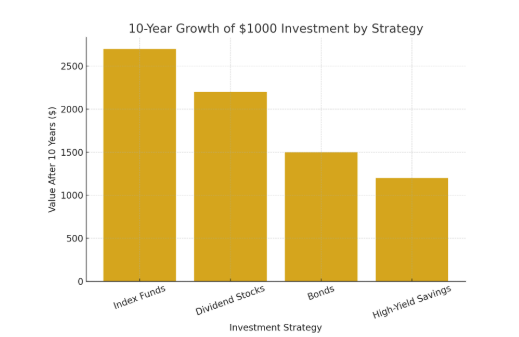
Index funds are one of the simplest and most effective ways to invest. By tracking the performance of a broad market index (like the S&P 500), they offer diversification and steady long-term growth. Historically, index funds have returned around 7–10% annually. With $1,000 invested, the potential compound growth over 10 years could more than double your money.

2. Dividend Stocks

Dividend-paying stocks provide the dual benefit of potential stock price appreciation and regular income through dividend payouts. This strategy appeals to investors who want to generate passive income while also building long-term value. Though returns may vary, reinvesting dividends can accelerate portfolio growth.

3. Bonds

For those seeking stability, bonds remain a trusted option. While the returns are lower compared to stocks, they provide predictable income and are less volatile. A $1,000 bond investment won’t skyrocket in value, but it can help protect capital while earning modest interest.

4. High-Yield Savings Accounts

Technically not an investment in the traditional sense, high-yield savings accounts are a safe place to grow your money while maintaining liquidity. While returns are the smallest of the group, they offer security and immediate access to funds, which is ideal for short-term goals.

Bottom Line

Starting with $1,000 may not make you rich overnight, but it sets the foundation for long-term financial growth. By choosing a strategy that aligns with your needs—whether it’s the steady growth of index funds, the income from dividends, the safety of bonds, or the liquidity of savings—you can begin your journey to building wealth today.

Retirement Planning: Starting Early vs. Starting Late – The Financial Fork in the Road

As Americans continue to grapple with economic uncertainty, rising living costs, and increasing life expectancy, the importance of retirement planning has never been more pressing. One of the biggest debates among financial experts and everyday workers alike is this: Is it better to start saving early, or can a late start still lead to a secure retirement?

The Power of Starting Early
Financial advisors almost universally agree—when it comes to retirement, time is your greatest asset. Starting in your 20s or early 30s allows compound interest to work its magic.

Take, for example, a 25-year-old who invests $300 a month in a retirement account with an average annual return of 7%. By the time they turn 65, they could accumulate nearly $725,000. On the other hand, someone who begins investing the same amount at age 40 would end up with just over $225,000 at retirement.

“Starting early doesn’t just mean you’ll have more saved—it also means you can afford to take less risk, contribute less monthly, and still enjoy financial freedom later,” says Michelle Harris, a certified financial planner in Chicago.

Early starters also have the advantage of weathering market volatility. They have decades to recover from downturns, allowing for a more aggressive, growth-oriented investment approach early on.

The Challenges—and Hope—of Starting Late
Still, not everyone has the means or knowledge to begin saving in their 20s. Life events such as student debt, low-paying jobs, or unexpected medical expenses can push retirement planning to the back burner.

“If you’re starting in your 40s or even 50s, the hill is steeper, but it’s not insurmountable,” says Tony Kim, a retirement strategist based in San Diego. “The key is discipline, increased contributions, and possibly working a bit longer.”

Late starters are often advised to max out retirement accounts like 401(k)s and IRAs, take advantage of catch-up contributions (available to those 50 and older), and consider delaying Social Security benefits to increase monthly payouts.

Financial experts also emphasize the importance of budgeting, eliminating debt, and making intentional lifestyle choices to accelerate savings.

A Matter of Mindset
Whether you start at 25 or 55, the most important step is simply to start. Procrastination is often the biggest enemy of retirement planning.

“Too many people think they have time or that it’s too late,” says Harris. “Both beliefs are harmful. The sooner you face your financial future, the better your options will be.”


Retirement planning is not a one-size-fits-all journey. Starting early gives investors more flexibility and freedom, but starting late doesn’t mean the game is over. With the right strategy, discipline, and mindset, it’s possible to secure a comfortable retirement at any age.

About the Author:

David Dandaneau is a insurance agent that covers the insurance and financial services industry. He is known for his insightful analysis and comprehensive coverage of market trends and regulatory developments.

AI-Led Revolution: Reshaping Stocks and Crypto Markets

In recent events, the convergence of Artificial Intelligence (AI) and financial markets has ushered in a new era of investment dynamics, propelling both traditional stocks and cryptocurrencies to unprecedented heights. With AI algorithms increasingly driving decision-making processes, investors are witnessing remarkable shifts in market behaviors and opportunities.

Stock Market Surge:

AI’s influence on stock markets has been profound, with algorithms swiftly analyzing vast datasets to predict market trends and identify lucrative investment opportunities. One notable example is the meteoric rise of Quantitative Hedge Funds like Renaissance Technologies, which extensively leverage AI for trading strategies. These funds have consistently outperformed traditional counterparts, showcasing AI’s prowess in navigating complex market landscapes.

Furthermore, AI-powered trading platforms such as Alpaca and Robinhood have democratized access to sophisticated investment tools, empowering retail investors to make data-driven decisions previously reserved for institutional players. These platforms utilize machine learning algorithms to provide personalized investment recommendations and real-time market insights, leveling the playing field for investors of all backgrounds.

Crypto Craze Amplified:

In the realm of cryptocurrencies, AI has emerged as a game-changer, fueling unparalleled growth and innovation. AI-driven trading bots, like those offered by companies such as Cryptohopper and 3commas, autonomously execute trades based on market indicators and user-defined strategies, optimizing trading efficiency and profitability.

Moreover, AI-powered analytics platforms such as IntoTheBlock and Santiment provide comprehensive market intelligence, offering investors invaluable insights into market sentiment, token liquidity, and price volatility. These tools enable investors to make informed decisions in the highly volatile crypto landscape, mitigating risks and maximizing returns.

Real-world Applications:

The integration of AI into financial markets extends beyond trading, with applications ranging from risk management to fraud detection. Banks and financial institutions utilize AI algorithms to assess credit risk, detect fraudulent transactions, and enhance customer service through chatbots and virtual assistants.

Additionally, AI-driven predictive analytics models are revolutionizing investment banking, enabling analysts to forecast market trends, evaluate asset valuations, and optimize portfolio allocations with unparalleled accuracy.

Expert Insights:

Dr. Emily Chen, a leading AI researcher at Stanford University, underscores the transformative potential of AI in financial markets, stating, “AI algorithms possess the ability to process vast amounts of data and identify intricate patterns that elude human analysts. This capability empowers investors to make data-driven decisions and capitalize on emerging opportunities in dynamic market environments.”

Looking Ahead:

As AI continues to evolve and permeate every facet of financial markets, its impact is poised to reshape investment landscapes on a global scale. However, amidst the rapid advancements, regulatory oversight and ethical considerations remain paramount to safeguarding market integrity and investor interests.

The fusion of AI and financial markets heralds a new epoch of innovation and opportunity, where data-driven insights and predictive analytics drive investment strategies, unlocking untapped potentials in both traditional stocks and cryptocurrencies.

About the Author:

David Dandaneau is a insurance agent that covers the insurance and financial services industry. He is known for his insightful analysis and comprehensive coverage of market trends and regulatory developments.

References:

  1. Investopedia – “Quantitative Trading” – https://www.investopedia.com/terms/q/quantitative-trading.asp
  2. Forbes – “How AI Is Transforming Cryptocurrency Trading” – https://www.forbes.com/sites/lawrencewintermeyer/2023/09/14/you-cant-spell-blockchain-without-ai-ai-will-dominate-crypto-trading/?sh=78d5c3dd6ede
  3. Bloomberg – “AI Hedge Funds Trounce Rivals” – https://www.bloomberg.com/news/articles/2024-02-08/quant-hedge-funds-trounce-rivals-amid-china-rout?embedded-checkout=true
  4. CNBC – “AI in Banking: The Real Benefits of AI & Machine Learning in Finance” – https://www.cnbc.com/2023/12/18/generative-ai-has-landed-on-wall-street-heres-how-it-can-help-propel-massive-revenue-growth-.html
  5. Santiment Blog – “The Rise of AI in Crypto Trading”

Crypto Investors Embrace Cold Storage Solutions for Enhanced Security and Peace of Mind

In the ever-evolving landscape of cryptocurrency investments, security remains a paramount concern for investors seeking to safeguard their digital assets against cyber threats. As the industry matures, one trend has been gaining traction among savvy investors: cold storage solutions. Offering heightened security measures and peace of mind, cold storage methods are becoming increasingly popular among cryptocurrency enthusiasts.

Cold storage refers to the practice of storing cryptocurrencies offline, away from internet-connected devices, thus minimizing the risk of hacking and unauthorized access. Unlike hot wallets, which are connected to the internet and susceptible to cyberattacks, cold storage methods provide a more secure alternative for long-term storage of digital assets.

One of the primary benefits of cold storage is enhanced security. By storing cryptocurrencies offline, investors can mitigate the risk of unauthorized access and potential breaches. Cold storage solutions typically involve hardware wallets, paper wallets, or even offline computers, all of which provide a high level of protection against cyber threats.

Moreover, cold storage offers peace of mind to investors concerned about the safety of their assets. With the proliferation of hacking incidents and security breaches in the crypto space, many investors are turning to cold storage as a reliable method to protect their holdings. By keeping their cryptocurrencies offline, investors can rest assured that their assets are safe from online vulnerabilities.

Another advantage of cold storage is resilience against phishing attacks and malware. Since cold storage devices are not connected to the internet, they are immune to common online threats such as phishing scams and malware attacks. This significantly reduces the likelihood of unauthorized access to investors’ funds, providing an added layer of protection against cyber threats.

Furthermore, cold storage solutions offer long-term viability for investors looking to hodl their cryptocurrencies for extended periods. Unlike hot wallets, which may be susceptible to technical issues or server downtime, cold storage methods ensure that investors retain control of their assets regardless of external factors.

As the adoption of cryptocurrencies continues to expand, the importance of secure storage solutions cannot be overstated. Cold storage offers a robust and reliable method for safeguarding digital assets against cyber threats, providing investors with the confidence to navigate the volatile crypto market with peace of mind.

Cold storage solutions represent a significant advancement in the realm of cryptocurrency security. By leveraging offline storage methods, investors can protect their digital assets from online vulnerabilities and cyber threats, ensuring the safety and longevity of their investments in the ever-evolving world of cryptocurrencies.

The Advantages of MYGA (Multi-Year Guaranteed Annuity)

In today’s unpredictable financial climate, securing a stable and reliable source of income during retirement is a top priority for many individuals. Amidst various investment options, MYGA (Multi-Year Guaranteed Annuity) stands out as a beacon of financial security, offering a plethora of benefits that cater specifically to retirees’ needs.

MYGA, short for Multi-Year Guaranteed Annuity, is a type of fixed annuity renowned for its simplicity, stability, and predictability. Unlike other investment vehicles subject to market volatility, MYGA annuities provide a guaranteed interest rate over a specified period, typically ranging from three to ten years. This fixed-rate feature shields retirees from market fluctuations, ensuring a steady income stream throughout their golden years.

One of the primary advantages of MYGA annuities lies in their predictability. Retirees can rest assured knowing exactly how much income they will receive over the annuity’s term, regardless of economic conditions. This predictability eliminates the anxiety associated with market downturns, providing peace of mind and financial stability.

Moreover, MYGA annuities offer flexibility in terms of payout options. Retirees can choose between receiving regular income payments or opting for a lump-sum withdrawal at the end of the annuity term. This flexibility empowers retirees to tailor their income streams according to their specific financial needs and goals.

Another notable benefit of MYGA annuities is their simplicity. Unlike other retirement investment options that may involve complex fee structures and investment choices, MYGA annuities are straightforward and easy to understand. This simplicity makes them an attractive option for retirees seeking hassle-free financial planning solutions.

Furthermore, MYGA annuities often come with optional features that can enhance their value. For instance, some annuities offer inflation protection riders, which adjust income payments to account for rising living costs. Others may include death benefit provisions, ensuring that beneficiaries receive a predetermined amount upon the annuitant’s passing.

The appeal of MYGA annuities extends beyond retirees to financial advisors who recognize the importance of guaranteed income in retirement planning. These annuities provide advisors with a reliable tool to help their clients achieve long-term financial security while minimizing risk.

MYGA (Multi-Year Guaranteed Annuity) stands as a beacon of stability and security in today’s uncertain financial landscape. With its guaranteed interest rates, flexibility, simplicity, and optional features, MYGA annuities offer retirees a dependable source of income and peace of mind during their retirement years. As retirees seek to secure their financial futures, MYGA annuities emerge as a compelling option that deserves careful consideration. If you need help deciding if a MYGA or another annuity is the right investment decision give me a call, shoot me an email or drop me a line and I will give you a hand.

The World of Variable Annuities: A Closer Look at the Trends and Data

In the ever-evolving landscape of financial instruments, variable annuities have emerged as a popular choice for individuals seeking a combination of investment growth and income protection. These financial products have garnered attention for their flexibility and potential benefits, but recent data sheds light on key trends and considerations for investors.

Rising Popularity Amid Economic Uncertainty:

Variable annuities have witnessed a surge in popularity, particularly in the face of economic uncertainty. As investors seek stability and guaranteed income in retirement, variable annuities offer a unique proposition by combining investment options with insurance features. According to recent industry reports, sales of variable annuities have seen a notable uptick, with an increasing number of individuals incorporating them into their retirement planning strategies.

Customization and Investment Options:

One of the key advantages of variable annuities is the ability to customize investment portfolios based on individual risk tolerance and financial goals. Investors can allocate funds among a variety of sub-accounts, typically consisting of stocks, bonds, and other investment instruments. This flexibility allows for a tailored approach to wealth accumulation, providing an attractive option for those seeking a diversified investment strategy within the framework of an annuity.

Guaranteed Income Features:

Variable annuities often come with optional riders or features that guarantee a minimum level of income, regardless of market performance. These riders, commonly known as living benefits, provide a sense of security by establishing a baseline income stream during retirement. While these features can be appealing, investors should carefully evaluate the associated costs and understand the trade-offs involved in balancing guaranteed income against potential investment gains.

Considerations and Challenges:

Despite their appeal, variable annuities also present certain considerations and challenges. High fees and complex structures have been cited as potential drawbacks, and investors are encouraged to carefully review the terms and conditions of these products before making a commitment. Additionally, surrender charges and limitations on withdrawals may impact liquidity, making it crucial for investors to have a clear understanding of the product’s terms.

Regulatory Developments:

The variable annuities market has not gone unnoticed by regulators. Recent regulatory developments have focused on enhancing consumer protections and increasing transparency in the sale of these products. Investors should be aware of any changes in regulations that may impact the features and sales practices associated with variable annuities.

Variable annuities continue to be a noteworthy option for individuals planning their retirement. As with any financial product, it is imperative for investors to conduct thorough research, seek professional advice, and carefully assess their financial objectives before incorporating variable annuities into their portfolios. With the right approach and understanding, these products can play a valuable role in a well-rounded retirement strategy. If you need help deciding on what variable annuity best suits you give me a shout, drop me a comment, or call me directly so we can talk about your options. Until next time… keep smiling cause it really does look good on you.

About the Author:

David Dandaneau is a insurance agent that covers the insurance and financial services industry. He is known for his insightful analysis and comprehensive coverage of market trends and regulatory developments.

Unlocking Financial Security: The Benefits of Universal Life Insurance as an Investment

In the realm of financial planning, the concept of universal life insurance often stands out as a versatile and powerful tool. While the primary purpose of life insurance is to provide a death benefit to beneficiaries, universal life insurance goes beyond this by offering a unique combination of protection and investment. In this article, we explore the reasons why universal life insurance can be a good investment, providing financial security and potential growth for policyholders.

  1. Flexible Premiums and Death Benefits:

One key advantage of universal life insurance is its flexibility. Unlike traditional whole life insurance, universal life policies allow policyholders to adjust their premium payments and death benefits within certain limits. This adaptability makes it easier for individuals to align their coverage with their evolving financial situations, ensuring that the policy remains relevant throughout different life stages.

  1. Cash Value Accumulation:

Universal life insurance includes a cash value component, which functions as an investment account within the policy. A portion of the premium paid by the policyholder goes towards this cash value, which accumulates over time on a tax-deferred basis. This cash value can be accessed by the policyholder through policy loans or withdrawals, providing a source of liquidity in times of need.

  1. Tax Advantages:

The tax benefits associated with universal life insurance make it an attractive investment option. The growth of the cash value is not subject to income tax, allowing policyholders to build wealth without immediate tax implications. Additionally, death benefits are generally paid out to beneficiaries income-tax-free, providing a tax-efficient way to transfer wealth to the next generation.

  1. Investment Options:

Universal life insurance policies typically offer a range of investment options for the cash value component. Policyholders can choose from various investment vehicles, such as fixed interest accounts, indexed accounts, or variable subaccounts. This flexibility empowers individuals to tailor their investment strategy based on their risk tolerance and financial goals.

  1. Estate Planning Tool:

For individuals with significant assets, universal life insurance can serve as a valuable estate planning tool. The death benefit can help cover estate taxes, ensuring that the intended beneficiaries receive a more substantial inheritance. This strategic use of life insurance can contribute to the seamless transfer of wealth from one generation to the next.

Universal life insurance stands out as a robust and multifaceted financial instrument. Its combination of flexible premiums, cash value accumulation, tax advantages, investment options, and estate planning benefits make it a compelling choice for individuals looking to secure their financial future. While it may not be suitable for everyone, those seeking a versatile and long-term investment strategy should consider the unique advantages that universal life insurance brings to the table. As with any financial decision, it’s crucial to consult with a financial advisor to determine the best approach based on individual circumstances and goals. If you need help finding a policy that fits your needs give me a call, shoot me an email, or drop me a line in the comments and I will be happy to help.

Why Managing your Health Can Help you Create Wealth

Investing in your health is akin to cultivating a fertile soil for the seeds of wealth to thrive. A robust state of well-being serves as the cornerstone for a prosperous life. When you prioritize your health, you’re making strategic decisions that ripple through every aspect of your financial landscape. Consider the productivity gains that emerge from sustained energy and mental clarity. By managing your health, you enhance your ability to perform at peak levels, whether in your career, entrepreneurial pursuits, or personal projects. This heightened productivity translates into tangible financial gains, as you become more efficient and effective in your endeavors, opening doors to advancement and increased income. Taking charge of your health isn’t just about feeling good—it’s a smart financial move too. Let’s break it down.

  1. Preventive Care Saves Money:
    • Regular health check-ups and preventive measures can catch potential issues early on, saving you from hefty medical bills down the road. Investing in preventive care is like putting money in a health savings account for the future.
  2. Reduced Medical Expenses:
    • Chronic conditions often come with high healthcare costs. By managing your health, you’re less likely to develop these conditions, reducing the financial burden associated with long-term medical care.
  3. Productivity Boost:
    • When you’re healthy, you’re more productive. Whether it’s at work or in your personal projects, being physically and mentally fit enables you to perform at your best. This can lead to career advancements, promotions, and increased income.
  4. Lower Insurance Premiums:
    • Maintaining good health can translate into lower health insurance premiums. Insurance providers often reward individuals with healthy lifestyles by offering lower rates. Over time, these savings can add up significantly.
  5. Longer Working Years:
    • Good health can extend your working years. If you’re able to stay in the workforce for a more extended period, you not only continue earning but also delay tapping into your savings for retirement.
  6. Quality of Life:
    • Wealth isn’t just about the money in your bank account; it’s also about the quality of life you lead. Good health contributes to a higher quality of life, allowing you to enjoy your wealth more fully.
  7. Mind-Body Soul Connection:
    • Mental health is a crucial aspect of overall well-being. A healthy mind is better equipped to handle stress, make sound financial decisions, and pursue opportunities that can contribute to your wealth.
  8. Economic Downturn Resilience:
    • During economic downturns or personal financial setbacks, good health can be a safety net. It reduces the likelihood of incurring additional medical expenses during already challenging times.
  9. Investing in Healthy Habits:
    • Healthy habits, such as regular exercise and a balanced diet, may seem like small expenses, but they’re investments in your long-term well-being. The returns on these investments can be seen in both your health and your financial stability.
  10. Opportunity Costs:
    • Illness often comes with opportunity costs. Time spent recovering or dealing with health issues is time not spent pursuing career opportunities, investments, or personal growth.

In essence, managing your health is a wise financial strategy. It not only safeguards your current assets but also lays the foundation for future wealth by ensuring you’re physically and mentally equipped to seize opportunities and navigate the challenges life throws your way. A healthy lifestyle is a prudent investment with compounding returns. The preventive measures you take today, such as preventative care, quality of life and healthy habits shield you from the escalating costs of potential health issues in the future. These measures not only reduce medical expenses but also contribute to an extended and more productive career. The longevity of your working years translates into a longer runway for wealth accumulation and delayed reliance on retirement funds. In essence, managing your health is a proactive strategy that not only safeguards your current financial well-being but lays the groundwork for sustained wealth creation over the long haul. I help people make better longterm decisions and if you have any additional strategies that your using to balance your health while creating wealth, please share. Otherwise, and as always keep smiling and living healthy, as it really does look good on you.