Understanding the Santa Claus Rally: A Swing Trader’s Guide

As the calendar closes out and holiday cheer replaces headline noise, U.S. stock markets often show a predictable burst of strength known as the Santa Claus Rally — a short, historically favorable window that many swing traders lean on for quick, low-risk setups. The rally is narrowly defined, reliably rewarded by the data, and backed by a handful of market mechanics (low volume, year-end flows, tax-related reversals) that can amplify short-term moves — exactly the conditions swing traders seek. (Investopedia+1)

What is the Santa Claus Rally (timeframe)?

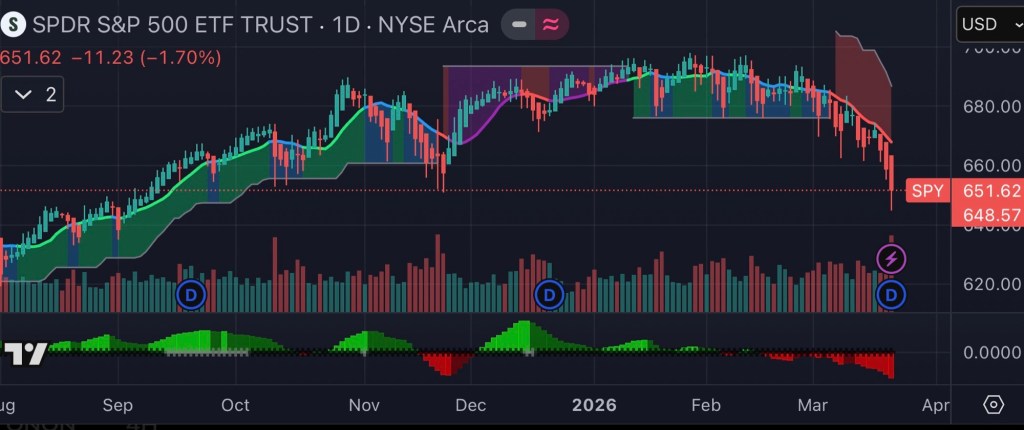
The conventional definition — credited to Yale Hirsch and the Stock Trader’s Almanac — is the last five trading days of December plus the first two trading days of January (a seven-trading-day window). That short span is when seasonal strength historically concentrates, rather than across the whole of December. (Stock Trader’s Almanac+1)

The numbers: how the S&P 500 and Dow have performed

  • S&P 500: Since roughly 1950, the S&P 500 has averaged about +1.3% over the seven trading days of the Santa Claus Rally, with positive returns roughly 78–79% of the time. That beats a typical seven-day period’s average return and win-rate. (Investopedia+1)
  • Dow Jones Industrial Average: Using the classic post-Christmas window, the Dow has historically been positive about 77% of the time, with average gains in the same ballpark as the S&P by some measures (studies often report roughly +1.4% in the period). (MarketWatch+1)
  • Relative context: Analysts note the Santa Claus window’s 1.3% average gain contrasts with a much smaller average seven-day return (around 0.3%), underscoring the period’s above-normal edge. (LPL)

(These figures come from long-range studies and market almanacs; different start dates or sample periods shift the precise numbers slightly but not the broad conclusion.) (Stock Trader’s Almanac+1)

Why this period favors swing trading

  1. Condensed upside in a known short window. Swing trading profits from predictable, short moves — a seven-day, high-probability uptick is exactly that. Historical win-rates near the ~78% mark give a favorable edge if position sizing and risk controls are used. (Investopedia)
  2. Lower volatility and thinner volume. Holiday trading often sees lighter volume and fewer market-moving news items; prices can drift more cleanly in one direction, letting swing setups (breakouts, momentum continuations, mean-reversion bounces) play out with less intraday whipsaw. (Lower volume can magnify moves in the direction of flows.) (Corporate Finance Institute+1)
  3. End-of-year flows and positioning. Institutional flows (window dressing, year-end rebalancing, bonus/retirement contributions) and a reversal of tax-loss selling can create concentrated buying pressure around year-end and early January. Big inflows into equities have been cited as a driver in some recent Santa rallies. (MarketWatch+1)
  4. Correlation with January and the new year. Historically, a positive Santa Claus Rally has sometimes preceded stronger January returns and a more bullish full year — a dynamic that can attract more buyers into the short window and amplify momentum. (This is a correlation, not a guarantee.) (LPL+1)

Practical swing-trader playbook (how to trade it)

  • Time the window. Look for entries during the last five trading days of December and use targets or exits by the first two trading days of January (or earlier if your plan dictates). The edge is short-lived — don’t stretch holding periods beyond the seasonality. (Stock Trader’s Almanac)
  • Trade probability, not hope. Use setups with clear technical evidence (breakout on rising RSV/volume, pullback to moving average, bullish RSI divergence). Favor names with existing positive momentum.
  • Risk control is essential. Even periods with high historical win-rates can fail; use tight stops, sensible position sizing, and consider defined-risk instruments (protective puts or small options trades) if you want asymmetric payoff.
  • Use ETFs for broad exposure. If you want to play the seasonal tilt without single-stock risk, liquid ETFs (SPY, QQQ, DIA) can capture the move and provide easy entries/exits.
  • Watch volume & implied volatility. Low volume can help moves trend but can also create thin markets. Options traders should check implied volatility — seasonality can compress IV, affecting premium strategies.
  • Consider small-cap/January effect overlap. If you’re a swing trader who also trades small caps, remember the broader January Effect can lift small-cap names in the early month, offering extra upside for appropriately sized trades. (Plus500)

Indicators and signals traders often monitor

  • Short interest and buybacks — low supply + active buybacks can help push prices.
  • Seasonal inflows / fund flows (ETF inflows, mutual fund windows) — high year-end inflows can sustain rallies. (MarketWatch)
  • Volatility (VIX) trend — falling VIX into year-end often accompanies risk-on moves; a sudden spike can kill momentum.
  • Breadth measures (advance/decline lines, number of stocks above 50-day MA) — confirm whether the rally is broad-based or just a narrow megacap lift. (Broad rallies are more robust for swing trades across sectors.)

A quick caution

Seasonal patterns are statistical tendencies, not certainties. Past performance is not a guarantee of future results. There have been years without a Santa Claus Rally (and even reverse episodes), and macro surprises — policy shocks, geopolitical events, or sudden earnings shocks — can reverse the move. Traders should use the seasonal edge as one input among many, not a sole decision rule. (Morningstar+1)

What this means for investors is simple:

The Santa Claus Rally is a short, well-defined window (last five trading days of December + first two trading days of January) that historically offers above-average returns and a high probability of positive performance for major indices like the S&P 500 and the Dow. Those characteristics — concentrated upside, lower intraday noise, and supportive year-end flows — make it an attractive environment for disciplined swing traders who pair tight risk controls with high-probability setups. Just remember: seasonality improves the odds, it doesn’t eliminate risk. (Investopedia+2MarketWatch+2)

References

Canopy Wealth. (2024, December 19). What is the Santa Claus Rally? https://www.canopy-wealth.com/blog/what-is-the-santa-claus-rally Canopy Wealth Management
Corporate Finance Institute. (n.d.). Santa Claus Rally – Overview, Causes, Retrospective. https://corporatefinanceinstitute.com/resources/career-map/sell-side/capital-markets/santa-claus-rally/ Corporate Finance Institute
Interactive Brokers. (2024, December 13). Chart Advisor: Get Ready for the Real Santa Claus Rally. https://www.interactivebrokers.com/campus/traders-insight/chart-advisor-get-ready-for-the-real-santa-claus-rally/ Interactive Brokers
InvestingNews. (2024, December 24). What Is the Santa Claus Rally and Has it Arrived? https://investingnews.com/santa-claus-rally/ Investing News Network (INN)
Investopedia. (2024, December 20). Santa Claus Rally: What It Is and Means for Investors. https://www.investopedia.com/terms/s/santaclauseffect.asp Investopedia
Investopedia. (n.d.). The Santa Claus Rally. https://www.investopedia.com/the-santa-claus-rally-4779941 Investopedia
LPL Research. (2025, January 2). Santa Claus Rally in Jeopardy. https://www.lpl.com/research/blog/santa-claus-rally-in-jeopardy.html LPL
SmartAsset. (2025, August 14). Is the Santa Claus Rally Real? – 2020 Study. https://smartasset.com/financial-advisor/santa-claus-rally-2020 SmartAsset
TSPSmart. (n.d.). Santa Claus Rally. https://tspsmart.com/Santa-Claus-Rally TSP Smart

Opendoor Technologies: Rising Star or Risky Bet?

Opendoor Technologies (NASDAQ: $OPEN), the best-known public “iBuyer” that buys, renovates and resells homes, has gone from near-obscurity to the center of a retail-investor frenzy — and to a renewed debate among analysts about whether the company is finally turning a corner or simply a high-risk turnaround story.

Over the last few months OpenDoor’s shares have swung dramatically: the stock traded around $7.70–$8.00 at the end of October 2025 and the company’s market capitalization sits in the $5–6 billion range, after a year of volatile trading that included a multi-hundred-percent YTD gain. (Yahoo Finance+1)

What changed recently

Several headline events have driven sentiment:

  • Leadership and board moves: Opendoor brought in Kaz Nejatian (former Shopify COO) as CEO and welcomed co-founders (including Keith Rabois) back into senior board roles; those governance shifts have been cheered by retail investors and credited with a share-price pop. (Barron’s)
  • Institutional attention and retail momentum: a disclosed stake by trading firm Jane Street and visible retail groups (“Open Army”) helped amplify demand and liquidity in the stock, intensifying swings. (Investopedia+1)
  • Changing operating results: Opendoor reported stronger operating metrics in 2025 quarters, including a notable adjusted-EBITDA improvement (the company posted roughly $23M adjusted EBITDA in Q2 2025), and guidance that signaled more predictable contribution profit heading into Q3 — although management warned of macro and inventory risks. (investor.opendoor.com+1)

Those items explain the run-up in price and the renewed investor conversation — but they do not answer whether the stock is a good investment for a given investor. Below we lay out the primary reasons for and against considering Opendoor as a buy, and then present a compact comparison table against a few direct/adjacent competitors.


Investment case — the arguments for buying

  1. Path to a more capital-light business mix. Management has publicly emphasized diversifying away from pure house flipping and toward capital-light revenue (listings, agent referrals and platform services). If executed, that could reduce inventory/interest-rate exposure and lift margins. (Nasdaq)
  2. Operational improvement indicators. Opendoor reported improved contribution margins/adjusted EBITDA in 2025 quarters, indicating they can be profitable on a run-rate basis under current housing conditions when volumes and pricing cooperate. That shows the business has levers to control costs and marketing spend. (investor.opendoor.com+1)
  3. Retail + selective institutional support can sustain valuation re-rating. The combination of vocal retail investors and large trading desks taking stakes can produce favorable secondary-market momentum and liquidity — often important for smaller, restructuring names. Recent stake disclosures and active retail communities materially contributed to price appreciation. (Investopedia+1)

Investment case — the arguments against buying

  1. Still fundamentally exposed to housing and rates. iBuying profitability depends on narrow purchase/resale spreads. High mortgage rates, slower transaction volumes and inventory carrying costs can quickly turn contribution profit negative; management itself has warned of those macro risks. (AInvest)
  2. Historical unprofitability and scale risk. Despite pockets of positive adjusted EBITDA, Opendoor remains a company that has reported large GAAP losses in recent years and must prove sustained, repeatable profitability at scale. Analysts and some sell-side desks still view the firm skeptically. (Investopedia+1)
  3. Valuation and momentum risk (meme-stock dynamics). Part of the recent price action appears driven by retail fervor and narrative (founder/board changes, social campaigns). If sentiment cools or short interest/unfavorable headlines resume, the stock can be highly volatile. Institutional disclosures (e.g., Jane Street) can be neutral in economic intent — they don’t guarantee long-term fundamental support. (Investopedia+1)

Quick facts & signals investors should check before deciding

  • Recent price / market cap: ~$7.7–$7.8 per share, market cap roughly $5–6B (end of October 2025). (Yahoo Finance+1)
  • Recent operating cue: Q2 2025 reported ~$1.6B revenue and $23M adjusted EBITDA (management said this was their first quarter of positive adjusted EBITDA in the recent cycle). Management gave guidance for Q3 2025 but flagged inventory & macro risks. (investor.opendoor.com+1)
  • Sentiment shocks: Return of co-founders/board changes + Jane Street stake disclosure drove major intraday moves and an extended retail buying wave in mid-to-late 2025. (Barron’s+1)

Comparison table — Opendoor vs. selected competitors (price & recent fluctuations)

Table shows representative market snapshots and price-movement indicators as reported publicly in late Oct 2025. Percent figures are illustrative based on publicly reported YTD or 1-year performance where available; use the cited links to verify live numbers before trading.

Company (ticker)Business focusRepresentative price (late Oct 2025)Market cap (approx.)Notable recent move / comment
Opendoor (OPEN)iBuyer / online home marketplace~$7.7 (Oct 31, 2025). 52-wk range: $0.51–$10.87.$5–6B.Big YTD rally driven by board changes, CEO hire & retail interest; Q2’25 adjusted EBITDA improvement. (Yahoo Finance+2StockAnalysis+2)
Zillow Group (ZG)Online listings, marketplace, mortgages (adjacent)~$71 (Oct 2025)~$17B.Larger, diversified play in online real estate and mortgage; more mature revenue streams. (StockAnalysis+1)
Offerpad (OPAD)iBuyer / home transaction services~$2.3 (Oct 31, 2025); 52-wk range: 0.91–6.35~$80–100M market cap (small-cap)Smaller competitor in same model; more levered to local execution and operational differences; higher volatility. (StockAnalysis+1)
Redfin (RDFN)Brokerage + tech (acquisition announced)Acquisition / deal value $12.50-per-share by Rocket (2025)Deal value ≈ $1.75B (acq. by Rocket Cos.)Redfin was being acquired by Rocket Companies in 2025 — that transaction changes the public-peer landscape. (AP News+1)

Sources: company investor pages, mainstream financial sites and news coverage (see citations). (AP News+4investor.opendoor.com+4Yahoo Finance+4)


How a pragmatic investor might think about sizing a position

  • Risk-aware, small allocation: If you believe management can execute and you want exposure to an asymmetric upside (turnaround + retail momentum), consider a modest, portfolio-hedged allocation (small percent of liquid equities), with strict stop or re-evaluation triggers tied to subsequent earnings and inventory metrics.
  • Event-driven play: Some traders view Opendoor as an event trade (earnings, board/management updates). That strategy requires active monitoring and is not suitable for buy-and-hold retirement capital.
  • Avoid if you need steady income/low volatility: Opendoor is not a conservative equity — it’s a high-volatility name with housing and interest-rate sensitivity.

What to watch next (near-term catalysts)

  1. Q3 2025 earnings / management commentary (Nov 6, 2025): updated revenue, contribution profit, inventory levels and margin guidance will matter. Opendoor plans a novel “Financial Open House” investor presentation that could influence retail interest. (investor.opendoor.com+1)
  2. Inventory and financing costs: how much inventory they hold and the cost to finance that inventory as mortgage rates move. (AInvest)
  3. Any further institutional filings: large 13F/13D/13G filings or insider transactions (adding/removing high-profile board members) can swing sentiment quickly. (Investopedia+1)

Long and Short

Opendoor sits at the intersection of a real operational story (improving contribution metrics, attempts to move into capital-light revenue) and a high-sensation market story (retail fervor, activist board moves, and short-squeeze/meme dynamics). That combination creates both upside and downside:

  • If you believe management can repeat profitable quarters, diversify revenue and steadily shrink inventory risk, Opendoor could be a high-reward turnaround play.
  • If you believe that housing-cycle risk, rate sensitivity, and structurally low flipping spreads will persist, then the stock remains a speculative, momentum-driven bet that could reverse sharply.

Before making any trade, check the latest quarter results, read management’s Q&A from the upcoming November presentation, and confirm up-to-the-minute prices/position filings — the environment around Opendoor is unusually fast-moving and sentiment-sensitive. (investor.opendoor.com+2Quiver Quantitative+2)

Disclaimer

I currently hold a personal position in Opendoor Technologies Inc. (NASDAQ: OPEN).
This article is provided for informational and educational purposes only and does not constitute financial advice or a recommendation to buy, sell, or hold any securities.
Investors should conduct their own research or consult a licensed financial advisor before making investment decisions.

References

Barron’s. (2025, October 31). Opendoor Technologies Inc. (OPEN) stock price, quote, and news. Retrieved from https://www.barrons.com

Business Insider. (2025, October 31). Opendoor Technologies Inc. (OPEN) stock performance and financial data. Retrieved from https://markets.businessinsider.com

CNBC. (2025, October 25). Opendoor shares surge after leadership shake-up and board changes. Retrieved from https://www.cnbc.com

MarketWatch. (2025, October 31). Opendoor Technologies Inc. stock overview and financial results. Retrieved from https://www.marketwatch.com

Nasdaq. (2025, October 30). Opendoor Technologies Inc. (OPEN) company profile and financials. Retrieved from https://www.nasdaq.com

Opendoor Technologies Inc. (2025). Q2 2025 shareholder letter and financial results. Retrieved from https://investor.opendoor.com

Reuters. (2025, October 27). Opendoor Technologies sees EBITDA improvement, guidance for Q3 2025. Retrieved from https://www.reuters.com

Seeking Alpha. (2025, October 28). Opendoor Technologies Q2 earnings report analysis. Retrieved from https://seekingalpha.com

Yahoo Finance. (2025, October 31). Opendoor Technologies Inc. (OPEN) stock price, history, and market cap. Retrieved from https://finance.yahoo.com

Zillow Group Inc. (2025, October 30). Company financials and stock price. Retrieved from https://www.zillowgroup.com

Offerpad Solutions Inc. (2025, October 30). Company profile and stock chart. Retrieved from https://www.offerpad.com

Redfin Corporation. (2025, October 29). Rocket Companies announces acquisition of Redfin at $12.50 per share. Retrieved from https://www.redfin.com/news

Zeta Global: A High-Growth Martech Investment Opportunity

Quick take: Zeta Global, the AI-driven marketing cloud, has delivered a string of better-than-expected quarters, is guiding to another year of strong revenue growth, and just made a big acquisition to expand its loyalty and enterprise footprint. That combination — accelerating revenue, improving profitability guidance, and strategic M&A — is why some investors are re-rating the stock. Below: the facts, the catalyst, a compact risk view, and a chart/table that show the growth story.


Headlines and the data points you need

  • Zeta reported Q2 2025 revenue of $308.4 million, a ~35% year-over-year increase vs. the prior year quarter. (Nasdaq)
  • For full-year 2024 Zeta generated about $1.01 billion in revenue. (Zeta Global)
  • Management has repeatedly “beat and raise” — most recently increasing full-year 2025 revenue guidance to $1,258–$1,268 million (midpoint ~$1.263B) and raising Adjusted-EBITDA and free-cash-flow ranges as well. Those revisions reflect faster growth and improving margins. (Zeta Global+1)
  • Zeta announced a large acquisition (Marigold’s enterprise business — including Cheetah Digital, Selligent, Sailthru and other assets) to strengthen loyalty and enterprise offerings, a move management says accelerates international reach and cross-sell opportunities. (Zeta Global+1)
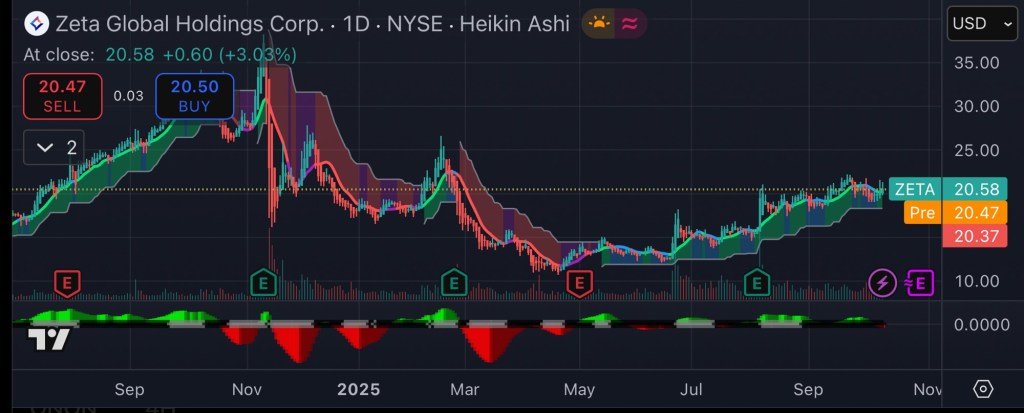
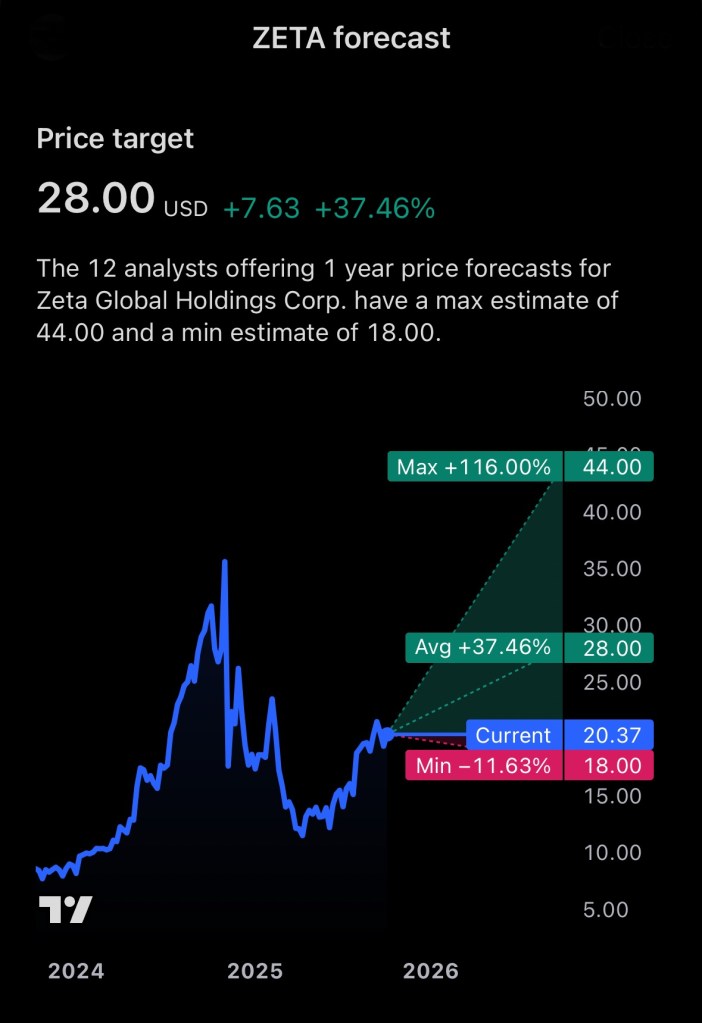
  • Market snapshot (at time of writing): share price ≈ $20.37 and market cap in the mid-$4 billion range — investors are paying for fast growth but also a path to profitability. (Yahoo Finance)

Why this could be an attractive investment (the bull case)

  1. High single- to double-digit top-line growth that’s accelerating. Zeta’s recent quarters show consistent revenue acceleration (Q2 ’25 +35% YoY), a key signal for growth investors in the martech/adtech space. Management’s upward guidance for FY-2025 reinforces that it’s not just one quarter of outperformance. (Nasdaq+1)
  2. Improving operating leverage and cash generation. The company has raised Adjusted-EBITDA and free-cash-flow guidance, pointing to margin expansion. That’s important: investors reward companies that can turn revenue growth into sustainable profits and cash. (Zeta Global)
  3. Strategic M&A that fills capability gaps and expands addressable market. The Marigold enterprise business deal adds loyalty platforms and prominent enterprise customers (and EMEA coverage), enabling more cross-sell inside an existing customer base and a larger recurring revenue pool. If integration goes smoothly, this can boost both revenue and churn resilience. (Zeta Global+1)
  4. Compelling unit economics at scale. Zeta reports improving ARPU (average revenue per scaled customer) and strong net revenue retention metrics, which suggest existing customers are spending more — a powerful multiplier for SaaS-like businesses. (Company disclosures highlight rising Scaled and Super-Scaled customer ARPU.) (Zeta Global+1)
  5. Positive technical / market interest. Stock research outlets have recently upgraded technical scores (e.g., IBD RS rating rise), indicating renewed investor interest that can amplify returns if fundamentals keep improving.( Investors.com)

Compact table: key metrics (source notes below)

MetricValue (most recent / guidance)Source
Q2 2025 revenue$308.4M (+35% YoY)Company results / press release. (Nasdaq)
FY 2024 revenue$1,006M (≈$1.01B)FY 2024 report. (Zeta Global)
FY 2025 revenue guidance$1,258–$1,268M (midpoint ≈ $1.263B)Company guidance (beat & raise). (Zeta Global)
Adjusted-EBITDA guidance (FY-25)~$263.6–$265.6MCompany guidance. (Zeta Global)
Share price (snapshot)~$20.37Market quote (timestamped).
Market cap (approx.)Mid ~$4B–$4.8BMarket data providers. (Yahoo Finance+1)

Visual: revenue comparison (Q2 vs prior year, FY 2024 vs FY 2025 guidance)

I created a compact chart and table comparing:

  • Q2 2024 (estimate) vs Q2 2025 actual, and
  • FY 2024 actual vs FY 2025 guidance midpoint.

(Chart and table were prepared from the company reporting and guidance figures cited above).

Sources for the plotted numbers: Q2 2025 revenue and YoY change, FY 2024 totals, and FY 2025 guidance. (Nasdaq+2Zeta Global+2)


Risks — what could go wrong

  • Execution risk on M&A and integration. The Marigold enterprise assets are substantial; integration issues, customer churn, or higher-than-expected costs could blunt the benefits. (Zeta Global)
  • Valuation vs. growth tradeoff. The stock price reflects future growth expectations. If revenue growth slows or margin expansion stalls, multiples can compress quickly. (Yahoo Finance)
  • Adtech / martech competition and cyclicality. The market is competitive (large incumbents and many specialists). Ad/spend cyclicality could affect revenue. Company performance depends on continued client spend and retention. (Zeta Global)
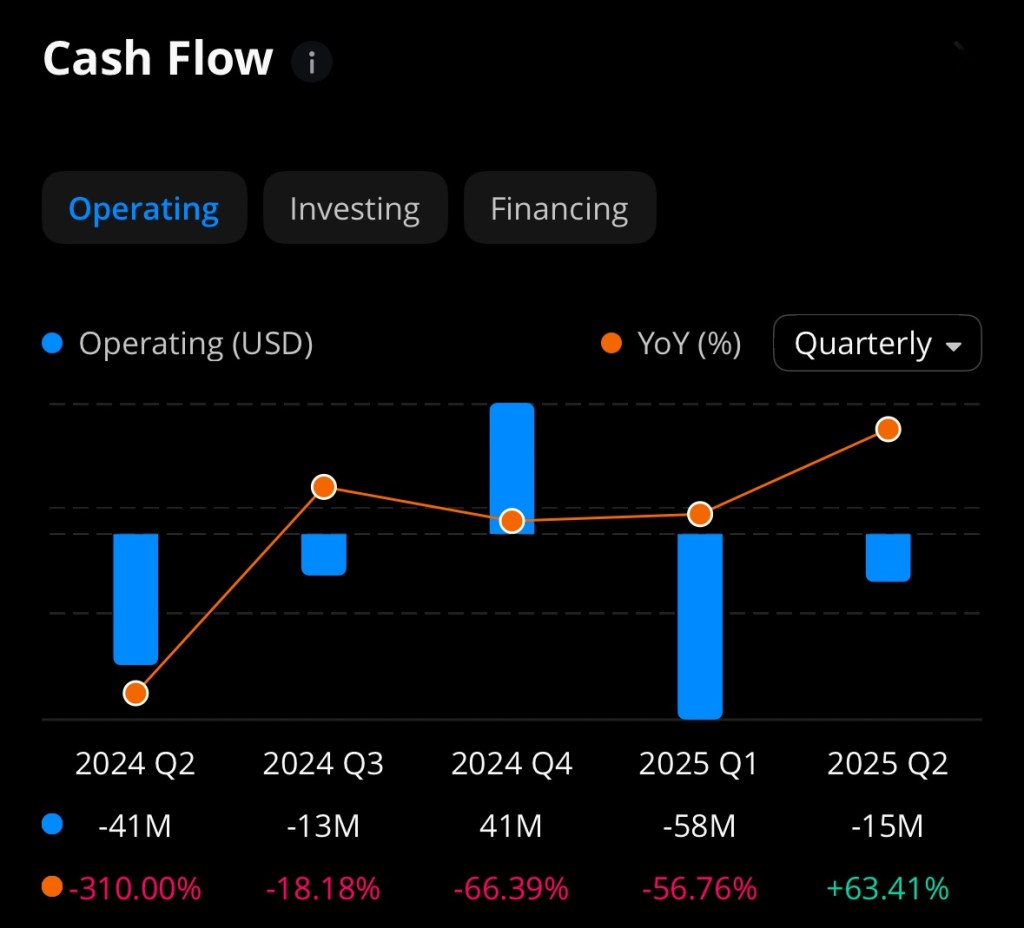
  • Profitability not yet fully GAAP positive. Zeta has narrowed losses but still reports GAAP net losses; investors should watch sustained EBITDA and free-cash-flow conversion. (Zeta Global)

Bottom line (concise)

Zeta Global presents a classic high-growth martech investment case: accelerating revenue, improving profitability guidance, and strategic M&A that extends its product footprint and international reach. That combination can create durable revenue expansion and margin improvement — the ingredients growth investors pay for. But the stock still carries execution and integration risk and depends on preserving high retention and ARPU. If you like fast growth with a clear path to margin expansion and accept the M&A/integration risk, Zeta is a name to research further; if you are risk-averse or need immediate GAAP profitability, it may not fit.

Disclosure:

I do not own any stock or have any financial interest in Zeta Global Holdings (NYSE: $ZETA). This article is for informational purposes only and should not be considered financial or investment advice. Investing in stocks carries risks, and past performance is not indicative of future results. Always conduct your own research and consult with a qualified financial professional before making any investment decisions.

References

Zeta Global Holdings Corp. (2025, August 8). Zeta reports second quarter 2025 financial results; raises full-year 2025 guidance. Zeta Global Investor Relations. Retrieved from https://investors.zetaglobal.com/

Zeta Global Holdings Corp. (2024, February 28). Zeta reports fourth quarter and full-year 2024 results. Zeta Global Investor Relations. Retrieved from https://investors.zetaglobal.com/

Investor’s Business Daily. (2025, September). Zeta Global stock analysis and relative strength update. Investor’s Business Daily. Retrieved from https://www.investors.com/

Reuters. (2025, September). Zeta Global Holdings Corp. company profile and financial summary (ZETA.O). Reuters Markets. Retrieved from https://www.reuters.com/

MarketWatch. (2025, October). Zeta Global Holdings Corp. stock quote & financials (ZETA). MarketWatch. Retrieved from https://www.marketwatch.com/

Business Wire. (2025, July 31). Zeta Global announces acquisition of Marigold’s enterprise business to expand loyalty and EMEA presence. Business Wire. Retrieved from https://www.businesswire.com/

Yahoo Finance. (2025, October 9). Zeta Global Holdings Corp. (ZETA) stock price and market cap data. Yahoo Finance. Retrieved from https://finance.yahoo.com/

Conduent Incorporated ($CNDT): Q2 2025 Snapshot, Balance-Sheet Health, and Where the Stock Stands for Gains

Conduent Incorporated, the business-process-services company spun out from Xerox, reported mixed results through early 2025 as it works to convert cost cuts and restructuring into sustainable profit. The shares trade at a low single-digit price level, making the company a high-beta, speculative play for investors who believe management can consistently deliver margin improvement and free cash flow growth. (Conduent Investor)

Key headlines (what just happened)

  • Conduent reported second-quarter 2025 results in early August with revenue of roughly $754 million and GAAP net loss on a standalone basis (but continued improvements in adjusted metrics were highlighted by management). (Conduent Investor)
  • The company’s market capitalization sits in the hundreds of millions (Yahoo Finance shows market cap in the ~$440–460M range around current quotes), while enterprise value is notably higher because of net debt on the balance sheet. The stock price is trading near $2.80–$3.00 per share as of this writing. (Yahoo Finance)

Balance-sheet and financial-position analysis

Using the company filings and aggregated financial data, the balance-sheet picture for Conduent in the most recent filings shows several important characteristics:

  • Total assets / liabilities: Conduent’s total assets in recent annual/quarterly filings have been in the low-to-mid billions (annual totals around $2.6B–$3.2B), with total liabilities making up a substantial portion of that base. That translates to relatively thin shareholder equity compared with larger peers. (Yahoo Finance+1)
  • Leverage / net debt: Total long-term debt has historically been material — recent snapshots put total debt roughly in the high hundreds of millions to over $1B (enterprise value and total debt differ by source and date) — and net cash/(debt) has been negative (i.e., net debt). StockAnalysis and other aggregators show net debt in the several-hundred-million range. That means Conduent’s EV is meaningfully larger than its market cap. (StockAnalysis+1)
  • Liquidity: Management has emphasized cash on hand and the revolving credit facility as sources of near-term liquidity in SEC filings and the latest 10-Q/earnings commentary; operating cash flow is a key metric to watch as the company seeks to deleverage. The company stated it believes its cash, projected operating cash flow and its revolving credit line support near-term needs. (Conduent Investor+1)

Interpretation: Conduent is a balance-sheet–constrained turnaround: not insolvent, but carrying leverage that raises the bar for operational execution. If revenue growth stalls or free cash flow fails to materialize, debt servicing and refinancing risk become real constraints.

Income-statement & cash-flow highlights

  • Revenue trend: Revenues have been in the ~$3.3B range on an annual basis (2023–2024 levels per public filings and financial aggregators), with sequential quarter fluctuations due to contract timing and divestitures. Recent quarters in 2025 showed revenue in the mid-$700M range per quarter. (Yahoo Finance+1)
  • Profitability: GAAP results have cycled between losses and small profits in recent years; management prefers adjusted EBITDA/adjusted metrics that show margin improvement after restructuring. For investors, the question is whether adjusted profit improvement converts to consistent GAAP profitability and positive operating cash flow. (Conduent Investor+1)
  • Cash flow: Free-cash-flow generation has been variable. The company highlights projected cash flow from operations as a pillar of its liquidity, but historical net debt and working-capital swings mean investors should track quarterly cash-flow statements, not just headline operating results. (Conduent Investor+1)

Valuation and risks

  • Valuation: On a trailing basis Conduent’s P/E (when positive) and EV multiples are compressed versus stable peers because of the elevated leverage and inconsistent earnings. Market cap (sub-$500M range) compared with enterprise value near ~$1B indicates investors price in significant debt and execution risk. (Yahoo Finance+1)
  • Catalysts for upside: sustained adjusted-EBITDA growth, consistent GAAP profitability, meaningful free cash flow, and visible debt reduction would be strong upside catalysts. Contract wins or higher-margin mix (e.g., digital-services expansion) could improve investor sentiment. (Conduent Investor)
  • Downside risks: failure to convert adjusted metrics to real cash, large contract losses, macro pressure on customers (public-sector budgets, transportation spending shifts), or refinancing stress on debt.

Recommendation (straight answer)

  • For conservative investors: Conduent is not suitable. The balance sheet shows leverage and earnings volatility; until management demonstrably converts adjusted profits into recurring GAAP profits and consistent positive free cash flow, the stock is a speculative holding at best. (StockAnalysis+1)
  • For risk-tolerant investors / traders seeking gains: Conduent’s low absolute market cap and depressed share price create asymmetric upside if execution improves. That makes it a potential high-risk, event-driven trade — buy only a small allocation, be prepared for high volatility, and plan an exit strategy tied to specific milestones (e.g., two to three consecutive quarters of positive operating cash flow or a material debt-reduction announcement). Use strict position sizing and stop rules. (Conduent Investor)

What to watch next (actionable checklist)

  1. Quarterly cash-flow from operations (is it consistently positive?). (Conduent Investor)
  2. Net debt trend — any sustained debt paydown or refinancing on better terms. (StockAnalysis)
  3. Revenue mix — growth in higher-margin digital services vs. legacy BPO work. (Conduent Investor)
  4. Management commentary & guidance (next earnings call / 10-Q updates). (Conduent Investor+1)

Sources and Transparency

This article relied on Conduent’s investor relations releases and SEC filings, plus market data aggregators (Yahoo Finance, StockAnalysis, Macrotrends, Nasdaq) for pricing, market cap and historical financial statements. Key sources: Conduent investor releases and 10-Q/10-K filings, Yahoo Finance price & key statistics, and StockAnalysis balance-sheet pages. (StockAnalysis+3Conduent Investor+3Conduent Investor+3)


Bottom line: Conduent is a turnaround story with a leveraged balance sheet. If you believe management will convert improved adjusted margins into recurring cash and pay down debt, the stock offers speculative upside from a depressed base. If you require capital preservation and predictable returns, this is better left alone. Keep position sizing small, watch cash flow and net-debt trends, and tie any buy decision to concrete operational milestones. (Conduent Investor+1)


References

Conduent Incorporated. (2025, August 6). Conduent reports second quarter 2025 results [Press release]. Conduent Investor Relations. https://investor.conduent.com

Conduent Incorporated. (2025). Form 10-Q for the quarterly period ended June 30, 2025. U.S. Securities and Exchange Commission. https://www.sec.gov

Macrotrends LLC. (2025). Conduent balance sheet 2016–2025 (CNDT). Macrotrends. https://www.macrotrends.net

Nasdaq, Inc. (2025). Conduent Incorporated (CNDT) income statement. Nasdaq. https://www.nasdaq.com

StockAnalysis. (2025). Conduent (CNDT) financials, balance sheet & ratios. StockAnalysis. https://stockanalysis.com

Yahoo Finance. (2025). Conduent Incorporated (CNDT) stock price, quote, and news. Yahoo! Finance. https://finance.yahoo.com

Quantum Computing in 2025: Transforming the Future of Technology

As we officially enter 2025, the quantum computing revolution is accelerating, promising to reshape industries and solve problems once thought intractable. This transformative technology is no longer confined to research labs; it is becoming a cornerstone of technological innovation.

Quantum Leap in Computing Power

Quantum computers operate fundamentally differently from classical computers by leveraging quantum bits, or qubits, which can exist in multiple states simultaneously. This property, known as superposition, combined with entanglement and quantum interference, allows quantum computers to perform complex calculations exponentially faster than their classical counterparts.

In 2025, major breakthroughs are expected in hardware stability and error correction, two of the most significant hurdles in quantum computing. Companies like IBM, Google, and Intel are racing to increase qubit counts and coherence times. IBM recently announced its 1,000-qubit “Condor” processor, and industry experts anticipate that 2025 could see quantum processors surpassing 2,000 qubits, a milestone that might signal the onset of quantum advantage for certain applications.

Applications on the Horizon

Quantum computing is poised to revolutionize numerous fields:

  1. Drug Discovery and Healthcare: Simulating molecular structures and interactions, a task infeasible for classical supercomputers, could lead to breakthroughs in medicine and personalized treatment plans.
  2. Cryptography: While quantum computing poses threats to current encryption methods, it also offers opportunities for developing quantum-resistant cryptographic algorithms.
  3. Supply Chain Optimization: Quantum algorithms can process vast amounts of data to optimize logistics and reduce costs across global supply chains.
  4. Climate Modeling: Advanced quantum simulations could help model complex climate systems with greater accuracy, aiding in the fight against climate change.

Challenges and Ethical Considerations

Despite its promise, quantum computing faces significant challenges. Scalability, error correction, and the need for extremely low-temperature environments are technical obstacles that researchers are striving to overcome. Additionally, the disruptive potential of quantum computing raises ethical and security concerns, particularly regarding data privacy and the potential for technological inequality.

Governments and organizations worldwide are investing heavily in quantum research and workforce development to address these issues. In 2025, collaborations between academia, industry, and government are expected to intensify, fostering innovation while ensuring ethical governance.

Looking Ahead

The quantum computing race is entering a pivotal phase. By 2030, experts predict that quantum computers could become commercially viable for specialized tasks, with far-reaching implications for industries ranging from finance to artificial intelligence.

As we move through 2025, the world will witness quantum computing shifting from a futuristic concept to a practical tool with transformative capabilities. While challenges remain, the momentum building around this technology signals an era of unprecedented possibilities and innovation.

How AI is Transforming Personal Finance Strategies

Artificial intelligence (AI) and cutting-edge technologies are revolutionizing the way individuals and institutions invest in their future. From personalized financial planning to sustainable investment strategies, the integration of AI into financial systems is shaping a new era of opportunity and efficiency.

AI in Personal Finance
Gone are the days when financial advice was solely the domain of human advisors. AI-driven platforms like robo-advisors are providing investors with tailored advice at a fraction of the cost. By analyzing vast amounts of data in real time, these tools offer personalized investment strategies that account for individual goals, risk tolerance, and market trends.

For instance, platforms such as Wealthfront and Betterment leverage AI to automate portfolio management, ensuring investments are optimized and rebalanced regularly. This technology empowers even novice investors to take control of their financial futures with confidence.

Predictive Analytics for Smarter Decisions
AI’s ability to process and interpret data at lightning speed is revolutionizing predictive analytics. Investors and financial institutions use machine learning algorithms to identify market trends, detect anomalies, and predict economic shifts. This insight helps mitigate risks and uncover profitable opportunities, making investment strategies more robust than ever.

Democratizing Access to Wealth-Building Tools
Technological advancements are also breaking down barriers to entry in the investment world. Apps like Robinhood and Acorns make it easy for individuals to start investing with as little as a few dollars. These platforms, often powered by AI, offer features like micro-investing, automated savings, and financial education, helping more people build wealth over time.

AI and Sustainable Investing
The growing emphasis on environmental, social, and governance (ESG) factors in investment decisions is another area where AI is making a difference. By analyzing non-financial data—such as carbon emissions, labor practices, and governance policies—AI helps investors identify companies that align with their values while delivering strong financial returns.

Challenges and Ethical Considerations
Despite its many benefits, the rise of AI in investing raises concerns about data privacy, algorithmic bias, and the potential for over-automation. Experts caution against over-reliance on AI, emphasizing the need for human oversight to ensure ethical and responsible decision-making.

A Glimpse Into the Future
As AI and technology continue to evolve, the future of investing looks increasingly dynamic and inclusive. Blockchain technology is paving the way for decentralized finance (DeFi), while advancements in quantum computing promise to unlock even greater predictive capabilities.

The integration of AI into financial systems is not merely a trend but a fundamental shift. By embracing these innovations, individuals and institutions alike can navigate the complexities of modern markets and secure their financial futures with unprecedented precision.

AI-Led Revolution: Reshaping Stocks and Crypto Markets

In recent events, the convergence of Artificial Intelligence (AI) and financial markets has ushered in a new era of investment dynamics, propelling both traditional stocks and cryptocurrencies to unprecedented heights. With AI algorithms increasingly driving decision-making processes, investors are witnessing remarkable shifts in market behaviors and opportunities.

Stock Market Surge:

AI’s influence on stock markets has been profound, with algorithms swiftly analyzing vast datasets to predict market trends and identify lucrative investment opportunities. One notable example is the meteoric rise of Quantitative Hedge Funds like Renaissance Technologies, which extensively leverage AI for trading strategies. These funds have consistently outperformed traditional counterparts, showcasing AI’s prowess in navigating complex market landscapes.

Furthermore, AI-powered trading platforms such as Alpaca and Robinhood have democratized access to sophisticated investment tools, empowering retail investors to make data-driven decisions previously reserved for institutional players. These platforms utilize machine learning algorithms to provide personalized investment recommendations and real-time market insights, leveling the playing field for investors of all backgrounds.

Crypto Craze Amplified:

In the realm of cryptocurrencies, AI has emerged as a game-changer, fueling unparalleled growth and innovation. AI-driven trading bots, like those offered by companies such as Cryptohopper and 3commas, autonomously execute trades based on market indicators and user-defined strategies, optimizing trading efficiency and profitability.

Moreover, AI-powered analytics platforms such as IntoTheBlock and Santiment provide comprehensive market intelligence, offering investors invaluable insights into market sentiment, token liquidity, and price volatility. These tools enable investors to make informed decisions in the highly volatile crypto landscape, mitigating risks and maximizing returns.

Real-world Applications:

The integration of AI into financial markets extends beyond trading, with applications ranging from risk management to fraud detection. Banks and financial institutions utilize AI algorithms to assess credit risk, detect fraudulent transactions, and enhance customer service through chatbots and virtual assistants.

Additionally, AI-driven predictive analytics models are revolutionizing investment banking, enabling analysts to forecast market trends, evaluate asset valuations, and optimize portfolio allocations with unparalleled accuracy.

Expert Insights:

Dr. Emily Chen, a leading AI researcher at Stanford University, underscores the transformative potential of AI in financial markets, stating, “AI algorithms possess the ability to process vast amounts of data and identify intricate patterns that elude human analysts. This capability empowers investors to make data-driven decisions and capitalize on emerging opportunities in dynamic market environments.”

Looking Ahead:

As AI continues to evolve and permeate every facet of financial markets, its impact is poised to reshape investment landscapes on a global scale. However, amidst the rapid advancements, regulatory oversight and ethical considerations remain paramount to safeguarding market integrity and investor interests.

The fusion of AI and financial markets heralds a new epoch of innovation and opportunity, where data-driven insights and predictive analytics drive investment strategies, unlocking untapped potentials in both traditional stocks and cryptocurrencies.

About the Author:

David Dandaneau is a insurance agent that covers the insurance and financial services industry. He is known for his insightful analysis and comprehensive coverage of market trends and regulatory developments.

References:

  1. Investopedia – “Quantitative Trading” – https://www.investopedia.com/terms/q/quantitative-trading.asp
  2. Forbes – “How AI Is Transforming Cryptocurrency Trading” – https://www.forbes.com/sites/lawrencewintermeyer/2023/09/14/you-cant-spell-blockchain-without-ai-ai-will-dominate-crypto-trading/?sh=78d5c3dd6ede
  3. Bloomberg – “AI Hedge Funds Trounce Rivals” – https://www.bloomberg.com/news/articles/2024-02-08/quant-hedge-funds-trounce-rivals-amid-china-rout?embedded-checkout=true
  4. CNBC – “AI in Banking: The Real Benefits of AI & Machine Learning in Finance” – https://www.cnbc.com/2023/12/18/generative-ai-has-landed-on-wall-street-heres-how-it-can-help-propel-massive-revenue-growth-.html
  5. Santiment Blog – “The Rise of AI in Crypto Trading”

5 Tips to Ask in Order to Run a Successful Social Media Campaign with Increases in ROI and Sales? Yes!

As many of you know, finding an experienced professional to assist you with anything in life can be a daunting task. Also, as many of you probably know there are so many people out there that you speak with everyday that consider themselves “experts, connoisseurs, sales guru’s, geeks” of the trade(s), etc. Well as we both know, these so called experts or what have you, don’t actually have the experience that you may often find yourself needing… good advice, that actually works or saves you money? Yes?
Needless to say, we also continue to run across these same people in our line of work (especially social media), who claim to be experts but are nothing more than users who participate in things in a limited capacity or in social media words… in the basic sites such as Facebook, YouTube, or Twitter. So, for this week’s discussion, we thought we would provide you with a few things (5 Tips) to consider or ask when you are considering putting together a social media campaign.
1)  The very first question you should ask someone that you are considering letting them help you with your online engagement is what sites do you operate personally or for your company and could you please provide me with the links to check them out?
·    Now that you have their attention, see if they provide you with more than just a Facebook or Twitter account. It is crazy to think about but many experts stake their claim on these sites and these sites alone. However, the truth is social media didn’t start with these sites nor are they the answer to everyone’s needs. Look for people/companies that give you links to blogs and old school forums, etc. Also, look at how long they have been ACTIVELY participating in online activities, since participating for 6 months or a year or two definitely doesn’t make you an expert. Just ask Melcolm Gladwell who wrote Outliersand 60 Minutesused to run a great piece on. Think 10,000 or 10 years (well maybe not that many) but at least look for 3,000 or 3 years of activity.
2)   The second question you should ask the so-called expert you are talking to is whether or not they are familiar with or know of any restrictions in online activities for your specific needs or industry segment.
·    Let’s face it much like people would like to tell you, in online or social media activities there is not one size that fits all approach… mush like Professional Employer Organizations (PEOs), Customer Relationship Management (CRM) services, etc. Sure you can participate get quotes for all the companies or operate on all the mediums but most people/businesses should stick with 3-5 networks. A good example is our consulting practice. We consult with clients on PEO, CRM, and Wireless Devices, so these are our ideal clients (companies who offer and those who also need these services), as we know the industry extremely well and any limitations that we must consider on their behalf. However, we don’t run social media campaigns for law, pharmaceutical, alcohol, etc, as we are not familiar with these segments. Sure we could figure it out but you really want a professional or business to help in your social networking that lives, breathes, and knows the industry and more importantly, where your customers hang out!
3)   The third question you should ask your so called expert is their overall opinion (personal opinion) of the industry and how thinks might change in the days, weeks, and months ahead.
·    This is a great question, as it usually lets you know where exactly the person or company started their online activities, why, and what they are trying to accomplish on a personal level. If they say they do it cause it’s their job… RUN! However, if they start out by telling you some of the reasons they started to participate in chat forums, started their own blog, or why they originally joined MySpace or sold stuff on EBay these are more than likely the people you want to deal with, as they have a personal not just a monetary investment in social networking. Also, this should clue you in, as to what other networks that they think will be the next Facebook, much like Pinterest, FourSquare, Scoop-it, etc are becoming. The true expert lives and breathes whatever they are an expert in, so they should/will always have options for you when things are not going as well as you think they should or how they are going.
4)   The forth question you should ask is who will help develop, manage, or engage your specific audience?
·    It still amazes us how many people and businesses think that social media begins and ends with a post or the creation of a Facebook page or Blog or better yet how many likes, followers, or friends you can acquire. Shoot that is the easy part about social networking… creating the sites and adding people, what is difficult part is keeping people interested, engaged, and coming back each week (CUSTOMER SERVICE). This is often the more expensive part of social media but a good investment, if you or your company is really serious about taking the next step online and something more people/businesses should be concerned about if you are looking for that so called Return on Investment (ROI). We cannot even tell you how often we see idle accounts out there that were set-up and abandoned, even some of our client accounts. Why? Cause most of the time just like in person, people and a lot of businesses do not know how to interact with others online or what they want to accomplish even if you tell them. What is the worst that can happen? Someone de-friends, un-follows, or leaves a negative response? Rejection and acceptance are both part of life, so in order to be successful online; you have to interact with others. You cannot just develop an account(s) but you must also manage and engage, so this is a very important question to ask your expert!
5)   Finally the last question, and perhaps the most important (ROI) you have to ask is how exactly social networking will improve a person or business and the measurement scale your expert will use to claim a SUCCESS!
·    This is probably one of our favorite questions to answer because more times than not, our answer doesn’t have anything to do with likes, followers, or friends. Instead we use tools that were created for measurement such as Kred, Klout, PeerIndex,EmpireAvenue, and Google Analytics.  Of course these tools do consider your Facebook, YouTube, Twitter, LinkedIn, Google+, FourSquare, ETC. accounts but remember that they also measure your level of interaction. Of course, these sites are not perfect but remember the more you interact with your friends, followers, and acquaintances, the higher your scores should go. If you are a business, these should also translate into more calls, sales, referrals, etc (ROI) plus the more you interact the more likely you are to create chatter that is positive even despite any negatives that others may have previously left.
Each week we try to take our daily personal/business conversations and translate them into the online world for others to view and use. This week is no different, as we hope that these five tips can help you decide on a person or company best suited for your online “social media” and other activities. Of course, this is only the tip of the iceberg, so if you need any other advice, please don’t be afraid to ask us or contact David Dandaneau directly, as we are here to help. Otherwise, we will see you back here again next week, with another tip brought to you… Well, by YOU! You know the story… Keep Smiling Kidzzz!

David Dandaneau is a Consultant at [SevenTimesSeven]. He specializes in helping business owners “manage their business and not their processes!” For more connect with him via Twitter @ddandaneau or any of the other social platforms you may find him on.


How YOU can Measure your Social Media & In-Person Engagement FREE of Charge?

Within business and our personal lives, we are continually looking for ways to educate people through things such as email, social media, blog posts, associations, etc in order to show our expertise and/or leadership in the fields we consider ourselves experts in. However, even our best tips, practices, case studies, questions and answers, etc often end up leaving us with no real way to measure our successes. Or maybe not?  
 

Since our agency consults on things such as these, we thought this week we would share a few tips on some of the items, which are out now that could help you measure your online and in-person networking efforts. If you use social media to produce, content (personally or professionally) then you may or may not know about the program referred to as HootSuite. Regardless of the reasons people or companies use HootSuite the most important thing to remember about this tool is that it allows you to control, manage, and analyze multiple online social media mediums such as Facebook, Twitter, LinkedIn, FourSquare, etc. The best part of this is that you can add up to five accounts for FREE or subscribe to another plan that starts around $5.99 a month and gives you access (even the FREE accounts do) to analytics such as those found in other programs like Google Analytics or Facebook Page Insights. Please study, learn, and use these analytics if you are not already, as you may be surprised at what you might find out about how your message(s) are being received by your friends, followers, and acquaintances online.
Another must have and know how in the social media or blogosphere realm, which will help you measure your social media engagement that you must learn and utilize are three very similar programs (1) Klout (2) PeerIndex, and(3) EmpireAvenue. Klout, PeerIndex, and EmpireAvenue use data from various networks such as Facebook, Twitter, YouTube, WordPress, Blogspot, Tumblr, Flickr, Google+, etc to measure the different amounts of influence you have on your networks or other networks that are tied to you somehow (i.e. ReTweets, Mentions, Likes, Share Purchases, etc), while giving a user and/or company a number based from 1-100. These mediums should leave a person or company with little ambiguity, as to whether their messages are being received well or not regardless of the mediums, they are using to send the message(s). In other words the higher your Klout, PeerIndex Score, or Share Price the more likely your messages are being received by your network or not.
Lastly, if you are scared on the new ways (analytics) to measure your online effectiveness or engagement of friends, followers, or acquaintances than you can use the old way(s) to judge your material and that is by looking deep into your senses and motivations for engaging users to begin with. OK, so you are asking how can you do that? Easy, if you are like us and strapped for time carry around a little notebook. When you expose something either online (social media) or in-person (personally or professionally) jot down a note when you feel something was received well and other notes when you think the opposite. At the end of a day, week, month, or year review these notes and decide what days, weeks, or months you were most successful and what exactly pleased or displeased your audience and/or audiences. This is old school but still effective even in this new digital age we find ourselves in.
Needless to say, each week we use a variety of these methods (online and in-person) to help determine what others are asking and/or might have questions about, so we can one day become the source you turn to for the advice you seek. Although this week’s tip only tips the iceberg, we can all continue to analyze and melt the ice, along with our works online or in-person in order to tailor our messages to meet the needs of those who seek our advice. Thanks for stopping by, don’t be afraid to speak out to us anytime from anywhere, and we will look forward to seeing you right back here next week with another tip, brought to you… well… by YOU! Until then and as usual, KEEP SMILING

David Dandaneau is a Consultant at [SevenTimesSeven]. He specializes in helping business owners “manage their business and not their processes!” For more connect with him via Twitter @ddandaneau or any of the other social platforms you may find him on.