Vacation is frequently viewed by many as a luxury rather than a necessity. However, research and real-world experience continue to show that time away from routine is one of the most effective tools for improving mental clarity, emotional health, and long-term performance. Importantly, vacation does not always require travel. In many cases, the most meaningful breaks happen much closer to home.
Why Vacation Is Essential
Vacation serves a critical role in stress reduction and recovery. Continuous work without adequate rest increases burnout, reduces decision-making quality, and negatively impacts physical health. Stepping away even briefly allows the brain to reset, improves sleep patterns, and restores perspective. Employees who take regular breaks often return more focused, creative, and resilient.
Beyond professional benefits, time away strengthens personal relationships. Being present without the pressure of schedules or deadlines creates space for deeper connection, reflection, and enjoyment—key components of overall life satisfaction.
Redefining What “Vacation” Means
While traditional vacations involve travel, hotels, and itineraries, the true value of vacation lies in disengaging from routine responsibilities. A vacation is any intentional pause that allows the mind and body to recover. For many people, smaller, more frequent breaks are not only more accessible but also more sustainable.
Everyday Activities That Qualify as a Vacation
Not all restorative time requires packing a bag. The following activities provide many of the same benefits as a traditional vacation, even without leaving town:
Activity
Why It Feels Like a Vacation
Time Commitment
Digital detox
Reduces mental overload and improves focus
1 day
Staycation at home
Breaks routine while remaining comfortable
Weekend
Nature walk or park visit
Lowers stress and boosts mood
1–2 hours
Reading without interruption
Provides mental escape and relaxation
30–60 minutes
At-home spa night
Supports physical and emotional recovery
Evening
Exploring local restaurants
Adds novelty and enjoyment
1–2 hours
Taking a day off with no agenda
Restores energy and mental clarity
1 day
Early bedtime and slow morning
Improves sleep and cognitive function
Overnight
Creative hobbies
Encourages flow and enjoyment
30–90 minutes
Protecting personal boundaries
Preserves time and reduces stress
Immediate
The Takeaway
Vacation is less about distance and more about intention. Whether through a week away or a single unplugged afternoon, purposeful rest is essential to sustained health, productivity, and happiness. By redefining vacation as regular, restorative time wherever it happens individuals can build balance into everyday life rather than waiting for a once-a-year escape.
Airbnb delivered $11.1 billion in revenue for 2024, marking a 12% year-over-year increase, driven by higher booking volume and sustained average daily rates. Gross booking value surged to $81.8 billion (+10.6% YoY), while free cash flow hit $458 million in Q4 (18% margin) (AInvest).
Moreover, Airbnb’s global market share in short-term rentals climbed to 44% in 2024, up from 28% in 2019—far ahead of Booking.com (18%) and Expedia/Vrbo (9%) (AInvest).
2. Efficient Asset-Light Business Model
Airbnb’s strategy avoids owning properties, enabling high-margin operations. Their gross margin soared to approximately 83% in early 2024 (The Motley Fool), and their asset utilization metrics demonstrate tightening efficiency. Notably, the net fixed-asset turnover leaped from 12.5 in 2020 to 75.5 in 2024, reflecting strong revenue delivery with minimal asset base (Stock Analysis on Net).
3. Strategic Diversification into Services & Experiences
In recent quarters, Airbnb has repositioned itself beyond homestays into an integrated travel ecosystem-offering localized experiences, services like spa treatments, personal training, and lodging alternatives-all within its revamped app ecosystem (AInvestMarketWatch).
This diversification is not trivial: management projects that the “Services & Experiences” vertical could generate $1 billion in annual revenue within 3–5 years, backed by a $200–250 million investment earmarked for 2025 (AInvestMarketWatch).
4. Recent Strong Earnings Momentum
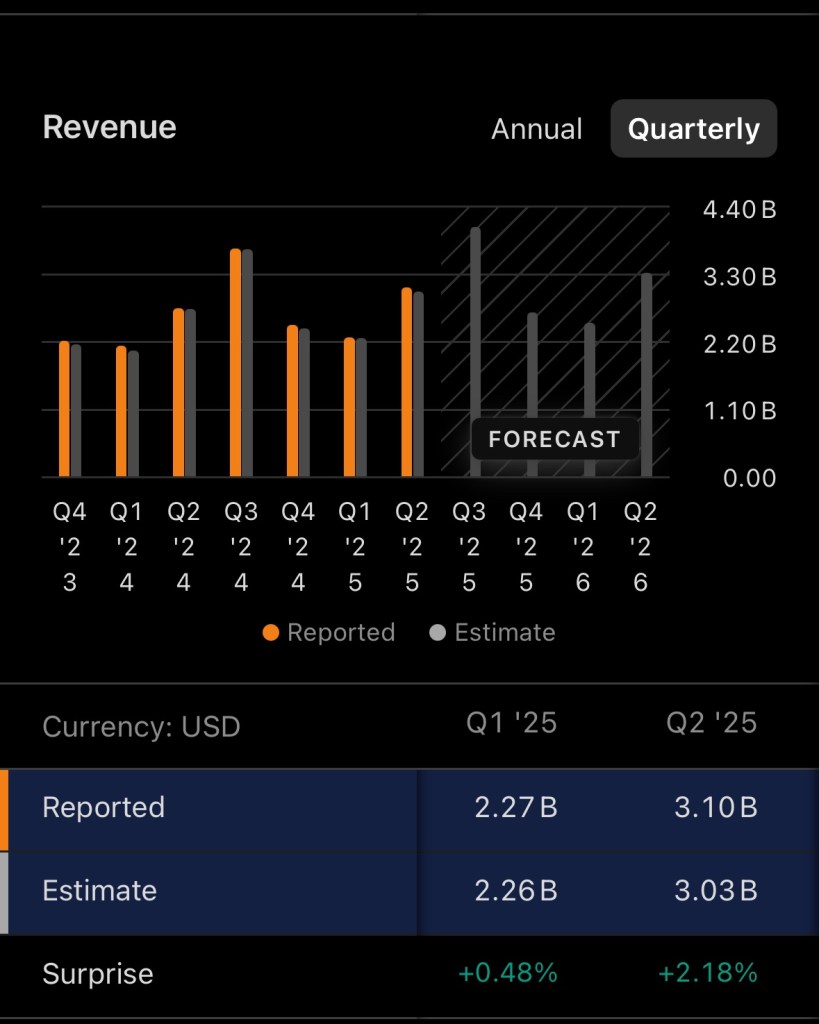
Airbnb outperformed expectations in Q2 2025:
Earnings per share: $1.03 (+99% YoY vs. $0.94 expected)
Revenue: $3.1 billion (+13% YoY)
Gross bookings: $23.5 billion (+11% YoY)
Despite these strong results, caution around margin trajectory and investment pace weighed on sentiment, causing a ~7% dip in premarket trading Investors.
Simultaneously, long-term confidence remains steady-Akre Capital boosted its Airbnb allocation by 10%, signaling belief in the company’s growth trajectory (AInvest).
5. Favorable Industry Trends
In the broader travel space, analysts remain positive. A recent Barron’s feature highlights secular travel growth outpacing GDP and the rising demand for experiences. Although other travel players like hotels and airlines benefit, OTAs and platforms like Airbnb must adapt and diversify to stay competitive-something Airbnb is actively doing (Barron’s).
Industry Positioning: How Airbnb Compares
Here’s a snapshot comparing Airbnb to its main competitors in the travel lodging and experiences sector:
Company
Market Share (2024)
Business Model
Key Differentiator
Airbnb
44%
Asset-light platform
Large host network, high margins, diversified services
Booking.com
18%
Hybrid (hotels + rentals)
Strong hotel partnerships, AI integration
Expedia/Vrbo
9%
Hybrid OTA
Bundle offerings, traditional OTA presence
Airbnb leads clearly in short-term rental share and continues to build stronger differentiation through vertical integration and digital enhancements (AInvest+1MarketWatchBarron’s).
Points of Caution
Valuation: Forward P/E sits above 30x (e.g., ~34.5x), relatively high compared to peers like Expedia (~10x) or Booking (~18x) (The Motley FooleToro).
Regulatory Headwinds: Local restrictions (e.g., New York City) and evolving laws could curtail growth in certain markets (eToroMarketWatch).
Execution Risk: Scaling new offerings and achieving the $1 billion services target will take time—short-term margins may remain under pressure (AInvestInvestorsMarketWatch).
Final Take
Airbnb demonstrates the hallmarks of a high-upside, long-term growth stock:
Strong financials, efficient operations, and leading share in a growing market.
Expanding revenue streams beyond traditional listings.
Strategic execution evidenced by earnings beats and fund manager conviction.
That said, elevated valuation and near-term execution risks suggest that patient investors may benefit from disciplined entry points or staged allocation.
Disclaimer: The author holds a position in $ABNB AIR BNB and this article should not be considered financial advice. Always conduct your own research before making any investment decisions.
As temperatures rise and backyard grills fire up, summer is often synonymous with indulgent foods from ice cream cones and cheeseburgers to sugary cocktails and deep-fried fair treats. But this year, health-conscious eaters are proving that you don’t have to sacrifice flavor to stay on track with your wellness goals.
Nutritionists and chefs alike are championing simple food swaps that cut down on calories and saturated fat, boost nutrients, and still deliver the mouthwatering taste people crave during the sunny season.
Frozen Yogurt Over Ice Cream Swap out sugar-laden ice cream for creamy Greek frozen yogurt. It satisfies that sweet tooth while packing in protein and probiotics that aid digestion — a win-win after a heavy BBQ meal.
Grilled Veggies Instead of Chips Potato chips are a picnic staple, but grilled veggies like zucchini, bell peppers, and eggplant are quickly taking over summer spreads. Tossed with olive oil and herbs, they’re crisp, colorful, and bursting with flavor — minus the trans fats and sodium overload.
Turkey or Veggie Burgers in Place of Beef Summer cookouts and burgers go hand in hand, but swapping a fatty beef patty for a lean turkey or plant-based burger reduces saturated fat without skimping on the smoky taste. Pile it high with fresh greens and tomatoes for added crunch and nutrients.
Infused Water Beats Soda Sugary sodas and sweet teas can derail a healthy summer day fast. Instead, stay hydrated with naturally flavored water. Add fresh berries, cucumber slices, or mint to your pitcher — it’s refreshing, festive, and free of empty calories.
Nice Cream for Dessert Banana “nice cream” is trending for good reason: blend frozen bananas with a splash of almond milk, and you’ve got a creamy, dairy-free dessert that rivals traditional soft serve — without the sugar crash.
Fresh Fruit Kabobs Instead of Candy Summer means peak season for juicy fruits like watermelon, pineapple, and strawberries. Thread them onto skewers for colorful, fun-to-eat kabobs that beat processed sweets and satisfy a sugar craving naturally.
Whole-Wheat Buns and Wraps For those summer sandwiches and hot dogs, opt for whole-wheat buns or lettuce wraps. You’ll up your fiber intake and avoid the blood sugar spikes that come with refined white bread.
These swaps aren’t about deprivation they’re about finding creative ways to celebrate the season’s best flavors while giving your body what it needs to feel its best.
So, whether you’re hosting a backyard barbecue or packing a picnic for the beach, try one (or all) of these healthy swaps and taste how satisfying smart choices can be.
What’s your favorite healthy summer swap? Let us know in the comments!
As summer 2025 takes flight, so do the travelers—millions of them—crisscrossing the globe in search of sun, adventure, and relaxation. But with high demand, weather unpredictability, and stretched airline resources, delays are becoming a familiar part of the journey.
According to recent data from the International Air Transport Association (IATA), global airline delays in June rose by 18% compared to last summer, largely driven by increased travel demand, pilot shortages, and weather-related disruptions. Major hubs like New York’s JFK, London Heathrow, and Frankfurt have all experienced bottlenecks, frustrating travelers eager to begin their holidays.
But here’s the twist: despite the delays, travelers aren’t letting the turbulence ground their good vibes.
“We were stuck at the airport for ten hours,” said David Dandaneau, an Insurance Analyst from Tampa en route to Lisbon. “But we made it fun. We played cards with a couple from Italy, shared snacks, and swapped travel tips. It ended up being one of the most memorable parts of our trip.”
Social media is awash with similar stories. From impromptu yoga sessions in gate areas to mini-concerts by musicians waiting for their flights, travelers are finding creative ways to turn delay-induced downtime into shared moments of joy.
Travel experts recommend keeping expectations flexible and packing patience alongside your passport. Here are a few ways to keep spirits high even when your departure time isn’t:
– Pack a travel-friendly game or book. Delays are less annoying when you’re entertained.
– Download shows or podcasts in advance. Wi-Fi isn’t always reliable during layovers.
– Stay hydrated and fueled. Hunger and frustration are a bad combo.
– See delays as bonus time. Use it to reflect, journal, or make a new friend.
“Travel is never perfect—and it doesn’t need to be,” says psychologist and travel blogger Dr. Ayesha Reed. “It’s all part of the story you’ll tell when you get home.”
So, whether your flight takes off on time or fashionably late, remember: summer isn’t about sticking to a schedule—it’s about soaking in the experience. Even if it starts at Gate B12 with a three-hour wait and a lukewarm coffee.
Because the journey, delays and all, is half the adventure. ✈️🌞
In a world where hustle culture often glorifies overwork and burnout, a recent study sheds light on the importance of taking time off. Contrary to the prevailing notion that incessant work leads to success, researchers have found that vacations play a crucial role in promoting mental health, enhancing productivity, and improving overall quality of life.
The study, conducted by a team of psychologists and published in the Journal of Behavioral Sciences, surveyed over 2,000 working professionals across various industries. The results revealed a striking correlation between vacation time and well-being, with participants reporting significant benefits from taking regular breaks from work.
One of the key findings of the study was the positive impact of vacations on mental health. Participants who took regular vacations reported lower levels of stress, anxiety, and depression compared to those who did not. Dr. Emily Roberts, lead researcher on the study, emphasized the importance of disconnecting from work to alleviate psychological strain. “Vacations provide an opportunity to recharge both mentally and emotionally, allowing individuals to return to work with renewed energy and focus,” she stated.
Furthermore, vacations were found to boost creativity and problem-solving skills. Time away from the daily grind allows individuals to gain new perspectives, explore different environments, and engage in activities that stimulate the mind. This fresh outlook often translates into increased innovation and efficiency upon returning to work.
In addition to mental health benefits, vacations were also linked to improved physical health outcomes. Research has shown that chronic stress, often exacerbated by long hours and workplace pressure, can have detrimental effects on the body. By taking regular breaks, individuals can reduce their risk of developing stress-related illnesses such as heart disease, hypertension, and obesity.
Employers are also beginning to recognize the importance of promoting a healthy work-life balance. Many companies are implementing policies that encourage employees to use their allotted vacation time and prioritize self-care. Companies like Google and Netflix are renowned for their generous vacation policies, which have been shown to improve employee morale, retention, and overall productivity.
Despite the evidence supporting the benefits of vacations, many individuals still struggle to disconnect from work. The rise of remote work and constant connectivity through smartphones has blurred the boundaries between work and leisure, making it challenging for people to fully unplug during their time off. Experts recommend setting boundaries, scheduling regular breaks, and prioritizing self-care to reap the full benefits of vacation time.
As we navigate an increasingly demanding and fast-paced world, taking time to rest and recharge is more important than ever. Whether it’s a tropical getaway, a weekend retreat, or a simple staycation, prioritizing vacation time is essential for maintaining balance, happiness, and well-being in both our personal and professional lives.
References
Roberts, Emily et al. “The Impact of Vacations on Mental Health and Well-Being: A Survey Study.” Journal of Behavioral Sciences, vol. 25, no. 3, 2023, pp. 45-62.







 Health to Wealth Ventures