After years of discussing auto insurance with customers, I’ve learned that one of the most common points of confusion is what actually counts as a “property claim” after a car accident. Many people assume that if property is damaged in an accident, it automatically falls under the property portion of their policy. In reality, auto insurance breaks these situations into different categories.
Understanding the difference can help drivers avoid surprises when they file a claim.
The Scenario: A Simple Car Accident
Imagine this situation.
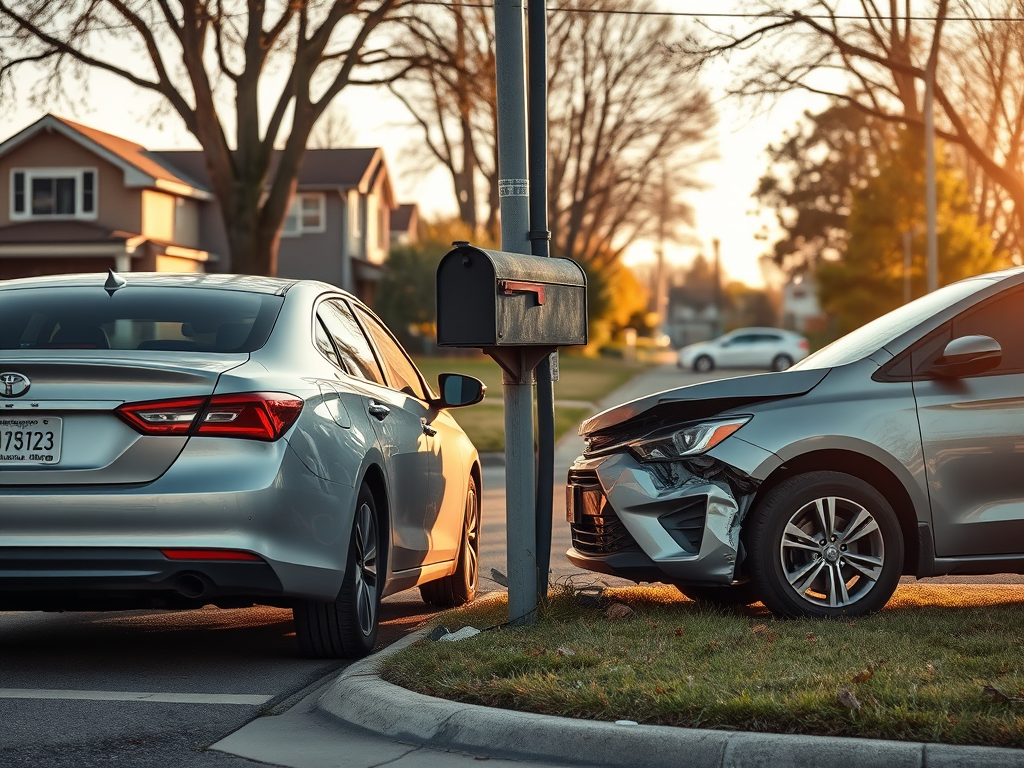
You’re driving through your neighborhood on a Saturday afternoon. As you approach a stop sign, you look down for a moment to adjust the radio. When you look back up, it’s too late you roll into the intersection and collide with another vehicle. The impact pushes the other car into a nearby mailbox and damages both vehicles.
Now there are three different types of damage involved:
Damage to the other driver’s car
Damage to the mailbox
Damage to your own car
At this point, many people ask the same question:
“Is this a property claim?”
The answer is yes and no, depending on which property was damaged.
Property Damage Liability: Damage to Other People’s Property
In the scenario above, your Property Damage Liability coverage would apply to the damage you caused to someone else’s property.
This includes:
The other driver’s vehicle
The mailbox you knocked over
Property Damage Liability is designed to pay for repairs or replacement of property that you damage in an accident when you are at fault.
In other words, it protects other people’s property… not your own.
Collision Coverage: Damage to Your Own Car
Your vehicle, however, is handled differently.
Damage to your car would typically fall under Collision Coverage, which helps pay to repair or replace your vehicle after an accident, regardless of who caused it.
If you don’t carry collision coverage, you may have to pay out of pocket for repairs to your own vehicle.
Why This Confuses Drivers
The confusion comes from the wording.
Many drivers hear the term “property damage” and assume it refers to any property involved in an accident, including their own car.
But in auto insurance terminology:
Property Damage Liability = damage you cause to someone else’s property
Collision Coverage = damage to your own vehicle
Understanding that distinction can make the claims process much clearer.
Why It Matters
Knowing how your policy works before an accident occurs can save both time and stress.
Drivers who understand their coverage are better prepared to answer questions like:
Who pays for the other car?
Who pays for my car?
What happens if property like a fence, building, or mailbox is damaged?
Insurance is ultimately about managing risk and protecting both your finances and the property around you.
And sometimes, the most important protection comes from simply understanding what your policy actually covers.
About the Author:
David Dandaneau is a client relations analyst that covers the insurance and financial services industry. He is known for his insightful analysis and comprehensive coverage of market trends and regulatory developments.
Most drivers believe they’re “fully covered” because they carry the minimum auto insurance required by their state. It’s an understandable assumption but often a dangerous one. After speaking with accident victims, reviewing claim data, and examining common policy structures, it’s clear that some of the most important protections in auto insurance are also the most frequently overlooked.
These lesser-known coverages can be the difference between a manageable inconvenience and a long-term financial setback after an accident. The reality is simple: it’s not just about having insurance it’s about having the right insurance.
The Hidden Risk: Other Drivers
One of the biggest misconceptions drivers have is assuming everyone else on the road is properly insured. Unfortunately, that’s not always the case.
According to the Insurance Research Council, approximately 1 in 7 drivers nationwide are uninsured, and many more carry only minimum liability limits often insufficient to cover serious injuries or vehicle damage.
If you’re hit by one of these drivers, your financial protection depends heavily on whether you carry certain optional coverages.
Uninsured and Underinsured Motorist Coverage (UM/UIM): Your Safety Net
Uninsured Motorist (UM) and Underinsured Motorist (UIM) coverage protects you if you’re injured by a driver who either has no insurance or not enough insurance.
This coverage can help pay for:
Medical bills
Lost wages
Pain and suffering
Rehabilitation costs
Without UM/UIM, you may be forced to rely on your health insurance or worse, pay out of pocket.
In states like Florida, where minimum liability requirements are relatively low, this coverage becomes even more critical.
Medical Payments Coverage (MedPay): Immediate Medical Relief
Medical Payments coverage, commonly called MedPay, helps cover medical expenses for you and your passengers regardless of who caused the accident.
This includes:
Ambulance fees
Hospital visits
Surgery
X-rays
Follow-up care
MedPay works quickly and does not require lengthy fault investigations. It can also help cover deductibles and out-of-pocket costs your health insurance doesn’t pay.
This coverage is especially valuable for drivers with high health insurance deductibles.
Personal Injury Protection (PIP): Mandatory in Some States, Essential Everywhere
Personal Injury Protection, or PIP, is required in certain “no-fault” states like Florida.
PIP covers:
Medical expenses
Lost income
Essential services (such as childcare or housekeeping if you’re injured)
However, many drivers don’t realize PIP coverage limits can be exhausted quickly in a serious accident. Supplementing it with MedPay or UM/UIM provides stronger protection.
Gap Coverage: Protecting Your Loan Balance
If your vehicle is financed or leased, Gap insurance may be one of the most important coverages you can carry.
If your car is totaled, insurance typically pays only the vehicle’s actual cash value, not what you owe on the loan.
Gap coverage pays the difference between:
What your car is worth
What you still owe on your loan
Without Gap coverage, drivers may find themselves making payments on a car they no longer own.
Rental Reimbursement: Keeping Your Life Moving
After an accident, your vehicle may be in the shop for days or weeks.
Rental reimbursement helps cover the cost of a rental vehicle while repairs are being completed. Without it, transportation costs can add up quickly—and disrupt work and family routines.
Why Minimum Coverage Is Often Not Enough
State minimum coverage requirements are designed to meet legal standards not financial protection standards.
In many states, minimum property damage limits can be as low as $10,000 to $25,000. Considering the cost of modern vehicles, that amount may not even cover the damage to a single car.
Serious accidents involving injuries can result in costs reaching hundreds of thousands of dollars.
Drivers without adequate coverage may be personally responsible for these expenses.
Comparison Table: Key Overlooked Coverages and State Applicability
Coverage Type
What It Covers
Required in All States?
Required in Some States?
Optional but Recommended?
Notes
Uninsured Motorist (UM)
Injuries caused by uninsured drivers
No
Yes
Yes
Critical in states with high uninsured driver rates
Underinsured Motorist (UIM)
Injuries when at-fault driver lacks sufficient coverage
No
Yes
Yes
Protects against low-liability drivers
Personal Injury Protection (PIP)
Medical expenses and lost wages regardless of fault
No
Yes
Yes
Required in no-fault states like Florida
Medical Payments (MedPay)
Medical expenses regardless of fault
No
No
Yes
Helps cover deductibles and gaps in health insurance
Gap Coverage
Difference between loan balance and vehicle value
No
No
Yes
Important for financed or leased vehicles
Rental Reimbursement
Cost of rental vehicle after covered accident
No
No
Yes
Provides transportation continuity
Bodily Injury Liability (Higher Limits)
Injuries you cause to others
Yes (minimum limits)
Yes
Strongly Recommended to increase limits
Minimum limits often insufficient
Property Damage Liability (Higher Limits)
Damage you cause to others’ property
Yes (minimum limits)
Yes
Strongly Recommended to increase limits
Modern vehicle costs exceed minimums
Financial Protection Is About Preparation, Not Prediction
No one expects to be involved in a serious accident. But accidents don’t ask whether you’re prepared they simply test whether you are.
Many of the most valuable auto insurance coverages are optional, inexpensive, and rarely used but when needed, they can protect your financial stability and peace of mind.
The difference between minimal coverage and proper coverage often comes down to just a few additional protections protections that can make all the difference when the unexpected happens.
Before assuming you’re fully covered, it may be worth reviewing your policy closely. The coverages you overlook today could be the ones you’re most thankful for tomorrow.
About the Author:
David Dandaneau is a client relations analyst that covers the insurance and financial services industry. He is known for his insightful analysis and comprehensive coverage of market trends and regulatory developments.
When it comes to staying insured and legally compliant on the road, few documents create more confusion than the SR-22. Contrary to popular belief, an SR-22 is not an insurance policy—it’s a certificate of financial responsibility filed with your state to prove you carry the minimum required auto insurance. For drivers who have encountered serious traffic violations or insurance lapses, filing an SR-22 can be critical to regaining or maintaining driving privileges.
Why You Might Need an SR-22
States typically require an SR-22 after certain high-risk incidents, including:
Driving without insurance If you’re caught driving uninsured—even once—many states will require an SR-22 to verify you remain insured moving forward.
DUI or DWI convictions One of the most common triggers. After a DUI/DWI, drivers must often carry an SR-22 for several years.
Multiple traffic violations or at-fault accidents Repeat offenders or drivers involved in severe collisions may be labeled “high-risk,” prompting the SR-22 requirement.
License suspension or revocation To reinstate your driver’s license, an SR-22 filing may be mandatory.
Serious moving violations Excessive speeding, reckless driving, or hit-and-run incidents sometimes lead to SR-22 mandates depending on the state.
How Long You Must Carry an SR-22
Most states require drivers to maintain an SR-22 for 3 years, though this varies by location and offense. If coverage lapses at any point, your insurance company must notify the state likely resetting the clock on your compliance period.
What an SR-22 Costs
The SR-22 filing fee itself is typically small around $15–$50. However, insurance premiums can increase based on your driving record. Working with a knowledgeable insurance agent can help reduce the financial impact by exploring policy options tailored to high-risk drivers.
The Filing Process: Getting Professional Help
The SR-22 must be filed by a licensed insurance provider on your behalf. Here’s how professionals typically assist:
Assess Your Situation An insurance professional reviews your state’s requirements and the circumstances behind your SR-22 need.
Secure an Eligible Policy Not all insurers offer SR-22 filings. Agents specializing in high-risk auto insurance can pair you with a policy that meets your state’s minimums.
File the SR-22 Electronically Most filings are sent directly to the state within 24–48 hours, speeding up reinstatement timelines.
Provide Guidance and Follow-Up Agents can help you avoid lapses, set up reminders, and secure better rates once your SR-22 period ends.
Suggestions for Drivers Facing an SR-22 Requirement
Act quickly to prevent extended license suspensions.
Compare quotes—prices vary dramatically among providers.
Avoid coverage lapses at all costs.
Consider defensive driving courses to improve your record over time.
Stay insured continuously to begin rebuilding your driving profile.
Referrals and When to Seek Professional Help
If you’re unsure whether you need an SR-22 or how to file one, your best first step is connecting with:
A licensed auto insurance agent specializing in SR-22 filings
A traffic attorney if your requirement stems from a DUI, reckless driving, or a serious violation
Your state’s Department of Motor Vehicles (DMV) for official reinstatement guidelines
These professionals can clarify requirements, ensure proper filing, and help you move forward with confidence.
About the Author:
David Dandaneau is a client relations analyst that covers the insurance and financial services industry. He is known for his insightful analysis and comprehensive coverage of market trends and regulatory developments.
As we approach the end of 2025, the property insurance marketplace is navigating a mix of change, challenge and opportunity. Here’s a look at the key trends shaping the sector — and what they might mean for insurers, brokers and property owners alike.
1. Climate-Driven Losses Are Now the New Normal
The pace and severity of natural catastrophes continue to place major pressure on the property insurance market. The Swiss Re Institute estimates that global insured losses from natural catastrophes hit roughly US $80 billion in the first half of 2025, nearly double the 10-year average. (Reuters+2Insurance Journal+2) For insurers, that means heavier claims, tougher underwriting decisions and heightened scrutiny of exposures in high-risk zones.
What to watch:
Insurers will increasingly pull back or raise rates in high-catastrophe zones — e.g., coastal and wildfire-prone areas.
Property owners in those zones will receive stronger signals to invest in resilience (storm hardening, wildfire mitigation, flood defence).
Coverage gaps may grow where private insurers no longer provide adequate support, leading to more reliance on state/last-resort markets.
2. Pricing and Coverage Conditions Are Mixed — Softening in Some Segments, Hardening in Others
While recent years were characterised by sharp rate increases and tightening terms, there are signs that some parts of the market are stabilising or even softening. For example:
The Alera Group in its 2025 P&C update notes greater market stability, with disciplined underwriting, improving investment yields, and signs that premium growth may moderate. (Alera Group)
In commercial property, accounts with favourable loss history and limited catastrophe exposure may now see flat to single-digit rate increases, rather than the double-digit hikes of earlier years. (Dominion Risk+1)
On the flip side, in the homeowners/home-insurance space, average premiums remain elevated, and the insurers’ “combined ratio” suggests limited profitability in some segments. (Rate)
Key take-aways:
For well-performing risks, carriers are competing — more capacity, more flexible terms.
Brokers and agents who can help clients demonstrate strong mitigation/maintenance will be in demand.
3. Technology & Risk-Modelling Innovations Are Moving From “Nice to Have” to “Must-Have”
Insurers are rapidly expanding their use of technology — sensors, drones, satellite imagery, IoT monitoring, artificial intelligence — to refine risk assessments, improve underwriting and streamline claims. According to a recent legal-firm insight, insurers are deploying drones, satellite-imagery and IoT to track damage and property condition in real time. (Greenberg Traurig) Meanwhile, homeowners are seeing insurers push risk-mitigation incentives (smart-home sensors, leak detectors, fire-resistant construction) as a way to differentiate risk. (Rate)
What this means:
Risk-differentiation will widen: properties with upgraded resilience features may enjoy better terms/discounts.
Older or non-mitigated properties may face fewer options or harsher terms.
Agents and insurers who embrace these tools will have a competitive edge, especially in emerging hazard-zones.
4. Reinsurance and Capacity Pressures Remain Real
While direct insurance pricing may be moderating for some risks, the broader ecosystem — especially reinsurance — remains under strain. The costs of reinsurance for catastrophe risk continue to climb as global natural hazard exposures grow. (Greenberg Traurig) Also, some last-resort markets (state-backed, residual lines) are under pressure to raise rates or adjust eligibility, particularly in states with chronic exposure. (San Francisco Chronicle)
Implication: Insurers must manage their reinsurance treaties carefully, be selective about exposures they carry, and pass through appropriate pricing and terms to stay sustainable.
5. Market Size is Growing — With Geographic and Product Gaps Emerging
From a volume perspective, the property-insurance market remains on a growth path. For example, in North America the market for property insurance was projected to reach about US $365 billion in 2025, with a five-to-seven-year compound annual growth rate (CAGR) of nearly 7%. (Statista) Globally, a report projects the property-insurance market to be around US $364.75 billion in 2025, growing toward ~US$591 billion by 2034. (Business Research Insights)
Yet, growth is uneven:
Regions with escalating risk (wildfire, flood, storm) may struggle with supply and affordability.
Specialized products (wildfire-only, flood-only, resiliency add-ons) are gaining traction.
Bundled products (home + auto) and value-added services (risk-engineering, smart-home upgrades) are becoming differentiators.
6. Homeowners Face Increasing Burden — Affordability, Availability and Risk
For homeowners, especially in climate-exposed states (e.g., coastal Florida, wildfire-prone California), the challenges are mounting:
Rising premiums and deductibles: some reports show average home-insurance premiums nationally up ~20 % year-over-year in certain markets. (Rate+1)
Higher deductibles and more peril-specific deductibles (wind/hail, wildfire, flood) are becoming more common. (Matic Insurance)
Coverage availability is still strained in many high-risk ZIP codes; the E&S (Excess & Surplus) market is filling gaps. (Matic Insurance)
For agents and homeowners:
Risk mitigation (roof upgrades, fire-resistant landscaping, flood mitigation) is no longer optional—it can materially affect access and cost of coverage.
The choice of market (traditional carrier vs. surplus market) matters more than ever; early renewal/placement is advised.
For homeowners in highly exposed zones, budgeting for rising insurance costs (and potential policy non-renewals) is prudent.
7. Regulatory & Geographic Regulation Shifts
Regulators in states like Hawaii, Florida and California are responding to the stability challenges in property-insurance markets. For example, in Hawaii legislators pledged efforts to stabilise the market in the face of rising rates and insurers pulling out. (AP News) Rate filings and underwriting criteria adjustments are happening in several jurisdictions — meaning agents must stay abreast of local regulatory changes that could affect availability, coverage form, or premium.
Looking Ahead to Late 2025 and Early 2026
As we close out 2025, a few strategic themes for stakeholders:
For insurers and brokers: Market segmentation will deepen. Strong, well-mitigated risks will benefit from capacity and competition. Weakly mitigated risks will face greater terms and possibly coverage erosion.
For homeowners/property owners: Now is a contact point: review your property’s risk profile, invest in mitigation where possible, explore multiple carriers, and monitor renewal dates early.
For agents in your position (auto/property insurance): There’s an opportunity to advise clients on the “property side” in addition to auto — helping them understand risk exposures, mitigation, bundling opportunities, and market shifts. For example, bundling home + auto may give you more leverage.
For regulatory watchers: The interplay of climate risk, insurance affordability, and public policy will remain front-and-centre. Watch for state-level reforms, changes in last-resort insurers, and potential new coverage mandates or premium subsidies.
What Lies Ahead
The property-insurance market at the end of 2025 is in a state of transition. Big picture: demand is growing, but risk is mounting and not evenly distributed. Pricing and terms are moderating in some segments — yet for high-exposure zones the pressure remains acute. Technology, mitigation and geographic nuance will distinguish winners from laggards.
For you (and your clients) this means: be proactive. Know the risks. Position properties (or clients’ homes) for reward (through mitigation) rather than punishment. And stay flexible — the “next renewal” is likely to look quite different from the last.
About the Author:
David Dandaneau is a client relations analyst that covers the insurance and financial services industry. He is known for his insightful analysis and comprehensive coverage of market trends and regulatory developments.
When it comes to motorcycles, boats, golf carts, and ATVs, most people think about the thrill of the ride, the open water, or a sunny day on the course-not the financial risks. But accidents, theft, and unexpected liabilities don’t take a holiday, and that’s why insurance for your recreational “toys” is worth serious consideration.
Required vs. Optional Coverage
The first step in understanding toy insurance is knowing what’s required by law and what’s optional.
Motorcycles: Like cars, most states require liability insurance if you’re taking your motorcycle on public roads. This covers injury or damage you may cause to others, but not your own bike. Collision and comprehensive coverage—protecting your motorcycle against accidents, theft, or weather damage are optional but highly recommended.
Boats: While boat insurance isn’t federally mandated, some states and marinas require proof of coverage. Even if it’s not required, carrying liability and property protection can shield you from costly repairs or lawsuits if an accident occurs on the water.
ATVs & Dirt Bikes: If you’re riding on private land, insurance is usually optional. However, many state parks, trails, and off-road areas require proof of coverage to operate. Considering the high rate of ATV accidents and theft, insuring your four-wheeler is a smart move.
Golf Carts: Most neighborhoods and golf courses don’t require golf cart insurance, but if you’re using the cart on public roads-or even just around your community-liability coverage can protect you if an accident happens. Some homeowners’ policies provide limited coverage, but standalone golf cart insurance can fill the gaps.
Why You Should Insure Even When It’s Optional
Just because coverage isn’t required doesn’t mean it isn’t essential. Repair costs, medical bills, or liability lawsuits can quickly outweigh the value of your toy itself. Theft is another growing concern-ATVs, motorcycles, and even boats are among the most commonly stolen recreational vehicles.
Insurance not only protects your investment but also your financial stability. For many, the peace of mind of knowing that a fun weekend won’t turn into a financial nightmare is worth the modest premium.
A Smarter Way to Protect Your Fun
Your recreational vehicles are more than just “toys”-they’re part of your lifestyle. Adding the right insurance ensures that your good times don’t come with unnecessary risks. Before the next ride, round of golf, or day on the water, check your coverage and make sure your adventures are backed by protection as strong as your passion.
About the Author:
David Dandaneau is a client relations analyst that covers the insurance and financial services industry. He is known for his insightful analysis and comprehensive coverage of market trends and regulatory developments.
As recreational boating gains popularity across the United States, the importance of boat insurance becomes increasingly evident. Whether you’re navigating serene lakes or coastal waters, unforeseen accidents can lead to substantial financial burdens without adequate coverage.
In 2023, the U.S. witnessed over 4,000 recreational boating accidents, resulting in more than 500 fatalities and nearly 3,000 injuries. These incidents underscore the unpredictable nature of boating and the potential risks involved.
Financial repercussions from such accidents are significant. Property damage alone amounted to approximately $63.42 million in 2023, marking a slight increase from the previous year.
Common Causes of Boating Accidents Understanding prevalent causes of boating mishaps can highlight the necessity of insurance:
Collisions with Other Vessels or Objects: Account for 26% of all boat insurance claims.
Grounding: Involves 16% of claims, often due to navigating shallow waters or unseen obstacles.
Theft: Represents 6% of claims, emphasizing the need for comprehensive coverage.
Fire and Explosion: Though less common, these incidents can lead to total vessel loss .
The Role of Boat Insurance Boat insurance serves as a financial safeguard, covering damages to your vessel, liability for injuries to others, and protection against theft or natural disasters. Without it, boat owners may face out-of-pocket expenses for repairs, medical bills, or legal fees.
For instance, the sinking of the Bayesian superyacht off Sicily in 2024 resulted in anticipated insurance claims of at least $150 million, highlighting the potential financial magnitude of maritime accidents.
Boating offers unparalleled freedom and enjoyment, but it also comes with inherent risks. Investing in comprehensive boat insurance ensures that you’re protected against unforeseen events, allowing you to navigate the waters with peace of mind.
About the Author:
David Dandaneau is a insurance agent that covers the insurance and financial services industry. He is known for his insightful analysis and comprehensive coverage of market trends and regulatory developments.
Auto insurance is a crucial financial safeguard that protects drivers from unexpected costs due to accidents, theft, and other incidents. While most states require drivers to carry at least a minimum level of insurance, understanding the different parts of an auto insurance policy can help policyholders make informed decisions about their coverage. Here’s a breakdown of the key components of an auto insurance policy and optional coverages to consider adding for extra protection.
Car insurance policy. Man handshake with agent. Contract for safe and protect automobile from disaster or crash. Guarantee vector concept. Agreement for damaged vehicle service, deal
The Core Components of an Auto Insurance Policy
Liability Coverage Liability insurance is typically required by law and covers bodily injury and property damage that you cause to others in an accident.
Bodily Injury Liability (BI): Pays for medical expenses, lost wages, and legal fees if you injure someone in an accident.
Property Damage Liability (PD): Covers the cost of repairing or replacing another person’s property that you damage, such as vehicles, fences, or buildings.
Collision Coverage This coverage pays for repairs or replacement of your vehicle if it is damaged in an accident, regardless of who is at fault. It is particularly beneficial for newer or high-value vehicles.
Comprehensive Coverage Often called “other than collision” coverage, comprehensive insurance covers damage to your vehicle from non-collision incidents such as theft, vandalism, fire, natural disasters, or animal collisions.
Uninsured/Underinsured Motorist Coverage (UM/UIM) This coverage protects you if you’re involved in an accident with a driver who has no insurance or insufficient coverage. It can cover medical bills, lost wages, and other expenses resulting from the accident.
Personal Injury Protection (PIP) / Medical Payments (MedPay) These coverages help pay for medical expenses for you and your passengers, regardless of fault. PIP may also cover lost wages and essential services like childcare if you’re unable to work due to injuries.
Additional Coverages to Consider
Roadside Assistance Provides help with common vehicle issues such as towing, battery jump-starts, flat tire changes, and lockout services.
Rental Car Reimbursement Covers the cost of a rental car while your vehicle is being repaired due to a covered accident.
Gap Insurance If your car is totaled or stolen and you owe more on your loan or lease than the car’s current value, gap insurance covers the difference.
Custom Equipment Coverage If you’ve added aftermarket modifications to your vehicle, such as custom wheels or a sound system, this coverage helps protect those enhancements.
Rideshare Insurance If you drive for companies like Uber or Lyft, personal auto insurance may not cover you while you’re working. Rideshare insurance fills the gap in coverage.
Choosing the Right Policy
When selecting auto insurance, consider factors such as your vehicle’s value, driving habits, and budget. While state minimums may keep you legally covered, adding comprehensive protection can prevent costly out-of-pocket expenses in case of an accident or theft. Consulting with a trusted insurance agent can help you customize your policy to fit your specific needs.
Understanding the different parts of an auto insurance policy and tailoring your coverage accordingly ensures that you are adequately protected on the road. Taking the time to review and adjust your policy can provide peace of mind and financial security in the event of an unexpected incident.
For a personalized insurance review, contact me today to ensure you have the right coverage for your needs.
About the Author:
David Dandaneau is a insurance agent that covers the insurance and financial services industry. He is known for his insightful analysis and comprehensive coverage of market trends and regulatory developments.
Florida — Personal Injury Protection (PIP) insurance is a critical component of auto insurance coverage for Florida drivers. As a no-fault state, Florida law requires motorists to carry PIP coverage to ensure swift access to medical treatment and other essential benefits after an accident, regardless of who is at fault.
What Is PIP Insurance?
PIP, also known as “no-fault insurance,” is designed to cover medical expenses, lost wages, and other costs associated with an accident. Florida law mandates that all vehicle owners carry a minimum of $10,000 in PIP coverage as part of their auto insurance policy.
What Does PIP Cover?
PIP provides a variety of benefits to policyholders, including:
Medical Expenses – Covers up to 80% of necessary medical costs, such as hospital visits, surgeries, rehabilitation, and diagnostic services, up to the policy limit.
Lost Wages – Compensates injured policyholders for lost income, covering up to 60% of wages if the injuries prevent them from working.
Death Benefits – Provides up to $5,000 in benefits to the family of a policyholder who dies as a result of an accident.
Replacement Services – Covers essential services such as childcare, housekeeping, or transportation if the injured person is unable to perform them due to the accident.
Key Limitations and Considerations
While PIP provides crucial financial relief, it does have limitations:
Coverage Limits – The $10,000 coverage may not be sufficient for severe injuries requiring long-term treatment.
Emergency Medical Condition (EMC) Requirement – Florida law requires policyholders to receive initial medical treatment within 14 days of an accident. If an injury is not deemed an EMC, PIP coverage may be limited to $2,500 instead of the full $10,000.
Exclusions – PIP does not cover property damage, and certain medical treatments may not be fully reimbursed.
Why PIP Matters in Florida
Florida’s PIP system ensures that drivers and passengers receive immediate medical care after an accident without waiting for fault to be determined. This reduces legal disputes and allows for faster claim processing. However, due to high fraud rates and rising insurance costs, there have been ongoing debates about potential reforms to Florida’s no-fault system.
For Florida drivers, understanding PIP coverage is essential for financial protection in the event of an accident. Policyholders should review their policies carefully and consider additional coverage options, such as Bodily Injury Liability (BIL) or MedPay, to enhance their protection. If you have questions about your auto insurance coverage, consulting with an experienced insurance agent can help you make informed decisions.
About the Author:
David Dandaneau is a insurance agent that covers the insurance and financial services industry. He is known for his insightful analysis and comprehensive coverage of market trends and regulatory developments.
Every year, millions of drivers renew their car insurance policies without giving them a second thought. However, failing to review your coverage annually could mean missing out on potential savings or leaving yourself underinsured in the event of an accident. Understanding key aspects of your policy—such as bodily injury liability, property damage coverage, and personal injury protection—can help you make informed decisions and ensure you have the right protection at the best price.
Rates Change, and So Should Your Coverage Car insurance premiums fluctuate based on multiple factors, including your driving history, credit score, local accident trends, and even changes in state laws. A rate that was competitive last year may no longer be the best option today. By reviewing your policy annually, you can compare quotes from different providers and adjust your coverage to match your current needs.
Bodily Injury Liability: Are You Adequately Covered? Bodily injury liability coverage is crucial because it helps pay for medical expenses, lost wages, and legal fees if you’re at fault in an accident that injures another person. Many states set minimum coverage requirements, but these may not be sufficient in a serious accident. Reviewing your policy ensures that your coverage limits are high enough to protect your assets if you’re sued.
Property Damage Liability: Protecting More Than Just Cars Property damage liability covers the costs of repairing or replacing another person’s vehicle or property if you’re responsible for an accident. With the rising cost of car repairs and replacements, minimum state-required coverage may not be enough. A yearly policy review can help you determine if increasing your limits is necessary to avoid paying out of pocket in a worst-case scenario.
Personal Injury Protection (PIP): Covering Your Medical Costs Personal injury protection, or PIP, is required in some states and optional in others. It helps cover medical expenses, lost wages, and even funeral costs for you and your passengers, regardless of fault. As healthcare costs continue to rise, ensuring that your PIP coverage is sufficient can prevent financial strain in the event of an accident.
Discounts and Savings You Might Be Missing Many insurers offer discounts for safe driving, bundling policies, vehicle safety features, and even good credit. However, these discounts aren’t always applied automatically. Reviewing your policy yearly allows you to check for any available savings and ensure you’re not overpaying.
When Should You Review Your Policy? Experts recommend reviewing your car insurance at least once a year or whenever a significant life event occurs, such as:
Buying a new car
Moving to a new location
Getting married or divorced
Adding a teen driver to your policy
Experiencing changes in your driving habits
Your car insurance policy is not a “set it and forget it” expense. Taking the time to review your coverage each year can save you money, ensure adequate protection, and provide peace of mind on the road. By staying proactive and informed, you can make sure you’re getting the best value without compromising on essential coverage.
About the Author:
David Dandaneau is a insurance agent that covers the insurance and financial services industry. He is known for his insightful analysis and comprehensive coverage of market trends and regulatory developments.













 Health to Wealth Ventures