I choose to maintain a positive outlook because I believe it directly impacts how long and how well I live. Positivity is not about denying challenges or pretending life is easy; it is about managing stress, protecting mental health, and giving my body and mind the best chance to function at their highest level over time.
Stress, negativity, and constant worry take a measurable toll on the body. I’ve learned that when I focus on optimism, perspective, and emotional balance, I recover faster, think more clearly, and make healthier decisions. A positive mindset encourages better habits, more movement, better sleep, stronger relationships, and greater consistency in self-care… all of which contribute to longevity and life expectancy.
Maintaining a positive outlook also strengthens resilience. Life will always present obstacles, but optimism helps me respond rather than react. That emotional stability reduces chronic stress, which research consistently links to inflammation, heart disease, and shortened lifespan. Choosing positivity becomes a form of preventive care, not just a mental exercise.
Equally important, positivity improves connection. Strong social relationships are one of the most significant predictors of long life, and optimism makes it easier to build and maintain them. Showing up with patience, gratitude, and emotional steadiness strengthens bonds that support both mental and physical health over the long term.
I remind myself daily that positivity is a discipline, not a personality trait. It requires intention, self-awareness, and practice. Some days it means reframing a setback; other days it means simply choosing calm over frustration. Over time, those small decisions compound.
By committing to a positive outlook, I am investing in more than a good mood, I am investing in energy, resilience, and longevity. My goal is not just to add years to my life, but to add life to those years.
History, business, and everyday life repeatedly prove the same truth: progress belongs to those who refuse to quit. Drive, quiet, relentless determination is what separates those who merely participate from those who endure and ultimately prevail.
Giving up is often disguised as being “practical.” When obstacles appear, the easier option is to step back, lower expectations, or rationalize retreat. But difficulty is not a signal to stop; it is a signal that the work matters. The presence of resistance confirms that something meaningful is at stake. Without challenge, growth would be unnecessary and excellence impossible.
Drive matters because it compounds. Talent may open a door, but persistence is what keeps it open. Skills can be learned, strategies refined, and mistakes corrected—but only by those willing to stay in the game long enough to learn from failure. The most respected leaders, innovators, and professionals are rarely the most gifted at the start; they are the ones who continued when results were slow and recognition was absent.
There is also a deeper question that exposes the value of perseverance: if everyone could do it, why bother? The answer is simple… because not everyone will. Most people stop when progress becomes uncomfortable. They disengage when the outcome is uncertain. The willingness to push forward when others step aside is precisely what creates distinction. Effort loses its value only when it is common; perseverance remains rare.
Drive is not loud or glamorous. It shows up early, stays late, and keeps moving forward after setbacks. It is choosing consistency over comfort, discipline over excuses, and long-term purpose over short-term relief. It is understanding that success is not a straight line, but a series of recoveries.
The bottom line is clear: never give up. Not because the path is easy, but because quitting guarantees nothing changes. Progress, fulfillment, and meaning all require endurance. Those who keep going, especially when it would be easier not to, are the ones who ultimately shape their outcomes.
In the end, drive is not just about achieving a goal. It is about proving, day after day, that adversity does not get the final word.
Vacation is frequently viewed by many as a luxury rather than a necessity. However, research and real-world experience continue to show that time away from routine is one of the most effective tools for improving mental clarity, emotional health, and long-term performance. Importantly, vacation does not always require travel. In many cases, the most meaningful breaks happen much closer to home.
Why Vacation Is Essential
Vacation serves a critical role in stress reduction and recovery. Continuous work without adequate rest increases burnout, reduces decision-making quality, and negatively impacts physical health. Stepping away even briefly allows the brain to reset, improves sleep patterns, and restores perspective. Employees who take regular breaks often return more focused, creative, and resilient.
Beyond professional benefits, time away strengthens personal relationships. Being present without the pressure of schedules or deadlines creates space for deeper connection, reflection, and enjoyment—key components of overall life satisfaction.
Redefining What “Vacation” Means
While traditional vacations involve travel, hotels, and itineraries, the true value of vacation lies in disengaging from routine responsibilities. A vacation is any intentional pause that allows the mind and body to recover. For many people, smaller, more frequent breaks are not only more accessible but also more sustainable.
Everyday Activities That Qualify as a Vacation
Not all restorative time requires packing a bag. The following activities provide many of the same benefits as a traditional vacation, even without leaving town:
Activity
Why It Feels Like a Vacation
Time Commitment
Digital detox
Reduces mental overload and improves focus
1 day
Staycation at home
Breaks routine while remaining comfortable
Weekend
Nature walk or park visit
Lowers stress and boosts mood
1–2 hours
Reading without interruption
Provides mental escape and relaxation
30–60 minutes
At-home spa night
Supports physical and emotional recovery
Evening
Exploring local restaurants
Adds novelty and enjoyment
1–2 hours
Taking a day off with no agenda
Restores energy and mental clarity
1 day
Early bedtime and slow morning
Improves sleep and cognitive function
Overnight
Creative hobbies
Encourages flow and enjoyment
30–90 minutes
Protecting personal boundaries
Preserves time and reduces stress
Immediate
The Takeaway
Vacation is less about distance and more about intention. Whether through a week away or a single unplugged afternoon, purposeful rest is essential to sustained health, productivity, and happiness. By redefining vacation as regular, restorative time wherever it happens individuals can build balance into everyday life rather than waiting for a once-a-year escape.
Some days arrive quietly, slipping into our routine without warning. Others crash in like a wave… loud enough to shake the walls of your life and remind you just how thin the line is between normalcy and catastrophe. Yesterday was one of those days for me. A day when “cheating death” and “just another day working from home” felt like they were separated by inches, seconds, or maybe just luck.
It started like any other morning. Same route. Same coffee. Same rhythm that carries me from one day to the next without much thought. But all it takes is one moment—a car swerving a little too close, a ladder giving way, a near-miss in the driveway, a medical scare that hits you out of nowhere to jolt you awake in a way caffeine never could. I found myself standing there, heart racing, realizing that if one variable had shifted just slightly, today’s story might have ended very differently.
In that instant, everything sharpens. The things you stress about every day suddenly feel small. The people you love seem closer. Even the air feels different, heavier with meaning. And I couldn’t help but ask myself: Was this just another close call… or was I being reminded to live with more intention?
We treat our routines like armor predictable, reliable, safe. But the truth is, life does not send warnings. It does not offer do-overs. It simply unfolds, moment after moment, whether we’re paying attention or not. And when you brush up against danger, even for a second, it becomes impossible to ignore how fragile all of this really is.
What I realized today is simple: surviving a close call isn’t just about walking away. It’s about what you walk away with. Perspective. Gratitude. Maybe even a renewed sense of purpose. It’s a reminder that every ordinary day is actually extraordinary when you think about the sheer number of things that must go right just for us to make it home.
So yes, maybe it was just another day working from home. Or maybe it was a moment meant to wake me up, slow me down, and push me to appreciate the life I’ve been busy rushing through.
Either way, I’m here. I’m breathing. And that alone is enough to make today another good day.
Planning for retirement isn’t something that should wait until your final working years. One of the smartest steps you can take today “no matter your age” is estimating your future Social Security benefits. Understanding these numbers early helps you make more informed financial decisions, set realistic expectations, and build a roadmap toward a more secure retirement.
Why Estimating Your Benefits Early Matters
1. It Helps You Understand How Much You’ll Actually Need Many Americans overestimate how much Social Security will provide. By checking your personalized benefit estimate now, you can see whether your projected income will cover your essential expenses—and how much more you may need to save.
2. You Can Adjust Your Savings Strategy Ahead of Time If your estimated monthly benefit is lower than expected, learning this early gives you years—even decades—to increase your contributions to a 401(k), IRA, or other retirement vehicles.
3. It Highlights the Value of Working Longer Your Social Security payout is based on your highest 35 years of earnings. Seeing your estimate can motivate you to improve your earnings record or reduce low-income years, increasing your benefit when retirement finally comes.
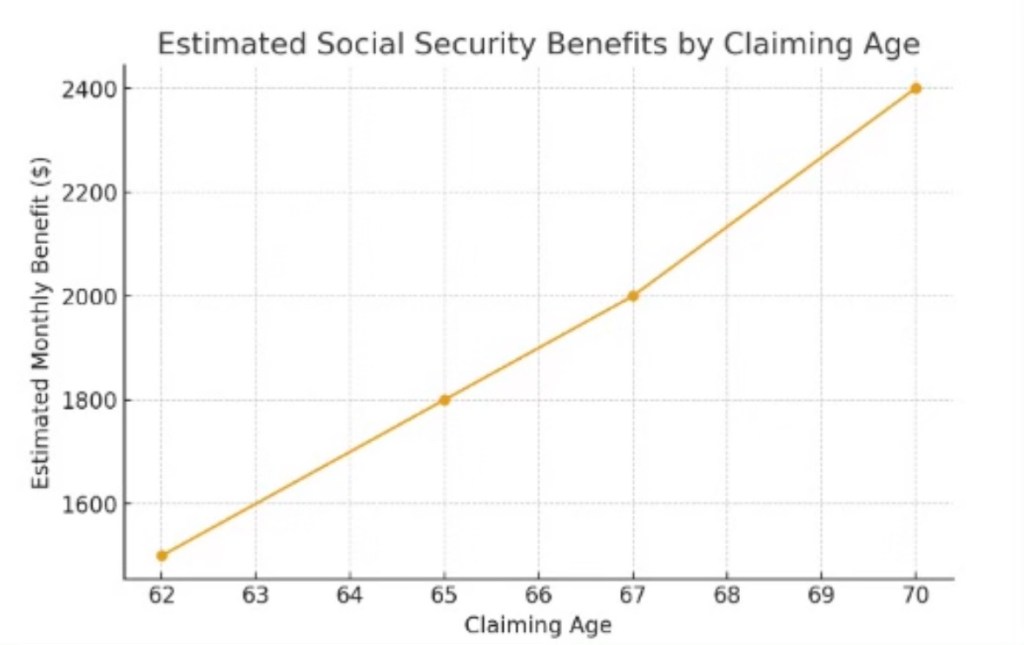
4. Claiming Age Makes a Huge Difference Whether you claim at 62, 67, or 70 dramatically changes your monthly income. Understanding this now helps you plan the right claiming strategy for your lifestyle and goals.
Estimated Social Security Benefits by Claiming Age
Below is a chart illustrating how estimated monthly benefits generally increase the longer you delay claiming:
How to Estimate Your Benefits Today
You can access your personalized estimate at any age by creating or logging into your mySocialSecurity account at SSA.gov. Once inside, you’ll see:
Your projected monthly benefit at age 62
Your full retirement age (typically 67)
Your estimated benefit at age 70
Your complete earnings record
Taking a few minutes to review this information now can help you avoid surprises later and give you the confidence to build a stronger retirement strategy.
About the Author:
David Dandaneau is a client relations analyst that covers the insurance and financial services industry. He is known for his insightful analysis and comprehensive coverage of market trends and regulatory developments.
Technology is becoming inseparable from daily life, as one generation is quietly redefining what it means to age: younger Baby Boomers. Born in the late 1950s to mid-1960s, this group spent the peak of their careers adapting to the rise of digital tools, mobile devices, automated systems, and internet-driven workplaces. Now, as they transition into retirement, they’re carrying those habits forward — and in doing so, they’re reshaping the broader longevity economy.
From Typewriters to Touchscreens: A Generation That Adapted
Unlike older Boomers who spent most of their careers in analog environments, younger Boomers navigated a unique technological evolution. They learned to send their first emails midway through their careers, adopted smartphones while still raising families, and saw entire industries digitize around them.
That exposure created a distinct comfort level with digital convenience — a “life-by-app” approach that now defines how they plan, save, spend, and even socialize during retirement.
How Younger Boomers Are Using Technology to Their Advantage
1. Financial Planning Goes Digital Younger Boomers are more likely than previous generations to use:
Investment and retirement apps
Automated budgeting tools
Online banking
Robo-advisor platforms for risk-managed portfolios
This not only makes retirement planning more accessible but also gives them real-time insights that older retirees rarely had.
2. Healthcare from a Screen Telehealth visits, wearable health trackers, and medication-management apps are becoming standard tools. Younger Boomers embrace these resources to stay proactive about their health and remain independent longer.
3. Social Connectivity Without Borders Younger Boomers maintain friendships and family relationships through video calls, social media, and messaging apps — reducing isolation and supporting emotional well-being, especially as they age.
4. Flexible Working in Retirement Years Many within this group are exploring partial retirement through gig work, consulting, and remote job platforms. Technology allows them to earn supplemental income on their own terms.
The Contrast: Older Boomers and Minimal-Tech Retirement
Older Boomers — those born in the late 1940s to mid-1950s — often approach retirement differently. Many prefer:
In-person banking over mobile banking
Physical mail over digital statements
Human financial advisors over algorithm-driven ones
Paper calendars and appointment books
Face-to-face healthcare visits
This doesn’t mean they reject technology entirely, but they generally use it as a tool of convenience rather than a lifestyle backbone.
A Growing Generational Technology Gap
This difference isn’t about willingness — it’s about familiarity. Younger Boomers spent decades experiencing technology woven into their work. Older Boomers did not. As a result, younger Boomers:
Adopt new tools faster
Feel more confident with apps and automation
Expect digital customer service
Research and make decisions online
This gap is reshaping industries as companies redesign services for a more tech-ready retiree population.
Impact on the Longevity Economy
The longevity economy — the economic activity driven by people aged 50+ — is now valued at trillions. Younger Boomers are accelerating its growth in three major ways:
1. Increased Demand for Digital-Friendly Services From virtual healthcare to AI-powered retirement tools, industries are rapidly building platforms with older users in mind.
2. Growth of Smart Home and Independent Living Tech Devices like smart thermostats, automated lighting, fall-detection sensors, and home assistants are booming as younger Boomers look for safe, self-sufficient living.
3. New Expectations for Customer Experience Retirement planning firms, healthcare providers, retailers, and insurance companies are being forced to modernize their systems or risk losing loyal customers.
Looking Ahead: Retirement Will Never Look the Same
As younger Boomers continue to enter retirement with smartphones in hand and digital habits intact, they are quietly transforming what aging means in America. Their comfort with technology is enabling longer independence, more financial empowerment, and more flexible lifestyles.
The narrative is shifting: retirement is no longer about slowing down — it’s about staying connected, informed, and in control.
And for the generations that follow, this “life-by-app” legacy will likely become the new norm.
Many people in the world are rediscovering the importance of treasuring each day as if it were their last. Not out of fear, but out of appreciation. Life’s most meaningful moments often unfold in the small, overlooked details—the morning sunlight, a shared laugh, a simple conversation and yet these are the things we forget to honor until they’re gone.
Experts in mental health and relationship wellness say that valuing each day can significantly improve emotional resilience, physical health, and relationship satisfaction. When people slow down long enough to notice what matters, they often find themselves more connected, more grounded, and more fulfilled.
“Life becomes richer when we stop rushing through it,” says Dr. Lena Howard, a wellness researcher. “When individuals live with intention and gratitude, they strengthen their emotional bonds and experience greater overall well-being.”
Treasure today, and today treasures you back. By treating each moment as meaningful, we shift from surviving to truly living and that shift creates powerful ripples across our relationships, our mental health, and our sense of purpose.
Why Treasuring Each Day Matters
Living with appreciation transforms everyday routines into opportunities for growth and connection. Studies show that mindfulness and gratitude reduce stress, improve heart health, and enhance emotional intelligence, which are key factors in building long-lasting, healthy relationships.
When people practice gratitude and presence, they communicate better, react more calmly, and express their emotions more clearly. This leads to more trust, fewer conflicts, and a deeper sense of partnership.
In short: Better habits create better health, and better health creates wealth—not just financial wealth, but wealth of spirit, peace, and emotional stability.
Things People Can Do to Enhance Their Relationships and Strengthen Their Health
1. Communicate With Intent
Speak to understand, not just respond. Share your feelings honestly and calmly. Listen without planning your comeback.
2. Practice Daily Gratitude
Tell your partner one thing you appreciate about them every day. Keep a short gratitude journal to remind yourself of what’s going right.
3. Prioritize Health as a Team
Cook healthy meals together. Take evening walks or do light exercise side by side. Hold each other accountable without criticism.
4. Create Meaningful Rituals
Morning coffee together Unplugged dinners Weekly check-ins about life and emotions
These routines build emotional safety and closeness.
5. Slow Down on Purpose
Schedule “distraction-free” time—no phones, no TV. Practice being present in the moment, not lost in your thoughts.
6. Solve Problems Instead of Winning Arguments
Focus on finding solutions, not proving points. Take breaks during heated moments to reset. Return to the conversation when calmer.
7. Show Love in Small, Consistent Ways
Handwritten notes Warm compliments Acts of service without being asked A hug when it’s needed most
Small gestures add up to huge emotional trust.
8. Build Emotional Resilience Together
Learn each other’s triggers and comfort zones. Support each other’s mental health goals. Celebrate progress, not perfection.
9. Set Shared Goals
Health goals Financial goals Travel dreams Family plans
Working toward the same vision brings couples closer and builds unity.
10. Choose Kindness—Even on Hard Days
Every relationship has conflict. But choosing kindness—especially when it’s difficult—sets the tone for healing, respect, and growth.
Living Wealthy in Spirit
Wealth isn’t measured only by money. It’s measured by emotional peace, good health, and strong relationships. When you treasure each day, treat people with care, and honor your health, you create a life that feels full no matter what challenges come your way.
Every sunrise is a gift. Every conversation is a chance to connect. Every day is an opportunity to love harder, grow deeper, and live with purpose.
As the year winds down, many of us instinctively look outward searching for new opportunities, new relationships, new chances to feel fulfilled. But experts in mental health, personal growth, and human behavior remind us that the answers we seek are often already right in front of us. In a time when society encourages constant striving, comparison, and reinvention, the real power may lie in keeping faith in the lives we’re already living.
Today’s fast-paced culture fuels the belief that “more” is better: more success, more friends, more achievements, more validation. But this mindset often blinds us to what we already have—relationships worth nurturing, progress worth appreciating, and blessings that deserve recognition. Faith, in this context, isn’t just spiritual; it’s a steady confidence in our path, our people, and ourselves.
“Most people don’t lack opportunity—they lack awareness of the opportunities they already hold,” says personal development coach Marla Jameson. “When you slow down and really look at your life, you realize you’re already standing in places you once prayed to be.”
Strengthening existing relationships is one of the most powerful ways to enrich life without needing to search elsewhere. Researchers from several universities have found that individuals who invest in the connections they already have—friends, family, partners, colleagues—report higher satisfaction and a stronger sense of emotional security than those constantly chasing new circles. Familiar relationships, when watered, continue to grow. They are the foundation that supports us through hardships and celebrates us through triumphs.
As the calendar approaches its final pages, many people feel pressure either to finish strong or start reinventing themselves prematurely. But finishing strong doesn’t always mean pushing harder; sometimes it means grounding yourself, realigning your priorities, and restoring your faith in what’s already working.
Staying rooted in gratitude, embracing what’s within reach, and appreciating the relationships that have stood by us can create a powerful sense of peace. Ending the year on a positive and faithful note means taking stock of where you are and recognizing that you have enough—and you are enough.
Whether through reflection, reconnecting with loved ones, or simply choosing to trust the direction of your life, this season offers a chance to step into the new year with renewed clarity and confidence. Faith reminds us not to rush the journey, but to honor it. And in doing so, we may discover that everything we’ve been searching for has been right beside us all along.
Relationships don’t fall apart overnight. More often, they erode quietly—through small misunderstandings, emotional distance, unspoken frustration, or unmet expectations. While every couple’s journey is unique, experts consistently point to a set of common reasons why relationships fail and a handful of proven strategies that help couples build long-lasting, healthy connections.
Why Relationships Fail
1. Communication Breakdowns The biggest threat to modern relationships isn’t always infidelity or finances it’s poor communication. When partners stop expressing their feelings or assume the other person “should know,” resentment begins to grow. Over time, silence can speak louder than words.
2. Emotional Disconnect Love isn’t just a feeling it’s a consistent effort. When partners disengage emotionally, stop listening, or withdraw to avoid conflict, the relationship begins to feel one-sided. Emotional disconnect often comes before physical distance.
3. Unresolved Conflict Every couple argues. What matters is how they resolve it. Many relationships fall apart because partners attack each other instead of the issue, recycle old grievances, or avoid discussing problems altogether. Issues left unresolved eventually become too big to ignore.
4. Lack of Appreciation People need to feel valued. When affection fades or appreciation stops, partners begin to feel taken for granted. Small gestures like saying thank you or acknowledging efforts play a massive role in sustaining love.
5. Different Life Goals People grow. Sometimes they grow together; sometimes in different directions. Misalignment in goals finances, parenting, lifestyle, or values can slowly create a divide that becomes difficult to re-cross.
6. Broken Trust Trust is the foundation of every healthy relationship. Whether it’s dishonesty, secrecy, or betrayal, cracks in trust can cause lasting damage if not addressed openly and sincerely.
What You Can Do to Build and Maintain a Healthy Relationship
1. Communicate Clearly and Often Healthy relationships thrive on clear, respectful communication. Make it a priority to talk daily your feelings, your concerns, your appreciation. Avoid assumptions; ask questions. Listen with the intent to understand, not respond.
2. Practice Transparency Honesty builds safety. Be open about finances, fears, plans, and mistakes. Vulnerability may feel uncomfortable, but it creates deeper connection and trust.
3. Resolve Conflicts Constructively Instead of competing with your partner, collaborate with them.
Focus on the issue, not the person
Avoid yelling or shutting down
Take breaks if emotions get too high
Use phrases like “I feel…” instead of “You always…”
4. Prioritize Quality Time Busy schedules can kill intimacy. Commit to regular time together date nights, technology-free evenings, morning routines, or shared hobbies. Connection is built through intentional time, not convenience.
5. Show Appreciation Daily Gratitude keeps relationships warm. Compliment each other, acknowledge effort, and celebrate small wins. Feelings of appreciation fuel emotional closeness.
6. Keep Growing – Individually and Together A healthy relationship is two whole people choosing each other every day. Encourage each other’s goals, celebrate achievements, and have conversations about future plans often. Growth should be a shared journey.
7. Seek Help When Needed There’s no shame in counseling or therapy. Sometimes a neutral third party can open doors to healing that couples can’t access alone. Early intervention prevents deeper issues from developing.
The Last Word
Relationships fail when effort stops, communication fades, and partners drift instead of reconnecting. But with intention, honesty, and consistent care, love can not only survive… it can thrive.
Healthy relationships aren’t perfect; they’re built. Every conversation, every choice, and every moment of understanding helps create the foundation for a stronger future together.
When something in our lives isn’t right, the first signs often appear long before we consciously recognize the problem. These early warnings rarely shout—they whisper. They show up in the body, in our thoughts, and in small changes to how we move through the world. Yet too often, we brush them off, assuming we’re just tired, stressed, or “going through a phase.” But the truth is simple: when something is wrong, our physical and mental health speak up—even when we aren’t ready to listen.
The Body Keeps Score: Physical Signs Something Is Off
Our bodies are built to warn us. Whether the issue is emotional strain, life imbalance, or a deeper mental health challenge, the physical symptoms tend to show up first.
Common signs include:
Fatigue that rest doesn’t fix Not just being tired—but a deep, draining exhaustion that lingers no matter how much sleep you get.
Headaches, migraines, or muscle tension Stress and emotional strain often accumulate where we least expect: shoulders, jaw, temples, and back.
Stomach issues Anxiety and internal conflict frequently manifest as nausea, loss of appetite, or digestive problems.
Sleep changes Trouble falling asleep, waking up throughout the night, or oversleeping can all signal an internal imbalance.
These symptoms are easy to overlook, especially in a world that praises pushing through discomfort. But ignoring the physical signs can allow small problems to grow into larger ones.
When the Mind Speaks: Mental and Emotional Symptoms
Just as the body reacts, the mind offers its own warnings when something is wrong. They are often subtle at first—small shifts in how we think or feel.
Lack of motivation or joy Activities you once enjoyed feel dull, or you find yourself going through the motions without connection.
Irritability and frustration When underlying issues build, even minor inconveniences can feel overwhelming.
Racing thoughts or constant worry A sign that your mind is working overtime trying to solve a problem you haven’t fully acknowledged.
Emotional numbness Perhaps the most misunderstood symptom—sometimes the mind shuts down to protect itself.
Mental and emotional health aren’t separate from physical health. They’re intertwined. When one suffers, the other often follows.
Why We Ignore the Signs
Many people push through discomfort because slowing down feels inconvenient—or uncomfortable. Admitting something is wrong means acknowledging that change may be required, and change is rarely easy. Society often encourages us to “stay strong,” “keep going,” or “not make a big deal out of it.”
But ignoring these signs doesn’t make them disappear. It simply delays the moment we must face them.
Recognizing the Truth: Something Needs Attention
The moment we start listening—truly listening—to our bodies and minds, we reclaim control. Whether the issue is work stress, relationship strain, personal loss, or a deeper mental health condition, acknowledging the signs is the first step toward healing.
What You Can Do When Something Feels Wrong
Pause and reflect. Take a moment to ask yourself: What changed? What am I feeling? Have I been avoiding something?
Talk to someone you trust. Sometimes saying it out loud helps clarify what’s really going on.
Seek professional support. A doctor, therapist, or counselor can help identify physical or emotional causes.
Practice gentle self-care. Rest, hydration, movement, or stepping away from stress can provide clarity.
Don’t dismiss the signs. Your body and mind are communicating with you for a reason.
A Simple Truth
When something is wrong, we often feel it long before we fully understand it. The signals—whether physical tension or emotional exhaustion—aren’t weaknesses. They’re messages. And listening to them isn’t just self-awareness—it’s self-preservation.
If you’re feeling “off,” trust that instinct. It’s your body and mind working together to guide you back to balance.










 Health to Wealth Ventures