Understanding the Santa Claus Rally: A Swing Trader’s Guide

As the calendar closes out and holiday cheer replaces headline noise, U.S. stock markets often show a predictable burst of strength known as the Santa Claus Rally — a short, historically favorable window that many swing traders lean on for quick, low-risk setups. The rally is narrowly defined, reliably rewarded by the data, and backed by a handful of market mechanics (low volume, year-end flows, tax-related reversals) that can amplify short-term moves — exactly the conditions swing traders seek. (Investopedia+1)

What is the Santa Claus Rally (timeframe)?

The conventional definition — credited to Yale Hirsch and the Stock Trader’s Almanac — is the last five trading days of December plus the first two trading days of January (a seven-trading-day window). That short span is when seasonal strength historically concentrates, rather than across the whole of December. (Stock Trader’s Almanac+1)

The numbers: how the S&P 500 and Dow have performed

  • S&P 500: Since roughly 1950, the S&P 500 has averaged about +1.3% over the seven trading days of the Santa Claus Rally, with positive returns roughly 78–79% of the time. That beats a typical seven-day period’s average return and win-rate. (Investopedia+1)
  • Dow Jones Industrial Average: Using the classic post-Christmas window, the Dow has historically been positive about 77% of the time, with average gains in the same ballpark as the S&P by some measures (studies often report roughly +1.4% in the period). (MarketWatch+1)
  • Relative context: Analysts note the Santa Claus window’s 1.3% average gain contrasts with a much smaller average seven-day return (around 0.3%), underscoring the period’s above-normal edge. (LPL)

(These figures come from long-range studies and market almanacs; different start dates or sample periods shift the precise numbers slightly but not the broad conclusion.) (Stock Trader’s Almanac+1)

Why this period favors swing trading

  1. Condensed upside in a known short window. Swing trading profits from predictable, short moves — a seven-day, high-probability uptick is exactly that. Historical win-rates near the ~78% mark give a favorable edge if position sizing and risk controls are used. (Investopedia)
  2. Lower volatility and thinner volume. Holiday trading often sees lighter volume and fewer market-moving news items; prices can drift more cleanly in one direction, letting swing setups (breakouts, momentum continuations, mean-reversion bounces) play out with less intraday whipsaw. (Lower volume can magnify moves in the direction of flows.) (Corporate Finance Institute+1)
  3. End-of-year flows and positioning. Institutional flows (window dressing, year-end rebalancing, bonus/retirement contributions) and a reversal of tax-loss selling can create concentrated buying pressure around year-end and early January. Big inflows into equities have been cited as a driver in some recent Santa rallies. (MarketWatch+1)
  4. Correlation with January and the new year. Historically, a positive Santa Claus Rally has sometimes preceded stronger January returns and a more bullish full year — a dynamic that can attract more buyers into the short window and amplify momentum. (This is a correlation, not a guarantee.) (LPL+1)

Practical swing-trader playbook (how to trade it)

  • Time the window. Look for entries during the last five trading days of December and use targets or exits by the first two trading days of January (or earlier if your plan dictates). The edge is short-lived — don’t stretch holding periods beyond the seasonality. (Stock Trader’s Almanac)
  • Trade probability, not hope. Use setups with clear technical evidence (breakout on rising RSV/volume, pullback to moving average, bullish RSI divergence). Favor names with existing positive momentum.
  • Risk control is essential. Even periods with high historical win-rates can fail; use tight stops, sensible position sizing, and consider defined-risk instruments (protective puts or small options trades) if you want asymmetric payoff.
  • Use ETFs for broad exposure. If you want to play the seasonal tilt without single-stock risk, liquid ETFs (SPY, QQQ, DIA) can capture the move and provide easy entries/exits.
  • Watch volume & implied volatility. Low volume can help moves trend but can also create thin markets. Options traders should check implied volatility — seasonality can compress IV, affecting premium strategies.
  • Consider small-cap/January effect overlap. If you’re a swing trader who also trades small caps, remember the broader January Effect can lift small-cap names in the early month, offering extra upside for appropriately sized trades. (Plus500)

Indicators and signals traders often monitor

  • Short interest and buybacks — low supply + active buybacks can help push prices.
  • Seasonal inflows / fund flows (ETF inflows, mutual fund windows) — high year-end inflows can sustain rallies. (MarketWatch)
  • Volatility (VIX) trend — falling VIX into year-end often accompanies risk-on moves; a sudden spike can kill momentum.
  • Breadth measures (advance/decline lines, number of stocks above 50-day MA) — confirm whether the rally is broad-based or just a narrow megacap lift. (Broad rallies are more robust for swing trades across sectors.)

A quick caution

Seasonal patterns are statistical tendencies, not certainties. Past performance is not a guarantee of future results. There have been years without a Santa Claus Rally (and even reverse episodes), and macro surprises — policy shocks, geopolitical events, or sudden earnings shocks — can reverse the move. Traders should use the seasonal edge as one input among many, not a sole decision rule. (Morningstar+1)

What this means for investors is simple:

The Santa Claus Rally is a short, well-defined window (last five trading days of December + first two trading days of January) that historically offers above-average returns and a high probability of positive performance for major indices like the S&P 500 and the Dow. Those characteristics — concentrated upside, lower intraday noise, and supportive year-end flows — make it an attractive environment for disciplined swing traders who pair tight risk controls with high-probability setups. Just remember: seasonality improves the odds, it doesn’t eliminate risk. (Investopedia+2MarketWatch+2)

References

Canopy Wealth. (2024, December 19). What is the Santa Claus Rally? https://www.canopy-wealth.com/blog/what-is-the-santa-claus-rally Canopy Wealth Management
Corporate Finance Institute. (n.d.). Santa Claus Rally – Overview, Causes, Retrospective. https://corporatefinanceinstitute.com/resources/career-map/sell-side/capital-markets/santa-claus-rally/ Corporate Finance Institute
Interactive Brokers. (2024, December 13). Chart Advisor: Get Ready for the Real Santa Claus Rally. https://www.interactivebrokers.com/campus/traders-insight/chart-advisor-get-ready-for-the-real-santa-claus-rally/ Interactive Brokers
InvestingNews. (2024, December 24). What Is the Santa Claus Rally and Has it Arrived? https://investingnews.com/santa-claus-rally/ Investing News Network (INN)
Investopedia. (2024, December 20). Santa Claus Rally: What It Is and Means for Investors. https://www.investopedia.com/terms/s/santaclauseffect.asp Investopedia
Investopedia. (n.d.). The Santa Claus Rally. https://www.investopedia.com/the-santa-claus-rally-4779941 Investopedia
LPL Research. (2025, January 2). Santa Claus Rally in Jeopardy. https://www.lpl.com/research/blog/santa-claus-rally-in-jeopardy.html LPL
SmartAsset. (2025, August 14). Is the Santa Claus Rally Real? – 2020 Study. https://smartasset.com/financial-advisor/santa-claus-rally-2020 SmartAsset
TSPSmart. (n.d.). Santa Claus Rally. https://tspsmart.com/Santa-Claus-Rally TSP Smart

Understanding MINA: Risks and Rewards in the Crypto Market

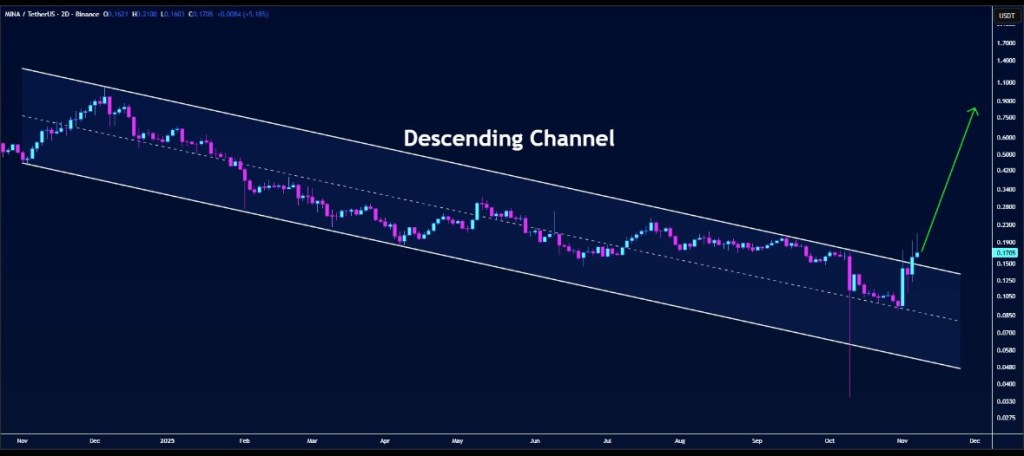
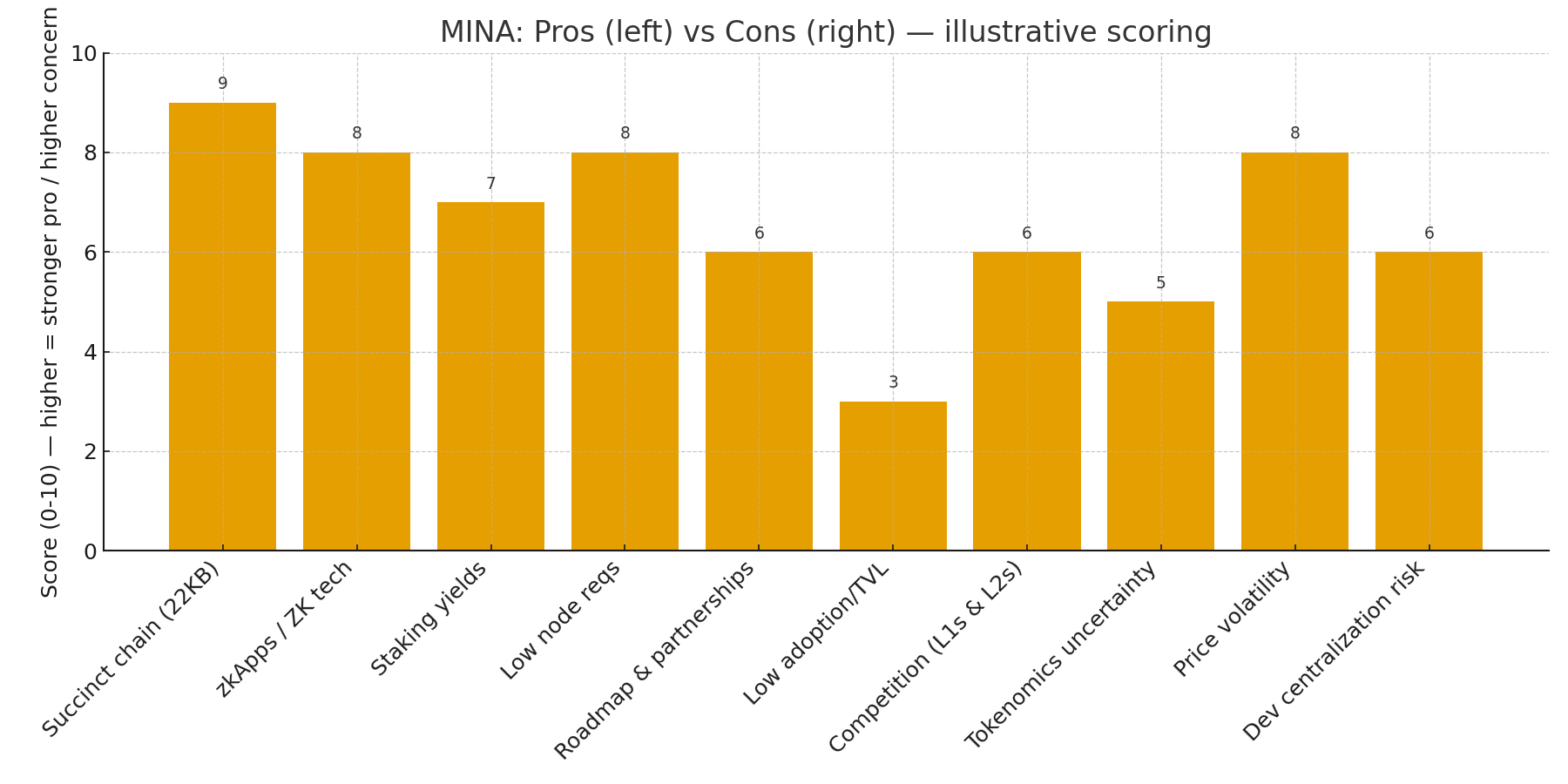
Mina Protocol markets itself as the “lightest blockchain” — a layer-1 that stays tiny by using recursive zero-knowledge proofs (zk-SNARKs) so the entire chain remains a succinct ~22KB snapshot instead of a growing ledger. That design promises a blockchain any device can verify, lowering node requirements and enabling on-device privacy-aware dApps (zkApps). Those technical foundations are Mina’s headline differentiator and the core reason some investors treat MINA as a long-term hold. (Mina Protocol+1)

Where MINA stands right now

As of early November 2025, MINA trades in the low-to-mid $0.17–$0.19 range with a market cap in the low hundreds of millions of dollars and roughly 1.26 billion MINA circulating. Price and ranking vary by source and exchange, but major market trackers show MINA as a mid-to-low market-cap altcoin. (CoinMarketCap+1)

Why investors like MINA — the bullish case

  1. Truly lightweight chain: Mina’s constant-sized blockchain (~22KB) lowers the hardware and bandwidth needed to run a full node, which could help decentralize participation and boost mobile/edge use cases. This is fundamental to Mina’s pitch as a “blockchain for everyone.” (Nansen Research+1)
  2. Zero-knowledge programmability (zkApps): Mina’s zkApp framework enables privacy-preserving smart contracts and verifiable off-chain computation. If ZK tech becomes central to mainstream Web3 privacy and scaling, Mina could capture unique developer interest. (Mina Protocol)
  3. Staking yields / network rewards: MINA supports staking and many exchanges and platforms offer competitive staking APRs (examples reporting 6–12% or higher on various platforms), which attracts yield-seeking holders who prefer passive income while they wait for price appreciation. (Kraken+1)
  4. Active roadmap and ecosystem work: Core development groups and community initiatives continue evolving Mina (roadmaps and upgrades in 2024–25 aim at tooling, zk developer onboarding, and greater interoperability). Continued protocol development can improve utility and adoption. (Mina Protocol+1)
  5. Relatively small market cap = upside if narrative wins: Compared with top L1s, Mina’s market cap is modest, so positive adoption or a crypto risk-on rotation could produce outsized percentage gains (classic “small-cap upside” dynamic).

Risks and why caution is warranted

  1. Adoption & TVL remain low vs major L1s: For MINA to move materially higher, it needs more apps, users, and locked value. Today it’s still a niche stack versus giants like Ethereum, Solana, or new ZK-focused rivals. Low TVL limits organic utility demand for the token. (CoinGecko+1)
  2. Strong competition: Other projects are pursuing ZK tech, rollups, and lightweight verification. If larger ecosystems integrate similar ZK capabilities (or if Ethereum rollups dominate the ZK narrative), Mina’s unique edge could shrink. (o1Labs)
  3. Tokenomics & supply dynamics: A large circulating supply (~1.26B MINA) and ongoing issuance/staking rewards can dilute price upside unless demand grows to absorb supply. Coin trackers list circulating supply but no fixed “max” supply, so inflation mechanics matter to holders. (CoinMarketCap)
  4. Price volatility & market risk: As a mid/low-cap crypto, MINA is susceptible to broad market moves, liquidity shocks, and volatility — factors that can erase gains quickly. Historical price charts show sharp swings that should caution risk-sensitive investors. (Yahoo Finance)
  5. Technology / centralization risk: While Mina’s research teams (o1 Labs, Mina Foundation, community contributors) are active, concentrated development or coordination risks exist — and any delays or setbacks to roadmap items could temper market enthusiasm. (o1Labs)

Potential upside in an “altcoin season”

Altcoin seasons reward narratives — smaller caps with clear, differentiated value propositions often run hardest. Mina’s narrative (real ZK programmability + tiny chain size) fits a neat theme: privacy, edge verification, and on-device dApps. If the ZK narrative accelerates — through developer tool improvements, interoperability wins (projects like Aligned working on ZK verification integrations), or a wave of zkApps adoption — MINA could outpace larger, less nimble chains. Several mid-2024–25 developments and roadmap items indicate the team remains focused on ZK tooling and ecosystem funding, which would be the necessary fuel for such a move. (o1Labs+1)

How an investor might position (not financial advice)

  • Long-term speculative hold: If you believe ZK tech and ultra-light clients matter, a small allocation to MINA (size depending on risk tolerance) could be reasonable — especially if you stake to capture yield while waiting for adoption. (Kraken)
  • Event-driven trade: Watch roadmap milestones, zkApp launches, partnerships (e.g., Aligned/Ecosystem announcements), and listings/staking product rollouts. Positive, repeated dev activity and growing on-chain usage are bullish triggers. (Mina Protocol+1)
  • Risk management: Given volatility and competition, position sizing, stop levels, and a clear thesis (what adoption metric would make you add more vs cut losses) are essential.

End Result

Mina’s technology is interesting and differentiated: a truly succinct chain with ZK programmability that theoretically lowers barriers to running full nodes and enables privacy-preserving dApps. That technical moat gives MINA a plausible role in a future Web3 where ZK proofs are central. However, adoption, TVL, competition, tokenomics, and market volatility remain the main hurdles. For investors, MINA looks like a classic higher-risk, higher-optional-upside altcoin: attractive to those who believe in ZK-native dApps and willing to stomach swings; less attractive to conservative crypto investors who prefer larger, more established L1 ecosystems. (Mina Protocol+2CoinMarketCap+2)

Disclaimer

I currently hold a position in MINA. The views and opinions expressed in this article are my own and are provided for informational purposes only. This content should not be construed as financial, investment, or trading advice. Always conduct your own research or consult with a licensed financial advisor before making investment decisions.

References

CoinMarketCap. (2025, November 8). Mina (MINA) price, charts, and market cap. Retrieved from https://coinmarketcap.com/currencies/mina-protocol/

Mina Foundation. (2025). Mina Protocol documentation and roadmap. Retrieved from https://docs.minaprotocol.com/

o(1) Labs. (2024). Mina Protocol: The world’s lightest blockchain powered by zero knowledge. Retrieved from https://o1labs.org/

Messari. (2024, December). Mina Protocol research profile. Retrieved from https://messari.io/asset/mina

CoinGecko. (2025, November 8). Mina (MINA) price and market data. Retrieved from https://www.coingecko.com/en/coins/mina-protocol

Binance Research. (2024). Understanding Mina Protocol: Lightweight blockchain and zkApps. Retrieved from https://research.binance.com/en/projects/mina

Aligned Layer. (2025). Mina zkApp integrations and ecosystem collaborations. Retrieved from https://www.alignedlayer.com/blog/mina-zkapps-integration

Decrypt. (2024, July 14). What is Mina Protocol and how does it use zero-knowledge proofs? Retrieved from https://decrypt.co/resources/what-is-mina-protocol

Staking Rewards. (2025). Mina staking overview and yields. Retrieved from https://stakingrewards.com/crypto-assets/mina/

Exploring Investment Strategies: How to Start with Just $1,000

Many people believe you need a large sum of money to start investing, but the truth is you can begin building wealth with as little as $1,000. The key lies in choosing the right strategy that fits your goals, risk tolerance, and timeline.

1. Index Funds

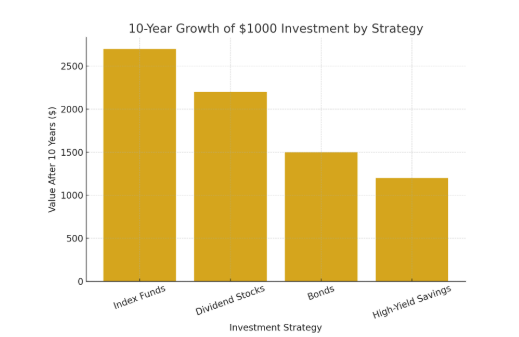
Index funds are one of the simplest and most effective ways to invest. By tracking the performance of a broad market index (like the S&P 500), they offer diversification and steady long-term growth. Historically, index funds have returned around 7–10% annually. With $1,000 invested, the potential compound growth over 10 years could more than double your money.

2. Dividend Stocks

Dividend-paying stocks provide the dual benefit of potential stock price appreciation and regular income through dividend payouts. This strategy appeals to investors who want to generate passive income while also building long-term value. Though returns may vary, reinvesting dividends can accelerate portfolio growth.

3. Bonds

For those seeking stability, bonds remain a trusted option. While the returns are lower compared to stocks, they provide predictable income and are less volatile. A $1,000 bond investment won’t skyrocket in value, but it can help protect capital while earning modest interest.

4. High-Yield Savings Accounts

Technically not an investment in the traditional sense, high-yield savings accounts are a safe place to grow your money while maintaining liquidity. While returns are the smallest of the group, they offer security and immediate access to funds, which is ideal for short-term goals.

Bottom Line

Starting with $1,000 may not make you rich overnight, but it sets the foundation for long-term financial growth. By choosing a strategy that aligns with your needs—whether it’s the steady growth of index funds, the income from dividends, the safety of bonds, or the liquidity of savings—you can begin your journey to building wealth today.

Sei Network ($SEI) Picks Up Steam: Strong Fundamentals Fuel Short- and Long-Term Interest

Rising Momentum & Market Performance

Sei (SEI) is a cryptocurrency
  • Breakouts & Price Rally: SEI recently broke above the pivotal $0.33–$0.34 resistance, delivering a nearly 40% surge in price within a week. A 10% spike over 24 hours further amplifies growing interest in the token. (The Market Periodical)
  • Stable Support, Upward Targets: As of August 8, 2025, SEI is holding steady around the key $0.285 support level. Should bullish momentum continue, investors are eyeing Fibonacci resistance targets at $0.48, $0.56, and even $0.67. But a dip below $0.285 could bring a pullback risk. (Blockonomi)

On-Chain Adoption & Ecosystem Growth

  • Transaction Volume & User Activity: The network is seeing explosive activity. Daily transactions have topped 1.5 million, while active wallets now exceed 616,000. (The Currency analytics)
  • TVL & DeFi Expansion: Total Value Locked (TVL) has climbed dramatically-from $500M to $680M+ in recent updates, and, according to some reports, has soared to as high as $1.13B. This doubles early-2025 levels, underlining robust DeFi growth. (The Market PeriodicalCryptodamusCoinCentral)
  • Institutional & Regulatory Recognition: A wave of institutional interest is tied to an ETF filing; SEI’s user base has ballooned to over 8.1 million addresses, placing it as the #2 EVM-compatible chain by user count. TVL jumped 24% to above $535M. (Cryptonews)

Technical and Sentiment Indicators

  • Technical tools are flashing bullish signals: RSI and MACD suggest further upside potential, particularly if SEI maintains position above its 200-day EMA. (OneSafe)
  • Analysts highlight a possible higher-low formation, reminiscent of past wave patterns, potentially marking the start of a broader “Wave C” rally. (Blockonomi)

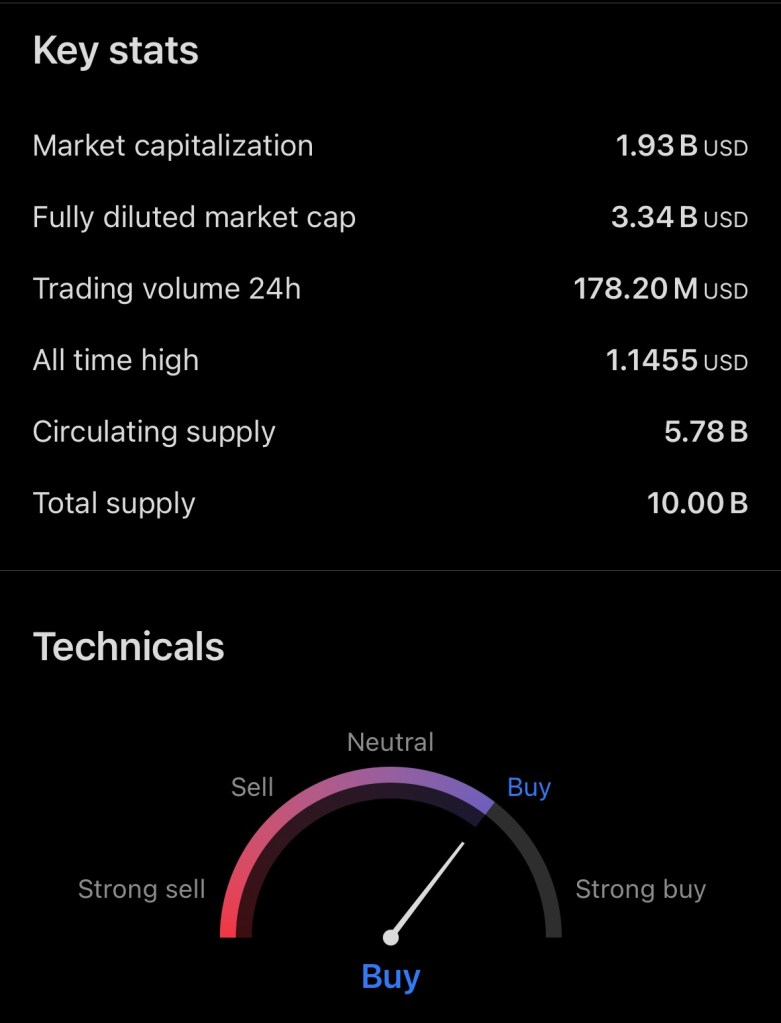
SEI’s Token Supply & Volume Overview

MetricKey Data (as of August 2025)
Circulating SupplyApproximately 5.78 billion SEI (CryptoMarketCapCoinStatsTokenomist)
Maximum / Total Supply10 billion SEI (CryptoMarketCapCoinStatsBinance)
Supply UnlocksLinear vesting underway; upcoming unlocks scheduled around mid-August 2025 (Tokenomist)
24-Hour Trading VolumeBetween $143M and $160M depending on data source (CryptoMarketCapCryptoRankBlockonomi)

Investment Summary: Short- vs. Long-Term Outlook

Short-Term:
SEI is in a critical zone-holding support at ~$0.285 could drive a breakout toward $0.48 or beyond. High trading volume and technical momentum support this scenario. However, watch for potential pullbacks if the support fails.

Long-Term:
Strong ecosystem fundamentals, increasing TVL, active users, and institutional interest (ETF-based momentum) give SEI solid traction. Continued infrastructure development and adoption could support sustained growth, especially as token unlocks are phased in without sudden floods of supply.

Risks to Note:

  • Supply unlocks (e.g., mid-August) may generate selling pressure.
  • Over-reliance on DeFi and gaming applications may limit ecosystem diversification. (Gate.com)

Final Take

Sei Network is gaining serious traction, backed by strong on-chain growth, technical momentum, and institutional recognition. For short-term traders, current support zones and bullish setups offer attractive opportunities, so long as key levels hold. For long-term investors, SEI’s expanding ecosystem, increasing utility, and vesting transparency suggest meaningful upside as the chain matures. Always balance optimism with awareness of unlocking events and ecosystem concentration risks.

Disclaimer: The author holds a position in $SEI Network and this article should not be considered financial advice. Always conduct your own research before making any investment decisions.

References

Blockonomi. (2025, July 28). Sei price holds $0.28 support, targets $0.48 and beyond. Blockonomi. https://blockonomi.com/sei-price-holds-0-28-support-targets-0-48-and-beyond

Blockonomi. (2025, August 3). Sei crypto signals reversal with price surge and on-chain momentum. Blockonomi. https://blockonomi.com/sei-crypto-signals-reversal-with-price-surge-and-on-chain-momentum

CoinCentral. (2025, July 21). SEI price surges 33% as DeFi ecosystem explodes to new heights. CoinCentral. https://coincentral.com/sei-sei-price-surges-33-as-defi-ecosystem-explodes-to-new-heights

CoinStats. (2025). Sei Network price and market data. CoinStats. https://coinstats.app/coins/sei-network

CryptoMarketCap. (2025). Sei Network price, supply, and market capitalization. CryptoMarketCap. https://cryptomarketcap.com/coins/sei

CryptoNews. (2025, July 19). Sei ETF filing sparks 40% rally as it becomes #2 EVM chain—$0.30 next? CryptoNews. https://cryptonews.com/news/sei-etf-filing-sparks-40-rally-as-it-becomes-2-evm-chain-0-30-next

CryptoRank. (2025). Sei Network trading volume and market data. CryptoRank. https://cryptorank.io/price/sei-network

Cryptodamus. (2025, July 25). Sei Network explodes: Downtrend broken—see key metrics and institutional DeFi surge. Cryptodamus. https://cryptodamus.io/en/articles/news/sei-network-explodes-downtrend-broken-see-key-metrics-institutional-defi-surge

Gate.com. (2025, July 29). Sei hits a 6-month high: What’s driving the ecosystem’s momentum? Gate.com. https://www.gate.com/learn/articles/sei-hits-a-6-month-high-whats-driving-the-ecosystems-momentum/10401

OneSafe.io. (2025, July 27). Sei price surge: Driving momentum in crypto payments. OneSafe.io. https://www.onesafe.io/blog/sei-price-surge-driving-momentum-crypto-payments

The Currency Analytics. (2025, July 22). Sei Network hits 1.5M transactions: Is a sharp price surge next? The Currency Analytics. https://thecurrencyanalytics.com/altcoins/sei-network-hits-1-5m-transactions-is-a-sharp-price-surge-next-181371

The Market Periodical. (2025, July 16). Sei price breaks out: What’s fueling the 10% rally? The Market Periodical. https://themarketperiodical.com/2025/07/16/sei-price-breaks-out-whats-fueling-the-10-rally

Tokenomist.ai. (2025). Sei Network token supply and unlock schedule. Tokenomist.ai. https://tokenomist.ai/sei-network

Why Ethena’s Synthetic Dollar Model is Gaining Attention

Ethena ($ENA) has recently caught the crypto market’s eye — its price is hovering around $0.49, up nearly 24% in the last 24 hours, with trading volumes topping $700 million. This surge follows fresh momentum triggered by both favorable technical signals and a broader shift in how stablecoins are being regulated globally.

⚙️ What Does Ethena Actually Do?
The Ethena Network isn’t your typical crypto project — it’s a DeFi-native synthetic dollar protocol. At its core, Ethena issues USDe, a “synthetic stablecoin” that aims to hold its peg to the US dollar without relying on centralized, real-world assets like US Treasury bills.

Instead, Ethena uses a delta-neutral strategy:

  • Long ETH spot: It holds actual Ethereum tokens.
  • Short ETH perpetual futures: It simultaneously shorts ETH through perpetual futures contracts.

This setup balances out price swings in ETH and generates a yield from funding rates in the perpetual futures market. The resulting system keeps USDe stable, fully backed and on-chain — a big draw for crypto-native users who prefer trustless, censorship-resistant stable assets.

📈 Why Is Ethena Growing Now?
Recent regulatory crackdowns are putting pressure on traditional stablecoins like USDT and USDC to maintain larger reserves, stricter reporting, and tighter banking relationships. Ethena’s on-chain, algorithmic approach offers an alternative — one that some see as more transparent and decentralized.

The project also supports liquid staking, meaning it earns additional yield from staking ETH while hedging its volatility. Combined, these strategies create yield opportunities for holders, which initially topped 60% APY (though rates have since compressed closer to 5% as more capital has flowed in).

🪙 Investment Case: Why Some See Potential
Here’s why some investors are eyeing ENA:
✅ Innovation Edge: Ethena’s delta-neutral synthetic dollar is an innovative twist on the stablecoin model — if it holds its peg and scales, it could become a go-to DeFi collateral or savings option.
Regulatory Advantage: With regulators tightening the screws on off-chain reserves, an on-chain model could shine — especially for users who value transparency.
Strong Community: Backed by notable DeFi developers and supported by deep liquidity, Ethena has quickly climbed into the top 40 cryptos by market cap (now ~$3.1 billion).

However, there are real risks too:
️ Yield Compression: Those eye-popping yields don’t last forever — as more capital joins, returns shrink.
⚠️ Funding Rate Volatility: The delta-neutral strategy depends on favorable perpetual futures funding — a big market swing could disrupt the peg.
⚠️ Token Unlocks: With $10 million+ worth of ENA unlocking soon, short-term sell pressure could dampen gains.

📊 Current ENA Snapshot
Metric Value
– Price (USD) ~$0.49
– 24h Price Change +24%
– 24h Trading Volume ~$700 million
– Market Cap ~$3.1 billion
– Synthetic Stable USDe (~$3 billion issued)

🔭 Looking Ahead
The Ethena story is still unfolding — can a synthetic dollar survive big market swings and keep its peg when volatility strikes? Will regulators clamp down on algorithmic stablecoins again, like they did with Terra USD in 2022?

Investors intrigued by innovation, DeFi-native strategies, and the idea of a transparent, yield-generating dollar are keeping Ethena on their radar — but seasoned traders know this space is not for the faint-hearted.

📢 Thoughts?
Ethena is making waves by reinventing the stablecoin model. If its approach works and its peg holds, ENA could carve out a big niche in the future of decentralized finance. But like all crypto bets, the risks are real — and the next few months will test whether the synthetic dollar dream holds up under pressure.

Disclaimer: The author holds a position in ENA Ethena and this article should not be considered financial advice. Always conduct your own research before making any investment decisions.

HBAR Hedera Makes Gains Amid Bullish Market: Can It Hit $1 in 2025?

May 13, 2025 — Hedera Hashgraph ($HBAR), the native cryptocurrency of the Hedera network, is drawing renewed attention as it experiences a resurgence in price and market confidence. As of today, HBAR is trading at $0.2098, down slightly by 1.88% over the last 24 hours. This comes after a strong performance earlier in the week, where the token climbed over 24%, breaking the psychological barrier of $0.20 and signaling potential bullish momentum.

Current Market Snapshot

  • Price: $0.2098
  • 24H Change: -1.88%
  • Day High / Low: $0.2266 / $0.2015
  • Market Sentiment: Cautiously optimistic

HBAR has been trading within a broad range but recently found support near the $0.20 level, which analysts say could serve as a foundation for further gains—assuming favorable market conditions persist.

Bullish Outlook & Price Predictions
Several crypto analysts and financial platforms forecast a promising future for HBAR in the ongoing bull cycle. According to analysts at Crypto News and Bankless Times, Hedera could surge toward $1, particularly if it breaks key resistance levels near $0.30 and $0.58—the latter being its all-time high.

One analyst noted: “If the current upward momentum sustains, and with growing enterprise adoption—including partnerships with tech giants like Google and IBM—HBAR could challenge the $1 mark by late 2025.” (Crypto News, 2025)

Others remain more conservative, citing continued challenges in breaking out of the long-term descending channel as a key risk. Technical indicators such as the Relative Strength Index (RSI) and Chaikin Money Flow show strong market inflows, but overbought conditions may spark a short-term pullback.

Fundamentals Supporting Growth
Several factors bolster HBAR’s long-term appeal:

  • Enterprise Integrations: Use by Fortune 500 companies.
  • Sustainability: Hedera’s consensus mechanism is significantly energy-efficient compared to traditional blockchains.
  • Tokenization and DeFi Growth: Hedera’s total value locked (TVL) in stablecoins has recently surged to $130 million, up from just $37 million at the start of the year (Crypto News, 2025).

Hedera’s price trajectory appears increasingly bullish, but market watchers remain wary of resistance zones and macroeconomic headwinds. Whether HBAR reaches $1 this year depends largely on continued investor sentiment, enterprise adoption, and overall crypto market dynamics.

Disclaimer: The author holds a position in HBAR Hedera Hashgraph and this article should not be considered financial advice. Always conduct your own research before making any investment decisions.

References

BeInCrypto. (2025, May 12). Hedera HBAR price secures $0.20 support as funding rate hits 5-month high. https://beincrypto.com/hedera-hbar-price-secures-support-funding-rate-rises/

Bankless Times. (2025, January 29). Top 3 reasons the Hedera HBAR price may surge to $2.50 in 2025. https://www.banklesstimes.com/articles/2025/01/29/top-3-reasons-the-hedera-hbar-price-may-surge-to-2-50-in-2025/

CCN. (2025, May). Hedera HBAR price prediction. https://www.ccn.com/analysis/crypto/hedera-hbar-price-prediction/

CoinMarketCap. (2025, May). HBAR price forecast by Cheeky Crypto. https://coinmarketcap.com/academy/article/9b874a2f-5038-49e0-aee8-a75b150d6b99

Crypto News. (2025, May). HBAR price prediction: Can Hedera hit $1 in this bull market? https://crypto.news/hbar-price-prediction-can-hedera-hit-in-this-bull-market/

Crypto News. (2025, May). HBAR stablecoin market cap surges. https://crypto.news/hbar-crypto-price-prediction-as-hedera-stablecoin-market-cap-surges/

The Crypto Basic. (2025, January 20). Hedera price prediction: Analysts forecast $5 HBAR by 2025. https://thecryptobasic.com/2025/01/20/hedera-price-prediction-analysts-forecast-5-hbar-by-2025/

Beginner’s Guide to Stock Market Investing

Investing in the stock market has long been a cornerstone of personal finance and wealth building. Yet, for many beginners, the world of stocks can seem intimidating and complex. Understanding the fundamentals of how the stock market works is the first step toward making informed, confident investment decisions.

What Is the Stock Market?
The stock market is a platform where investors buy and sell shares of publicly traded companies. These shares represent ownership in a company, and their prices fluctuate based on factors such as company performance, industry trends, and broader economic indicators.

Major stock exchanges, such as the New York Stock Exchange (NYSE) and the Nasdaq, serve as centralized marketplaces where these transactions occur. Investors can participate through brokerage firms or online trading platforms, many of which now offer user-friendly apps and educational tools for beginners.

Why Do People Invest in Stocks?
Stocks are a popular investment vehicle because they offer the potential for significant long-term returns. When you invest in a stock, you’re essentially betting on a company’s future success. If the company grows and becomes more profitable, the value of its shares typically increases, allowing investors to sell at a profit. Additionally, some stocks pay dividends—regular cash payments to shareholders—which can be a source of passive income.

Key Concepts for Beginners
To navigate the stock market successfully, new investors should become familiar with several essential concepts:

  • Diversification: This strategy involves spreading your investments across different sectors or asset classes to reduce risk. Rather than putting all your money into a single stock, a diversified portfolio can help weather market volatility.
  • Risk and Return: All investments carry some degree of risk. Generally, higher potential returns come with higher risk. Understanding your risk tolerance is crucial in shaping your investment strategy.
  • Time Horizon: The length of time you plan to hold an investment affects your strategy. Long-term investors often ride out short-term market fluctuations in pursuit of steady growth over years or decades.
  • Market Orders vs. Limit Orders: A market order buys or sells a stock immediately at the best available price, while a limit order sets a specific price at which you’re willing to buy or sell. Understanding these order types helps manage how you enter or exit investments.

Getting Started
Starting with investing doesn’t require large sums of money. Many platforms allow users to begin with as little as $10, and some offer fractional shares, letting you invest in expensive stocks like Amazon or Tesla with a small budget.

Experts recommend starting with index funds or exchange-traded funds (ETFs) for beginners. These funds track a market index, such as the S&P 500, and offer built-in diversification.

Stock market investing can be a powerful tool for building long-term wealth. While there are risks involved, gaining a solid understanding of the basics, maintaining realistic expectations, and staying informed can help investors make wise decisions. As with any financial decision, it’s also wise to consult a financial advisor to tailor a strategy that fits your personal goals and situation.

Whether you’re saving for retirement, a home, or future education expenses, learning how to invest smartly in the stock market is a valuable skill that pays dividends over time.

The Rise of Cryptocurrencies: What You Need to Know

In little more than a decade, cryptocurrencies have gone from obscure tech experiments to mainstream financial instruments, reshaping the way the world views money, investment, and digital ownership. As Bitcoin, Ethereum, and a growing list of digital assets dominate headlines and influence global markets, it’s becoming clear: the age of cryptocurrency is no longer a future possibility — it’s a present reality.

A Brief History
Bitcoin, created in 2009 by the pseudonymous developer Satoshi Nakamoto, was the first decentralized digital currency. Its goal? To offer a peer-to-peer payment system without the need for banks or central authorities. Initially dismissed by many as a fringe idea, Bitcoin steadily gained traction among developers, libertarians, and eventually mainstream investors.

Ethereum followed in 2015, introducing the concept of “smart contracts” — self-executing agreements that run on blockchain technology. This innovation expanded the use cases of cryptocurrencies beyond currency into areas like finance, real estate, gaming, and digital art.

Why the Boom?
Several factors have contributed to the rapid rise of cryptocurrencies:

  • Decentralization & Trust: Built on blockchain technology, cryptocurrencies allow for transparent and immutable transactions without the need for centralized institutions.
  • Global Accessibility: With a smartphone and internet access, anyone can participate in the crypto economy, making it especially appealing in regions with unstable currencies or limited banking access.
  • Speculative Investment: Crypto markets have attracted millions of investors hoping to capitalize on dramatic price fluctuations.
  • Institutional Adoption: Major companies like Tesla, PayPal, and Visa have incorporated crypto into their services, lending legitimacy to the sector.

Risks and Challenges
Despite its promise, the crypto world is not without controversy and concern.

  1. Volatility: Cryptocurrency prices can swing wildly, leading to massive gains — and losses — in a matter of hours.
  2. Regulatory Uncertainty: Governments around the world are grappling with how to regulate crypto, balancing innovation with consumer protection and financial stability.
  3. Security Issues: Hacks, scams, and phishing attacks remain a persistent problem, with billions of dollars lost in recent years.
  4. Environmental Impact: Some cryptocurrencies, especially those using proof-of-work mining (like Bitcoin), consume large amounts of energy.

What You Need to Know
For those looking to enter the world of cryptocurrencies, experts recommend the following:

  • Educate Yourself: Learn how different cryptocurrencies work, understand the risks, and stay updated on market trends.
  • Use Reputable Platforms: Stick to well-known exchanges and wallets to reduce the risk of fraud.
  • Diversify Cautiously: Don’t invest more than you can afford to lose, and consider spreading investments across multiple assets.
  • Follow Regulations: Ensure you’re compliant with tax laws and regulatory requirements in your country.

Looking Ahead
The future of cryptocurrencies remains uncertain — and exciting. Central banks are exploring their own digital currencies, governments are debating regulatory frameworks, and tech developers are pushing the boundaries of what blockchain can do. Whether it becomes the backbone of the future economy or a passing trend, one thing is clear: cryptocurrencies have made a lasting impact on the global financial landscape.

Stay informed, stay safe, and stay curious — the crypto revolution is just getting started.

ONDO Finance: A Rising Star in the Crypto Investment Landscape

The cryptocurrency market continues to evolve, with new projects constantly emerging that aim to redefine finance. One such project making waves is ONDO Finance. This innovative platform bridges traditional finance with decentralized finance (DeFi), providing investors with unique opportunities to gain exposure to real-world assets on the blockchain.

What is ONDO Finance?
ONDO Finance is a decentralized finance protocol that focuses on tokenizing traditional financial assets, such as bonds, treasury securities, and other stable investments. By leveraging blockchain technology, ONDO Finance offers transparency, security, and ease of access to investors seeking diversified income streams.

The ONDO token is the platform’s utility and governance token, allowing holders to participate in decision-making processes, earn rewards, and access exclusive investment opportunities.

Why is ONDO Finance Gaining Attention?

Real-World Asset Integration: ONDO Finance bridges traditional finance with crypto by tokenizing real-world assets. This unique model offers stability and predictable returns, attracting risk-averse investors seeking consistent yields.

Transparency and Security: Blockchain technology ensures that all transactions are recorded and verifiable, reducing fraud risk and enhancing trust among investors.

Yield Opportunities: ONDO Finance offers structured investment products designed to maximize returns, making it an attractive platform for both retail and institutional investors.

Institutional Partnerships: The project has forged partnerships with major financial institutions, reinforcing its credibility and growth potential.

DeFi Growth Potential: As DeFi continues to expand, platforms like ONDO Finance that focus on real-world asset integration are poised for strong growth.

Investment Considerations
While ONDO Finance presents an exciting opportunity, potential investors should be mindful of the risks inherent to the crypto market. Market volatility, regulatory changes, and platform-specific risks should be carefully considered. Conducting thorough research and diversifying investments is crucial.


ONDO Finance is emerging as a significant player in the crypto landscape by combining traditional finance stability with blockchain innovation. For investors seeking exposure to real-world assets with the added benefits of DeFi, ONDO Finance may offer a promising avenue for growth. However, as with any investment, due diligence is key to making informed decisions.

Disclaimer: The author holds a position in ONDO Finance and this article should not be considered financial advice. Always conduct your own research before making any investment decisions.

AMD’s Strategic Rise in the Semiconductor Market

Advanced Micro Devices (AMD) has emerged as a formidable player in the semiconductor industry, showcasing significant growth and strategic initiatives that position it as a compelling investment opportunity.

Financial Performance and Market Position

As of January 19, 2025, AMD’s stock is trading at $121.46, reflecting a 2.54% increase from the previous close. This upward trend underscores investor confidence in AMD’s market strategies and financial health. Notably, AMD’s market valuation surpassed $300 billion in March 2024, highlighting its substantial growth trajectory.

Strategic Acquisitions and AI Expansion

AMD has made significant strides in the artificial intelligence (AI) sector through strategic acquisitions. In July 2024, the company acquired Finnish AI startup Silo AI for $665 million, aiming to enhance its AI capabilities and compete more effectively with industry leader Nvidia. Additionally, AMD’s $4.9 billion acquisition of ZT Systems in August 2024 bolstered its AI infrastructure, providing access to a team of 1,000 design engineers to strengthen its AI system designs.

Leadership and Innovation

Under the leadership of CEO Lisa Su, AMD has transformed from a struggling entity into a semiconductor powerhouse. Since she took charge in 2014, AMD’s stock price has surged from $3 to approximately $140, with the company’s market value surpassing that of Intel. Su’s strategic focus on product redesign, customer relationships, and capitalizing on the AI boom has been instrumental in this turnaround.

Analyst Perspectives

Wall Street analysts have shown optimism regarding AMD’s prospects. UBS identified AMD as a top semiconductor pick, citing its competitive pricing and performance in AI chips compared to Nvidia. Despite a 5.8% drop in shares earlier in the year, UBS analysts remain positive about AMD’s future in the AI market. However, some analysts urge caution, noting that while AMD’s AI accelerator chips show promise, the company faces challenges in closing the performance gap with Nvidia. Following announcements about AI chip revenue forecasts, AMD shares experienced a nearly 8% decline, reflecting market skepticism about its competitive positioning.

AMD’s robust financial performance, strategic acquisitions, and visionary leadership under Lisa Su position it as a strong contender in the semiconductor industry. While the company faces challenges, particularly in the competitive AI sector dominated by Nvidia, its proactive strategies and market responsiveness suggest a promising outlook for investors considering AMD as part of their portfolio.

Disclosure: I currently hold a position in Advanced Micro Devices ($AMD). This article reflects my personal opinions and analysis, and is not intended as financial advice. Please conduct your own research or consult a financial advisor before making any investment decisions.

References

MarketWatch. (2024, August 15). AMD to make $4.9 billion AI acquisition as it steps up race against Nvidia. MarketWatch. https://www.marketwatch.com/story/amd-to-make-4-9-billion-ai-acquisition-as-it-steps-up-race-against-nvidia-7c2d4d34

Cunningham, A. (2024, August 18). AMD deal shows AI chip business isn’t just about chips. The Wall Street Journal. https://www.wsj.com/tech/ai/amd-deal-shows-ai-chip-business-isnt-just-about-chips-81fb46d9

Toh, M. (2024, December 7). Lisa Su: TIME’s CEO of the year 2024. TIME. https://time.com/7200909/ceo-of-the-year-2024-lisa-su