Key Components of Effective Risk Assessment in Organizations

In today’s unpredictable business landscape, risk assessment has become a critical component of effective business management. Organizations across industries are recognizing the importance of identifying, evaluating, and mitigating risks to ensure sustainability and growth.
The Role of Risk Assessment in Business

Risk assessment is the systematic process of identifying potential hazards, analyzing their impact, and implementing measures to minimize threats. From financial uncertainties to cybersecurity threats and operational challenges, businesses face a myriad of risks that can disrupt their operations.

Effective risk assessment enables companies to anticipate challenges and make informed decisions. It fosters resilience by preparing organizations for adverse events, allowing them to respond proactively rather than reactively.

Key Components of Risk Assessment

Identification of Risks: Businesses must first pinpoint possible risks, whether they stem from market volatility, regulatory changes, technological disruptions, or internal inefficiencies.

Risk Analysis and Evaluation: Once identified, these risks must be analyzed based on their likelihood and potential impact. High-risk areas require immediate attention, while lower-risk concerns may need monitoring.

Implementation of Risk Mitigation Strategies: Companies must develop strategies to either eliminate, mitigate, transfer, or accept risks. These strategies can include diversifying investments, enhancing cybersecurity measures, or creating contingency plans.

Continuous Monitoring and Review: Risk assessment is an ongoing process. Businesses must regularly review and update their risk management strategies to adapt to evolving threats.

The Business Benefits of Risk Assessment

A robust risk assessment framework enhances business management in several ways:

Improved Decision-Making: With a clear understanding of risks, businesses can make data-driven decisions and allocate resources effectively.

Regulatory Compliance: Many industries have strict regulatory requirements. Risk assessment helps organizations adhere to legal and compliance standards, avoiding penalties.

Financial Stability: Identifying and mitigating financial risks protect businesses from unexpected losses and economic downturns.

Enhanced Reputation: Companies that proactively manage risks build trust among customers, investors, and stakeholders, fostering long-term growth.

The Future of Risk Assessment

With advancements in technology, businesses are leveraging artificial intelligence (AI) and data analytics to enhance risk assessment processes. Predictive analytics, machine learning, and real-time monitoring tools are revolutionizing how organizations assess and respond to risks.

As business environments continue to evolve, integrating risk assessment into business management strategies will remain crucial for success. Organizations that prioritize risk management will be better positioned to navigate uncertainties and achieve sustainable growth in the competitive marketplace.

Business continuity management concept. “Business Continuity” with icons strategy, risk assessment, and operational planning. business continuity planning and resilience in managing disruptions.

Risk assessment is no longer optional but a necessity for businesses aiming for longevity and profitability. By embedding risk assessment into their core management strategies, businesses can ensure resilience, maintain operational efficiency, and drive long-term success.

About the Author:

David Dandaneau is a insurance agent that covers the insurance and financial services industry. He is known for his insightful analysis and comprehensive coverage of market trends and regulatory developments.

How AI is Transforming Personal Finance Strategies

Artificial intelligence (AI) and cutting-edge technologies are revolutionizing the way individuals and institutions invest in their future. From personalized financial planning to sustainable investment strategies, the integration of AI into financial systems is shaping a new era of opportunity and efficiency.

AI in Personal Finance
Gone are the days when financial advice was solely the domain of human advisors. AI-driven platforms like robo-advisors are providing investors with tailored advice at a fraction of the cost. By analyzing vast amounts of data in real time, these tools offer personalized investment strategies that account for individual goals, risk tolerance, and market trends.

For instance, platforms such as Wealthfront and Betterment leverage AI to automate portfolio management, ensuring investments are optimized and rebalanced regularly. This technology empowers even novice investors to take control of their financial futures with confidence.

Predictive Analytics for Smarter Decisions
AI’s ability to process and interpret data at lightning speed is revolutionizing predictive analytics. Investors and financial institutions use machine learning algorithms to identify market trends, detect anomalies, and predict economic shifts. This insight helps mitigate risks and uncover profitable opportunities, making investment strategies more robust than ever.

Democratizing Access to Wealth-Building Tools
Technological advancements are also breaking down barriers to entry in the investment world. Apps like Robinhood and Acorns make it easy for individuals to start investing with as little as a few dollars. These platforms, often powered by AI, offer features like micro-investing, automated savings, and financial education, helping more people build wealth over time.

AI and Sustainable Investing
The growing emphasis on environmental, social, and governance (ESG) factors in investment decisions is another area where AI is making a difference. By analyzing non-financial data—such as carbon emissions, labor practices, and governance policies—AI helps investors identify companies that align with their values while delivering strong financial returns.

Challenges and Ethical Considerations
Despite its many benefits, the rise of AI in investing raises concerns about data privacy, algorithmic bias, and the potential for over-automation. Experts caution against over-reliance on AI, emphasizing the need for human oversight to ensure ethical and responsible decision-making.

A Glimpse Into the Future
As AI and technology continue to evolve, the future of investing looks increasingly dynamic and inclusive. Blockchain technology is paving the way for decentralized finance (DeFi), while advancements in quantum computing promise to unlock even greater predictive capabilities.

The integration of AI into financial systems is not merely a trend but a fundamental shift. By embracing these innovations, individuals and institutions alike can navigate the complexities of modern markets and secure their financial futures with unprecedented precision.

AI-Led Revolution: Reshaping Stocks and Crypto Markets

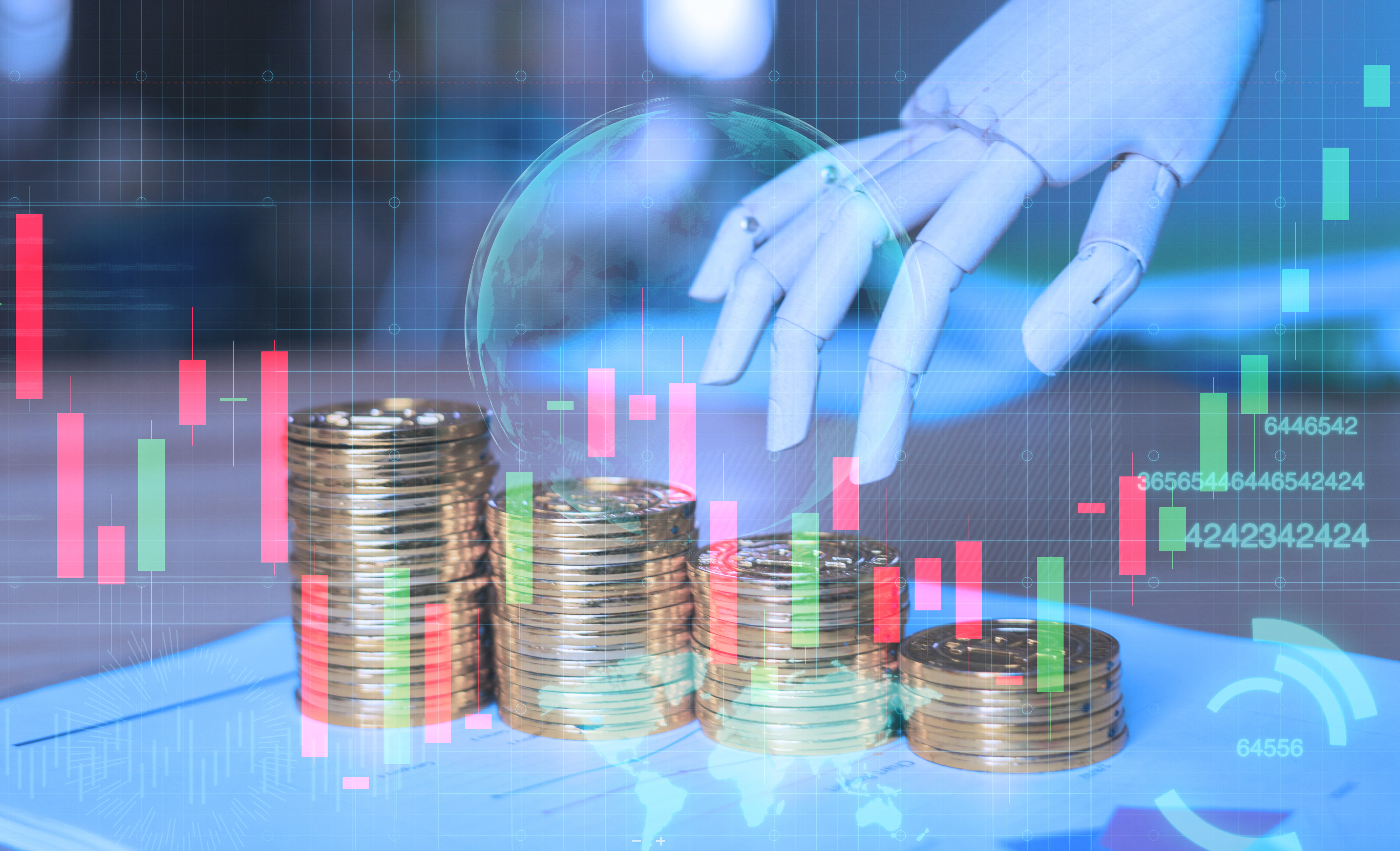
In recent events, the convergence of Artificial Intelligence (AI) and financial markets has ushered in a new era of investment dynamics, propelling both traditional stocks and cryptocurrencies to unprecedented heights. With AI algorithms increasingly driving decision-making processes, investors are witnessing remarkable shifts in market behaviors and opportunities.

Stock Market Surge:

AI’s influence on stock markets has been profound, with algorithms swiftly analyzing vast datasets to predict market trends and identify lucrative investment opportunities. One notable example is the meteoric rise of Quantitative Hedge Funds like Renaissance Technologies, which extensively leverage AI for trading strategies. These funds have consistently outperformed traditional counterparts, showcasing AI’s prowess in navigating complex market landscapes.

Furthermore, AI-powered trading platforms such as Alpaca and Robinhood have democratized access to sophisticated investment tools, empowering retail investors to make data-driven decisions previously reserved for institutional players. These platforms utilize machine learning algorithms to provide personalized investment recommendations and real-time market insights, leveling the playing field for investors of all backgrounds.

Crypto Craze Amplified:

In the realm of cryptocurrencies, AI has emerged as a game-changer, fueling unparalleled growth and innovation. AI-driven trading bots, like those offered by companies such as Cryptohopper and 3commas, autonomously execute trades based on market indicators and user-defined strategies, optimizing trading efficiency and profitability.

Moreover, AI-powered analytics platforms such as IntoTheBlock and Santiment provide comprehensive market intelligence, offering investors invaluable insights into market sentiment, token liquidity, and price volatility. These tools enable investors to make informed decisions in the highly volatile crypto landscape, mitigating risks and maximizing returns.

Real-world Applications:

The integration of AI into financial markets extends beyond trading, with applications ranging from risk management to fraud detection. Banks and financial institutions utilize AI algorithms to assess credit risk, detect fraudulent transactions, and enhance customer service through chatbots and virtual assistants.

Additionally, AI-driven predictive analytics models are revolutionizing investment banking, enabling analysts to forecast market trends, evaluate asset valuations, and optimize portfolio allocations with unparalleled accuracy.

Expert Insights:

Dr. Emily Chen, a leading AI researcher at Stanford University, underscores the transformative potential of AI in financial markets, stating, “AI algorithms possess the ability to process vast amounts of data and identify intricate patterns that elude human analysts. This capability empowers investors to make data-driven decisions and capitalize on emerging opportunities in dynamic market environments.”

Looking Ahead:

As AI continues to evolve and permeate every facet of financial markets, its impact is poised to reshape investment landscapes on a global scale. However, amidst the rapid advancements, regulatory oversight and ethical considerations remain paramount to safeguarding market integrity and investor interests.

The fusion of AI and financial markets heralds a new epoch of innovation and opportunity, where data-driven insights and predictive analytics drive investment strategies, unlocking untapped potentials in both traditional stocks and cryptocurrencies.

About the Author:

David Dandaneau is a insurance agent that covers the insurance and financial services industry. He is known for his insightful analysis and comprehensive coverage of market trends and regulatory developments.

References:

  1. Investopedia – “Quantitative Trading” – https://www.investopedia.com/terms/q/quantitative-trading.asp
  2. Forbes – “How AI Is Transforming Cryptocurrency Trading” – https://www.forbes.com/sites/lawrencewintermeyer/2023/09/14/you-cant-spell-blockchain-without-ai-ai-will-dominate-crypto-trading/?sh=78d5c3dd6ede
  3. Bloomberg – “AI Hedge Funds Trounce Rivals” – https://www.bloomberg.com/news/articles/2024-02-08/quant-hedge-funds-trounce-rivals-amid-china-rout?embedded-checkout=true
  4. CNBC – “AI in Banking: The Real Benefits of AI & Machine Learning in Finance” – https://www.cnbc.com/2023/12/18/generative-ai-has-landed-on-wall-street-heres-how-it-can-help-propel-massive-revenue-growth-.html
  5. Santiment Blog – “The Rise of AI in Crypto Trading”