
In Florida’s insurance market, few documents carry as much weight for homeowners as a wind mitigation report. Yet, despite its importance, many policyholders don’t fully understand what it is, when it’s required, or how it impacts their premiums. From my perspective in the insurance industry, this report is not just paperwork… it’s a powerful tool that can directly influence both insurability and cost.
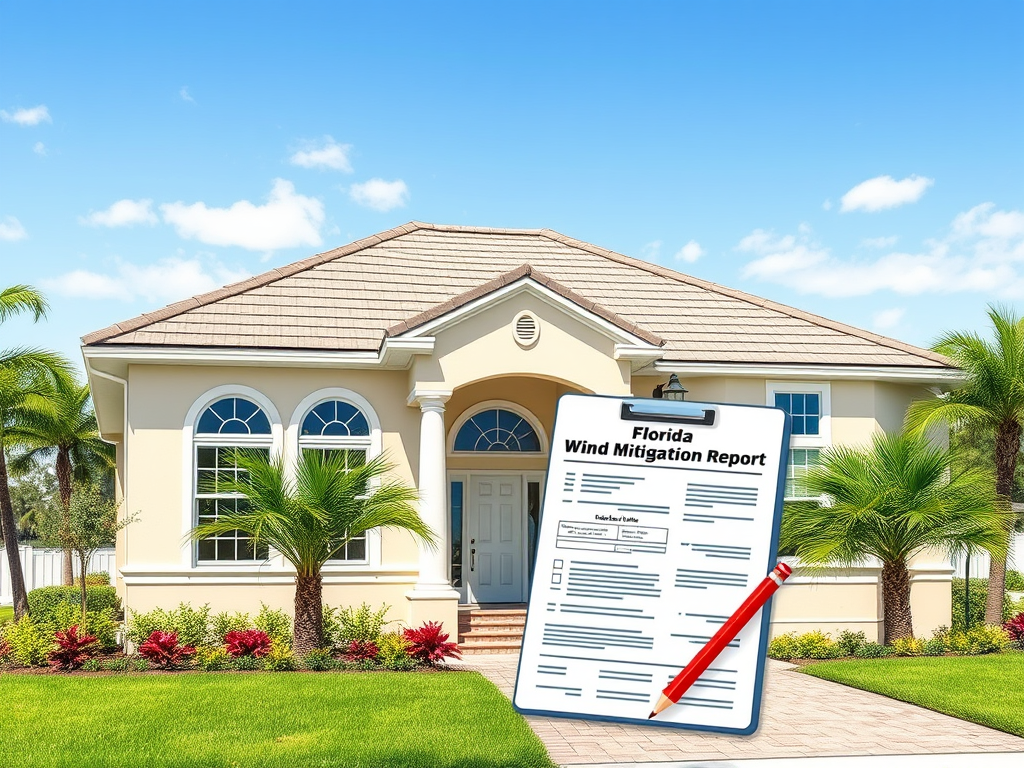
What Is a Wind Mitigation Report?
A wind mitigation report is an inspection that evaluates how well a home can withstand high winds, particularly from hurricanes and severe storms. The inspection focuses on specific structural features that reduce wind damage risk.
Key elements assessed include:
- Roof shape (hip vs. gable)
- Roof covering and age
- Roof deck attachment (nail size and spacing)
- Roof-to-wall connections (clips, straps, etc.)
- Secondary water resistance (SWR)
- Opening protection (impact windows, shutters)
The findings are documented on a standardized form used across Florida, often referred to as the OIR-B1-1802 form.
Why It Matters
Insurance carriers use wind mitigation reports to determine eligibility for credits and discounts. Homes with stronger wind-resistant features present less risk, and that reduced risk is often rewarded with lower premiums.
In some cases, the difference is substantial, homeowners can see premium reductions of hundreds or even thousands of dollars annually depending on the upgrades documented.
When You Need a Wind Mitigation Report
From an underwriting standpoint, there are several common scenarios where a wind mitigation inspection is either required or strongly recommended:
1. New Policy Applications
Many insurance companies request a wind mitigation report before binding coverage, especially for homes over a certain age (often 20+ years). This helps underwriters accurately assess the property’s risk profile upfront.
Example:
A homeowner purchasing a 1998-built home applies for coverage. The carrier requires a wind mitigation report before issuing the policy to verify roof attachment and protection features.
2. Policy Renewals or Re-Underwriting
Carriers may request an updated report during renewal periods, particularly if prior documentation is outdated (typically older than 5 years) or missing.
Example:
An insurer conducts a portfolio review and notices a home insured since 2015 has no current wind mitigation on file. They request a new inspection to maintain eligibility.
3. Roof Replacement or Major Upgrades
Any time significant improvements are made such as a new roof, installation of hurricane shutters, or upgraded roof-to-wall connections, a new report should be completed.
Example:
A homeowner installs impact-resistant windows and replaces their roof. A new wind mitigation report allows the insurer to apply additional credits that weren’t previously available.
4. High-Risk Geographic Areas
Homes located in coastal or wind-borne debris regions are more likely to require a wind mitigation report due to increased exposure to hurricane-force winds.
Example:
A property located in a coastal county applies for coverage. The insurer mandates a wind mitigation inspection to ensure compliance with stricter underwriting guidelines.
5. Older Homes
Homes built prior to modern building codes (pre-2002 in Florida, when stricter codes were implemented) often require inspections to verify whether any upgrades have been made.
When You May NOT Need One
There are situations where a wind mitigation report may not be required:
- New Construction Homes:
Homes built under current Florida Building Code standards often already meet wind mitigation criteria. Documentation from the builder may suffice. - Recent Prior Inspection:
If a valid wind mitigation report (typically less than 5 years old) is already on file, a new one may not be necessary. - Carrier-Specific Guidelines:
Some insurers may not require the report for certain low-risk properties or newer homes, though this is becoming less common in Florida.

Industry Insight: Why Carriers Care
From an underwriting lens, wind is one of the most significant drivers of property losses in Florida. A properly completed wind mitigation report gives insurers measurable data to evaluate risk instead of relying on assumptions.
It also creates a more transparent relationship between the homeowner and the insurer rewarding proactive improvements and reducing uncertainty in the event of a claim.
Final Thoughts
A wind mitigation report is one of the few tools available to homeowners that can directly reduce insurance costs while improving property resilience. Whether it’s required or optional in your situation, having one completed, especially after upgrades is often a financially sound decision.
In today’s evolving insurance environment, understanding and leveraging this report isn’t just beneficial… it’s essential.
About the Author:
David Dandaneau is a client relations analyst that covers the insurance and financial services industry. He is known for his insightful analysis and comprehensive coverage of market trends and regulatory developments.



 Health to Wealth Ventures