
For many investors, the most difficult part of building wealth in the stock market is not choosing the right company it is deciding when to invest. Market volatility, headlines, and fear of buying at the “wrong time” often cause investors to sit on the sidelines. Dollar-cost averaging (DCA) offers a straightforward solution to this problem, making it one of the easiest and most effective ways to ease into a stock position for long-term investing.

What Is Dollar-Cost Averaging?
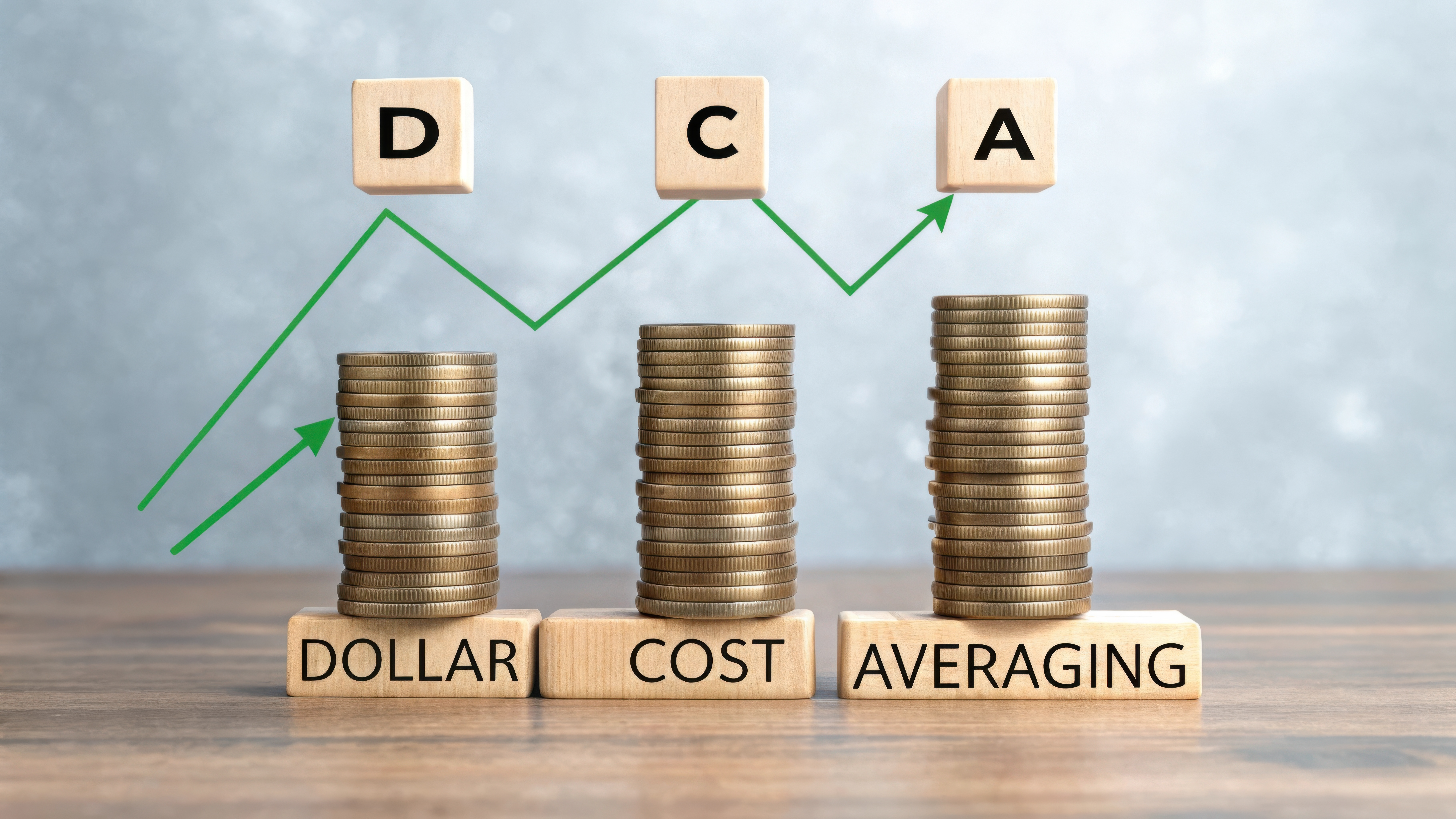
Dollar-cost averaging is an investment strategy where an investor commits to investing a fixed dollar amount into a stock, exchange-traded fund (ETF), or mutual fund at regular intervals such as weekly, biweekly, or monthly regardless of the asset’s price.
Instead of investing a lump sum all at once, DCA spreads purchases over time. When prices are high, the fixed dollar amount buys fewer shares. When prices are low, the same amount buys more shares. Over time, this approach results in an average purchase price that reflects market fluctuations rather than a single entry point.
Why DCA Works for Long-Term Investors
1. Reduces Market Timing Risk
Trying to time the market consistently is extremely difficult, even for professionals. Dollar-cost averaging removes the pressure to predict short-term price movements. By investing consistently, investors participate in the market regardless of temporary highs or lows.
2. Eases Emotional Decision-Making
Emotions such as fear and greed often lead to poor investment decisions. DCA introduces discipline by turning investing into a routine process rather than a reaction to market news. This structure helps investors stay invested during periods of volatility, which are critical for long-term success.
3. Smooths Volatility Over Time
Markets are inherently volatile in the short term. DCA naturally takes advantage of price swings by purchasing more shares during market pullbacks. Over long periods, this can lower the average cost per share compared to investing all funds at a single market peak.
4. Encourages Consistent Investing Habits
Dollar-cost averaging aligns well with regular income cycles, such as paychecks. This makes it easier for investors to build positions gradually without waiting for large sums of capital. Consistency is a key driver of long-term portfolio growth.
Why DCA Is Ideal for Easing Into a Stock Position
For investors initiating a new stock position, especially in a volatile or uncertain market, DCA provides a measured and controlled entry. Rather than committing all capital at once, investors can scale into the position over months or even years, allowing the investment thesis to play out while limiting short-term downside risk.
This approach is particularly effective for:
- Long-term growth stocks
- Broad market ETFs
- Retirement and taxable investment accounts
- Investors new to the market or returning after a pullback
Long-Term Results Matter More Than Perfect Timing
While lump-sum investing can outperform in steadily rising markets, dollar-cost averaging shines when volatility is present an increasingly common feature of modern markets. More importantly, DCA helps investors stay invested, which historically has mattered far more than finding the perfect entry point.
Over time, markets have demonstrated an upward bias driven by earnings growth, innovation, and economic expansion. Dollar-cost averaging allows investors to participate in that long-term trend without the stress of short-term market noise.
The Last Word
Dollar-cost averaging is not about maximizing short-term gains it is about building wealth steadily and responsibly. By reducing timing risk, minimizing emotional mistakes, and encouraging consistent participation, DCA stands out as one of the simplest and most effective strategies for easing into a stock position and staying committed to long-term investing goals.
For investors focused on patience, discipline, and long-term growth, dollar-cost averaging remains a proven and accessible strategy in any market environment.


 Health to Wealth Ventures